One of the films for 2012 that’s seen by many as a major player in the end of the year Awards season. Steven Spielberg’s long-delayed and gestating historical drama about Abraham Lincoln will finally make it onto the big-screen this early November. Spielberg had initially chosen Liam Neeson to play the 16th President of these United States but as the project continued to get delayed he backed out and in comes Daniel Day-Lewis to take on a very difficult role.
Lincolnis based off of Doris Kearns Goodwin’s biography of the 16th President, Team of Rivals: The Political Genius of Abraham Lincoln. With Tony Kushner tasked with finally hashing out a final draft of the screenplay the film finally went into production in 2009. The cast is an ensemble led by Day-Lewis that includes several past Academy Award and Emmy winners like Tommy Lee Jones, Sally Field and Hal Holbrook with other acting luminaries like Joseph Gordon-Levitt, Walton Goggins, David Straithairn, Jared Harris and Jackie Earle Haley.
The first trailer finally arrived today, September 13, 2012, during a Google+ hangout with Spielberg and Gordon-Levitt and reaction to the trailer seems to range from “give Daniel Day-Lewis the Oscar already” to “an Oscar-bait if there was ever one”. No matter where one sat in their reaction to this trailer it will be interesting to see if Spielberg will come out with a film that doesn’t come off as maudlin and manipulative, but deliver a film that explores and tries to explain why Lincoln became such a beloved President in his time despite making so many unpopular decisions and sitting through the worst era of American history (Civil War) and decades since his death.
Here’s to hoping that the film is less like Amistadand more like Schindler’s Listin terms of tone and narrative. We know why Lincoln is seen as the greatest President we ever had. What we want to know is the why’s.
Lincoln arrives in the theaters this November 9, 2012.
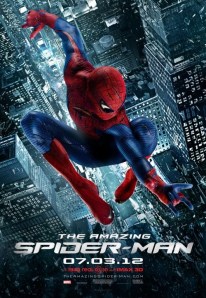
I know, I know — it’s really not even fair, is it? To review director Marc Webb’s probably-happening-to-quickly relaunch of Marvel’s Spider-Man franchise in the wake of Christopher Nolan’s The Dark Knight Rises seems like setting this flick up for defeat. Truth be told, though, I actually saw this flick on opening night, and held off on reviewing it here on Through The Shattered Lens because, well — everybody else was already having a crack at it on here. I swear. I think this is the fourth or fifth review of this film to go up here. So I held off. And honestly, the fact that I wasn’t rushing home to sit down and review it right away should tell you something right there, shouldn’t it?
Not that The Amazing Spider-Man isn’t a perfectly decent little superhero flick, it is. But that’s all it is. I can’t find much fault here, really — Webb’s directive from Columbia seems to have been to, in effect, Nolan-ize the Spider-Man story with this reboot, and on the surface, he seems to have done that. The tone is darker and more somber. James Garfield’s take on Peter Parker is altogether more haunted and troubling than was Tobey Maguire’s. He’s less likable, too — a development I actually welcome. Emma Stone does a nice job as high-school love interest Gwen Stacy. Martin Sheen’s Uncle Ben in an altogether more realistic and involving take on the character than we got in Sam Raimi’s first flick. Sally Field is great as Aunt May. Dennis Leary does a fine job as Gwen’s dad, police Captain George Stacy, who has a hard-on to arrest Spider-Man. Campbell Scott, in flashback scenes as Peter Parker’s dad, cuts both a kindly and haunting figure, and the decision of the filmmakers/studio to concentrate on the mystery surrounding the elder Parkers is a good one that gives the series a little bit more depth.About the only two serious knocks against the film are the normally-reliable Rhys Ifans’ take on the villainous Curt Connors/Lizard, his performance in both roles being of a distinctly lacking/mail-in-in nature, and the CGI effects in general, which are of middling quality, particularly in terms of their realization of Connors’ Lizard persona (or maybe that should be reptile-ona). They’re not bad, but they’re not up to the level we expect in our summer blockbusters at this point, and I would say they’re pretty of a piece, quality-wise, with, say, the second Hulk flick.
Anyway, by and large, the word we’re looking for here, across the board, is competent. Not inspired, by any means, and not groundbreaking — just competent. I’ll be honest and admit I liked this flick better than Joss Whedon’s Avengers, since it at least provided some level of human melodrama to back up the action, but it seems that the lesson studios have taken from Nolan raising the bar on the entire superhero genre is not that we want more complex, challenging, higher-quality, more technically-brilliant, more multi-faceted fare, but that we just want these flicks to be “darker” and “more realistic.” They “get” what the success of the Batman films means on a surface level, but they really don’t “get it” at all.
For those of you who are old enough to remember the “evolution” of the comics medium in the mid-to-late ’80s with books like Frank Miller’s The Dark Knight Returns and Alan Moore and Dave Gibbons’ Watchmen, assuming you were paying attention to comics back then, this will all seem terribly familiar — after the success of those two books, the “Big Two” publishers said they got the message and that people were ready for “superheroes to grow up.” And what did we get? Not more intelligent, thought-provoking, boundary-pushing, stories and characters that challenged the conventions of the genre itself the way those works did, but a steady stream of “darker,” more “mature,” somber, soul-less versions of the same kind of crap the industry was already cranking out — a state of “creative” affairs that continues unabated to this day. Nolan’s raised the bar on superhero storytelling on the silver screen the same way that Miller, Moore, and Gibbons did on the printed page, and Hollywood seems to have taken the same “lessons” from it that Marvel and DC did a quarter-century ago.
in other words, welcome to a new age of superhero sameness. On the one extreme we’ll have pure, unfiltered, two-dimensional, check-your-brain-at-the-door, CGI-heavy slugfests, a la The Avengers. Comics could always do these and do ’em well, and now so can the movies. On the other hand, we’ll have ostensibly more “mature,” “realistic,” “darker” stuff like this. But don’t expect another series with the innate intelligence and willingness to push the envelope in new directions that we’ve gotten with the Dark Knight films anytime too soon. Meet the new boss — same as the old boss.
Mind you, all of this was pretty much written and ready to go before I saw The Dark Knight Rises — and now that I have, my initial view still stands. Reaction to one flick shouldn’t change one’s opinions on another, after all. So yeah, this is perfectly adequate, acceptable superhero fare — but in the wake of DKR , do “adequate” and “acceptable” still cut it? Should they ever have? And are we willing to settle for movies like The Amazing Spider-Man that think that all DKR and its ilk prove are that audiences want the same old stuff, albeit with “darker,” more humorless trappings — or are we going to reward work that does what Nolan’s done with his Batman series in terms of pushing the genre itself in directions we’d never before expected? Let’s vote with our dollars, and vote wisely.
It was in the summer of 2002 that the superhero film genre finally entered it’s Golden Age (or Silver Age for some). X-Menhad come out two years before to positive acclaim and, most importantly, in the box-office. It wasn’t until Sam Raimi released the first in what would be his trilogy in the Spider-Manfilm franchise that superhero comic book films became the power in Hollywood it remains to this day. The first film from Raimi easily captured the pulp and campy sensibilities of the source material and for an origin story film it was done quite well in that it introduced the titular character and what made him tick. In 2004, Raimi and company released what many consider the best comic book film with Spider-Man 2. The film brought a level of Greek tragedy to the fun of the first film and it definitely brought one of the best realized comic book villains on film with Alfred Molina as Dr. Octopus. Then the franchise hit a major bump in 2007 with Raimi third entry in the franchise with the bloated Spider-Man 3.
Sony Pictures, who owned the film rights to the Spider-Manfranchise, were so quick to churn out a fourth film, but in doing so lost the filmmaker and cast that made the trilogy happen. In the studios’ thinking they needed to get a fourth film up and running in order to keep the rights to the film from reverting back to Marvel and Disney. So, out goes Sam Raimi, Tobey Maguire and Kirsten Dunst and in comes Marc Webb, Andrew Garfield and Emma Stone. Instead of getting Spider-Man 4we get The Amazing Spider-Manwhich doesn’t continue what Raimi had established with the first three films, but reboots the franchise all the way to the beginning.
Marc Webb takes the screenplay worked on by a trio of screenwriters (James Vanderbilt, Alvin Sargent, Steve Kloves) and reboots the origin story of Peter Parker’s transformation into Spider-Man. We find Peter Parker back in high school as a student and still getting bullied by Flash Thompson while remaining awkward around girls (especially one Gwen Stacy played by Emma Stone). yet, before we even get to this part of the film we get an introductory coda where we find a preadolescent Peter Parker playing hide and seek with his scientist father. These early scenes show hints that the enhanced spider thatwill bite and give eter his abilities may have had his father’s research and work written all over it.
This intro influences much of the storyline and leaves a huge impact on the character of Peter Parker which the previous three films never explored. The rest of the film has Peter investigating the circumstances of his parent’s disappearance and his adjustment to having been given the superhuman abilities by the spider that his father may or may not have been responsible in breeding.
First off, the film does a good job in re-establishing Peter Parker as a high school student. The original film spent some time in this part of Peter Parker’s life but never truly explored it. We see Peter not just the class genius, but also one who also shows an affinity for photography (something that the original trilogy never really explained other than he needed the job and money). There’s also some added layers to the character as this version of Peter Parker is more than willing to stand up to the bullies picking on the weaker students other than himself. It’s a huge departure from the meek and geeky Peter Parker of the past. We still get a geeky and smart Peter, but one who is also a sort of a well-intentioned slacker. We also get a proper introduction for Gwen Stacy (something the third film criminally mishandled)
The film introduces once again many of the characters the first film in the series had already done. From Uncle Ben (played by Martin Sheen this time around) and Aunt May (Sally Field) right up to the robber who runs into Uncle Ben and changes Peter Parker’s outlook on his role as a hero forever. Again these were character that had already been explored by the first three films and they’re scenes that had an air of familiarity to them though Sheen performance as Uncle Ben added more layers to the character who becomes Peter Parker’s moral center.
Another thing that the film did a good job with was the design of the film. It has been ten years since the first film and the technology in CGI-effects has leapfrogged exponentially since. The look of the OsCorp Tower was a beautiful piece of architectural design. The building loomed over New York City like something dark with a hint of malice. There were changes to the suit Peter wears that really harkens back to the McFarlane years of the Spider-Man comics. Even the return of the web-shooters was a nice surprise that I had some reservations when first hearing about it.
A third good thing about the film was the extended montage when Peter Parker realizes he has gained new abilities and begins to test them out. It’s familiar territory from the first film, but Marc Webb and Andrew Garfield adds a new level of youthful exuberance to the proceedings. Even the use of parkour by Peter Parker to show his growing abilities didn’t come off as silly. Garfield’s performance as Peter Parker in this montage was pretty great. One could believe at how much fun he was having at discovering each new level of abilities. Even some of the growing pains he goes through after getting bit were some of the more hilarious moments in the film that ultimately lacked much of it in the end.
Which brings us to what made this entertaining film end up becoming a failure in the end.
I admit that the film entertained me in the end, but there were things aboutThe Amazing Spider-Manwhich nagged at me throughout and afterwards. While the film was entertaining the story self and most of the characters were inconsistently written. Once one looked past the action and some of the witty dialogue in the beginning the film’s many plot-holes and head-scratching moments become too glaring to ignore.
The character of Peter Parker does get some new layers of characterization in the beginning, but as the film played out the more the Peter Parker of this film began to stray away from not just what Raimi had created and guided through the first three films but also most of the character’s decade’s long growth in the comics. Yes, we see Peter Parker as the science-genius and even moreso than the one portrayed by Tobey Maguire, but we also don’t get the awkward teen who grows into his abilities, but most importantly, one who learns through tragedy that he has a responsibility to the people around him to protect them even if it means sacrificing his wants and dreams to do so. We don’t just see Peter Parker saving people, but also one who seemed to relish beating up and abusing those who used to do the same to him and/or others. Spider-Man in this film acts more like a bully than a reluctant hero by film’s end. Even the events that should’ve taught him the lessons of self-sacrifice and heeding the needs of the many fail to make much of an impact on the teen superhero. All one has to look at as the perfect example of this darker and more selfish turn to the character was Peter’s whisper to Gwen about promises not being kept being the best ones.
Other characters get inconsistencies in how they’re written. The other big one being Dr. Curt Connors who begins the film as a scientist so intent of not just curing his disability but also helping the world. It’s a character similar in tone to Alfred Molina as Dr. Octopus, yet where that villain remained a tragic one throughout the film and we could see the path which led him to become a villain with Dr. Connors in this fourth film there’s such a huge turnabout in the character’s motivations that whatever sympathy we may have had for Connors was squandered.
Not every character fails to impress. Martin Sheen and Denis Leary as Uncle Ben and Capt. Stacy respectively were fully realized characters who become Peter Parker’s moral centers and voice of reason. In fact, both Sheen and Leary helped anchor the scenes they appeared in and thus made their characters’ fate have the sort of emotional impact that a growing hero needs to move from being reluctant to accepting of his lot in life. It’s a shame that the writers failed to capitalize on the performances of these two character actors to help make Peter Parker more a hero and less a teenager more in love with what he can do instead of realizing that he has more to offer those who are weakest.
This is not to say that the performances by the cast was bad. From Garfield and Stone right up to Ifans, Sheen, Leary and Field, the cast did a great job with an uneven and inconsistent script that was too full of themes and ideas but no focus on any one of them. It’s a wasted opportunity to build on what the previous cast of the three films had created. Even the third film which many would agree as being a huge, bloated mess actually had a singular focus. It was a story that tried to explore Peter Parker’s darker side andhow his life as a superhero negatively impacts everyone around him he cares for. With this Marc Webb production we get a Peter Parker who at times was compassionate when it came to others being bullied and then we get one who relished on doing the same to those he now sees deserving of payback. Even Parker’s hunt for his uncle’s killer which the film spent a considerable time following just got dropped without any sort of resolution. One of the most significant events in Peter’s life gets dumped to the wayside to concentrate on finally pitting Spider-Man against the film’s Lizard.
Did The Amazing Spider-Manneed to have gotten made? The answer to that would be a yes.
Did Marc Webb, the three writers in Vanderbilt, Sargent and Kloves and the new cast get the reboot correctly? I would say no.
This was a film that spent too much time reintroducing characters both comic book and film fans already knew intimately. The storyline itself shared many similarities to the second film in the series yet none of the cohesiveness which made that first sequel such an instant classic the moment it premiered in 2004. The Amazing Spider-Manspent so much time trying to come off as a grittier and edgier version of the character (I call this the Christopher Nolan-effect) that what should’ve been coming off as a fun-loving, albeit self-sacrificing hero, came off as a dick once he finally got the full costume on. The people in charge of this reboot sacrificed what was fun about the film franchise for realism that the character and his universe were never steeped in to begin with.
Gritty, edgy and realism may work for Nolan’s take on the Batman film franchise, but for Spidey it fails and just turns what could’ve been a fresh new take on the franchise into another entertaining, but ultimately forgettable entry in the series. Maybe it’s time Sony just realize that it’s just pushing this franchise downhill and let the rights revert back to Marvel who seem to have found a balance between pulpy camp and serious realism.
I am pleasantly surprised that I enjoyed the film. The only thing that interested me from the trailers was his new fangled compact web shooters. It was not a perfect film but it gave me a more authentic Peter Parker than the previous films.
What I Loved:
Garfield’s Peter Parker… he gave the character a soul. He made the audience empathize with Peter’s joy and pain.
The scientifically gifted Peter Parker: the film clearly and smoothly demonstrated throughout the film.
Eugene “Flash” Thompson had some depth… he wasn’t another generic one dimensional bully. He offered Peter a proverbial shoulder to cry on after his uncle died and he reacted gently to Pete’s outburst. He even went the extra step of checking up on Pete some time after. These acts of kindness redeemed Flash in my eyes.
The introduction of Gwen Stacy, Peter Parker’s true love and intellectual equal: Emma Stone was a better fit in this role than Kirsten Dunst was as MJ.
The compact web shooters: I loved this design. It makes sense and wouldn’t mind if the comic Peter Parker refined his classics to this model.
The chemistry that Garfield and Stone had on screen, it didn’t feel wooden or forced like some other super hero romances.
Captain Stacy centering Peter by telling him that Spider-Man’s blind vendetta put innocent people’s lives at stake. He prevented this film from going to the dark places that the previous films have traversed.
I loved Sally Field and Martin Sheen as May and Ben Parker. I was visibly shaken when Ben wrestled the crook and was shocked. I don’t recall being emotionally moved in the Raimi films.
The animal motiff, like Peter hunting like a spider and using his web to track his prey.
What Irked Me:
Curt Connors wasn’t a very interesting or compelling villain. He lacked a certain spark and his motivation wasn’t believable either. I felt that depriving Connors of his family weakened his overall potency in addition to lumping him with Norman Osborne. His passion would have been more believable if he wanted to be whole for the sake of his family, especially his young son. I would have loved if the Lizard was a separate personality instead of an uninhibited and unhinged Connors. If they fleshed out the Lizard as Golem to Connor’s Smeagol would have added some depth but I guess time constraints prevented this. The mysterious guest at the end was more interesting that Connors… I will end my rant now… forgive me for exposing my geek.
The web fluids: I disliked the fact that Peter didn’t invent it. He just lifted it from OsCorps. It takes something away from his overall brilliance IMO.
The lack of accelerated healing (well not quite Wolverine but faster than the average human’s).
The loose ends like the people on the Q train that saw Pete display his powers or the first thug & his gang who got their collective arses kicked by Pete. Wouldn’t they have gone to the police or tabloids after Spider-Man debuted. How come only one spider escaped? It would be interesting if some more escaped and we ended up with some more Spider-People.
I have to admit that, before I saw The Amazing Spider-Man on Tuesday, all I knew about the character was that he could climb walls, shoot webs, and that Tobey Maguire played him in three films, two of which were fun and one of which wasn’t. However, my boyfriend is a Spider-Man fanatic so, on Monday night, I asked him to tell me everything that he knew about the character and everything that I should know before I even tried to write a review of this latest film.
“Everything?” he asked.
“Everything,” I replied, “I mean, I know about the spider bite and his uncle and Kirsten Dunst and all that. How much more could there be?”
Well, he told me how much more there was. A few hours later, I threw up my hands in exasperation and jealousy while shouting, “Well, if you love Spider-Man so much, why don’t you take him to the movies!?” Being the wonderful and patient guy that he is, Jeff explained to me the many reasons why he prefers my company to Spider-Man’s. While most of those reasons would probably be considered too TMI for me to go into too much detail about on this site, it was still nice of him to reassure me. The fact of the matter is that Spider-Man has became a cultural icon, a figure that is now known not only to the cute guy who grew up with him but also to people, like me, whose knowledge of costumed super heroes is pretty much limited to what shows up on the movie screen.
Perhaps that’s why Marc Webb’s reboot of The Amazing Spider-Man has been so highly anticipated. Having seen it, I’m happy to say that the film, while uneven, has plenty to please both fans and newcomers alike.
The first part of the film pretty much retells the familiar origin of Spider-Man. Peter Parker (Andrew Garfield) is a nerdy high school outcast who lives with his aunt and uncle (Sally Field and Martin Sheen). A scientific genius, Peter is bullied by jocks and spends his time pining for a girl who he can’t work up the courage to talk to. One day, Peter gets bitten by a radioactive spider and soon, he has all the powers of a spider. At first, Peter has a selfish reaction to his new powers and he sees little reason why he should use them to protect a society that has rejected him. However, that all changes once Peter’s saint of an uncle is killed by a criminal that Peter earlier refused to help capture.
As many critics have pointed out, this is all familiar to anyone who saw the first Spider-Man film but that familiarity doesn’t detract from the film’s effectiveness. The fact of the matter is that Spider-Man, much like Batman, has become a part of American folklore. These are stories that are meant to be told and retold with each teller bringing his own unique spin to the material.
The film works best during this first half, when Peter is first discovering and learning how to deal with his powers while pursuing a tentative romance with Gwen (played by Emma Stone) under the disapproving eye of her father (Denis Leary), who just happens to be a police detective obsessed with capturing Spider-Man. This is largely because the first half of the film is dominated by Andrew Garfield.
Andrew Garfield has been one of my favorite actors ever since I first noticed him in Never Let Me Go and he brings a wonderfully unpredictable energy to the familiar story of how Peter Parker became Spider-Man. To his credit, Garfield plays Peter as such an awkward teenager that he’s actually somewhat creepy when we first see him. Whereas Tobey Maguire just came across like a shy nice guy, Garfield’s performance establishes Peter as a classic outcast and that gives his heroic transformation an extra poignancy. Unlike a lot of critics, I don’t feel that it’s necessary to praise Garfield’s performance by attacking Maguire’s. Maguire was the perfect Peter Parker for Sam Raimi’s unique brand of pop art. Marc Webb, for the first half of the film, take a far more realistic approach to the material and it’s an approach that’s well-suited to Andrew Garfield’s far more neurotic and internalized approach to the role. If Maguire’s performance owed a lot to Jimmy Stewart, Garfield’s performance reminds one of a young Dennis Hopper. It, of course, also helps that Garfield has a wonderful chemistry with both Martin Sheen and Emma Stone.
Though the audience I was with seemed to disagree, I found the film’s second half to be significantly weaker than the first. The latter part of the film is dominated by a pretty standard super-villian, a one-armed scientist (played by Rhys Ifans) who knew Peter’s parents and whose attempts to regenerate his missing arm leads to him turning into a lizard man who lives in the sewers. Though Ifans is a talented actor and he certainly has the mad scientist look down, his character remains something of a cipher. You’re never quite sure what Ifans is attempting to do or why he’s attempting to do it and, as a result, his final confrontation with Spider-Man is never quite as compelling (or fun) as one would hope. It all feels rather oddly generic.
Complaints aside, I enjoyed The Amazing Spider-Man and I’m looking forward to the inevitable sequel. I’m just hoping that the next film in the franchise has a villain that can match up to Garfield’s interpretation of the lead role.


 Through the Shattered Lens