October True Crime: The Onion Field (dir by Harold Becker)


This 1979 true crime drama opens in Los Angeles in 1963.

Rookie Detective Karl Hettinger (John Savage) has just joined the Felony Squad and met his new partner, Ian Campbell (Ted Danson, making his film debut).  Ian is a tall, somewhat eccentric detective, the type who practices playing the bagpipes in the basement and who takes Hettinger under his wing.

Meanwhile, Jimmy Smith (Franklyn Seales) has just been released from prison.  The nervous and easily-led Jimmy almost immediately runs into Gregory Powell (James Woods), a small-time hood with delusions of grandeur.  Powell is the type who talks a big game but who really isn’t even that good of a thief.  Smith and Powell form an uneasy criminal partnership.  They are easily annoyed with each other but they also share an instant bond.  Though the film doesn’t actually come out and say what most viewers will be thinking, there’s a lot of subtext to a brief scene where Powell appears to caress Smith’s shoulder.

One night, Hettinger and Campbell are kidnapped by Smith and Powell.  Smith and Powell drive them out to an onion field.  Because he’s misinterpreted the Federal Kidnapping Act and incorrectly believes that he and Smith are already eligible for the death penalty because they kidnapped two police officers, Powell shoots and kills Campbell.  (The close-up image of Campbell falling dead is a disturbing one, not the least because he’s played by the instantly likable Ted Danson.)  Hettinger runs and manages to escape.  He saves his life but he’s now haunted by the feeling that he abandoned his partner.

The rest of the film deals with the years that follow that one terrible moment in the onion field.  Treated as a pariah by his fellow cops, Hettinger sinks into alcoholism and eventually becomes a compulsive shoplifter.  Smith and Powell, meanwhile, use a variety of tricks to continually escape the death penalty and to keep their case moving through the California justice system.  Powell, for instance, defends himself and then later complains that he had incompetent counsel.  Smith, meanwhile, is defended by the infamous Irving Karanek, a legendary California attorney who specialized in filing nuisances motions.  (Later Karanek found a measure of fame as Charles Manson’s attorney.  Eventually, he had a nervous breakdown in 1989, lived in his car, and was briefly suspended by practicing law.)  While Smith and especially Powell quickly adjust to being imprisoned, Hettinger spends the next decade trapped in a mental prison of guilty and bitterness.

Based on a non-fiction book by Joseph Wambaugh, The Onion Field is a compelling look at a true crime case that continue to resonate today.  The film can be a bit heavy-handed in its comparisons between the two partnerships that define the story.  Both Hettinger and Smith are young and neurotic men who find themselves working with a more confident mentor.  The difference is that Hettinger’s mentor is the cool, composed, and compassionate Ian Campbell while Smith’s sad fate is to be forever linked to the erratic Gregory Powell.  While the film may have the flat look of something that was made for television, it’s elevated by the performances of its lead actors.  James Woods give an especially strong performance as the cocky Powell, a loser in the streets who becomes a winner behind bars.  Over the course of the film, he goes from being a joke to being the prisoner that others come to for legal advice.  John Savage, meanwhile, poignantly captures Hettinger’s descent as the trauma from that night leaves him as shell of the man that he once was.

The film’s supporting cast is full of familiar faces.  Christopher Lloyd and William Sanderson show up as prisoners.  Ronny Cox plays the detective in charge of the onion field investigation.  David Huffman plays a district attorney who is pushed to his breaking point by the obstructive tactics of Smith’s attorney.  Priscilla Pointer play Ian Campbell’s haunted mother.  All of them do their part to bring this sad story to life.

The Onion Field is a chillingly effective true crime drama and a look at a murder that was inspired by one man’s inability to understand federal law.

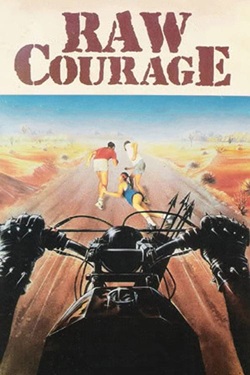
Raw Courage (1984, directed by Robert L. Rosen)


Three friends (Ronny Cox, Art Hindle, and Tim Maier) leave their families behind and go on a 72-mile run through the desert of New Mexico.  They’re marathon runners and they are trying to survive the ultimate challenge.  Instead, they run into a right-wing militia led by “Colonel” Crouse (M. Emmet Walsh) and Sonny (William Russ).  Soon, the joggers are being chased through the desert.  Their survival depends on if they have the raw courage to make it back to civilization.

Raw Courage was written and produced by Ronny Cox and I like to think that he made this movie as his way to get back at everyone who typecast him as a victim after Deliverance.  Cox’s jogger never gives up in Raw Courage, even while being chased through the broiling desert by a bunch of madmen on motorcycles.  Cox and Art Hindle both give good performances and their well-matched by Walsh and Russ.  (Unfortunately, Walsh’s role in pretty small.  Most of the actual villainy is committed by William Russ.)  Cox and Hindle both play intelligent men who just happened to find themselves in the wrong place at the wrong time.  That the victims are sympathetic and you actually care about whether or not they make it back to their families elevates the film.

The film does start to run out of gas towards the end.  The scenes of our heroes running through the desert start to get repetitive.  Raw Courage is still an exciting action film and it’s flat, made-for-TV look is probably less of a problem when viewed on YouTube than it was when the movie was initially released.  The film provides a rare starring role for Ronny Cox, four years before Robocop typecast him as everyone’s favorite corporate villain.  Cox delivers.  It’s a shame he didn’t get to play more heroes.

Beverly Hills Cop (1984, directed by Martin Best)


Two years after teaming with Nick Nolte in 48 Hrs., Eddie Murphy returned to the action genre in what remains he best-known action comedy, Beverly Hills Cop.

We all know the story.  Eddie Murphy is Axel Foley, a streetsmart detective in Detroit whose childhood friend, Mickey (James Russo), is murdered because of something that he saw while working as a security guard in Beverly Hills.  Axel plays by his own rules and gets results even as he gives his boss, Inspector Todd (Gil Hill), heartburn.  Todd refuses to allow Foley to investigate Mickey’s death so Axel puts in for some vacation time and catches the first plane to Beverly Hills.

In Beverly Hills, he meets up with another childhood friend, Jenny (Lisa Eilbacher).  Axel thinks that Mickey’s murder was ordered by a shady businessman named Victor Maitland (Steven Berkoff).  The Beverly Hills Police Department orders Axel to leave Maitland alone and to return to Detroit.  Axel won’t go until he gets justice for Mickey.  Lt. Bogomil (Ronny Cox) assigns Taggart (John Ashton) and Rosewood (Judge Reinhold) to follow Axel in Beverly Hills.

Like 48 Hrs., the story is serious but the comedy comes from how the well-drawn characters interact with each other and from seeing how Axel reacts to the strange and wealthy world of Beverly Hills.  Axel has the same reactions that we would have but, because he’s played by Eddie Murphy, he always has the perfect response to everything that he sees, whether it’s dealing with a snooty hotel clerk or with someone like Serge (Bronson Pichot), Jenny’s co-worker who speaks with an unidentifiable accent.  Even more so than in 48 Hrs or Trading Places, Murphy reveals himself to be a natural star here.  One reason why we like Axel is because he’s not just funny but he’s also the type of confident hero that we all wish we could be.  He’s not intimidated by Beverly Hills for a second.

It’s now impossible to picture anyone else in the role of Axel Foley but, when the film’s script was first being shopped around, it was originally offered to Sylvester Stallone, who said the story had potential but was missing something.  He rewrote the script and took out all of the humor, turning it into a grim and serious action film.  (It is rumored that Stallone later turned his version of the script into Cobra.)  Fortunately, Stallone eventually dropped out of Beverly Hills Cop so that he could co-star with Dolly Parton in Rhinestone.  Producers Don Simpson and Jerry Bruckheimer, then at the start of their producing careers, then offered the role to Eddie Murphy, who took Stallone’s script and added back all of the humor.  Murphy also ended up ad-libbing several of the film’s best one-liners, improvising the hotel lobby scene and the meeting with Serge on the spot.

Beverly Hills Cop was a huge success, cementing Murphy’s status as a star and proving that Murphy could carry a movie on his own.  The film still holds up, certainly better than any of the sequels that followed.  Even though Murphy was clearly the main attraction, the movie also gave actors like John Ashton, Judge Reinhold, Ronny Cox, Bronson Pinchot, and even Paul Reiser a chance to shine.  The villainous performances of Steven Berkoff and Jonathan Banks would serve as a model for countless bad guys through the 80s and 90s.  Beverly Hills Cop is a movie that makes you happy that Sylvester Stallone didn’t have a better sense of humor.

Retro Television Review: Fallen Angel (dir by Robert Michael Lewis)


Welcome to Retro Television Reviews, a feature where we review some of our favorite and least favorite shows of the past!  On Sundays, I will be reviewing the made-for-television movies that used to be a primetime mainstay.  Today’s film is 1981’s Fallen Angel!  It  can be viewed on Tubi.

Jennifer Phillips (Dana Hill) is 12 years old and struggling to find her place in the world.  Sometimes, she wants to be a gymnast.  Sometimes, she wants to be an actress.  She misses her late father.  She has a difficult time communicating with her mother, an often-exhausted waitress named Sherry (Melinda Dillon).  She is definitely not happy that Sherry is dating the well-meaning but rather dorky Frank Dawson (Ronny Cox).  Jennifer wants to watch an awards show.  Frank changes the channel to a baseball game.  That pretty much sums up their relationship.

One night, Jennifer escapes the unhappiness of her home life by going to an arcade.  That’s where she is approached by Howard Nichols (Richard Masur), a seemingly friendly older man who takes her picture and then tells her that she’s just as beautiful as Farrah Fawcett and Olivia Newton-John.  Jennifer replies that she doesn’t think that she should talk to Howard because he’s a stranger.  Howard tells her that’s very smart of her and then explains that he coaches the local girls softball team and that he thinks Jennifer would make a great shortstop.

You can probably guess where this is going and you’re absolutely right.  Soon, Jennifer is spending all of her time with Howard, who tells her that he understands what she’s going through even if her parents don’t.  Howard’s an amateur photographer and he’s constantly asking Jennifer to pose for him.  He tells Jennifer that she probably shouldn’t tell any adults about their “special friendship” because they just wouldn’t understand.  He even buys Jennifer a puppy, one that he threatens to take back to the pound whenever it appears that Jennifer is trying to step away from him.  

Howard is not only a pedophile but he also works for a pornography ring and, as Jennifer soon finds out, he’s actually got several young people living with him and posing for pictures.  Jennifer’s mother eventually becomes concerned about what Jennifer is doing when she leaves the house and she even comes to suspect that friendly old Howard is not quite as friendly as he pretends to be.  But is it too late?

Yikes!  I watched this film on Tubi and I cringed through the whole thing.  Of course, that’s the reaction that Fallen Angel was going for.  This is a film that was made to encourage parents to maybe be a little concerned about with whom their children are spending their free time.  Jennifer is fortunate that her mom eventually figures out what is going on but, as the film makes clear, a lot of victims are not so lucky.  This film is pure paranoia fuel but in the best way possible.  There are some things that every parent should be paranoid about and the adult who only spends time with people 20 years younger than him is definitely one of those things.  The film is well-made, well-written, and well-acted.  Richard Masur, with his friendly manner and his manipulate tone, will give you nightmares.

Retro Television Reviews: Fantasy Island 1.11 “Reunion/Anniversary”


Welcome to Retro Television Reviews, a feature where we review some of our favorite and least favorite shows of the past!  On Tuesdays, I will be reviewing the original Fantasy Island, which ran on ABC from 1977 to 1986.  The entire show is currently streaming on Tubi!

This week, Fantasy Island is all about confronting the mistakes of the past.

Episode 1.11 “Reunion/Anniversary”

(Dir by Allen Baron and John Newland, originally aired on April 29th, 1978)

Before I talk about the two fantasies in this episode, here’s a bit of trivia.  This episode was originally intended to be the first episode of the series.  That perhaps explains why it has a tone that is more similar to the original TV movie than to the more light-hearted episodes that followed.  Just as in the made-for-TV movie, Mr. Roarke is a bit of an enigma in this episode, one who has little trouble manipulating his guests in order to get the results that he wants.  This episode even ends with Tattoo saying, “Thank God,” and Mr. Roarke replying with a mysterious half-smile.  Roarke isn’t quite as sinister as he was in the TV movie but he’s also not quite the cheery host that he would become in later episodes.  Roarke, at one point, also mentions that he has people who research everyone’s fantasy before choosing whether to grant it.  That’s certainly different from later episodes, in which the fantasies are apparently available to anyone who can pay or who has been lucky enough to win Roarke’s sympathy.

Of course, when it came time to air the first season of Fantasy Island, this episode got pushed back and it aired as the eleventh episode.  As a result, it presents a bit of a change-of-pace from the episodes that aired the weeks before.  One can only imagine how someone who decided to start watching the show because of the fantasy where Don Knotts played a private eye reacted to this episode, in which four guests were stalked by a murderer who wore giallo-style black gloves.

The guests being stalked by the murderer are Agnes (Pamela Franklin), Hannah (Hilarie Thompson), Carol (Michele Lee), and Jill (Sue Loyon).  They are all members of the Honeybees, a group of former high school cheerleaders who are having a ten-year reunion.  Their fantasy is to spend the weekend at a recreation of the Beehive, a cabin where they used to hang out while in high school.  Of course, every one of them has a dark secret and, after one of the Honeybees is apparently blown up in a nearby barn, the three remaining Honeybees have to solve the mystery.  It all gets fairly dark and sordid but, fear not!  Mr. Roarke shows up and even takes part in some hand-to-hand combat before revealing the truth about what is going on at the Beehive.

(Again, this is not something that we would normally expect from Mr. Roarke.)

Meanwhile, troubled couple Toni (Lucie Arnaz) and Tom Elgin (Ronny Cox, looking slightly embarrassed) come to the island for their anniversary!  Toni wants to relive the weekend that they got married, when they were still happy and before Tom became a drunk.  All of their old friends are invited to the island and soon, Tom is flirting with another woman while Toni is flirting with another man.  Mr. Roarke even invites Rev. Allen (Stuart Nisbet), the man who performed the original wedding ceremony.  The reverend explains that, due to a mix-up at the licensing office, he wasn’t actually legally allowed to perform marriages when Toni and Tom get married so it turns out that Tom and Toni have been living in sin all this time!  Now, Tom and Toni have to decide whether to get married for real or to go their separate ways.

I vote for separate ways, just because they really do seem to be miserable together.  However, it turns out that Mr. Roarke has a plan to keep this awful couple together.

The decision to move this episode from the start of the season to the latter half was definitely a good one.  It was probably a bit too dark and dramatic to really work as the premiere episode but, as the 11th episode, it provides a nice change-of-pace.  After several comedic and somewhat shallow episodes, this episode emphasizes the dramatic side of Fantasy Island.  In this episode, the ultimate lesson appears to be that fantasies are fun but that it’s far more important to deal with the real world.  In other words, Fantasy Island is a nice place to visit but only Mr. Roarke and Tattoo should live there.

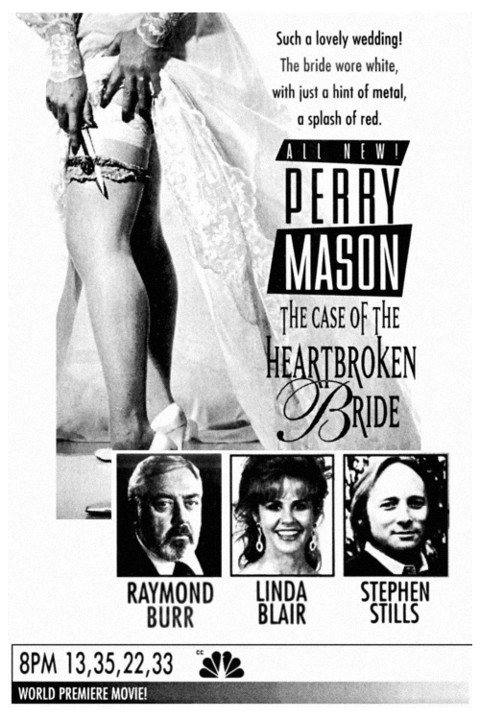
Who Is The Black Dahlia? (1975, directed by Joseph Pevney)


In 1947 Los Angeles, the body of 22 year-old Elizabeth Short is discovered in an empty lot.  Short, who was nicknamed The Black Dahlia because she always wore black, was an aspiring actress who was violently tortured before being chopped in half.  Her murder remains one of Hollywood’s most infamous unsolved crimes.

In this made-for-television movie, Ronny Cox and Efrem Zimbalist, Jr. play the two detectives who are assigned to investigate Short’s murder.  Though they struggle to find any clues identifying who could have killed Short, they do learn about her life and how she went from being a naïve innocent who came to Hollywood with stars in her eyes to being a hardened and cynical woman who may have been supporting herself through sex work when she was murdered.  The film makes use of frequent flashbacks, in which Elizabeth Short is played by Lucie Arnaz.  Her friends and acquaintances are played by familiar television faces like Henry Jones, Mercedes McCambridge, June Lockhart, Brooke Adams, Donna Mills, and Tom Bosley.  Also be sure to keep an eye out for Sid Haig, playing a tattoo artist.

What Elizabeth Short went through over the course of her short time in Hollywood was probably too graphic to be put on television in the 70s but this movie still does a good job of recounting the basic facts of her life and murder.  Because the film is based on fact, no one is ever arrested for Short’s murder.  The only suspect is a doctor who turns out to have an alibi.  The movie instead focuses on Short trying make it in Hollywood and discovering that it’s a cruel town.  Lucie Arnaz was far better than I was expecting in the role of Elizabeth and brought a lot of vulnerability to the role.  The film ended with a title card, asking anyone who had information about the murder of Elizabeth Short to call the LAPD.  The case remains open to this day.

The TSL’s Horror Grindhouse: Scissors (dir by Frank De Felitta)


The plot of the 1991 film, Scissors, is not easy to describe. That’s not because the plot is particularly clever as much as it’s because it doesn’t make much sense.

Basically, Sharon Stone plays a woman named Angela Anderson. She is oddly obsessed with scissors and terrified about getting close to anyone. She’s been getting hypnotherapy from Dr. Carter (Ronny Cox) in an effort to understand why she’s so repressed but she doesn’t seem to be getting anywhere. This could possibly have something to do with the fact that Dr. Carter is continually distracted by the adulterous activities of his wife, Ann (Michelle Phillips).

Angela lives in a lonely but surprisingly big apartment with only her cat for company. Her cat is named Midnight and he’s a black cat so he automatically became my favorite character in the film. Living next door to her are two twin brothers. Alex (Steve Railsback) is a soap opera star. Cole (Railsback, again) is an artist in a wheelchair who continually paints cartoonish pictures of Angela being attacked by a man with a big red beard.

Then, one day, Angela goes out to buy some scissors. When she returns and gets on the elevator to head back up to her apartment, she’s attacked by a man …. A MAN WITH A RED BEARD! Fortunately, Angela is able to stab him with her scissors. After the man with the red beard runs off, Angela is discovered in the elevator by Alex and Cole. Alex and Angela fall in love. Cole’s not too happy about that.

Following so far?

Angela get a call about a job interview, one that requires her to go to a stranger’s apartment. Despite the fact that the film has spent nearly an hour setting up Angela as being intensely agoraphobic, she has no problem going to this apartment. However, once she enters the apartment, she finds herself locked in! She also discovers that the red-bearded man is also in the apartment. Fortunately, he’s dead. Unfortunately, it appears that he was killed by Angela’s scissors. There’s also a raven in the apartment. The raven continually taunts Angela, saying, “You killed him!” Let’s just be happy that Edgar Allan Poe wasn’t around to see this.

Trapped in the apartment, Angela has flashbacks to her past. Is Angela the murderer? Is all of this just happening in her mind? Or is someone trying to drive her over the edge?

Though Scissors is set up as a psychological horror film, it’s really more of an extended acting exercise for Sharon Stone. Stone wanders around the apartment. She talks to herself. She had a nervous breakdown or two. She discusses life with a puppet. Every single scene seems to be designed to make audiences go, “Wow, she really can act!” but, despite all of the histrionics on display, Angela is still a very one note character. By making her obviously unstable from the start, the film doesn’t really leave the character with much room to develop or take us by surprise. The film attempts to end on a bit of an ambiguous note as far as Angela’s character is concerned but that type of ambiguity has to be earned. There’s nothing to Stone’s performance to indicate that there’s anything about Angela that isn’t totally on the surface. To suggest that there was more to her than originally appeared is to insult the audience’s ability to discern hidden depths.

The film does eventually wrap up its mystery and present a solution of sorts. Unfortunately, it’s a totally unsatisfying solution and one that’s dependent on otherwise intelligent people coming up with a ludicrously overcomplicated scheme to deal with one not particularly complicated problem. It’s all pretty forgettable but at least the cat survives.

The TSL’s Grindhouse: Steele Justice (dir by Robert Boris)


“You don’t recruit him!  You unleash him!”

That’s what they say about John Steele, the man who Martin Kove plays in 1987’s Steele Justice.  John Steele served in Vietnam and he was one of the best and most fearless members of the special forces.  On the final day of the war, he was on the verge of arresting the corrupt General Kwan (Soon-Tek Oh) until Kwan suddenly announced that the war was over and the Americans were leaving.  Steele laughed, shrugged, and turned his back on Kwan and started to walk away.  Was Steele planning on just walking back to America?  Well, regardless, Kwan shot Steele and his friend in the back.  Fortunately, Steele survived.  Steele may be stupid but he’s strong.

Years later, both Steele and Kwan are now living in California.  Kwan is a prominent businessman who is also the secret leader of the Vietnamese mafia.  Naturally, his main henchman is played by Al Leong.  If Al Leong’s not working for you, are you even evil?  John Steele has not been quite as successful.  He was a cop until he got kicked off the force.  Then he got a job transporting horses across California.  Despite his cool guy name, John Steele doesn’t seem to be that good at anything that doesn’t involve killing people.

But then Kwan murders Steele’s best friend and former partner, Lee (Robert Kim).  In fact, Kawn not only murders Lee but he also kills Lee’s entire family.  The only survivor is Lee’s daughter, Cami (Jan Gan Boyd), a piano prodigy who is supposed to be 14 years old even though she’s being played by someone who is in her 20s.  Steele and Lee’s former boss, Bennett (Ronny Cox), gives Steele permission to track down the people responsible for Lee’s death.

John Steele sets out to destroy Kwan.  The film gives us a lot of reasons to be on Steele’s side but it’s hard not to notice that a lot of innocent people end up getting killed as a result of Steele’s vendetta.  Any time that Steele goes anywhere, Kwan’s people attack and a bunch of innocent bystanders get caught in the crossfire.  For example, Steele’s ex, Tracy (Sela Ward), agrees to look after Cami.  It turns out that Tracy is a music video director and, of course, she takes Cami to work with her.  The video shoot turns into a bloodbath, with even the members of the band getting gunned down.  And yet, not even Tracy seems to be particularly disturbed by that.  One might think that Tracy would at least sarcastically say something like, “Hey, John, thanks for getting the band killed before I got paid,” but no.  Tracy just kind of laughs it all off.  At no point does Steele or Bennett or really anyone seem to feel bad about all of the people who get killed as a result of the decision to unleash John Steele.  Those people had hopes and dreams too, you know.

I really like Martin Kove on Cobra Kai.  I love how his portrayal of the over-the-hill and burned-out John Kreese manages to be both intimidating and pathetic at the same time.  I’ve also seen a number of interviews with Kove, in which he’s discussed his career as an exploitation mainstay and he always comes across as being well-spoken and intelligent.  That said, Martin Kove appears to be totally lost in Steele Justice, unsure if he should be playing John Steele as a grim-faced avenger or as a quick-with-a-quip action hero.  Whenever Steele is angry, Kove looks like he’s on the verge of tears.  Whenever Steele makes a joke, Kove smiles like an overage frat boy who, while cleaning out his old storage unit, has just discovered his long lost copy of Bumfights.  It’s a confused performance but, to be honest, no one really comes out of Steele Justice looking good.  This is a film that features a lot of talented actors looking completely and totally clueless as to why they’re there.

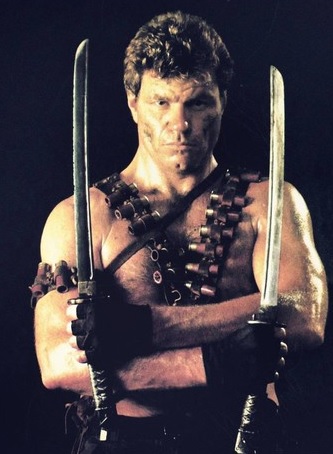
On the plus side, Steele Justice did give this world this totally intimidating shot of Martin Kove, preparing to be get and give justice.  Recruit him?  No, just unleash him!

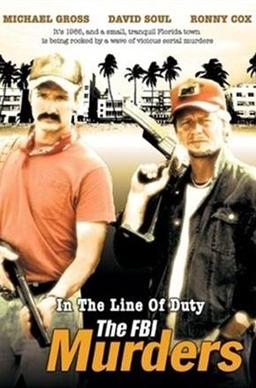
In The Line of Duty: The FBI Murders (1988, directed by Dick Lowry)


Last night, after I wrote up my review of the last In The Line of Duty movie, I checked and discovered that the first In The Line of Duty movie is now available on YouTube.

In The Line of Duty: The FBI Murders is the one that started it all.  This was the first installment and it set the general format of all the In The Line of Duty films to follow.  It was based on a true story.  The movie was evenly split between the criminals and the members of the law enforcement trying to catch them.  Here, the criminals were two bank robbers played by David Soul and, in an effective turn against type, Michael Gross.  (When this film was released, Gross was best known as the wimpy father on Family Ties.  Today, he’s better known as the survivalist from the Tremors films.  He went on to play cops in two subsequent In The Line of Duty films.)  The FBI agents pursuing them were played by Ronny Cox, Bruce Greenwood, and several other recognizable TV actors.

The FBI Murders was not only the first In The Line of Duty film but it was also the best.  All of the subsequent installments, both good and bad, pale in comparison.  Though the story is familiar and the foreshadowing is sometimes obvious (“Try not to get shot,” one FBI agent’s wife tells him), The FBI Murders still holds up today because of the strong cast and Dick Lowry’s direction of the final shootout between the cops and the criminals.  No matter how many times David Soul gets shot, he keeps getting up and firing more rounds.  Making this part of the film all the more effective is that it’s based on fact.  During the actual incident, the real-life criminals played by Soul and Gross continued firing and killing even though they had been shot a tremendous number of times.  Remarkably, it was discovered that neither had been on any type of pain-killing drug at the time.  Instead, they were determined to just keep shooting until the end.  Though the two men were outnumbered by the FBI, the agents were not prepared to go up against the military-grade weapons that the men were carrying with them.

The actors who play the FBI agents are all effective, especially Ronny Cox as the veteran who has seen it all.  As with the other In The Line of Duty films, a lot of time is spend showing the comradery between the agents and how, even when they’re not at work, they’re all still together.  In other In The Line of Duty films, the comradery could sometimes feel forced but, in The FBI Murders, it feels natural and scenes like Bruce Greenwood’s character finally getting a nickname and one of the older agents deciding to go on a stakeout just for old times sake carry a lot more emotional weight than you might expect.  It makes the final shootout all the more powerful.

Eleven more In The Line of Duty films would follow but none of them would top The FBI Murders.

Film Review: Robocop (dir by Paul Verhoeven)


Last week, I watched the original Robocop (along with Robocop 2 and Robocop 3) and I have to say that the first film holds up far better than I was expecting. Made and released way back in 1987, Robocop may be one of the most prophetic films ever made.

Consider the plot:

America is torn apart by crime and a growing gap between the rich and the poor. That was probably true in 1987 and it’s certainly true in 2021.

Throughout the film, we see news reports about what’s happening in the world. The news is always grim but the reporters are always cheerful and the main message is that, no matter what’s happening, the government is not to blame and anyone who questions the wisdom of the establishment is a fool. If that’s not a perfect description of cable news and our current state-run media, I don’t know what is.

The populace is often too busy watching stupid game shows to really pay attention to what’s happening all around them. I’m writing these words on a Wednesday, which means that Game of Talents will be on Fox tonight, immediately after The Masked Singer.

Detroit, a once proud center of industry, has now turned into a dystopian Hellhole where no one feels that they’re safe. Now, I don’t live in Detroit so I don’t know how true that is but I do know that most of the recent news that I’ve heard about the city has not exactly been positive. Also, this seems like a good time to point out that, even though the film is set in Detroit, it was shot in Dallas. Though the Dallas skyline has undoubtedly changed a bit since 1987, I still recognized several buildings while watching Robocop. Seeing Reunion Tower in the background of a movie that’s supposed to be set in Detroit was interesting, though perhaps not as interesting as seeing our City Hall transformed into the headquarters of Detroit’s beleaguered police force.

OCP, a multi-national conglomerate that’s run by the amoral but occasionally charming Old Man (played by the brilliant Dan O’Herlihy), has a contract with city of Detroit to run their police department. This certainly doesn’t seem far-fetched in 2021. Considering that we now have prisons that are run by private companies and that the government has shown a willingness to work with private mercenaries overseas, it’s not a stretch to imagine a city — especially one on the verge of bankruptcy — handing over the police department to a private company.

Two OCP executives — Dick Jones (Ronny Cox) and Bob Morton (Miguel Ferrer) — are competing to see who can be the first to create and develop a peace-keeping robot, a machine that will replace the need to employ (and pay) human police officers. Dick Jones goes with an actual robot, which malfunctions during a boardroom demonstration and guns down another executive. (The scene where the poor exec is targeted is both terrifying and darkly humorous at the same time. Particularly disturbing is how everyone in the boardroom keeps shoving him back towards the robot in order to ensure that they won’t accidentally be in the line of fire.) Bob Morton, however, takes a mortally wounded cop named Murphy (Peter Weller) and turns him into Robocop!

Robocop turns out to be a huge success and is very popular with the media. (Anyone who doubts this would really happen has obviously never watched news coverage of a drone attack.) As you can guess, Dick is not particularly happy about getting shown up by Morton and his robocop. Dick also happens to be secretly in league with Clarence Boddicker (Kurtwood Smith), the crimelord who blew Murphy apart in the first place.

(A gangster and a businessman working together!? I doubt that was shocking even in 1987.)

Robocop claims that he’s just a machine, without a past or emotions, but he’s still haunted by random flashes of his life as Murphy. Working with Lewis (Nancy Allen), Murphy’s former partner, Robocop tracks down Boddicker and his gang. A lot of people die in outrageously violent ways. (The scene where Boddicker and his gang use a shotgun to torture Murphy is still shocking, even after all these years.) The violence is so over-the-top that it soon becomes obvious that director Paul Verhoeven is deliberately trying to get those of us watching to ask ourselves why we find films like this to be so entertaining. On the one hand, Robocop is an exciting action film with a sense of humor. On the other hand, it’s the type of subversive satire of pop and trash culture to which Verhoeven would return with Basic Instinct, Starship Troopers, and Showgirls. This is the type of film that asks the audience, “What are you doing here?”

34 years after it was first made, Robocop remains a triumph. Peter Weller’s performance holds up well, as he does a great job of capturing Robocop’s anguish while, at the same time, never forgetting that the character is ultimately a machine, one that’s trapped in a sort of permanent limbo. I also really liked the performance of Miguel Ferrer, who takes a character who should be unlikable and instead makes him into a surprisingly sympathetic figure.

Of course, a film like this lives and dies on the strength of its villains and both Ronny Cox and Kurtwood Smith are ideally cast as Dick Jones and Clarence Boddicker. Kurtwood Smith especially took me by surprise by how believably evil and frightening he was. As a I watched the film, I realized that it was his glasses that made him so intimidating. Wearing his glasses, he looked like some sort of rogue poet, a sociopathic intellectual who had chosen to use his talents to specifically make the world into a terrible place. Boddicker’s crew was full of familiar actors like Paul McCrane, Ray Wise, and, as the always laughing Joe Cox, Jesse Goins. Interestingly enough, all of the bad guys seemed to genuinely be friends. Even though they were all willing to betray each other (“Can you fly Bobby?”), they also seemed to really enjoy each other’s company. That somehow made them even more disturbing than a group of bad guys who were only in it for the money. The villains in Robocop really do seem to savor the chance to show off just how evil they can be.

(Incidentally, for all of the Twin Peaks fans out there, this film features three members of the show’s ensemble: Miguel Ferrer, Ray Wise, and Dan O’Herlihy.)

Robocop holds up well as entertainment, prophecy, and satire. Though not much was expected from it when it was first released, it became a surprise hit at the box office. Needless to say, this led to a sequel. I’ll deal with that film in about an hour.