Obviously, it’s way too early to start speculating about who and what will receive Oscar nominations in 2016. I mean, that would be crazy, right?
So, that’s exactly what I’m going to do. Just like last year, I’m going take a monthly wild guess and try to predict what might be nominated. Next year, around this time, we’ll look at the predictions below and probably laugh.
Since the year just started, these predictions should be taken with more than a few grains of salt. Needless to say, these predictions are heavily orientated towards what played at Sundance this week and also towards films that were directed by the usual suspects. For instance, I know next to nothing about St. James Place but it stars Tom Hanks and it was directed by Steven Spielberg and, when you’re guessing this early in the year, that’s enough to earn it a listing.
(And before you laugh too much at how influenced this list was by Sundance, consider that the campaigns for both Boyhood and Whiplash started at Sundance.)
Of course, for all I know, the release of some of these films might be delayed, much as how Foxcatcher was moved from 2013 t0 2014.
With all that in mind, here are my way, way, way too early Oscar predictions for January!
Well, this is certainly intimidating. I know I’ve said this many time before but it deserves to be repeated: it’s often a hundred times more difficult to review a great film than it is to review a merely mediocre one. When a film fails, it’s usually easy to say why. The acting was bad. The directing was uninspired. The plot didn’t make any sense. Or maybe the film has been so overpraised that you, as a reviewer, are almost obligated to be tougher on it than you would be with any other film. However, it’s never as easy to put into words just what exactlyit is that makes a movie great.
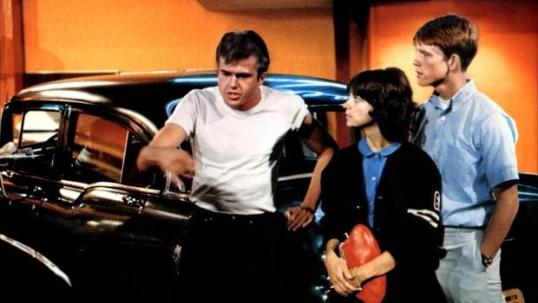
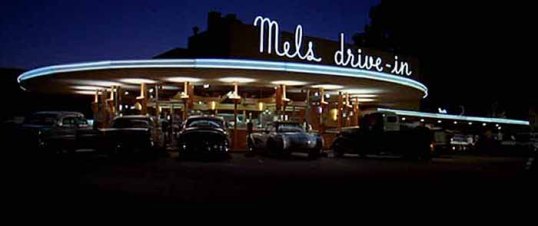
Take the 1973 Best Picture nominee American Graffiti for instance. I could tell you that this is a very well-acted film and that it features an ensemble of very likable performers, many of whom subsequently went on to become stars and celebrated character actors. Then again, you can say the same thing about countless other films.
I could say that director George Lucas does such a good job putting this film together that it’s hard to believe that he’s the same man who would later be responsible for all three of the Star Wars prequels. Then again, I could also say the same thing about how odd it is that the same man who directed the entertaining Final Destination 5was also responsible for the far less enthralling Into The Storm.
I could tell you that the film serves as a valuable time capsule in that not only does it feature a loving recreation of small town America in the early 60s but that it’s also a chance to see what Richard Dreyfuss, Ron Howard, and Charles Martin Smith all looked like when they still had hair. But then again, I also praised The Young Graduates for being a time capsule as well.
Let’s face it — it’s difficult to define the intangible qualities that make a film great. Often times, it’s a case of simply knowing it when you see it. I’ve seen American Graffiti a few times. The last time I saw it was at a special Sunday showing at the Alamo Drafthouse. And, on that early Sunday afternoon, the theater was packed with people who had paid for the chance to see the 40 year-old film on the big screen. I’m 28 years old and it’s significant that, while the majority of the audience was older than me, there were quite a few people who were younger. American Graffiti is one of those films that obviously spoke to audiences when it was first released and continues to speak to audiences today.
As I mentioned in my review of Rebel Without A Cause, films about teens tend to age quickly and, often times, one generation’s masterpiece will turn out to be a later generation’s joke. When a film like Rebel or American Graffiti survives the test of time, it’s because the film has managed to capture a universal truth about what it means to be young and to have your entire life ahead of you.
American Graffiti takes place over the course of one long night in Modesto, California in 1962. The film follows several different characters, the majority of whom have just graduated from high school. What these characters all have in common is that one phase of their life has ended and a new one is about to begin. Over the course of that one night, all of them are forced to say goodbye to their past identities and, in some instances, are forced to face their future.
For instance, there’s Curt (an amazingly young Richard Dreyfuss), a neurotic intellectual who spends the night trying to decide whether or not he actually wants to leave for college in the morning. Complicating Curt’s decision is a mysterious blonde who mouths “I love you” at him before driving away. While searching for her, Curt finds himself unwillingly recruited into the Pharoahs, a somewhat ludicrous small town gang that’s led by Joe (played, in hilariously clueless fashion, by Bo Hopkins.) Curt, incidentally, is my favorite character in the film. He’s just adorable, which admittedly is not a reaction that one often has to Richard Dreyfuss.
(Curt is also featured in one of my favorite scenes, in which he smokes a cigarette with a lecherous teacher named Mr. Wolf.)
Curt’s sister (Cindy Williams) is dating Steve Bolander (Ron Howard). Steve is the former class president and, unlike Curt, he’s very excited about leaving home. Ron Howard gives such a likable performance that it actually takes a few viewing to realize just how big of a jerk Steve really is.
And then there Terry (Charles Martin Smith) who wears big glasses and has bad skin. Terry gets to spend the night driving around in Steve’s car and manages to pick up a girl named Debbie (Candy Clark). For Terry, this is his night to actually be somebody and what makes it all the more poignant is just how obvious it is that Terry will probably never get another chance. Though he may not realize it, those of us watching understand that this is literally going to the be the best night of Terry’s life.
(Incidentally, much like Ron Howard, Charles Martin Smith would go on to become a film director and gave the world the amazingly sweet Dolphin Tale.)
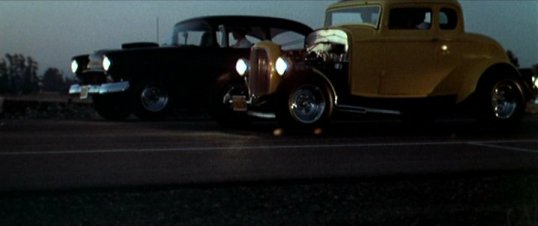
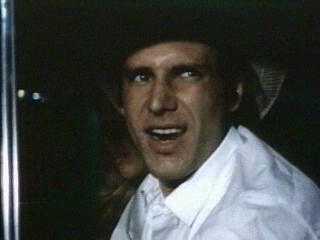
And finally, there’s John Milner (Paul Le Mat). John is a little older than the other main characters. He spends most of his time in his car, driving around and getting challenged to race. He’s the epitome of late 50s/early 60s cool, with an attitude and a look that he obviously borrowed from James Dean and Marlon Brando. Over the course of the night, he is forced to deal with a bratty 13 year-old stowaway (MacKenzie Phillips) and a mysterious challenger named Bob Falfa (played by a youngish Harrison Ford, who wears a cowboy hat and speaks with a country twang).
The film follows these characters through the night and then, at the end of it, we get the famous epilogue where we discover that all of the male characters have pretty much ended up exactly how we thought they would. In some cases, that’s a good thing. And in other cases, it’s not. It’s a good ending that’s kept from being great by the fact that none of the film’s female characters rate so much as even a mention.
So, what else can be said about American Graffiti?
Rush, the latest film from Ron Howard, is the type of film that I usually hate.
It’s big, bombastic, and so extremely mainstream that it actually features Chris Hemsworth uttering the line, “This is what I was born to do,” without a hint of irony. This is a film about rich boys playing with expensive toys and the movie’s portrayal of women manages to make Aaron Sorkin look enlightened by comparison. Finally, the film is about a sport that I previously knew nothing about and, after having spent two hours watching this film, I still know very little about.
And yet, I didn’t hate Rush. In fact, I really enjoyed it and I think the reason why comes down to one thing.
I have a weakness for hot guys who drive fast cars.
Rush tells the true story about the rivalry between two Formula One racers, the flamboyant Englishman James Hunt (Chris Hemsworth) and the extroverted German Niki Lauda (Daniel Bruhl). The film follows them from their first meeting in 1970 until they both find themselves competing for the Formula One championship in 1976. Along the way, we watch how both of them deal with the temptations that went along with being a rich celebrity in the 1970s. (Lauda resists the majority of them. Hunt does not.) Along the way, one of them struggles to recover after a horrifying accident and both of them try to maintain a balance between their personal lives and the fact that each race they run could potentially be their last. (In one of the film’s best scenes, Niki explains that he’s prepared to accept a 20% chance of dying during a race but not a point more.)
Plotwise, Rush is pretty much a standard sports film, full of men talking about the importance of being men while women stare up at them with adoration. Inspirational speeches are delivered and everything comes down to one final race. If, like me, you’re not into Formula 1 racing, the film can occasionally be difficult to follow. During one extended montage of cars racing across the world and occasionally crashing, I found myself seriously wondering how many races could possibly be run in a Formula One season. As the film reached its conclusion, James and Niki started talking about which racers have the most points. Their conversation would have undoubtedly been easy to follow for someone who was into Formula One but for me, it took a few minutes to figure out what they were going on about.
However, none of that matters.
Rush works.
There’s a lot of reasons why Rush works. The film’s glossy recreation of the 1970s (in all of its frequently tacky glory) is enjoyable to watch and Hans Zimmer’s score is properly loud and majestic. Both Hemsworth and Bruhl give good performances, with Hemsworth coming across as properly flamboyant and Bruhl bringing some much-needed humor to a character who, in the hands of a lesser actor, could have been insufferable. Both Olivia Wilde and Alexandra Maria Lara do good work bringing seriously underwritten characters to life.
However, the film’s ultimate success belongs to director Ron Howard.
Ever since Frost/Nixon prevented The Dark Knight from getting a best picture nomination in 2009, there has been a certain loud element of the online film community that has used Ron Howard as a go-to example of a safe and thoroughly commercial director. He is often dismissed as being the epitome of a mainstream, conventional filmmaker.
However, as mainstream as Howard’s sensibility may be, Rush proves that he still knows how to craft an exciting scene. I may have occasionally had trouble keeping track of who was and wasn’t in each car but that didn’t make the races any less thrilling or the accidents any less horrifying. During the film’s best sequences, you feel the thrill of being in control of the uncontrollable and you understand why Niki and James are willing to risk death just so they can experience being alive.
This movie was actually on the Fox Movie Channel last night. The trailer’s better.
2) The Tenement (1985)
As this trailer makes clear, this film is also known as Slaughter In The South Bronx.
3) Enter The Ninja (1981)
It’s Franco Nero!
4) Eat My Dust (1976)
It’s Ron Howard!
5) Beatrice Cenci (1969)
Before Lucio Fulci devoted himself to making zombie films, he made this one. It tells the true story of Beatrice Cenci, an Italian noblewoman who, in 1599, conspired to murder her abusive father. Fulci considered it to be his second best film. I’ve never seen it but I hope to do so someday soon.
6) The Slams (1973)
Finally, let’s conclude this edition with Jim Brown in … The Slams!
During my sophomore year of college, I had a political science professor who, every day of class, would sit on his desk and ramble on and on and on about his past as a political activist. He protested Viet Nam, he hung out with revolutionaries, he loved Hugo Chavez, and I assume he probably had a Che Guevara poster hanging in his office. Whenever he wanted to criticize George W. Bush, he would compare him to Richard Nixon and then pause as if he was waiting for the class to all start hissing in unison. He always seemed to be so bitterly disappointed that we didn’t. What he, and a whole lot of other people his age, didn’t seem to understand was that Richard Nixon was his boogeyman. The rest of us could hardly care less.
That was the same problem that faced the 2008 best picture nominee Frost/Nixon.
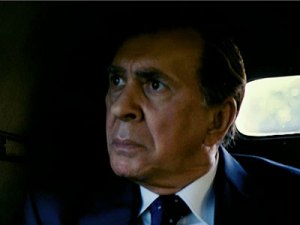
Directed rather flatly by Ron Howard, Frost/Nixon tells the true story about how a light-weight English journalist named David Frost (played by Michael Sheen) managed to score the first televised interview with former President Richard Nixon (Frank Langella). Both Frost and Nixon see the interviews as a chance to score their own individual redemptions while Frost’s assistants (played by Oliver Platt and Sam Rockwell) see the interview as a chance to put Richard Nixon on trial for Watergate, the Viet Nam War, and every thing else under the sun. That may not sound like a very exciting movie but it does sound like a sure Oscar contender, doesn’t it?
I’ve always secretly been a big history nerd so I was really looking forward to seeing Frost/Nixon when it was first released in 2008. When I first saw it, I was vaguely disappointed but I told myself that maybe I just didn’t know enough about Richard Nixon or Watergate to really “get” the film. So, when the film later showed up on cable, I gave it another chance. And then I gave it a chance after that because I really wanted to like this film. Afterall, it was a best picture nominee. It was critically acclaimed. The word appeared to be insisting that this was a great film. And the more I watched it, the more I realized that the world was wrong. (If nothing else, my reaction to Frost/Nixon made it easier for me to reject the similarly acclaimed Avatar a year later.) Frost/Nixon is well-acted and slickly produced but it’s not a great film. In fact, Frost/Nixon is epitome of the type of best picture nominee that inspires people to be cynical about the Academy Awards.
Before I get into why Frost/Nixon didn’t work for me, I want to acknowledge that this was a very well-acted film. By that, I mean that the cast (Frank Langella, Michael Sheen, Kevin Bacon, Sam Rockwell, and Oliver Platt) all gave very watchable and entertaining performances. At the same time, none of them brought much depth to their characters. Much like the film itself, nobody seems to have much going on underneath the surface. Frank Langella may be playing a historic figure but, ultimately, his Oscar-nominated performance feels like just a typically grouchy Frank Langella performance. Michael Sheen actually gives a far more interesting performance as David Frost but, at the same time, the character might as well have just been identified as “the English guy.” In fact, a better title for this film would have been The Grouchy, the English, and the Superfluous.
For all the time that the film devotes to Rockwell and Platt blathering on about how they’re going to be giving Richard Nixon “the trial he never had,” this film is ultimately less about politics and more about show business. Ron Howard devotes almost as much time to the rather boring details of how the interviews were set up and sold into syndication as he does to the issues that the interview brings up. Unfortunately, for a movie about show business to succeed, the audience has to believe that the show is one that they would actually enjoy watching, This, ultimately, is why Frost/Nixon fails. While the filmmakers continually tell us that the Frost/Nixon interviews were an important moment in American history, they never show us. Yes, everyone has hideous hair and wide lapels but, otherwise, the film never recreates the period or the atmosphere of the film’s setting and, as a result, its hard not to feel detached from the action happening on-screen. For all the self-congratulatory claims made at the end of the film, it never convinces us that the Frost/Nixon interviews were really worth all the trouble. Much like my old poli sci professor, Frost/Nixon never gives us a reason to care.
For a far more interesting and entertaining look at the Watergate scandal, I would recommend the 1976 best picture nominee All The President’s Men. Recreating the story of how two Washington Post reporters (played by Robert Redford and Dustin Hoffman) exposed the Watergate scandal that eventually led to Nixon’s resignation, All The President’s Men is the movie that Frost/Nixon wishes it could be. Despite being made only two years after Watergate, All The President’s Men doesn’t take the audience’s interest for granted. Instead, director Pakula earns our interest by crafting his story as an exciting thriller. Pakula directs the film like an old school film noir, filling the screen with menacing shadows and always keeping the camera slightly off-center. Like Frost/Nixon, All The President’s Men is a well-acted film with a bunch of wonderful 70s character actors — performers like Ned Beatty, Jason Robards, Jack Warden, Martin Balsam, and Robert Walden, and Jane Alexander — all giving effectively low-key and realistic performances. The end result is a film that manages to be exciting and fascinating to those of us who really don’t have any reason to care about Richard Nixon or Watergate.
Both of these two films were nominated for best picture. Frost/Nixon quite rightly lost to Slumdog Millionaire. All The President’s Men, on the other hand, lost to Rocky.
Who would’ve thought that a comic book named Cowboys & Aliens will end up being one of the most anticipated tentpole films for the Summer of 2011. It’s a fun little book from Platinum Studios created by Scott Mitchell Rosenberg and written by Fred Van Lente and Andrew Foley with the artwork done by one Luciano Lima. The premise of the comic book is literally about cowboys and aliens. With the latter attempting to enslave humanity during the 1870’s and starting with the Wild West. In their plans for world conquest are a band of cowboys and Indians who band together despite their many conflicts and issues to combat a shared and greater threat.
The film was announced prior to the release of Favreau’s Iron Man 2 and was a surprising one. Many insiders thought he was a shoo-in to helm the planned Avengers film for Marvel, but instead he chose this project instead.
To say that Cowboys & Aliens steamrolled into production with so many heavyweights behind it would be an understatement. Favreau was already in the director’s chair and producing the project behind the scenes were giants of the industry like Steven Spielberg, Brian Grazer and Ron Howard. The cast roped in for the film was also quite impressive with Daniel Craig taking on the lead role with Olivia Wilde, Harrison Ford, Clancy Brown, Keith Carridine, Walton Goggins and Paul Dano supporting Craig.
The very first teaser trailer has been released and could be seen above. While the trailer only shows only a little bit it does confirm that it will have cowboys and, from the brief glancing images, aliens. Cowboys & Aliens has a tentative release date of July 29, 2011 and joins other comic book-based films for that summer like Thor, Captain America and Green Lantern.
It will be interesting to see if Favreau keeps the bulk of the books storyline in the film or will he just loosely base the story on the books. One thing for sure, he and his crew have a tall order to try and tell this story and do it well enough that it stands out amongst the many comic book blockbusters and sequels set to appear in the same season. This film could be a real fun, action-adventure or it could easily turn into the second coming of Wild, Wild West. Here’s to hoping it’s the former and not the latter.




 Through the Shattered Lens