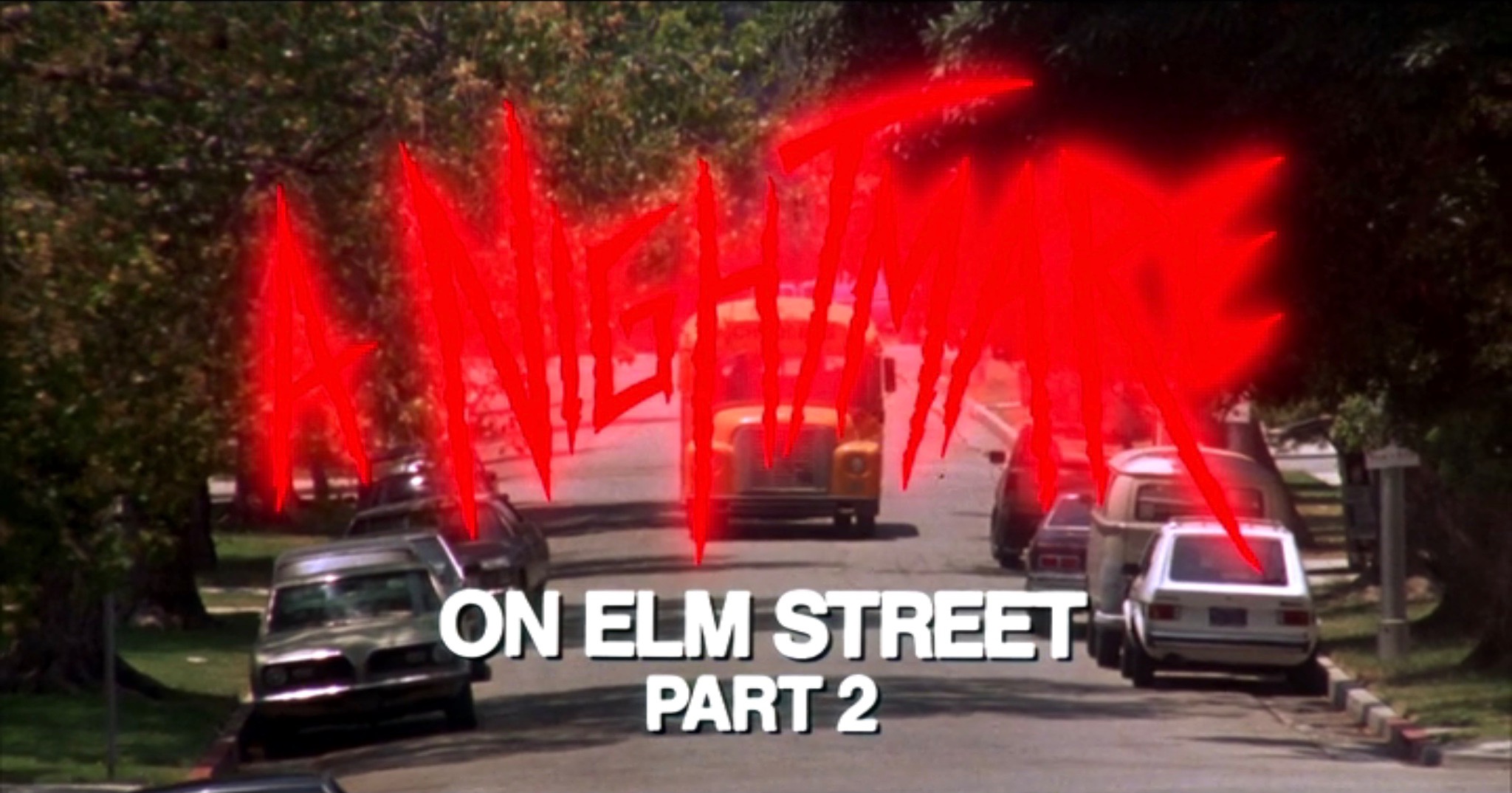
Horror Film Review: A Nightmare On Elm Street Part 2: Freddy’s Revenge (1985, dir. Jack Sholder)


IMG_8022

You’ll have to forgive me, but I watched A Nightmare On Elm Street (1984) back on September 6th, 2008. So it’s been awhile. Luckily, this film doesn’t really ask you to know anything about the original. Also on the plus side, I’ve reviewed Rock: It’s Your Decision (1982) and Law Enforcement Guide To Satanic Cults (1994) this year, so imaginary subtext is still fresh in my mind.

IMG_8029

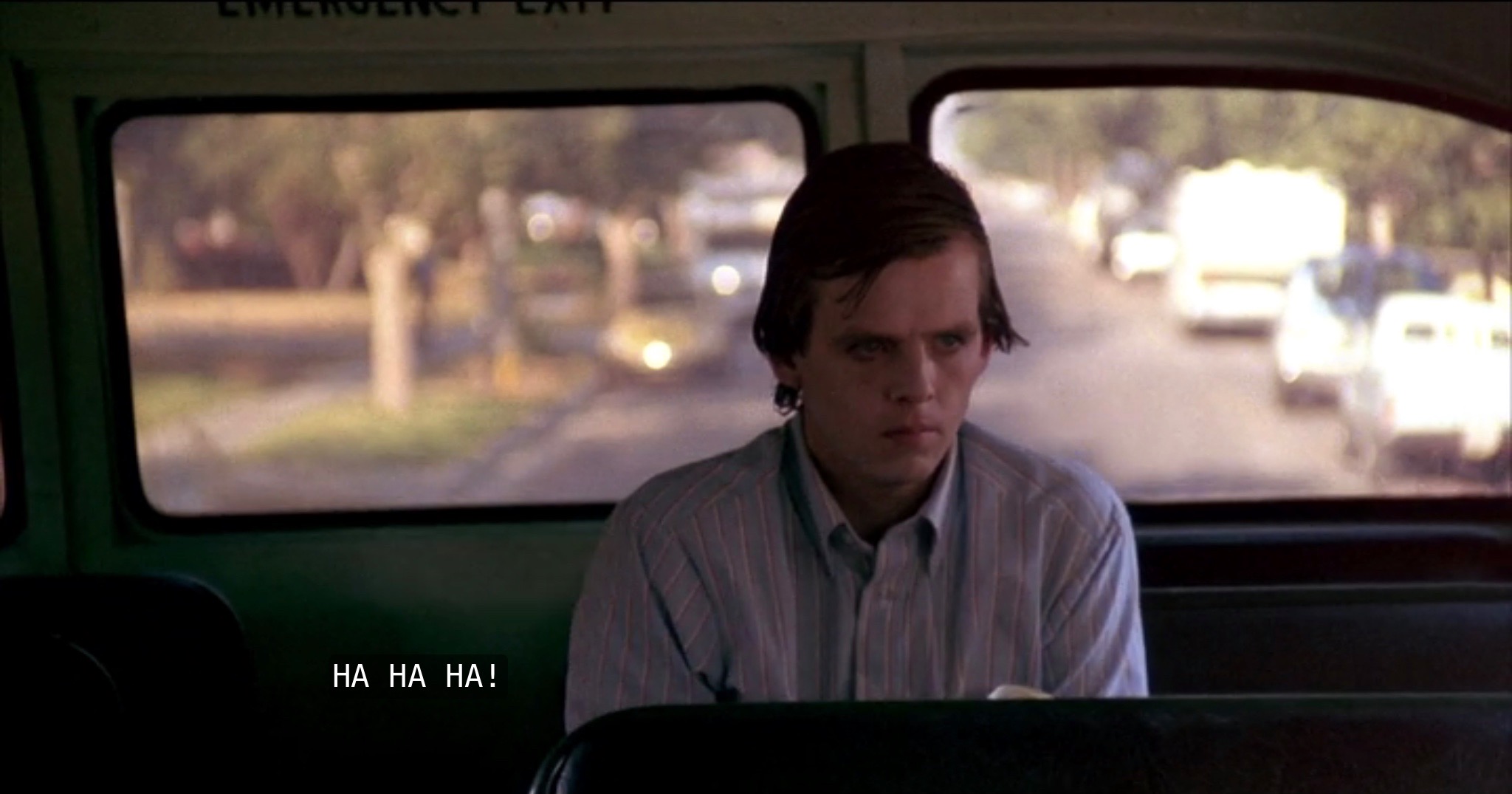
The movie opens up with Jesse Walsh (Mark Patton) riding the bus. Just in case we didn’t notice that Robert Englund is driving the bus, the movie makes sure we know right away that something isn’t right. They have Jesse looking like he doesn’t think very highly of himself in real life. Of course Freddy Kruger is driving the bus and a nightmare sequence ensues. Then we cut to Jesse waking up sweating. Heat plays a major role in this film because of course it does since Freddy was burned.

IMG_8053

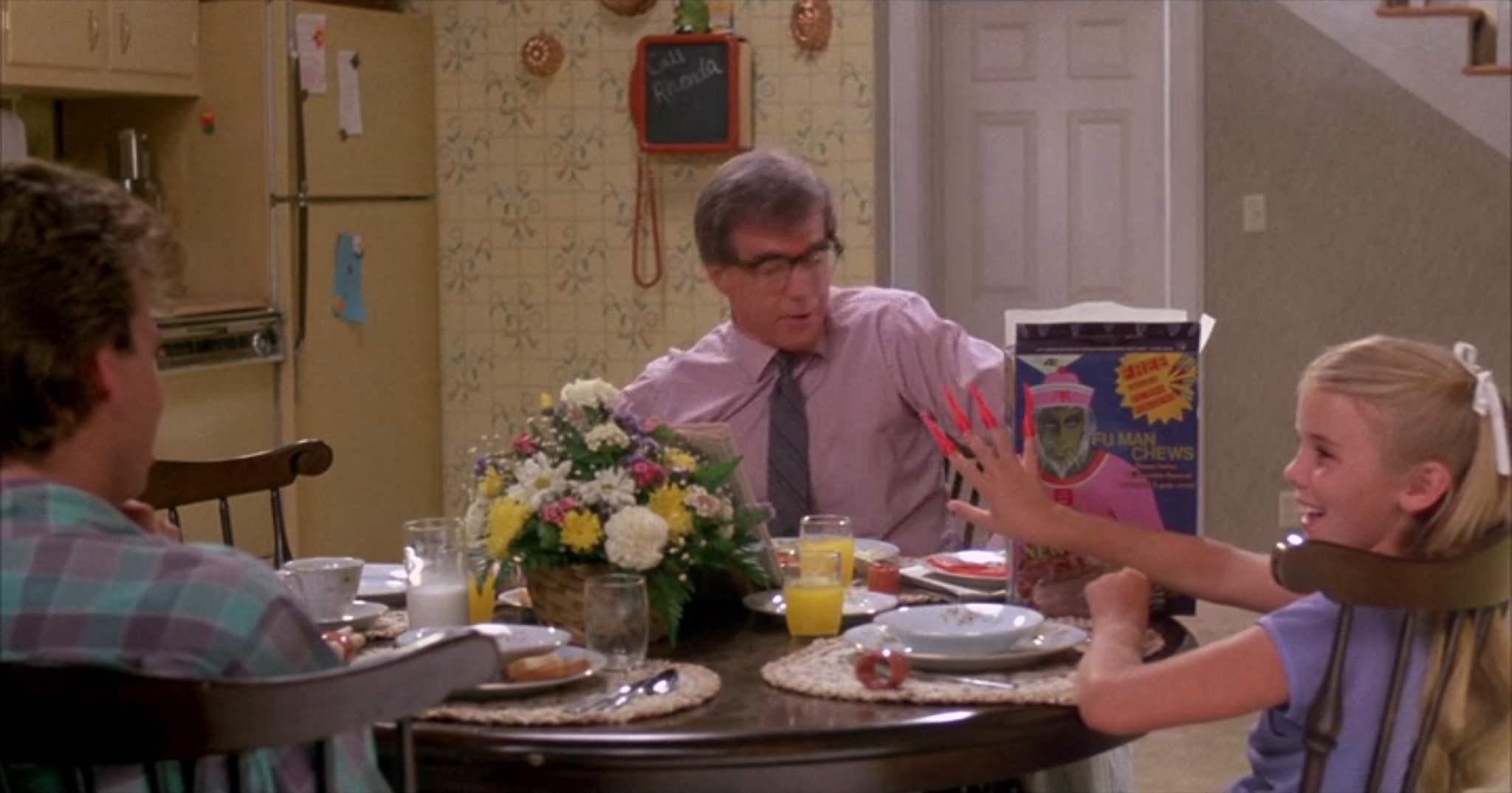
Unfortunately, Jesse does go downstairs to find that Fu Man Chews cereal is very real. That’s scary! This movie is cerebral. I remember the original also playing with what was real and imagined, but here it’s a little different. The things here are mostly real in that something really is happening in Jesse and it does have him take actions in the real world against his will. Freddy isn’t something that gets you in your dreams. In this sequel, Freddy is inside Jesse slowly but surely taking hold of him. Doesn’t really fit with the first one, but who cares. It’s much better than just getting a retread of the original.

IMG_8092

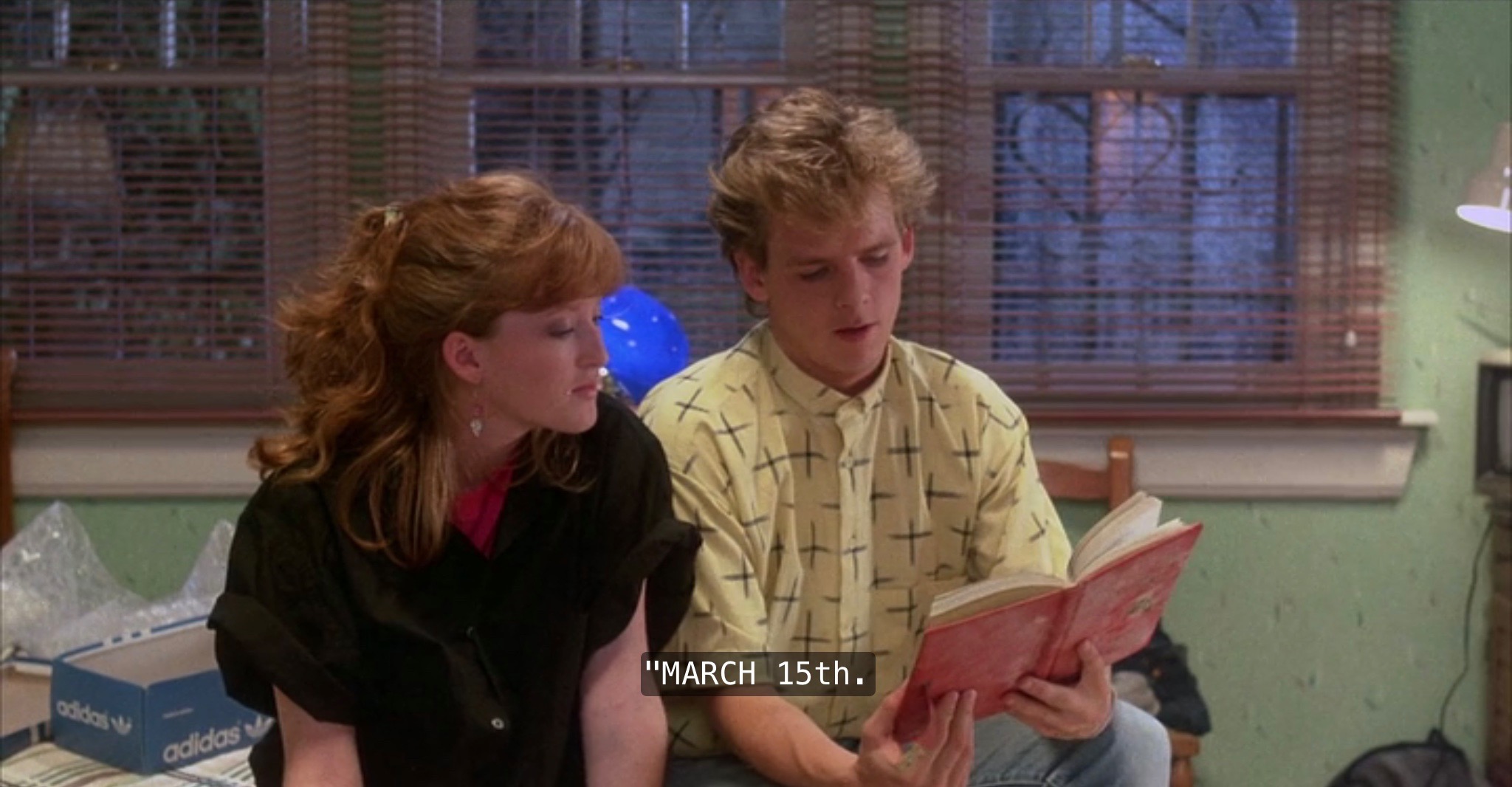
Pretty quickly, Jesse and his girlfriend Lisa (Kim Myers) find a diary written by the girl from the first film. They find it because it turns out Jesse’s family has recently moved into the house from the first movie, unbeknownst to anyone but the dad. One of the things people might latch onto in the hopes of reading gay subtext into this movie here is the “No (out of town) Chicks” sign on his door. Yes, because kids in high school are totally not so juvenile to have something like that on their door. And just in case we don’t remember that kids at that age are that juvenile. When Jesse and his friend are forced to do pushups by their coach on the field because they were fighting, they of course assume the coach must be “queer” because they know he frequents an S&M club.

IMG_8679

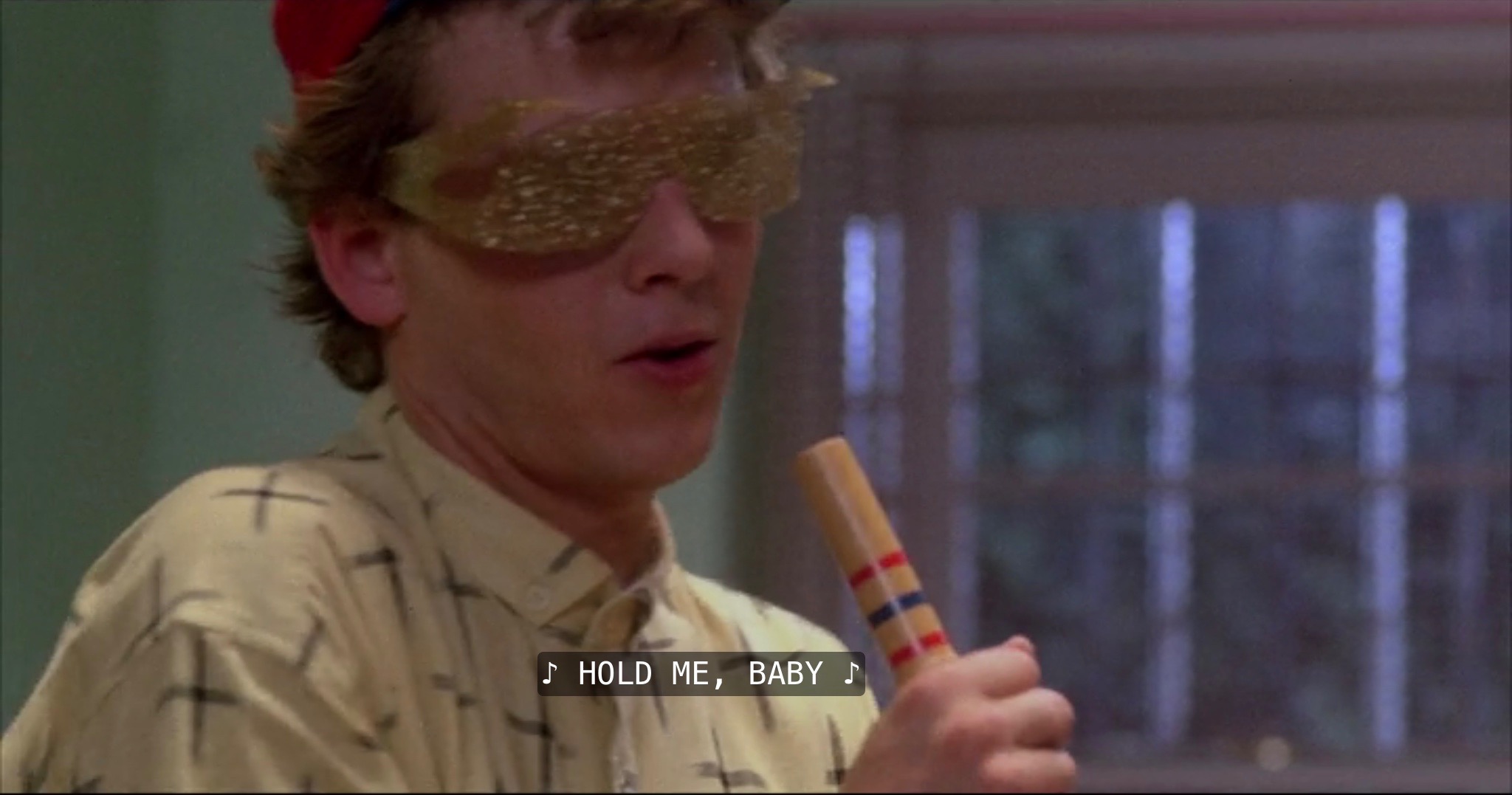
While we are here. I believe the cleaning the room scene pictured above means he’s gay about as much as I believe the girls from Teen Witch (1989) went home and made out with each other after the I Like Boys musical number.

As stupid as they are, these kind of scenes are all over 1980s movies. Remember this one from Risky Business (1983)?

Hell, going back to Teen Witch again. The infamous Top That! rap is just as goofy.

IMG_8163

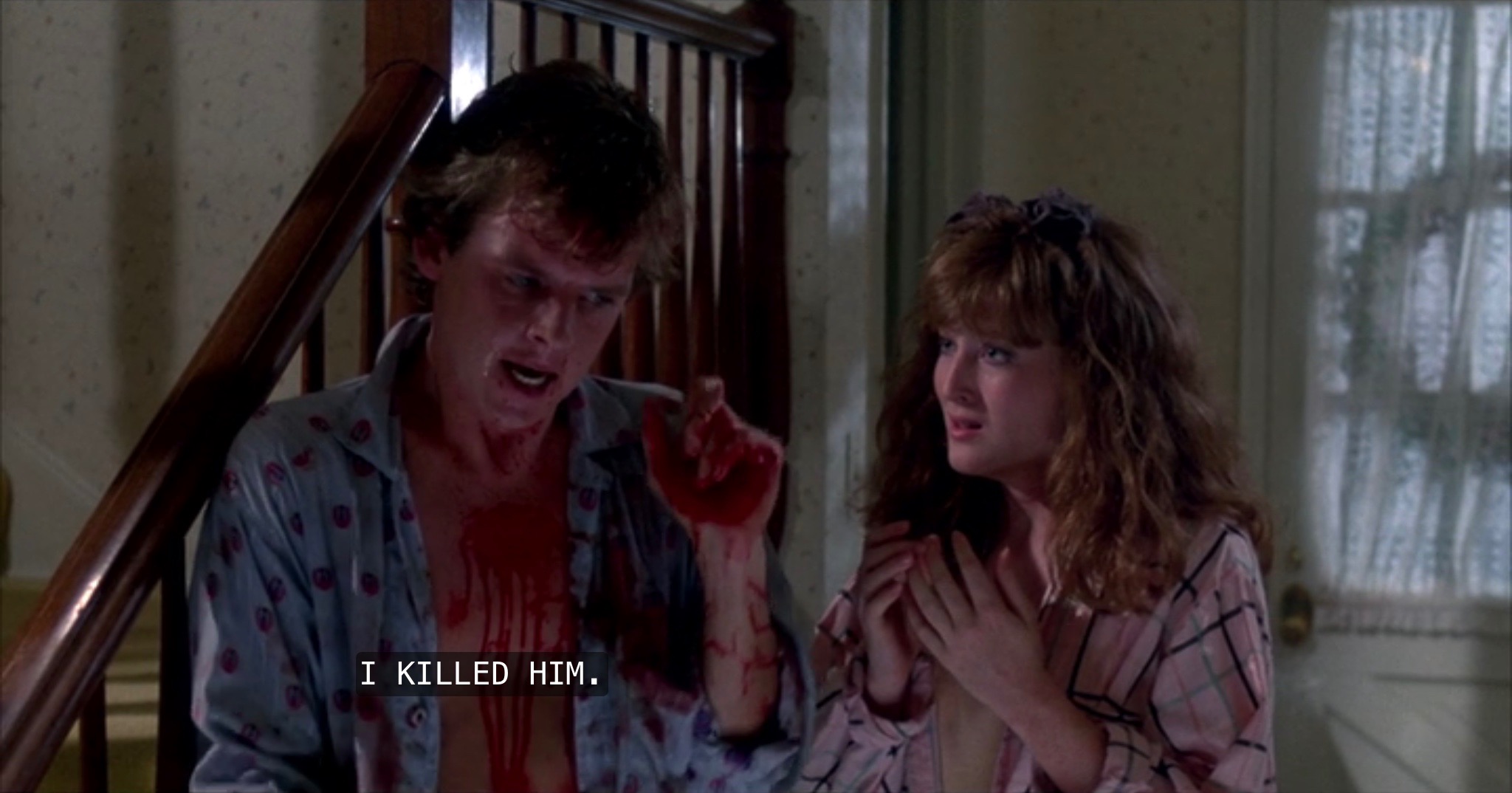
The first time we really see Freddy truly taking hold is when Jesse appears to leave his house in the middle of the night. He goes to the S&M club where his coach goes. It takes no time at all for the coach to spot him and punish him by making him run laps at the school gym. Of course they didn’t mention the coach was into S&M for anything. I can’t think of one off the top of my head, but movies from this period loved to throw in characters who were perceived sexual deviants, then punish or kill them in a manner similar to what turns them on. That’s what happens here to the coach. However, instead of Jesse waking up in his bed to find out the coach is dead the next day. He is actually brought home by the police, meaning it really happened. This obviously scares the crap out of Jesse.

IMG_8176

And things only spin further and further out of control as Freddy manifests himself more and more in reality. This is another scene I’m sure is supposed to seal the deal on the gay subtext.

IMG_8370

The gay is trying to get out of him so he flees being with his girlfriend to barge in on his friend. Of course he goes to his friend. This isn’t a big budget film we’re talking about here. The coach is dead, his parents think he’s on drugs, and Freddy just manifested himself while he was with Lisa. Who else is he going to go to but his friend? He’s the only other character of consequence left in the movie.

IMG_8385

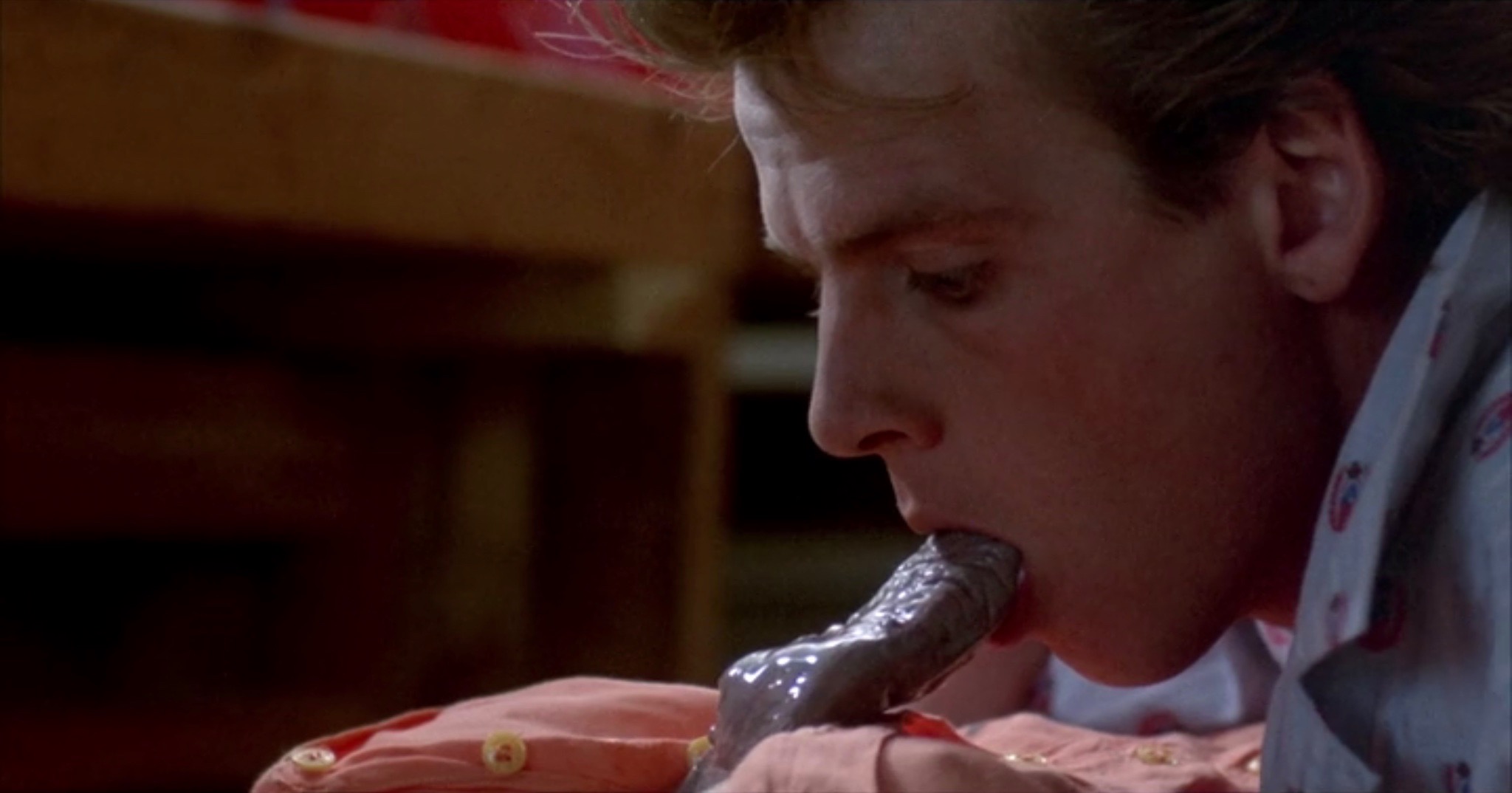
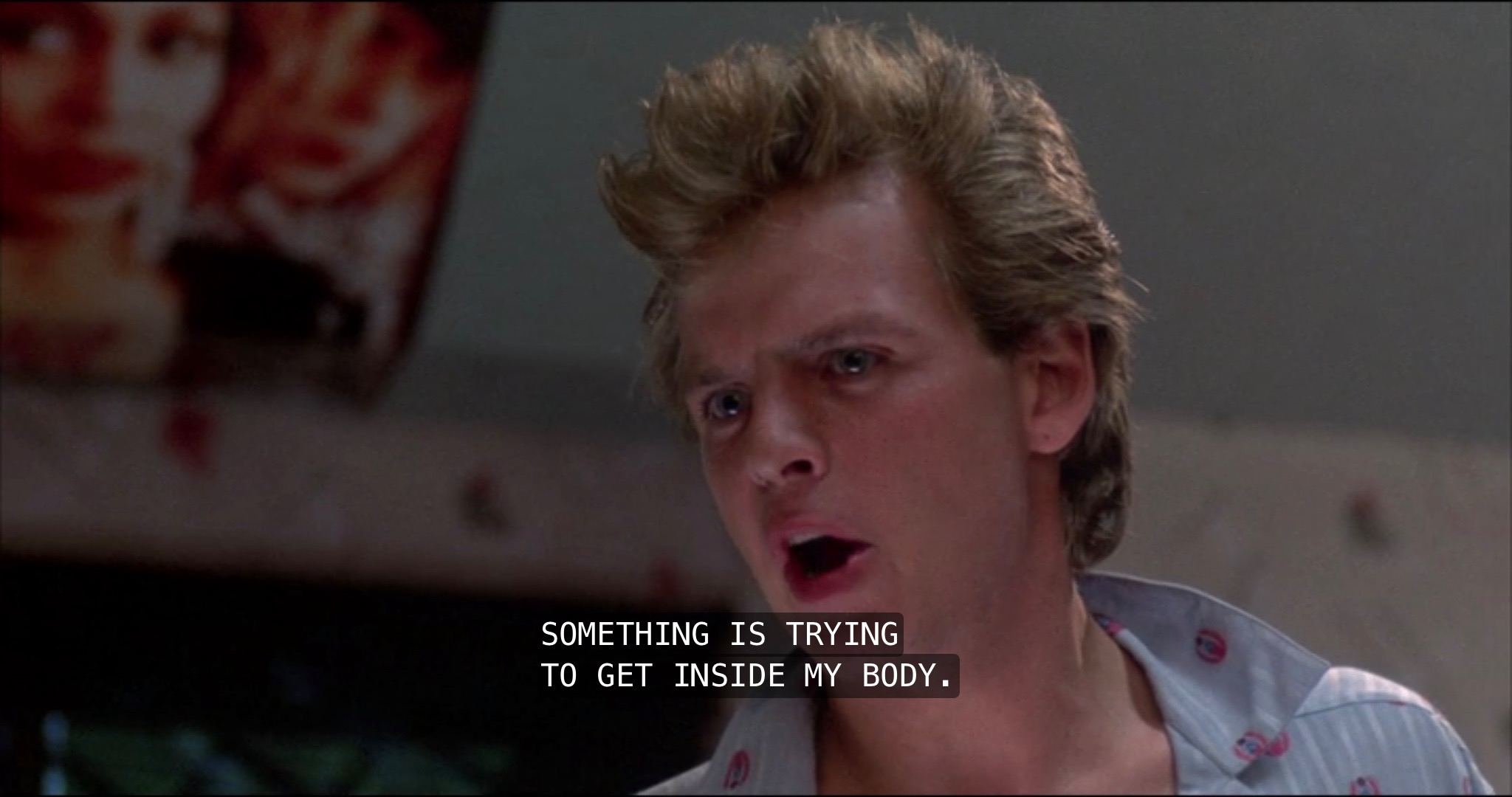
And this line that Jesse says shortly after coming into his friend’s room means a penis if you are in middle school. This is where the film does run into some issues for me. Up until now, the movie did a good job of showing Jesse slowing losing his mind as Freddy took further and further control, but now he literally appears to jump into reality as if Jesse were an incubator. It eventually kind of explains it, but I wish they could have smoothed this out a bit more. Especially seeing how good of a job I think Mark Patton did up till now with the character of Jesse.

IMG_8440

After Freddy runs wild at a party, Lisa goes to where Freddy used to work. There was a scene earlier where Lisa took Jesse there.

IMG_8522

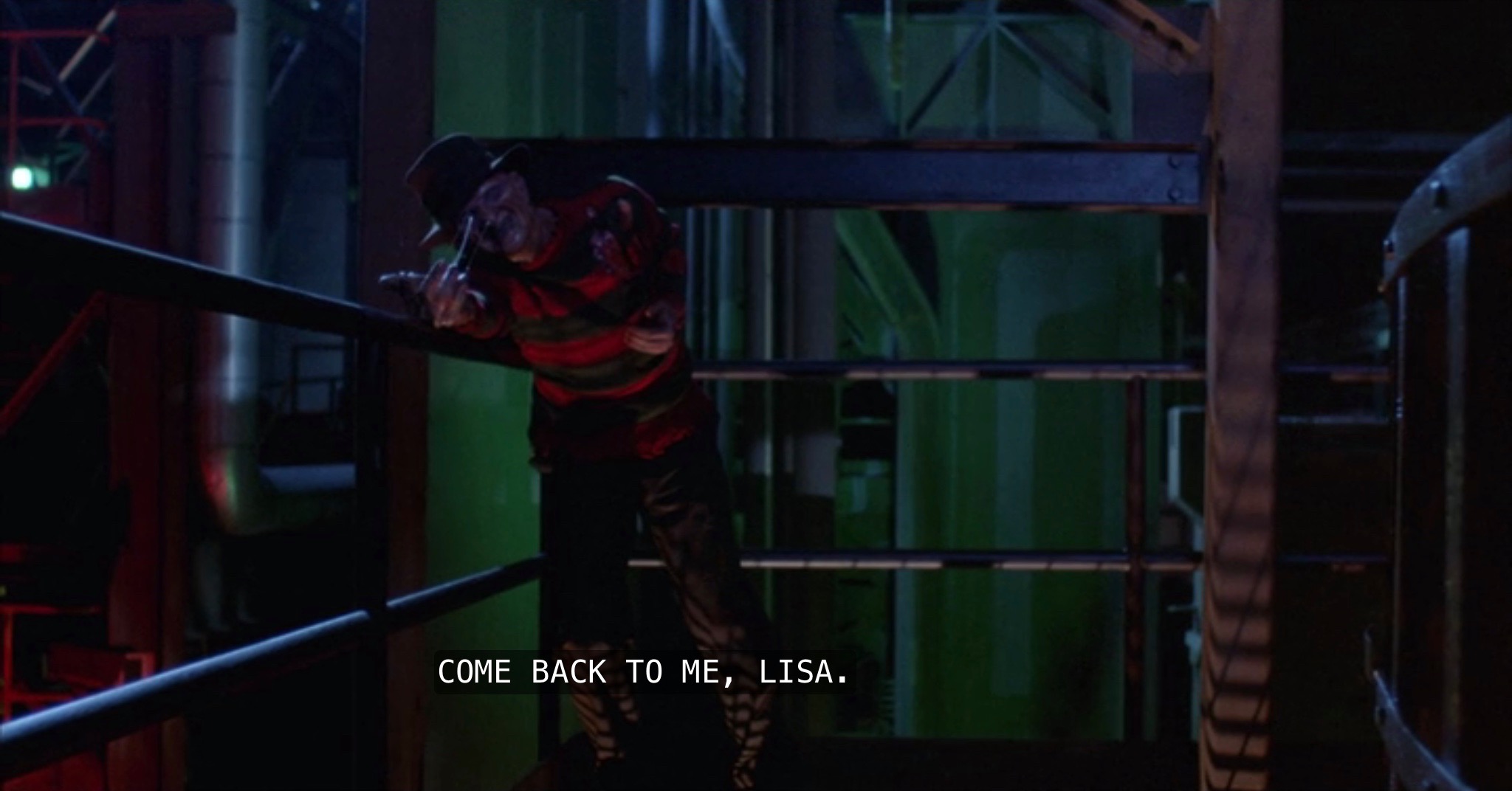
This is where Lisa tries to get Jesse to fight Freddy’s control over him. In fact, we can hear Jesse sometimes and it’s clear that Freddy hasn’t destroyed Jesse quite yet. Or you can read this as reparative therapy with Lisa trying to call Jesse back to being straight. Even going so far as to kiss him because that’s never used in films to draw characters back from the dark side in a movie.

IMG_8543

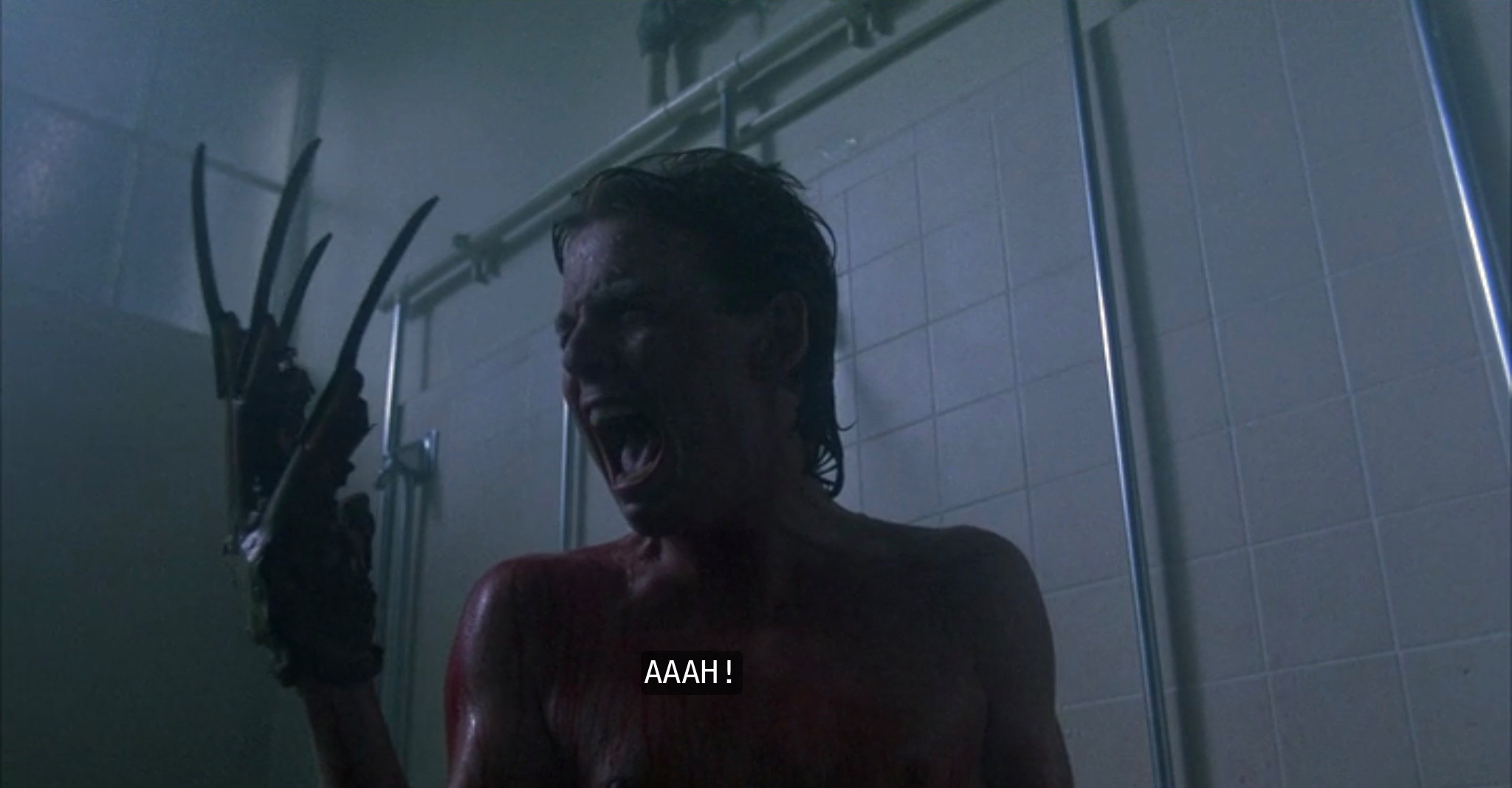
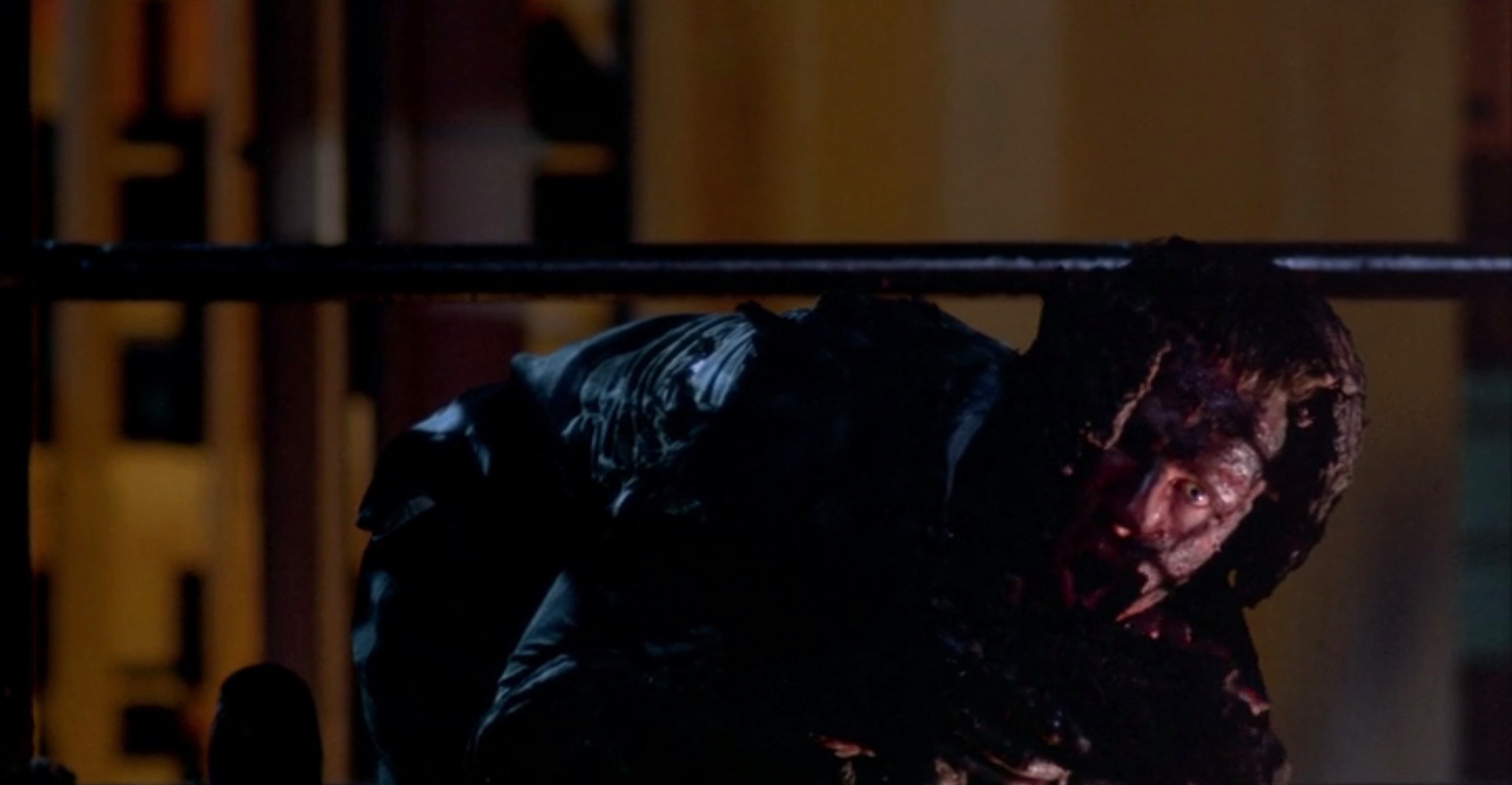
Then we get the ending of Ghostbusters (1984) in that Jesse emerges from the charred outer skin of Freddy. And then that little bit at the end of the movie just in case we weren’t sure that they were going to make more of these movies.

IMG_8564

And I’m sure you can read this the way you can the ending of Taxi Driver (1976) in that Jesse has only resolved this episode, but hasn’t dealt with the real issue. And I’m just coming up with these things off the top of my head without actually referring to anyone else’s posts.

As a follow up to the original, I like it. They tried to do something different that still drew from the source material. I really did like Mark Patton’s performance in this.

As a horror movie in general. It’s not really scary in the traditional sense. You don’t perceive something or someplace as now being dangerous and a source of fear like a regular horror movie does. In that sense, it’s actually even scarier because Jesse does nothing, but is simply taken over just because. Near the end of last year my brain turned on me and I wound up in the emergency room. They didn’t know what was wrong with me and sent me home. It took around five days or so to come out of it. While I was in it, among other things, I honestly believed I was trapped in some sort of Matrix-like prison that just looked like reality. I kept looking for anything that could be a flaw in what my brain kept telling me wasn’t real. It’s an absolutely terrifying thing.

As for the supposed gay subtext in the movie. It’s just not there. You can add up all the scenes you want and apply any meanings you want to them, but it doesn’t means it’s there. I’m transgender and Terminator 2: Judgement Day (1991) meant something to me as a kid. It doesn’t mean that the scenes where Robert Patrick is seen having transformed into a woman didn’t strike a note in me because they did. But it doesn’t mean that there is transgender subtext in it or anything that happens to have shapeshifting between genders. So please don’t take what I said as trying to take away something that might be special to you. I have no desire to do that. It’s just that you are reading your own meaning into it, not one that was hidden away and discovered by you.

Now I need to get back to something less serious. I’m in the middle of the first Mostly Ghostly movie and it’s not as stupid so far, but pretty close.

4 Shots From 4 Films: Wes Craven Edition


Today is the birthday of one of the masters of horror. So, here’s wishing Wes Craven a happy birthday.

Now, go out there and check out his films. Here’s a four to try out. It’s got voodoo, a thing from the swamp, a street full of nightmares and, the one that started him off, the very last house on the left.

4 SHOTS FROM 4 FILMS

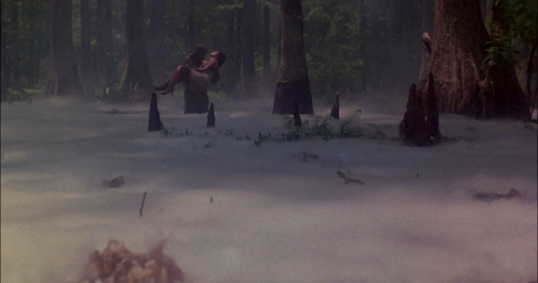
Swamp Thing (dir. by Wes Craven)

Swamp Thing (dir. by Wes Craven)

A Nightmare on Elm Street (dir. by Wes Craven)

A Nightmare on Elm Street (dir. by Wes Craven)

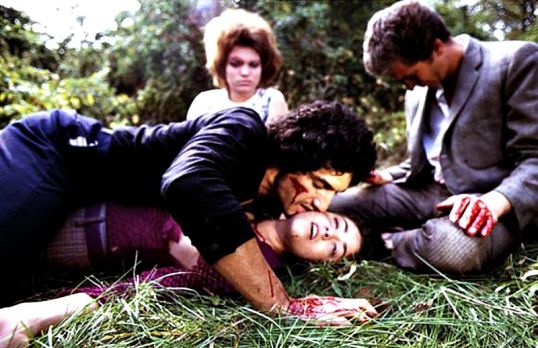
The Last House on the Left (dir. by Wes Craven)

The Last House on the Left (dir. by Wes Craven)

Embracing the Melodrama Part II #49: Hustle (dir by Robert Aldrich)


HustleContinuing our journey into the dark Hell of the 1970s, we now take a quick look at the 1975 cop film, Hustle.

Taking place in Los Angeles, Hustle tells the story of several different people who find their lives intertwined in the desperate dance of existence.  (Does that sound overdramatic?  Well, that’s the type of film that this is.)

There’s Leo Sellers (Eddie Albert), a lawyer with bright rosy cheeks and a friendly manner.  You look at Leo and you automatically assume that he must be a nice guy, the type of guy who puts on a fake beard and plays Santa Claus down at the local orphanage.  But actually, Leo is a lawyer for the mob.  He’s gotten rich through crime and his mansion hides all sorts of secrets.  He also has a weakness for violently abusing prostitutes.

Speaking of prostitutes, one of Leo’s favorite is Nicole (Catherine Deneuve), an icy French beauty who survives by holding the world at a distance.  Though Nicole doesn’t like Leo, she has to keep him happy because Leo could easily arrange for her to be deported back to France.

Nicole is also the girlfriend of Phil Gaines (Burt Reynolds), a cynical homicide detective who, like her, tries to keep the world at a distance.  Phil is obsessed with old films and frequently speaks of how much he wishes the real world could be like a movie.  Throughout the film, he talks about eventually moving to Rome.

Phil’s partner is Louis Belgrave (Paul Winfield), who is not quite as cynical as Phil but who is definitely getting there.  Whereas Phil is always talking about how much the world has disappointed him, Louis mostly accepts things without complaint.  He just wants to do his job and go home at the end of the day.

Phil and Louis’s boss is Santoro (Ernest Borgnine, giving a typical Ernest Borgnine performance).  Santoro is not a bad guy but, in order to hold onto his job, he has to keep powerful men like Leo Sellers happy.

Santoro also has to deal with the complaints of people like the Hollingers.  Marty Hollinger (Ben Johnson) is a veteran of the Korean War and handles the world in a gruff and suspicious manner.  Paula (Eileen Brennan) is Marty’s wife and, as a result of his emotional distance, has recently started having an affair.

And then there’s Gloria (Colleen Brennan), Marty and Paula’s daughter.  Gloria ran away from home a while ago and soon found herself working as a stripper, a porn actress, and eventually as a prostitute.  When Gloria is found dead, Phil and Louis get the case.  It’s obvious to them that Gloria committed suicide.  It’s not so obvious to Marty, who is convinced that his daughter was murdered and, disgusted by Phil’s cynical attitude, sets out to investigate the case on his own.

One of the more interesting things about Hustle is that really is no murder mystery.  Despite what Marty believes, Gloria really did commit suicide.  Marty’s insistence that she was murdered has more to do with his guilt over being a bad father than it does with any real evidence.  As Marty investigates his daughter’s life, he is exposed to a sordid world of strip clubs and prostitution.  He discovers that Gloria’s clients included many powerful men and he decides that the last client she saw must have murdered Gloria.

That client is Leo Sellers.  And while Leo may not have murdered Gloria, he is willing to kill Marty to keep his secret life from being exposed.  Phil and Louis are forced to choose between remaining detached or protecting Marty from himself.

And, since this film was made in the 70s, it all ends on a really dark note!

Hustle shows up on Encore occasionally.  It’s a strange film to watch, as it alternates between being a fairly predictable cop film and being a portrait of existential dread.  The movie doesn’t really work; it’s too long, it features some amazingly pretentious dialogue, and Reynolds, Winfield, and Deneuve all seem to be bored with their characters.  Probably the film’s best performance comes from Ben Johnson.  I imagine that has to do with the fact that Johnson is playing the only character who behaves in a fairly consistent way.

And yet, if you’re like me and you’re fascinated with the nonstop fatalism of 70s cinema, Hustle does have some historical value.  It’s one of those films that you watch and you wonder how anyone survived the 1970s!

Film Review: Freddy Vs. Jason (dir. by Ronny Yu)


(This review probably contains what some people would consider to be spoilers.)

Today, as part of my continuing series reviewing the films of the Friday the 13th franchise, I take a look at Freddy Vs. Jason.

After spending 15 years in development Hell, the film Freddy Vs. Jason was finally released in 2003.  With this film, New Line Cinema brought together the stars of their two best-known horror franchises, Jason Voorhees (played here not by Kane Hodder but by Ken Kirzinger) and Freddy Krueger (Robert Englund.) 

During the time that Freddy Vs. Jason was languishing in development Hell, a huge number of potential storylines were pursued and a lot of scripts were written.  Some of those scripts are surprisingly good and one of them (the one with the enviromental message) is hilariously self-important.  Most of them are just terrible and can be found online via a google search.  The main problem was how to convincingly bring both Jason and Freddy together when the two of them essentially epitomized two radically different subsets of the slasher genre.  Especially when compared to some of the other ideas that were considered, the concept behind FreddyVs. Jason is actually pretty clever.

As the film starts, Freddy is trapped in Hell because he’s been forgotten by the teenagers of the world.  They’re no longer scared of him and, as such, they’re not having nightmares about him.  Freddy’s solution?  He tracks down Jason (also hanging out in Hell and having dreams that neatly parody his whole image of being a murderous defender of purity) and, by disguising himself as Pamela Voorhees, he convinces Jason to resurrect himself in Freddy’s old hometown.  Jason promptly starts killing teenagers and Freddy is blamed.  Soon, people are having nightmares and Freddy has his gateway back into the real world.  Unfortunately for Freddy, Jason keeps killing everyone before Freddy can get to them.  Freddy sets out to kill Jason and it all leads to one “final” battle between the two of them.

I have to admit that when I first saw Freddy Vs. Jason, I didn’t care much for it.  Of course, at that point in my life, my view of whether or not a film was good or bad was largely based on the type of night I was having when I saw it.  I saw Freddy Vs. Jason with a guy who 1) thought proper date attire was shorts, a t-shirt, and a baseball cap and 2) who apparently thought my right breast was just an armrest there for him to lean on whenever he got bored.  Bleh.  Beyond the company that I saw the film with, I was also upset that the character I most related to, Katharine Isabelle’s Gibb, was rather brutally killed off while boring old Monica Keena was allowed to survive.  My initial response to Freddy Vs. Jason was that it had to be bad film because I had a bad time while I was watching it.

However, I recently rewatched it again with my BFF Evelyn (who always dresses up and is pretty good about not feeling me up every three minutes) and I actually enjoyed Freddy Vs. Jason a bit more the second time around.  I think it also helped that, in between the two viewings, I got a chance to see all the other Friday the 13th and Nightmare on Elm Street films along with a lot of other horror films and was now able to see how scenes that seemed pointless the first time around were actually meant to comment on the history and the conventions of both the Friday the 13th and Nightmare on Elm Street franchises.  The 2nd time around, I could better appreciate the perverse parody at the center of Robert Englund’s performance as Freddy Krueger.  While the human characters are never all that interesting, the “final” battle between Jason and Freddy is genuinely exciting.  When I first saw it, I thought that the film’s final scene (with Freddy’s decapitated head winking at the camera before laughing) was incredibly stupid but now I appreciate it for what it is — a deliberately campy homage to the over the top exploitation films of the 70s and 80s. 

As opposed to the previous few films in the Friday the 13th franchise, Freddy vs. Jason was a huge box office success.  It was the first (and, come to think of it, only Friday the 13th film) that I saw in an actual theater and it actually did give me nightmares (mostly because I foolishly chose to relate to the obviously doomed Katharine Isabelle).  With that type of success, it was inevitable that there would be another film in both the Friday the 13th and Nightmare on Elm Street franchises.  Those two films, however, would not be sequels.  Instead, they would be (bleh) reboots.  We’ll take a look at the reboot of Friday 13th (and finish off this series of reviews) tomorrow.