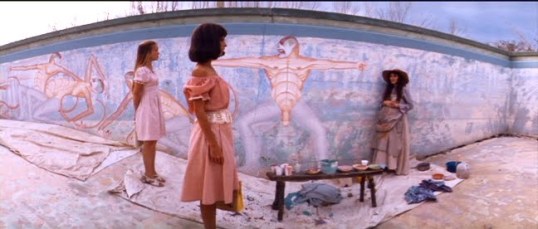
Icarus File No. 18: Brewster McCloud (dir by Robert Altman)


First released in 1970, Brewster McCloud takes place in Houston.

A series of murders have occurred in the city.  The victims have all been older authority figures, like decrepit landlord Abraham Wright (Stacy Keach, under a ton of old age makeup) or demanding society matron Daphne Heap (Margaret Hamilton, who decades earlier had played The Wicked Witch in The Wizard Of Oz).  The victims all appear to have been killed by strangulation and all of them are covered in bird droppings.  Perplexed, the Houston authorities call in Detective Frank Shaft (Michael Murphy) from San Francisco.  Shaft only wears turtlenecks and he has piercing blue eyes.  He looks like the type of guy you would call to solve a mystery like this one.  It’s only later in the film that we discover his blue eyes are due to the contact lenses that he’s wearing.  Frank Shaft is someone who very much understands the importance of appearance.  As one detective puts it, when it comes to Shaft’s reputation, “The Santa Barbara Strangler turned himself in to him.  He must have really trusted him.”

Perhaps the murders are connected to Brewster McCloud (Bud Cort), who lives in a bunker underneath the Astrodome and who seems to be fascinated with birds.  Brewster dreams of being able to fly just like a bird and he’s spent quite some time building himself a set of artificial wings.  A mysterious woman (Sally Kellerman) who wears only a trenchcoat and who has scars on her shoulder blades that would seem to indicate that she once had wings continually visits Brewster and encourages him to pursue his dream.  However, she warns him that he will only be able to fly as long as he remains a virgin.  If he ever has sex, he will crash to the ground.

Brewster thinks that he can handle that.  Then he meets a tour guide named Suzanne Davis (Shelley Duvall, in her film debut) and things start to change….

Brewster McCloud is a curious film.  The story is regularly interrupted by a disheveled lecturer (Rene Auberjonois) who is very much into birds and who, over the course of the film, starts to more and more resemble a bird himself.  The film is full of bird-related puns and there are moments when the characters seem to understand that they’re in a movie.  Frank Shaft dresses like Steve McQueen in Bullitt and his blue contact lenses feel like his attempt to conform to the typical image of a movie hero.  (A lengthy car chase also feels like a parody of Bullitt’s famous chase scene.)  When the old woman played by Margaret Hamilton dies, the camera reveals that she’s wearing ruby slippers and a snippet of Somewhere Over The Rainbow is heard.  As played by Bud Cort, Brewster is the perfect stand-in for the lost youth of middle class America.  He knows that he’s rebelling against something but he doesn’t seem to be quite sure what.  Brewster, like many idealists, is eventually distracted by his own desires and his once earnest plans come cashing down.  Brewster becomes an Icarus figure in perhaps the most literal way possible, even if he doesn’t come anywhere close to reaching the sun.  As with many of Altman’s films, Brewster McCloud is occasionally a bit too esoteric for its own good but it’s always watchable and it always engages with the mind of the viewer.  One gets the feeling that many of the film’s mysteries are not necessarily meant to be solved.  (Altman often said his best films were based on dreams and, as such, used dream logic.)  With its mix of plain-spoken establishmentarians and quirky misfits, Brewster McCloud is not only a classic counterculture film but it’s also a portrait of Texas on the crossroads between the cultures of the past and the future.

Though it baffled critics when it was released, Brewster McCloud has gone on to become a cult film.  It’s a bit of a like-it-or-hate-it type of film.  I like it, even if I find it to be a bit too self-indulgent to truly love.  Quentin Tarantino, for his part, hates it.  Brewster McCloud was released in 1970, the same year as Altman’s Oscar-nominated M*A*S*H.  (Both films have quite a few cast members in common.)  Needless to say, the cheerfully and almost defiantly odd Brewster McCloud was pretty much ignored by the Academy.

Previous Icarus Files:

  1. Cloud Atlas
  2. Maximum Overdrive
  3. Glass
  4. Captive State
  5. Mother!
  6. The Man Who Killed Don Quixote
  7. Last Days
  8. Plan 9 From Outer Space
  9. The Last Movie
  10. 88
  11. The Bonfire of the Vanities
  12. Birdemic
  13. Birdemic 2: The Resurrection 
  14. Last Exit To Brooklyn
  15. Glen or Glenda
  16. The Assassination of Trotsky
  17. Che!

Made-for-TV Movie Review: Nightmare in Chicago (dir by Robert Altman)


Taking place over the course of one very long day and night in December, this 1964 made-for-television movie opens with the discovery of a murdered woman in Indiana.  She is the latest victim of a killer that the press has nicknamed “Georgie Porgie.”

Georgie Porgie, who has killed five blondes in the Midwest, is actually a nondescript man named Myron Ellis (Philip Abbott).  Myron is middle-aged, short, and fairly normal-looking.  That, along with the fact that he’s always moving, is one reason why he has yet to be captured.  The only thing that really stands out about Myron is that, due to a medical condition, he is extremely sensitive to light and always wears dark glasses, even at night.  When Myron isn’t murdering someone or stealing a car, he’s haunted by the voice of his dead sister.

Because he is a nomadic killer, the authorities in Chicago are worried that Myron is coming to their town next and it turns out that they’re correct.  Myron is already in Chicago and he’s looking for his next victim.  In a rather disturbing scene, he strangles a woman that he meets at a strip club, managing to do so without any of the many people around them even noticing.  Myron wanders up and down the streets of Chicago, looking for his next victim.  With his polite manners and his bland appearance, no one suspects that the polite man on the street corner is actually a murderer.

Police Commissioner Lombardo (Ted Knight) and Detectives McVea (Robert Ridgley) and Brockman (Charles McGraw) decide that the best way to catch the killer would be to set up a dragnet on the highway, stopping cars and shining flashlights at the drivers to see who has the weakest eyes.  The only problem is that there is also a nuclear missile convoy scheduled to move through the city at the same time.  With the highways congested and the killer not above wrecking his own car to throw the police off his trail, Lombardo tries to both capture the killer and make sure nothing happens to the convoy.

Nightmare In Chicago is a short and efficient thriller.  It’s well-acted and rather serious in its approach.  Especially when compared to more recent films with similar plots, Nightmare In Chicago deserves some credit for not trying to turn its serial killer into some sort of diabolical mad genius.  Myron, like all serial killers in real life, is a maladjusted and rather stupid person who has only gotten away with his crimes due to pure luck.  He’s not a Hannibal Lecter-style supergenius.  Instead, he’s just a creep who has many, many issues.  The film also does a good job of capturing the manic energy and eventual exhaustion of pulling an all-nighter.  It’s an effective little film with a memorably sordid story.

For modern audiences, probably the most interesting thing about Nightmare in Chicago is that it was directed by Robert Altman and was, in fact, his second non-documentary film after The Delinquents.  At the time he made this film, Altman was largely working in television.  Nightmare In Chicago was one of the first made-for-TV movies and it was a ratings and critical success.  Seen today, it’s easy to spot Altman’s trademark attention to detail in the film.  While it’s far more straight-forward than the majority of his feature films, Nightmare in Chicago still displays the talent that eventually led to Robert Altman become one of Americas most important filmmakers.

Song of the Day: 200 Years by Henry Gibson


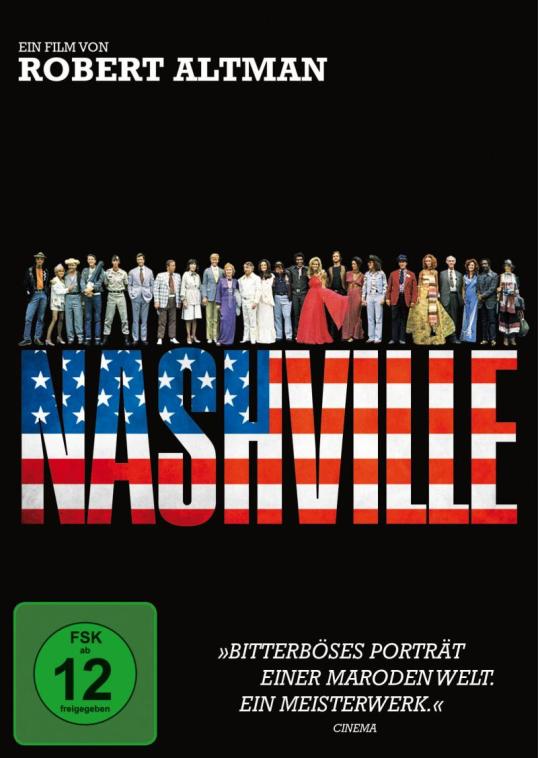
Today’s song of the day comes from the soundtrack of Robert Altman’s 1975 masterpiece, Nashville.

Written and performed by Henry Gibson (who played the role of Haven Hamilton in Altman’s film), 200 Years was meant to be a satire of patriotic country music.  But apparently, Gibson did such a good job capturing the feel of those songs that several patriotic singing groups actually added 200 Years to their repertoire.

Myself, I find the song to be just as heavy-handed in its satire as the song itself is meant to be heavy-handed in its patriotism.  But, perhaps that’s the point.  It’s definitely effective in its way and it certainly fits in with Altman’s stylized portrayal of American culture.  I guess this song is a real Rorschach test.  Some will see it as a commentary on jingoism.  Others will hear it and say, “He’s right, we must be doing something right.”

My mother’s people came by ship
And fought at Bunker Hill
My daddy lost a leg in France
I have his medal still
My brother served with Patton
I saw action in Algiers
Oh we must be doin’ somethin’ right
To last 200 years.‎

I pray my sons won’t go to war
But if they must, they must
I share our country’s motto
And in God I place my trust
We may have had our ups and downs
Our times of trials and fears
But we must be doin’ somethin’ right
To last 200 years.‎

I’ve lived through two depressions
And seven Dust Bowl droughts
Floods, locusts and tornadoes
But I don’t have any doubts
We’re all a part of history
Why Old Glory waves to show
How far along we’ve come ’til now
How far we’ve got to go.‎

It’s been hard work but every time
We get into a fix
Let’s think of what our children faced
In two – ought – seven – six
It’s up to us, to pave the way
With our blood and sweat and tears
For we must be doin’ somethin’ right
To last 200 years.‎

Lyrics: Henry Gibson

Film Review: The Delinquents (dir by Robert Altman)


First released in 1957 and filmed on a $63,000 budget in Kansas City, The Delinquents tells the story of Scotty White (Tom Laughlin).

Scotty is eighteen.  He’s not a bad kid.  He’s just a bit directionless and he’s got a slight rebellious streak.  Today, Scotty would not be considered to be that wild of a teenager but, by the standards of 1957, he’s dangerous.  He’s a criminal.  He’s a rebel.  He’s an outsider.  He’s a degenerate.  He’s a delinquent and it doesn’t matter how in love he and 16 year-old Janice (Rosemary Howard) may be, Janice’s parents don’t want Scotty anywhere near their daughter.  She’s too young to date, they say.  Scott’s got a bed reputation, they say.  Scotty is set to soon leave for college and he’s got his entire future ahead of him.  But it doesn’t seem like much of a future without Janice as a part of it.

Poor guy!  Is it any surprise that he ends up hanging out with two legitimate delinquents, Cholly (Peter Miller) and Eddy (Richard Bakalyan)?  At first, Cholly and Eddy seem like great friends to have.  They even come up with a scheme to allow Scotty to spend some time with Janice.  (The plan doesn’t work, of course.  But it’s the thought that counts.)  However, when the police show up to bust a wild delinquent party, Cholly and Eddy suspect that Scotty might be a rat!  When their attempts to get Scotty drunk enough to confess fail, they end up driving a passed out Scotty into the country so they can dump him on the side of the road.  However, they decide to stop to rob a gas station first.  Believe it or not, this leads to even more trouble.

It also leads to the question of why they couldn’t have waited to rob the gas station until after they got Scotty out of the car.  Watching The Delinquents, I came to suspect that many of the characters just weren’t that smart.  Seriously, how difficult is it to be a delinquent in Kansas City?  But as dumb as Cholly and Eddy were, Scotty was even dumber because he continually got outsmarted by the both of them.  Maybe Janice’s parents had a point about him….

The Delinquents is pretty much a standard youth-in-trouble exploitation film, one that owes more than a little bit of debt to Rebel Without A Cause.  The main reason why anyone would watch the film is because it was not only the directorial debut of Robert Altman but also the acting debut of Tom “Billy Jack” Laughlin.  And let’s give credit where credit is due.  Though I doubt either one of them would have claimed this film as an example of their best work, there is some obvious talent to found in The Delinquents.  Laughlin gives an appealing performance, even though Scotty’s an idiot.  And Altman keeps the action moving and even manages to come up with some visually striking sequences, like the opening jazz performance and the “wild” delinquent party.  Viewed today, The Delinquents is an interesting preview of what was to come for both Altman and Laughlin.  Though the plot is nothing special and it’s hard not to laugh at the portentous narration (which was apparently added by the studio and without Altman’s knowledge), The Delinquents is an energetic exploitation film and a reminder that even Kansas City had its mean streets.

Scenes That I Love: The I’m Easy Scene From Robert Altman’s Nashville


Since today would have been Robert Altman’s 100th birthday, it only seems right that today’s song of the day should come from his best film.  In this scene from 1975’s Nashville, Keith Carradine sings I’m Easy as Altman’s camera finds each of his lovers in the audience, all convinced that Carradine is singing expressly to them.

This song won Nashville it’s only Oscar.  It also made Keith, who wrote the song, the only Oscar winner amongst the fabled Carradine family.


4 Shots From 4 Films: Special Robert Altman Edition


4 Shots From 4 Films is just what it says it is, 4 shots from 4 of our favorite films. As opposed to the reviews and recaps that we usually post, 4 Shots From 4 Films lets the visuals do the talking!

Today, we celebrate what would have been the 100th birthday of the great director, Robert Altman!  It’s time for….

4 Shots From 4 Robert Altman Films

MASH (1970, dir by Robert Altman, DP: Harold E. Stine)

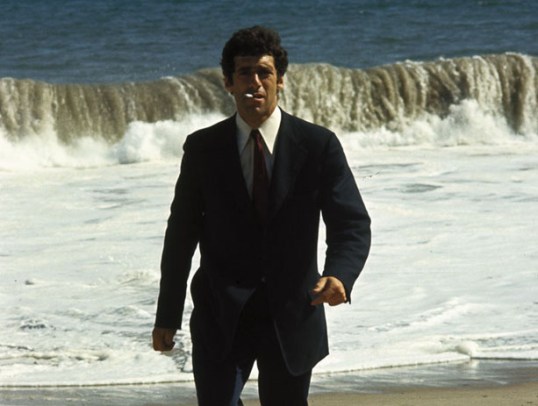
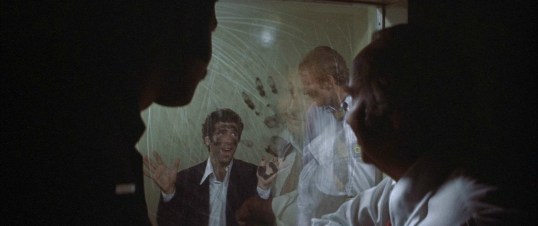
The Long Goodbye (1973, dir by Robert Altman, DP: Vilmos Zsigmond)

Nashville (1975, dir by Robert Altman, DP: Paul Lohmann)

3 Women (1977, dir by Robert Altman, DP: Charles Rosher, Jr.)

4 Shots From 4 Films: Special Robert Altman Edition


4 Shots From 4 Films is just what it says it is, 4 shots from 4 of our favorite films. As opposed to the reviews and recaps that we usually post, 4 Shots From 4 Films lets the visuals do the talking!

Today, we celebrate what would have been the 99th birthday of the great director, Robert Altman!  It’s time for….

4 Shots From 4 Robert Altman Films

The Long Goodbye (1973, dir by Robert Altman, DP: Vilmos Zsigmond)

Nashville (1975, dir by Robert Altman, DP: Paul Lohmann)

3 Women (1977, dir by Robert Altman, DP: Charles Rosher, Jr.)

Short Cuts (1993, dir by Robert Altman, DP: Walt Lloyd)

Late Night Retro Television Reviews: Gun 1.6 “Father John”


Welcome to Late Night Retro Television Reviews, a feature where we review some of our favorite and least favorite shows of the past!  On Tuesdays, I will be reviewing Gun, an anthology series that ran on ABC for six week in 1997.  The entire show is currently streaming on Tubi!

Tonight, we finish up Gun!

Episode 1.6 “Father John”

(Dir by Jeremiah S. Chechik, originally aired on May 31st, 1997)

Father John, the final episode of Gun, is also one of its worse.  The only thing keeping it from being the absolute worst is that Robert Altman directed that episode that dealt with the country club presidency and then there was that episode with Daniel Stern as the guy having an elaborate Hollywood fantasy and, of course, there was last week’s episode with Kirsten Dunst…. actually, now that I think about it, of the six episodes of Gun that were produced, Father John is in the top 3 but only by default.

The episode stars Fred Ward as John Farragut, a newspaper columnist who is also a recovering alcoholic and who is always struggling to keep up with his alimony payments to his ex-wife, Joyce (Brooke Adams).  John doesn’t have much faith in the world but he has always worshiped his Uncle John, a priest for whom he was named.  When Uncle John dies, nephew John is shocked to discover that his uncle not only died with a lot of money hidden away in his room but that he also owned the pearl-handled gun that appears in every episode of this series.  What secrets were being hidden by Uncle John!?

Nephew John sets out to find out.  At first, he assumes that his Uncle must have been having an affair with a woman named Gloria (Angela Alvarado) but he then comes to learn that Gloria (whose real name is Gabriella) is a refugee who was rescued from a sex trafficking ring by his uncle.  Uncle John had the gun to protect Gabriella and now, it’s time for his nephew to continue to protect her.

It sounds pretty straight-forward and, to be honest, there really aren’t any unexpected twists in this episode.  That said, the episode itself is incredibly overwritten.  We not only get to watch as living John tries to solve a very simple mystery but, even worse, we have to listen to his narration as he tells us the details of what he’s doing.  Of course, we can already see what he’s doing so it all feels a bit redundant.  The narration itself is so hard-boiled that it feels almost like a parody of the detective genre and I found myself wondering why anyone would want to read anything written by a man whose narration is essentially a collection of clichés.  John Farragut is the type of guy who says, “If you sleep with dogs, you wake up with fleas,” as if he think he’s the first person to ever come up with it.  Surprisingly, Fred Ward is very much miscast as John Farragut.  With his weathered face and his weary tone, it’s hard to buy Ward as someone who 1) still hero-worships anyone and 2) would still be crying about having never met his father.  Farragut appears to be nearly 50 and he’s still whining about stuff that most people get over or have figured out by the time they graduate college.  Farragut’s actions often only make sense if you accept that idea that he is impossibly naïve about the world and that’s not the feeling one would ever get from a character played by Fred Ward.

With this episode, Gun ends on a boring note but, then again, it was never a particularly exciting series to begin with.  For all the notable actors who appeared in Gun, it’s hard to think of any stand-out episodes or performances.  If I had to rank the episodes, it would go something like this:

  1. Ricochet 
  2. Columbus Day
  3. Father John
  4. The Hole
  5. The Shot
  6. All The President’s Women

That’s not a very impressive list, to be honest.  Gun perhaps would have worked better if there had been some sort of continuity as far as the gun itself was concerned.  Perhaps the show would have worked if there had been a feeling of the gun following a natural journey from owner to owner.  Instead, it just randomly showed up in each story and sometimes, it was important and, far more often, it was just a prop.  The show certainly had nothing to say about American gun culture.  It was an uneven show.  The opening credits featured U2 covering Happiness Is Warm Gun and Bono’s overbaked interpretation of the lyrics felt appropriate for this show’s flashy but shallow style.

Next week, there will be a new show in this time slot.  What will it be?  Uhmmmm …. ask me next week.

Late Night Retro Television Reviews: Gun 1.5 “The Hole”


Welcome to Late Night Retro Television Reviews, a feature where we review some of our favorite and least favorite shows of the past!  On Tuesdays, I will be reviewing Gun, an anthology series that ran on ABC for six week in 1997.  The entire show is currently streaming on Tubi!

This week, the gun ends up at the bottom of a swimmin’ hole!

Episode 1.5 “The Hole”

(Dir by Ted Demme, originally aired on May 24th, 1997)

Yep, this episode of Gun centers around an old country swimming hole.  Every day, teenage Sondra (Kirsten Dunst) and her younger brothers, Brendan (Drake Bell) and Tad (Joe Pichler), head down to the Hole.  For Sondra, swimming in the Hole is a chance to escape from her life of living in a trailer park with her trashy mother (Carrie Fisher) and her pervy stepfather (Cliff Bemis).  For Brendan and Tad, going to the Hole is a chance to look for the treasure that they are convinced is at the bottom of the water.  It is true that there is something shiny in the Hole.  Sondra thinks that it might be the diamonds that she could use to finance an escape from the trailer park and a one-way trip down to Florida.  Actually, it’s the pearl-handled gun that’s been at the center of every episode of Gun.

(In this episode, it’s suggested that the gun has been at the bottom of the hole for over a year.  So, how did it end up in that town in the first place?  Is this episode taking place before or after the previous episodes?  I guess the simple solution is that it’s not the same gun as the gun seen in the previous episodes but the part of me that loves continuity is having a hard time accepting that.)

The gun belonged to James Munday (Johnny Whitworth), who has only recently been released from prison.  He was convicted of murdering his girlfriend and only the fact that he was a minor at the time kept him from being given a life sentence.  James claims that his girlfriend died as a part of a failed suicide pact and he’s convinced that the gun in the Hole can prove his innocence.

When James and Sondra meet, it doesn’t take long for them to fall for each other.  Sondra remains James of his dead girlfriend and Sondra, like of all of us, is attracted to brooding rebels.  However, when the rest of the town hears that James has been going to the Hole, a lynch mob is formed.  Dick Sproule (Max Gail), the father of the girl that James was convicted of killing, is soon at the Hole with a rifle in his hands.  Can James prove his innocence and will the town even care?

This episode was extremely overwrought and it featured every flaw that tends to turn me off of anthology shows in general.  All of the characters were broadly drawn.  The dialogue was way overwritten.  Director Ted Demme told the story with a heavy-hand and used slow motion as if he was under the impression that he was the first director to ever consider heightening the drama by slowing things down.  The whole thing just felt like a bad creative writing assignment.  Out of the cast, only Kirsten Dunst was able to really create a character who felt as if she had a life outside of the demands of the story.  Everyone else seemed to be a caricature.  In the end, James may have been a hot, brooding rebel but he was also kind of whiny.  That got old pretty quickly.

*Sigh*  Well, that’s another disappointing episode of Gun for you!  Next week, I’ll be reviewing the series finale.  Hopefully, this show will at least end on a worthwhile note.

Late Night Retro Television Reviews: Gun 1.4 “All The President’s Women”


Welcome to Late Night Retro Television Reviews, a feature where we review some of our favorite and least favorite shows of the past!  On Tuesdays, I will be reviewing Gun, an anthology series that ran on ABC for six week in 1997.  The entire show is currently streaming on Tubi!

This week, Robert Altman!  This will be good …. right?

Episode 1.4 “All The President’s Women”

(Dir by Robert Altman, originally aired on May 10th, 1997)

When it comes to the fourth episode of Gun, I have to admit that my expectation were high because this episode was the only one in the series to be directed by Gun’s producer, Robert Altman.  The story, about the womanizing president of a golf club, sound like it would be right up Altman’s alley and allow him to engage in the social satire for which he was best-known.

Unfortunately, the episode itself just isn’t that good.  In fact, it’s the worst episode of Gun that I’ve seen so far.  Watching the show, it’s easy to see that Altman directed it.  There’s several very Altman-like moments.  The show’s plot and its characters all tend to mirror Altman’s trademark obsessions.  That said, for all of Altman’s strengths as a filmmaker and a satirist, he was also a bit self-indulgent and this episode is basically 50 minutes of Altman patting himself on the back and bragging about how clever he is.

The film takes place at a golf club in Texas.  After the club’s president is bitten by a rattlesnake and then accidentally shoots himself in the foot while trying to kill the snake, Bill Johnson (Randy Quaid) is elected as his replacement.  Bill is friendly but shallow, a businessman who is all about prestige and showing off his wealth.  While his wife (Daryl Hannah) spends her time researching real-life presidents, Bill is having an affair with the former’s president’s widow (Jennifer Tilly) while also flirting with his new secretary (Dina Spybey).  Meanwhile, another former lover (Sean Young) is now his attorney while Sally Kellerman plays Jennifer Tilly’s mother and continually warns Bill to stay away from her daughter.

Bill is shocked to discover that someone is sending packages to the women in his life.  Jennifer Tilly receives the gun that was used to shoot the rattlesnake.  Darryl Hannah receives the magazine.  Sean Young receives the bullets.  If you can’t already guess that this is going to end up with Bill in his underwear on the 18th hole, being menaced by a woman carrying a gun, I don’t know what to tell you.

This episode just falls flat and it’s largely the fault of the cast.  Randy Quaid, at the very least, has a Texas accent but he’s not a convincing lothario.  The women all butcher their accents, with the majority of them sounding more like they’re from Georgia than Texas.  Most the cast goes overboard with their quirkiness while Altman directs in a meandering fashion that robs the episode of whatever satirical impact that it might have had.  It’s just a boring episode, regardless on the nails-on-a-chalkboard accents and all the overacting.  Watching this episode, I was reminded of why I usually can’t stand anthology shows.  They just seem to bring out the worst in everyone.

Next week, Kirsten Dunst guest stars.  Did Gun bring out the worst in her?  We’ll find out!