4 Shots From Horror History: The Texas Chainsaw Massacre, Jaws, Carrie, The Omen


This October, I’m going to be doing something a little bit different with my contribution to 4 Shots From 4 Films.  I’m going to be taking a little chronological tour of the history of horror cinema, moving from decade to decade.

Today, we continue with the 70s!

4 Shots From 4 Films

The Texas Chainsaw Massacre (1974, dir by Tobe Hooper)

The Texas Chainsaw Massacre (1974, dir by Tobe Hooper)

Jaws (1975, dir by Steven Spielberg)

Jaws (1975, dir by Steven Spielberg)

Carrie (1976, dir by Brian DePalma)

Carrie (1976, dir by Brian DePalma)

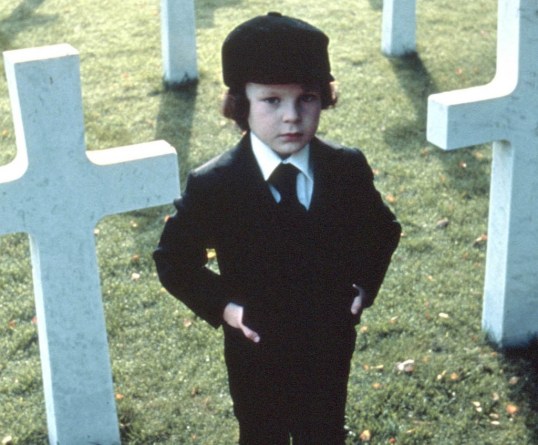
The Omen (1976, dir by Richard Donner)

The Omen (1976, dir by Richard Donner)

Horror On TV: Tales From the Crypt 2.10 “The Ventriloquist’s Dummy”


For tonight’s excursion into the world of televised horror, we have the 10th episode of the 2nd season of Tales From The Crypt!  This episode, which originally aired on June 5th, 1990, is called The Ventriloquist’s Dummy!

Who doesn’t love a creepy ventriloquist story?  And this is certainly a creepy one, with an ending that you’ll either love or hate.

This episode was directed by Richard Donner and written by future Shawshank Redemption director and Walking Dead showrunner, Frank Darabont!

Enjoy!

Horror on TV: The Twilight Zone 5.3 “Nightmare at 20,000 Feet”


TheTwilightZoneLogo


Wow. It’s hard to believe that is going to be my final televised horror of the year. (Though I imagine this feature will return in October of 2016 — just in time for election season!) Well, let’s get right to it!


For our final televised horror, I have selected a classic episode of The Twilight Zone. In Nightmare at 20,000 Feet, William Shatner is a man who, though being scared of flying, finds himself on an airplane. And guess what he sees out on the wing?


This episode was written by one of Arleigh’s favorite writers, the great Richard Matheson. It was directed by Richard Donner and originally aired on October 11th, 1963.


Enjoy Nightmare at 20,000 Feet! And here’s hoping that all of our readers have had a wonderful, safe, and happy Halloween!


Horror Film Review: The Omen (dir by Richard Donner)


The Omen

A few days ago, Arleigh shared the theme song from 1976’s The Omen as Monday’s horror song of the day.  As I sat there and listened to Jerry Goldsmith’s award-winning hymn to Satan, it occurred to me that I happen to have all five of the Omen films sitting in my movie collection.  Seeing as how this is Halloween and how the world seems to be getting closer to ending with each passing day, I decided that this would be the perfect time to rewatch the entire franchise and consider whether or not The Omen films are truly as scary as a lot of people seem to think.

So, that’s what I did.

How did things turn out?

Well, in the long history of sequels and remakes, The Omen franchise is one of the more uneven collections.  This is one of those franchises where things tend to get less impressive with each subsequent entry.  However, 38 years after its initial release, the first Omen remains effective and, in its way, genuinely scary.

If you’re a horror fan, you probably know the general plot of The Omen regardless of whether you’ve actually watched it or not.  It’s one of those films that has been so frequently imitated that it’s almost possible to watch it by osmosis.

The film opens in Rome with diplomat Robert Thorn (Gregory Peck) being rushed to the hospital where his wife, Kathy (Lee Remick), has just given birth.  A priest (Martin Benson) tells him that his son died shortly after being born but that he can always just go home with an orphaned newborn that he just happens to have handy.  Robert agrees and decides not to tell his wife the truth about the child.  Robert and Kathy raise the boy and they name him Damien.  Four years later, the politically ambitious Robert is named as Ambassador to the Court of St. James.

The Thorns move to London and soon, odd things start to happen.  Damien (now played by Harvey Spencer Stephens) is a quiet boy with a piercing stare who throws a fit whenever he’s taken inside of a church.  When Kathy takes Damien to the zoo, they’re attacked by angry baboons.  A large Rottweiler mysteriously appears on the grounds of the Ambassador’s estate.  A mysterious and sinister nanny (Billie Whitelaw) shows up and explains that she’s been sent by an “agency.”  A crazed priest (Patrick Troughton) starts to stalk the Ambassador, demanding a chance to speak with him and insisting that Damien’s mother was actually a jackal.

Even more mysteriously, people start dying in the strangest of ways.  A young woman (Holly Palance) smiles as she shouts, “Damien, it’s all for you!” and then hangs herself, thoroughly ruining Damien’s fifth birthday party.  A freak lightning storm leads to a man being impaled by a weather vane.  Another person who suspects that there might be something wrong with Damien ends up losing his head in a graphic sequence that — even in this age of Hostel and Saw — is difficult to watch.

The Ambassador is contact by Keith Jennings (David Warner), a nervous photographer who fears that Damien may be planning on killing him.  Soon, Thorn and Jennings are flying to Italy and to the Middle East and discovering evidence that five year-old Damien might very well be the Antichrist.  Speaking of Damien, he and that nanny have been left alone with poor, victimized Kathy.

(“Oh, leave her alone,” I muttered as Damien attempted to kill Kathy for the hundredth time…)

As I watched The Omen, I tried to figure out why this film has held up so well.  It certainly wasn’t due to the performance of Gregory Peck who, quite frankly, seemed to mostly be going through the motions.  David Warner, on the other hand, gave such a good performance that it was almost difficult to watch.  (Don’t get attached to any character who appears in an Omen film.)   Some of the film’s effectiveness was undoubtedly due to Jerry Goldsmith’s intense score.  Anything’s scary when you’ve got a hundred voice shouting “Ave Satani” at you.

But, ultimately, I think the reason why The Omen still works is because the film generates such a palpable sense of doom.  This is one of those films that leaves you convinced that anyone can die at any minute and, considering that happens to be true in both this movie and in real life, that makes the horror of The Omen feel very real.  By the time the film ends, you’re left with little doubt that nobody in the film had the least bit of power or control over his or her own destiny.  Instead, they were all just pawns in a game that they had no hope of ever winning or understanding.  Is there anything scarier than feeling powerless?

All I know is that, having rewatched The Omen, I will never look at a plane of glass the same way again.


Horror Song of the Day: Ave Satani (by Jerry Goldsmith)


theomenfeat-1024x847

One cannot think of horror and not bring up Richard Donner’s The Omen. A film made during the turbulent late 1970’s when the world was literally on the brink of ripping itself apart. The Omen was a film that told the tale of the birth of the Anti-Christ which would herald the coming of the Apocalypse. Outside of William Friedkin’s The Exorcist there wasn’t a film during this era which put the fear of God’s Judgment on the faithful than The Omen.

It helped that it’s own film score was determined to hammer the point of it’s blasphemous subject matter by taking one of the most holy rituals in Roman Catholicism and inverting it to praise Satan instead of the Virgin Mary. Jerry Goldsmith took the rite of consecration and came up with what one could call the rite of desecration for a purported Black Mass.

One must say that “Ave Satani” was all the creation of Jerry Goldsmith and a fellow choir-master in London. This was a work of art created to accompany a film that some would label art as well, but for some whose own faith has superseded all thoughts of art appreciation “Ave Satani” was very real and was a real danger to one’s eternal soul.

I will say that it’s an effective use of the Gregorian chant and more than just a tad hair-raising.

Ave Satani

Sanguis bibimus
Corpus edibus
Sanguis bibimus
Corpus edibus
Sanguis bibimus
Corpus edibus
Rolle corpus Satani, ave
Sanguis bibimus
Corpus edibus
Rolle corpus Satani, ave

Ave, ave, versus Christus

Ave Satani
Sanguis bibimus
Corpus edibus
Rolle corpus Satani,
Satani, Satani

Ave, ave, Satani

Horror On TV: Twilight Zone Ep. 123 “Nightmare at 20,000 Feet”


When I first decided to feature old, horror-themed television episodes this month, I knew that I had to include Nightmare At 20,000 Feet.

This is perhaps the most famous episode of Twilight Zone. William Shatner plays a man on an airplane who is both terrified of flying and who has spotted a gremlin out on the wing. As Shatner desperately tries to convince his fellow passengers that he’s not crazy, the gremlin cheerfully goes about his destructive business.

This is one of the few episodes of The Twilight Zone not to have been downloaded onto YouTube and, at first, I was worried that I wouldn’t be able to share it. Fortunately, site subscriber and frequent commenter KO tracked it down on Hulu for me and, as a result, we are very happy to present the classic fright fest Nightmare At 20,000 Feet!

This episode was written by Richard Matheson and directed by Richard Donner, who would later direct such films as The Omen, Superman, and Lethal Weapon. It originally aired on October 11th, 1963.


http://www.hulu.com/watch/440824
(Incidentally, originally an episode of Goosebumps was scheduled to be featured tonight. However, the YouTube account that was hosting that video has been suspended. The episode in question was The House of No Return, which many people believe features an early performance from Ryan Gosling. Having seen the episode before it was taken off YouTube, I can assure you that Ryan was nowhere to be seen.)

Trash Film Guru Vs. The Summer Blockbusters : “Man Of Steel”


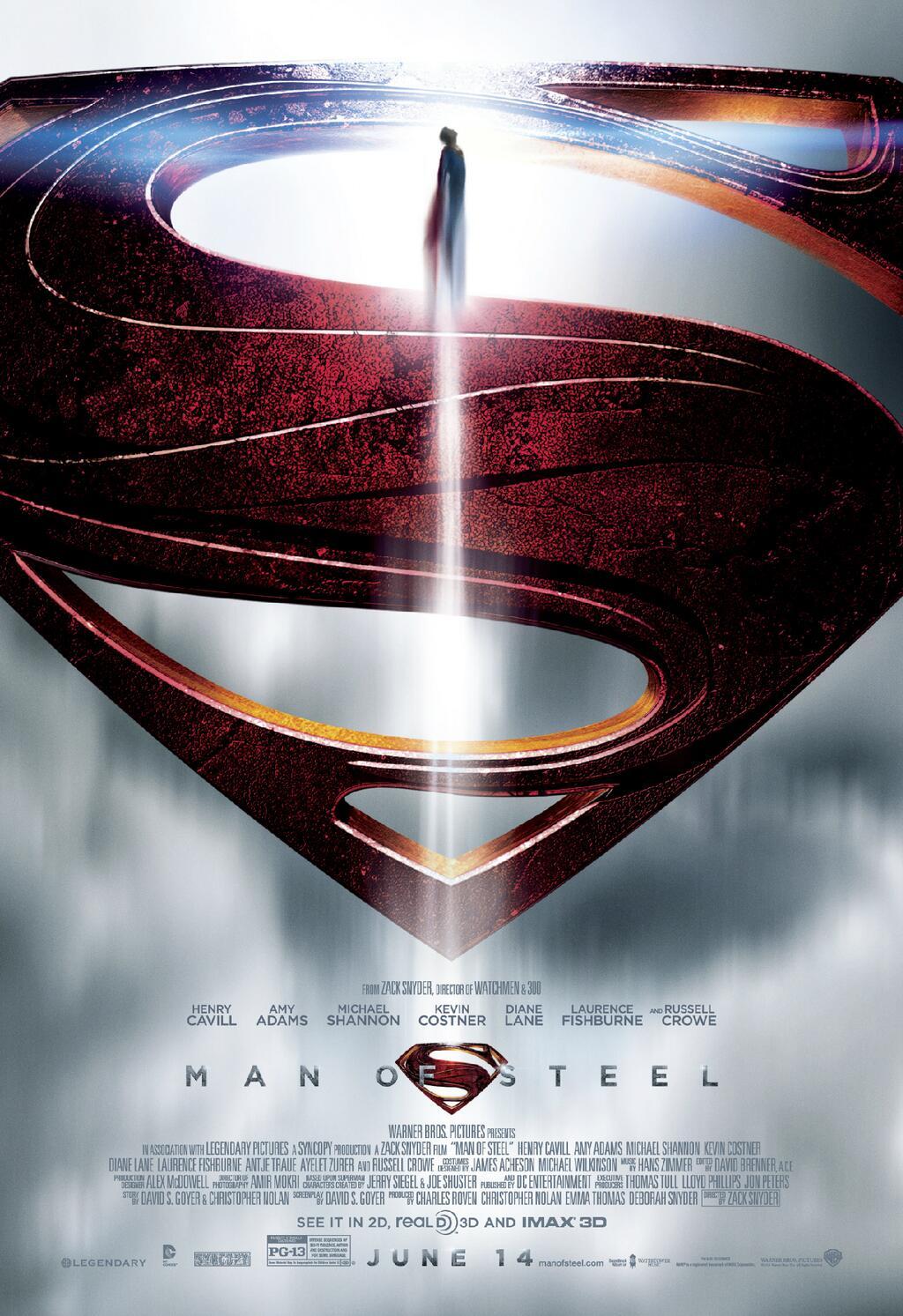
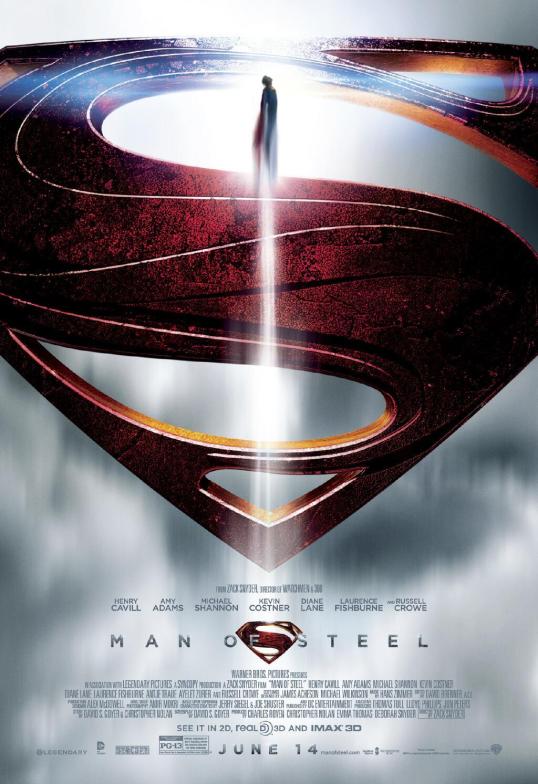
New Man of Steel Poster

I know that, in this day and age, we as a society seem to get off on tearing down our myths and legends and “humanizing” them, but seriously — when did Superman develop a split personality?

Before you jump to any conclusions based on that admitted “gotcha” of an opening line, allow me to state for the record that I didn’t actively dislike Zack Snyder’s Man Of Steel, it’s just that it spends its first half or so rather half-heartedly trying to portray its title character in more human terms than we’ve seen in previous iterations before finally throwing all that out the window and deciding that it actually wants to tell a story about a God who walks (and flies) among us, and the film definitely suffers as a result of this abrupt shift in tone.

But first the “plus” side of the ledger : Man Of Steel is pretty much the most awesome visual spectacle the movies have ever produced. I’m no fan of CGI as a general rule, but damn if every single effects shot in this flick isn’t enough to take your breath away, particularly the sequences on Superman’s home planet of Krypton, which Snyder and his WETA-employed staff depict in a markedly new and exciting “biotech on steroids” fashion. When the action goes earthbound, the optical awesomeness continues, never fear, so if spectacle is what you’re after, you’ll walk away from this well pleased indeed.

Pitch-perfect (with one notable exception which we’ll get to in a moment) casting doesn’t hurt matters any, either — Henry Cavill makes an immediate impression in both his Superman and Clark Kent personas; Russell Crowe is suitably above it all as his Kryptonian father, Jor-El; Kevin Costner and Diane Lane are almost too spot-on for words as his adopted human parents; Laurence Fishburne’s Perry White is old-school newspaper vet all the way (even with the pierced ear); and the always-underrated Michael Shannon oozes psychotic menace as lead villain General Zod. Watching all these people at work is a genuine joy.

Granted, the script — by Dark Knight veteran David S. Goyer (from a story co-plotted with the head honcho of this whole enterprise, Christopher Nolan) — doesn’t do any of them any favors dialogue-wise (apparently Kryptonians have evolved beyond good, old-fashioned conversation and speak entirely in grandiose pronouncements — but it’s not like the mere humans in this film are any less prone to dull, dry, wooden,  faux-poetic waxings themselves), but the players by and large manage to rise above the material they’ve been handed.

I say “by and large” (and here comes that exception I talked about a moment ago) because, sadly, one has been dealt such a losing hand that I’m not sure what she could really have done about it — I’m speaking, of course, about Amy Adams’ Lois Lane. Goyer does some brave and interesting things in terms of shaking up the established Clark-Lois backstory ( let’s just say she won’t be sneaking glimpses of him at sly angles when his glasses are off to see how much he might or might not look like Superman), but the cold, emotionally distant nature of this particular big-budget beast means that the whole love story angle falls pretty flat. By the time Goyer, Nolan, and Snyder decide they want to play the Nietzchean uberman card for all it’s worth, the independent, confident journalist we meet at the outset is reduced to becoming more awestruck than she is lovestruck, and rather than being “Superman’s girlfriend” she comes off more as his disciple. Who just so happens to kiss him. I mentioned the abrupt tonal shift in the film at the outset of this review, and poor Lois definitely suffers the brunt of it.

The messianic poses Cavill is forced into during all the flight and battle sequences get pretty old pretty fast as well, it’s gotta be said, and with no real transition period in the way the story is structured between its “simple farm boy from Kansas”  and its “demi-god here to save us all from the evil forces originating from his own homeworld” (that he inadvertently brought here himself, but hey, let’s not dwell on that) segments, well — let’s just say not much thought apparently went into how jarringly that would all play out. Hans Zimmer’s typically percussive, insistent musical score only augments the problem, and while there’s no way anybody was gonna have fans forgetting about John Williams, a “stripped-down,” “less over the top” orchestral accompaniment really doesn’t work when you’re trying to portray Superman as a fucking deity.

Superman purists, for their part,  may also find themselves semi-outraged by more than the snakeskin-fetish-wear take on his costume. There’s no Jimmy Olsen here, no Lex Luthor (although the “Lexcorp” logo appears here and there on props throughout — as do the logos for Sears, 7-11, and an unending and highly annoying litany of corporate sponsors), and “Metropolis” is never mentioned by name even though the entire final act takes place there. So be ready for at least some “nerd-rage” on the internet. Still, if those were the only things that bugged me about Man Of Steel, I’d be feeling a little bit better about it as a whole right about now. Not that I’m all that pissed or disappointed —-just, well, kinda perplexed.

I can’t say that Man Of Steel isn’t a fun movie to watch, because it is — hell, it’s an absolute visual marvel, and if you want to shut your brain off and just be taken along for a wild adventure ride, you’re not gonna do much better this (or any other) summer  Still —my mind kept drifting back to the famous first-encounter-between-Supes-and-Lois scene in Richard Donner’s Superman : The Movie (still the gold standard for all superhero flicks as far as I’m concerned) : when Lois asks him “who are you?,” and he replies, simply and with a smile, “a friend,” that told us all we needed to know right there. Sure, he was faster than a speeding bullet, more powerful than a locomotive, and able to leap tall buildings in a single bound, but at the end of the day , Superman as envisioned by Richard Donner, Mario Puzo, and Christopher Reeve was one of us.

By contrast, Superman a la Snyder, Nolan, Goyer and Cavill is above us. He’s not here to help humanity, but to redeem it. He’s not our hero anymore, he’s our savior — whether we want one or not.

Scenes I Love: Superman II


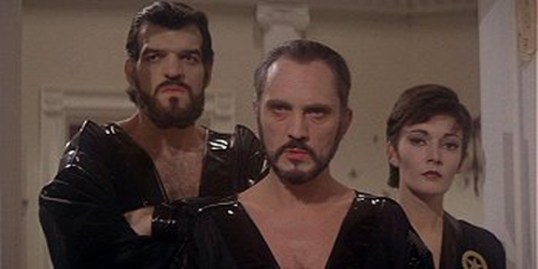
OG General Zod

“Rise before Zod…kneel before Zod.”

The latest reboot of Superman by DC and Warner Brothers has now arrived. It’s bound to rake in the dollars and shake the foundations of cineplexes worldwide with its dizzying array of genocidal-level action and mayhem. Yet, we must not forget that before Michael Shannon donned the mantle of General Zod for Zack Snyder’s Man of Steel the megalomaniacal Kryptonian general was played by none other than The Limey himself, Terrence Stamp.

In one of the best scenes (and a favorite of mine) from Superman II (itself a film shouldering a continent-sized and kryptonite-laced amount of controversy over it’s filming) we find the original Zod easily subduing the defenders of the White House and matter-of-factly instructing the President of the United States to rise and kneel before him. Thus an iconic piece of pop-culture dialogue was born that day.

Scenes I Love: Superman Spins the Planet


“Fezzik, do you hear that? That is the sound of ultimate suffering.” – Inigo Montoya, The Princess Bride.

Granted, this is one of the most strangest ways to resolve an issue (rewind everything back so it didn’t happen to begin with, without any paradoxes whatsoever), but it’s the reaction to Lois’ death that I like about this. As a kid, that scream made me jump, because it sounded like Superman lost just about everything. I honestly would have liked to know what Reeve thought of to get that scream out. I recently showed this to my cousin who liked it too. The spinning around the planet was cool (though a little much), and is something I come back to once in a while.