Late Night Retro Television Review: Friday the 13th 1.18 “Brain Drain”


Welcome to Late Night Retro Television Reviews, a new feature where we review some of our favorite and least favorite shows of the past! On Fridays, I will be reviewing Friday the 13th: The Series, a show which ran in syndication from 1987 to 1990. The show can be found on YouTube!

This week, Jack falls in love but, unfortunately, someone is stealing brains.

Episode 1.18 “Brain Drain”

(Dir by Lyndon Chubbuck, originally aired on April 25th, 1988)

Jack, Ryan, and Micki go to the Natural History Museum of Ontario to try to retrieve a trephinator, which is a device that the ancient Greeks apparently used to measure the size of people’s heads.  The belief was that the bigger head someone had, the more intelligent they were.  While at the museum, Jack runs into a former girlfriend, Dr. Viola Rhodes (Carrie Snodgress).  Jack is so happy to run into Viola that he soon seems to forget about the trephinator but instead finds himself planning their upcoming wedding.

(Just to make clear, Micki canceled her engagement so she could spend the next few years of her life tracking down cursed antiques but Jack can apparently just decide to get married out-of-the-blue without it being an issue.)

Well, Jack may have other things on his mind but that trephinator is still out there and it’s dangerous!  It has been incorporated into a chair that allows a formerly developmentally challenged man to steal the brain fluid of others and use it to increase his own intelligence.  Stewart Pangborn (Denis Forest) used to be a test subject but now he’s a scientist.  When he decides that Viola will be his next victim, Jack’s wedding plans are put in danger.

Even after watching this episode, I have no idea what a trephinator is, what it looks like, or how it was incorporated into the big bulky chair that Pangborn used to steal other people’s brain fluids.  Was the trephinator the big needle that would be forcibly inserted into the base of the skulls of Pangborn’s victims?  I don’t know but I do know that the whole point of Friday the 13th was that Chris, Jack, and Micki were searching for cursed antiques.  Overall, it’s helpful to actually be able to look at the screen and say, “Oh, there’s the antique.”

The episode had quite a few flaws, from the bulkiness of the chair to the apparent ease by which Pangborn was able to set himself up as a scientist at the museum.  (Do they not do background checks in Canada?)  The episode’s dialogue had a “It’s only first draft, we’ll think of something better later” quality to it and the performances, even from the usually reliable Denis Forest, felt subpar.  The idea of Jack meeting an ex-girlfriend and falling in love had potential but there was very little chemistry between Chris Wiggins and Carrie Snodgress.  If anything, Jack’s romance reminded the viewers of how strange it was that neither the handsome Ryan nor the beautiful Micki ever seemed to have any amorous admirers.

It was a disappointing episode this week but apparently, next week will feature Ryan joining some sort of Amish death cult.  That sounds promising!
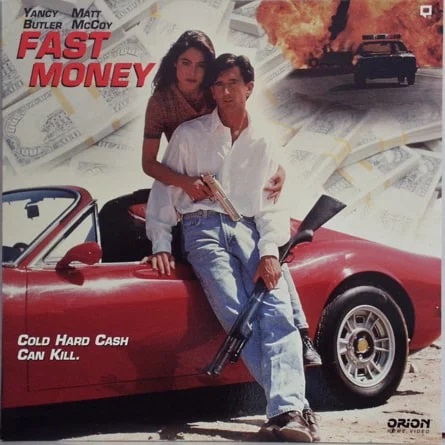
14 Days of Paranoia #1: Fast Money (dir by Alex Wright)


First released in 1996, Fast Money opens with Francesca March (Yancy Butler) stealing a car.

This is what Francesca does for a living.  She steals cars and she’s good at it.  She’s the type of who can look in any trashcan and find something that she can use to pick a lock.  She’s master at hot-wiring a car.  I personally have no idea how to hot-wire a car but, judging from the movies that I’ve seen, it appears to be the easiest thing in the world to do.  Francesca doesn’t just steal cars for the money.  She sincerely enjoys doing it, to the extent that it’s a compulsion for her.  If she sees a car, she has to steal it.

This has not made her popular with the LAPD.  In fact, an entire taskforce has been set up to stop her.  Realizing that she has to get out of town, she rushes to the airport.  It’s there that she runs into Jack Martin (Matt McCoy), a nerdy journalist who is working on a story that could take down a powerful U.S. Senator.  Jack is looking to catch a flight to Reno.  For reasons that aren’t particularly clear, Francesca rushes up to Jack and pretends to be his wife and the recently widowed Jack goes along with it.

Further complicating matters is that Francesca impulsively decides to seal one last car and the one that she picks just happens to have 3 million dollars in mob money and a bunch of counterfeit printing plates in the trunk.  The evil Sir Stewart (Jacob Witkin) wants his money back and he sends Regy (Trevor Goddard) and corrupt detective Lt. Diego (John Ashton) to track down Francesca and Jack.

Soon, Francesca and Jack are desperately trying reach the Mexican border while dodging corrupt cops, FBI agents, and mobsters.  It leads to a lot of car chases, explosions, helicopters, and shoot-outs.  (The otherwise meek Jack turns out to be a surprising good shot.  Neither he nor Francesca freaks out after he shoots multiple people, which is the sort of thing that I would probably freak out about.)  Francesca and Jack also find themselves falling in love but wondering just how much they can trust each other.  Stolen money does that to people.

Fast Money is a cheerfully dumb but entertainingly fast-paced movie, one in which the chase never stops long enough for the viewer to have too much time to try to figure out why the ultracool Francesa would be willing risk her freedom for a relationship with someone as whiny as Jack.  Yancy Butler plays Francesca as being so confident and so fearless that it’s hard not to admire her but there’s also no way that she seems like she would ever have much use for someone as meek and repressed as Jack, regardless of how deadly his aim might be.  One gets the feeling that the only thing keeping this couple together is the adrenaline rush of being hunted.  If Jack and Francesca do make it to safety, their relationship will probably be over by the end of the week.

Though Fast Money is ultimately a fun but somewhat generic direct-to-video action film, I appreciated the film’s vision of a world where everyone from the mob to the police to the FBI were basically working together to track down one career criminal and one innocent man.  When even the usually likable John Ashton is trying to murder you in a cheap motel, you know you have reached the other side of the looking glass.  Jack learns what Francesca has always understood, which is that one should be suspicious of authority.  Though it may not have been the film’s intent, Fast Money‘s ultimate message becomes, “Trust no one but yourself.”

Retro Television Reviews: T and T 2.17 “T.S. Turner For The Defense”


Welcome to Retro Television Reviews, a new feature where we review some of our favorite and least favorite shows of the past! On Fridays, I will be reviewing T. and T., a Canadian show which ran in syndication from 1987 to 1990.  The show can be found on Tubi!

This week, it’s time for …. another clip show?  Didn’t we just do a clip show last week?  Far be it for me to complain about having an easy review to write but how does any show get away with doing two weeks straight of clip shows?

Episode 2.17 “T.S. Turner For The Defense”

(Dir by Patrick Loubert, originally aired on May 1st, 1989)

“Things don’t look too good for Amy when, after upsetting the law society, she gets threatened with disbarment.  But even I got nervous when she doesn’t show up for the hearing and it’s left to me to defend her.”

Oh yay!  For the first time since the start of the second season, an episode of T and T opens with Mr. T offering up a synopsis of the episode’s plot.  It’s been so long since this weird but fun trick has been employed by the show that I originally assumed that this episode was originally meant for the first season.  But then I spotted the character of Joe Casper in the background of a courtroom scene and Joe didn’t become a regular character until the second season.  Who knows why Mr. T introduced this episode.  I’m just glad that he did.

As for the episode itself, Amy’s adventures with T.S. Turner have finally led to her facing disbarment proceedings.  Unfortunately, right before heading with Amy to the hearing, Amy’s attorney has a heart attack.  Amy blows off the hearing to go to the hospital with her friend and, for whatever reason, it doesn’t occur to her to call Turner or anyone else at the hearing and let them know what’s going on.  I mean, her lawyer had a heart attack.  Under normal circumstances, this is the sort of thing that would lead to the hearings being postponed.

So, with Amy missing, T.S Turner takes it upon himself to defend her at the hearings.  Keep in mind, T.S. is not a lawyer.  Amy did not hire Turner to defend her.  If there’s not much reason for the hearing to proceed without Amy or her actual attorney, there’s even less for the “law society” to allow T.S. Turner to serve as her counsel.  Maybe they do things differently in Canada but seriously, none of this makes any sense.

Maybe I’m overthinking things.  Like last week’s episode, this is a clip show and obviously, the main concern of the writers was to find an excuse for everyone to talk about Amy’s previous adventures on the show.  Unfortunately, Amy’s adventures have never been as interesting as Turner’s so the clips pretty much all fall into the same three categories: Amy gets mad, Amy gets captured, and Amy flirts with some loser to get information.  It all gets repetitive fairly quickly.

Halfway through the episode, Turner calls Joe to testify.  “What about you, Joe?” T.S. asks Joe on the stand, “Have you ever gotten in trouble?  Tell the court about it, Joe.”  Joe proceeds to talk about how he first met T.S. and Amy and it’s hard not to notice that Joe’s entire story centers on T.S. but not Amy.  Perhaps realizing that Joe hasn’t been of any help, Turner takes the stand himself and talks about …. himself.  We get several flashbacks of Turner beating up criminals and it’s hard not to feel bad for Amy, who isn’t even the center of attention at her own disbarment hearings.

“Every legal indiscretion she has committed is justified,” Turner says as Amy finally steps into the courtroom, “because she has helped so many.”

That’s all it takes for the Canadian Legal Society to decide that Amy can continue as a lawyer.  Yay!

Late Night Retro Television Review: Highway to Heaven 1.21 “The Brightest Star”


Welcome to Late Night Retro Television Reviews, a feature where we review some of our favorite and least favorite shows of the past!  On Thursdays, I will be reviewing Highway to Heaven, which aired on NBC from 1984 to 1989.  The entire show is currently streaming on Freevee and several other services!

Jonathan and Mark are once again in Hollywood, bringing yet another family together.

Episode 1.21 “The Brightest Star”

(Dir by Victor French, originally aired on March 6th, 1985)

Despite the fact that Mark was hoping to finally have a vacation from work, the Boss has other ideas.  Jonathan and Mark end up picking up a hitchhiking little girl who claims that she’s escaped from an abusive orphanage.  It doesn’t take long for Jonathan and Mark to figure out that she’s lying.  She’s actually Laurie Parks (Carrie Wells), one of the most in-demand child actresses working in Hollywood.

Hired to do some carpentry at the Parks home, Jonathan and Mark soon start offering advice to the family and indeed, this family needs a lot of help.  The family is totally dependent on Laurie’s salary and Laurie deals with the pressure of being the main provider by acting like a monstrous brat.  Her alcoholic father (Gerald S. O’Loughlin) wants to return to his previous life of driving a cab.  Her mother (Trish Van Devere) spends all of her time watching out for Carrie’s career.  The daughter (Laura Jacoby) of the family’s loyal maid (Mary Armstrong) is the selfless angel that Laurie is not and, with Jonathan’s help, she begins her own acting career.  Unfortunately, her success comes at Laurie’s expense.

As I watched this episode, I was struck by how familiar it felt.  Eventually, I realized that it was reminding me of an earlier episode from season 1, in which a father was the one who neglected his family until his son was cast opposite of him in a movie that was he was shooting.  Both of these episodes present Hollywood as being a shallow place, where family is often put second and people are corrupted by the pressures of stardom.  Both episodes were critical of Hollywood but ultimately ended with the classic Hollywood story of a new star being discovered from out of nowhere.  One gets the feeling that Michael Landon, as the show’s guiding force, was dealing with his own issues of trying balance his career with his family.  Highway to Heaven both loves and criticizes the entertainment industry with equal abandon.

As for the episode itself, it wasn’t particularly memorable and it struggled to balance moments of sentimental drama with moments of comedy.  One could understand the father’s unhappiness with his situation without necessarily thinking that the solution would be for him to move out of the house and start driving a cab again.  In the end, Laurie was such a monster that it was difficult to care about what happened to her one way or the other.

Next week, Jonathan and Mark go up against another heartless corporation!

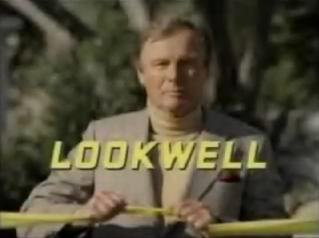
Retro Television Reviews: Lookwell 1.1 “The Pilot”


Welcome to Retro Television Reviews, a feature where we review some of our favorite and least favorite shows of the past!  On Thursdays, I will be reviewing Lookwell, which aired on NBC in 1991.  The entire show is currently streaming on YouTube!

Adam West is an actor who solves crimes …. kind of.

Episode 1.1 “Lookwell”

(Dir by E.W. Swackhamer, originally aired on July 28th, 1991)

Ty Lookwell (Adam West) was once the biggest star in Hollywood.

Well, maybe not the biggest star.  But, in the 70s, he did have his own cop show.  It was called …. BanacekMannix?  No, that’s not it.  Oh …. BRANNIGAN!  Ty Lookwell starred on a show called Brannigan and he was even given his own honorary police badge in 1972.  It was presented to him at a ceremony in Television City.

However, nearly 20 years later, things have changed.  Brannigan is no longer on the air and Ty Lookwell has been reduced to wearing a wig and a leather jacket in an attempt to get a role in a revival of Happy Days.  (He not only doesn’t get the role but he doesn’t even get to audition.)  When he returns to his home, he is informed that his favorite hairspray has been discontinued (“Those fools!”) and that all the messages on his machine are for his nephew.  Kevin Costner calls looking for Lookwell’s nephew.  Francis Ford Coppola calls for Lookwell’s nephew and leaves a message in which he promises to call back.  No one calls for Ty Lookwell.

Lookwell, however, still has a steady gig teaching an acting class and his students not only look up to him  but also help him out whenever he decides that there’s a crime he has to solve.  This apparently happens frequently as Lookwell takes his honorary badge very seriously.

“Remember how we talked about how you don’t have to come around here?” Detective Kennery (Ron Frazier) asks Lookwell at one point.

The pilot follows Lookwell as he investigates a series of car thefts.  Helping him out is his favorite student, Jason (played by future director Todd Field).  Lookwell’s investigative techniques are not particularly complicated.  He puts on a disguise and attempts to go undercover.  It never quite works, largely because everyone that Lookwell meets is smarter than Lookwell.  Lookwell’s attempt to disguise himself as a Grand Prix racer fails because the security guard takes one look at him and sees that he’s obviously not a Grand Prix racer.  His attempt to conduct a stakeout on a fancy diner is nearly thwarted by his bizarre decision to disguise himself as a hobo.  His attempt to go undercover at a garage is thwarted by the other mechanics misunderstanding his leading questions.

(“Who beat you up, Mr. Lookwell?” his students ask at the start of class.)

As the investigation continues, Jason wonders if they’re just wasting time.

“You do not waste time,” Lookwell corrects him, “Time wastes you.”

Lookwell was written by Conan O’Brian and Robert Smigel, long before either one of them became famous, and the humor is definitely the humor of a generation who grew up watching network television, especially the cop shows of the 70s and the 80s.  While the dialogue is clever and definitely funny, it’s really Adam West who makes the pilot work.  West delivers all of his line with such conviction and confidence that it doesn’t matter that he only plays a peripheral role in solving the case and, in fact, usually makes things worse for everyone involved.  As played by West, Lookwell is so confident in his abilities and so blithely unaware of his limitations that it’s hard not to admire his spirit.

Unfortunately, the spirit was not admired by NBC and Lookwell only aired once.  But it has since developed a cult following.  Adam West described it as being his favorite of the various shows that he did.  I enjoyed the pilot, though I do think the premise was perhaps a bit too thin to support an actual series.  (It would have made a great recurring SNL bit, though.)  Thanks to YouTube, everyone can now watch what NBC passed up.

Music Video of the Day: When I’m Gone by Katy Perry, feat. Alesso (2022, dir by Hannah Lux Davis)


This is a fun video and I think we need more fun in the world.

The robot in the video was provided by Boston Dynamics and was nicknamed “Nugget” by Perry.  (The robot’s actual name was Spot.  If I ever get a robot, I’m naming it Fritz after director Fritz Lang.)  The video itself premiered on ESPN because …. well, why not?  Where else was it going to premiere?  Rob Dyrdek’s not in the video so it’s not like it could have premiered on MTV or any of its affiliated stations.  This was the first music video to ever premiere live on ESPN and, as far as I can tell, it might also be the only one.  There’s nothing wrong with being unique.

Enjoy!

Late Night Retro Television Review: Monsters 1.20 “The Cocoon”


Welcome to Late Night Retro Television Reviews, a feature where we review some of our favorite and least favorite shows of the past! On Wednesdays, I will be reviewing Monsters, which aired in syndication from 1988 to 1991. The entire show is streaming on Tubi.

This week, Billy Drago learns an important lesson about cheating, greed, and cocoons.

Episode 1.20 “The Cocoon”

(Dir by John Gray, originally aired on April 29th, 1989)

A woman (Kim Ulrich) is involved in a serious traffic accident, one that should have killed her.  Instead, she survives the accident with hardly a scratch but also without her memory (or so she claims).  A greedy police detective named Richard (Billy Drago) is called in when it is discovered that the woman has a good deal of money but no identification on her.  When the woman says that she knows that she’s wealthy, Richard becomes very interested in helping her regain her memory.

Richard’s girlfriend, Sarah (Silvana Gallardo), is a psychic.  Richard brings her to see the woman, hoping that Sarah will have a vision.  When she handles the woman’s comb, Sarah has a vision of the woman in the 1920s, seducing a man who has been missing for over 60 years.  But the woman appears to be in her 20s in both the present and in Sarah’s vision.  Richard suggests that Sarah might be seeing the woman’s grandmother.

Of course, the truth is a bit more complex.  The woman has been alive for centuries, surviving by wrapping her lovers in a cocoon and then feasting off their life force.  The woman is hoping to make Richard her next lover and Richard, being a bit of a sleazeball, is prepared to go along with it.  However, Sarah has a few tricks of her own….

This was an interesting and ambitious episode, one that attempted to tell a very complex story in just 21 minutes and on a very limited budget.  Unfortunately, the show didn’t really have the resources to do this particular story justice but it’s still hard not to admire the imagination involved.  Throughout the episode there are moments that work really well, like a sequence where Sarah has a vision of all of the different costumes that the woman has worn through the centuries.  The episode also ends with an entertaining little twist.  It’s effective, even if the scenes involving the actual spinning of the cocoon fall victim to the show’s low budget.

Billy Drago was a veteran screen bad guy, one who almost always cast as an evil henchman.  (In Brian De Palma’s The Untouchables, Kevin Costner memorably threw him off of a roof.)  This episode gives Drago a rare leading role, though Richard is just as amoral and sleazy as the characters for which Drago was best known.  Drago does a good job in the lead, playing Richard as being a not particularly smart guy who is undone by his own cockiness.  If nothing else, it’s impossible not to enjoy seeing him get his comeuppance.

Next week on Monsters …. Adrienne Barbeau dabbles in the magical arts!

Love On The Lens: The Amy Fisher Story (dir by Andy Tennant)


Poor Mary Jo Buttafuoco!

As seen in the 1993 made-for-tv movie, The Amy Fisher Story, Mary Jo (Laurie Paton) was just a normal Long Island housewife.  She was married to an auto mechanic named Joey (Anthony John Denison).  She had a family and a nice house and a seemingly perfect life.  But, one day, a teenage girl named Amy Fisher (played by a young Drew Barrymoe) showed up at her front door and claimed that her younger sister was having an affair with Joey.  When Mary Jo accused Amy of lying and then said she was going to call her husband, Amy pulled a gun and shot Mary Jo in the head.  That Mary Jo survived, albeit with partial facial paralysis, was a miracle.

The Amy Fisher Story was the third of the movies to be based on the true story of Amy Fisher and her affair with Joey Buttafuoco.  If Casualties of Love portrayed Amy as being an obsessed stalker who targeted a saintly man and if Amy Fisher: My Story portrayed Amy as a vulnerable teen who was groomed by a sleazy older man, The Amy Fisher Story suggests that perhaps the truth was somewhere in between.  As played by Drew Barrymore, Amy Fisher is immature, unstable, and self-destructive even before she meets Joey Buttafuoco.  As played by Anthony John Denison, Joey is a cocky and arrogant womanizer who grooms a teenage girl and leads her to believe that the only thing keeping them from being truly together is the fact that he has a wife.  (If Casualties portrayed Joey as being a dumb, salt-of-the-Earth type of guy and Amy Fisher: My Story portrayed him as being coldly manipulative and cruel, The Amy Fisher Story portrays him as being a self-centered idiot who did whatever he felt like doing without thinking about any possible consequences.)  Of all the performers who played Amy and Joey, Drew Barrymore and Anthony John Denison are the most convincing.  On the one hand, that lends a credibility to this film’s version of the events that led to the shooting of Mary Jo.  On the other hand, it also means that neither of the main characters is particularly likable.

The film instead tries to make a hero out of a reporter named Amy Pagnozzi (Harley Jane Kozak), who finds herself assigned to follow the Amy Fisher story when she would much rather be reporting on the upcoming presidential election.  Pagnozzi pops up throughout the story, commenting on the media feeding frenzy and generally acting annoyed by the whole thing.  The problem with this approach is that, for all of Pagnozzi’s condemnation of the country’s tabloid mentality, she’s still a part of the monster.  It’s hard to have sympathy for someone complaining about how a story is covered when they’re the one doing the covering.

Interestingly, for a film that condemns that way the story was covered, The Amy Fisher Story is probably the most tabloid-y of the three films.  Every sordid detail — from Amy and Joey’s motel meetings to Amy’s work as an escort to her subsequent dalliance with a gym owner — is provided in artfully filmed detail.  The result is a film that can feel a bit over-the-top but that’s exactly the right approach to take when it comes to a story like this.  When you’re making a movie about a suburban teenage escort who shoots her boyfriend’s wife, there’s really not much need or room for subtlety.  The Amy Fisher Story works because it fully embraces the melodrama and it features a performance from Drew Barrymore that remind us that, back before she became a permanently cheerful talk show host, Drew was a force of pure chaos.

When it comes to the story of the Fishers and the Buttafuocos, this is the film to see.

Love on the Lens: Amy Fisher: My Story (dir by Bradford May)


Poor Amy Fisher!

In the 1993 made-for-TV movie, Amy Fisher: My Story, Amy Fisher (played by Noelle Parker) is an insecure teenager growing up on Long Island.  She goes to high school.  She has a boyfriend.  She has lots of girl friends.  She has a part-time job.  She has a car.  Everything should be perfect but it’s not.  For one thing, her creepy father (played by veteran Canadian character actor Lawrence Dane) likes to come into her room while she’s trying to sleep and sit on the edge of her bed.  Her mother (Kate Lynch) refuses to believe that there’s anything strange about the way her husband treats their daughter.

When Amy and her father take her car to the local auto body shop, she meets the handsome and slick Joey Buttafuoco (Ed Marinaro).  Amy is polite to Joey but Joey takes one look at Amy and he smiles in a way that immediately lets us know that he’s not to be trusted.  Soon, he’s going out of his way to spend time with Amy and eventually, he seduces her in the house that he shares with his wife, Mary Jo (played by Check It Out‘s Kathleen Laskey).  Soon, Joey and Amy are checking into cheap motels together.  Amy think that she’s in love with Joey and Joey says that he loves her (though only when he wants her to do something).

Joey eventually coerces Amy into becoming an escort, enjoying the stories of her spending time with other older men.  And yet, when Amy follows his orders and gets a gym membership, Joey freaks out when she attracts the attention of a man who is close to her own age.  For her part, Amy starts to wonder whether she and Joey will ever truly be together.  Joey insinuates that his wife would have to die before he could even think of marrying Amy Fisher.  Amy happens to have a friend who has a gun….

Amy Fisher: My Story largely plays out in flashbacks and is narrated by Amy as she sits in her jail cell.  It’s based on the same true story that inspired Casualties of Love, with the main difference being that this is Amy’s version of the story.  And it must be said that Amy’s version, with Amy as an insecure and abused teenager being groomed by a manipulative sociopath, feels considerably more plausible than Casualties of Love‘s portrayal of Joey Buttafuoco as being the misunderstood Saint of Long Island.  Working to Amy Fisher: My Story‘s advantage is that it doesn’t let Amy off the hook.  Ultimately, she’s the one who decides to knock on Mary Jo’s front door and then shoot her when she answers.  Amy is not portrayed as being a saint but she’s not a one-dimensional psycho either.  Instead, she’s a naive and emotionally damaged girl who is so desperate to feel loved that she allows Joey to push her over the edge.

Amy Fisher: My Story is a well-done look at a sordid story.  Ed Marinaro is appropriately sleazy and macho as Joey.  Noelle Parker gives a quiet but strong performance as Amy Fisher, playing her as someone who knows that she’s being manipulated but who still finds herself clinging to the smallest shred of hope that she’s not.  While the film never quite transcends its tabloid origins, it still provides a worthy reminder that there’s always a human behind the headlines.