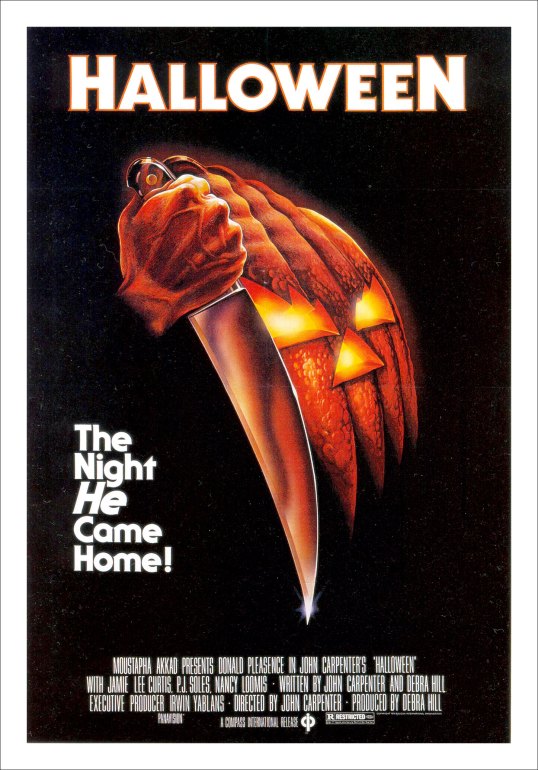
Was there ever any doubt?
Was there ever any doubt?
In 2021’s Chloe’s Mountain, teenaged orphan Chloe (Kenzie Mae) moves to her grandmother’s farm.
Grandma (Donna Bristol) has white hair. Chloe has blue hair.
Chloe is an aspiring singer who like her music loud. Grandma hasn’t listened to anything since Glenn Miller died.
Grandma is big into church. Chloe is not.
Chloe smokes weed with her friends. Grandma really likes her neighbor’s biscuits.
Chloe and Grandma don’t have much in common and, at first, Chloe doesn’t want anything to do with her grandmother. But Grandma wins Chloe over through the power of her unconditional love. But then, on Chloe’s 18th birthday no less, Grandma dies. Chloe is heartbroken. Grandma leaves Chloe her house, her farm, and all of her money. If Chloe goes to a Christian university and graduates in four years, she’ll get the house when she’s 22. If she doesn’t go to a Christian university or if she fails to graduate, she’ll have to wait until she’s 35 to collect her inheritance.
Knowing that this was a faith-based film, I was not surprised when Chloe agreed to go to the Christian university. In many ways, the movie feels like a commercial for going to a Christian college. Sure, the movie says, the rules are a little bit goofy and you have to spend a lot of time memorizing hundreds of bible verses but you will eventually get a good education …, maybe. And yes, you’re roommate will probably really be into stuffed animals and the color pink but why can’t you just shut up and conform?
That said, the movie lost me as soon as it explained all the college’s rules. Chloe learns that she can earn demerits for breaking the college’s rules and, if she ends up with too many, she can be expelled. Talking too loudly? That’s a demerit. Late for class? Demerit. Loud music? Demerit. Public displays of affection? Huge demerit right there. Wearing revealing clothing? Demerit.
Uhmm …. okay, isn’t Chloe 18 years old? Aren’t universities supposed to give young adults an education so they can go out into the real world? Chloe’s an adult. The viewer may or may not feel that Chloe always acts like an adult but, the fact of the matter, 18 year-olds are considered to be adults. Telling an adult what she can or cannot wear, especially when she’s the one paying to attend your school, is beyond insulting. “You wore a belly shirt,” the Dean says at one point while looking over Chloe’s demerits. And? I mean, a lot of people do. I’ve certainly worn my share over the years. You’re going to kick someone out of college because they wore a slightly revealing piece of clothing? Seriously, Chloe, get out of there! Drop out and go to a real school. Grandma’s farm wasn’t really that nice to begin with.
Anyway, as for the rest of the film, Chloe does eventually make a friend, Nechelle (Shalayne Janelle). Nechelle helps to change Chloe’s cynical outlook. It’s a standard low budget, faith-based movie, full of jokes that fall flat and performers who give amateurish performances. I thought Kenzie Mae actually gave a pretty likable performance as Chloe but she’s sabotaged by filmmakers who have no idea how to tell a story visually or how to make one scene flow into the next. By the end of the movie, I felt as if I had been watching for four years. Still, I stuck with the film and I didn’t quit, no matter how much I was tempted to do so. So, seriously, where’s my farm?
Welcome to Late Night Retro Television Reviews, a feature where we review some of our favorite and least favorite shows of the past! On Wednesdays, I will be reviewing Monsters, which aired in syndication from 1988 to 1991. The entire series is streaming on YouTube.
In this episode, a new lifeform is discovered.
Episode 2.20 “Micro Minds”
(Dir by Anthony Santa Croce, originally aired on March 4, 1990)
In a college science lab, astronomy student Paula (Belle Avery) is convinced that her personal computer is picking up communications being sent to her from an extra-terrestrial civilization. When Dr. Thomas Becker (Troy Donahue) comes by the lab to find out why Paula hasn’t been coming to class, he is at first dismissive of her theory. But then he hears the voice of Grok (David Parmenter) coming through the computer and he realizes the truth of what has happened.
Paula has made contact with another lifeform.
But it’s not an lifeform from another planet. Instead, it’s a microscopic protozoa that has evolved in the laboratory’s cooling tank. Grok can speak but it doesn’t know much about the world outside of the tank. When Becker shines a light over the tank, Grok thinks that Becker is God. Becker, to Paula’s alarm, rather likes the idea of being God.
Soon, Becker is pouring salt and sugar into the cooling tank, all in an attempt to speed up Grok’s evolution. Paula thinks that Becker is moving too quickly. Eventually, a giant version of Grok (imagine a slimy version of the killer carpet from The Creeping Terror) materializes in the lab and attacks Paula. Paula destroys it and Becker, realizing the Paula also means to destroy the rest of Grok, responds by killing her. Becker, thinking that he has saved Grok, does not realize that Grok is planning on using him to destroy the human race.
I had a bit of a hard time following the plot of this episode, as you may have guessed from the somewhat jumbled synopsis above. This episode of Monsters is an homage to the B-science fiction films of the 50s and 60s and, as such, there’s a lot of technobabble which doesn’t make much sense but which is there so the viewer can at least pretend like the story is rooted in some sort of reality. In this case, the incoherence is the point.
The casting of former teen idol Troy Donahue as the professor is another call back to the 50s. After Donahue’s star faded, he appeared in his share of low-budget horror and sci-fi films. Donahue gives a good performance here, doing a nice job of portraying Dr. Becker’s growing megalomania. (That said, whenever anyone referred to him as “Becker,” I was reminded of that terrible Ted Danson show where he played the doctor who was always pissed off whenever he got off the subway.)
As for the episode’s monster, it looked awful and fake but again, one gets the feeling that was deliberate. To be honest, it didn’t look any worse than some of the monsters that showed up in Roger Corman’s alien invasion films.
This was an okay episode. Even if I couldn’t always follow the plot, the story held my attention. It was a well-done homage to cheap sci-fi, even if it never was quite as much fun as Plan 9 From Outer Space.
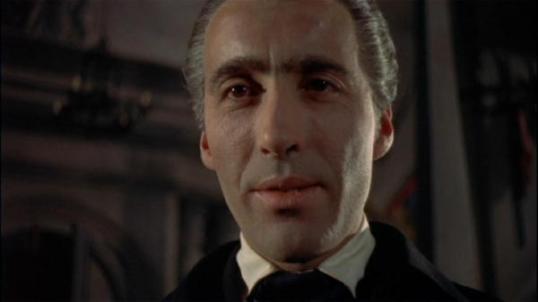
Here to help you get in the mood for the best day of the year is Christopher Lee reading Edgar Allan Poe’s The Fall Of The House Of Usher. Listening to this will require 40 minutes of your time but it’s totally worth it. Christopher Lee had an amazing voice and was a wonderful reader and one imagines that it was his voice that Poe heard in his head as he first wrote this short story.
Here is the wonderful voice of Christopher Lee….
One tonight’s episode of One Step Beyond, the one and only Christopher Lee plays a German military officer who makes a fatal deal with a sorcerer.
This episode was Christopher Lee’s American television debut. It originally aired on May 23rd, 1961.
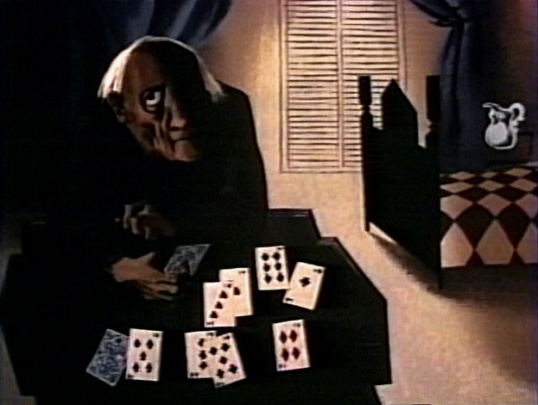
This short, animated film is from 1953 and it features James Mason reading a story from America’s first master of suspense, Edgar Allan Poe!
Here, for your listening and visual enjoyment, is The Tell Tale Heart! Along with featuring the voice of James Mason, the film was directed by Ted Parmlee. It was the first animated film to ever be given an X rating by the British Film Board of Censors.
The much-missed Gary Loggins loved Halloween and he loved the old, frequently subversive cartoons from the 1930s. He was a particular fan of the Fleischer Brothers so it only seems right that today, on Halloween, we should share one of those cartoons. Here is 1930’s Swing You Sinners.
In this bizarre cartoon, a dog named Bimbo attempts to steal a chicken. After the police chase him into a cemetery, Bimbo is confronted by ghosts, demons, and apparently death. Shockingly, there is no escape offered in this film. Abandon all hope!
I guess chicken theft was a really huge problem in 1930.
Welcome to Retro Television Reviews, a feature where we review some of our favorite and least favorite shows of the past! On Wednesdays, I will be reviewing the original Love Boat, which aired on ABC from 1977 to 1986! The series can be streamed on Paramount Plus!
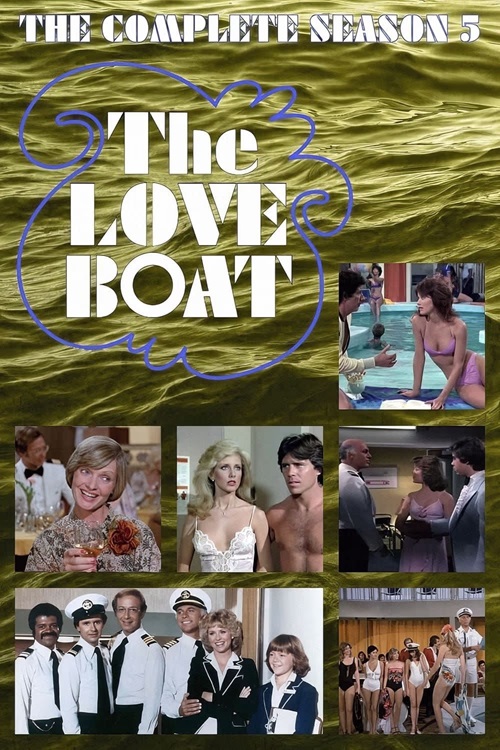
This week, The Love Boat hosts a special event!
Episode 5.3 “Two Grapes On The Vine/Aunt Sylvia/Deductible Divorce”
(Dir by Bob Sweeney, originally aired on October 17th, 1981)
This week, the Love Boat is hosting a wine tasting competition!
Basically, the contestants sit in the ballroom. They take a sip of wine. They then write down what type of wine they think they just tasted. All of the members of the crew and the majority of the passengers watch them. Seriously, it looks like the most boring thing ever. I mean, I get why the competitors are into it. The winner gets a lot of money. But why would you want to watch people drink? I mean, if you’re crazy into wine, it seems like you’d want to drink it yourself. What fun is there in watching other people drink something? I’ll just say that, if I was on a cruise, I would want to do other things. I would want lay out by the pool or look at the ocean or maybe solve a murder. What I would not want to do would be to spend hours watching other people drink and then spit.
Also, I have to wonder about the wisdom of hosting a wine tasting competition on a ship that’s captained by a recovering alcoholic. Did the show forget this key part of the captain’s character? Merrill Stubing is a recovering alcoholic and he lives his life with the rigorous discipline of someone who is trying to avoid falling back into old habits. It would seem like Captain Stubing would at least mention his alcoholic past in this episode, especially after Vicki says that she wishes she could take part in the contest. Wouldn’t this be a good time for Stubing to explain that an addictive personality can be hereditary?
I know, I know. I’m overthinking. It’s just because I found this episode to be remarkably dull. I mean, I love The Love Boat but this episode was just boring. The whole wine tasting thing just put me to sleep.
It didn’t help that the three stories weren’t particularly interesting.
Robert Guillaume and Leslie Uggams played the two finalists in the wine tasting competition. They each lied to the other about why they needed the money. Then they fell in love and they each threw the competition so the other could win the money. But since they both got the last wine wrong, no one won and no money was awarded. Wow, wine tasting is a harsh sport!
Tanya Tucker and Michael Goodwin played a married couple who got divorced every year so that they could get a tax break. This time, they sailed to Mexico for a quickie divorce. Tucker’s ex-boyfriend, Robert Walden, was on the cruise and Tucker was tempted to stay divorced. However, she and Goodwin eventually decided to get married a sixth time and to never get divorced again. I liked this story solely because it was about screwing over the IRS.
Finally, Betty White wanted to marry Douglas Fairbanks, Jr. but he instead fell for Betty White’s friend, Carol Channing. No worries though! Fairbanks gave Betty White a job so that she would no longer have to marry for money.
It was all pretty boring. As I said, I love this show but this episode tasted as flat as a French wine from 1178.
Thanks to the one and only John Carpenter, the version of this sweet little song that The Chordettes recorded in the 1950s will be forever associated with the Night He Came Home. Sadly, none of the Chordettes are with us anymore and I haven’t been able to find any interviews about how they felt about their song of teenage love being used in Halloween.
I’d like to think they would have appreciated it. Michael Myers may not have had hair like Liberace but he did have a mask that looked a lot like William Shatner.

Vincent Price was born, at the start of the 20th Century, in St. Louis, Missouri. When he first began his film career in the 1930s, he was promoted as a leading man and he was even tested for the role of Ashley Wilkes in Gone With The Wind. (Imagine that!) However, Price would find his greatest fame as a horror icon.
Among the fans of Price’s horror films was a young animator named Tim Burton. In 1982, Price and Burton would work together for the first time, with Price providing the narration for a short, stop motion film that Burton had written and directed. Called Vincent, the film was about a seven year-old boy named Vincent who wanted to be — can you guess? — Vincent Price! The six-minute film follows Vincent as he gets involved in all sorts of macabre activities. Of course, as Vincent’s mom points out, Vincent isn’t actually a monster or mad scientist. He’s just a creative child with an overactive imagination. (To say the short feels autobiographical on Burton’s part would be an understatement.) The animation is outstanding and full of wit but it really is Vincent Price’s wonderful narration that makes this short film a classic.
Both Price and Burton would later call making this film one of the most creatively rewarding collaborations of their respective careers.
On Halloween Eve, enjoy Vincent!
 Through the Shattered Lens