Love On The Shattered Lens: Charming Sinners (dir by Robert Milton and Dorothy Arzner)


Based on a play by Somerset Maugham, 1929’s Charming Sinners takes place amongst the very rich.

Kathryn Miles (Ruth Chatterton) is married to Robert Miles (Clive Brook).  Robert is wealthy and a respected businessman and, through her marriage, Kathryn is also wealthy and …. well, she’s not quite respected.  The fact of the matter is that everyone is gossiping about the fact that Robert is cheating on Kathryn.  Kathryn denies that Robert is being unfaithful but she knows that he is.  She also knows that Robert is cheating with her best friend, Anne-Marie Whitley (Mary Nolan).  Even when Anne-Marie’s husband, George (Montagu Love), comes to suspect that Anne-Marie is cheating with Robert, Kathryn tells George that it isn’t true and defends her cad of a husband.

Why is Kathryn doing this?  As Kathryn explains it, she doesn’t feel that marriage necessarily means that you have to love someone.  Kathryn married Robert for the money and the status and, as long as she has that, she’s willing to overlook Robert’s dalliances.  Admitting that Robert is cheating would obligate her to go through a divorce and potentially lose everything that she has.  If this film had been released just a few years later than it was, the Production Code would have insisted that Kathryn suffer for her less-than-reverent attitude towards the institution of marriage.  Since this is a pre-code film, Kathryn is portrayed as being strong and determined.  What the Production Code would have deemed a drama, the pre-code era considered to be a comedy.

Still, Kathryn does get revenge on her husband by openly flirting with a former lover, Karl Kraley (William Powell, handsome and suave as ever).  Kathryn also makes some money on her own, proving to her husband that she could be a success even if she hadn’t married him.  Kathryn informs Robert that she is going to be living her own life, even if they are married.  And if Kathryn wants to take a lover, that’s her decision.

And good for Kathryn!  Seriously, Robert is so smug and sure of himself that it’s deeply satisfying to watch as Kathryn reveals that Robert was never as clever as he thought it was.  Though the film does not end with the dramatic divorce that some might expect, it does end with Kathryn taking control of her own life and making her own decisions about how she’s going to live it.  That type of ending is rare enough today.  One can only imagine how audiences in 1929 reacted to it.

But is the film itself any good, you may be asking.  It’s an early sound picture and while the cast all proves their ability to handle dialogue, the largely stationary camera often makes the film feel like a filmed play (which is largely what it was).  Like many pre-code films, the emphasis here is on how the rich have better clothes and better homes than the majority of the people watching the movie.  That’s not a problem for me.  I like looking at nice clothes and wonderfully decorated houses.  Some others may dismiss this film as just being about the problems of the rich but my personal opinion is that everyone has problems.  Wouldn’t you rather have problems as a wealthy person than a poor one?  The most important thing is that the film features two of the best actors of Hollywood’s early Golden Age, Ruth Chatteron and William Powell, and they both give excellent and charming performances.

Charming Sinners is a bit of time capsule and probably not for everyone.  If you’re not interested in the film’s era, it probably won’t hold your attention.  But, to a fashionable history nerd like me, Charming Sinners definitely had its charms.
Song of the Day: If I Can’t Have You by Yvonne Elliman


Today’s Valentine’s Day song of the day is my favorite song of all time, performed by the wonderful Yvonne Elliman.

I don’t know why I’m surviving every lonely day
When there’s got to be no chance for me
My life would end, and it doesn’t matter how I cry
My tears of love are a waste of time

If I turn away, am I strong enough to see it through?
Go crazy is what I will do

If I can’t have you, I don’t want nobody, baby
If I can’t have you, ah-ah-ah, oh
If I can’t have you, I don’t want nobody, baby
If I can’t have you, ah-ah-ah

Can’t let go, and it doesn’t matter how I try
I gave it all so easily to you, my love
To dreams that never will come true
Am I strong enough to see it through?
Go crazy is what I will do

If I can’t have you, I don’t want nobody, baby
If I can’t have you, ah-ah-ah, oh
If I can’t have you, I don’t want nobody, baby
If I can’t have you, ah-ah-ah, oh

If I can’t have you, I don’t want nobody, baby
If I can’t have you, ah-ah-ah, oh
If I can’t have you, I don’t want nobody, baby
If I can’t have you, ah-ah-ah (I’m in love with nobody)

If I can’t have you, I don’t want nobody, baby
If I can’t have you, ah-ah-ah, oh
If I can’t have you, I don’t want nobody, baby
If I can’t have you, ah-ah-ah, no

(Lyrics by Maurice Ernest Gibb / Robin Hugh Gibb / Barry Alan Gibb)

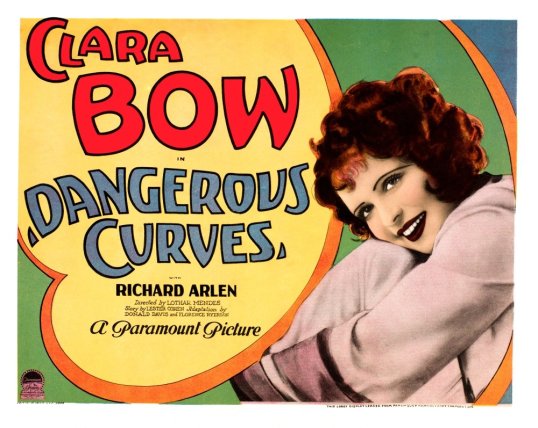
Love On The Shattered Lens: Dangerous Curves (dir by Lothar Mendes)


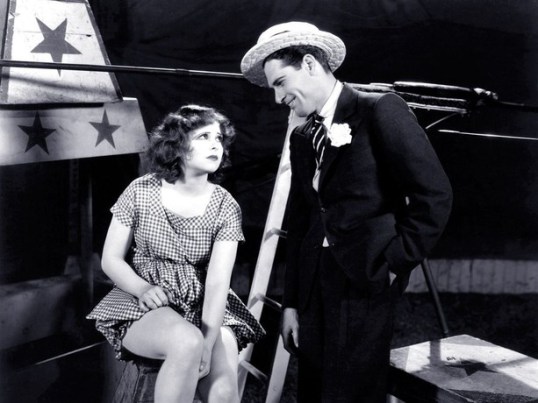
The 1929 film, Dangerous Curves, takes place at the circus.

Larry Lee (Richard Arlen) is a tightrope walker and, when we first meet him, he’s a bit of a cad.  He knows he’s the best and he knows that the crowds are specifically showing up to watch him risk his life on a nightly basis.  Every woman at the circus is crushing on him but Larry hardly notices because he’s used to being desired.  He’s in love with his tightrope-walking partner, Zara (Kay Francis).  Everyone can tell that Zara is manipulative and not even loyal to her relationship with Larry.  She wastes his money and Larry sometimes spends so much time thinking about her that it breaks his concentration on the tight rope.

Eventually, Larry discovers that Zara has been cheating on him!  When Larry finds out about Zara and Tony (David Newell), he cannot get the image of them kissing out of his head.  When he tries to walk across the tight rope, he loses his focus and, as the audience gasps, Larry falls to the ground below.  (In an impressively-edited sequence, we see Larry falling from about five different angles before we finally see him hitting the ground.)  Larry recovers but his confidence has been broken.  Instead of returning to the circus, he just wants to drink and obsess on Zara and Tony.

Can bareback rider Patricia Delaney (Clara Bow) convince him to return to the circus?  Can she give him the confidence to once again walk across the tightrope?  Will Larry then teach Pat how do the tightrope act herself?  Will Larry finally realize that Pat loves him and that he loves her?  And how will Pat react when, after all she’s done for Larry, he suddenly decides that he wants to bring Zara back into the act?

Dangerous Curves is a mix of melodrama and romance, all taking place at the circus.  It’s also a pre-code film, which means it’s a bit more honest about the relationships between the characters and Larry’s subsequent drinking problem than it would have been if the film had been made just a few years later.  As a result, this is a melodrama with an edge.  The members of the circus community are living on the fringes of polite society and they’ve built their own community, one that is based on their unique talents.  Larry’s sin isn’t so much that he’s arrogant and tempermental.  It’s that he doesn’t properly respect the community of which he’s a part.  He thinks he’s above the rest of the circus.  His fall from the high wire humbles him.  His relationship with Patricia eventually redeems him.

That said, the main appeal of this film is that it features Clara Bow in one of her early sound-era performances.  Bow became a star during the silent era but, unlike many of her contemporaries, she was able to make the transition to sound.  I absolutely love Clara Bow and this film features one of her best performances.  She’s determined and energetic and she plays the stereotypical “good” girl with just enough of a mischievous glint in her eye to make her compelling.  She may be willing to help Larry get back on the tightrope and then subsequently learn how to walk the tightrope herself but she also shows that she’s not going to put up with him taking her for granted.  As well, both Clara and Kay Francis get to wear a lot of cute outfits, which is always one of the pleasures of a pre-code film.

Dangerous Curves is worth watching for the chance to see Clara Bow at her best.


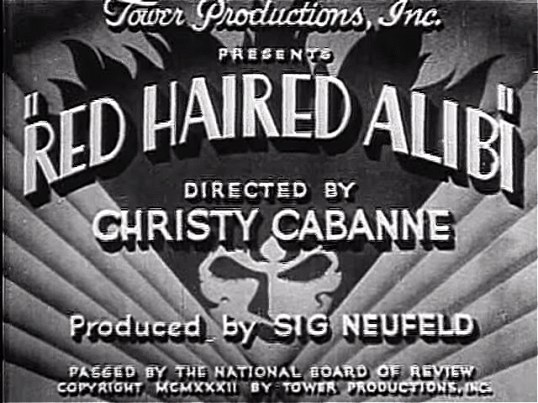
Love On The Shattered Lens: The Red-Haired Alibi (dir by Christy Cabanne)


1932’s The Red-Haired Alibi tells the story of Lynn (Merna Kennedy).

When we first meet Lynn, she is working at a store in Manhattan.  She has red hair.  The film is in black-and-white but we have no doubt that her hair is red because every single character who meets her mentions that she has red hair and she continually reminds people that she has red hair.  Everyone seems to be so stunned to meet a redhead!  And I have to say that this is the most realistic part of this movie.  I have red hair.  I’ve had complete strangers tell me that they like my hair.  I’ve also had complete strangers ask me if I’m a natural redhead (and I am!) and some other things that I’m not going to repeat here.  Personally, I love having red hair.  I’m a member of the proud 2%.  I don’t care if some people claim that people with red hair don’t have souls.  When you’ve got red hair, what else do you need?

As for the movie, Lynn meets a charming man named Trent Travers (Theodore van Enz).  Trent offers to give Lynn a job, away from the drudgery of working in sales.  Trent will pay Lynn to be his companion at night.  And since this is a pre-code film, Red-Haired Alibi is pretty open about what that means.  Lynn agrees.  Trent is handsome and rich and who couldn’t use the money during the Great Depression?  I imagine the film’s audience agreed.  One thing that always comes through in these Depression-era pre-code films is that morals don’t really matter when you’re struggling to pay your rent and not starve to death.

The problem is that Trent is a gangster.  Trent spends his nights committing crimes and then using Lynn as his alibi.  Eventually, Lynn realizes that she’s gotten herself into a dangerous situation.  The police suggest to her that she should get out of town before Trent takes things too far.  (I guess they didn’t have witness protection in 1932.)

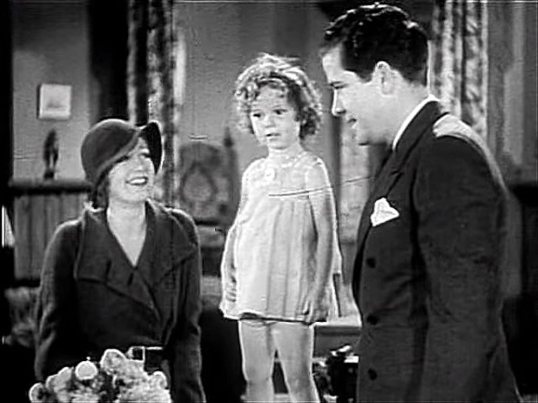
Lynn flees New York and builds a new life for herself in White Plains.  She meets a charming widower named Bob Wilson (Grant Withers).  They marry and settle into a life of domestic bliss.  Lynn becomes the stepmother to Bob’s young daughter (played by Shirley Temple, in what is believed to have been her film debut).  Everything seems to finally be perfect for Lynn.  Or at least it does until Trent shows up….

The Red-Haired Alibi is a generally well-acted but somewhat slow 1930s melodrama.  Comparing this film to some of the other films of the early 30s, it’s a relief to see a cast that knows how to deliver dialogue in the sound era but director Christy Carbanne sometimes struggles to maintain the sort of narrative momentum necessary to make a film like this compelling.  The ending feels a bit silly but, at least during the pre-code era, there wasn’t a need to try to punish Lynn for having a less-than-perfect past.

Dancer and former silent actress Merna Kennedy was best-known for her work with Charlie Chaplin and she gives a likable performance as Lynn.  Two years after making this film, she married Busby Berkley and retired from acting.  Tragically, she died of a heart attack in 1944, when she was only 36 years old.

Love On The Shattered Lens: Frank and Ava (dir by Michael Oblowitz)


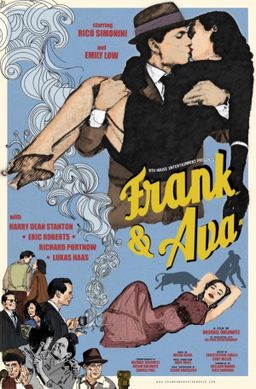
2018’s Frank & Ava tells the story of the tempestuous love affair and marriage of Frank Sinatra (Rico Simonini) and Ava Gardner (Emily Elicia Low).

The film opens with Sinatra at his lowest point.  His records are no longer selling.  His marriage to Nancy is in trouble.  The government is now investigating him for supposed communist sympathies (say it ain’t so, Frank!) and also his connections to the Mafia.  Hedda Hopper (Joanne Baron), Louella Parsons (Joanna Sanchez), and Walter Winchell (Richard Portnow) all pop up throughout the film, breathlessly reading the latest gossip into radio microphones.  Frank’s voice is weakening and it looks like he’s about to lose his fanbase to Eddie Fisher and Perry Como.  As for his acting career, everyone knows that he can’t act.  (At one point, even Frank’s friends laugh at the idea of Siantra ever winning an Oscar.)  Frank knows that he would be perfect for the role of Maggio in From Here To Eternity but the film’s director wants to cast someone like Harvey Lembeck or Eli Wallach.

As for Ava Gardner, she’s just gotten out of a relationship with Howard Hughes.  More famous for her then-scandalous personal life than her film roles, Gardner drinks too much, curses too much, and is too open about her affairs for the sensibilities of much of 1950 America.

When Frank and Ava meet, it’s love at first sight.  They drive around while drinking champagne straight from the bottle.  They crash cars.  When they’re arrested, they charm a local sheriff (Harry Dean Stanton, in his final film role).  They fight.  They make love.  They fight more.  They make love more.  Frank obsesses on the possibility of Ava being unfaithful to him while continually cheating on her with everyone from Lana Turner to Marilyn Maxwell.

The first thing that you notice about Frank & Ava is that it is full of references to real Hollywood gossip.  Names are dropped.  Real celebrities are depicted and the portrayals are not always positive.  The second thing that you notice is that, with the exception of Emily Elicia Low, no one is particularly convincing.  The actress who plays Marilyn Monroe not only looks nothing like Marilyn but her attempt to imitate Marilyn’s trademark voice made me laugh out loud.  Actors appear as Lana Turner, Montgomery Clift, Howard Hughes, and a host of mafiosos and none of them are the least bit convincing.  Much of the film is like attending a costume party where no one could spend more than five bucks on their costume.  Rico Simonini, who was so charming in My Dinner With Eric, is not particularly convincing as Frank Sinatra.  That said, Emily Elicia Low is well-cast as Ava Gardner and Eric Roberts shows up for two scenes as producer Harry Cohn.  In real life, Cohn was a notorious bully.  The old anecdote about everyone showing up at an unpopular man’s funeral to make sure that he’s actually dead is often said to have been inspired by Cohn.  In the film, Roberts plays Cohn as being a surprisingly reasonable guy.  If Fred Zinnemann wants Sinatra, he can have Sinatra.  If he wants Eli Wallach, he can have Eli Wallach.  Just make sure they aren’t communists!

Probably the most interesting thing about this film is its attempt to recreate the 50s without spending a good deal of money.  This is a low-budget movie and there’s an obvious artificiality to many of the sets and costumes that gives the entire film an oddly dream-like feel.  It’s less a recreation of the past and more a look at how the past might look in our fantasies.  All the men wear suits.  Ava dresses and talk as if she just stepped out of a parody of a film noir.  Famous scenes from Goodfellas and La Dolce Vita are awkwardly recreated by Santini and the cast.  The film, which was made by people who obviously loved the legend of Frank and Ava, ultimately transcends the conventional definition of good and bad and instead becomes a work of outsider art, a look into the hazier regions of the American cultural psyche.

Previous Eric Roberts Films That We Have Reviewed:

  1. Star 80 (1983)
  2. Blood Red (1989)
  3. The Ambulance (1990)
  4. The Lost Capone (1990)
  5. Love, Cheat, & Steal (1993)
  6. Voyage (1993)
  7. Love Is A Gun (1994)
  8. Sensation (1994)
  9. Dark Angel (1996)
  10. Doctor Who (1996)
  11. Most Wanted (1997)
  12. Mercy Streets (2000)
  13. Wolves of Wall Street (2002)
  14. Mr. Brightside (2004)
  15. Six: The Mark Unleased (2004)
  16. Hey You (2006)
  17. In The Blink of an Eye (2009)
  18. Enemies Among Us (2010)
  19. The Expendables (2010) 
  20. Sharktopus (2010)
  21. The Dead Want Women (2012)
  22. Deadline (2012)
  23. The Mark (2012)
  24. Miss Atomic Bomb (2012)
  25. Bonnie And Clyde: Justified (2013)
  26. Lovelace (2013)
  27. The Mark: Redemption (2013)
  28. Self-Storage (2013)
  29. This Is Our Time (2013)
  30. Inherent Vice (2014)
  31. Road to the Open (2014)
  32. Rumors of War (2014)
  33. Amityville Death House (2015)
  34. A Fatal Obsession (2015)
  35. Stalked By My Doctor (2015)
  36. Enemy Within (2016)
  37. Joker’s Poltergeist (2016)
  38. Prayer Never Fails (2016)
  39. Stalked By My Doctor: The Return (2016)
  40. The Wrong Roommate (2016)
  41. Dark Image (2017)
  42. Black Wake (2018)
  43. Stalked By My Doctor: Patient’s Revenge (2018)
  44. Clinton Island (2019)
  45. Monster Island (2019)
  46. The Savant (2019)
  47. Seven Deadly Sins (2019)
  48. Stalked By My Doctor: A Sleepwalker’s Nightmare (2019)
  49. The Wrong Mommy (2019)
  50. Exodus of a Prodigal Son (2020)
  51. Free Lunch Express (2020)
  52. Her Deadly Groom (2020)
  53. Top Gunner (2020)
  54. Deadly Nightshade (2021)
  55. The Elevator (2021)
  56. Just What The Doctor Ordered (2021)
  57. Killer Advice (2021)
  58. The Poltergeist Diaries (2021)
  59. The Rebels of PT-218 (2021)
  60. A Town Called Parable (2021)
  61. Bleach (2022)
  62. My Dinner With Eric (2022)
  63. Aftermath (2024)
  64. The Wrong Life Coach (2024)

Love On The Shattered Lens: The Bitch (dir by Gerry O’Hara)


“Joan Collins is THE BITCH” announced the opening credits of the 1979 film, The Bitch.  Seriously, how can you not love a film that opens that way?

Joan Collins returns of Fonatine Khaled, the character that she previously played in The Stud.  Once again based on a novel by Jackie Collins, The Bitch follow Fontaine as she adjusts to life as a freshly divorced woman.  Though she received a good deal of money in the divorce and she has her own personal fortune as well, Fontaine is struggling to maintain her extravagant lifestyle.  A new disco has opened and is taking away the crowds that used to populate her club.  She’s running out of cash and soon, she might not even be able to fly first class!

It’s on an airplane that she meets Nico (Michael Colby, who is not particularly charismatic but still isn’t quite as dull as Oliver Tobias was in The Stud).  In an amusing in-joke, the movie that they watch on the plane is The Stud.  Nico says that he can’t decide if the movie is funnier with the sound or without.  “It’s not meant to by funny,” Fontaine replies.  Nico claims to be a wealthy Italian businessman, which immediately gets Fontaine’s attention.  Of course, Nico’s lying.  He’s actually a con artist and a jewel thief.  Fontaine figures that out when Nico tries to use her to smuggle a diamond through customs.  Fontaine is angered but she’s intrigued.

Nico is in debt to the Mafia.  The head of the British mob is a man named … and I’m not making this up …. Thrush Feathers (Ian Hendry).  Thrush Feathers demands that Nico cause a horse to lose an upcoming race.  The horse belongs to Fontaine’s friends from the first film, Vanessa (Sue Lloyd) and Mark Grant (Mark Burns).  Thrush Feathers also offers to help Fontaine keep her club open but his help comes with a price.  Whatever the price is, could it possibly be worse than being named Thrush Feathers?  Seriously, in what world is someone with that name going to take over a London crime syndicate?  How do you go from the Kray Brothers to Thrush Feathers?

Anyway, the plot really isn’t that important.  There’s a lot of double crosses and manipulation as Fontaine lives up to the title of the film.  The plot is really just an excuse to tease the viewer with visions of the decadent rich.  The clothes are expensive.  The mansions are ornate.  The conversations are always arch and full of double entendres.  This film is less about how the rich live and more about how middle class like to imagine the rich live.  It’s also about sex, though none of it quite reaches the lunatic abandon of The Stud’s swimming pool orgy scene.  The important thing is that whole thing is scored to a disco beat.

As with The Stud, it’s Joan Collins who holds the film together, giving a fierce and uninhibited performance in which she gleefully embraces the melodrama and delivers her lines with just enough attitude to let the viewer know that she’s in on the joke.  “Bitch” may have been meant as an insult but, as played by Joan Collins, Fontaine wears the title as a badge of honor.  She understands what had to be done to survive in a male-dominated world and she makes no apologies for it.  Even more importantly, she knows that once you fly first class, you can never go back.

The Bitch is not necessarily good but it is definitely fun in its sordid way.

Love On The Shattered Lens: The Stud (dir by Quentin Masters)


Oliver Tobias is …. THE STUD!

It is true that Oliver Tobias does play the title character of this 1978 British film, which was itself based on a novel by Jackie Collins.  Tobias is cast as Tony Blake, a youngish Englishman who runs the hottest discotheque in the UK.  He runs it on behalf of its actual owner, the decadent Fontaine Khaled (Joan Collins).  Fontaine is married to the fabulously wealthy Benjamin Khaled (played by Walter Gotell, who also had a recurring role in the James Bond films as the head of the KGB) but she seeks her carnal pleasure elsewhere.  Tony’s job and all the glamour that goes with it is dependent upon being Fontaine’s personal plaything.  If Fontaine wants to do it in the elevator while the security cameras film, that is what’s going to happen.  If Fontaine wants Tony to take part in a swimming pool orgy while she swings back and forth over the festivities, that’s what is going to happen.  Tony Blake is the stud, after all.

Tony, however, tires of all the nonstop decadence.  He’s not as empty-headed as Fontaine assumes him to be.  Tony’s complicated.  Tony has feelings.  At least, that’s what the films wants us to believe.  To be honest, Tony is kind of boring but we’ll get to that later.  Tony allows himself to be used by Fontaine but he finds himself truly falling in love with Fontaine’s stepdaughter, Alexandra (Emma Jacobs).  But does Alexandra feel the same way towards Tony or is she just using Tony to get revenge on her hated stepmother?

Let’s start with something positive about this film.  The Stud is one of the most 70s movies ever made.  Everything from the fashion to the slang to the cinematography to the wah wah soundtrack simply screams 70s.  There’s several scenes that take place in the discotheque.  Very few of them actually move the story forward in any meaningful way but they do give you a chance to look at the clothes and the haircuts and to listen for the sound of people snorting cocaine in the background.  If you’re a student pop culture or if you’re just fascinated by the tacky and the trashy, the film is very enjoyable on that level.  There’s also a lot of sex, all of it filmed in vibrant color and featuring a camera that will not stop moving as The Stud tries to convince us that it’s actually high art.

Unfortunately, the stud of the title is a bit of dud.  (And they say I’m not a poet!)  Oliver Tobias is handsome and has a superficially charming screen presence.  But, whenever he has to deliver dialogue or show any hint of emotion, the film falls flat.  As played by Tobias, Tony just comes across as a bland gigolo, enjoyable to look at but impossible to really care about.  The film is so dominated by Joan Collins’s cheerfully over-the-top performance as Fontaine that Tobias seems to spend a lot of the movie disappearing into the background.  Indeed, Collins’s performance is the best thing about the film.  She fully understand what type of movie she’s appearing in and she fully embraces the melodrama, delivering her arch dialogue with just the right amount of self-awareness to suggest that she’s in on the joke.

The Stud is a love story featuring people who are only capable of loving themselves.  At its worst, it gets bogged down in Tobias’s dull lead performance.  At its best, its trashy fun with a disco beat.  I like trashy fun so I can excuse the boring leading man.  A good beat that you can dance to can make up for a lot.

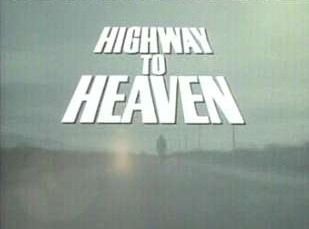
Late Night Retro Television Review: Highway to Heaven 3.13 “Basinger’s New York”


Welcome to Late Night Retro Television Reviews, a feature where we review some of our favorite and least favorite shows of the past!  On Thursdays, I will be reviewing Highway to Heaven, which aired on NBC from 1984 to 1989.  The entire show is currently streaming on Tubi and several other services!

New York, New York, it’s a heckuva town….

Episode 3.13 “Basinger’s New York”

(Dir by Michael Landon, originally aired on December 17th, 1986)

It’s Christmas in New York and veteran news columnist Jed Basinger (Richard Mulligan) has no idea what to write about.  Basinger has been recording the lives of the people of New York City for decades and he’s finally reached the point where he fears that there may not be anything good left to write about.  In short, Jed Basinger is a cynic and we know what this show thinks of cynicism!

While Basinger walks down a cold city sidewalk, he suddenly discovers Jonathan and Mark walking beside him.  Basinger worries that they’re fans, looking to harass him or tell him a long story that they think he should write about.  Instead, Jonathan introduces himself as an angel and explains that he’s here to show Basinger all the good things happening in the city.

I have to admit that I always groan a little whenever an episode of this show starts with Jonathan admitting that he’s angel.  The episodes where Jonathan makes no effort to hide his identity are usually the weakest, if just because they tend to be a bit more preachy than the typical episode of Highway to Heaven.  (Despite its reputation, Highway to Heaven was usually more earnest than preachy.)  Once Jonathan says those three words — “I’m an angel,” — the viewer is immediately aware that this episode has a message and it’s not going to be a subtle one either.

Jonathan, Mark, and Basinger make their way through New York.  They meet a cab driver who just wants to be reunited with his son.  They meet the saintly homeless people who live on the streets and take care of each other in their own quirky way.  They meet a nice cop.  They meet not one but two women who are in labor and who end up at the same hospital.  One woman is poor and turned away because she doesn’t have insurance (which, technically, I think is illegal under federal law but whatever).  The other woman is the wife of a U.S. Senator who announces that she refuses to give birth in a hospital that turns away the poor.  Luckily, Basinger is there and threatens to write about it.  The scene in the hospital is typical of this episode.  It’s well-meaning but so heavy-handed that it’s nowhere near as effective as it should have been.  If I was in labor, would I take the time to demand that the hospital treat all of its patients fairly?  I’d like to think so but, realistically, my mind would probably be on other things.  Luckily, Basinger gets to write his column, despite showing up late at the newspaper.  It turns out that the presses went down while Basinger learned a lesson about New York and kindness.

I can’t really be too critical of this episode because its heart was in the right place.  That was this show’s biggest strength.  Michael Landon really did seem to believe he could make the world a better place, one episode at a time.  That said, this episode was a bit too heavy-handed for my tastes.  But again, how can I be too critical of a show about Christmas miracles?


Retro Television Review: Malibu CA 2.2 “Jason’s Song”


Welcome to Retro Television Reviews, a feature where we review some of our favorite and least favorite shows of the past!  On Thursdays, I will be reviewing Malibu CA, which aired in Syndication in 1998 and 1999.  The entire show is currently streaming on YouTube!

I know that’s the first season cast but I don’t care.

This week …. ugh.

Episode 2.2 “Jason’s Song”

(Dir by Gary Shimokawa, originally aired on October 16th, 1999)

Lisa is just the worst!

No, silly, not me!  I’m the best.  I’m talking about Lisa, the newest character on this show.  Lisa is the medical student who was hired to work as a waitress at the restaurant.  This week’s episode finds her desperately looking for an apartment and moving in with …. Traycee!  The problem is that Lisa can’t stand Traycee because Traycee loves the color pink and is a careless driver.  What’s wrong with that?  I love the color pink and …. well, I am a good driver.  But still, Lisa throws such a fit over moving in with Traycee and Marquita Terry (who plays Lisa) gives such a cartoonishly over-the-top performance in the role that you can kind of end up feeling that Lisa is …. well, she’s the worst.

Things are resolved when Lisa throws one of Traycee’s possessions of the balcony in frustration.  I hate to say it but, even though it’s only been a few hours since I watched the episode, I cannot remember what exactly Lisa threw.  Was it a CD?  Let’s say it was a CD because I refuse to rewatch this episode because, as I will discuss in the next paragraph, this episode deeply offended me.  The important thing is that, when the cop shows up at the apartment looking for who threw the whatever at him, Traycee takes the blame and …. GOES TO JAIL!  (Editor’s Note: I checked and it was a CD. — Erin)

See, that’s why I’m not going to rewatch this episode.  Getting arrested and going to jail is a big deal.  Lisa allowed Traycee to potentially get a criminal record.  If the show wants me to sympathize with Lisa then Lisa should have gone to the police and told the truth and dealt with the consequences.  Lisa was the one dumb enough to throw whatever it was that she threw.  This is on Lisa and I don’t care how frustrated she was, she’s the one was an idiot.  Instead, Lisa stays at the apartment and paints one door pink and puts up some fake hearts.  When Traycee returns …. FROM JAIL! …. she is overjoyed.  Lisa and Traycee are friends.  Yay?  No, no yay.  TRAYCEE WENT TO JAIL FOR YOU!  Traycee probably got charged with a misdemeanor and had to pay a fine.  Someone probably had to bail her out.  Throwing something off of a balcony and hitting a cop is not a little thing.  Someone with that little self-control should not be a doctor.  Lisa spends almost this entire episode shaking with rage.  Was no one directing this episode?  Was no one asking for a second take?  What the Hell was going on?

While this was going on, Jason pursued his musical career and fell under the influence of Jesse Mercer (Rex Smith), who was once in a band with Jason and Scott’s father.  (The Disco Dudes, I think they were called.)  Jesse proves to be a bad influence.  Recently promoted to night manager and having been given a laptop by his father, Jason sells the laptop for a new guitar.  What a prick.  Jesse agrees to play a fundraiser for the lifeguards but bails at the last minute.  Don’t worry.  Jason has a guitar and he’s learned an important lesson.

This storyline actually featured a pretty good performance from Rex Smith but it was hard not to notice that it was basically just the Fabolous Belding Boys with Edward Blatchford (now cast not as the cool Belding brother but instead as Jason and Scott’s dorky father) playing the role that Dennis Haskins originally played.  If that sentence doesn’t make sense to you, you’ve never watched Saved By The Bell and you’re lucky.

Ugh, this show.

I CAN ONLY IMAGINE (2018) – a movie that came out at just the right time in my life! 


I CAN ONLY IMAGINE (2018) is the story of Bart Millard, the lead singer of the band MercyMe. He also wrote the song of the same name that inspired the movie. I remember when the song was released in 2001 as it immediately became a huge hit. As a person who attended church regularly and listened to contemporary Christian music, I heard it often either on radio or when other people would sing it at church. There was no getting away from the song as it was so popular. I really liked the song, but to be completely honest, it wasn’t especially meaningful to me. I just really liked it as a beautiful song. Fast forward to March of 2018 when the movie came out. 2018 was probably the most difficult year in my life, and I was needing hope. I saw I CAN ONLY IMAGINE at the movie theater, and its message of redemption and reconciliation provided glimmers of hope for me when my life had gotten really dark.

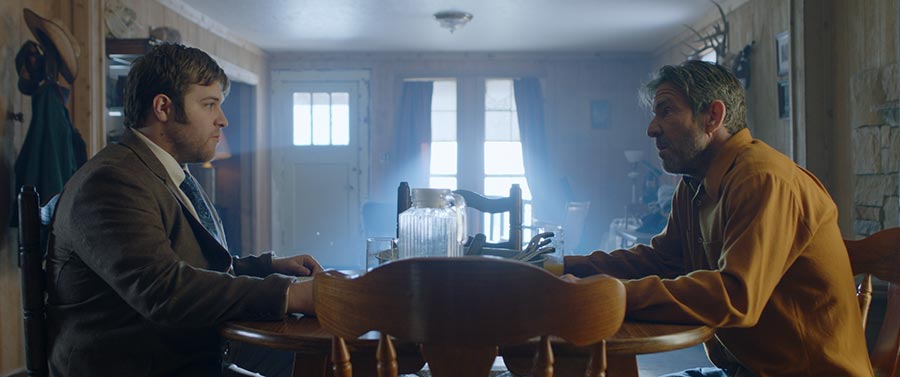
The movie provides us snapshots of Bart’s early life.  We see him at church camp where he meets the girl who would go on to be the love of his life, Shannon. We see him as a boy dealing with the fact that his mother has left the family because she was no longer able to deal with the abusive behavior of his dad, Arthur (Dennis Quaid). We also see how that abuse has extended to Bart himself. We see him as a high schooler (actor John Michael Finley) playing football in Greenville, TX, to try to please his dad. When he gets injured playing football and turns to the school’s music program, we see him hide the fact that he got the lead in the school production of “Oklahoma” because he knows his dad will make fun of him. Arthur is the kind of man who never has a nice word to say to his son. When he does find out about Bart performing in the musical, he tells him that it “sounds like a good joke.” It all boils over when the two get into a fight before Bart heads to church one morning, and Arthur smashes a plate over his head. Bart leaves for good, he thinks.  

With his love of music and great singing voice, Bart joins a band in need of a singer. Now we get snapshots of this portion of Bart’s life as the band hits the road and performs at different places, trying to sell as many of their homemade records as possible. Through sheer determination, Bart is able to convince Scott Brickell (Trace Adkins) to take over management of the band. After traveling with the group for a while, Brickell believes that they have a shot at making it in Nashville, so he secures the band, now known as “MercyMe,” a showcase in front of a group of top record executives. Unfortunately, the executives aren’t that impressed, with one even going so far as to tell Bart that he’s just not good enough. With those words bringing back all of the doubt that his father had instilled in him, Bart decides to quit the band. Sensing that Bart needs to resolve his family issues, Brickell asks him to take some time for himself. Bart asks the band to give him some time so he can go home for a while, not knowing what might be in store for him.

When Bart returns home, he finds his dad Arthur acting really strange… he’s being nice. He makes his son breakfast and then tells him about a project he’s hoping they can work on together, which is the restoration of his old Jeep. Bart doesn’t know what to make of this and even confronts his dad. Arthur tells him that he has become a Christian and even goes so far as to ask Bart for forgiveness for the way he has treated him in the past. Bart refuses to forgive him and gets in his dad’s truck to leave. While looking for the keys, Bart sees papers in his dad’s truck that reveal a terminal pancreatic cancer diagnosis. Discovering this information allows Bart to soften his heart towards his dad, and he even begins the process of forgiveness. The two men would be inseparable up to the point that Arthur passes away. Bart would say of his dad during this time that “he went from being a monster to the man I wanted to be.” At the funeral, Bart’s grandma (Cloris Leachman), who he called Me Maw, tells Bart, “I can only imagine what your dad’s seeing right now.” Ultimately inspired by his Me Maw’s words, as well as his own journey of grief and healing with his dad, Bart would write the lyrics that would turn into the most-played song in the history of Christian radio as well as the best-selling Christian song of all time (linked just below).

Movies that feature relationships between dads and sons always get to me, and I’m not even sure why that is. My dad and I have always had a great relationship. We were inseparable when I was growing up. My dad was my coach in sports, we always worked together on his projects, and he loved to take us fishing. My dad has always shown unconditional support and love towards me, and he continues to do so to this day. Maybe it’s my appreciation for my dad that leads me to this sort of emotional response when those relationships are presented on screen, but I think it’s even deeper than that. There’s a scene near the end of I CAN ONLY IMAGINE where Arthur shares his conversion experience with his son that always makes me cry like a baby. It seems that same day that he smashed that plate over Bart’s head, Arthur listened to his son sing at church on the radio and decided to turn his life over to God. Watching Arthur admit to his faults and become a man who shows great love and kindness to Bart is a beautiful sight to behold. And watching Bart accept that love and show that forgiveness may even be more beautiful. As a deeply flawed Christian myself, I think that’s why this movie means so much to me. I never tell other people how they should live their lives. In my opinion, each person has their own journey, and their lives will be based on their own decisions and actions. But it’s my personal belief that God is in the business of making things that seem impossible, possible, and He does it all while showing unconditional love and forgiveness. I can honestly say that when I’ve been at my lowest points in my own life (here’s looking at you 2018), it has been the process of turning things over to God that has opened me up both spiritually and emotionally to opportunities for meaningful, life-changing connections with other people. This movie tried to tell me that, and my own life is proving it out.

Check out the trailer below: