Directed by Neil Jordan and first released in 1992, The Crying Game opens at a fair in Northern Ireland. A black British soldier named Jody (Forest Whitaker) meets a flirtatious woman named Jude (Miranda Richardson). Jude leads Jody away from the fairground. Jody thinks that they’re going to have sex but instead, he ends up getting kidnapped by Fergus (Stephen Rea) and Peter Maguire (Adrian Dunbar). As Peter explains it after Jody is taken to an abandoned cottage, the soldier is now a prisoner of the Irish Republican Army.
Jody is left in a dark room, tied to a chair and with a canvas bad over his head. Fergus is often left to guard him. Despite Peter’s explicit orders, Fergus talks to Jody and the two men strike up an uneasy friendship. Fergus removes the bag from Jody’s head. He even reveals his name. Jody and Fergus talk about their lives. Jody says he joined the Army and was immediately sent to the most racist part of the UK. Fergus replies that his only issue with Jody is that “you shouldn’t be over here.” Jody talks about his love of cricket. Fergus talks about his love of hurling. Fergus sees a picture of Jody with his lover, Dil (Jaye Davidson). Fergus comments that Dil is attractive. “She’s not your type,” Jody replies.
Peter warns Fergus not to become friends with Jody because there’s a good chance that they’re going to have to execute him. And when the British refuse to exchange prisoners, the order does come down to carry out the execution. Fergus demands that he be allowed to carry out the shooting. However, as he leads Jody out of the cottage, Jody breaks free. Fergus chases him but, as they reach a nearby road, Fergus realizes that he can’t bring himself to kill Jody. Unfortunately, Jody is still killed when he’s run over by a British army truck.
Fergus flees to London and, after getting a job as a construction worker, he tries to lay low and track down Dil. Dil, however, turns out to be not quite was Fergus was expecting. It turns out that Jody didn’t reveal every aspect of his life while he was trapped in that cottage. Meanwhile, Jude and Peter both show up in London and demand that Fergus help them execute “some judge.”
The Crying Game is a twisty and engaging thriller, one that is best known for the twist involving Dil’s identity but which is also a thought-provoking look at the assumptions we make about each other and the roles that people feel forced to play. Fergus doesn’t really have it in him to be a terrorist or an assassin but it’s the role that he feels he’s been forced into by his desire to see the British leave Northern Ireland. Jody turns out to have a few secrets of his own and, once their revealed, his eagerness to go off with Jude is seen in an entirely new light. Jude and Peter present themselves as being honorable freedom fighters but their actions often seem to suggest the opposite. In the end, the only character who is truly comfortable with their nature is Dil. Both Stephen Rea and Jaye Davidson more than deserved their Oscar nominations. Their chemistry goes a long way towards making this a thriller that sticks with you.
The Crying Game was nominated for several Oscars but lost the majority of them to Unforgiven. (Both Stephen Rea and Clint Eastwood lost Best Actor to Al Pacino for Scent of a Woman.) However, Neil Jordan did win an Oscar for his clever screenplay. Rea has continued to act. Davidson, who reportedly hated the fame that came with appearing in The Crying Game, appeared in one more film before retiring.
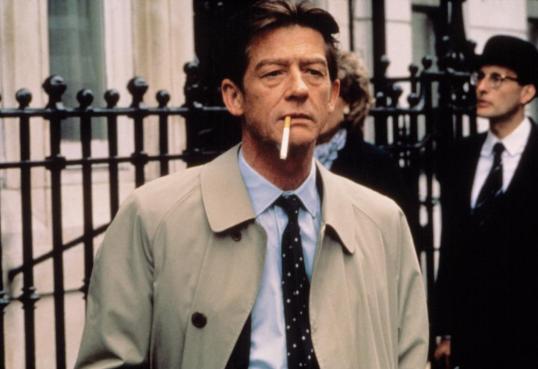
 London. 1961. Doctor Stephen Ward (played by John Hurt) is an artist and an osteopath. He counts among his patients some of the most distinguished men and women in British society, including the Minister of War, John Profumo (Ian McKellen). After meeting two young dancers, Christine Keeler (Joanne Whalley) and Mandy Rice-Davies (Bridget Fonda), Stephen becomes their mentor, the Henry Higgins to their Eliza Doolittle.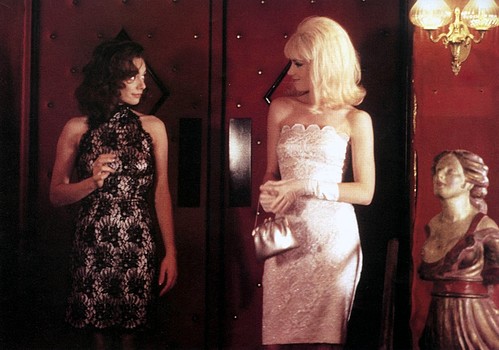
 Through the Shattered Lens