Horror On The Lens: Baffled! (dir by Philip Leacock)


This is a film that I share every year for Horrorthon and can you blame me?  Check out this pitch: Leonard Nimoy is a race car driver who can see into the future and who uses his powers to solve crimes!

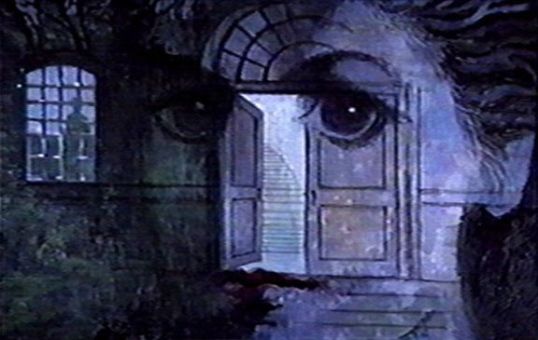
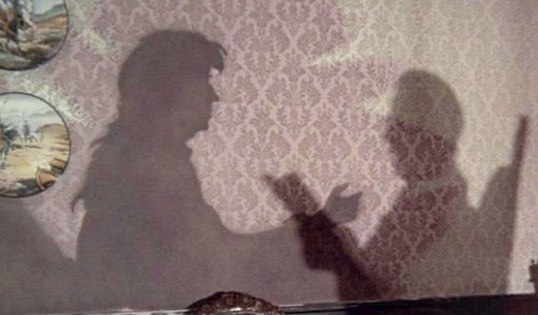
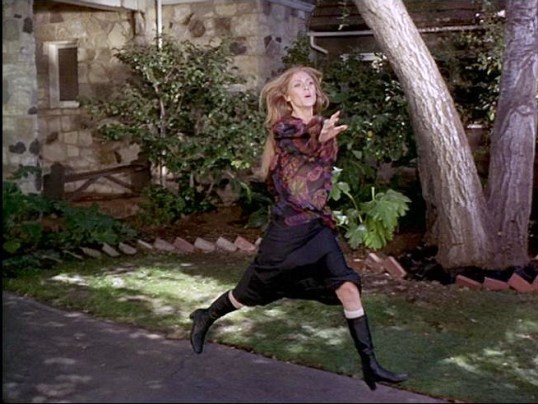
Seriously, if that’s not enough to get you to watch the 1973 made-for-TV movie Baffled!, then I don’t know what is.  In the film, Nimoy takes a break from racing so that he and a parapsychologist (played by Susan Hampshire) can solve the mystery of the visions that Nimoy is having of a woman in a mansion.  This movie was meant to serve as a pilot and I guess if the series had been picked up, Nimoy would have had weekly visions.  Of course, the movie didn’t lead to a series but Baffled! is still fun in a 70s television sort of way.  Thanks to use of what I like to call “slo mo of doom,” a few of Nimoy’s visions are creepy and the whole thing ends with the promise of future adventures that were sadly never to be.  And it’s a shame because I’ve always wondered what was going on with that couple at the airport!

Enjoy Baffled!  Can you solve the mystery before Leonard?


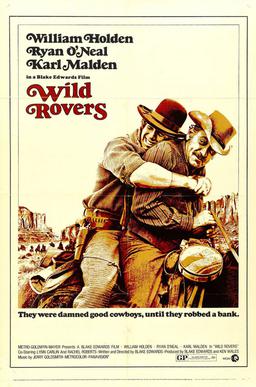
Wild Rovers (1971, directed by Blake Edwards)


In Montana, Walter Buckman (Karl Malden) runs his ranch with an iron hand, warning his neighbor, Hansen (Sam Gilman) not to even think of allowing his sheep to graze on his land.  Walter has two sons, hot-headed John (Tom Skerritt) and the laid back and good-natured Paul (Joe Don Baker).  When Walter learns that two of his ranch hands — aging Ross Bodine (William Holden) and young Frank Post (Ryan O’Neal) — have robbed a bank and are heading down to Mexico, he sends John and Paul to bring them back.  Walter is a big believer in the law and he’s not going to allow any of his people to get away with breaking it.

Ross is a veteran cowboy, who only robbed the bank after Walter withheld his pay to cover the damage of a saloon fight between Ross and Hansen’s men.  Frank is the wilder of the two.  He looks up to Ross and Ross is protective of Frank, even if he has a hard time admitting it.  Ross and Frank are heading down to Mexico so Ross can retire in peace.  Instead of going straight to Mexico, though, they make the mistake of stopping by a small town so Frank can play a little poker and visit the town’s brothel.

Wild Rovers was Blake Edwards’s attempt to make an epic, revisionist western and he includes plenty of shots of the sun setting over the mountains as well as several violent shoot-outs that are shot in Peckinpah-style slow motion.  Unfortunately, the story itself isn’t really strong enough to support Edwards’s ambitions and all of the shots of the countryside, while nice to look at, don’t really add up too much.  Wild Rovers was also a troubled production, with MGM slashing Edwards’s original three-hour film down to 106 minutes and advertising it with a poster featuring O’Neal hugging Edwards from behind, making the film look like a buddy comedy in the style of Butch Cassidy and the Sundance Kid (or an early version of Brokeback Mountain) as opposed to a violent and elegiac western.  (In 1986, a director’s cut was released, which ran for 136 minutes.)  If you only know Blake Edwards from his Pink Panther movies, the grim and tragedy-filled Wild Rovers will come as a surprise.

One thing that Wild Rovers does have going for it is a good cast.  William Holden and an energetic Ryan O’Neal are a solid team and Karl Malden, Tom Skerritt, Rachel Roberts, James Olson, and Moses Gunn all give good performances too.  This movie also provides Joe Don Baker with a sympathetic role and he’s very likable as the laid back Paul Buckman.  It’s not the type of role that Baker often got to play and it’s obvious that a lot of scenes between John and Paul were cut from the film but, in the truncated version, Joe Don Baker’s Paul Buckman becomes the moral center of the film’s story.

Wild Rovers was a disappointment at the box office, one of many that Edwards suffered in the 70s before he and Peter Sellers brought back Inspector Clouseau.

Retro Television Review: 3 By Cheever 1.1 “The Sorrows of Gin” (dir by John Hofsiss)


Welcome to Retro Television Reviews, a feature where we review some of our favorite and least favorite shows of the past!  On Saturdays, I will be reviewing 3 By Cheever, which ran on PBS in 1979.  The entire show can be purchased on Prime and found on YouTube.
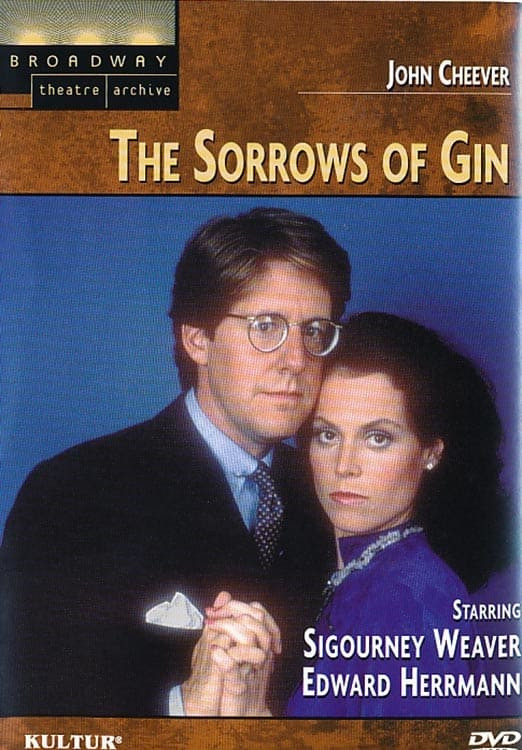
In 1979, PBS aired 3 By Cheever, three short films that were all based on stories by the American author, John Cheever.  The stories all took place in the same suburban milieu and featured characters in common.  The first episode was an adaptation of one of Cheever’s earlier stories, The Sorrows of Gin.

Episode 1.1 “The Sorrows of Gin”

(Dir by Jack Hofsiss, originally aired on October 24th, 1979)

Taking place in the New England suburb of Shady Hill, The Sorrows of Gin deals with the Lawton family.  The Lawtons have got a nice house, lovely neighbors, and enough loyal servants that they don’t ever have to really worry about taking care of their eight year-old daughter, Amy (Mara Hobel).  Kip (Edward Herrmann) and Marcia Lawton (Sigourney Weaver) are youngish, successful, athletic (they play tennis, of course), and they’re also alcoholics.  They don’t realize they’re alcoholics and they’re both far more refined than the stereotypical image of the boozy drunk but they’re alcoholics nonetheless.

They’re also hypocrites.  When Amy’s babysitter, Rosemary (Eileen Heckart), comes to work with booze on her breath, Kip fires her.  Amy, realizing that the alcohol is causing her parents to fight, starts to secretly pour out all of the gin, a little at a time.  Kip and Marcia assume that the servants are sneaking drinks and they go on a firing rampage.  Amy finally decides to run away from home, just to be found by Kip who, at the very least, seems like he’s willing to try to be a better father and husband.

Wow, what a depressing story!  Cheever’s original short story, which was one of the first American stories to really explore suburban alcoholism, was written with a good deal of wit and social satire.  The PBS adaptation takes a far more literal approach.  It captures Cheever’s story but not his voice and, as a result, you kind of find yourself why you should care about any of these people.  Even taking alcohol out of the equation, Kip and Marcia are shallow, self-absorbed, and terrible parents.  Maybe Amy should run away.

On the plus side, the film does feature Edward Herrmann and Sigourney Weaver, both giving excellent performances as the Lawtons.  The same year in which this aired, Weaver also starred as Ripley in Alien and it is a bit odd to see Weaver playing someone who would probably never in a thousand years see that film.  That said, Weaver does a good job and is totally believable as the clueless Marcia.  Meanwhile, Edward Herrmann has just the right WASP-y style to play Kip Lawton.  One of the most effective things about this film is how Kip is just a goofy suburban husband until he thinks someone is drinking his gin.  Then, he becomes outraged.  This film ends with a hint of redemption for Kip, a suggestion that Kip has finally realized how much his drinking is upsetting his daughter.  But, honestly, Kip doesn’t really seem like he has it in him to change.  Hopefully, he’ll just stop firing people.

This was an uneven production.  The story wasn’t quite as shocking as perhaps it was when Cheever first wrote about the Lawtons.  But the performances of Herrmann and Weaver kept me watching.


Horror on the Lens: Baffled! (dir by Philip Leacock)


Leonard Nimoy is a race car driver who can see into the future and who uses his powers to solve crimes!

Seriously, if that’s not enough to get you to watch the 1973 made-for-TV movie Baffled!, then I don’t know what is.  In the film, Nimoy takes a break from racing so that he and a parapsychologist (played by Susan Hampshire) can solve the mystery of the visions that Nimoy is having of a woman in a mansion.  This movie was meant to serve as a pilot and I guess if the series had been picked up, Nimoy would have had weekly visions.  Of course, the movie didn’t lead to a series but Baffled! is still fun in a 70s television sort of way.  Thanks to use of what I like to call “slow mo of doom,” a few of Nimoy’s visions are creepy and the whole thing ends with the promise of future adventures that were sadly never to be.  And it’s a shame because I’ve always wondered what was going on with that couple at the airport!

(I should mention that this is a personal favorite of mine and, as our longtime readers have probably noticed, I share it every Horrorthon.  I’m sharing it earlier than usual this month because, today, I’m having to take my car in to get the driver’s side window repaired.  I have no idea how long I’ll be at the shop but I look forward to watching Baffled when I get back!)

Enjoy Baffled!  Can you solve the mystery before Leonard?

Horror on the Lens: Baffled! (dir by Philip Leacock)


Leonard Nimoy is a race car driver who can see into the future and who uses his powers to solve crimes!

Seriously, if that’s not enough to get you to watch the 1973 made-for-TV movie Baffled!, then I don’t know what is.  In the film, Nimoy takes a break from racing so that he and a parapsychologist (played by Susan Hampshire) can solve the mystery of the visions that Nimoy is having of a woman in a mansion.  This movie was meant to serve as a pilot and I guess if the series had been picked up, Nimoy would have had weekly visions.  Of course, the movie didn’t lead to a series but Baffled! is still fun in a 70s television sort of way.  Thanks to use of what I like to call “slow mo of doom,” a few of Nimoy’s visions are creepy and the whole thing ends with the promise of future adventures that were sadly never to be.

Enjoy Baffled!  Can you solve the mystery before Leonard?

Horror Film Review: When A Stranger Calls (dir by Fred Walton)


“Have you checked the children?” the stranger on the phone asks the terrified babysitter, who is unaware that the children are already dead and that the call is …. COMING FROM INSIDE THE HOUSE!

That’s the premise behind both an oft-repeated urban legend and the opening of the 1979 film, When A Stranger Calls.  I’ve often seen the original When A Stranger Calls described as being one of the scariest films ever made.  That’s not quite true, of course.  The first 20 minutes or so are effective.  The final scene has a few intense moments.  The majority of what lies in-between feels like filler, albeit well-acted filler.

When A Stranger Calls opens with Carol Kane as Jill, a teenage babysitter who is terrified one night by a caller who keeps asking her if she’s checked on the children.  This sequence — really, a mini-movie all of its own — is so well-executed and suspenseful that many people assume that the entire film is just Jill dealing with the mystery caller.  Actually, that’s just the first few minutes and, once the location of the killer has been revealed, Kane disappears from the film for an extended period.  That’s a shame since Kane’s empathetic performance is perhaps the best thing that When A Stranger Calls has going for it.  She’s so convincing as the emotionally shattered babysitter that it doesn’t matter that, at the start of the film, she’s obviously not a teenager.

Instead, the middle part of the film focuses on John Clifford (Charles Durning).  Clifford is a former policeman-turned-private investigator.  He is obsessed with Duncan (Tony Beckley), the man who called Jill at the start of the film.  Duncan has just escaped from a mental institution and Clifford has been hired to track him down.  Clifford is convinced that Duncan will try to find Jill.  Duncan, meanwhile, wanders through the sleaziest sections of downtown Los Angeles, briefly living with a pathetic alcoholic named Tracy (Colleen Dewhurst).  Clifford, of course, is right about Duncan wanting to find Jill.  And Clifford is so determined to kill Duncan that he might even be willing to use Jill as bait….

After the brilliantly horrific opening sequence, it’s impossible not to be disappointed with the drawn-out middle section of When A Stranger Calls.  Durning, Dewhurst, and especially Beckley all give good performances and downtown Los Angeles is so repellent that you’ll want to take a shower afterwards but, narratively, there’s really not much happening.  Clifford finds Duncan. Duncan runs away.  Duncan acts like a jerk and gets in a fight.  Tracy drinks.  The old school cop Clifford scowls at the sleaziness of the world while Duncan continues to lose what little sanity he has left.  Give the film some credit for not portraying Duncan as being some sort of charming, loquacious master criminal.  He’s a total loser, as all serial killers are despite the later popularity of fictional characters like Hannibal Lecter.  Duncan hates both himself and the world with equal fury.  But, that said, the narrative stalls during the middle part of the film.  There’s only so many time you can watch two men chase each other down a trash-strewn street before it gets dull.

Fortunately, Jill does eventually show up again and, after an hour of relentless sleaziness, you’re happy to see Carol Kane, again.  Jill is now married and has children of her own.  And soon, she’s again getting a phone call asking if she’s checked on the children….

And, again, the closing sequence is scary, even if it’s not quite as intense as the opening.  (The opening was scary because we didn’t know what the killer looked like.  By the time Duncan finds Jill a second time, we now know that Duncan is a sickly-looking alcoholic who can’t handle himself in a fair fight.)  The film does have one great jump scare left in its arsenal of tricks.  And yet, it’s impossible to watch When A Stranger Calls without wishing that the whole thing had just focused on Jill instead of getting sidetracked with Clifford searching Los Angeles.

When A Stranger Calls will always have a place in horror history.  “Have you checked the children?” will always produce chills.  It’s just unfortunate that the film spends a good deal of its running time ignoring what makes it scary in the first place.

Horror on the Lens: Baffled! (dir by Philip Leacock)


Leonard Nimoy is a race car driver who can see into the future and who uses his powers to solve crimes!

Seriously, if that’s not enough to get you to watch the 1973 made-for-TV movie Baffled!, then I don’t know what is.  In the film, Nimoy takes a break from racing so that he and a parapsychologist (played by Susan Hampshire) can solve the mystery of the visions that Nimoy is having of a woman in a mansion.  This movie was meant to serve as a pilot and I guess if the series had been picked up, Nimoy would have had weekly visions.  Of course, the movie didn’t lead to a series but Baffled is still fun in a 70s television sort of way.  Thanks to use of what I like to call “slow mo of doom,” a few of Nimoy’s visions are creepy and the whole thing ends with the promise of future adventures that were sadly never to be.

Enjoy Baffled!  Can you solve the mystery before Leonard?

https://www.youtube.com/watch?v=09JTgUcvyGE

Horror on the Lens: Baffled! (dir by Philip Leacock)


Baffled! is an entertaining little made-for-TV movie from 1973.  Leonard Nimoy plays a race car driver who suddenly starts to have psychic visions of a woman who lives in what appears to be a gothic manor.  The woman is in some sort of danger.  Nimoy, of course, would rather just race cars but a parapsychologist (Susan Hampshire) convinces him that he has to figure out what his visions mean.

Now, to be honest, Baffled! is not a particularly scary movie.  Some of Nimoy’s visions are spooky but there’s nothing in this movie that’s going to give you nightmares.  Though it may not be horrifying, Baffled! is a lot of fun.  Apparently, it was meant to be a pilot for a TV series.  If it had been picked up, I guess Nimoy and Hampshire would have been helping out a new guest star every week.  Nimoy seems to be having a lot of fun playing a psychic race car driver and he and Susan Hampshire have a really sweet and enjoyable chemistry.

Enjoy!

http://www.youtube.com/watch?v=09JTgUcvyGE


Film Review: Murder on the Orient Express (dir by Sidney Lumet)


There’s been a murder on the Orient Express!

In the middle of the night, a shady American businessman (Richard Widmark) was stabbed to death.  Now, with the train momentarily stalled due to a blizzard, its up to the world’s greatest detective, Hercule Poirot (Albert Finney), to solve the crime.  With only hours to go before the snow is cleared off the tracks and the case is handed over to the local authorities, Hercule must work with Bianchi (Martin Balsam) and Dr. Constantine (George Coulouris) to figure out who among the all-star cast is a murderer.

Is it the neurotic missionary played by Ingrid Bergman?  Is it the diplomat played by Michael York or his wife, played by Jacqueline Bisset?  Is it the military man played by Sean Connery?  How about Anthony Perkins or John Gielgud?  Maybe it’s Lauren Bacall or could it be Wendy Hiller or Rachel Roberts or even Vanessa Redgrave?  Who could it be and how are they linked to a previous kidnapping, one that led to the murder of an infant and the subsequent death of everyone else in the household?

Well, the obvious answer, of course, is that it had to be Sean Connery, right?  I mean, we’ve all seen From Russia With Love.  We know what that man is capable of doing on a train.  Or what about Dr. No?  Connery shot a man in cold blood in that one and then he smirked about it.  Now, obviously, Connery was playing James Bond in those films but still, from the minute we see him in Murder on the Orient Express, we know that he’s a potential killer.  At the height of his career, Connery had the look of a killer.  A sexy killer, but a killer nonetheless….

Actually, the solution to the mystery is a bit more complicated but you already knew that.  One of the more challenging things about watching the 1974 version of Murder on the Orient Express is that, in all probability, the viewer will already know how the victim came to be dead.  As convoluted as the plot may be, the solution is also famous enough that even those who haven’t seen the 1974 film, the remake, or read Agatha Christie’s original novel will probably already know what Poirot is going to discover.

That was something that director Sidney Lumet obviously understood.  Hence, instead of focusing on the mystery, he focuses on the performers.  His version of Murder on the Orient Express is full of character actors who, along with being talented, were also theatrical in the best possible way.  The film is essentially a series of monologues, with each actor getting a few minutes to show off before Poirot stepped up to explain what had happened.  None of the performances are exactly subtle but it doesn’t matter because everyone appears to be having a good time.  (Finney, in particular, seems to fall in love with his occasionally indecipherable accent.)  Any film that has Anthony Perkins, John Gielgud, Lauren Bacall, Sean Connery, Ingrid Bergman, and Albert Finney all acting up a storm is going to be entertaining to watch.

Though it’s been a bit overshadowed by the Kenneth Branagh version, the original Murder on the Orient Express holds up well.  I have to admit that Sidney Lumet always seems like he would have been a bit of an odd choice to direct this film.  I mean, just consider that he made this film in-between directing Serpico and Dog Day Afternoon.  However, Lumet pulls it off, largely by staying out of the way of his amazing cast and letting them act up a storm.  It looks like it was a fun movie to shoot.  It’s certainly a fun movie to watch, even if we do already know the solution.

TV Review: Night Gallery 1.3 “The House/Certain Shadows on the Wall”


The third episode of Night Gallery aired on December 30th, 1970.  While Americans were undoubtedly finalizing their plans for a wild New Year’s Eve (because, after all, Nixon was president and every day was a party), NBC and Rod Serling invited viewers to take a tour through a darkened museum, one where every painting told a story.

This episode of Night Gallery featured two stories:

The House (dir by John Astin, written by Rod Serling)

The House opens with Elaine Latimer (Joanna Pettet) talking about a recurring dream.  She’s driving her car through the countryside when she comes across a large house.  Though she’s never seen the house, she finds herself drawn to it, as if she somehow belongs in the house.  As Elaine describes her dream, we come to realize that she’s talking to a psychiatrist (Steve Franken) and that Elaine is recovering from mental breakdown.  Her doctor tells Elaine that the dream is nothing to worry about.

However, when Elaine is driving home, she realizes that the countryside looks familiar.  Soon, she’s pulling up in front of the house from her dreams!  When Elaine gets out of the car, she’s greeted by a real estate named Peugeot (Paul Richards) who asks her if she’s interested in buying the house.  As Peugeot gives her a tour of the estate, he mentions that the house is thought to be haunted….

I liked The House.  It was an atmospheric little tale and, from the minute that Elaine started talking about her dream, the story captured my attention.  (I should admit that I also have recurring dreams about a house that I’ve never actually seen before.)  Admittedly, the story does play out at a very deliberate pace and requires a bit of patience but the dream sequences are effectively surreal and Joanna Pettet gives an empathetic performance in the lead role.

Certain Shadows On The Wall (dir by Corey Allen, written by Rod Serling)

This segment features Agnes Moorehead as the sickly Emma, who is poisoned by her own brother, the despicable Stephen (Louis Hayward).  After Emma’s death, Stephen is shocked to discover that, even though Emma is gone, her shadow remains on the wall.  While Stephen is trying to make sense of that, his other two sisters (played by Grayson Hall and Rachel Roberts) have plans of their own for how to deal with their duplicitous brother.

Like The House, Certain Shadows On The Wall is appropriately atmospheric.  The ending is a bit weak as Stephen gets what he deserves but the shadow itself doesn’t have much to do with his actual fate.  Just when you’re waiting for Agnes Moorehead to make a sudden, ghostly appearance, the story comes to an end.  Still, this is an effective segment and it features excellent work from its ensemble.  I especially liked the performance of Grayson Hall, which features one of the most frightening glares that I’ve ever seen.

The third episode of Night Gallery was a definite improvement over the two that came before it.  Both segments tell intriguing stories, though it’s obvious that the show was still better at coming up with good premises than effective endings.

Previous Night Gallery Reviews:

  1. The Pilot
  2. The Dead Man/The Housekeeper
  3. Room With A View/The Little Black Bag/The Nature of the Enemy