Sweet and repressed Amy (Madchen Amick) is a college student who has too much on her plate. She has to take care of her greedy grandmother (Natalie Schaefer, of Gilligan’s Island fame). She has to read a book for her study partner (Corey Parker). She has to sew a dress for her older sister, Gloria (Daisy Hall). She has to find props for the school play. It is her search for props that leads to her buying an old chest at an estate sale. Inside the chest is a red cloak. Amy turns the red cloak into a dress but what she does not know is that the red cloak was previously won by Aztec priests while they conducted human sacrifices. As Professor Buchanan (Anthony Perkins) later explains, anyone who wears the dress will be driven to do evil.
Like Hitler’s Daughter and Deadly Game, I’m Dangerous Tonight was a USA original film. Like those two films, and despite the combined talents of the star of Psycho and the director of The Texas Chainsaw Massacre, I’m Dangerous Tonight is not very good. Perkins is mostly just used for exposition while Hooper’s direction suggests that his main concern was picking up his paycheck. I’m Dangerous Tonight will be best appreciated by fans of Madchen Amick. Amick is not only beautiful here but she also plays a character far different from Twin Peaks’s Shelly Johnson.
Also, be sure to keep an eye out for R. Lee Ermey, playing a tough, cigar-chomping police detective as only he can.
What’s an Insomnia File? You know how some times you just can’t get any sleep and, at about three in the morning, you’ll find yourself watching whatever you can find on cable? This feature is all about those insomnia-inspired discoveries!
If you were suffering from insomnia last night, at around 2 in the morning, you could have turned on Showtime and watched Love is a Gun, an odd little thriller from 1994.
How odd is Love Is a Gun? It’s so odd that it stars Eric Roberts. Roberts plays Jack, a photographer with problems. His longtime girlfriend, Isabelle (Eliza Roberts), refuses to forgive him for cheating on her in the past and demands that he put a ring on her finger. (Jack, for his part, has bought a ring but he keeps losing it.) Jack is haunted by a reoccurring dream, in which he sees himself with a gun pointed at his head. Isabelle says that the dream means that Jack needs to give her a ring. Jack says it’s all about deja vu.
Jack gets a job working as a crime scene investigator. He meets a detective who is so crazy that he’s played by R. Lee Ermey. Jack takes pictures of dead bodies. His colleagues make macabre jokes. A local reporter offers to pay Jack for insider information. Ermey asks Jacks to help cover up a crime. Jack has visions of a line of well-dressed detectives shooting at him, firing squad style. Eventually, Jack ends up sitting in a living room, an anonymous body at his feet, and watching a soap opera. The actors on TV repeat dialogue that we’ve heard Jack and Isabelle say earlier in the film. Jack starts to giggle and is soon laughing like a maniac. A detective steps into the living room and asks Jack if he remembered to take a picture of the body in the bathroom. “Oh yeah,” Jack says, “I forgot about that…”
Jack meets a model named Jean (Kelly Preston). He takes pictures of her wearing a bridal gown and occasionally playing dead. He realizes that he’s already seen the exact same pictures that he’s just taken. Somebody left them in his locker at work but the images of Jean faded to black as soon as he looked at them. He asks Jean if this is all an elaborate joke. “Take the shot, Jack,” Jean replies.
Soon, Jean and Jack are having an affair. Jean tells Jack that she has a strange rash. Jack imagines that there’s a hole in Jean’s forehead. A man claiming to be Jean’s husband shows up and wishes Jack luck because his wife is crazy.
Jack goes back to Isabelle. Isabelle demands the ring. Jack freaks out and returns to Jean. Jean says she’s pregnant but then says she isn’t. Jack giggles and then cries. He goes back and forth between the two women, constantly begging for forgiveness as beads of sweat collect on his forehead.
Jack’s watch stops. He tries to get it repaired. An old man yells at him that his watch is cursed and cannot be repaired because it might infect all of the other watches in the man’s shop.
And, after all of that, the movie starts to get really weird…
Love Is A Gun does eventually offer up an explanation as to what’s going on. It doesn’t make a bit of sense but somehow, the total incoherence of it all adds to this low-budget film’s charm. Full of surreal images and intentionally odd dialogue, Love Is A Gun is compulsively watchable.
It also features a genuinely strange performance from Eric Roberts. Roberts goes through the film with this goofy smile on his face, except for the scenes when Jack gets upset. When Jack is upset, Roberts stomps his feet, jumps up and down, yells out every other line of dialogue, and contorts his body in some truly weird ways. When he gets really angry, he grabs can after can of beer and furiously shakes them before opening, causing the beer to drench his face. Eric Roberts’s lead performance is literally one of the oddest things that I have ever seen and it’s worth watching Love Is A Gun just to experience it.
Last night, after we finished watching the first episode of the new season of American Idol, my bff Evelyn and I watched Megiddo: The Omega Code 2, an evangelical apocalypse film from 2001.
Why Were We Watching It?
Considering that I’m an occasionally agnostic Irish Catholic and Evelyn describes herself as being a “Jewish atheist,” and that Megiddo: The Omega Code 2 is a film about Armageddon told from an evangelical point of view, I think the real question is how could we not watch it? I mean, seriously.
Along with that, of course, Evelyn and I both wanted to watch something that nobody would ever expect either one of us to ever watch.
What Was It About?
Stone Alexander (Michael York) is President of the European Union and is promoting a plan that he claims will solve all of the world’s problems. His younger brother, David Alexander (Michael Biehn) is vice president of the United States and wants to keep America from turning into Europe. David is also in love with Stone’s wife (Diane Venora). And, of course, Stone is actually the Antichrist while David is Michael Biehn.
Anyway, Stone uses his magic devil powers to cause President Benson (R. Lee Ermey) to die of a heart attack and David becomes President. David, however, refuses to join Stone’s “new world order” so Stone frames David for the murder of their father. David goes into hiding with a few loyal American soldiers while Stone makes plans to launch a military strike against Jerusalem.
It all, of course, leads to a huge battle between the forces of Hell and the combined armies of Spain and China (no, really). David finally gets his chance to confront his brother, many prayers are said, and, eventually, a CGI demon pops up and creates a lot of CGI mayhem.
What Worked?
Evelyn claims that nothing worked in this film but I disagree just slightly. First off, and most importantly, Franco Nero is in this film! He plays Stone’s father-in-law and, while he may no longer be the dashing Lancelot from Camelot, Franco Nero is still aging pretty damn well.
Udo Kier is in the film too. Seriously, Udo Kier pops up in the strangest places.
Michael York is a lot of fun as the wonderfully evil Stone Alexander. York’s performance here makes his delivery of the line, “YOU CAN LIVE! LIIIIIIIIIIIIIIIIIIIIVE!” at the end of Logan’s Run look restrained. Also, if you’re going to have a made-for-evil name like Stone Alexander, you might as well be the Antichrist.
On a personal note, I had a lot of fun annoying Evelyn by pointing out that just about every policy proposed by Stone Alexander has also been proposed by Barack Obama. I imagine that Megiddo must be a very popular film among certain conspiracy-minded segments of the population.
What Did Not Work?
To be honest, the entire film didn’t work. It’s not a very good film. The special effects were cheap, the script made the Atlas Shrugged films look subtle, and I imagine that the film probably created more atheists than believers.
My weekend was full of sleep, coughing and just vegetating in front of my bedroom tv as I tried to get better from my bout of the cold and flu. For some reason or another AMC channel decided to hold a mini-marathon of David Fincher’s classic neo-noir thriller, Seven, and I must say that I probably saw all three straight showings before sleep finally took over. It surely made for some very unusual, drug-induced dreams.
I’ve always seen Seven as Fincher at his most exploitative best. If there was ever a modern grindhouse exploitation film of the past twenty years I would have to consider Seven as one of them. From start to finish the film just felt grimy and made one feel dirty just for having seen it. Take away all the gloss and veneer afforded Fincher due to modern film technology and techniques this film was grindhouse to its core. No better scene exemplifies and solidifies Seven as a grindhouse exploitation film than it’s shocking, nihilistic ending which bucked traditional Hollywood happy ending (or at least and ambiguous one).
It’s been made famous due to the powerful performances from the three leads who dominate the scene. It is almost played off like a stage play with some gorgeous camera work from cinematographer Darius Khondji switching from Morgan Freeman to Kevin Spacey to Brad Pitt with mathematical precision as the scene unfolds through very strong dialogue by screenwriter Andrew Kevin Walker.
The performances shown by Spacey is both chilling and otherworldly as the sociopathic John Doe urging Pitt’s Det. Mills to become wrath and punish him for his sin of envy. Looking helpless and desperate is Freeman’s Det. Somerset trying to talk some sense and decency to the rapidly unraveling Mills who has just learned that what is inside the box he’s been screaming for is his wife’s head.
The fact that the unfolded and ended the way it did honors the grindhouse sensibilities of past exploitation films where the good guys never always win and even when they do it’s at a very heavy cost to the victor. This climactic ending to Seven is so nihilistic that when the film was first shown in 1995 many walked out grumbling at such a dark and heavy ending. Where was the Hollywood happy ending everyone was so used to. There was no cavalry charging last second to save the day. No deus ex machina intervening to show that Mill’s wife was still alive. No, Fincher and crew knew they had something special in their hands and went full tilt to see it through.
It’s no wonder I still consider Seven to be David Fincher’s best film to date.
 Sweet and repressed Amy (Madchen Amick) is a college student who has too much on her plate. She has to take care of her greedy grandmother (Natalie Schaefer, of Gilligan’s Island fame). She has to read a book for her study partner (Corey Parker). She has to sew a dress for her older sister, Gloria (Daisy Hall). She has to find props for the school play. It is her search for props that leads to her buying an old chest at an estate sale. Inside the chest is a red cloak. Amy turns the red cloak into a dress but what she does not know is that the red cloak was previously won by Aztec priests while they conducted human sacrifices. As Professor Buchanan (Anthony Perkins) later explains, anyone who wears the dress will be driven to do evil.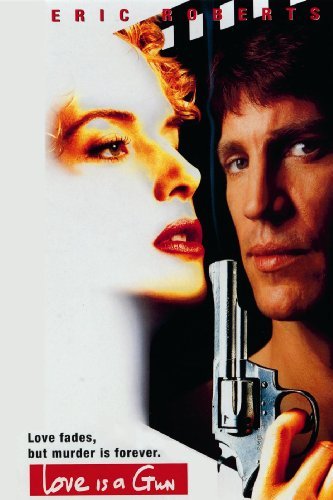


 Through the Shattered Lens