Retro Television Review: The Love Boat 3.27 “Invisible Maniac/September Song/Peekaboo”


Welcome to Retro Television Reviews, a feature where we review some of our favorite and least favorite shows of the past!  On Wednesdays, I will be reviewing the original Love Boat, which aired on ABC from 1977 to 1986!  The series can be streamed on Paramount Plus!
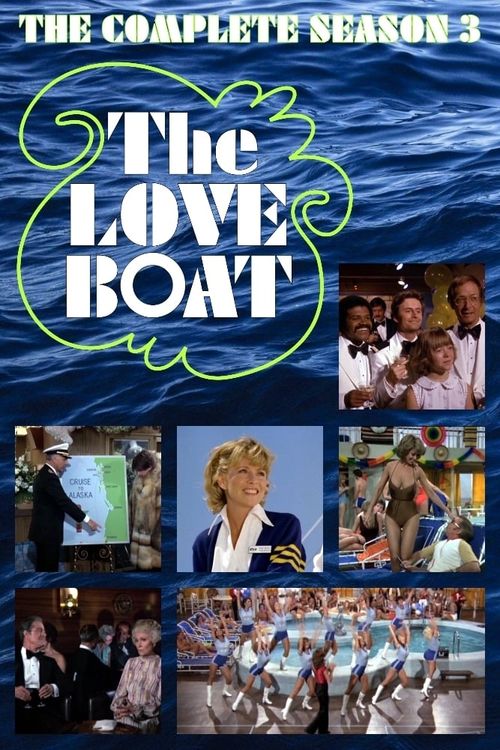
This week, The Love Boat has a very special passengers!

Episode 3.27 “Invisible Maniac/September Song/Peekaboo”

(Dir by George Tyne, originally aired on April 19th, 1980)

This week, the pop cultural stars align as a young David Hasselhoff boards the Love Boat!

Hasselhoff plays Tom Bell, a 20-something attorney who is dating a 30-something attorney named Cathy (Shelley Fabares).  Cathy insists that they keep their romance a secret due to the age difference.  She doesn’t want people to think that she’s a cradle robber or an older woman with a gigolo.  (Cathy might also want to consider that she’s a senior partner at the firm while Tom is just a junior partner.)  Tom doesn’t care about the age difference.  In fact, he wants to marry Cathy!

And yes, they do eventually get married.  Tom even has his grandparents waiting for them when the boat docks in Los Angeles so that they can act as witnesses.  There’s not really any suspense as to whether or not Tom and Cathy will end up married because this is The Love Boat, the show that combined the swinging culture of the 70s with the morality of the 50s.  The Hoff is his usual dramatic but self-aware self while Shelley Fabares is endlessly likable.  They’re a cute couple and, minor age difference aside, they just look like they belong together.  It was a sweet story.

As for the other passengers:

Fay Piermont (Peggy Cass) is married to Bill (Gordon Jump).  Bill’s a nice guy but Fay fears that they’ve become a boring couple.  She wants to be an exciting couple and she’s figured out that the way to do this is to get a makeover, buy a new wardrobe, and then toss her glasses and all of her frumpy clothes overboard.  (At first, both Julie and Vicki are worried that Fay is planning on throwing herself overboard.  One would think that would be cause for ship-wide alarm but Julie and Vicki just check on Fay occasionally to make sure she’s still alive.)  At first, Bill is freaked out by Fay’s new attitude but, eventually, he comes to accept it and Fay comes to realize that she loves Bill, even if he is a bit reserved.  This is the type of story that The Love Boat did frequently.  Fay and Bill are a nice couple, even if they’re no Tom and Cathy.

Finally, Isaac is reunited with a former high school classmate, a model named Janet (BernNadette Stanis).  Janet is upset that her husband (Clifton Davis) is more into sports than romance so she tries to make him jealous by lying about what a womanizer Isaac was in high school.  Gopher overhears and tells Isaac that Janet referred to him as being “all hands” in high school.  Now, most people would understand that Janet was just trying to make her husband jealous but Isaac somehow becomes convinced that he is a womanizer but he just can’t remember his actions because he suffers from dissociative identity disorder and he even goes to Doc Bricker for help!  Why would Isaac believe that?  It makes no sense that Isaac — cool, calm Isaac — would suddenly be so stupid.  This is something that would happen to Gopher not Isaac.

That one silly storyline aside, this was a pleasant cruise on The Love Boat.  I’m glad things worked out for Tom and Cathy.  Seriously, the world is so lucky to have The Hoff.

Late Night Retro Television Reviews: Monsters 1.14 “Parents From Space”


Welcome to Late Night Retro Television Reviews, a feature where we review some of our favorite and least favorite shows of the past! On Wednesdays, I will be reviewing Monsters, which aired in syndication from 1988 to 1991. The entire show is streaming on Tubi.

This week on Monsters, peace-loving aliens crash land on Earth and meet some really unlikable people.  Hmmm …. didn’t we just do this last week?

Episode 1.14 “Parents From Space”

(Dir by Gerald Cotts, originally aired on February 11th, 1989)

Poor Cindy (Mary Griffin)!

Cindy is a sweet-natured and caring orphan who is treated like a slave by her cruel foster parents, Ward (Frank Gorshin) and June (Peggy Cass).  Ward and June don’t care about Cindy.  All they care about is the money that they make for taking care of her.  When the social worker visits, they pretend to be a sweet, old couple.  When the social worker leaves, they treat Cindy like a slave and refuses to even show a hint of compassion when Cindy’s beloved hamster is seriously injured.

Fortunately, there are two rat-like aliens in the basement.  Their spaceship crashed and their bodies cannot handle Earth’s atmosphere.  In order to find a way home, the rats temporarily switch minds with Ward and June.  In the rat bodies, Ward and June enter into a catatonic state.  In the human bodies, the two rats try to figure out how to survive and escape.

The two rats turn out to be a lot nicer than Ward and June and they even heal the hamster.  Cindy loves her foster rat parents but she’s disappointed when the two rats say that they are going to have to switch bodies again.  As they explain it, it is simply not ethical for them to leave Ward and June in the rat’s bodies, especially since the rat bodies can’t survive on Earth for too long.  Cindy responds by disintegrating the rat’s bodies (and, of course, the minds of Ward and June).  The rats remain in the human bodies.  When a social worker shows up to check in on the living situation, she discovers a very happy family but also a very messy house.  The rats may be in human bodies but they are still rats.

This is an incredibly simple story with a one-joke premise.  It’s a fun episode but it also feels a bit rushed due to the 20-minute runtime.  Ward and June are such terrible foster parents that there’s never really any doubt as to what Cindy is going to do.  I think a lot of people who grew up with abusive parents (foster or not) will definitely find a lot of wish-fulfillment in this episode.  Cindy has terrible parents but she gets to trade them in for a better set.

The best thing about this episode was definitely the rats themselves.  For a low-budget show, Monsters usually had effective creature effects.  Just check out these two:

Evil, they make look but they’re actually the nicest aliens this side of Glim-Glim.

This was a slight but likable episode.  Cindy got a nice family and the hamster lived.

Lisa Watches An Oscar Nominee: Auntie Mame (dir by Morton DaCosta)


Oh Lord, Auntie Mame.

There were two reasons why I watched the 1958 film Auntie Mame.

First off, as I’ve mentioned before, TCM has been doing their 31 Days of Oscar this month.  They’ve been showing a lot of films — both good and bad — that were nominated for best picture.  Since it’s long been my goal to see and review every single film that has ever nominated for best picture, I have made it a point to DVR and watch every best picture nominee that has shown up on TCM this month.  Auntie Mame was nominated for best picture of 1958 and was broadcast on TCM this month so I really had no choice but to watch it.

My other reason for wanting to see Auntie Mame was because, when I was 19, I was cast in a community theater production of Mame.  (Mame, of course, is the musical version of Auntie Mame.)  Though everyone who saw the auditions agreed that I should have played the role of Gloria Upson, I was cast in the ensemble.  (Gloria was played by the daughter of a friend of the director.  Typical community theater politics.)  As a member of the ensemble, I didn’t get any lines but I still had fun.  In the opening party scene, I dressed up like a flapper and I got to show off my legs.  And then in another scene, I was an artist’s model and I got show off my cleavage.  (If you don’t use being in the ensemble as an excuse to show off what you’ve got, you’re doing community theater wrong.)  Towards the end of the play, I appeared as one of Gloria’s friends and whenever she delivered her lines, I would make sure to have the most over-the-top reactions possible.  She may have stolen the part but I stole the scene.  It was a lot of fun.

But, even while I was having fun, I have to admit that I didn’t care much for Mame.  It was an extremely long and kind of annoying show and there’s only so many times you can listen to someone sing We Need A Little Christmas before you’re tempted to rip out the hair of the actress who stole the role of Gloria Upson from you.

So, when I recently sat down and watched Auntie Mame, I was genuinely curious to see if the story itself worked better without everyone breaking out into song.  After all, Auntie Mame was the number one box office hit of 1958, it was nominated for best picture, and it was apparently so beloved that it inspired a musical!  There had to be something good about it, right!?

Right.

Auntie Mame tells the story of Mame Dennis (Rosalind Russell, attempting to be manic and just coming across as hyper) who is rich and quirky and irrepressibly irresponsible.  When her brother dies, Mame suddenly finds herself entrusted with raising his son, Patrick (played, as a child, by the charmless Jan Hadzlik and, as an adult, by the stiff Roger Smith).  Mame is a wild nonconformist (which I suppose is easy to be when you’ve got as much money as she does) and she tries to teach Patrick to always think for himself.  However, once Patrick grows up and decides that he wants to marry snobby Gloria Upson, Mame decides maybe Patrick shouldn’t think for himself and goes out of her way to prevent the wedding.

Auntie Mame is an episodic film that follows Mame as she goes through a series of oppressively zany adventures.  When the Great Depression hits, she’s forced to work as an actress, a saleswoman, and a telephone operator and she’s not very good at any of them.  She does eventually meet and marry the wealthy Beauregard Jackson Pickett Burnside (Forrest Tucker).  As you can probably guess from the man’s name, he’s supposed to be from the south.  (And yet Tucker plays the role with a western accent…)  He loves Mame but then he ends up falling off a mountain.  So much for Beau.

(In the production of Mame that I appeared in, Beau was played by this 50 year-old guy who simply would not stop hitting on me and every other girl in the cast and who was always “accidentally” entering the dressing room while we were all changing.  Whenever Mame mentioned Beau’s death, all of us ensemble girls would cheer backstage.)

Anyway, as a film, Auntie Mame doesn’t hold up extremely well.  I can understand, to an extent, why it was so popular when it was first released.  It was an elaborate adaptation of a Broadway play and, in 1958, I’m sure that its theme of nonconformity probably seemed somewhat daring.  When you watch it today, though, the whole film seems almost oppressively heavy-handed and simplistic.  It’s easy to embrace Mame’s philosophy when everyone else in the film is essentially a sitcom creation.

As I mentioned previously, Auntie Mame was nominated for best picture.  However, it lost to the musical Gigi.