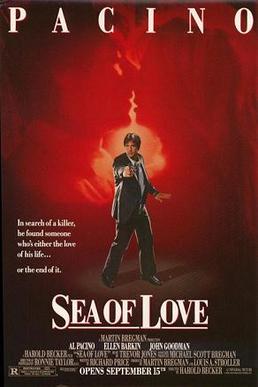
In New York City, someone is ritualistically murdering the men who are placing rhyming personal ads in a tabloid newspaper. Assigned to the case is Frank Keller (Al Pacino), an alcoholic burn-out whose wife just left him for another cop. Keller and his partner (John Goodman) decide to go undercover. Frank places a rhyming personal ad of his own and then goes to a restaurant to see who shows up. When Helen Cruger (Ellen Barkin) answers the ad, it leads to a relationship between Frank and Helen. Frank is falling for Helen but what if she’s the murderer?
Sea of Love is a superior thriller, even though it doesn’t really work as a mystery. As soon as you see a certain person’s name in the cast list, you’re going to guess who the killer is because that person is always the killer. Sea of Love isn’t really about the mystery, though. It’s about people looking something that’s missing from their lives and realizing that the world is passing them by. The movie works because of the performances of Al Pacino and Ellen Barkin, cast as two lonely middle-aged people who are desperately looking for some sort of connection. Helen and Frank are both in their 40s and wondering if their current situation is really as good as it’s going to get. The film uses Frank’s fear that Helen could be the killer as a metaphor for the fear that anyone feels when they are first starting to open up to someone. Both Pacino and Barkin give emotionally raw and poignant performances. I don’t think I’ve ever seen Al Pacino look as miserable as he did for the majority of Sea of Love. This was Pacino’s first film role after the disaster of Revolution and the movie’s box office success was revived Pacino’s career and convinced him to give movies a try again.
Director Harold Becker captures the feel of New York at its grittiest and least welcoming and Richard Price’s script is full of priceless dialogue. This is one of the rare films in which everyone has something intelligent or meaningful to say. Featuring a strong supporting cast and career-best performances from Ellen Barkin and Al Pacino, Sea of Love is much more than just another cop film.
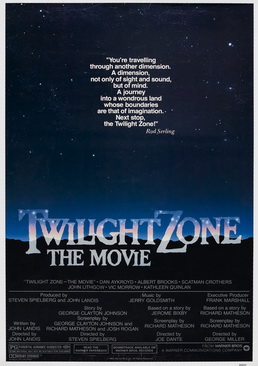
1983’s Twilight Zone: The Movie is meant to be a tribute to the classic original anthology series. It features four “episodes” and two wrap-around segments, with Burgess Meredith providing opening and closing narration. Each segment is directed by a different director, which probably seemed like a good idea at the time.
Unfortunately, Twilight Zone: The Movie is a bit of a mess. One of the episodes is brilliant. Another one is good up until the final few minutes. Another one is forgettable. And then finally, one of them is next too impossible to objectively watch because of a real-life tragedy.
With a film that varies as wildly in tone and quality as Twilight Zone: The Movie, the only way to really review it is to take a segment at a time:
Something Scary (dir by John Landis)
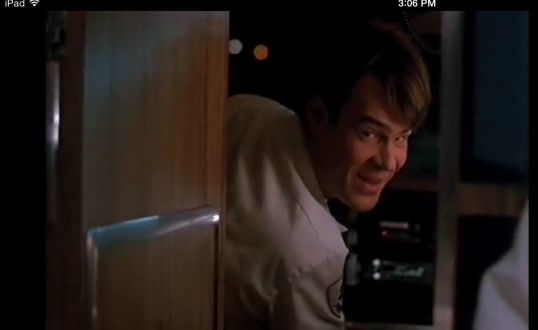
Albert Brooks and Dan Aykroyd drive through the desert and discuss the old Twilight Zone TV series. Brooks claims that the show was scary. Aykoyd asks if Brooks wants to see something really scary. This is short but fun. It’s tone doesn’t really go along with the rest of the movie but …. oh well. It made me jump.
Time Out (dir by John Landis)
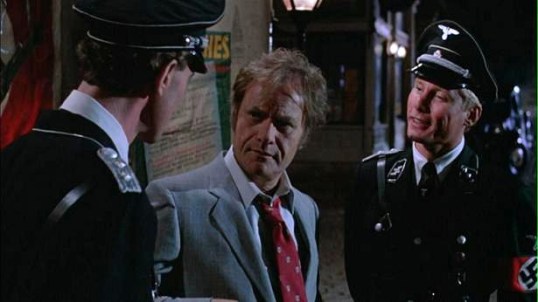
Vic Morrow plays a racist named Bill Connor who, upon leaving his local bar, finds himself transported to Nazi-occupied France, the deep South, and eventually Vietnam.
How you react to this story will probably depend on how much you know about its backstory. If you don’t know anything about the filming of this sequence, you’ll probably just think it’s a bit heavy-handed and, at times, unintentionally offensive. Twilight Zone often explored themes of prejudice but Time Out just seems to be using racism as a gimmick.
If you do know the story of what happened while this segment was being filmed, it’s difficult to watch. Actor Vic Morrow was killed during filming. His death was the result of a preventable accident that occurred during a scene that was to involve Morrow saving two Vietnamese children from a helicopter attack. The helicopter crashed, killing not only Morrow but the children as well. It was later determined that not only were safety protocols ignored but that Landis had hired the children illegally and was paying them under the table so that he could get around the regulations governing how many hours child actors could work. It’s a tragic story and one that will not leave you as a fan of John Landis’s, regardless of how much you like An American Werewolf in London and Animal House.
Nothing about the segment feels as if it was worth anyone dying for and, to be honest, I’m kind of amazed that it was even included in the finished film.
Kick The Can (dir by Steven Spielberg)
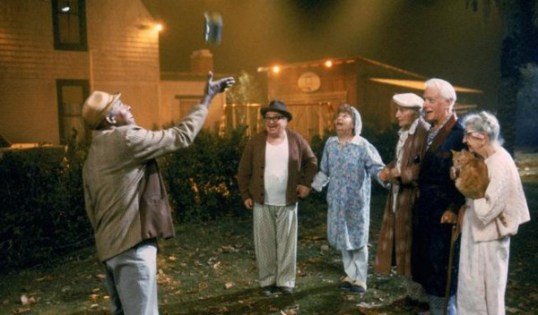
An old man named Mr. Bloom (Scatman Crothers) shows up at Sunnyvale Retirement Home and encourages the residents to play a game of kick the can. Everyone except for Mr. Conroy (Bill Quinn) eventually agrees to take part and, just as in the episode of the Twilight Zone that this segment is based on, everyone becomes young.
However, while the television show ended with the newly young residents all running off and leaving behind the one person who refused to play the game, the movie ends with everyone, with the exception of one man who apparently became a teenager istead of a kid, deciding that they would rather be old and just think young. That really doesn’t make any damn sense but okay.
This segment is unabashedly sentimental and clearly calculated to brings tears to the eyes to the viewers. The problem is that it’s so calculated that you end up resenting both Mr. Bloom and all the old people. One gets the feeling that this segment is more about how we wish old people than how they actually are. It’s very earnest and very Spielbergian but it doesn’t feel much like an episode of The Twilight Zone.
It’s A Good Life (dir by Joe Dante)
A teacher (Kathleen Quinlan) meets a young boy (Jeremy Licht) who has tremendous and frightening powers.
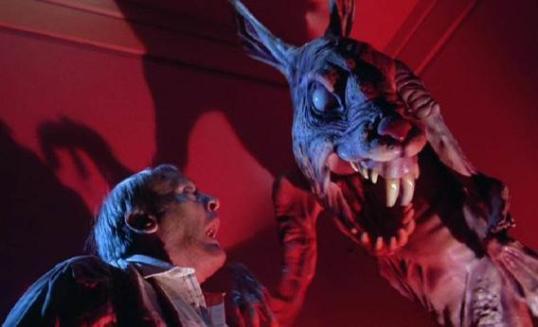
This is a remake of the classic Twilight Zone episode, It’s A Good Life, with the difference being that young Anthony is not holding an entire town hostage but instead just his family. This segment was directed by Joe Dante, who turns the segment into a cartoon, both figuratively and, at one point, literally. That’s not necessarily a complaint. It’s certainly improvement over Spielberg’s sentimental approach to the material. Dante also finds roles for genre vets like Kevin McCarthy, William Schallert, and Dick Miller and he provides some memorably over-the-top visuals.
The main problem with this segment is the ending, in which Anthony suddenly reveals that he’s not really that bad and just wants to be treated normally, which doesn’t make much sense. I mean, if you want to be treated normally, maybe don’t zap your sister in a cartoon. The teacher agrees to teach Anthony how to be a normal boy and again, what the Hell? The original It’s A Good Life worked because, like any child, Anthony had no conception of how adults felt about him. In the movie version, he’s suddenly wracked with guilt and it’s far less effective. It feels like a cop out.
Still, up until that ending, It’s A Good Life worked well as a satire of the perfect American family.
Nightmare at 20,000 Feet (dir by George Miller)
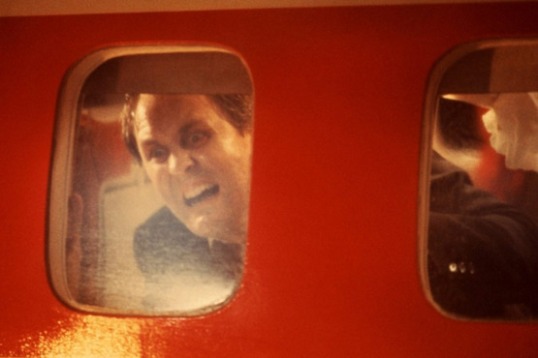
In this remake of Nightmare at 20,000 Feet, John Lithgow steps into the role that was originally played by William Shatner. He plays a man who, while attempting to conquer his fear of flying, sees a gremlin on the wing of his airplane. Unfortunately, he can’t get anyone else on the plane to believe him.
Nightmare at 20,000 Feet is the best of the four main segments. It’s also the one that sticks closest to its source material. Director George Miller (yes, of Mad Max fame) doesn’t try to improve on the material because he seems to understand that it works perfectly the way it is. John Lithgow is also perfectly cast in the lead role, perfectly capturing his increasing desperation. The one change that Miller does make is that, as opposed in the TV show, the gremlin actually seems to be taunting John Lithgow at time and it works wonderfully. Not only is Lithgow trying to save the plane, he’s also trying to defeat a bully.
Something Scarier (dir by John Landis)
Dan Aykroyd’s back as an ambulance driver, still asking his passenger if he wants to see something really scary. It’s an okay ending but it does kind of lessen the impact of Nightmare at 20,000 Feet.
Sure, inheriting an old New England farm might sound like a fun idea but what are you going to do if it turns out that the farm is haunted by the spirits of a coven of witches?
That’s the question that Hope Lange and Paul Burke have to find an answer for in this enjoyably spooky 1970 made-for-TV horror film! Lange and Burke both give good performances, generating a lot of sympathy for their unhappily married couple while director John McGreevey does a commendable job of creating and maintaining a nicely ominous atmosphere.
And, of course, John Carradine’s in it! It’s simply not a rural horror film from the 70s without John Carradine!
For tonight’s televised horror, we have yet another classic episode of the Boris Karloff-hosted anthology series, Thriller!
In the Wig for Miss Devore, Sheila Devore (Patricia Barry) is an actress looking to make a comeback. She’s recently been cast in a film about a real-life witch who was executed centuries ago. Sheila’s so determined to make the part her own that she’s even willing to wear a wig that once belonged to the dead witch.
Needless to say, that proves to be a mistake for her.
In tonight’s episode of the Boris Karloff-hosted anthology series, Thriller, Edward Andrews plays a bookseller who discovers that his wife has numerous lovers. Fortunately, he has a collection of books that is just full of good ways to take care of the competition!
This episode was written by Robert Bloch and was based on his short story.
Enjoy the little tribute to the power of literature!
For tonight’s televised horror, we have The Purple Room, an episode of Thriller! This was an anthology series, which was hosted by Boris Karloff. Admittedly, Thriller was not always a horror show. Several of the episodes were crime stories that had a diabolical twist. But anything hosted by Boris Karloff is perfect for October viewing.
The Purple Room is the story of what happens when a skeptic (played by a young Rip Torn) learns that he must spend a year living in a house that may or may not be haunted. This episode is enjoyably creepy and, of course, it has a twist.
This episode originally aired on October 25th, 1960.
 In New York City, someone is ritualistically murdering the men who are placing rhyming personal ads in a tabloid newspaper. Assigned to the case is Frank Keller (Al Pacino), an alcoholic burn-out whose wife just left him for another cop. Keller and his partner (John Goodman) decide to go undercover. Frank places a rhyming personal ad of his own and then goes to a restaurant to see who shows up. When Helen Cruger (Ellen Barkin) answers the ad, it leads to a relationship between Frank and Helen. Frank is falling for Helen but what if she’s the murderer?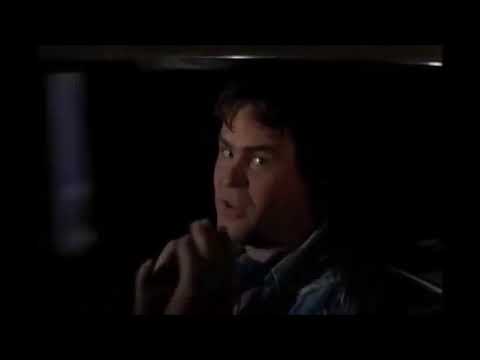
 Through the Shattered Lens