Since it’s Oscar weekend, I’ve been watching past and present Best Picture nominees like crazy. Here are my thoughts on ten of them.
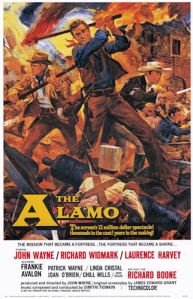
The Alamo (1960, directed by John Wayne, lost to The Apartment) — I’m a Texan which means that I’m legally required to watch both this film and the 2004 remake whenever they show up on television. Both films are way too long and feature way too many characters speaking speeches as opposed to dialogue but, if I had to choose, I would have to go with the 1960 version of the story. The original Alamo might be heavy-handed, poorly paced, and awkwardly acted but at least it’s sincere in its convictions. I always cry when Richard Widmark dies.

Becket (1964, directed by Peter Glenville, lost to My Fair Lady) — This one is a personal favorite of mine. The film is about the friendship and the eventual rivalry of King Henry II (Peter O’Toole) and Thomas Becket (Richard Burton). Becket and Henry II start out the film drinking and whoring but eventually, Henry makes Becket Archbishop of Canterbury. Becket, however, rediscovers his conscience and soon, Henry is famously asking, “Who will rid me of this troublesome priest?” Becket is an exciting historical drama and Peter O’Toole is at his absolute best as the flamboyantly decadent Henry.
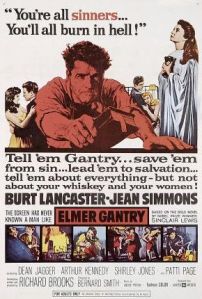
Elmer Gantry (1960, directed by Richard Brooks, lost to The Apartment) — Burt Lancaster plays Elmer Gantry, a traveling salesman and con artist who ends up falling in love with a saintly evangelist (played by Jean Simmons). Gantry soon starts preaching himself and soon has an army of loyal followers. However, Gantry’s new career is threatened when an ex-girlfriend-turned-prostitute (Shirley Jones) pops up and starts telling people how Gantry “rammed the fear of God into” her. With its unapologetically corrupt lead character and its looks at how commerce and religion are often intertwined, Elmer Gantry makes a perfect companion piece to Paul Thomas Anderson’s There Will Be Blood. Lancaster won an Oscar for his powerful and intense performance in the title role.
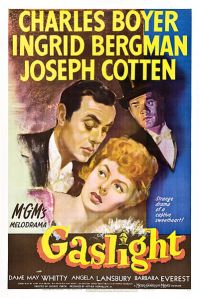
Gaslight (1944, directed by George Cukor, lost to Going My Way) — Evil Charles Boyer marries Ingrid Bergman and then attempts to drive her crazy. Luckily, Inspector Joseph Cotten is on the case. Gaslight is, in many ways, an old-fashioned melodrama but it’s still a lot of fun to watch. Boyer is a suave devil and Joseph Cotten (one of my favorite of the old film actors) is a dashing hero.
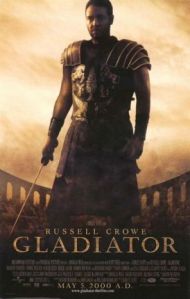
Gladiator (2ooo, directed by Ridley Scott, won best picture) — One thing that I’ve recently discovered is that men love Gladiator. Seriously, they obsess over this film and hold Russell Crowe’s surly gladiator up as some sort of mystical ideal and if you dare to say a word against it in their presence, be ready for big and long argument. So, I won’t criticize Gladiator too much other than to say that the film has always struck me as being kinda overlong, that the CGI is occasionally cartoonish, and that, despite his fearsome reputation, Russell Crowe is a lot more interesting as an actor when he plays a thinker as opposed to a fighter. Joaquin Phoenix, playing the Emperor Commodus, is a lot of fun to watch.
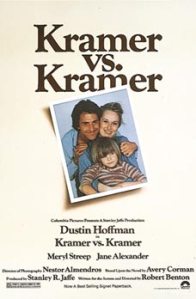
Kramer Vs. Kramer (1979, directed by Robert Benton, won best picture) — Dustin Hoffman plays a workaholic New York advertising executive who, after his wife Meryl Streep leaves him, ends up as a single father. Kramer Vs. Kramer won best picture in 1979 but I have to admit that I didn’t care much for it. Then again, I don’t think that I was the intended audience. Instead, Kramer vs. Kramer appears to have been made to appeal to men frustrated with women wanting to have a life outside of being a domestic servant. The film is well-acted though Hoffman’s character becomes insufferably smug once he gets comfortable with being a single father.
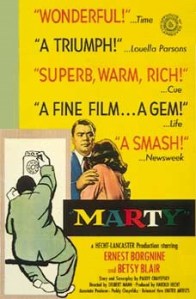
Marty (1955, directd by Delbert Mann, won best picture) — Lonely butcher Marty (Ernest Borgnine) romantically pursues a shy school teacher named Clara (Betsy Blair). However, Marty’s friends and his family don’t like Clara and Marty soon finds himself having to choose between them. Marty is a bit of an anomaly when it comes to best picture winners. It’s not an epic, it doesn’t claim to solve any of the world’s problems, and it’s based on a tv show. However, it’s also a sincerely sweet and heartfelt film and also features excellent performances from Borgnine and Blair.
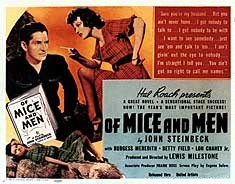
Of Mice and Men (1939, directed by Lewis Milestone, lost to Gone With The Wind) — “Tell me about the rabbits, George.” Yes, it’s that film. Smart and little George (Burgess Meredith) and big but simple Lenny (Lon Chaney, Jr.) are migrant farm workers who get a job working at ranch where Lenny ends up accidentally killing the rancher’s daughter-in-law. Despite the fact that we all now tend to naturally smirk when we hear anyone say “Tell me about the rabbits, George,” Of Mice and Men remains an effective tear-jerker and both Meredith and Chaney give strong performances.
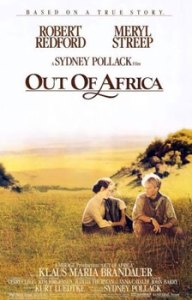
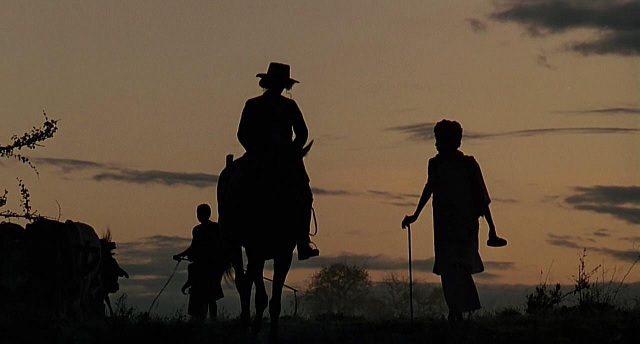
Out of Africa (1985, directed by Sydney Pollack, won best picture) — I recently sat down to watch this film because 1) my aunts love this film and get excited whenever they see that it’s going to be on TV and 2) Out of Africa was named the best film of the year I was born. So, I sat down and watched it and then three or five hours later, I realized that the film was nearly over. Anyway, the film is about a Danish baroness (Meryl Streep) who moves to a plantation in Africa and ends up having an affair with a British big game hunter. The hunter is played by Robert Redford, who refuses to even try to sound British. (USA! USA! USA!) Anyway, the film is pretty in that generic way that most best picture winners are but the film ultimately suffers because its difficult to care about any of the characters. Streep acts the Hell out of her Danish accent but she and Redford (who seems to be bored with her) have absolutely no chemistry. I saw one review online that dismissed Out of Africa as a “big budget Lifetime movie” but Lifetime movies are a lot more fun.
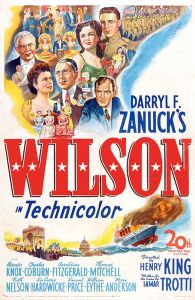
Wilson (1944, directed by Henry King, lost to Going My Way) — Wilson is a two-and-a-half biopic about Woodrow Wilson and his presidential administration. Wilson is well-played by Alexander Knox, who later showed up in countless exploitation films. Wilson shows up on cable occasionally and every time I’ve seen it, I’ve had mixed feelings about it. The critical part of me tends to be dismissive of this film because it’s way too long, extremely stagey, and it glosses over the fact that Wilson was a virulent racist who idolized the Ku Klux Klan. However, as a secret history nerd, I can’t help but enjoy seeing a film where Vincent Price plays the Secretary of the Treasury.



 Through the Shattered Lens