4 Or More Shots From 4 Or More Films is just what it says it is, 4 shots from 4 of our favorite films. As opposed to the reviews and recaps that we usually post, 4 Shots From 4 Films lets the visuals do the talking!
Today, we pay tribute to the year 1975. It’s time for….
4 Shots From 4 1975 Films
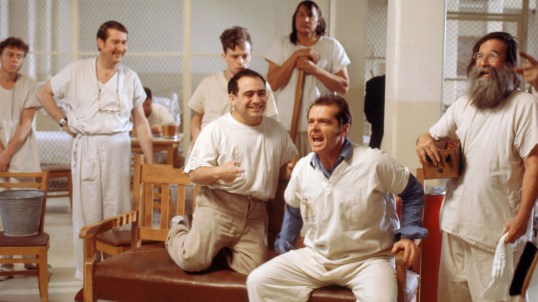
One Flew Over The Cuckoo’s Nest (1975, dir by Milos Forman, DP: Haskell Wexler and Bill Butler)
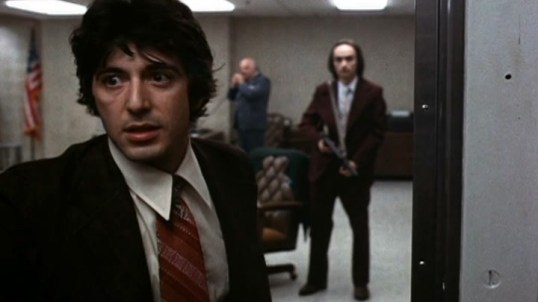
Dog Day Afternoon (1975, dir by Sidney Lumet, DP: Victor J. Kemper)
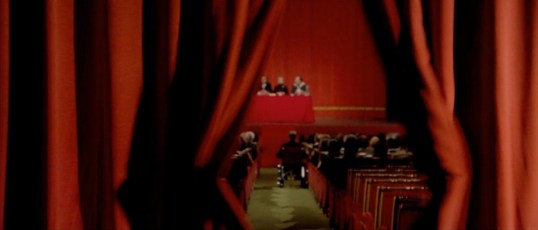
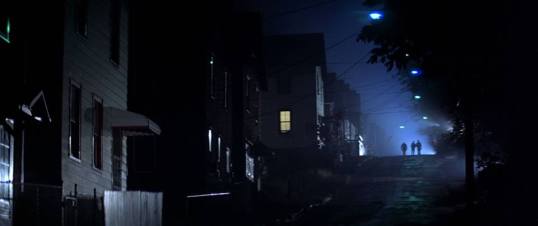
Deep Red (1975, dir by Dario Argento, DP: Luigi Kuveiller)
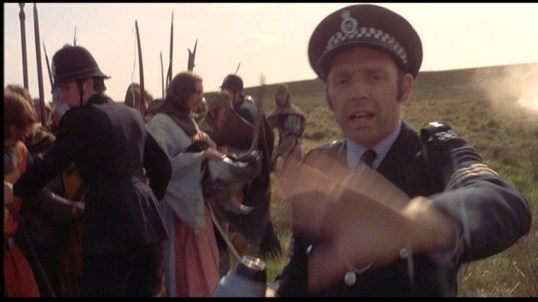
Monty Python and the Holy Grail (1975, dir. Terry Gilliam & Terry Jones, DP: Terry Bedford)
4 Shots From 4 Films is just what it says it is, 4 shots from 4 of our favorite films. As opposed to the reviews and recaps that we usually post, 4 Shots From 4 Films lets the visuals do the talking!
Today, I’m using this feature to take a look at the history of the Academy Award for Best Picture. Decade by decade, I’m going to highlight my picks for best of the winning films. To start with, here are 6 shots from 6 Films that won Best Picture during the 1970s! Here are….
6 Shots From 6 Best Picture Winners: The 1970s
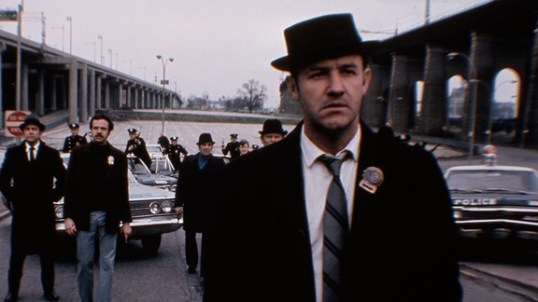
The French Connection (1971, dir by William Friedkin, DP: Owen Roizman)
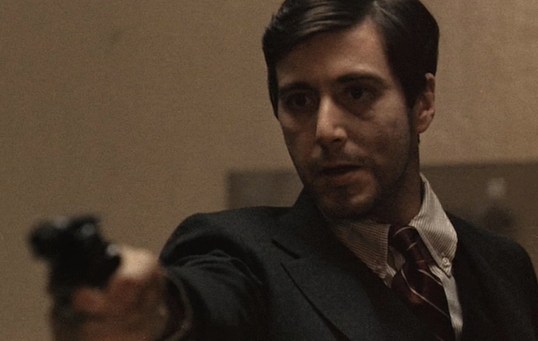
The Godfather (1972, dir by Francis Ford Coppola, DP: Gordon Willis)
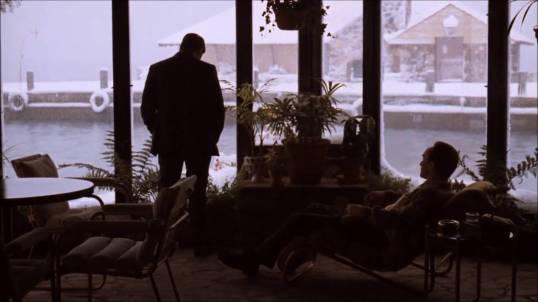
The Godfather Part II (dir by Francis Ford Coppola, DP: Gordon Willis)
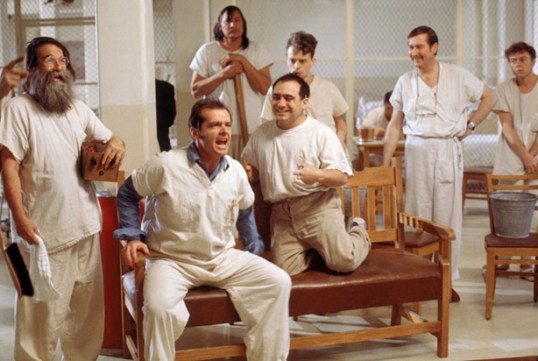
One Flew Over The Cuckoo’s Nest (1975, dir by Milos Forman, DP: Haskell Wexler and Bill Butler)
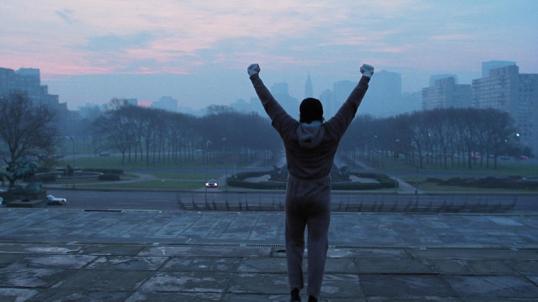
Rocky (1976, dir by John G. Avildsen, DP: James Crabe)
The Deer Hunter (1978, dir by Michael Cimino, DP: Vilmos Zsigmond)
Technically, the 1975 film One Flew Over The Cuckoo’s Nest is not a horror film.
Though it may take place in a creepy mental hospital, there are no ghosts or zombies. There’s no masked killer wandering the halls. The shadows do not leap off the walls and there are no ghostly voice in the night, unless you count the rarely heard voice of Will Sampson’s Chief Bromden.
Admittedly, the cast is full of horror and paranormal veterans. Michael Berryman, of the original Hills Have Eyes, plays a patient. Louise Fletcher, who won an Oscar for playing the role of Nurse Ratched, went on to play intimidating matriarchs in any number of low-budget horror movies. Vincent Schiavelli, a patient in this film, played the angry subway ghost in Ghost. Another patient, Sidney Lassick, played Carrie’s condescending English teacher in Carrie. Brad Dourif, who received an Oscar nomination for playing the meek Billy Bibbit, has become a horror mainstay. Will Sampson appeared in the Poltergeist sequel. Both Scatman Crothers and Jack Nicholson would go on to appear in The Shining.
Nicholson plays Randle Patrick McMurphy, a career criminal who, hoping to get out of prison early, pretends to be mentally ill. He ends up getting sent to an Oregon mental institution, where his rebellious ways upset the administrators while, at the same time, inspiring the patients to actually try to take some control over their lives. The film is, in many ways, a celebration of personal freedom and rebellion. The only catch here is that, in One Flew Over The Cuckoo’s Nest, being a little bit too rebellious can lead to not only electroshock treatment but also a lobotomy. Those in charge have a way of making you permanently compliant.
And really, to me, that’s what makes One Flew Over The Cuckoo’s Nest a horror film. It’s about the horror of conformity and bureaucracy. The film may start out as something of a comedy and Nicholson brings a devil-may-care attitude to the role of McMurphy but then, eventually, you reach the scene where McMurphy is tied down and given electrical shocks to make him compliant. You reach the scene where Ratched coldly informs Billy Bibbit that she will be telling his mother that Billy lost his virginity to a prostitute and Billy reacts by slicing open his wrists. Finally, you reach the scene where McMurphy returns to the ward having had a bit of his brain removed. In those scenes, One Flew Over The Cuckoo’s Nest becomes a horror movie. The monster is not a ghost or a demon or a serial killer. Instead, it’s a system that is determined to squash out any bit of rebellion or free thought.
What makes Nurse Ratched such a great villain is the fact that, as opposed to being some sort of a maniacal force of evil, she’s really just someone doing her job and refusing to question her methods. She’s the ultimate symbol of bland authoritarianism. Her job is to keep the patients from getting out of control and, if that means lobotomizing them and driving one of them to suicide …. well, that’s what she’s going to do. For all the time that Ratched spends talking about therapy, her concern is not “curing” the patients or even helping them reach a point where they can leave the hospital and go one with their lives. Ratched’s concern is keeping everyone in their place. As played by Fletcher, Ratched epitomizes the banality of evil. (That’s one reason why it was so silly for Ryan Murphy to devote his most recent Netflix series to giving her an over-the-top origin story. Ratched is a great villain because she doesn’t have any complex motivations. She’s just doing whatever she has to do to keep control of the people are on her ward. Part of keeping control is not to allow anyone to question her methods. Everyone has had to deal with a Nurse Ratched at some point in the life. With the elections coming up, we’re about to be introduced to whole new collection of Nurse Ratcheds.)
I like One Flew Over The Cuckoo’s Nest, even though it’s an undeniably dated film. That said, it’s not as dated as the novel on which it’s based, nor is it as appallingly misogynistic. Jack Nicholson’s rough but charismatic performance holds up wonderfully well. (I don’t know if an actor has ever matched a character as perfectly as Nicholson does with McMurphy.) Louise Fletcher brings a steely resolve to the role of Nurse Ratched. Fans of spotting character actors in early roles will probably get a kick out of spotting both Danny DeVito and Christopher Lloyd as patients. The movie skillfully combines drama with comedy and the ending manages to be both melancholy and hopeful.
When it comes to the 1975 Oscar race …. well, I don’t know if I would argue that One Flew Over The Cuckoo’s Nest deserved to win Best Picture over Nashville, Dog Day Afternoon, or Barry Lyndon or Jaws. Dog Day Afternoon and Nashville feel as if they were ahead of their time, with their examination of the media and politics. Jaws set the template for almost every blockbuster that would follow and it’s certainly one of the most influential horror films ever made. Barry Lyndon is a stunning technical achievement. Compared to those films, One Flew Over The Cuckoo’s Nest seems rather simplistic. Watching it today, you’re very much aware of how much of the film’s power is due to Jack Nicholson’s magnetic screen presence. Nicholson definitely deserved his Oscar but it’s debatable whether or not the same can be said of One Flew Over The Cuckoo’s Nest as a whole.
So no, I wouldn’t necessary say that One Flew Over The Cuckoo’s Nest was the best of the films nominated that year. Still, it’s an entertaining film and a helluva ride. It’s a great film to watch whenever you’re sick of faceless bureaucrats trying to tell you what to do. And, in its own odd way, it’s a great film for Halloween season.
Last night, as part of my continuing mission to see every film ever nominated for best picture, I watched Sidney Lumet’s Dog Day Afternoon. Dog Day Afternoon was released in 1975. Though nominated for best picture, it lost to One Flew Over the Cuckoo’s Nest.
In Dog Day Afternoon, Al Pacino plays Sonny, a nervous Viet Nam vet who, along with the dim-witted and possibly crazy Sal (John Cazale), attempts to rob a bank. Unfortunately for him, Sonny doesn’t really know what he’s doing and literally within minutes of him first drawing his gun, the bank is surrounded by cops. The robbery quickly descends into a hostage situation. As Pacino negotiates with a NYC police detective (Charles Durning), a crowd of onlookers gathers around the bank and starts to cheer with every defiant word that comes out of Sonny’s mouth. Sonny discovers he likes his new-found fame. In the film’s most famous scene, he stands outside the bank and leads the crowd in a chant of “Attica! Attica!” Eventually, Durning learns that Pacino’s motive for robbing the bank was to steal enough money for his suicidal lover (Chris Sarandon) to get a sex change operation. However, now that the robbery has failed, Pacino has a new plan. He demands a flight out of the country. Meanwhile, the hostages inside the bank start to form their own odd kinship with the two bank robbers and Durning finds himself being challenged by the F.B.I., who have a much more drastic plan for how to end the situation.
Dog Day Afternoon is a remarkable film, a dark comedy of desperation and human nature that, by the final scene, reaches a certain tragic grandeur. Sidney Lumet (who made his directorial debut in 1957 with 12 Angry Men and whose most recent film, Before the Devil Knows Your Dead, was released 51 years later) was one of the most important (if underrated) filmmakers of the 1970s and he proves it here. From the opening montage of New York City looking so wonderfully sordid at the height of the grindhouse era to Pacino’s bumbling initial attempt to rob the bank to the film’s violent and abrupt conclusion, Lumet captures your attention and, much like Al Pacino in this movie, he holds it hostage until the movie ends.
Dog Day Afternoon is probably one of the best acted films that I’ve ever seen. This is one of those films where every role — regardless of how large or how small — fills like an actual human being. By the end of the film, you feel as if you know the bank managers and the tellers almost as well as you know Pacino, Durning, Sarandon, and Cazale. Pacino is simply amazing here, giving a nervous, jittery performance as a character who manages to be both selfish and selfless at the same time. Durning, meanwhile, is hilarious as the frazzled detective who finds himself steadily overwhelmed by the circus around him. Much as you can’t help but root for Pacino no matter how self-absorbed he might act, you can’t help but sympathize with During, even if he is a member of the establishment. As Pacino’s transsexual lover, Sarandon plays his role with a fragile dignity that prevents the role from becoming a stereotype. However, for me, the film truly belongs to John Cazale who is both scary and oddly child-like as Sal. As seen below, Cazale improvised one of the best lines in the movie when he replies to Pacino’s question regarding to which country Cazale wants to make his escape.
Now, this is going to be difficult for me to admit but, as thrilling as it was to watch Pacino shout, “Attica! Attica!,” I honestly had no idea why that phrase was the one he chose to use to work up the crowd. In fact, if I had written this review right after seeing (or while watching) the film last night, I probably would have doubled embarrassed myself by claiming that Pacino was shouting “Ateka.” However, for once, I decided to be a responsible reviewer and I actually did some research as opposed to just going with my first conclusion. So, as a result of this film, I can now say that I know about the Attica Prison Riots of 1971.
But what’s truly significant about that “Attica” chant is that it’s the only part of this film (beyond a few fashion choices) that feels dated. As I watched the movie, it was easy for me to imagine myself jumping on twitter and seeing “#Attica” as a trending topic. We’ve all seen the famous “Attica!” scene in countless compilations but what’s often forgotten is how that sequence ends. When Pacino, obviously a bit star struck by all the attention, goes outside and start chanting a second time, he is suddenly tackled from behind by one of the bystanders who has decided to play hero. And as Pacino goes down to the ground, the same crowd that was previously cheering him now cheers for the new object of their affection. If nothing else, Dog Day Afternoon showed why sometimes we all need to escape to Wyoming.

 Through the Shattered Lens