Brad reviews THE STONE KILLER (1973), starring Charles Bronson!


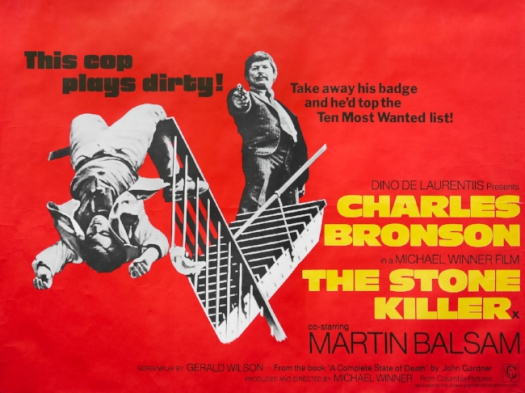
THE STONE KILLER opens in Spanish Harlem with detective Lou Torrey (Charles Bronson) following a young man, who had just shot a cop, into an abandoned building. When the young man refuses to turn himself in, and even tries to shoot Torrey, he gets blown away. In trouble with his superiors on the force, and being dragged in the press for the shooting, Torrey decides to change locations and continue his law enforcement career under his friend Les Daniels (Norman Fell) in Los Angeles. Soon after he arrives in Los Angeles, Torrey and his partner Mathews (Ralph Waite) are working a case against a drug dealer, when they arrest “Bootlace” Armitage (Eddie Firestone), a drug addict, but also a well-known hitman from New York. Torrey is delivering the “mechanic” back to New York for outstanding warrants when Armitage says that he is willing to give up some big information on “Wexton” in exchange for a reduced sentence. When Armitage is gunned down in what is obviously a professional hit, it’s clear that there is something going on that involves the name Wexton. We soon learn more as we meet mafia leader Al Vescari (Martin Balsam). As Vescari walks through a cemetery, he tells the leader of his operation, Lawrence (Stuart Margolin), of his plans to get revenge for a string of mafia killings that occurred 42 years earlier by using “stone killers,” in this case, former military men with no connection to the mob. As the film moves forward, Detective Lou Torrey and his fellow cops will eventually put the pieces together and find themselves taking on these “stone killers” and the mob! 

I’ll just go ahead and say up front that I’m a big fan of THE STONE KILLER these days, but that’s because the movie has grown on me over the years with repeat viewings. When I first watched the film as a teenager in the 1980’s, I enjoyed it as a tough cop film, but it wasn’t one of my favorites. I think that part of the reason I didn’t appreciate it as much back then is the more convoluted plot of the film. Most Bronson films have simple and easy to follow plot lines, but THE STONE KILLER includes a somewhat complicated mafia assassination plan, and it also sends the cops on wild goose chases that have nothing to do with the actual story. Watching the film as an adult, I appreciate Director Michael Winner taking us with him on some of those 1970’s flavored tangents that include getting to hang out with some hippies at an ashram, as well as some unjustly accused black militants. 

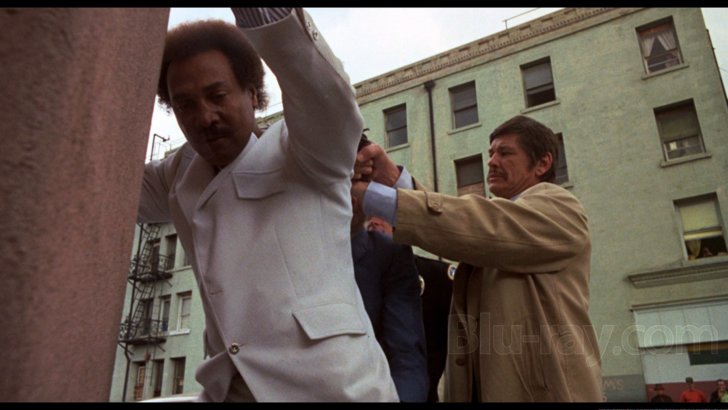
Even though the plot is more complicated than the average Charles Bronson film, director Michael Winner gives us some of the best action sequences of Charles Bronson’s career. There are two sequences in particular that stand out to me. After the impressive opening scenes where Torrey blows away the gun wielding young man in Spanish Harlem, it takes a while to get to the next extended action sequence, but it’s definitely worth the wait. The scene involves Detective Torrey in a car chase where he’s after one of the stone killers, Albert Langley (Paul Koslo), who’s on a motorcycle. In an era of great car chases, this is a doozy that features many amazing and dangerous stunts. The late 60’s and early 70’s are an embarrassment of riches for cinematic car chases and this one stands the test of time. The next great action sequence occurs later in the film when Detective Torrey and the cops bust the home and facility where the killers have trained for the planned massacre. Bronson is still in his physical prime in 1973, and his athletic prowess is clearly on display as he slides across floors, jumps on tables, and does anything else that is required to take down the bad guys. The film is not wall to wall action, but what’s here is as badass as it gets. 

Detective Lou Torrey is a really good role for Charles Bronson. In his best roles, Bronson is tough, but you can also tell that he cares about other people. That’s definitely the case here as he consistently shows empathy for some of the people he’s after. For example, at the beginning of the film, he has to shoot the young man in Spanish Harlem in self-defense, but he later explains to his sister that he didn’t want to do it, even expressing some understanding of how the young man may have found himself in that situation. A little later while arresting a drug dealer with his partner Mathews, Torrey is clearly disgusted when his partner uses racial slurs during the arrest. Torrey then talks to the man with respect and gets the needed information to arrest the man buying the drugs. There are further examples later in the film as he deals with other drug addicts and militants. I say none of this to insinuate that Bronson’s character is weak in any way. Rather, he seems to want to do his job and arrest criminals in a professional manner. He’s also a complex character in some ways as he will bend the rules to get what he needs if he has to. He does end up punching the car thief, Jumper (Jack Colvin), a couple of times during an interview. While this is definitely not legal, in the context of this film, it’s required in order to get to the facts of the case. Bronson is actually quite great in the film. 

Besides international superstar Charles Bronson, Michael Winner put together an amazing cast for THE STONE KILLER. Martin Balsam had won an Oscar a few years earlier, and he’s good here as the mafia boss with four decades worth of patience for revenge. Ralph Waite is also excellent as Bronson’s incompetent, racist partner Mathews. It’s hard to believe the guy would go on to play Papa Walton based on the ignorance he shows in both this film and in the Bronson/Winner collaboration CHATO’S LAND from the prior year. It’s fun watching both Norman Fell and John Ritter work together in this film, especially knowing that they would be making television history a few years later on the classic TV sitcom “Three’s Company.” The last two actors I want to mention are Stuart Margolin as the leader of the stone killers, Lawrence, and Paul Koslo as the bi-sexual badass musician Albert Langley. Both actors, especially Koslo, are good here and would have important roles with Bronson the next year as well. Margolin was an important character in DEATH WISH, and Koslo may have even outdone his work here the next year as a particularly slimy weasel in MR. MAJESTYK. Oh yeah, be sure to look for a short, uncredited cameo from B-movie queen Roberta Collins! I also want to shout out the musical score from Roy Budd, who also did the score for GET CARTER (1971). Thanks to Budd’s work, the opening credits are very cool and memorable. 

THE STONE KILLER was marketed as Charles Bronson’s “Dirty Harry” and meant to be his breakout hit in America. Unfortunately, while the film was an international hit, the actual grosses in the United States were respectable but not as much as the filmmakers had hoped for. As such, we didn’t get any more entries in the case log of Detective Lou Torrey and Bronson would have to wait another year for his American box office breakout with DEATH WISH. But that’s okay because THE STONE KILLER has stood the test of time as an excellent 1970’s cop film, emerging in my personal rankings as a major feather in the cap of Charles Bronson’s career. 

Lisa Marie Reviews An Oscar Winner: The Graduate (dir by Mike Nichols)


Hello darkness, my old friend….

After watching 1967’s The Graduate, I defy anyone to listen to Simon and Garfunkel sing about the darkness without immediately picturing a young-looking Dustin Hoffman (he was 30 when the film was made but he was playing 22) standing on a moving airport walkway with a blank expression on his face.

If you don’t picture that, maybe you’ll picture Dustin Hoffman floating in a pool, wearing dark glasses and barely listening to his parents asking him about graduate school.

Or maybe you’ll remember him driving his car across the Golden Gate bridge.  Or perhaps sitting at the bottom of his pool with a scuba mask on.  Or maybe you’ll see him awkwardly standing at the desk in the lobby of a fancy hotel, trying to work up the courage to get a room.  Or maybe you’ll just see him and Katharine Ross sitting at the back of that bus with a “what do we do now?” expression on their faces.

(Supposedly, that expression was not planned and was just a result of the shot running longer than expected.)

Ah, The Graduate.  Based on a novel by Charles Webb, Buck Henry’s script remains one of the quotable in history.  “Mrs. Robinson, you’re tying to seduce me …. aren’t you?”  “Plastics.”  “Elaine!”  Myself, I have an odd feeling of affection for the line “Shall I get the cops?  I’ll get the cops.”  Perhaps that’s because the line is delivered by a young and uncredited Richard Dreyfuss, appearing in his second film and adding to the film’s general atmosphere of alienation.

Alienation is the main theme of The Graduate.  As played by Hoffman, Benjamin Braddock feels alienated from everything.  He was a track star.  He was a top student in high school and college.  Now, he’s just a college graduate with no idea what he wants to do with the rest of his life.  One can argue, of course, that Braddock brings a lot of his alienation on himself.  He can be a bit judgmental, even though he’s the one who is having an adulterous affair with Mrs. Robinson (Anne Bancroft) while also falling for Mrs. Robinson’s daughter, Elaine (Katharine Ross).  His parents (William Daniels and Elizabeth Wilson) can be overbearing but it’s possible they have a point.  Is he planning on spending the rest of his life floating in their swimming pool?  Benjamin says that he just needs time to finally relax.  After being pushed and pushed to be the best, he just wants time to do what he wants to do before his life becomes about plastics.  When I first saw this movie, I was totally on Benjamin’s side.  Now, as I’ve gotten older, I’ve started to understand where his parents were coming from.  Still, it’s hard not to feel that Benjamin deserves at least a little bit of time to enjoy himself.  That’s what Mr. Robinson (Murray Hamilton) thinks, at least initially.

Mrs. Robinson is the most interesting character in the film, a force of chaos who lives to disrupt the staid world around her.  She’s bored with her marriage and her conventional but empty lifestyle so she has an affair with Benjamin.  Later, she grows bored with Benjamin and his desire to “just talk” for once and she moves on from him.  Benjamin and Elaine are both likable and you find yourself wishing the best for them but Mrs. Robinson is the character who you really remember.  Mrs. Robinson grew up without losing her sense of rebellion.  One doubts that Benjamin and Elaine are going to do the same.

A portrait of American suburbia and 60s alienation, The Graduate would prove to be one of the most influential social satires ever made.  A box office hit, it was nominated for seven Academy Awards.  It was nominated for Best Picture, Best Director (Mike Nichols), Best Actor (Dustin Hoffman), Best Actress (Anne Bancroft), Best Supporting Actress (Katharine Ross), Best Adapted Screenplay (Buck Henry and Calder Willingham), and Best Cinematography (Robert Surtees).  The Simon and Garfunkel songs that set the film’s mood were, for the most part, not eligible.  (Only Mrs. Robinson was written specifically for the film.)  I would argue that the film deserved to be nominated for its editing as well.  In the end, the film only won one Oscar, for Mike Nichols.  But, regardless of what awards it won or lost, The Graduate‘s legacy lives on.


STRIPPED TO KILL – 35 years later!


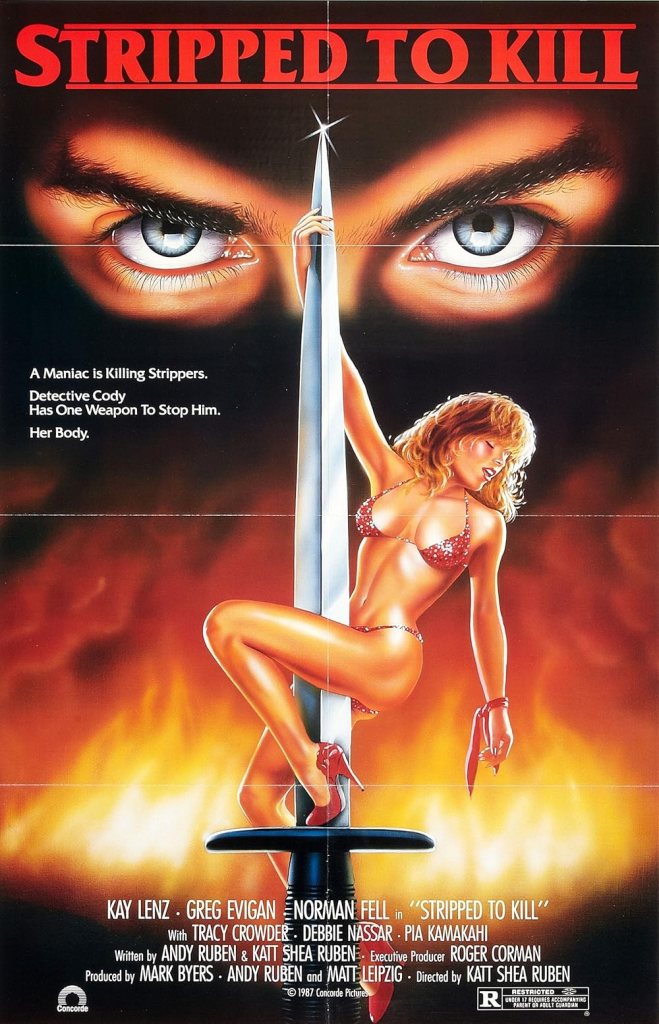
If you were a teenage boy in the 80’s, and you spent time at video stores, there’s no doubt in my mind that you noticed the VHS box for STRIPPED TO KILL. I certainly did! The box art promised violence and sexy women, and I was all in. I’m guessing that I watched the film when I was around 15 or 16 years old, and I hadn’t seen it since then. A few weeks back, we were recording an episode of our THIS WEEK IN CHARLES BRONSON PODCAST when actress Kay Lenz came up in reference to her part in DEATH WISH 4: THE CRACKDOWN. One of my buddies also mentioned her part in STRIPPED TO KILL. With that seed planted, I decided to give it another viewing and find out what sort of difference an additional 35 years would make in the viewing experience. 

Not surprisingly, STRIPPED TO KILL opens with a beautiful young lady named Angel performing a striptease act to an extremely 80’s song called “Deny the Night.” I’ll give Larry Steicher his credit because he was singing the hell out of the song on the soundtrack. A little later, the stripper gets a phone call from someone she knows asking her to meet. When she shows up to meet this mystery person, they throw gasoline on her and burn her alive. Detective Cody Sheenan (Kay Lenz) and her partner Detective Heineman (Greg Evigan) are working undercover in the area and come across this assault and murder in the act, but the killer gets away. When the two cops find out that the victim was a stripper at the Rock Bottom Dance Club, they want the case. Through a series of events, including Cody winning an “Amateur Night” contest, she’s able to go undercover at the club where she gets to know the dancers. Detective Heineman hangs out as well in order to protect her, and I think, to get a look at her performances. Our two undercover cops immediately begin to learn the backgrounds of the ladies at the club, and they also investigate any suspicious characters they see hanging around. When another stripper is murdered, and with several suspects beginning to emerge, it’s a race against time to see if they can catch the killer before other strippers have to die! 

I will say right off the bat that STRIPPED TO KILL delivers on the box art. There are multiple strippers killed, and by my count, there are 12 different striptease performances of various quality and duration throughout the course of the 88 minute film. And the cast is downright impressive for a low-budget B-movie like this. Kay Lenz is a fine actress with an impressive resume of TV and films, including productions like Clint Eastwood’s BREEZY, WHITE LINE FEVER with Jan-Michael Vincent, THE GREAT SCOUT & CATHOUSE THURSDAY with Lee Marvin, and FAST-WALKING with James Woods. As referenced in an earlier paragraph, she co-starred with Charles Bronson in DEATH WISH 4: THE CRACKDOWN the same year that she filmed STRIPPED TO KILL. Two classics in the same year is something every actor should hope for, and she doesn’t hold back in her performance here! Greg Evigan was in a show I liked very much when I was a kid called B.J. AND THE BEAR. I also remember him in that show MY TWO DADS when I was a teenager as well. He’s not a great actor, but he’s fine here. And then there’s Norman Fell, Mr. Roper himself, as the manager of the strip club. I have a soft spot for Norman because he played Charles Bronson’s boss in the 1973 film THE STONE KILLER, a film that also features John Ritter in a small role. Norman probably needed the paycheck, but he’s definitely a welcome presence in the film. 

This is the directorial debut of actress Katt Shea. She co-wrote the script for STRIPPED TO KILL with her then husband Andy Ruben. She apparently got the idea for the film when she lost a bet with Andy and ended up actually going to a strip club. She was so impressed with some of the performances that she wanted to make a movie showing the ladies in that world. Katt Shea would later direct films like POISON IVY with Drew Barrymore and THE RAGE: CARRIE 2. And, of course, the biggest factor in getting the movie made, Katt Shea was able to convince the legendary Roger Corman to produce the film. STRIPPED TO KILL would turn into a financially successful film for Corman. It was particularly successful overseas and on the home video market. Nice investment, Mr. Corman!

Overall, STRIPPED TO KILL delivers exactly what it promises, and it does so in 1 hour and 28 minutes. That’s a pretty nice combination in my book. I think I felt the same way in 1989 as well!

Retro Television Reviews: The Love Boat 2.3 “Rocky/Julie’s Dilemma/Who’s Who?”


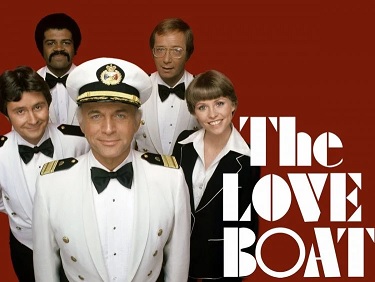
Welcome to Retro Television Reviews, a feature where we review some of our favorite and least favorite shows of the past!  On Wednesdays, I will be reviewing the original Love Boat, which aired on ABC from 1977 to 1986!  The series can be streamed on Paramount Plus!

This week, Julie’s parents set sail on The Love Boat!

Episode 2.3 “Rocky/Julie’s Dilemma/Who’s Who?”

(Dir by Allen Baron and Roger Duchowny, originally aired on September 23rd, 1978)

After last week’s hurricane and hostage situation, things calm down a bit for this week’s episode of The Love Boat.

Julie is super-excited because her parents, Bill (Norman Fell) and Martha (Betty Garrett), are going to be on this cruise.  Her parents, meanwhile, are only slightly excited about seeing where Julie works and getting to see all of the members of the crew.  They would perhaps be more excited if not for the fact that they’re planning on getting a divorce as soon as the cruise is over.  They haven’t told Julie, of course.  In fact, they tell Captain Stubing before they tell Julie.  Why would they tell someone whom they’ve only know for ten minutes before they would tell their own daughter?  What awful parents!

When they do eventually tell Julie, she has an emotional breakdown and runs through the corridors of the ship, sobbing.  Listen, I’ve been there.  When my parents told me that they were getting divorced, I had a difficult time with it as well.  Of course, I was twelve years old, whereas Julie is in her late 20s.  Still, it’s never easy.  Fortunately, Julie realizes that her parents still love each other so she just sets them up with different people on the boat so that they can get jealous and fall back in love.  And it works!  Julie’s parents get back together….

Which is nice, I guess.  I mean, one doesn’t watch The Love Boat because one wants to see a realistic story about the complexities of love and marriage.  Still, the show made it look so simple that it got on my nerves.  It’s not that simple and any actual child of divorce can tell you that.  Again, it’s The Love Boat so perhaps I shouldn’t judge too harshly but I would have had so much more respect for the show if Bill and Martha had told Julie that they were still getting a divorce at the end of the cruise.  It would have been a lot more honest than presenting a story where a marriage can be saved by wishful thinking.

While Julie was trying to save her parent’s marriage and prevent several years of awkward holidays, a young girl named Rocky (Melissa Gilbert) was developing her first crush on a boy named Norman (Jimmy Baio).  It was actually a sweet little story and both Melissa Gilbert and Jimmy Baio gave likable performances.  When Rocky learned that her family would be moving after the cruise, she was upset until she learned that their new home would be in El Paso, which was also where Norman and his family lived.  Again, it was simple but sweet.  And it went along well with the divorce storyline.  While one relationship nearly ended, another began.

Finally, in the silliest story of the week, TV network censor Pat (Dody Goodman) boards the ship and is told that she will be sharing a cabin with Marion Atkins.  That’s fine with Pat.  Her main concern is making sure that nothing shocking or sordid happens on the cruise.  However, it turns out that Marion Atkins (played by James Coco) is actually a guy!  Fortunately, Marion turns out to be just as puritanical as Pat.  He even brings a bunch of pamphlets on chastity with him for the cruise.  Pat and Marion first meet while wandering around the ship and they fall very chastely in love.  Since their morals forbid them from following each other to their  cabin, they somehow manage to go nearly the entire cruise without realizing that they are living together.  When they do realize that they’re cabinmates, they resolve to get married as soon as the boat docks.  This whole story was just incredibly dumb and not in a fun way either.  Obviously, The Love Boat was taking a swipe at the same network censors who probably insisted that the show be relatively discreet about what was going on behind the closed doors of the ship’s cabins.  But Pat and Marion were both so incredibly clueless that it was hard to care about them one way or the other.

This was a bit of uneven episode but, in the end, the boat still looked like a fun place on which to hang out and work.  And really, that’s the important thing.

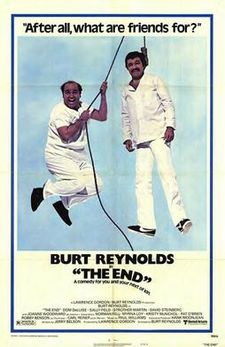
Film Review: The End (1978, directed by Burt Reynolds)


What if you were dying and no one cared?

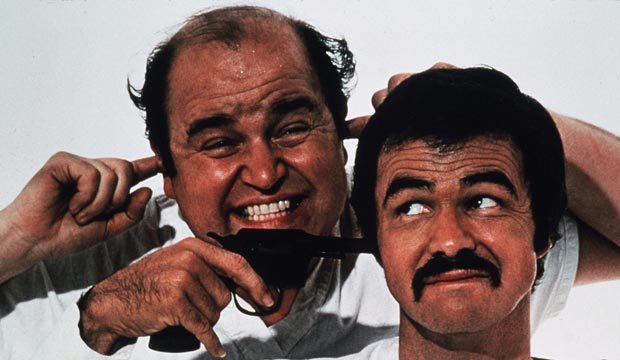
That is the theme of The End, which is probably the darkest film that Burt Reynolds ever starred in, let alone directed. Burt plays Sonny Lawson, a shallow real estate developer who is told that he has a fatal blood disease and that, over the next six months, he is going to die a slow and painful death. After seeking and failing to find comfort with both religion and sex, Sonny decides to kill himself. The only problem is that every time he tries, he fails. He can’t even successfully end things. When he meets an mental patient named Marlon Borunki (Dom DeLuise), he hires the man to murder him. Marlon is determined to get the job done, even if Sonny himself later changes his mind.

Yes, it’s a comedy.

The script for The End was written by Jerry Belson in 1971. Though Belson also worked on the scripts for Spielberg’s Close Encounters of the Third Kind and Always, he was best-known for his work on sitcoms. (Belson was an early collaborator of Garry Marshall’s.) The End was originally written with Woody Allen in mind but when Allen passed on it to concentrate on directing his own movies about death, the script spent five years in limbo. Reynolds later said that, when he eventually came across The End, he knew he had to do it because it was the only script that reflected “my strange sense of comedy.” United Artists was uncertain whether there was much box office potential in a film about a self-centered man dying and they required Reynolds to first make the commercially successful Hooper before they would produce The End.

The End was made for 3 million dollars and it went on to gross 40 million. That the film was a box office success is a testament to the late 70s starpower of Burt Reynolds because it’s hard to think of any other mainstream comedy that goes as much out of its way to alienate the audience as The End does. While watching The End for the first time, most viewers will probably expect two things to happen. First off, Sonny will learn to appreciate life and be a better person. Secondly, it will turn out that his fatal diagnosis was incorrect. Instead, neither of those happen. Sonny is going to die no matter what and he never becomes a better person. What’s more is that he never even shows any real interest in becoming a better person. The film’s signature scene comes when Sonny prays to God and offers to give up all of his money if he survives, just to immediately start backtracking on the amount. It’s funny but it’s also a sign that if you’re looking for traditional Hollywood sentiment, you’re not going to find it here.

Burt not only stared in The End but he also directed it and, as was usually the case whenever he directed a film, the cast is a mix of friends and Hollywood veterans. Sally Field plays Sonny’s flakey, hippie girlfriend while Robby Benson is cast as a young priest who fails to provide Sonny with any spiritual comfort. Joanne Woodward plays his estranged wife and Kristy McNichol plays his daughter. Myrna Loy and Pat O’Brien play his parents. Norman Fell, Carl Reiner, and Strother Martin play various doctors. The movie is stolen by Dom DeLuise, playing the only person who seems to care that Sonny’s dying, if just because it offers him an excuse to kill Sonny before the disease does. DeLuise was a brilliant comedic actor whose talents were often underused in films. The End sets DeLuise free and he gives a totally uninhibited performance.

Despite DeLuise’s performance, The End doesn’t always work as well as it seems like it should. Though Reynolds always said that this film perfectly captured his sense of humor, his direction often seems to be struggling to strike the right balance between comedy and tragedy and, until DeLuise shows up, the movie frequently drags. As a character, the only interesting thing about Sonny is that he’s being played by Burt Reynolds. That is both the film’s main flaw and the film’s biggest strength. Sonny may not be interesting but, because we’re not used to seeing Burt cast as such a self-loathing, self-pitying character, it is interesting to watch a major star so thoroughly reveal all of his fears and insecurities.

If you’re a Burt Reynolds fan, The End is an interesting film, despite all of its flaws. Burt often described this as being one of his favorite and most personal films. It’s a side of Burt Reynolds that few of his other films had the courage to show.

Happy Birthday Charles Bronson!: THE STONE KILLER (Columbia 1973)


gary loggins's avatarcracked rear viewer

Charles Buchinsky was born November 3, 1921 in the coal-country town of Ehrenfield, PA to a Lithuanian immigrant father and second-generation mother. He didn’t learn to speak English until he was a teen, and joined the Air Force at age 23, serving honorably in WWII. Returning home, young Charles was bitten by the acting bug and made his way to Hollywood, changing his last name to ‘Bronson’ in the early fifties. Charles Bronson spent decades toiling in supporting parts before becoming a name-above-the-title star in Europe.

By the 1970’s, Bronson had begun his long run as an action star. THE STONE KILLER capitalizes on the popularity of Cop and Mafia movies of the era, with Our Man Bronson as Lou Torrey, a Dirty Harry-type who shoots first and asks questions later. After he kills a 17-year-old gunman in the pre-credits opening, Torrey is raked over the coals by the New…

View original post 398 more words

Bronson’s Best: The Stone Killer (1973, directed by Michael Winner)


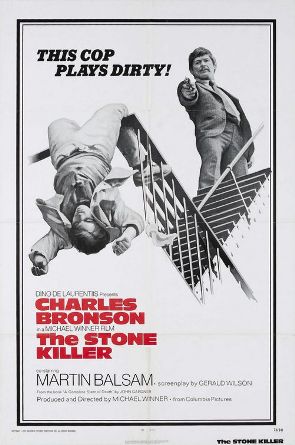
Stone_killerAfter tough New York detective Lou Torrey (Charles Bronson) lands in hot water for shooting and killing a teenage cop killer, he moves to Los Angeles and gets a job with the LAPD.  Working under an unsympathetic supervisor (Norman Fell), saddled with an incompetent partner (Ralph Waite), and surrounded by paper pushing bureaucrats, Torrey still tries to uphold the law and dispense justice whenever he can.  When a heroin dealer is murdered while in Torrey’s custody, Torrey suspects that it might be a part of a larger conspiracy, involving mobster Al Vescari (Martin Balsam).
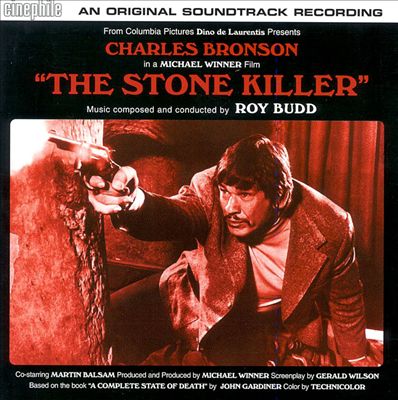
Vescari is plotting something big.  It has been nearly 40 since the “Sicilian Vespers,” the day when Lucky Luciano, Frank Costello, and Busy Siegel killed all of the original mafia dons at the same time.  Viscari has invited mafia leaders from across the country to attend a special anniversary dinner.  During the dinner, all of Vescari’s rivals will be assassinated.  To keep things a secret, Vescari will not be using any of his usual hitmen.  Instead, he has contracted a group of mentally unstable Vietnam vets, led by Lawrence (Stuart Margolin).

Charles Bronson has always been an underrated film star.  His legacy has been tarnished by the cheap films he made for Cannon and, unlike Clint Eastwood, he never got a chance to really take control of his career and reinvent his image.  But during the 1970s, not even Clint Eastwood was a more convincing action star than Charles Bronson.  Bronson may have never been a great actor but he was an authentic tough guy with a physical presence that dominated the screen.

It was during this period that Bronson made his first four movies with director Michael Winner.  Though Death Wish and The Mechanic are the best known, The Stone Killer may be the best.  Tough, gritty, and action-packed with a great car chase, The Stone Killer was filmed on location in Los Angeles and some of the best parts are just the scenes of Bronson awkwardly interacting with the local, California culture.  If you have ever wanted to see Charles Bronson deal with a bunch of hippies, this is the film to see.  The Stone Killer also has more of social conscience than the usual 70s cop film, with Bronson’s character not only condemning excessive police brutality but also his racist partner.

(Ironically, Bronson and Winner would follow The Stone Killer with Death Wish, a film that many critics condemned as being racist and which suggested that the police were not being brutal enough.)

The other thing that sets The Stone Killer apart is that it has a great cast, featuring several actors who would go on to find success on television.  Balsam, Fell, and especially Waite and Margolin are all great.  Keep an eye out for a very young John Ritter, playing one of the only cops in the film who is not portrayed as being either corrupt or incompetent.

Though it may not be as well-known as some of his other action films, The Stone Killer is one of Bronson’s best.