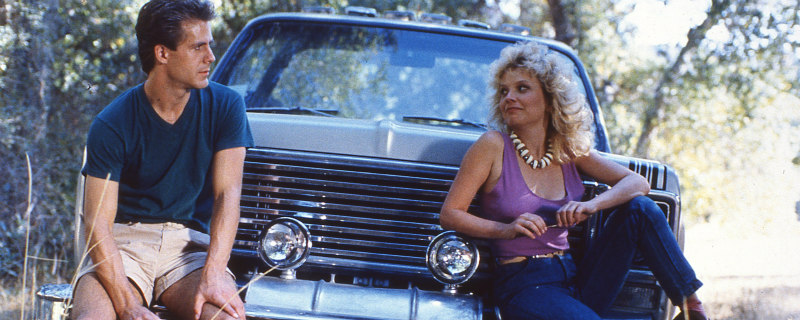
Horror Film Review: The Wind (dir by Nico Mastorakis)


In 1986’s The Wind, Meg Foster stars as Sian Anderson.  Sian is a novelist who lives in Los Angeles with her wealthy boyfriend, John (David McCallum).  How wealthy is John?  He’s so wealthy that he can sit out by his pool with a telephone.  (That’s 80s wealthy!)  He’s so wealthy that, when Sian says that she’s going to go to Greece so she can work on her next novel, John rents out the Goodyear Blimp and has it say, “Bon Voyage.”

(It would have been funnier if it had said, “The World Is Yours.”)

On the Greek isle of Monemvasia, she rents the home of Elias Appleby (Robert Morley), an eccentric man who tells her that she must be careful during the night because the heavy winds can be deadly.  He probably also should have warned her that the handyman, Phil (Wings Hauser), was crazy.  No sooner has the wind started howling outside and Sian has started work on her latest novel (which, from what we hear of her writing, sounds absolutely awful), then wild-eyed Phil starts acting crazy and homicidal.  Isolated and too stupid to figure out how to use a Greek phone (and yes, that actually is a plot point), Sian tries to survive the night.

The Wind was directed by Greek journalist-turned-filmmaker Nico Mastorakis.  Anyone was has seen a previous Mastorakis film will immediately be able to spot that The Wind is a product of his somewhat unique aesthetic vision.  As with almost all of Mastorakis’s films, The Wind is both a thriller and a travelogue.  Yes, Phil is trying to kill Sian but — hey!  Look at how pretty the island is!  As well, in typical Mastorakis fashion, the cast is a hodgepodge of familiar faces who don’t all seem as if they belong in the same movie.  Along with Meg Foster, Wings Hauser, Robert Morley, and David McCallum, the film also features Steve Railsback as a friendly sailor who, stranded on the island by the wind, attempts to help Sian out.

The other big Mastorakis trademark is that none of the characters in the film seem to like each other.  That makes sense when it comes to Sian and Phil.  But what is one to make of the scene where Appleby gives Sian a tour of the home and the two of them, who have just met, immediately start snapping at each other for no reason?  They’ve just met and they really don’t have any reason to be arguing with each other.  But that’s what they do because this is a Nico Mastorakis film.

For me, the funniest part of the film involves John.  Worried that Phil is going to kill her, Sian finally gets to talk to John on the phone.  The connection is bad but John, who is sitting out by his pool, still clearly hears Sian say that someone is trying to kill her.  The line then goes dead.  John contacts the international operator and says that he has to make an emergency call to Greece but he’s not sure about the exact number.  The international operator replies that a call cannot be made with an exact number.  So, what does John?  He shrugs, hangs up,  gets in the swimming pool, swims a few laps and nearly misses it when Sian, hours later, calls him again.  To reiterate: John, a wealthy man with Goodyear Blimp connections, heard that the love of his life was isolated and in fear of her life and his response was to go for a swim.

On the plus side, The Wind is actually decently paced and Nico Mastorakis makes the use of his limited locations.  Meg Foster and Wing Hauser are both such eccentric performers that it’s impossible not be entertained by the sight of them acting opposite each other.  Even by his usual standards, Hauser is memorably unhinged here.  This film is ludicrous and a lot of fun.  It’s a Nico Mastorakis film, after all.
The TSL Horror Grindhouse: Blind Date (dir by Nico Mastokaris)


In 1984’s Blind Date, Joseph Bottoms stars as Jonathon Ratcliff, an American who works in Greece.

Jonathon would appear to have it all.  He has a good job in an exotic land.  He has a nice home.  He has a beautiful girlfriend named Claire (Kirstie Alley).  He has co-workers who love him so much that they insist on throwing him a birthday party and giving him his cake while he’s making love to Claire.  Jonathon enjoys jogging and listening to music and spying on his neighbor, which the film treats as a harmless little thing that all men do.  I mean, I guess we should be happy that Jonathon isn’t disguising himself as a taxi driver and murdering the women that he picks up with a scalpel.  No, someone else is doing that.

Jonathon suddenly loses his eyesight.  Fortunately, Dr. Steiger (James Daughton) has a solution.  He’s created a computer program that turns sound into very primitive, grid-like images.  As long as Jonathon is wearing his headphones, he can see … kind of.  At first, it’s all good fun.  Jonathon beats up the extremely flamboyant muggers who have been harassing him at the subway station.  And he continues to spy on his neighbor whenever she’s getting undressed which is not cool considering that Claire has stayed with him through his entire ordeal.

Meanwhile, the scalpel murders are continuing….

Now, to be honest, I assumed that Jonathon was going to form some sort of mental connection with the killer and start seeing the murder through the killer’s eyes.  Instead, Jonathon just hears the killer walking with one of his victims and he ends up investigating on his own, despite not really being able to see well.  Basically, the whole idea of Jonathon being blind doesn’t have much to do with the thriller aspect of the plot.  I could maybe accept that if the film hadn’t spent a huge amount of time explaining in pain-staking detail how exactly Jonathon’s “eyes” work.  The action literally stopped for a huge chunk of the film’s running time so that the film could make its most ludicrous plot point seem even more ludicrous.

Greek director Nico Mastokaris is obviously trying to do an Argento-style giallo with Blind Date and, indeed, Argento himself has a noted habit of including intriguing but ultimately pointless red herrings in his films.  Just as Asia Argento having the Stendhal Syndrome proved to be a bit inconsequential to The Stendhal Syndrome, Joseph Bottoms being blind is inconsequential to Blind Date.  That said, Argento can get away with that sort of thing because, even in his weaker films, he’s clever stylist and he usually maintain a solid narrative pace.  Blind Date, on the other hand, is rather draggy and Joseph Bottoms is not a particularly likeable hero.

On the positive side, James Daughton (he was the head of the evil frat in Animal House) gives a genuinely interesting performance and Kirstie Alley is likable as the neurotic Claire.  For the most part, though, one can see why the sequel promised in the closing credits never came to be.

4 Shots From 4 Films: Special Nico Mastorakis Edition


4 Or More Shots From 4 Or More Films is just what it says it is, 4 shots from 4 of our favorite films. As opposed to the reviews and recaps that we usually post, 4 Shots From 4 Films lets the visuals do the talking!

Today is the 82nd birthday of Greek filmmaker, Nico Mastorakis.  And that means that it’s time for….

4 Shots From 4 Nico Mastorakis Films

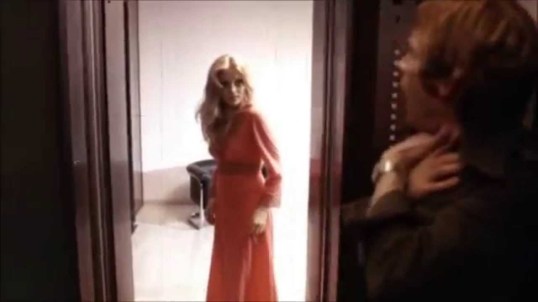
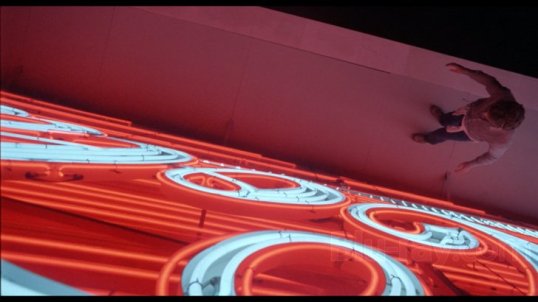
Island of Death (1975, dir by Nico Mastorakis, DP: Nikos Gardelis)

Death Has Blue Eyes (1976, dir by Nico Mastorakis, DP: Nikos Gardelis)

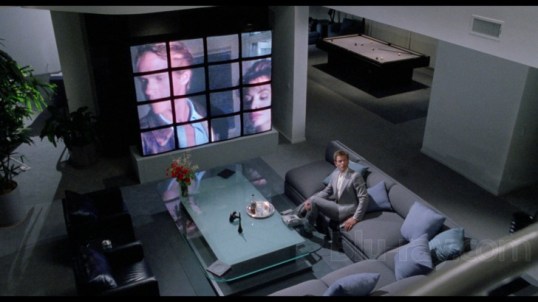
Blind Date (1984, dir by Nico Mastorakis, DP: Andreas Bellis)

In the Cold of the Night (1990, dir by Nico Mastorakis, DP: Andreas Bellis)

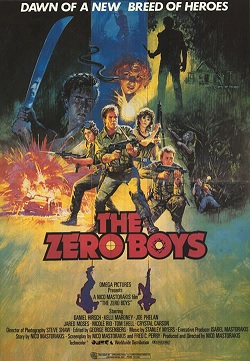
The Zero Boys (1986, directed by Nico Mastorakis)


When a paintball team known as the Zero Boys wins the big tournament, they decide to celebrate by spending the weekend in the woods with their girlfriends.  Accompanying the group is Jamie (Kelli Maroney), who was put up as a side bet by her boyfriend, who just happens to be the wannabe Nazi dork who lost the tournament.  The wilderness fun and games take a disturbing turn when the group comes across a deserted cabin and decide to camp there for the night.  The cabin belongs to family of hillbilly survivalists (one of whom is played by Martin Sheen’s brother, Joe Estevez) and they don’t intend to let anyone leave alive.  Soon, the Zero Boys are forced to put their paintball knowledge to the test in a real battle for survival.

The Zero Boys is one of those films that always used to come on television when I was growing up and I would always watch it because I thought it was going to be a standard, Friday the 13th-style slasher film.  When I was a kid, I would always end up getting annoyed with the film’s deliberate pace and its weird mix of the action and slasher genres.  I would usually watch for about an hour and then I would change the channel and try to find something better.  I thought The Zero Boys was just that, a big zero.

Now that I’m older, I realize that I was wrong and I better appreciate The Zero Boys and the way that it pokes fun at both the action and the slasher genres.  The Zero Boys opens with a really intense battle scene, between the Zero Boys and Casey, who is wearing a swastika armband.  It plays out like a standard Cannon action film, up until the moment that the Zero Boys catch up to Casey and shoot him in the head with a paintball. Our “heroes” are not mercenaries or former vets looking to rescue their brothers-in-arms from a POW camp.  There’s not a single Chuck Norris among them.  Instead, they’re just a bunch of dorky teens who are good at paintball and think that they have survival skills.  (One of them looks at a picture of Rambo and says, “Sly, eat your heart out.”) The movie goes on to further upend the audience’s expectations by introducing Jamie, a heroine who is anything but the typical, virginal final girl.  When it becomes obvious that the group is being stalked by a group of killers, the Zero Boys and their girlfriends actually fight back and it’s a definite change of pace from other slasher films of the era,  When it comes to horror films, The Zero Boys has more in common with The Hills Have Eyes than with Friday the 13th.

The Zero Boys is an action/horror hybrid that is willing to poke fun at itself.  It’s also one of the many superior genre pictures that Kelli Maroney made in the 80s.  Between this film, Chopping Mall, and Night of the Comet, Kelli Maroney was the crush of every 80s and 90s kid who spent too much time searching HBO and Cinemax for R-rated horror films.  She was cute but tough and, even if no one else in the movie realized it, she could definitely take care of herself.  Whether fighting malfunctioning robots, zombie scientists, or killer hillbillies, there was no one better to have on your side.

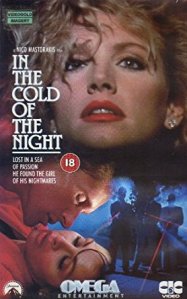
A Movie A Day #40: In the Cold of the Night (1990, directed by Nico Mastorakis)


51zd7jstaol-_sy445_Scott Bruin (Jeff Lester) is a high fashion photographer who is haunted by nightmares in which he strangles a naked woman in the swimming pool.  His nymphomaniac girlfriend, Lena (Shannon Tweed!), is surprisingly understanding when she wakes up to discover Scott strangling her but Scott is worried that he might be losing his mind.  His psychiatrist (David Soul) is not much help.  When Scott has a violent vision in the middle of photo shoot, he freaks out.  “Hey, are you on drugs?” one of the models asks.
Then Scott meets Kimberly (Adrienne Sachs) and she looks exactly like the woman from his dreams.  When she invites him to back to her house, the house looks exactly like the house from his nightmares.  Is Scott going crazy or is he seeing the future?  And how is Kimberly’s ex, a cold businessman named Ken Strom (Marc Singer), involved?

Does anyone remember this movie?  In the 90s, this used to be on HBO and Cinemax all of the time.  It’s a typical sex-fueled, nudity-filled direct-to-video thriller but Nico Mastorakis, a Greek director who has obviously learned a lot from Brian DePalma, gives the movie an enjoyably slick sheen.  Neither Jeff Lester nor Adrienne Sachs gives a good performance and the plot feels like it was made up on the spot but fans of Shannon Tweed in her Skinemax heyday might enjoy it.

In the Cold of the Night also features Tippi Hedren, playing Kimberly’s mother.  She only appears in one scene and freaks out when she sees some birds.  The scene ends with Adrienne Sachs looking directly at the camera and saying, “Mother simply hates birds!”

The Daily Grindhouse: Death Has Blue Eyes (dir by Nico Mastorakis)


Death Has Blue Eyes

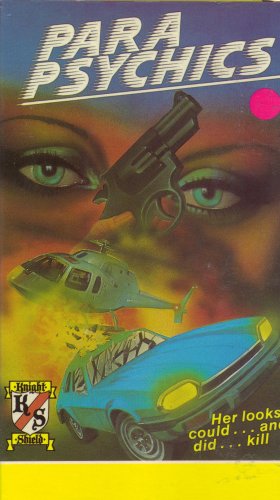
Just in case you needed proof that I will literally watch and review anything, here’s a few thoughts on an extremely obscure Greek thriller, which was first released in 1976.  As often happened with exploitation films in the 70s, this movie was released under several different names.  It’s original Greek title was To koritsi vomva.  Apparently, in England, it was known as The Para Psychics, which is truly a hideous title.  I prefer the American title, Death Has Blue Eyes.

So, maybe you’re wondering how exactly it was that I ended up watching a totally unknown (and unsung) Greek thriller that was filmed long before I was even born.  The trailer for Death Has Blue Eyes was included on the first volume of 42nd Street Forever, an amazingly fun and entertaining compilation of grindhouse movie trailers.  (I imagine that I’m not alone in counting 42nd Street Forever as my introduction to the anything goes aesthetic of the grindhouse.)

Check out the trailer below!

I have to admit that this trailer became something of an obsession of mine.  Some of it, of course, was the music.  And some of it was because every second of the trailer screamed out “low-budget 1970s.”  But, beyond that, I loved this trailer because it contained so many scenes and yet it still told me absolutely nothing about the film.  Seeing as how there were very little information about Death Has Blue Eyes online, I would watch the trailer and I would try to figure out how all of the random scenes fit together.

I could tell, of course, that the film was an action movie.  It was also obvious that the film featured a woman with psychic powers and that she could apparently blow up tents and kill men in bowling alley.  Just as obviously, the two men — one dark-haired and one blonde — were trying to protect her from an evil organization.

But, beyond that, I found myself obsessing on the odd scenes of the two men and the woman on the beach.  Why, I asked myself, were they on that beach?  And why, in a few shots, did both the woman and the blonde guy have such dark circles under their eyes?  Why was their skin so much more pasty and white on the beach than it was in the rest of the trailer?  Why was the blonde guy laughing like a maniac as the tide came in?  Why did the dark-haired guy appear to look so shocked when he saw the blonde guy and the woman dancing?  Why were they dancing on the beach in the first place?  And why, while the mysterious woman looked on with a mournful expression, were the two men fighting in the ocean?

Could it be, I wondered, that the three of them were dead?  And maybe the beach was purgatory?  Perhaps that explained why the blonde guy was laughing.  Maybe he had been killed after opening that briefcase full of money.  Maybe he was laughing at the fact that, as soon as he became rich, he lost his life and found himself on Purgatory Beach.  All that trouble to get all the money and here was betrayed, dead, and in purgatory.  No wonder he couldn’t stop laughing.

And what about that briefcase full of money?  Obviously, this was a heist film.  The two men must have been friends until they both fell in love with the same psychic woman.  And then, after the heist and the fireworks show, the two men turned against each other.  They fought.  They died.  And they ended up in purgatory.

Yes, I thought to myself, that had to be it!

And, as soon as I figured that out, I knew that I had to see Death Has Blue Eyes.  I mean, how often do you get to see a film that so perfectly combines film noir with Catholic theology as the trailer for Death Has Blue Eyes?  Death Has Blue Eyes was obviously a forgotten classic, waiting for one brave red-headed film blogger to defend it!  And if that film blogger has mismatched eyes and loved to dance, all the better!

Unfortunately, it was not easy to see Death Has Blue Eyes.  There’s a few old (and expensive) VHS copies floating around but the film has never been released on DVD or Blu-Ray.  (I am lucky enough to have an old VHS player, as all good lovers of film and history should!)  However, a year ago, someone was good enough to upload Death Has Blue Eyes to YouTube and I finally got to see it!

51NAQXY0RvL

And all I can say is that my version is sooooo much better.

I was right about the film being an action film that featured two guys protecting a blonde with psychic powers.  But I was totally wrong about purgatory.  In fact, when I saw how the beach scenes were actually used in he film, I got angry because my version was so much better!

(Because the film contains a lot of nudity and some violence and I don’t want our little site to get in trouble, I’m not going to embed the video here.  But if you want to watch the film on YouTube, click here!)

Anyway, as for the film, it tells the story of Bob (Peter Winter) and Ches (Hristos Nomikos), who are two con artists who make a living by seducing older women and pretending to be guests at expensive hotels.  After Ches’s latest cougar victim kicks them out of her home, they find themselves homeless.  But then, they’re hired to serve as bodyguards for Christine (Maria Aliferi).  Christine is a powerful psychic who witnessed a political assassination.  Because she can read minds, she knows both who the assassin was and who he was working for!

The rest of the film is basically a nonstop collection of car chases, exploding tents, and random assassins.  (What’s odd is that Christine can blow people up by merely looking at them and yet, she still needs bodyguards.)  It doesn’t make a bit of sense and the two “heroes” are incredibly unlikable but, because it’s such a product of its time, the film is oddly watchable.  It’s terrible and there’s no purgatory but it’s still probably the only film ever made about two gigolos hired to protect a blonde with ESP from a bunch of motorcycle-riding assassins.

That said, I still think my version of the film is better!

Check out some footage below, along with listening to a bit of the film’s score.  As I said, it’s all very 70s.

http://www.youtube.com/watch?v=qYLWYraIdm4

4 Shots From 4 Films: Thriller, Switchblade Sisters, Death Has Blue Eyes, Ms. 45


4 Shots From 4 Films is just what it says it is, 4 shots from 4 of our favorite films.  As opposed to the reviews and recaps that we usually post, 4 Shots From 4 Films is all about letting the visuals do the talking.

4 Shots From 4 Films

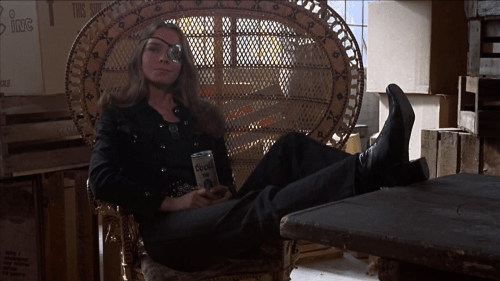
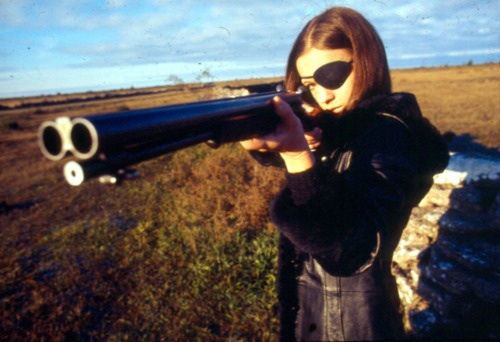
Thriller, A Cruel Picture a.k.a. They Call Her One Way (1973, dir by Bo Arne Vibenius)

Thriller, A Cruel Picture a.k.a. They Call Her One Eye (1973, dir by Bo Arne Vibenius)

Switchblade Sisters (1975, dir by Jack Hill)

Switchblade Sisters (1975, dir by Jack Hill)

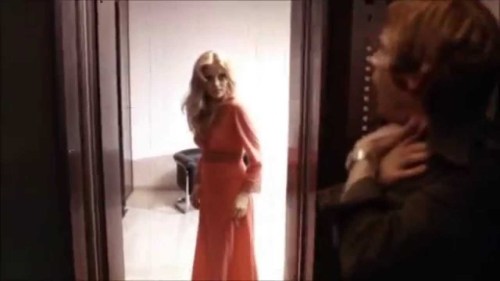
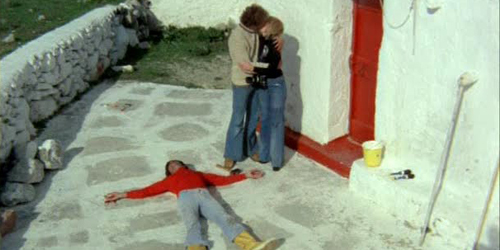
Death Has Blue Eyes (1976, dir by Nico Mastorakis)

Death Has Blue Eyes (1976, dir by Nico Mastorakis)

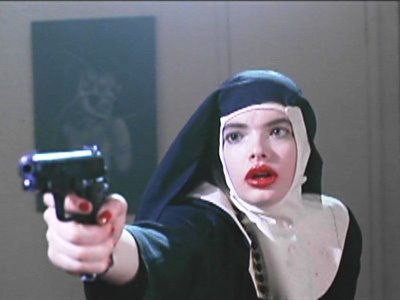
Ms. 45 (1981, dir by Abel Ferrara)

Ms. 45 (1981, dir by Abel Ferrara)