Life’s A Beach: Superdad (dir by Vincent McEveety)


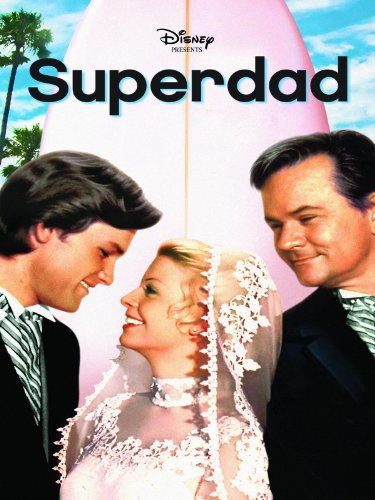
In 1973’s Superdad, Disney takes on the generation gap.

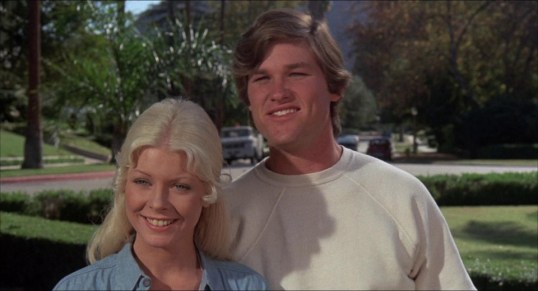
Charlie McCready (Bob Crane) just can’t understand what’s going on with his daughter, Wendy (Kathleen Cody).  She’s smart, pretty, and has the potential for a great future ahead of her but all she wants to do is hang out with her friends on the beach.  Eccentric Stanley Schlimmer (Bruno Kirby) drives everyone around in a souped-ambulance.  Ed Begley, Jr. (who plays a character who doesn’t even get a name) joins in whenever the group sings a folk song.  Wendy’s boyfriend, Bart (young and likable Kurt Russell), is a surfer and water skier.  Charlie is truly convinced that this extremely clean-cut group of teenagers is going to lead his daughter astray.  In fact, Wendy wants to marry Bart!  Charlie attempts to hang out with Wendy, Bart, and his friends on the beach and he can’t keep up.  He can’t water ski, he can’t play football, he can’t play volleyball.  All he can do is scream in this weird high-pitched voice.  The entire time is Bart is extremely nice to him and doesn’t even make fun of him for not being able to hit a volleyball over a net.  I mean, even I can do that!  But because Charlie’s not dealing well with becoming middle-aged, he decides that Bart is a threat.

(I’m going to assume that Charlie also teams up with a creepy friend and starts filming himself having threesomes with groupies, though we don’t actually see that happen in the film.  The subtext is there, though!)

Charlie decides that he has to get Wendy away from this group and the best way to do that would be to trick her into thinking she’s received a scholarship to …. Yes, this is just that stupid …. a scholarship to a prestigious university.  While Bart and his healthy, non-smoking, non-drinking friends are all going to City College and living at home with their parents, Wendy will be miles away at a college where she can do anything that she wants. Charlie thinks this is a great plan.  One gets the feeling that Charlie, for all of his overprotectiveness, hasn’t read a newspaper in 20 years.  Seriously, has he not been keeping up with what was happening on most college campuses in the late 60s and early 70s?

The main problem with this film is that Charlie is an incredible jerk.  It’s one thing to be overprotective.  Fathers are supposed to be overprotective of their daughters.  It’s one thing to worry about his daughter not having a good deal of ambition.  I can even understand him getting annoyed with Stanley because Stanley is kind of annoying.  (Watching this film, it’s hard to believe that Bruno Kirby was just one year away from playing the young Clemenza in The Godfather, Part II.)  But seriously, Charlie is freaking out over his daughter dating KURT RUSSELL!  In this film, Kurt Russell plays a character who is always polite, mild-mannered, sensible, and remarkably understanding of Charlie’s attempts to keep him from marrying Wendy.  There is one scene where Bart gets upset and he barely even raises his voice.  He’s incredibly likeable and, for all of this film’s flaws, it’s still easy to see why Kurt Russell became a star.

Of course, what really makes this film a cringe-fest is that it stars Bob Crane as a family man with a secretly manipulative side and, the whole time I was watching, I kept having flashbacks to Greg Kinnear in Auto-Focus.  Wendy, to make her dad really angry, gets engaged to an actual hippie named Klutch (Joby Baker) and there’s a scene in which Klutch and Charlie get into a fight in Klutch’s artist studio.  Every time Klutch swung anything near Charlie’s head, I definitely cringed a bit.  Red paints get spilled everywhere, though luckily it ends up on Klutch and not Charlie.  Still, watching the film, I couldn’t help but think that there are worse things that could happen to someone than having their daughter marry Kurt Russell.
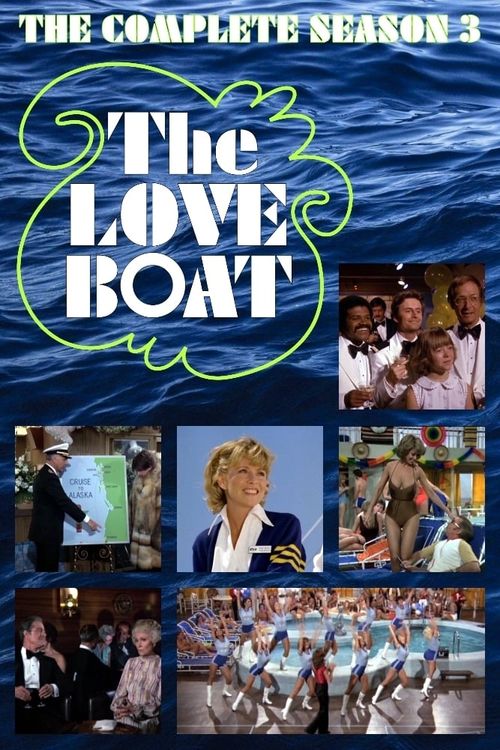
Retro Television Review: The Love Boat 3.22 “Not So Fast, Gopher/Haven’t We Met Before?/Seoul Mates”


Welcome to Retro Television Reviews, a feature where we review some of our favorite and least favorite shows of the past!  On Wednesdays, I will be reviewing the original Love Boat, which aired on ABC from 1977 to 1986!  The series can be streamed on Paramount Plus!

This week’s cruise is actually a pretty good one.

Episode 3.22 “Not So Fast, Gopher/Haven’t We Met Before?/Seoul Mates”

(Dir by Gordon Farr, originally aired on February 9th, 1980)

This week’s episode opens with Gopher in a panic.  His mother, Roz (Ethel Merman), is going to be on the cruise.  It’s her first big trip after the death of Gopher’s father and Gopher wants her to have fun because she’s been so depressed.  However, when Roz boards the ship, Gopher is stunned to see her laughing, singing, and hanging out with a male passenger named Lyle (Gene Rayburn).  Roz seems so happy that Gopher starts to worry that she didn’t love his father.

Of course, the opposite is true.  Roz is miserable but she doesn’t want Gopher to know how sad she’s feeling.  She doesn’t want Gopher to worry about her and she also doesn’t want to make Gopher feel any worse about losing his father.

This storyline handled loss and sadness with an intelligence and a maturity that I don’t think most people would ever expect to see on the show like The Love Boat, with both Fred Grandy and Ethel Merman giving sensitive performances as two people struggling to come to terms with their grief.  Gopher comes to realize that he’s been focusing on Roz’s grief so he’ll have an excuse to not think about his own and Roz comes to realize that she’s been doing the same thing to Gopher.

Now, of course, this is still The Love Boat so, of course, Roz ends up performing during the ship’s Passenger Talent Show.  And, yes, Gopher doe show up at the last minute and, in order to let her know that he now understands her feelings, sings a duet with her.  It’s a bit of goofy ending for an otherwise poignant story but, in its way, it definitely works.  It’s a sweet scene.

The Gopher/Roz storyline is so poignant and so well-handled that it pretty much overshadows everything else that happens on the boat.

Korean comic Jimmy Kim (Johnny Yune) finds romance with a reporter named Kendall Park (Momo Yashima) but Kendall is offended by Jimmy’s act (which is full of jokes about life in Korea).  However, after Roz talks about how much she enjoyed Jimmy’s humor, Kendall  changes her mind and she and Jimmy leave the ship as a couple.  This was an interesting story to watch and consider in the midst of our current, scolding, “That’s not funny” culture of 2023.  If anything, it showed that debates about what one can or should joke about are hardly new to this century.  But it just felt strange that it took a white woman appreciating Jimmy’s humor for Kendall to no longer be offended by jokes about Korea.  If anything it would seem that Roz saying that she enjoyed hearing jokes about Korea would leave Kendall feeling even more offended by Jimmy’s act.  I’m just glad that all of this didn’t lead to Captain Stubing doing his “I see you’ve been reading about your history” speech again.

Meanwhile, four blue collars friends board the ship.  Three of them (played by the Hudson Brothers) announce that they’re going to pretend to be wealthy professionals.  However, Paul Stockwood (Nicholas Hammond) announces that he is not going to pretend to be anything than the waiter that he is.  That’s before Paul realizes that the wealthy Leila Stanhope (Haley Mills) is on the boat.  Paul has waited on Leila several times at the Manhattan restaurant in which he works.  When Leila tells Paul that he seems familiar, Paul lies and says that he’s a wealthy writer.

It all seems to be working well, until Paul decides to bring Leila breakfast.  The sight of Paul carrying a tray of food is all it takes for Leila to remember who he is.  At first, Paul calls Leila a snob and Leila calls Paul a liar.  But then they fall in love anyway, which means that Paul will probably never have to work as a waiter again.  Yay!  Unfortunately, this storyline was hampered by the lack of chemistry between Nicholas Hammond and Hayley Mills.  They were both attractive but they were also difficult to buy as a couple.

Even though two of the storylines were somewhat flawed, the story about Gopher and his mother elevated this entire episode and it made it one of the best episodes of The Love Boat that I’ve watched so far.  This was a cruise to remember!

Every Generation Gets The Spider-Man It Deserves


August 1st is Spider-Man Day.  Despite this being the day that observes Spider-Man’s first appearance in the 15th issue of Marvel’s Amazing Fantasy, the trash is still being collected and the mail is still being delivered.  Spider-Man Day is a holiday when no one gets any time off.  I’m sure that the web slinger himself would appreciate the irony.

The appeal of Spider-Man has always been that he’s the hero who never feels that he’s done enough.  He’s also the hero who is almost always unappreciated by the rest of the world.  He’s the hero who often resents having to do his job but who still feels a responsibility to try to make the world a better place.  Spider-Man is the superhero that almost everyone can relate to.

As far as television and movies go, every generation has gotten the Spider-Man that they deserved.

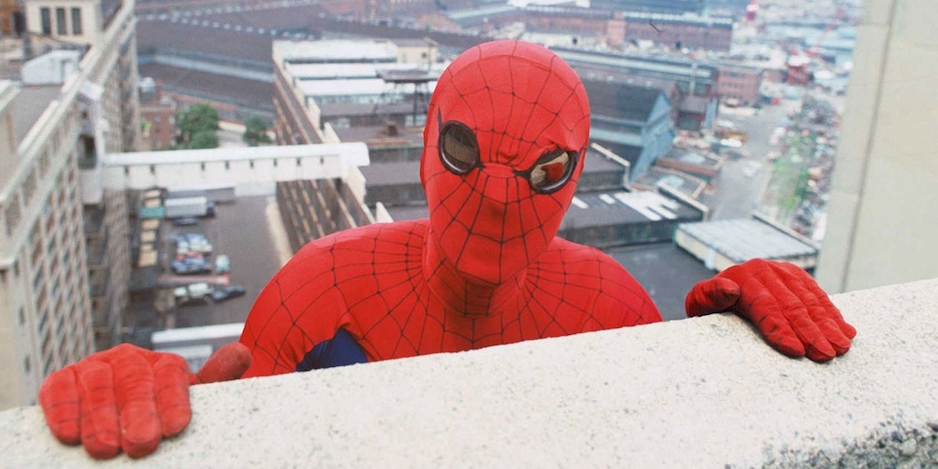
The boomers got Nicholas Hammond’s Spider-Man.  Hammond played Spider-Man for two seasons in the 70s.  He was a little boring but, from what I’ve seen, his show has a reputation for being worse than it was.  Like the best of the boomers, Hammond’s Spider-Man could be stuffy but he got the job done.

Generation X got Tobey Maguire, who played Spider-Man in three films that Sam Raimi directed in the aughts.  Like Generation X, Maguire’s Spider-Man was quiet but clever.  Despite his quick wit, he was frequently neurotic and more than a little introverted but he always came through in the end.

Then, Andrew Garfield played the millennial version of Spider-Man.  Angsty and awkward, Garfield’s Spider-Man was aware that society would never fully accept him, both as Peter and as Spider-Man.  At times, it seemed like his every attempt at making things better somehow only made them worse.

And finally, the Zoomers have got Tom Holland’s Spider-Man, an earnest idealist who struggles with the fact that the world is more complicated than it seems.  You can criticize him for being naïve but never doubt the sincerity of his beliefs.

All of the actors who played Spider-Man have done a good job and they all deserve praise.  My favorite is Tobey Maguire but that’s largely because, having been born in ’82, I’m on the dividing line between Generation X and Millennial and I’ve always leaned more towards the Generation X side of things.  Plus, I can relate to this:

Maguire, Garfield, and Holland all came together to appear in the previous Spider-Man film, which I thought was a nice touch.  I just wish Nicholas Hammond had been invited to join them.

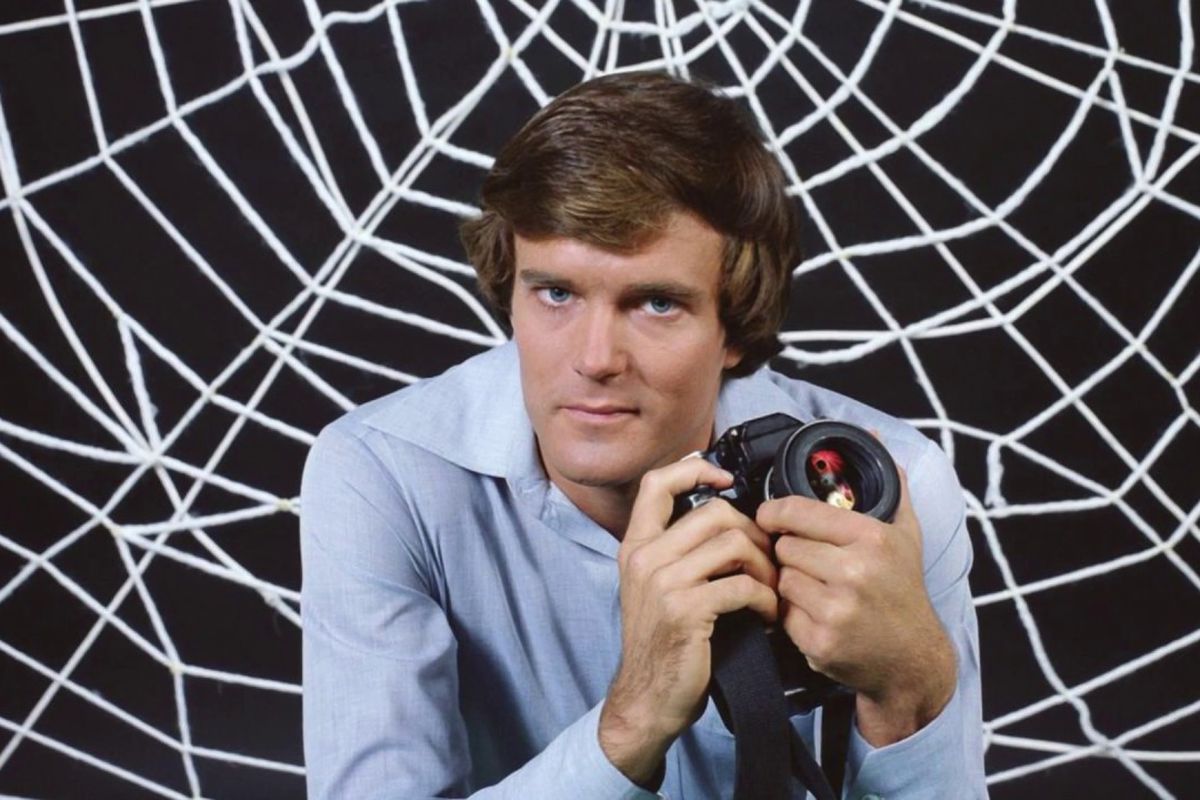
Nicholas Hammond, as Peter Parker

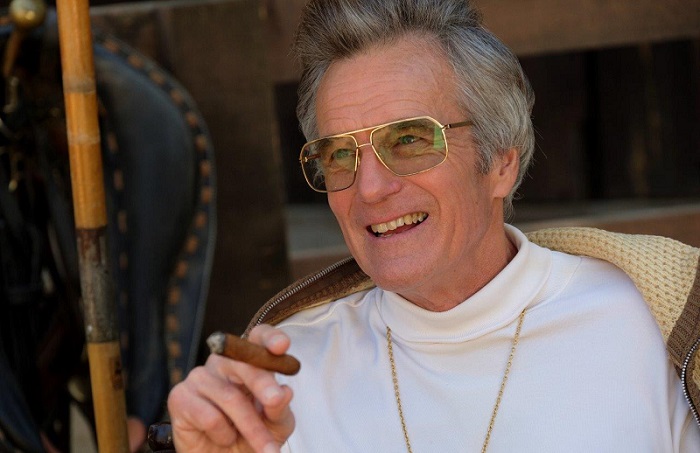
Nicholas Hammond, Today

Having an older, perhaps retired Spider-Man joining forces with the Maguire, Garfield, and Holland versions of the character would have provided an extra-dimension to the movie, much as used to happen on Doctor Who whenever any of the previous incarnations of the Time Lord would meet the newest version.

Regardless of who plays him or whether he’s Peter Parker or Miles Morales, Spider-Man remains the hero to whom we can all relate.  Spider-Man is all of us.

Happy Spider-Man Day to all!

The Martian Chronicles: Episode 1: The Expeditions (1980, directed by Michael Anderson)


In 1980, NBC adapted the Ray Bradbury short story collection, The Martian Chronicles, into a three-part miniseries.  Though Bradbury’s original book featured short stories that were only loosely connected by two shared locations (Earth and Mars), the miniseries connected most of the stories through the character of Colonel John Wilder (Rock Hudson), the NASA project director who headed up the project to colonize Mars and who later regretted his decision after it became clear that humanity was going to treat Mars just as badly as they treated their previous home.  The miniseries was adapted by Richard Matheson and directed by Michael Anderson.

Unfortunately, the miniseries itself was not a hit with critics, who complained that the story moved too slowly.  Audiences, having just experienced Star Wars and Close Encounters of the Third Kind, were not impressed with the special effects, in which miniatures were used to simulate spacecraft flying through space.  Despite all of that, though, The Martian Chronicles has built up a cult following.  I can remember first catching the miniseries playing late at night on one of the local station in Baltimore.  I’ve always liked it.  It’s not as good as Bradbury’s original collection, of course.  But the miniseries still has its strengths, despite the miniatures.

The first and best episode of the miniseries was The Expeditions.  Starting with a recreation of Viking 1 landing on Mars in 1976, the episode jumps forward to the far future of 1999!  The first manned spacecraft lands on Mars and the two astronauts aboard are promptly killed by the first Martian that they meet, an angry husband who thinks that one of the astronauts is going to have an affair with his wife.

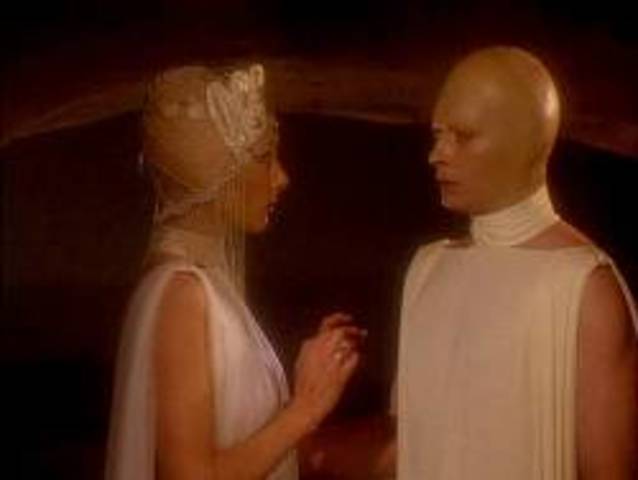
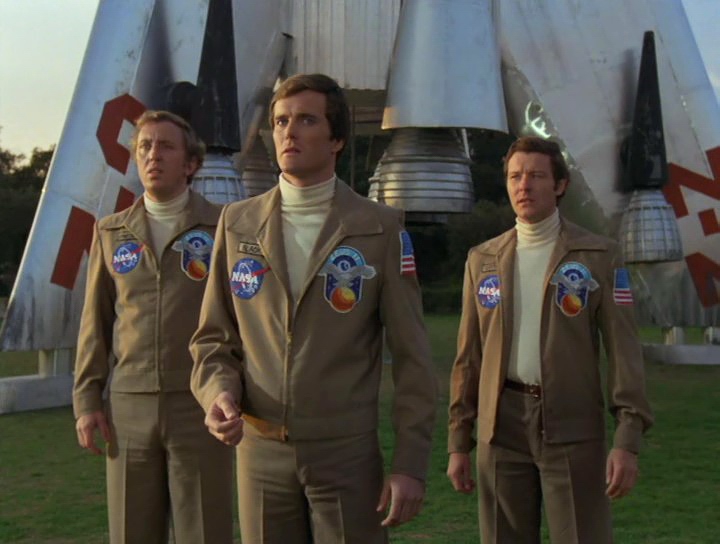
The second expedition is led by Captain Arthur Black (Nicholas Hammond, best-know for playing Spider-Man in the late 70s TV series).  When they land on Mars, they discover that the formerly Red Planet now looks like Black’s childhood home of Green Bluff, Illinois.  All of their relatives are waiting for them!  Falling into the belief that they’ve returned to the past, the astronauts are killed by their “families” that night.  It turns out that the Martians were using Black’s memories to set a trap for them.  As the Martian who disguises himself as Black’s brother explains it, they’ve seen, in the minds of the astronauts, what the humans are doing to their own planet and they can’t allow that to happen to Mars.  “Forgive us,” the Martians says, “we were once an honorable race.”  In one of the best scenes in both the book and the miniseries, the Martians still have an Earth-style funeral for the men that they’ve killed because they too got sucked into the world that they created and came to care about the men they felt they had to kill.

Years later, a third expedition arrives.  This one takes up the majority of the episode.  It’s led by Colonel Wilder himself and includes Sam Parkhill (Darren McGavin), Jeff Spender (Bernie Casey), Briggs (John Cassady), and McClure (Peter Marinker).  Almost all of the Martians have apparently died, the victims of the Earth germs that were brought to the planet by the second expedition.  While Parkhill plots to open a barbecue joint and Briggs gets drunk and tosses his empty beer cans into a waterway that he christens, “Biggs Canal,” Spender investigates a deserted Martian city.  Unlike the others, Spender is in awe of the Martian civilization and angry that it’s been so casually destroyed.  When Spender returns, he declares himself to be “the last Martian” and tries to kill the members of the expedition.

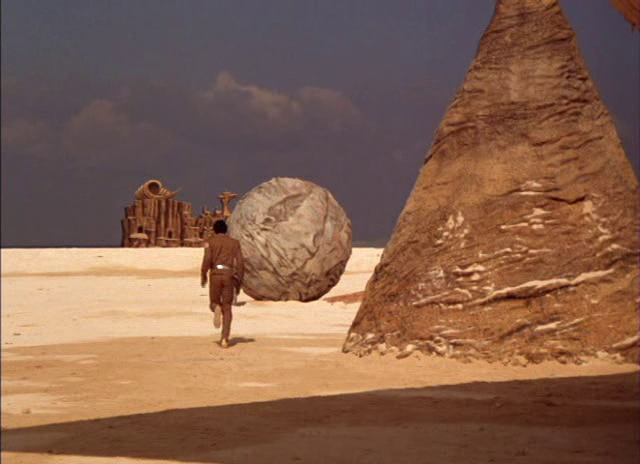
Of the three episodes, The Expeditions is the one that sticks closest to the stories on which it was based, in both content and theme.  Not surprisingly, it’s also the best of the miniseries, with each vignette working as both a separate story and a part of a larger whole.  It’s the episode that sticks closest to what Bradbuy himself was going for in his original collection.  While the miniature spaceships are a distraction, the desolate Martian landscape is sharply realized and the first episode is full of striking shots, from the Martian husband walking through the red desert to “greet” the first expedition to the funeral for the second expedition to the final battle between Spender and the survivors of the third expedition.  Among the members of the cast, Nicholas Hammond and Bernie Casey are the stand-outs but everyone plays their part well.  Darren McGavin is always a welcome presece in any miniseries and John Cassady is so obnoxious as Briggs that it’s impossible not to see where Spender is coming from.  (Back when the IMDb still has message boards, every message on Cassady’s board was someone posting about Briggs Canal.)  Rock Hudson is as stiff as ever but it’s appropriate for his character.  The scene where he and Bernie Casey debate whether humanity is worthy of a planet like Mars is well-acted by both actors, with the different opinions of their characters reflected in the different performing styles of the two actors.  Though the miniseries never explicitly states it, it is perhaps not a coincidence that Spender, as the only black character in the miniseries, is the only one to truly understand what humans colonizing Mars could lead to.

The Expeditions ends with Spender warning that humans will destroy Mars if they’re allowed to colonize it.  The next episode would explore whether he was correct.  We’ll take a look at The Settlers tomorrow.

Spider-Man: The Dragon’s Challenge (1979, directed by Ron Satlof)


This, the final of the three Spider-Man “feature films” that were basically edited episodes of the Spider-Man TV series, finds Peter Parker (Nicholas Hammond) in Hong Kong.  Spider-Man having adventures in Hong Kong sounds like it should be fun and the 2nd half of this “movie” was filmed on location but, even with all those elements (and a young Ted Danson in a small role), Spider-Man: The Dragon’s Challenge is just dull.

Min (Benson Fong) is a rich Chinese businessman who stands to be appointed to a position in the Chinese government but only if he can prove that he didn’t sell secrets to the U.S. during World War II.  Min needs to find three Marines who can clear his name.  Because Min is an old friend, J. Jonah Jameson (Robert F. Simon) assigns photographer Peter Parker to help Min track the men down.  Why would Jameson give that responsibility to Pater Parker?  I don’t know.

Min’s granddaughter, Emily (Rosalind Chao), thinks that Peter is a coward because he always disappears whenever Min is attacked.  It’s a good thing that Spider-Man always mysteriously shows up whenever Peter isn’t around because otherwise, Min would be in a lot of trouble.  It turns out that a steel baron named Mr. Zeider (Richard Erdman) wants to stop Min from clearing his name because Min would stop Zeider from getting a big construction contract.

Eventually, Peter, Min, Emily, and a former marine who can clear Min all end up in Hong Kong, where Spider-Man gets to fight kung fu masters and hopefully save the day.

Spider-Man: The Dragon’s Challenge has all the elements to be an enjoyably cheesy 70s adventure film but it fails because it’s not really a movie.  It’s just two episodes of a TV show that have been edited together and, with the exception of a few of the fight scenes in Hong Kong, there’s nothing cinematic about it.  As opposed to the previous two Spider-Man “films,” Nicholas Hammond just seems bored in this outing and the scenes with Rosalind Chao scolding Peter for being a coward are too much like Lois Lane complaining about Clark Kent never being in the same place as Superman.

Spider-Man: The Dragon’s Challenge also misses the opportunity to bring in any members of Spider-Man’s gallery of wonderful villains.  How hard would it have been to replace Mr. Zeider with Wilson Fisk?  The Silver Samurai could have at least made an appearance.  Instead, Spider-Man’s just fighting another corporate villain.  It’s a wasted opportunity.

The two episodes that make up this film were also the final two episodes of the Spider-Man TV show.  Despite the fact that CBS was constantly moving the show around on the schedule and that the second season only featured 7 episodes, the series still got good ratings.  However, CBS apparently feared that, by airing not only Spider-Man but also The Incredible Hulk and Wonder Woman, it would run the risk of becoming known as a “comic book” network.  Since the Hulk and Wonder Woman both got good ratings and, unlike Spider-Man, had the support of the critics, they were allowed to remain while Spider-Man was given the boot and canceled in 1979.  That’s a strong contrast to today, when most exec would probably sell their first born to get a chance at some of the Marvel action.

After this, it would be another 23 years before Spider-Man again appeared on a movie screen, this time in the form of Tobey Maguire.  While Nicholas Hammond would never again play Spider-Man, one fan of his time on the show was director Quentin Tarantino, who later cast Hammond as director Sam Wanamaker in Once Upon A Time In Hollywood.

Spider-Man Strikes Back (1978, directed by Ron Satlof)


When three college students decide to prove the folly of the nuclear arms race by stealing enough plutonium to make a nuclear bomb of their own, it’s up to Spider-Man (Nicholas Hammond) to sort them out!  He better do it quickly, too, because the police suspect that the plutonium may have been stolen by a grad student named Peter Parker.

However, Spider-Man is not the only person who wants that bomb.  The evil Mr. White (Robert Alda) also wants the bomb, though he’s not planning on using it to make the case for world peace.  Instead, he plans to blackmail the government into giving him a fortune in gold.  Now, Parker not only has to clear his own name but he has to keep Mr. White from blowing up Los Angles while, at the same time, preventing a nosy reporter (Joanna Cameron) from figuring out that he’s really Spider-Man.

Spider-Man Strikes Back was released as a feature film in Europe and was advertised as being a sequel to Spider-Man.  Gullible audiences who paid money to see it ended up sitting through a two-part episode of the Amazing Spider-Man TV show, albeit one that was edited into a 90-minute movie and which didn’t have stop for commercial interruption.

Spider-Man Strikes Back highlights exactly what went wrong with the first attempt to do a live action version of Spider-Man.  There were several members of Spider-Man’s regular rogues’ gallery who could have stolen that bomb and threatened Los Angeles.  It sounds like a typical Sinister Six plot.  Even the Kingpin, on a bad day, might be tempted to get in on that action.  Instead, the villain is a bland arms dealer named Mr. White.  CBS reportedly refused to use any classic Spider-Man villains because they wanted to keep the show grounded in reality but the minute Spider-Man crawled up a skyscraper for the first time, the network should have forgotten about trying to keep it real.

To repeat what I said in my review of Spider-Man, Nicholas Hammond is miscast as everyone’s favorite webcrawler.  Hammond is likable but he doesn’t come across as being at all insecure and it’s Spider-Man’s insecurities that distinguished him from other comic book heroes.  Spider-Man Strikes Back also suffers because it’s clear that much of the Spider-Man footage was reused from the pilot film.

I still enjoyed watching Spider-Man Strikes Back, though.  When I was a kid, Spider-Man was my favorite and, even in something like this, it’s still fun to watch him climbing up buildings and webbing up crooks.  Though there’s nothing cinematic about Spider-Man Strikes Back and it’s clearly just an extended episode of a TV show, I still liked that the climax took place in an preserved old west ghost town.  That was just strange enough to work.

Though Spider-Man Strikes Back was not as successful at the European box office as Spider-Man, it still did well enough that one more feature film would be crafted from the Spider-Man TV show, Spider-Man: The Dragon’s Challenge.

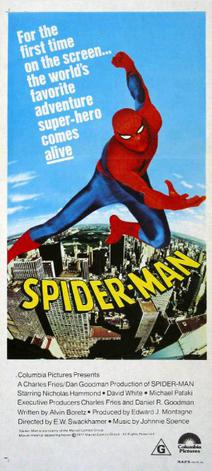
Spider-Man (1977, directed by E.W. Swackhemer)


When a college student named Peter Parker (Nicholas Hammond) is bitten by a radioactive spider, he’s stunned to discover that he can now do everything that a spider can.  He can climb walls.  He has super strength.  He has super senses.  And, once he invents a sticky web serum, he can shoot webs and swing around the city!  All he has to now is sew himself a red and blue costume and he’ll be ready to fight crime in New York City!

It’s not a minute too soon because New York is dealing with a crime wave that only Spider-Man can deal with.  Seemingly ordinary people are suddenly going into hypnotic trances, stealing money and committing suicide.  An extortionist sends words that, unless he’s paid a lot of money, he’s going to unleash a wave hypnotic chaos on the city.  Could it have anything to do with a sinister New Age guru and hypnotist named Edward Byron (Thayer David)?

Though it was released theatrically in Europe, Spider-Man was produced for television and it served as the pilot for a short-lived CBS television series.  Along with The Incredible Hulk, this was one of the first attempts to build a television series around one of Marvel’s characters.  Unfortunately, the series only last 14 episodes before being canceled.  Though it can be hard to believe nowadays with the nonstop hype around every single comic book movie, there was a time when television and film executives were actually weary about trying to bring super heroes like Spider-Man and Captain America to life.  According to Stan Lee (who served as a consultant on Spider-Man), CBS wanted to distance their version of Spider-Man from its comic book origins.  While both the pilot and the series features Peter Parker crawling up walls and shooting webs, there’s no Uncle Ben.  There’s no talk about how with great power comes great responsibility.  Worst of all, there are no members of Spider-Man’s famed rogue’s gallery.  No Electro, no Sandman, no Green Goblin, and certainly no Dr. Octopus.  CBS wanted the show to feature down-to-Earth villains, which is an interesting strategy for a show about a grad student who can climb walls.

The television version of Peter Parker isn’t as insecure and angsty as either the comic book version or even the movie versions.  Hammond is likable and sincere in the role but he is also almost too self-assured as Parker, proof that CBS didn’t understand that a huge part of Spider-Man’s appeal was that he was never as confident as Superman or Captain America.  Instead, much like many of the people who read his comic, Peter was frequently worried and consumed with self-doubt.  The comic book version of Spider-Man was always wracked with guilt for not stopping the thief who eventually killed Ben.  The television version was more worried about selling enough selfies to The Daily Bugle to be able to go on a date with his professor’s daughter.

At least the pilot film featured a villain who wouldn’t have felt out of place in an issue of The Amazing Spider-Man, though he probably would have had a cool villain name, like the Mesmerizer, if he had appeared in the comic.  Thayer David played a lot of smug villains in the 70s, not to mention the fight promoter in Rocky.  In Spider-Man, David goes all in as the villain and he’s got the perfect posh accent for delivering threats and sarcastic put-downs.  Unfortunately, this version of Peter Parker is not the wise-cracking machine that he was in the comic books and he never really gets a chance to verbally put Byron in his place.

If you can overlook its deviations from the comic book, the pilot isn’t a bad made-for-TV adventure.  Though miscast and playing a far different version of Peter Parker than we’re used to, Nicholas Hammond does his best to make Peter and his transformation credible.  Thayer David, as always, is a good villain and the story, with ordinary people suddenly turning into ruthless criminals, isn’t bad.  Though there are a few convincing shots of Spider-Man web-slinging, most of the special effects are lousy but they’re really not any worse than what you would expect to see in a 70s made-for-TV movie.  Though the series ultimately didn’t work, the pilot is still an enjoyable precursor to what, decades later, would become the Marvel Cinematic Universe.

4 Shots From 4 Films: Happy Birthday, Spider-Man!


It was 56 years ago today that The Amazing Spider-Man made his first appearance in the 15th issue of Amazing Fantasy.  After being bitten by a radioactive spider, Peter Parker developed super power but it was not until his uncle was murdered that Parker learned what it meant to be a hero.

With great power comes great responsibility and, as these four shots from four films demonstrate, movie stardom!  Over the years, Nicholas Hammond, Tobey Maguire, Andrew Garfield, and Tom Holland have all played America’s favorite web-spinning super hero.

In honor of Spider-Man’s birthday, here they are

4 Shots From 4 Films

The Amazing Spider-Man: The Chinese Web (1979, directed by Don McDougall)

Spider-Man (2002, directed by Sam Raimi)

The Amazing Spider-Man 2 (2014, directed by Marc Webb)

Spider-Man: Homecoming (2017, directed by Jon Watts)