Made For TV Horror: Death Car On The Freeway (dir by Hal Needham)


I, for one, am tired of the stereotype that women cannot drive.

I’m a woman and I can tell you right now that I am an above average driver.  I’ve only had one major accident.  Admittedly, I did smash into a parked car but it was raining and I really couldn’t see that well because I was driving convertible and the window was fogged up.  Plus, whoever parked that car must have done a bad job and left it sitting out in the middle of the street.  For the record, my convertible flipped over on impact so the parked car did far more damage than I did.

Other than that, I usually manage to stop in time for red lights.  I’ve only driven through a few stop signs and that was just because I didn’t notice them. I’ve very rarely been given a speeding ticket.  Instead, the police have always been very polite about just giving me a warning.  And yes, it is true that I have trouble with curbs and turns and going in reverse and all that but I’ve seen plenty of men do the same thing.

The statistics show that, while women are involved in more accidents, the accidents are more likely to be fatal if a man is driving.  Men are also more prone to get upset and pull a gun during a road rage incident whereas women just give other drivers the finger.  Women are not inherently bad or dangerous drivers.  The one exception, at least down here in Texas, are middle-aged women who drive SUVs with faded Beto stickers.  You really don’t want to get stuck behind one of them in traffic.

I found myself thinking about the misogyny behind the “women-are-bad-drivers” stereotype as I watched 1979’s Death Car On The FreewayDeath Car On The Freeway features a madman who is so sick of women driving in Los Angeles that he starts using his Dodge van to cause them to have accidents.  We don’t actually see his face or really learn much about him.  What we do see are his black-gloved hands on his steering wheel, which is a nifty homage to the giallo genre.  (Giallo killers have a thing for black gloves.)  Whenever the driver does try to force a woman into a fatal accident, he pops in an 8-track of hyperactive fiddle music.  The fiddle has never sounded more menacing than it does in Death Car On The Freeway.  It’s almost like prog rock fiddling.  Imagine a country western fiddler who has just done a mountain of cocaine and you’ll get a feeling for this guy’s taste in music.

News reporter Shelley Hack thinks that the public has the right to know that there’s a man causing women to crash their cars.  Her ex-husband, played to smarmy perfection by George Hamilton, thinks that Shelley should quit her current job and come work with him.  Meanwhile, police inspector Peter Graves is concerned that the media going to start a panic and make it more difficult for him to track down the “Freeway Fiddler.”  (One gets the feeling that Graves feels this entire mess could have been avoided if women had never been allowed to drive in the first place.)  At one point, Hack meets with a defensive driver instructor and he’s played by the film’s director, Hal Needham.

Oh, how I love this film!  Seriously, it’s got car chases, car crashes, 70s outfits, George Hamilton, Peter Graves, and a genuinely frightening villain.  This is one of those films where you might be tempted to be dismissive.  Folks like Dinah Shore, Sid Haig, and Abe Vigoda show up in small roles, reminding you that this really is a 70s made-for-TV movie.  But then, that fiddling explodes on the soundtrack, that van starts tailgating someone, and Death Car On The Freeway suddenly becomes a cinematic nightmare.  It’s not a surprise that Hal Needham was able to stage some impressive driving stunts in Death Car On The Freeway.  That was Hal Needham’s thing.  But Needham also manages to craft a compelling and, at times, genuinely frightening film.  Anyone who has ever glanced into their rearview mirror and suddenly realized that another vehicle is following them will be able to relate to the fear of the Fiddler’s victims.

This is a great movie and a reminder that women are not the most dangerous drivers on the streets.  Unless, of course, they’re driving an SUV with a faded Beto sticker….

Late Night Retro Television Review: CHiPs 1.15 “Surf’s Up”


Welcome to Late Night Retro Television Reviews, a feature where we review some of our favorite and least favorite shows of the past!  On Mondays, I will be reviewing CHiPs, which ran on NBC from 1977 to 1983.  The entire show is currently streaming on Freevee!

This week, Ponch and Baker hit the beach!

Episode 1.15 “Surf’s Up”

(Dir by Georg Fenady, originally aired on January 19th, 1978)

At the beginning of this week’s episode, Ponch and Baker are miserable.

Los Angeles, the city that they’ve taken an oath to protect, is no longer as friendly as it once was.  The highways are congested.  The chases are long and tedious.  The citizens don’t seem to appreciate the highway patrol’s hard work.  When Baker is forced to throw a reckless driver on someone else’s hood in order to arrest him, the owner of the car (Fran Ryan) yells at him for scratching her car and threatens to sue the department.

Ponch and Baker need a break!

At first, Getraer is dismissive of their concerns.  He points out, quite sensibly, that he can’t approve their request for a temporary transfer just because they’re having a bad day.  They work in Los Angeles and not every day is going to be a perfect day.

“Thanks a lot, pal,” Ponch snaps.

“I’m your sergeant,” Getraer starts, “if you want a pal….”

“Join the Police Athletic League, we know,” Baker says.

Fortunately, for Ponch and John, the Malibu division has a few men who have gotten the flu so Getraer, realizing that he doesn’t want to have to listen to Ponch and Jon whine for a whole week, finally agrees to giving them a temporary transfer.

The rest of the episode follows Ponch and John as they patrol Malibu.  It turns out that Malibu has the same problems as Los Angeles but it’s also closer to the beach.  (“You can hear the ocean from headquarters!” an excited Ponch says.)  Not only do Ponch and Baker stop a car theft (and save the baby who was trapped in the back seat) but they also catch a gang of van thieves.  Ponch also takes a few kids from the neighborhood to Disneyland, in order to make up for having incorrectly accused one of them of having stolen a radio and bunch of sunflowers.

Of course, we don’t actually see Ponch at Disneyland.  We just hear about afterwards.  What we do see is Ponch and Baker hanging out on the beach and trying out a jet ski.  As I watched this episode, it occurred to me that CHiPs really wasn’t a police show as much as it was an hour long commercial for California.  The theme of this episode appeared to be, “Even if Los Angeles is too crowded and smoggy for you, you can still go to Malibu, meet and date two flight attendants, and conquer the ocean on a jet ski!”  And really, this show is at its most effective when it focuses on being a travelogue.  I imagine quite a few people watched this episode in 1978 and thought to themselves, “I have to get to Malibu!”

Scenery aside, this is a bit of a dull episode.  The van thieves were not particularly impressive villains and even the show’s famous chase scenes felt a bit perfunctory.  As a drama, this episode fell flat but it worked wonderfully as a commercial.

Escape From New York (dir. by John Carpenter)


escape-from-new-york-movie-poster-1981-1020189511Before you start, note that Escape From New York was recently showcased in Jeff’s 4 Shots from 4 Films post to celebrate Kurt Russell’s birthday. For another take on the film, check out Jeff’s review. Please check that out, and then double back here, if you want. 
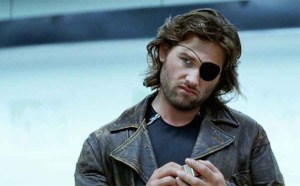
When I was little, my Aunt would sometimes take my older brother and I with her into Manhattan. In a little movie theatre near 82nd Street, she’d get us a set of tickets for a film, help us get seated with snacks and then either stay for the movie or leave to perform housekeeping duties for someone nearby if she had work and we weren’t allowed to hang out on site. John Carpenter’s Escape From New York wasn’t a film she stayed for (she loved Raiders of the Lost Ark), but it was okay. I was introduced to Snake Plissken, who ended up being cooler than Han Solo to my six year old eyes. Instead of being the hero, here was a criminal being asked to a mission. It showed me that even the bad guys could be heroes, now and then (or better yet, not every hero is cookie cutter clean). The film became an instant favorite for me. As I also do with Jaws and The Fog, I try not to let a year go by without watching Escape From New York at least once. It was my first Carpenter film.

The cultural impact of Escape From New York is pretty grand, in my opinion. It had a major influence on Hideo Kojima’s Metal Gear video games and also spawned a few comics with Plissken, complete with Jack Burton crossovers with Carpenter’s Big Trouble in Little China.

Carpenter brought in most of the same crew he worked with in his previous movies. The film was the third collaboration between Carpenter and Debra Hill, who previously worked with him in 1978’s Halloween and 1980’s The Fog. Though Hill didn’t write this one, she was still the producer, along with Larry Franco. There’s also a bit of speculation on whether Hill performed the opening vocals describing New York or Jamie Lee Curtis handled that. Cinematographer Dean Cundey (who worked on most of Carpenter’s early films) returned to help give the movie it’s gritty look, which is helpful considering how much of it takes place either at night or in darkened rooms. Another interesting part of the production is James Cameron, who was the Director of Photography when it came to the effects and matte work. One of the best effects shots in the film has Plissken gliding over Manhattan, which was designed by Effects member John C. Wash. The shot on his plane’s dashboard of the city was made from miniature mock up with reflective tape that made it appear as if it were digital, which was pretty cool given that they weren’t on an Industrial Light and Magic budget. There’s a fantastic article on We Are The Mutants and on the Escape From New York/LA Fan Page that focus on Wash’s technical contributions to the film.

For Carpenter’s career, Escape From New York marked the start of a great working relationship with Alan Howarth. Howarth, who also worked on the sound in the film, assisted Carpenter with the soundtrack. I’ve always felt this brought a new level to Carpenter’s music overall. You can easily hear the difference when Howarth was involved. Where Carpenter excelled at general synth sound, Howarth’s touch added some bass and depth. Together, they’d work on Christine, Big Trouble in Little China, Halloween III: Season of the Witch, Prince of Darkness and They Live together. On his own, Howarth was also responsible for both Halloween 2, 4 and 5.

For the writing, Carpenter worked with Nick Castle, who played Michael Myers for him in the original Halloween. Escape From New York’s story is simple. In 1988, the crime rate for the United States rises 400 percent. As a result, someone had the notion to turn Manhattan into a prison for an entire country, setting up walls around the borough and mines in the waterways. When Airforce One crashes in the borough nearly a decade later, the recently arrested war hero / fugitive Snake Plissken (Kurt Russell) is given a mission. Go in, rescue the President and/or the tape he’s carrying in 22 hours, and Plissken receives a pardon for all his crimes. To ensure that he follows through, he’s injected with nano-explosives that will kill him when the deadline hits. What seems like a simple mission becomes a little complicated when Snake discovers the President was captured by The Duke of New York, played by Issac Hayes (I’m Gonna Git You Sucka). Given that I’ve commuted to Manhattan more times than I can count, the film holds a special place in my heart.  The concept of the entire borough being a prison was mind blowing as a kid. The concept still holds up for me as an adult.

For a film about New York, there were only two days of filming actually spent on location there, according to Carpenter’s commentary. Most of that was used for the opening shot at the Statue of Liberty. The bulk of the film was made in Los Angeles, Atlanta and St. Louis. At the time, there was a major fire in St. Louis. The damage made for a great backdrop for both the crash site and the city at night. The film does take some liberties with locations, though. For example, as far as I know, we don’t have a 69th Street Bridge in Manhattan, but as a kid, it didn’t matter much. From an action standpoint, it might not feel as intense as other films. Even when compared to other films in 1981 – like Raiders of the Lost Ark (released a month earlier) – Escape From New York doesn’t have a whole lot, though I still enjoy what it does provide.

escape_from_new_york

Snake Plissken (Kurt Russell) has 22 hours to save the President in John Carpenter’s Escape from New York.

Casting seemed to come easy for the film. Hill, Castle and Carpenter reached out to some friends.  Kurt Russell and Carpenter worked together on Elvis, that was easy enough. Russell’s work with Carpenter would continue on in The Thing, Big Trouble in Little China and Escape from L.A.  From Halloween, Donald Pleasance was brought on to play the President, along with Charles Cyphers and Nancy Stephens as one pissed off flight attendant. From The Fog, we have Tom Atkins as Nick and Adrienne Barbeau as Maggie, who happened to be married to Carpenter at the time. According to Carpenter on the film’s commentary track, the sequence for Maggie’s exit needed to be reshot and extended. The scene with her body on the ground was filmed in Carpenter’s garage and added to the film.

Ernest Borgnine’s (The Poseidon Adventure) Cabbie was a favorite character of mine. Like most cabbies, he knew the city well. He even prepared for some of its challenges with molotov cocktails. Harry Dean Stanton (Alien, Christine) played Brain, the smartest individual in the room and the supplier for gas for the Duke. If you look close, you’ll also catch Assault on Precinct 13’s Frank Doubleday as Romero, which his crazy looking teeth. To round it all out, Lee Van Cleef (The Good, The Bad & The Ugly) plays Hauk, who puts Snake on his mission. And of course, it wouldn’t be a Carpenter film without a George ‘Buck’ Flower cameo. Buck was kind of Carpenter’s lucky charm in the way Dick Miller was for Joe Dante’s films. Good Ol’ Buck plays an inmate who sings Hail to the Chief.

Overall, Escape From New York is a classic Carpenter film that’s worth the watch. Whether you do so while wearing an eyepatch or not, that’s on you. We all have our preferences.