Decade of last.fm scrobbling countdown:
36. The Mountain Goats (846 plays)
Top track (37 plays): Home Again Garden Grove, from We Shall All Be Healed (2004)
Featured track: Fault Lines, from All Hail West Texas (2002)
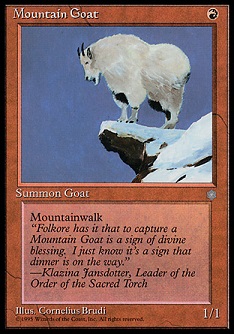
Back in my later high school days, when my early obsession with metal music coexisted with an active participation in games like Magic: The Gathering and Dungeons & Dragons, I remember stumbling across a 1/1 beast in Ice Age that I became bound and determined to name a pseudo-grim heavy metal band after:
I was very briefly disappointed to find that a band had already beaten me to the punch on that one. One of the things that makes John Darnielle an awesome person, though, is the very real possibility that this is no coincidence and he took his band name from M:tG too. (Probably not, given that his first album came out in 1994, but you never know.) This guy has made a guest appearance on an Aesop Rock hip-hop album and written an acoustic love song set to a Marduk black metal concert in the same year; his appreciation for the awkward and out-of-place couples with an above-average awareness of other musical scenes to conjure a constantly befuddling self-image. The first time I saw him live, before I was very aware of his works, I wasn’t sure if I ought to take the dialogue between each track as stand-up comedy or legitimate commentary by someone who was hopelessly socially inept. In retrospect, it was more the former, but the heart-felt sincerity Darnielle packs into everything he says or writes is both a quintessential part of the act and a reflection of who he really is–someone both incredibly aware and controlling of his public image and just a little bit legitimately weird. He has made his claim to fame writing sentimental solo acoustic songs with over-the-top lyrics and awkward subject matters that are simultaneously heart-felt and tongue-in-cheek. He has cultivated his awkwardness into some of the best solo acoustic albums recorded since Bob Dylan.
Lately, The Mountain Goats have evolved from a solo project to more of a full band. Last time I went to their show the audience had expanded from about a hundred to a few thousand, and Darnielle was hamming up the rock-star image with a shit-eating grin on his face the whole time. I absolutely love this guy and his works, and while I can’t say that I’ve kept up with him consistently over the years (his discography is massive), I’ve certainly listened to him enough to rank in my top 50 most played artists of the past decade. Here are the lines to Fault Lines, to give you some idea of his brilliantly bizarre lyrics:
Down here where the heat’s so fine
I’ll drink to your health and you drink to mine
As we try to make the money we scored out in Vegas hold out for a while
We drink vodka from Russia
We get our chocolates from Belgium
We have our strawberries flown in from England
But none of the money we spend seems to do us much good in the end
I got a cracked engine block, both of us do
Yeah the house, the jewels, the Italian race car
They don’t make us feel better about who we are
I got termites in the framework, so do you
Down here where the watermelon grows so sweet
Where I worshiped the ground underneath of your feet
We are experts in the art of frivolous spending
It’s gone on like this for three years I guess
And we’re drunk all the time, and our lives are a mess
And the deathless love we swore to protect with our bodies
is stumbling across its bleak ending
But none of the rage in our eyes
Seems to finish it off where it lies
I got sugar in the fuel lines, both of us do
Yeah the fights and the lies that we both love to tell
Fail to send our love to its reward down in hell
I got pudding for a backbone, and so do you
La la la la! Hey hey!
Decade of last.fm scrobbling countdown:
39. Camera Obscura (786 plays)
Top track (228 plays): Country Mile, from Let’s Get Out of This Country (2006)
Featured track: Razzle Dazzle Rose, from Let’s Get Out Of This Country (2006)
The presence of Camera Obscura on my decade-spanning last.fm charts might be the only fluke in this series. They basically got here because I listened to “Country Mile” on repeat for about 12 hours one day. Let’s Get Out of This Country is the only album I’ve really listened to extensively in their discography (they just released their fifth last month), and while I did get the pleasure of seeing them live once, I can’t say I know much about the band. But I do think this album is absolutely delightful–a little hidden ray of light in my mostly heavier music collection that warmed my heart the first time I heard it and still does today. Its retro vibe feels oddly more authentic than any of the actual classic pop sounds it replicates, made fresh by a heavy dose of 2000s indie aesthetics and Tracyanne Campbell’s angelic vocals. Let’s Get Out of This Country takes me back in time so vividly that I swear I remember growing up surrounded by the wallpaper on the album’s cover. It’s flooded with innocent ennui, played out in front of a kitchen window on a rainy Saturday afternoon. Its depression is refreshing and nostalgic, replaying some childhood memory in which boredom seemed to be the worst thing life had to offer.
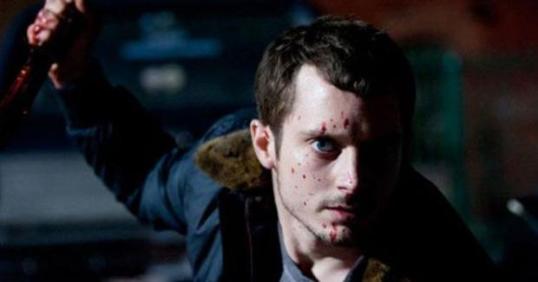
Today’s song of the day is an instrumental piece from the latest horror remake, Maniac. Composed by the French musician Rob, Maniac‘s score is just as important to the film’s unlikely success as Elijah Wood’s disturbing performance in the lead role. Reminiscent of the scores composed and performed by Goblin for the films of Dario Argento, Rob’s work here results in one of the best horror scores ever recorded.
Decade of last.fm scrobbling countdown:
45. 東野美紀 (Miki Higashino) (705 plays)
Top track (31 plays): Beautiful Golden City, from Suikoden (1995)
Ms. Higashino is the first of a handful of video game music composers to have risen through my ranks over the years, thanks almost entirely to her beautiful contributions to the soundtracks of Genso Suikoden I and II. (Funny, I would rank Suikoden II in a three way tie for my favorite video game ever, and all three relevant composers made it onto the charts.) Her discography is small but compelling, showcasing an appreciation for traditional Asian and European folk music that rarely surfaces with such force among her contemporaries. Paying special attention to Japanese and Irish folk in particular, she managed to imbue the first two Suikoden titles with a lively earthiness ideal for an unprecedented model of gameplay made possible by the Playstation. The Suikoden games eschewed fantasy in the raw for an appeal to political and military strife in which the hero moves from town to town gathering an army and waging war along grey lines, the quintessential naivete of the RPG hero being frequently exploited to generate scenarios in which the moral high ground stood open to debate. If the main plots centered around those characters most aware of war’s many faces, the hero and the bulk of his officers–108 recruitable characters in all–were simple folk, fighting for personal reasons without a grasp of the big picture. Miki Higashino’s success in the Suikoden soundtracks rested in her ability to score appropriate music for the simple majority–those characters with deep ties to the land, who lacked a grand vision and swallowed whole the political propaganda which cast their homes and country in jeopardy. Songs like Beautiful Golden City capture what the majority of the Suikoden cast fought to preserve.
Higashino has a long history in the video game music industry in spite of her short list of works. She composed her first two soundtracks–Gradius and Yie Ar Kung-Fu–in 1985, at the surprisingly young age of 17. Yie Ar Kung-Fu in particular reveals that Higashino bore an appreciation for folk music from the very beginning of her career. I’ll leave you with the NES version of this remarkably early score.
This is embarrassing. Here it is 2013, and my 2012 collection consists of only 38 albums, the majority of which I’ve listened to twice at best. I never heard the new Neurosis. I never heard the new High On Fire. Hell, forget metal, I didn’t even listen to the new Shins and Godspeed albums. I can’t offer an experienced, informed opinion now the way I could at the end of 2011. But I’ve been posting up some sort of album of the year list somewhere for over a decade now, and I’ll be damned if I let the fact that I didn’t really listen to any albums in 2012 stand in my way.
Or something like that. Here we go.
10. Dawnbringer – Into the Lair of the Sun God (track: IV)
It’s not often I get into a standard heavy metal album, but Dawnbringer did everything right in 2012. The songs rock along with a bit of an Iron Maiden drive to them, the power and black metal tendencies are tastefully incorporated to enhance the drive without altering the vibe, and the vocals know their limit. If it sounds a bit generic, don’t let that fool you. Not too many bands can pull this off without giving into the temptation to be more “epic” or “extreme” than they really are. Dawnbringer pull it off without the flare–without ever going over the top–and their accessibility places Into the Lair of the Sun God among the best of the year.
9. Korpiklaani – Manala
I wouldn’t say Hittavainen was the heart and soul of Korpiklaani, but he was an essential component. The band would be at a total loss without Jonne Järvelä, and their consistent line-up over the years has contributed enormously to their success, but Juho Kauppinen’s accordion aside, the folk instrumentation was almost all a product of Hittavainen. When he left due to health issues after Ukon Wacka in 2011, I feared it was the end of an era. Korpiklaani never missed a beat recovering from the loss in 2012. In addition to picking up the highly qualified Tuomas Rounakari as their new violinist, Jonne Järvelä stepped up to fill in the void by recording the mandolin, flute, and whistle tracks. I think I can hear some nuance differences between his and Hittavainen’s playing style, but it might just as well be in my head; Manala sounds like a Korpiklaani album through and through. I don’t like it as much as Karkelo and Ukon Wacka–it’s a bit heavier, too much so for my taste in folk metal–but in the greater sphere of Korpiklaani’s discography it is certainly composed and performed to par.
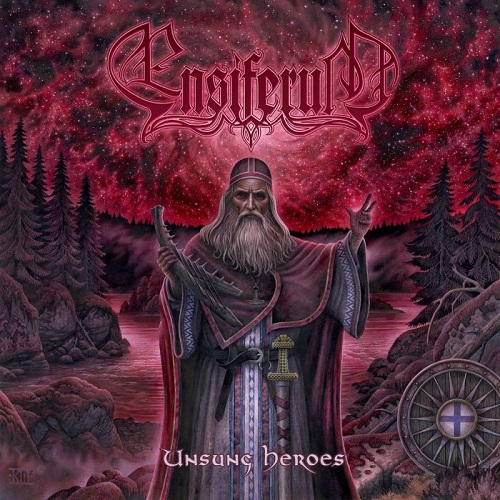
8. Ensiferum – Unsung Heroes
Ensiferum took a lot of slack for this album. I think a lot of people wanted to hear the over-the-top bombast that worked so effectively on Victory Songs, but in my opinion that was already growing stale on From Afar. Unsung Heroes is down to earth in a way they haven’t been since the 2001 self-titled debut, and I love it. They’re heading in exactly the direction I’d hoped for, and with the exception of the ugly mistake that is the album’s 17 minute closing track, Power Proof Passion, Unsung Heroes does not sound at all like a band past their prime. If they continue to push in the direction of tracks like Pohjola, they’re in position to trump Victory Songs and follow up Unsung Heroes with their best album to date.
7. Wodensthrone – Curse
I wish I’d taken the time to review this album earlier in the year, because I haven’t listened to it since the summer, and their flavor of epic black metal isn’t the sort of thing you can fully absorb in a quick last-minute listen. This is an album that can move nowhere but up in my charts over the months to follow, but for the time being I am content to place it somewhere in the middle. While busting out black metal that’s just as grim and unforgiving as the 1990s greats, Wodensthrone manage to infuse a tremendous amount of emotion that speaks of something beautiful hidden beneath the chaos. It’s buried a bit deeper than say, Femundsmarka by Waldgeflüster last year, but the feeling is similar.
6. Vattnet Viskar – Vattnet Viskar EP (song: Weakness)
If someone were to ask me what black metal sounded like in 2012, I might hand them this EP. It’s kind of cool getting to say that, because one of their members is a regular at the music forum where I get most of my recommendations. I wouldn’t have guessed back in March that they would be signed to Century Media by the end of the year, but I’m stoked to hear it. The whole notion of post-black metal has taken on a number of different flavors in these formative years, and Vattnet Viskar expand the genre by incorporating a lot of the all-encompassing guitar tones I associate with post-rock acts like Mono and This Will Destroy You. Top-notch stuff that’s really at the forefront of an emergent genre I’ve been anticipating for years.
5. Enslaved – RIITIIR
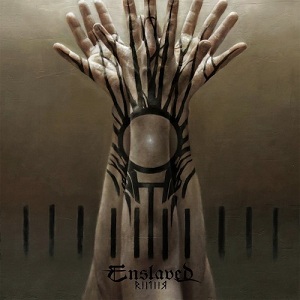
How Enslaved have aged so well is beyond me, but their last three albums have been their best three albums, and 22 years after the formation of this band they remain at the forefront of metal. Their viking-infused progressive black sound of late has done as much to shape the future of the genre as any new-found participant in the current popular trend towards black metal that has been taking shape over the past four years. RIITIIR is another outstanding output by the one classic early 90s black metal band that has managed to weather the ages unscathed.
4. Blut aus Nord – 777: Cosmosophy
The review I wrote of 777: Cosmosophy last month was one of the most thorough I’ve done all year, and there is nothing I care to say about the album that I haven’t said already. It is outstanding in its own right, but it does not feel like an entirely complete finale to their already classic 777 series. The first and third tracks, breathtaking though they may be, don’t seem to sufficiently progress from where the second album in the trilogy, The Desanctification, left off. The second track moreover, Epitome XV, is the weakest link on all three albums. The last two tracks compensate greatly by concluding in proper form, and I certainly think Cosmosophy is excellent. It can only be said to have “shortcomings” in so far as I expected it to be the best album of 2012. Fourth place isn’t too bad.
3. Torche – Harmonicraft (song: Reverse Inverted)
Calling Torche metal at this point is really pushing the limits of the definition. Since their early days writing crushing stoner anthems, they have evolved into a bizarre amalgamation equal parts metal and pop. But it’s not just the uniqueness of the happy, smiley-face hammers Harmonicraft beats you down with that makes it so appealing. Torche have become by all rights the heirs of the 1990s. These guys have more in common with the Smashing Pumpkins than they do with any of their stoner metal contemporaries. This is the sort of thing that 15 years ago we could have just labeled “alternative rock” and gone on enjoying without any need for classifications. While forging an entirely unique, original sound of their own, Torche have managed to capture a song-writing ethos that has been dead for a generation, and Harmonicraft is the cleanest breath of fresh air I’ve inhaled in years.
2. Krallice – Years Past Matter (song: Track 2)
Krallice is my favorite band making music today, and I dare say last year’s Diotoma might be my favorite album by any band ever. Seldom if ever has a band followed up such a masterpiece with something of equal worth, and I was shocked that Krallice had the energy left to release anything at all this year. Years Past Matter is an outstanding post-black metal outing in the vein of Dimensional Bleedthrough. The tracks took longer than usual to grow on me, and usual for Krallice entails dozens of listens, but the payout is always worth the time, and the slow process of appreciation is enjoyable in its own right. Mick Barr and Colin Marston’s dual tremolo is the grand ultimate ear-candy, and so long as they never compromise their commitment to that they will probably remain my favorite band. (Track 3 is my favorite song on Years Past Matter so far, but it was not available on youtube. Track 2 is a worthy substitute.)
1. Panopticon – Kentucky (song: Killing the Giants as They Sleep)
The fact that I didn’t review this album is almost embarrassing, because much like Aesthethica by Liturgy last year, it is an album that absolutely demands a thorough investigation to properly appreciate. I can’t easily tell you why I placed it this high, because frankly I don’t know yet myself. When I first read that a Louisville, Kentucky-based band called Panopticon had released a bluegrass black metal album, all sorts of thoughts ran through my head. Kentucky sounds like none of them. Do ignore the cliche “blackgrass” labels; while Austin Lunn listened to plenty of bluegrass in the process of recording this, he does not actually incorporate the genre as we might think of it. Instead he interweaves traditional Appalachian folk–not bluegrass particularly–as distinct tracks separated from the black metal. What folk does emerge in the bm is more akin to Waylander, and certainly far from “bluegrass”. That’s not a bad thing, just an–I think–important distinction to be made, because otherwise we might be left searching for genre stereotypes which simply aren’t present here. What Kentucky really accomplishes is a merging of a musical themes which perfectly juxtapose a beautiful landscape and a totally destitute human condition. The first half of “Killing the Giants as They Sleep” for instance generates landscape imagery with a degree of effectiveness similar to Femundsmarka by Waldgeflüster. (Have I referenced that album twice now? I think it’s time I paid it another visit.). You take a look around, take a deep breath, and really appreciate the natural beauty that surrounds you. About half way through the dialogue begins, and the explosion around 9:15 serves to draw you fully into the atrocities taking place here, both in the exploitation of workers and the desecration of the environment.
I don’t think Austin Lunn intended to make any sort of political statement here, but in succeeding so comprehensively to depict elements of Appalachia and its outskirts, he effectively did so. At a time when the working class of America is inexplicably becoming staunch supporters of big capital, this album hits a bulls-eye on all of the thoughts that have been forefront on my mind of late. His bleak renditions of union anthems like “Which Side Are You On?”, recently covered with such optimism by the likes of Dropkick Murphys, strike me as a painfully realistic reminder that the entire notion of equality as an American ideal is becoming antiquated.
But that might be seen as secondary. Wherever our ideas may lead us, Kentucky is the sort of album that inclines us to form them. It’s an album that makes me think. Like Aesthethica by Liturgy and Diotima by Krallice last year, it forces me to set aside my mundane daily routines and really engage the human experience. That alone, all other considerations aside, suffices to render it my favorite album of 2012.
Continuing my series on the best of 2012, here are ten of my favorite songs from 2012. Now, I’m not necessarily saying that these were the best songs of 2012. Some of them aren’t. But these are ten songs that, in the future, will define 2012 for me personally. Again, these are my picks and my picks only. So, if you think my taste in music sucks (and, admittedly, quite a few people do), direct your scorn at me and not at anyone else who writes for the Shattered Lens.
By the way, I was recently asked what my criteria for a good song was. Honestly, the main thing I look for in a song is 1) can I dance to it and 2) can I get all into singing it while I’m stuck in traffic or in the shower?
Anyway, at the risk of revealing just how much of a dork I truly am, here are ten of my favorite songs of 2012.
10 and 9) Make Bullying Kill Itself and Jacking It In San Diego (Trey Parker and Matt Stone)
These two songs were featured in the classic bullying episode of South Park. They should be required listening for anyone who thinks that a YouTube video can change human nature.
8) Big Machine (Ryan Miller)
Perhaps not surprisingly, I discovered a lot of my favorite music of 2012 in the films of 2012. This song was written for the Safety Not Guaranteed soundtrack.
7) Abraham’s Daughter (Arcade Fire)
This is from The Hunger Games soundtrack.
6) The Poison Tree (Moby, feat. Inyang Bassey)
Technically, this song — which is featured on Destroyed — is from 2011 but it was released, as a single, in 2012.
5) Call Me Maybe (Carly Rae Jepsen)
This is just a fun song.
4) Stronger (Kelly Clarkson)
Kelly Clarkson is always going to have to deal with haters, because she won American Idol and voted for Ron Paul. She’s one of my favorites, however.
3) Skyfall (Adele)
The minute I heard this song, I knew Skyfall was going to be great.
2) Blow Me (One Last Kiss) (P!nk)
It’s not really a year in music unless I have P!nk somewhere on the list.
1)Razor’s Out (Mike Shinoda featuring Chino Moreno)
This is from the soundtrack of The Raid: Redemption. Quite simply put, this is a great soundtrack for writing.
Tomorrow, I’ll continue my look at 2012 with my list of 10 good things that I saw on television last year.
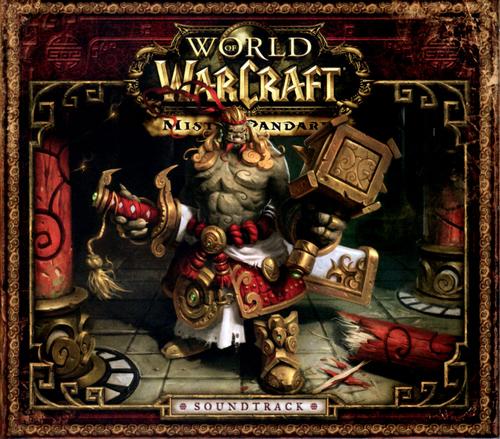
I had pretty mixed expectations for the soundtrack to Mists of Pandaria. One the one hand, Blizzard’s scores embarked on a downward spiral starting in 2010. Cataclysm was a poorly planned expansion, and its lack of a clear focus and theme had a serious impact on the music. Russell Brower, Derek Duke, and Glenn Stafford did an outstanding job on Wrath of the Lich King in 2008, but the Cataclysm sound team faced a weak, haphazard plot and (I would imagine) a great deal of frustration as Blizzard scrapped some of their major plans for the expansion mid-stride. Diablo 3 was equally disappointing, with the inexcusable failure to bring back Matt Uelmen taking its toll. I was beginning to think Blizzard had abandoned any serious commitment to ensuring high quality music in their games.
On the other hand, there was no doubt as to what Mists of Pandaria would be about. Just as Wrath of the Lich King had a clearly Nordic vibe from start to finish, Pandaria was thoroughly immersed in Eastern culture and tradition, with a wealth of pre-existing musical themes upon which to build a score. It also brought video game music legend Jeremy Soule into the mix; but considering Cataclysm fell flat in spite of involving David Arkenstone, I wasn’t going to get too excited about this one until I heard it.
As it turns out, Mists of Pandaria might be Blizzard’s best soundtrack to date. Russell Brower, Neal Acree, Sam Cardon, Edo Guidotti, and Jeremy Soule clearly did their research, and the expansion presents a delicious mix of authentic Chinese folk and big-ticket film/game scoring. I am ill-equipped to compare it to similar contemporary soundtracks–I don’t watch movies, and I really haven’t kept up with game soundtracks for the better part of a decade now–but as an avid World of Warcraft fan who plays with the sound on, I can safely say that the music this go around is a fundamental, essential element of the gameplay. This really hasn’t been the case since Wrath of the Lich King. Hour of Twilight (Dragon Soul) had one of the most unconvincing scores in Blizzard’s catalog, for a patch that felt rushed and entirely uninspired. It was a force-fed collection of dramatic stereotypes, and it’s hard to imagine what else it really could have been in the context of the raid. Mists of Pandaria, in contrast, is packed with lively anthems that bring the action to life on a level to par with the mechanical and visual appeal.
My favorite track so far is the music to the Shado-Pan Monastery dungeon. It’s a dungeon that, I think, would hedge on the side of tedious were it not for the score. The Master Snowdrift boss battle begins with a semi-choreographed fight against Pandarian monks who take turns jumping into a ring to engage you. I don’t know if the music is intentionally timed to cue with the fight or if it has just happened that way the two or three times I’ve played through it, but the heavy drumming that starts about 2 minutes into this clip seems to sync up with the start of combat. Playing the game in silence, you might find yourself impatiently waiting for the new challengers to engage you, yawning and tapping your foot to press through and collect 80 valor points. With the music on, it’s one of the most engaging experiences of the expansion: the sweeping anthem gives the fight a cinematic feel, and it’s easy to forget that you’re actively playing a game, not watching a movie. It was on my first play through Shado-Pan Monastery that what Russell Brower and co accomplished in this expansion really hit home. In Wrath of the Lich King, it was the slower-paced themes like Grizzly Hills and Dalaran that moved me the most, capturing the timeless, snow-covered landscapes and subduing the combat experience. In Mists of Pandaria they certainly still achieve top quality questing zone ambiance, but for the first time in a Blizzard game I am also hearing songs that suitably enhance the action.
That, at least, stands for the casual encounters. I have yet to really pay attention to the music while raiding. In a sense, the raids demand the best tunes Blizzard’s sound team have to offer, but they are also the part of gameplay in which you are most focused on what you’re doing and least inclined to sit back and take in the audiovisual experience. What I can certainly say is that for the first time in a while I feel inspired to at least make an effort to pay attention to that experience. For now, I’d like to call further attention to the more ambient, questing zone tracks. The degree to which they managed to incorporate traditional Chinese instrumentation into the score is admirable, and to the best of my knowledge none of the musicians accredited with the Mists of Pandaria soundtrack specialize in Chinese traditional music. The score is certainly of a western film style at heart, and you would never mistake their Eastern fusion for authentic Chinese folk, but such inclusions as a pipa at the outset of “The River” are delicious indulgences that enhance the gameplay experience far beyond what was necessary for the composers to earn their paychecks. Mists of Pandaria is just packed with little Easter eggs that show how much fun Blizzard must have had making this game. (I love how two early, relatively insignificant NPCs you encounter in Jade Forest are named Ren and Lina Whitepaw, as in Ren and Li–Humaneness and Ritual–two of the principles of Confucianism.) Mist of Pandaria’s music offers the same tip of the hat to those of us casually informed on Chinese tradition, and I get a constant thrill in recognizing moments that resemble my beloved eight-volume Chinese Ancient Music Series collection.
Bravo to Blizzard for doing this one right through and through. It’s no masterpiece independent of the video game for which it was composed–I wouldn’t sit around listening to it while not playing the game as I would for say, a Nobuo Uematsu score–but it is an essential component of Mists of Pandaria in a way that the music of Cataclysm never was. Mists of Pandaria is one of the most visually stunning games Blizzard has yet produced, and it’s got a soundtrack to match. I wouldn’t necessarily say I like it more than Wrath of the Lich King, but it achieves the same level of quality while set to a drastically different theme and landscape.
Happy Holidays! It’s that special time of the 5125 year cycle where friends and family all come together in celebration. From the writers of Shattered Lens, wishing you and yours a wonderful Mayan Apocalypse. Remember to enjoy the total annihilation of the human race responsibly!
I read so many negative reviews of Unsung Heroes that I actually avoided listening to it for four months. My acquaintance with Ensiferum goes all the way back to their 2001 full-length debut, and I was in no hurry to hear such an essential and formative band for me fall by the wayside. I finally gave it a spin for the first time last night, and frankly I don’t know what everyone is bitching about.
In My Sword I Trust
I mean, sure, Unsung Heroes isn’t the explosive powerhouse of Victory Songs and From Afar. But was I the only person who got the feeling on From Afar that their standard formula was growing really stale really fast? Ensiferum may have set the standard for folk metal as we know it today, but beneath the fist-pumping and epic folk interludes of even tracks like Twilight Tavern and Stone Cold Metal I got the sneaking suspicion that they were beginning to succumb to the very genre stereotype they established. Victory Songs certainly stands as my favorite Ensiferum album to date, but I kind of felt like From Afar was riding too much on its success. Almost every song followed the formula that made Victory Songs so great, and while this certainly facilitated a fresh batch of great songs, it was less than I’d hoped from a band that had consistently paved their own way over the years.
Is Unsung Heroes a washed out version of Victory Songs and From Afar? Only if you claim that those albums capture exactly what Ensiferum ought forever more to sound like. I for one think it’s a breath of fresh air. It reminds me, if anything, of their 2001 self-titled. It humors the possibility of rocking out without lightspeed double bass. It dares to occasionally divorce overbearing synth and “epic” orchestrated overlays from the folk passages. It drops, I think, the degree of pretentiousness that concerned me on From Afar. I have no interest in listening to the musical equivalent of 300 spin-offs ad nauseam. The total testosterone indulgence of Victory Songs was exciting in its day, but in music and film alike it grows old quickly.
Pohjola
I really feel like Unsung Heroes is Ensiferum’s most mature work to date. That doesn’t make it their best; Victory Songs was just too perfect and the self-titled too nostalgic to be trumped any time soon. But on Unsung Heroes I can again feel like I’m listening to a band who share my nerdy lust for all things fantasy. There’s none of the glam and special effects that dazzled me on Victory Songs but made me begin to feel distanced from the band on From Afar. I’m absolutely thrilled to be able to connect with these guys again in the more personal way I felt on their first album.
And really, what can you possibly complain about on a track like Pohjola save that it doesn’t fall into the formula of their last two albums? I’ve heard people say they’re becoming a Turisas knock-off. That’s absolutely ridiculous. Post-Battle Metal Turisas has served as the ultimate Hollywood blockbuster band–glossy and refined, if Victory Songs was Ensiferum’s 300, Varangian Way was Turisas’s Lord of the Rings. Tracks like Pohjola might have epic operatic vocals and orchestration, but the surrounding atmosphere is completely different from either of those works. The viking metal riffs that really start to pick up at the 3 minute mark ought to be a revealing sign that this song is all about the steady drive. The orchestration ebbs and flows without many hard, dramatic stops. The synth whistle that accompanies the main riff in the earlier stages of the song gives it a light-hearted, positive feel that carries throughout. The acoustic guitar outro is beautiful, but it’s also accessible. It’s something you the listener could pick up your guitar and play.
Unsung Heroes isn’t perfect. Sami Hinkka’s clean vocals leave a bit to be desired, especially on “Last Breath” where they take center stage. That, the ninth track, is really the first moment on the album where I begin to see where any complaints might have a leg to stand on. If the 17 minute-long closer which follows–“Passion Proof Power”–was as good as we’ve come to expect from an Ensiferum grand finale, any petty complaints about “Last Breath” might be easily forgotten. The problem is that “Passion Proof Power” is frankly pretty bad. It starts off a lot slower than the rest of the album’s non-acoustic tracks, more inclined to bore me than build anticipation. When it does pick up there’s no clear direction as to what’s going on. The song gives way into some really, really lame progressive rock, coupled with boring, unconvincing spoken passages and completely misplaced operatic vocals. The song never really builds up into anything. There are moments here and there where you might find yourself drawn back in–at the 13 minute mark for instance–but as the song continues to go nowhere you’ll forget about it again soon enough. I can’t make any excuses here; “Passion Proof Power” is a waste of 17 minutes, and if you skipped ahead to it expecting to hear Ensiferum’s finest effort–a reasonable thing to do considering how they’ve concluded past albums–you may well be left with the impression that Unsung Heroes is terrible. Follow that up with an embarrassing bonus track cover of Gypsy Kings’ Bamboleo and yeah, you definitely have a right to demand the last 20 minutes of your life back.
Burning Leaves
In conclusion, this is perhaps Ensiferum’s most down to earth album to date. It’s all about moderation and maintaining a steady drive while never over-extending or burning out into a bore. It doesn’t crush or dazzle; it rocks along, and does so with some really compelling orchestration that’s uniquely accessible. I think there’s this common misconception that fantasy-themed music has to sound larger than life, but for me that’s a detriment in all but the most perfect, Victory Songs/Varangian Way-level instances. If it sounds fake it’s not doing a very good job of creating fantasy now, is it? Unsung Heroes paces itself and transitions in ways that feel legitimate. I love it, at least for the first 40 minutes. It doesn’t so much progressively decline from there as stall mid-air and nose dive; they should have put “Last Breath” before “Pohjola” and made the latter the finale. “Passion Proof Power” and “Bamboleo” are garbage B-sides better suited for some bonus disc on a collector’s edition. (I suppose Bamboleo technically is a “bonus” track.) To say Unsung Heroes is a great album while chucking out a full 20 minutes of its content is a bit of a stretch, but because the weak points are condensed on the fringe rather than interspersed throughout the album, and because 40 minutes of outstanding new Ensiferum is certainly sufficient, I am content to delete the last two tracks from my playlist and call it a success.




 Through the Shattered Lens