14 Days of Paranoia #9: Chappaquiddick (dir by John Curran)


On July 18th, 1969, while American astronauts were preparing to land on and then take their first steps on the Moon, a 28 year-old woman named Mary Jo Kopechne attended a party on Chappaquiddick Island in Massachusetts.

A former aide to Robert Kennedy who was reportedly devastated by his assassination, Mary Jo was one of several former campaign workers who gathered at an isolated cabin that night.  According to the others at the party, Mary Jo (who was described as being a devout Catholic who rarely drank) was one of the first people to leave the party.  She left with another guest.  The next morning, that guest’s car was found overturned in Poucha Pond.  Dead in the backseat was Mary Jo Kopechne, who had suffocated as the car slowly filled up with water.  It was later determined that she had been alive and trapped in the car for hours before dying.  The owner of the car was back at his hotel.  He had returned there after crashing his car and, while he had taken a shower and combed his hair and called his father, he had not bothered to call the police.

Normally, a driver in this situation would be in serious legal jeopardy.  Along with having left the scene of the accident, he also left Mary Jo to die.  It was generally agreed that if he had called the police within an hour of the accident occurring, Mary Jo could have been saved.  However, because he was Ted Kennedy and the last remaining of the fabled Kennedy brothers and a man who many expected would someday be president, he was given a slap on the wrist and the death of Mary Jo would be forever described as being a “Kennedy tragedy” as opposed to a Kopechne tragedy.

Not surprisingly, there has been a lot of speculation about what had happened in the moments leading up to the crash.  Like his brothers, Ted Kennedy was a notorious and reckless womanizer.  Unlike his brothers, Ted also had a reputation for being a heavy drinker.  Some went as far as to accuse Ted of deliberately murdering Mary Jo, as if the actions that Ted later admitted to were not, in themselves, already bad enough.  While people may disagree on the circumstances that led to the accident, it is generally agreed that, if Ted had been anyone other than a Kennedy, he would have served time in prison.  The incident ended Ted’s presidential dreams but it didn’t keep him from being described as being the “lion of the Senate” when he died in 2010.  Indeed, when Ted died, many people on twitter expressed their shock as they read or heard about Mary Jo Kopechne for the first time in their lives.

(In 2010, Mary Jo would have been seventy years old.)

Obviously, no one was going to make a movie about Mary Jo Kopechne’s death while Ted was still living.  Indeed, even after Ted died, it still took seven more years for the story to be turned into a film and producer Byron Allen struggled to even book the film in theaters.  2017’s Chappaquiddick stars Jason Clarke as Ted and, briefly, Kate Mara as Mary Jo.  The film speculates as to what happened that night and it probably gets fairly close to the truth.  The accident is an accident, a result of Ted freaking out when a cop stops him for speeding and sees him with a woman who isn’t his wife.  Ted, who is portrayed as being an immature manchild, turns to his handlers and then his family for help.  His fails to call the authorities because, to Ted, there is no greater authority than his abusive father (Bruce Dern).

For the most part, Ted passively sits by as associates of his late brothers — including Ted Sorenson (Taylor Nichols, giving the film’s strongest performance), Joe Gargan (Ed Helms), and Paul Markham (Jim Gaffigan) — take over his defense and carefully craft his every response.  Ted’s attempts to provide input are shot down and it’s made clear that his job is to shut up and concentrate on returning the Kennedys to the White House.  The film’s best scenes feature Sorenson growing frustrated at all of Ted’s mistakes.  Very little concern is shown for the fact that Mary Jo Kopechne, a Kennedy true believer, is dead due to Ted’s recklessness.  When she was alive, Mary Jo was held up as a symbol of the Kennedy youth.  When she died, she was just viewed as being an obstacle to keeping the Kennedys from reaching the power to which they felt entitled.

As you can probably guess, Ted Kennedy does not come off particularly well in this film.  At his best, he’s a wimp who is struggling with a legacy of which he knows he’s not worthy.  At his worst, he is pathologically self-absorbed and incapable of feeling empathy for the woman he left to drown in the backseat of his car.  Both he and Mary Jo and ultimately the voters who are expected to reelect him even after he leaves Mary Jo to die are ultimately portrayed as just being pawns of the shadowy men who lurk behind the scenes of every political operation.

It’s not a happy film and it certainly has its flaws but it provides an important service, reminding viewers that death of Mary Jo Kopchene was more than just as a “Kennedy tragedy.”

14 Days of Paranoia:

  1. Fast Money (1996)
  2. Deep Throat II (1974)
  3. The Passover Plot (1976)
  4. The Believers (1987)
  5. Payback (1999)
  6. Lockdown 2025 (2021)
  7. No Way Out (1987)
  8. Reality (2023)

Live Tweet Alert: Join #ScarySocial for Black Box!


As some of our regular readers undoubtedly know, I am involved in a few weekly live tweets on twitter.  I host #FridayNightFlix every Friday, I co-host #ScarySocial on Saturday, and I am one of the five hosts of #MondayActionMovie!  Every week, we get together.  We watch a movie.  We tweet our way through it.

Tonight, at 9 pm et, Tim Buntley will be hosting #ScarySocial!  The movie?  2020’s Black Box!

If you want to join us this Friday, just hop onto twitter, start the movie at 9 pm et, and use the #ScarySocial hashtag!  I’ll be there tweeting and I imagine some other members of the TSL Crew will be there as well.  It’s a friendly group and welcoming of newcomers so don’t be shy.

Black Box is available on Prime!

See you there!

14 Days of Paranoia #8: Reality (dir by Tina Satter)


One day in 2017, Reality Winner (Sidney Sweeney), a yoga instructor who also works as a government translator, returns home from grocery shopping to discover that the FBI is outside of her house.  Agents Garrick (Josh Hamilton) and Taylor (Marchant Davis) have a search warrant and they explain that they also have some questions to ask her.

At first, both Garrick and Taylor are very friendly.  In fact, they’re almost too friendly.  Whenever Reality asks for more details about what is going on, they ask her about her pets or about whether or not she enjoys her job.  They ask her about her background and about the last trip she went on.  The conversation is cheerful but it’s hard not to notice that, while Garrick is smiling, burly FBI agents are ransacking Reality’s house.  As Reality comes to realize, she actually is in a lot of trouble.  Because she sent classified material to the Intercept, she is about to be arrested and prosecuted under the espionage act.  It’s going to be a while before she sees her house again.

Reality was released last year and aired on HBO.  It’s a film about which I had mixed feelings.  On the one hand, it showed how the government goes about prosecuting its citizens.  From the minute that Reality started talking to the FBI agents, I started yelling at her to shut up and get a lawyer.  No matter how many times they ask about your dog or how interested they seem to be in your recent trip to South America, agents of the FBI are not your friends!  Since the film’s script was largely a transcript of the actual interrogation, Reality presented a lesson in just how exactly law enforcement agencies like the FBI lure people into a false sense of security before dropping the trap on them.

On the other hand, this film also left me wondering just how much of a dumbass one has to be to throw away their career and their freedom for a trash organization like The Intercept.  Reality says that she was 1) upset over the election of Donald Trump (understandable) and 2) she resented being forced to watch Fox News at work when she would have rather watched Al Jazeera.  One needn’t be a fan of Fox to realize how ludicrous it is to suggest that Al Jazeera would somehow be less propagandistic.

There’s a moment, at the start of the film, where Reality — while standing outside of her house — stares at a toy truck on the other side of the street.  The toy has a big Confederate flag decal on it and the symbolism is so heavy-handed that it almost made me laugh out loud.  It leaves the viewer with no doubt that the film is very much on Reality Winner’s side and the film does her a great favor by casting the instantly likable Sydney Sweeney in the title role.  (Oddly, we occasionally see pictures of the actual Reality Winner over the course of the film, all of which invertedly serve to remind us that the real person is not as appealing as the actress playing her.)  Josh Hamilton and Marchant Davis are both appropriately menacing as the passive aggressive FBI agent and the scene where Hamilton goes from being friendly to being serious is truly jolting.

Since the film’s script is based on the actual transcripts of the interrogation, director Tina Satter inserts a film glitch whenever the characters mention anything that has been redacted.  The film’s best moment comes when a particularly big redaction causes the FBI agents to vanish all together and, for a few moments, Reality can actually catch her breath and is free from their questions.  The film did not make me any more sympathetic to Reality Winner (and, for all of its claims to historic veracity, it leaves out the moment she told her father that she wouldn’t be prosecuted because she was pretty and blonde) but it did make me feel empathy for anyone who has ever been targeted by the government.  When the film’s epilogue suggests that Reality Winner was prosecuted and imprisoned for a relatively minor offense solely to scare off other whistleblowers, it’s hard not to disagree.

14 Days of Paranoia:

  1. Fast Money (1996)
  2. Deep Throat II (1974)
  3. The Passover Plot (1976)
  4. The Believers (1987)
  5. Payback (1999)
  6. Lockdown 2025 (2021)
  7. No Way Out (1987)

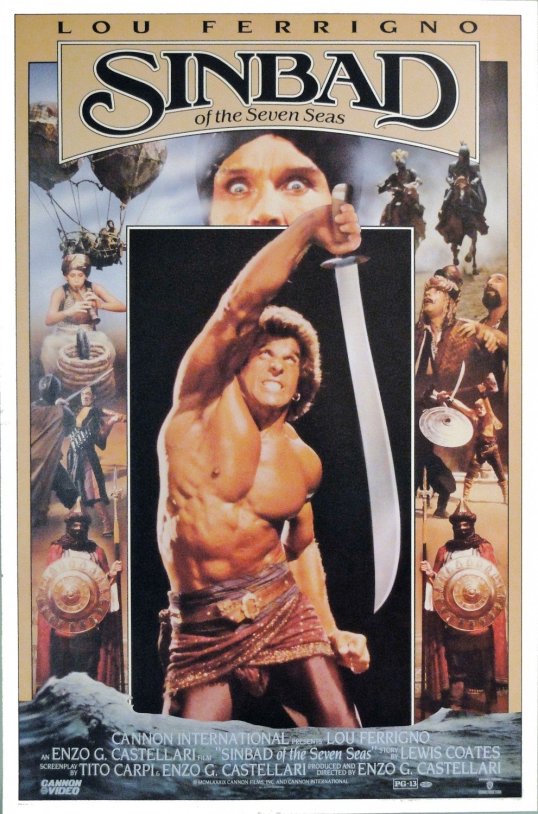
Live Tweet Alert: Join #FridayNightFlix For Sinbad of the Seven Seas!


As some of our regular readers undoubtedly know, I am involved in a few weekly live tweets on Twitter and Mastodon.  I host #FridayNightFlix every Friday, I co-host #ScarySocial on Saturday, and I am one of the five hosts of #MondayActionMovie!  Every week, we get together.  We watch a movie.  We tweet our way through it.

Tonight, at 10 pm et, we’ve got an action classic, 1989’s Sinbad Of The Seven Seas!

If you want to join us this Friday, just hop onto twitter, start the movie at 10 pm et, and use the #FridayNightFlix hashtag!  It’s a friendly group and welcoming of newcomers so don’t be shy.

Sinbad of the Seven Seas is available on Prime!  See you there!

Scenes That I Love: Paul Morrissey’s Mixed Blood


Today, the Shattered Lens wishes a happy 86th birthday to the one and only Paul Morrissey!

Though he may not be as well known as some of his contemporaries, Paul Morrissey is one of the godfathers of independent film.  He first came to notice as a collaborator of Andy Warhol’s.  Morrisey’s first films were shot at the Factory and starred the members of Warhol’s entourage.  At a time when the indie film scene barely even existed, Morrissey was making boldly transgressive films and distributing them largely on his own.  In fact, it could probably be argued that, if not for Paul Morrissey, the American independent film scene would never have grown into the impressive artistic and financial force that it is today.

There’s always been some debate over how much influence Warhol had over Morrissey’s films.  Morrissey has always said that Warhol had next to nothing to do with the films, beyond occasionally taking a producer’s or a co-director’s credit.  Others have disagreed.  What can be said for sure is that, even after Warhol retreated from directly involving himself in the cinematic arts, Morrissey continued to make fiercely independent films.

Paul Morrissey made films about outsiders.  While other directors were telling stories about the middle and upper classes, Morrissey was making movies about junkies, prostitutes, and people simply trying to make it from one day to another.  His films also frequently satirized classic Hollywood genres.  In fact, his two best-known films, Flesh for Frankenstein and Blood for Dracula, not only satirized the old Universal horror films but also the Marxist-themed films being made in Europe.  A devout Catholic and a political conservative, Morrissey took a particular delight in tweaking the left-wing assumptions of the counterculture.  Who can forget Joe Dallesandro’s gloriously shallow revolutionary in Blood for Dracula?

Today’s scene of the day comes from Paul Morrissey’s 1985 Mixed Blood, a film about a war between a Brazilian gang and a Puerto Rican gang that is fought almost entirely by underage soldiers.  (The film compares the street soldiers to the members of the boy band Menudo, in that they are rotated out once they reached the age at which they could be tired as adults.)  In this scene, a police officer visits a drug operation that is almost entirely staffed by children.

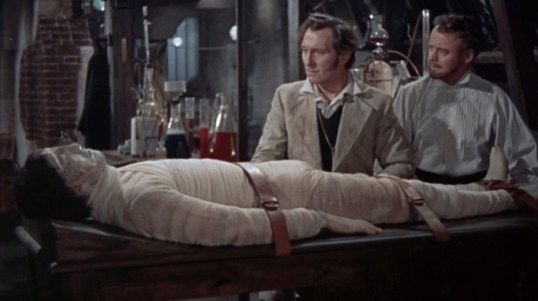
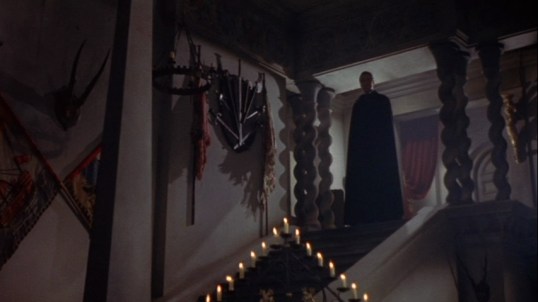
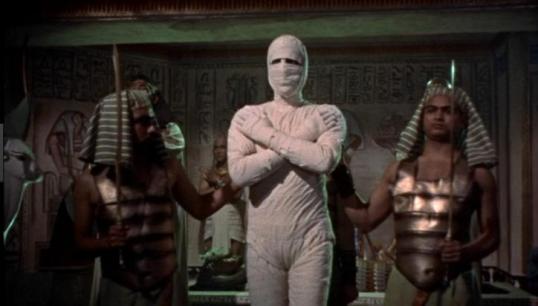
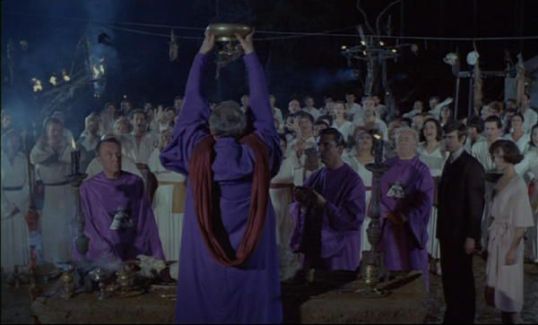
4 Shots From 4 Films: Special Terence Fisher Edition


4 Shots From 4 Films is just what it says it is, 4 shots from 4 of our favorite films. As opposed to the reviews and recaps that we usually post, 4 Shots From 4 Films lets the visuals do the talking!

Today, we celebrate the 120th anniversary of the birth of the great British film director, Terence Fisher.  Though Fisher worked in all genres, he is best remembered for the horror films that he directed for Hammer Studios.  Along with proving that there was still an audience for horror, he also helped to make stars out of Peter Cushing and Christopher Lee.

It’s time for….

4 Shots From 4 Terence Fisher Films

The Curse of Frankenstein (1957, dir by Terence Fisher, DP: Jack Asher)

Horror of Dracula (1958, dir by Terence Fisher, DP: Jack Asher)

The Mummy (1959, dir by Terence Fisher, DP: Jack Asher)

The Devil Rides Out (1968, dir by Terence Fisher, DP: Arthur Grant)

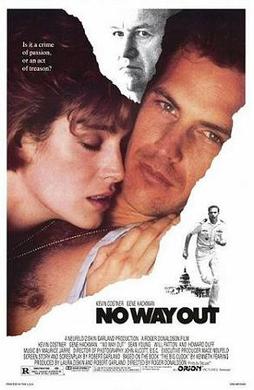
14 Days of Paranoia #7: No Way Out (dir by Roger Donaldson)


Trust no one in Washington would seem to be the message of this 1987 thriller.

Kevin Costner plays Lt. Commander Tom Farrell, a Naval Intelligence officer who is hailed as a hero after saving a shipmate who falls overboard.  In Washington, Tom is recruited by a friend from college, Scott Pritchard (Will Patton), to work for Secretary of Defense Brice (Gene Hackman).  Brice doesn’t trust the head of the CIA (played by future senator, Fred Dalton Thompson) and he wants Tom to serve as his mole within the service.  What Brice doesn’t know is that Tom is sleeping with Brice’s mistress, Susan Atwell (Sean Young).

Still, Brice does suspect that the woman with whom he is cheating is also cheating on him.  When he confronts her about it, their argument leads to him accidentally pushing Susan over an upstairs railing.  Pritchard, who is implied to be in love with Brice, takes charge of the cover-up and decides to push the story that Susan was killed by a possibly mythical Russian agent who is known only by the name “Yuri.”

Tom assists with the investigation of her death, both because he wants to know who killed Susan and also because he knows that there’s evidence in Susan’s apartment that could be manipulated to make him look guilty of the crime.  For instance, Susan took a picture of Tom shortly before her death.  The picture failed to develop but, through the use of what was undoubtedly cutting edge technology in 1987, Naval Intelligence is slowly unscrambling the picture.  For Tom, it’s a race against time to find the actual killer before the picture develops and he’s accused of both killing Susan and being Yuri.

Everyone has an agenda in No Way Out, from the ambitious Brice to the fanatical Scott Pritchard to the head of the CIA, who wants Brice to approve funding for a costly submarine.  Even the film’s nominal hero has an agenda, which has less to do with finding justice for Susan and everything to do with protecting himself and his future.  In fact, as is revealed in the film’s enjoyable if slightly implausible twist ending, some people in Washington have multiple agendas.  The film portrays Washington as being a place where, behind the stately facade, everyone is a liar and everyone is ultimately a pawn in someone else’s game.  If you have the right connections, you can even get away with murder.  Loyalty is rewarded until you’re no longer needed.

It’s an enjoyably twisty thriller, one that makes good use of the contrast between Kevin Costner’s All-American good looks and his somewhat shady screen presence.  The film introduces Costner as being a character who, at first glance, seems almost too good to be true and then spend the majority of its running time suggesting that is indeed the case.  Gene Hackman is well-cast as the weaselly cabinet secretary, as is Sean Young as the woman who links them all together.  In the end, though, the film is stolen by Will Patton, who plays Scott Pritchard as being someone who has unknowingly given his loyalty to a man who is incapable of returning it.  As played by Patton, Scott is an outsider who desperately wants to be an insider and who is willing to do just about anything to accomplish that goal.  He’s a version of Iago who never turned against Othello but instead devoted all of his devious tricks to trying to cover up the murder of Desdemona.

Even with an over-the-top final twist, No Way Out holds up well as a portrait of how the lust for power both drives and corrupts our political system.

14 Days of Paranoia:

  1. Fast Money (1996)
  2. Deep Throat II (1974)
  3. The Passover Plot (1976)
  4. The Believers (1987)
  5. Payback (1999)
  6. Lockdown 2025 (2021)

4 Shots From 4 Luis Buñuel Films: Special Luis Bunuel Edition


4 Shots From 4 Films is just what it says it is, 4 shots from 4 of our favorite films. As opposed to the reviews and recaps that we usually post, 4 Shots From 4 Films lets the visuals do the talking!

Today is the 124th birthday of the great Spanish surrealist filmmaker, Luis Bunuel!  That means that it is now time for….

4 Shots From 4 Luis Buñuel Films

Los Olivados (1950, dir by Luis Bunuel, DP: Gabriel Figueroa)

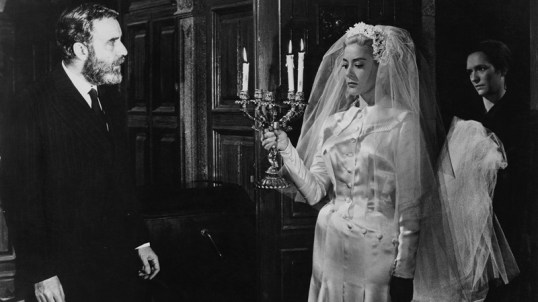
Viridiana (1961, dir by Luis Bunuel, DP: José F. Aguayo)

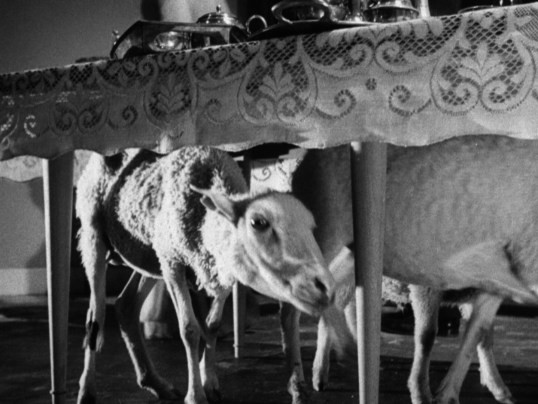
The Exterminating Angel (1962, dir by Luis Buñuel, DP: Gabriel Figueroa)

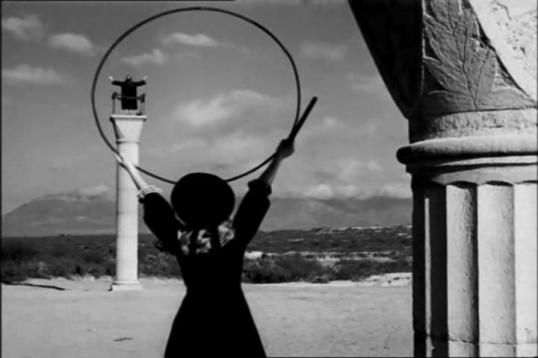
Simon of the Desert (1965, dir by Luis Bunuel, DP: Gabriel Figueroa)

Scene That I Love: Kyle MacLachlan in Dune


Today, the Shattered Lens wishes a happy birthday to the one and only Kyle MacLachlan!

Today’s scene that I love comes from MacLachlan’s film debut, 1984’s Dune.  MacLachlan played Paul Atriedes in David Lynch’s unfairly maligned film and his otherworldly vibe made him as perfect for the role as he would later be for Agent Dale Cooper in Lynch’s Twin Peaks.  As good as Timothee Chalamet was in the more recent adaptations of Frank Herbert’s novel, I still feel that MacLachlan is the superior Paul.

In this scene, Paul confronts the people who have been trying to destroy him and he proves his worth in an armed duel with Sting.

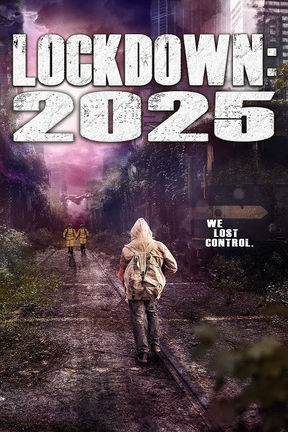
14 Days of Paranoia #6: Lockdown 2025 (dir by Mike Hall)


2021’s Lockdown 2025 tells the story of a neighborhood on the edge.

Clarence McGee (Glenn Plummer) has a got a nice house in the suburbs.  He has a nice view of the city in the distance and, even though we don’t learn much about what he does for a living, he appears to be very well off.  He has a wife named Carmen (Marie-Francoise Theodore) and three children, conspiracy theorist Junior (Marcus T. Paulk), daughter Crystal Marie (Parker McKenna Posey), and youngest Evan (Cristian Fagins).

To the outsider, it might look like Clarence has the perfect life but the reality is far different.  As a father, Clarence has been neglectful and, as his own wife points out, Evan is the only one of the kids with whom he  seems to have a strong connection.  Meanwhile, Crystal is pregnant and, while she’s told her boyfriend Marcos (Stewart Flores), neither one of them is quite sure how they’re going to tell Clarence.  And what is one to make of the burly police detective (James Black) who is sitting in his car and watching Clarence’s home?

Clarence is excited because he’s convinced that he’s finally going to win the lottery and become a billionaire.  However, just as the lottery numbers are about to be announced, the broadcast is interrupted by the National Alert System.  “This is not a test,” a voice says, before going on to explain that the president has declared a national emergency.  The country is under martial law.  There will be a 24-hour curfew.  No one is to leave their houses.

Suddenly, the skies are glowing and lightning bolts are streaking from the sky to the ground.  Explosions are heard in the distance.  The streets are full of “police soldiers” and anyone caught outside is subject to execution.  When Clarence’s neighbor tries to flee his house, he is executed on the spot.  Both Marcos and Junior suggest that maybe it’s all because of an online terrorist group known for being “pill-popping, weed-smoking, new age religious fanatics!”  Clarence says you can’t believe anything you see on YouTube.  For one thing, they let Junior on YouTube!

Meanwhile, a countdown clock appears on the television and starts to slowly tick down, from 80:00 to zero.  What happens the clock hits zero?  That’s what everyone is wondering.

As you can probably guess, things don’t go well for the McGees.  Being stuck in the house together not only makes them paranoid but it also leads to them revealing all of their deep, dark family secrets.  Soon, Clarence is loading a rifle.  When the detective finally enters the house and reveals his own secret, it leads to a violent confrontation.  Have you ever wondered how many people can accidentally get shot by two men firing guns at each other in a small enclosed space?  This film will tell you!

The plot description probably makes all of this sound more intriguing than it is.  Sadly, It’s not a very good movie, one that is marked by bad acting and bad special effects.  Not even the talented Glenn Plummer can do much with his role.  The initial apocalypse scenes are actually effective but soon, the Birdemic-style visuals kick in.  Worst of all, the film’s ending is the type of cheat that makes you feel stupid for getting in any way invested in the story.  An ending like this might have worked for a 15-minute short film but not for a film that drags on for 90 minutes.

This film was apparently produced by the Jehovah’s Witnesses and one of the final images is of a chastised, former doubter letting two Jehovah’s Witnesses into his home.  (Seriously, on the rare occasion that any of them are in my neighborhood, I hide in my room and don’t make a sound.)  I doubt this inspired anyone to pick up a copy of The Watch Tower.

14 Days of Paranoia:

  1. Fast Money (1996)
  2. Deep Throat II (1974)
  3. The Passover Plot (1976)
  4. The Believers (1987)
  5. Payback (1999)