Retro Television Review: All-American Girl: The Mary Kay Letourneau Story (dir by Lloyd Kramer)


Welcome to Retro Television Reviews, a feature where we review some of our favorite and least favorite shows of the past!  On Sundays, I will be reviewing the made-for-television movies that used to be a primetime mainstay.  Today’s film is 2000’s All-American Girl: The Mary Kay Letourneau Story!  It  can be viewed on YouTube.
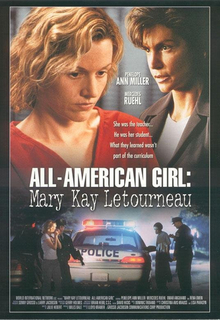
In 1996, a 34 year-old teacher named Mary Kay Letourneau decided that she had fallen in love with someone who was not her husband.

A 34 year-old deciding that they are no longer happy in their marriage and subsequently deciding that that they’ve found love with someone else is hardly an unusual or even surprising occurrence.  What made Mary Kay Letourneau’s case a national scandal was that the person that she decided that she was in love with was a 12 year-old student named Vili Fualaau.  Mary Kay started her affair with Vili when she was his sixth grade teacher.  When she was arrested and charged with two counts of second-degree rape of a child, Letourneau was pregnant with Vili’s child.  Even after being arrested, Letourneau insisted that she and Vili were soulmates.  After giving birth to Vili’s child, Letourneau was sentenced to six months of prison and somehow managed to avoid having to register as a sex offender.  After serving her sentence, Letourneau was promptly arrested again with Vili and was sent back to jail, where she gave birth to Vili’s second child.

All-American Girl opens with Mary Kay Letourneau (Penelope Ann Miller) in jail, insisting that everything that happened between her and Vili was consensual and that their love is real.  The majority of the film is shown in flashbacks.  Some of those flashbacks deal with Mary Kay, her husband (Greg Spottiswood), and Vili (Omar Anguiano).  Watching the flashbacks, I couldn’t help but notice that the film really did seem to be on Mary Kay’s side, to an almost ludicrous extent.  Her husband is portrayed as being a soulless sociopath, even before Mary Kay starts sneaking around with Vili.  As for Vili, he is presented as being the one who initiated his relationship with Mary Kay, flirting with her in class and comforting her when she starts crying in a school hallway.  The actor playing Vili looked, acted, and sounded considerably older than just 12 years old.  At times, he appeared to be nearly as old as Penelope Ann Miller.  And I’ll admit that it’s totally possible that Vili could have looked older than his age and maybe he did have a surprisingly mature vocabulary.  But still …. he was 12 years old!  Apparently, Letourneau cooperated with the film’s producers and that’s pretty obvious from the first minute we see Vili giving Letourneau a wolfish smile in the 6th grade.

The flashbacks dealing with Letourneau’s childhood are a bit more interesting, if just because Letourneau was the daughter of a congressman who ran for president in 1972.  (One of her brothers served in the first Bush White House.  Another served as an advisor to the 2016 Trump campaign.)  At one point, she taunts a group of protestors that have gathered outside of her family’s home and her father praises her courage.  The film hints that it was the twin traumas of her brother’s death and the discovery that her beloved father had fathered two children with a mistress that led to Letourneau’s subsequent instability.  Perhaps that’s true, though I think the film is a bit too eager to accept that as an all-purpose explanation.

You may have guessed that I had mixed feelings about this film.  Penelope Ann Miller gave an excellent performance as Mary Kay but the film’s attempts to portray May Kay as being even more of a victim that Vili were undeniably icky.  

As for the real Mary Kay, she married Vili four years after being released from prison.  They separated a year before Mary Kay died in 2020.  Their relationship inspired several films, most recently May/December.
Live Tweet Alert: Watch Silent Predators with #ScarySocial


As some of our regular readers undoubtedly know, I am involved in a few weekly live tweets on twitter.  I host #FridayNightFlix every Friday, I co-host #ScarySocial on Saturday, and I am one of the five hosts of #MondayActionMovie!  Every week, we get together.  We watch a movie.  We tweet our way through it.

Tonight, for #ScarySocial, Deanna Dawn will be hosting 1999’s Silent Predators!

If you want to join us on Saturday night, just hop onto twitter, start the film at 9 pm et, and use the #ScarySocial hashtag!  The film is available on Prime and YouTube.  It’s a friendly group and welcoming of newcomers so don’t be shy.

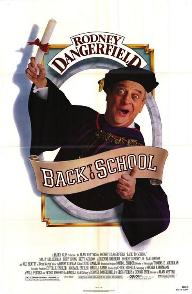
Live Tweet Alert: Join #FridayNightFlix For Back To School!


As some of our regular readers undoubtedly know, I am involved in a few weekly live tweets on Twitter and Mastodon.  I host #FridayNightFlix every Friday, I co-host #ScarySocial on Saturday, and I am one of the five hosts of #MondayActionMovie!  Every week, we get together.  We watch a movie.  We tweet our way through it.

Tonight, at 10 pm et, we’ve got 1986’s Back to School!

If you want to join us this Friday, just hop onto twitter, start the movie at 10 pm et, and use the #FridayNightFlix hashtag!  It’s a friendly group and welcoming of newcomers so don’t be shy.

Back to School is available on Prime and Tubi!  See you there!

Scenes That I Love: The Traitor Scene From Red Dawn


The original Red Dawn doesn’t get as much credit as it deserves.

It’s often described as just being an anti-communist film but actually, it’s a lot more complex than that.  Yes, it’s about a group of teenagers who wage guerilla warfare against communist invaders.  But it’s also about how those teenagers lose their innocence as a result and how they all come to realize that war is not as simple as they thought it was.  The movie celebrates the Wolverines while also mourning that they were put in the position to have to risk and sacrifice their lives in the first place.

That’s what today’s scene that I love is all about.  After they are tracked down and attacked by a group of Russian soldiers, the Wolverines discover that one of the original members of the group visited his father in town and was forced to swallow a tracking device.  In this scene, the group is forced to deal with the reality of war.  The fact that the traitor was a friend to all of them and popular enough to be president of his class just adds to the difficulty of emotionally processing with his betrayal.  Patrick Swayze can’t bring himself to pull the trigger.  C. Thomas Howell, on the other hand, is so quick to shoot his former friend that you realize just how consumed by hate he has become.

Today’s scene was directed by the brilliant John Milius.

4 Shots From 4 Films: Special John Milius Edition


4 Or More Shots From 4 Or More Films is just what it says it is, 4 shots from 4 of our favorite films. As opposed to the reviews and recaps that we usually post, 4 Shots From 4 Films lets the visuals do the talking!

Today is John Milius’s birthday and you know what?  It should be a national holiday!

It’s time for….

4 Shots From 4 John Milius Films

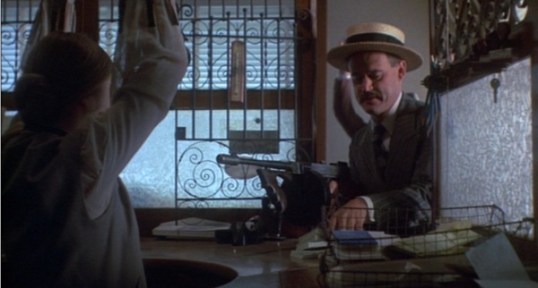
Dillinger (1973, dir by John Milius, DP: Jules Brenner)

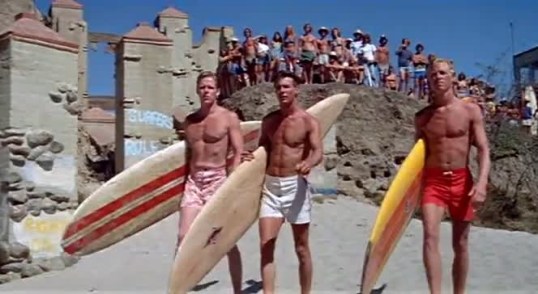
Big Wednesday (1978, dir by John Milius, DP: Bruce Surtees)

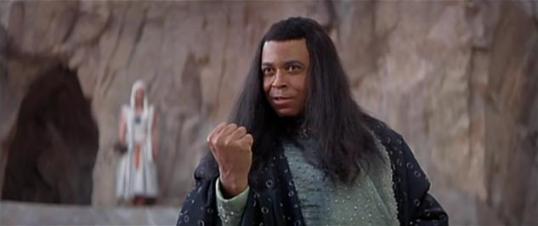
Conan The Barbarian (1982, dir by John Milius, DP: Duke Callaghan)

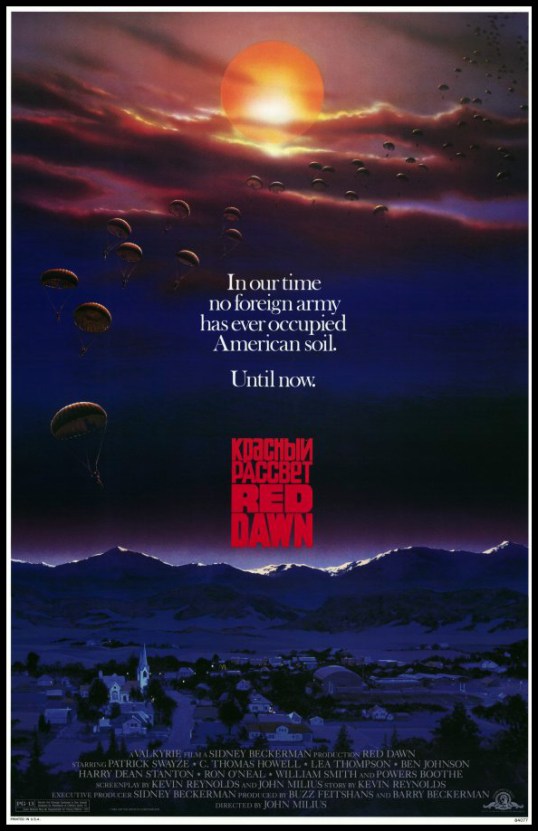
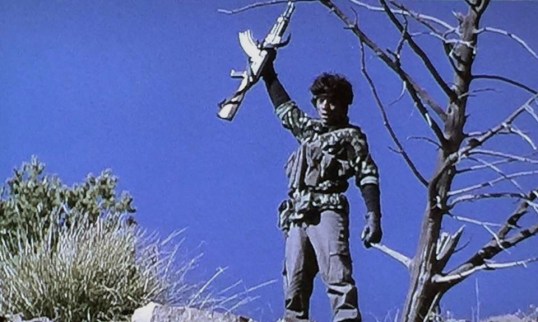
Red Dawn (1984, dir by John Milius, DP: Ric Waite)

Here Is The Official Cannes Lineup!


The lineup for the Cannes Film Festival has been announced.  After a rather subdued Sundance, film lovers like me are desperately looking to Cannes to add some excitement to 2024.  Considering that Cannes is going to see the premiere of new films from Francis Ford Coppola, Paul Schrader, Sean Baker, Kevin Costner, Andrea Arnold, George Miller, David Cronenberg, and Yorgos Lanthimos, it might do just that!

In the past, Cannes has always been hit-and-miss when it comes to the Oscars.  But lately, films like The Zone of Interest, Parasite, and The Tree of Life have followed success at Cannes with success with the Academy.

With that in mind, here’s the lineup.  If you’re going to Cannes in May, you’re going to have a good time!

Full lineup of the 2024 Cannes film festival.

The Second Act Quentin Dupieux (Opening Film) (Out of Competition)

Competition

L’Amour Ouf Gilles Lellouche

All We Imagine As Light Payal Kapadia

Anora Sean Baker

The Apprentice Ali Abbasi

Bird Andrea Arnold

Caught by the Tides Jia Zhangke

Emilia Perez Jacques Audiard

The Girl With the Needle Magnus von Horn

Grand Tour Miguel Gomes

Limonov: The Ballad Kirill Serebrennikov

Marcello Mio Christophe Honoré

Megalopolis Francis Ford Coppola

Motel Destino Karim Ainouz

Oh Canada Paul Schrader

Parthenope Paolo Sorrentino

The Shrouds David Cronenberg

The Substance Coralie Fargeat

Wild Diamond Agathe Riedinger

Kinds of Kindness Yorgos Lanthimos

Out of Competition

Furiosa: A Mad Max Saga George Miller

Horizon, an American Saga Kevin Costner

Rumours Evan Johnson, Galen Johnson, Guy Maddin

She’s Got No Name Chan Peter Ho-Sun

Un Certain Regard

Armand Halfdan Ullmann Tondel

Black Dog Guan Hu

The Damned Roberto Minervini

L’Histoire de Souleymane Boris Lojkine

My Sunshine Boku No Ohisama

Norah Tawik Alzaidi

On Becoming a Guinea Fowl Rungano Nyoni

Le Royaume Julien Colonna

Santosh Sandhya Suri

September Says Ariane Labed

The Shameless Konstantin Bojanov

Viet and Nam Truong Minh Quý

The Village Next to Paradise Mo Harawe

Vingt Deux! Louise Courvoisier

Who Let the Dogs Bite? Laetitia Dosch

Midnight Screenings

The Balconettes Noémie Merlant

I, The Executioner Seung Wan Ryoo

The Surfer Lorcan Finnegan

Twilight of the Warrior Walled In Soi Cheang

Cannes Premiere

C’est Pas Moi Leos Carax

Everybody Loves Touda Nabil Ayouch

The Matching Bang Emmanuel Courcol

Misericorde Alain Guiraudie

Rendez-Vous Avec Pol Pot Rithy Panh

Le Roman de Jim Arnaud Larrieu, Jean-Marie Larrieu

Special Screenings

Apprendre Claire Simon

La Belle de Gaza Yolande Zauberman

Ernest Cole, Lost and Found Raoul Peck

Le Fil Daniel Auteuil

The Invasion Sergei Loznitsa

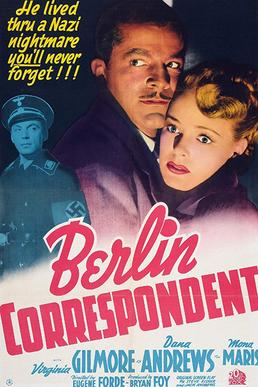
Film Review: Berlin Correspondent (dir by Eugene Forde)


In the 1942 film, Berlin Correspondent, Dana Andrews plays Bill Roberts.

Bill is an American journalist, working out of Berlin.  Because the film takes place before America’s entry into World War II, Bill pretends to report only what the Germans want him to report.  Even while there are bombs exploding outside of the studio, Bill and his fellow correspondents report that everyone in Berlin is happy and that the German government is doing a great job.

However, Bill fills his reporting with code words, which are then interpreted by listeners in the American Intelligence service.  They understand that when Bill says that the people are happy, that means that they’re actually miserable.  When Bill says that the weather in Berlin is cloudy, that means that there is dissent brewing in the government.

Still, Captain Von Rau (Martin Kosleck) comes to suspect that Bill might be sending out secret messages and he decides to send someone to not only compromise Bill but to also discover who is feeding Bill information.  Von Rau sends his own fiancée, Karen Hauen (Virginia Gilmore), to seduce Bill.  Little does Von Rau suspect that Bill’s source of information is Karen’s own father (Erwin Kalser) and that Karen herself is going to end up falling in love with Bill.

Berlin Correspondent is typical of the films that were made to try to build support for the American war effort during the Second World War.  The hero is a tough and cynical American who pretends to not care about what is happening in the rest of the world but who eventually reveals himself to be an idealist with a strong sense of right and wrong.  Bill may say that he’s only in Berlin to report the news but, when Karen’s father is sent to a concentration camp, Bill proves himself to be willing to risk his own life to help the older man make it to Switzerland.  Karen’s father stands in for the members of the German resistance who worked from the inside to bring down the Nazis.  Bill and Karen’s love serves as a reminder that the world can come back together but only after Hitler has been defeated.

The two main Nazi villains are played by Martin Kosleck and Sig Ruman, two German actors who immigrated to the United States to escape the real-life Nazis.  Kosleck and Ruman play their characters as being buffoonish bullies who are easily outsmarted by street smart Americans like Bill.  It’s the film’s way of saying to the audience, “Are you really going to let these idiots think that they can defeat America?”  Still, a scene is included in which a crippled girl is described as being someone who should be put to death.  It’s a necessary reminder that the Nazis may be idiots but they’re also a legitimate threat.

Berlin Correspondent clocks in at a brisk 70 minutes and it features a typically strong leading performance from Dana Andrews.  If you needed someone to fight for America, 40s-era Dana Andrews would definitely be a good pick to go with.  It’s a joy to watch him outsmart the Nazis.

Film Review: The Man I Married (dir by Irving Pichel)


In 1940’s The Man I Married, Joan Bennett stars as Carol Cabbott Hoffman.

Carol is a New York-based art critic.  She is young, sophisticated, wealthy, and politically naive.  Because she has been married to a German for seven years, she has been keeping up with what has been happening in Germany but it’s clear that she doesn’t really understand the full story of what she’s hearing.  As she says, at one point, she has heard bad things about the Nazis but she also tries to keep an open mind and not get drawn in by “propaganda.”

Her husband, Eric Hoffman (Francis Lederer), has not been back to Germany in ten years and he says that he has little interest in ever returning.  But, when he receives a letter from his father (Otto Kruger), Eric announces that he has to return home for a visit.  Before Carol, Eric, and their son, Ricky (Johnny Russell), leave for Germany, they are approached by their friend, Dr. Hugo Gerhardt (Ludwig Stossel).  He explains that his brother has been imprisoned in a concentration camp and he asks Carol and Eric to deliver money to him and to appeal to the American embassy for help.  Carol agrees to do so.  Eric is noticeably reticent.

As soon as they arrive in Germany and Eric learns that his father wants him to take over the family’s factory, Eric starts to change.  He and a former schoolmate named Freida (Anna Sten) are a bit too happy to see each other again.  Eric insists on listening to the nightly radio broadcasts from Dr. Goebbels.  When Freida mentions that it is illegal to joke about Hitler, Eric surprises Carol by defending the law.  With Eric spending all of his time with Freida and dismissing Carol’s understandable suspicions by saying that she’s just being jealous, Carol meets an American correspondent named Keith (Lloyd Nolan) who reveals to her the truth of life in Nazi Germany.  Carol discovers that, rather than being the economically-strong paradise that Eric and Freida claim it to be, Germany is a place where many citizens live in fear of being heard saying the wrong thing and, as a result, they’ve chosen to close their eyes to what is going on around them.

The Man I Married is an interesting film.  It’s an anti-Nazi film that was released at a time when America was still technically a neutral nation.  Indeed, the film almost feels like it was made to prepare Americans for the inevitability of war with Germany.  When Keith mocks Carol for trying to be neutral about the Nazis, it’s clear that he’s meant to be speaking to the audience watching the film.  Eric begins the film as an erudite and seemingly charming man but, as soon as he arrives in Germany and is reunited with Freida, he reveals himself to be a fervent Nazi.  The film warns the audience not to trust those who were trying to excuse or dismiss Germany’s actions.

This is also one of the few films made before World War II that really acknowledged just how central anti-Semitism was to the Nazi ideology, acknowledging the concentration camps at a time when many in the West were refusing to admit they existed, either because they were in denial or because they just didn’t care.  Towards the end of the film, a major character is discovered to have had a Jewish mother and the reaction to the news reveals the hate that was at the heart of the Third Reich.

The Man I Married, with its portrayal of a populace that has convinced itself that their government is never to be questioned and that all dissent must be punished, is a film that feels just as relevant today as it did in 1940.  It’s a film that warns viewers of the risk of disbelieving their own eyes.

Scenes That I Love: Jean-Paul Belmondo in Breathless


Today would have been the 91st birthday of international screen icon, Jean-Paul Belmondo.

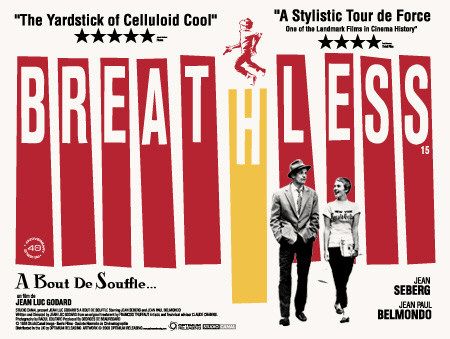
Belmondo spent the majority of his career in France, where he was one of the early faces of the New Wave and also a prominent action star, famed for doing his own very dangerous stunts.  In America, he was best-known for his starring turn in Jean-Luc Godard’s Breathless.  In Breathless, Belmondo was the perfect existential outlaw, living life day-by-day and obviously doomed but still so incredibly magnetic and stylish.

In tribute to Belmondo, here is a scene that I love, the final moments of Breathless, with Belmondo and Jean Seberg.

4 Shots From 4 Films: Special Ward Bond Edition


4 (or more) Shots From 4 (or more) Films is just what it says it is, 4 (or more) shots from 4 (or more) of our favorite films. As opposed to the reviews and recaps that we usually post, 4 (or more) Shots From 4 (or more) Films lets the visuals do the talking.

121 years ago today, the great American character actor Ward Bond was born in Benkleman, Nebraska.  In a career that last nearly forty years, Ward Bond appeared in more than 200 films and he currently holds the record for being the actor to appear in the most films nominated for Best Picture.  (He appeared in 13 nominated films, two of which won.)  He did 22 films with John Wayne and was a favorite of both John Ford and Frank Capra.

It’s time for….

4 Shots From 4 Ward Bond Films

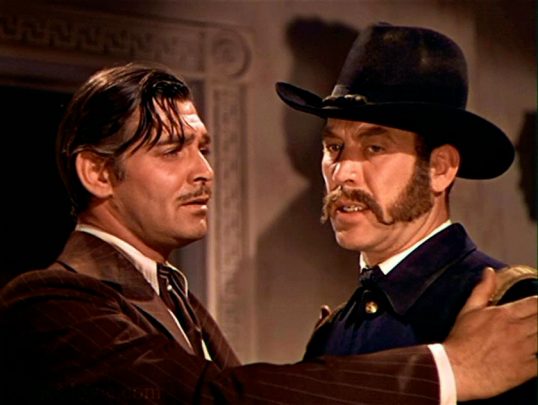
Gone With The Wind (1939, dir by Victor Fleming, DP: Ernest Haller)

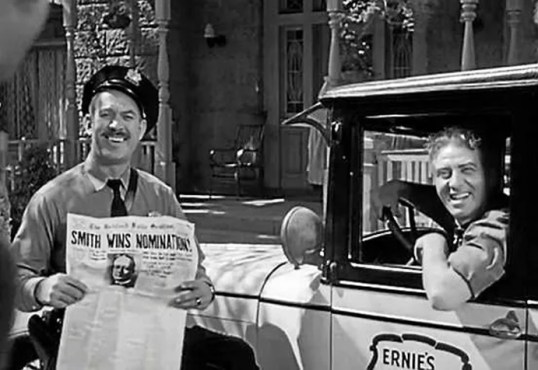
It’s A Wonderful Life (1946, dir by Frank Capra, DP: Joseph Walker and Joseph Biroc)

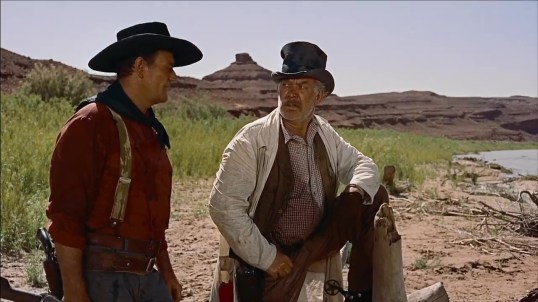
The Searchers (1956, dir by John Ford, DP: Winston C. Hoch)

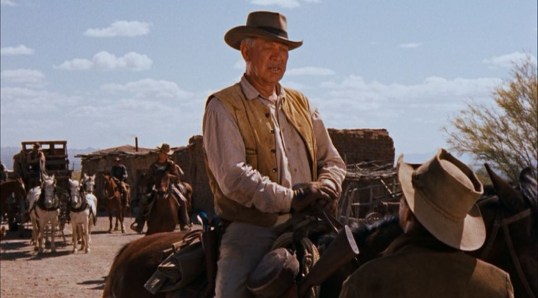
Rio Bravo (1959, dir by Howard Hawks, DP: Russell Harlan)