As some of our regular readers undoubtedly know, I am involved in a few weekly live tweets on twitter. I host #FridayNightFlix every Friday, I co-host #ScarySocial on Saturday, and I am one of the five hosts of #MondayActionMovie! Every week, we get together. We watch a movie. We tweet our way through it.
Tonight, at 9 pm et, Deanna Dawn will be hosting #ScarySocial! The movie? 2024’s Abigail!
If you want to join us this Friday, just hop onto twitter, start the movie at 9 pm et, and use the #ScarySocial hashtag! I’ll be there tweeting and I imagine some other members of the TSL Crew will be there as well. It’s a friendly group and welcoming of newcomers so don’t be shy.
116 years ago, an actor named Mort Mills was born.
Mort Mills may have never been a household name but he will be forever remembered for playing the suspicious highway patrolman in 1960’s Psycho. Anyone was have ever had to deal with a grim-faced, flat-voiced highway patrolman will automatically be able to relate to Janet Leigh’s fear in today’s scene that I love. I’ve watched this film numerous times and I still don’t know if the patrolman was just doing his job or if he really was suspicious of Marion. Mort Mills, with those dark glasses and flat affect, keeps you guessing. In this brief role, Mills makes an impression that will never be forgotten.
4 Or More Shots From 4 Or More Films is just what it says it is, 4 shots from 4 of our favorite films. As opposed to the reviews and recaps that we usually post, 4 Shots From 4 Films lets the visuals do the talking!
Today, we celebrate the birthday of Mexican director and actor Alfonso Arau! It’s time for….
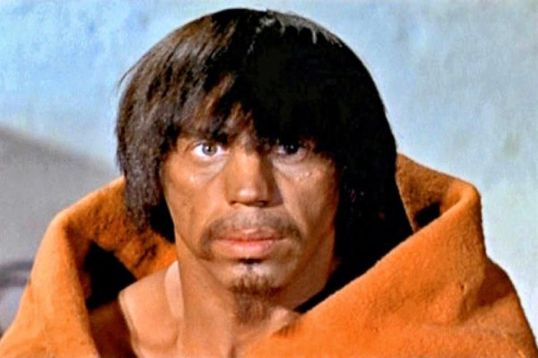
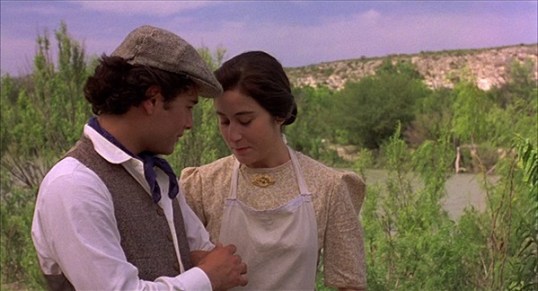
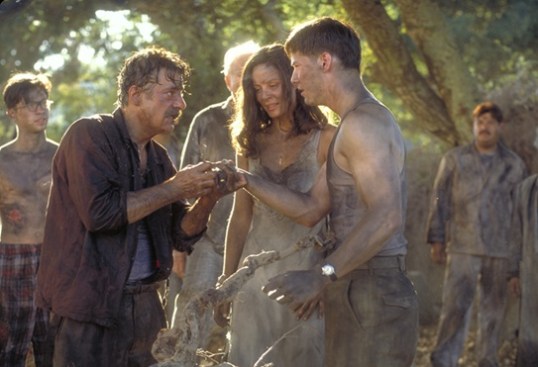
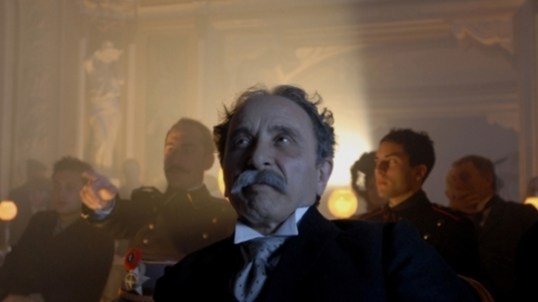
4 Shots From 4 Alfonso Arau Films
Calzonin Inspector (1973, dir by Alfonso Arau, DP: Jorge Stahl Jr.)
Like Water For Chocolate (1992, dir by Alfonso Arau, DP: Emmanuel Lubezki)
A Walk In The Clouds (1995, dir by Alfonso Arau. DP: Emmanuel Lubezki)
The Trick In The Sheet (2010, dir by Alfonso Arau, DP: Vittorio Storaro)
Of the many films that have been made about people desperately trying to get the Hell out of New York City, Quick Change is one of the funniest. The appropriately-named Grimm (Bill Murray) works in the city planning office and has had all that he can take of New York’s crime and rudeness. His solution is to dress up like a clown and rob a bank. His girlfriend Phyllis (Geena Davis) and best friend Loomis (Randy Quaid) are already inside the bank, disguised as customers. When Grimm, who claims to be a “crying on the inside” type of clown, takes everyone in the bank hostage and forces them into the vault, Phyllis and Loomis grab as much of the money as they can. Talking on the phone to police chief Rotzinger (Jason Robards), Grimm makes a series of pointless demands. Each demand that is met leads to Grimm releasing a group of hostages. By removing his clown makeup, Grimm is able to join Phyllis and Loomis when they are “released.” Rotzinger, who has even managed to procure a monster truck, thinks that the robber is still in the bank while Grimm, Phyllis, and Logan head for the airport.
Of course, things don’t go as planned. What starts out as a energetic and good-natured Dog Day Afternoonparody quickly becomes an increasingly surreal journey through New York. The streets are in terrible condition. The signs that would have provided directions to the airport have been taken down by a road construction crew. (They explain that they’re only taking down the signs today and it will be a few days before they get around to putting them back up.) One of the few polite people they meet turns out to be a thief who steals four dollars from Grimm’s wallet but fails to notice that he’s got a million dollars taped around his waist. Stanley Tucci shows up as a mobster. Tony Shalhoub plays a well-meaning taxi driver who speaks his own indecipherable language. Grimm keeps running into rude cops who, despite being on the hunt for the bank robbers, are frequently too busy being rude to notice what’s happening in front of them.
Best of all, Grimm, Phyllis, and the increasingly addled Loomis board a bus being driven by the film’s greatest character. Played by Philip Bosco, the bus driver is a wonderful comedic creation. “That’s not exact change,” the driver says when Loomis attempts to pay him with a hundred dollar bill. “Behind the white line,” he says before starting the bus. When Loomis, who has a habit of running into things and appears to be suffering from a concussion, tries to sit down, the bus driver informs him that he’s not allowed to sit until he receives exact change. The driver has a schedule to keep and, to his credit, he largely manages to do so. Bosco plays him with such deadpan determination that it’s hard not to admire his dedication to following every single regulation to his job. As opposed to Grimm, the driver has learned to deal with living in New York by obsessively making every scheduled stop.
Quick Change struggles sometimes to balance its moments of humor and drama. Scenes of Loomis running like a cartoon character are mixed with scenes of Phyllis worrying that Grimm might actually be a hardened criminal and struggling with whether or not to tell him that she’s pregnant. This was Bill Murray’s first and only film as a director and sometimes, he does struggle to maintain a consistent tone. But, in the end, what’s important is that it’s a funny film. Bill Murray is one of those actors who can make you laugh just by existing and, as a director, he’s smart enough to give Jason Robards enough room to make Rotzinger into something more than just a standard comedic foil.
Quick Change is a comedic nightmare, one that made me laugh even as it also made me glad that I don’t have to drive in New York. I get lost just driving around the suburbs of Dallas. There’s no way I’d ever be able to find my way out of New York.
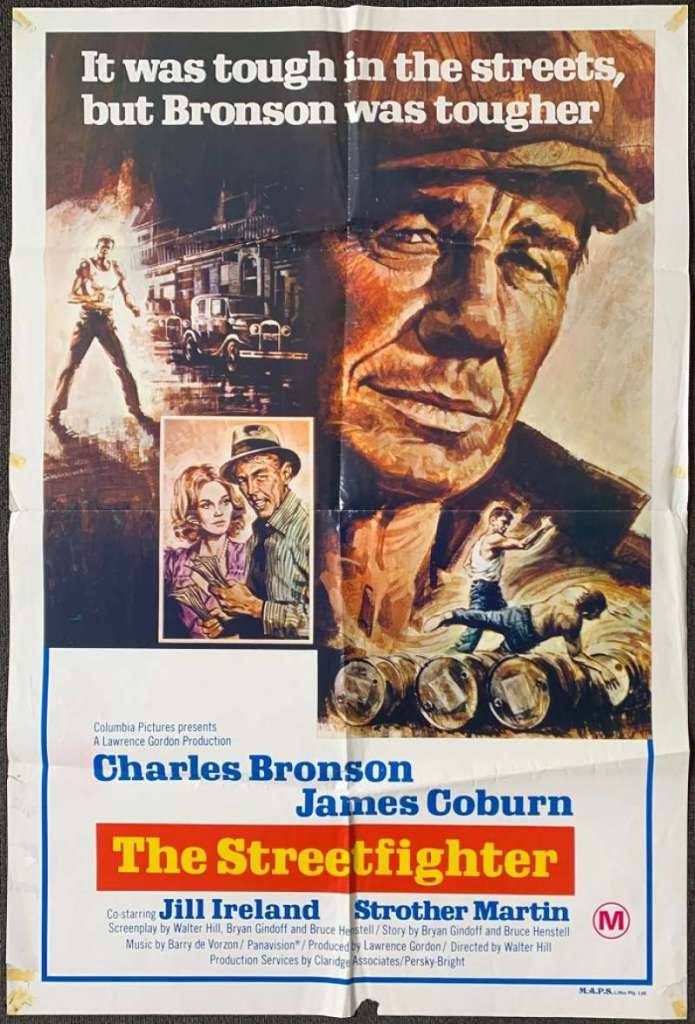
Walter Hill celebrates his 83rd birthday on January 10th, 2025. He has made so many great films in his career, but the one that stands out the most to me is his directorial debut from 1975, HARD TIMES, with Charles Bronson, James Coburn, Jill Ireland, and Strother Martin. The film was known as THE STREETFIGHTER in some parts of the world, like England, but due to Sonny Chiba’s “Street Fighter” movie from around the same time, the producers decided to go with HARD TIMES in America.
Here are a few more interesting facts about Hill’s directorial debut:
Chaney (Bronson) was originally supposed to be a much younger man, with Jan-Michael Vincent being considered for the role.
Charles Bronson was 52 years old when he made HARD TIMES. According to Hill, Bronson “was in remarkable physical condition for a guy his age…. He had excellent coordination, and a splendid build. His one problem was that he was a smoker, so he didn’t have a lot of stamina. I mean, he probably could have kicked anybody’s ass on that movie, but he couldn’t fight much longer than 30 or 40 seconds.”
According to Hill, Charles Bronson was easier to work with than James Coburn. Hill would say “Bronson was a very angry guy who didn’t get along with a lot of people. The only reason I can tell you he and I got along well was he respected that I wrote the script. He liked the script. I didn’t try to get close to him. Kept it very business-like. I think he liked that. James Coburn, who everybody liked and got along well with, he and I did not get along well. I think he was not in a good mood about being in a movie with Charlie, it was second banana. He had been up there more, and his career was coming back a bit. I don’t think he was wild about being second banana. But Charlie was a big star… and when things had seemed to not be working well, or there was some impasse, Charlie would come down hard on my side. That was a tipping point”.
Walter Hill thought the project could become more “up market” if he made it more like a Western and set it in the past. Hill incorporated elements of an earlier Western he had written, “Lloyd Williams and his Brother”. He wrote it in a style inspired by Alex Jacobs–“extremely spare, almost Haiku style. Both stage directions and dialogue.”
The settings for the Capcom arcade game Street Fighter are taken right from HARD TIMES. This film is titled “The Street Fighter” in Japan, and the game designer was instructed to take inspiration from this film. He did just that and copied many of them directly.
I’m so thankful for Walter Hill and HARD TIMES. In fact, it’s my all-time favorite film, as well as the first review I ever published for The Shattered Lens.
So, if you like movies like HARD TIMES, THE DRIVER, THE WARRIORS, THE LONG RIDERS, SOUTHERN COMFORT, 48 HRS., EXTREME PREJUDICE, and RED HEAT, join us in celebrating the great director Walter Hill on his 83rd birthday. He has brought me countless hours of joy over the years!
Here’s a trailer from the Masters of Cinema for HARD TIMES…
In 1951’s A Streetcar Named Desire, the emotionally fragile Blanche (played by Vivien Leigh) has come to New Orleans to live with her younger sister, Stella (Kim Hunter). From an old and formerly wealthy Southern family, Blanche has recently lost both her job as a teacher and the plantation where she and Stella grew up. Even before that, she lost her husband to suicide. And now Blanche has been reduced to living with Stella in the run-down apartment that she shares with her brutish husband, Stanley Kowalksi (Marlon Brando).
Stanley is tough and blue-collar, an earthy gambler whose bad manners stand in sharp contrast to Blanche’s attempts to present herself as being an elegant Southern belle. Stanley, who is convinced that Blanche has money that she’s hiding from her sister, goes out of his way torment Blanche. Stella, who is pregnant, tries to keep the peace between her sister and the man who claims to love her, his family, and the Napoleonic code. (“Stella!” Stanley yells at one point, the cry of a wounded animal who desperately needs his mate.) Blanche ends up going on a tentative date with Mitch (Karl Malden), one of Stanley’s co-workers, Stanley, who sees Blanche as a threat to the life that he’s created for himself, goes out of his way to destroy even that relationship. Blanche has secrets of her own and Stanley is determined to dig them up and use them to his own advantage. When Blanche refuses to allow Stanley to destroy the fantasy world that she’s created for herself, Stanley commits an act of unspeakable violence.
Based on the play by Tennessee Williams, A Streetcar Named Desire is a recreation of the film’s legendary Broadway production. Elia Kazan, who directed the theatrical production, does the same for the film. Marlon Brando, Kim Hunter, and Karl Malden recreate their stage roles and many of the minor characters are also played by the same actors who played them on stage. The only major change to the cast is Vivien Leigh, who replaces Jessica Tandy in the role of Blanche. Tandy had won a Tony for playing the role of Blanche but the film’s producer insisted on an actress who had more box office appeal. After both Bette Davis and Olivia de Havilland (both of whom would have had too strong of a personality to be believably pushed around by Stanley) declined the role, Vivien Leigh was cast. Leigh has played Blanche on the London stage and, perhaps even more importantly, her own fragile mental health mirrored much of what Blanche had gone through before moving to New Orleans.
A few changes were made to the play. In the play, it’s made clear that Blanche’s husband committed suicide after he was caught having an affair with another man. In the film, Blanche simply says that her husband was too sensitive. The film also includes a few scenes that are set outside of the apartment in an attempt to open up the play. (That said, the film still comes across as being rather stagey.) In the play, it’s made clear what Stanley does to Blanche while Stella is at the hospital. The film leaves it ambiguous, though still providing enough hints for the audience to figure it out on their own. Finally, the film ends with a suggestion that Stanley will ultimately suffer for his bad behavior. It’s hardly a happy ending but it’s still not as dark as what happens in the play.
The film definitely retains its theatrical origins. It’s very much a filmed play and again, it can feel rather stagey. But the performance are so strong that it really doesn’t matter. A Streetcar Named Desire was the first film to win three of the acting awards, with Oscars going to Hunter, Malden, and Leigh. Marlon Brando was nominated for Best Actor but did not win, largely because he was competing against Humphrey Bogart who, himself, had never won an Oscar. (The Brando snub would be rectified when he later won for On The Waterfront.) Brando’s performance as Stanley still holds up today. He’s so ferociously charismatic that it’s actually a bit scary to watch him. One can see what drew Stella to him, even though Stanley is very much not a good man. It’s a performance that will definitely take by surprise anyone who knows Brando only from his later years, when he was known for his weight and his oft-stated boredom with acting. A Streetcar Named Desire shows just how brilliant an actor Marlon Brando was at the start of his career. The intensity of Brando’s method acting matches up perfectly with Vivien Leigh’s more traditional style of acting and the film becomes not just the story of a domineering brute and a fragile houseguest but also a metaphor for the death of the antebellum South. If Blanche represents a genteel past that may have never existed, Stanley represents the brutality of the 20th Century.
Along with the similarly dark A Place In The Sun, A Streetcar named Desire was considered to be a front runner for the 1951 Best Picture Oscar. In the end, though, the voters went for the much less depressing An American In Paris.
A Streetcar Named Desire (1951, dir by Elia Kazan, DP: Harry Stradling)
As some of our regular readers undoubtedly know, I am involved in a few weekly live tweets on Twitter and Mastodon. I host #FridayNightFlix every Friday, I co-host #ScarySocial on Saturday, and I am one of the five hosts of #MondayActionMovie! Every week, we get together. We watch a movie. We tweet our way through it.
Tonight, at 10 pm et, #FridayNightFlix presents Bill Murray in Quick Change!
If you want to join us this Friday, just hop onto twitter, start the movie at 10 pm et, and use the #FridayNightFlix hashtag! It’s a friendly group and welcoming of newcomers so don’t be shy.
Quick Change is available on Prime! See you there!
From 1979’s The Warriors(which was directed by Walter Hill, who celebrates his birthday today), here’s a scene that I love. Playing the role of Cyrus, the man who could bring all of the gangs of New York together, is Roger Hill. Playing the role of his assassin is the great David Patrick Kelly.
Cyrus knew what he was talking about but the world wasn’t ready for him.
4 Or More Shots From 4 Or More Films is just what it says it is, 4 shots from 4 of our favorite films. As opposed to the reviews and recaps that we usually post, 4 Shots From 4 Films lets the visuals do the talking!
Today, we here at the Shattered Lens wish a happy 83rd birthday to the great director Walter Hill.
Walter Hill is one of those legendary figures who has a devoted cult of fans but it still seems like he’s never quite gotten all of the opportunities and the acclaim that he deserved. Perhaps because so many of his films are considered to be genre pieces, they were often not appreciated until a few years after they were first released. But for film lovers and film students, Walter Hill is one of the most important directors of the past 50 years.
Today, we celebrate with….
4 Shots From 4 Walter Hill Films
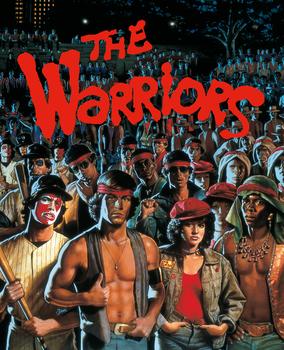
The Warriors (1979, directed by Walter Hill, DP: Andrew Laszlo)
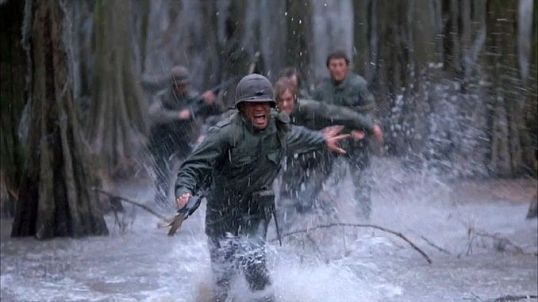
Southern Comfort (1981, dir by Walter Hill, DP: Andrew Laszlo)
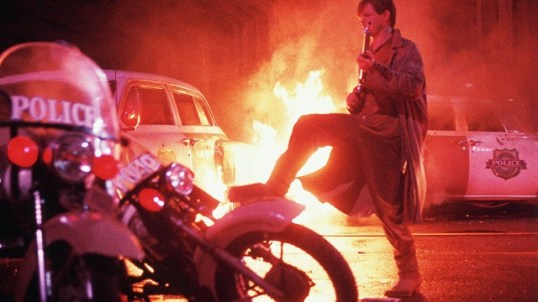
Streets of Fire (1984, dir by Walter Hill, DP: Andrew Laszlo)
Last Man Standing (1996, dir by Walter Hill, DP: Lloyd Ahern II)
Saturday Night, which presents what I assume to be a highly fictionalized account of the 90 minutes before the 1975 premiere of Saturday Night Live, did the impossible. It made me feel sorry for Chevy Chase.
Don’t get me wrong. As played by Cory Michael Smith, Chevy Chase is not presented as being a sympathetic character in Saturday Night. The film acknowledges his talent as a comedian and that he was the first star to come out of Saturday Night Live. But he’s still presented as being arrogant, self-centered, rude, and often deliberately self-destructive. The film portrays Chevy Chase in much the same way that most people describe him in real life. Chevy Chase has apparently always been a difficult person to work with and, I suppose to his credit, it doesn’t appear that Chevy himself has ever claimed anything different. But Saturday Night so piles on Chevy that even I felt it went a bit overboard. It’s one thing to present Chevy as being the arrogant jerk that he’s admitted to being. It’s another thing to fill the movie with moments in which people stop what they’re doing to tell Chevy that his career is going to start strong and then fade due to his bad behavior. At one point, the NBC executive played by Willem DaFoe comments that Chevy could host his own late night talk show. We’re all meant to laugh because eventually, Chevy Chase did host a late night talk show and it was such a disaster that it’s still, decades after its cancellation, held up as a prime example of a bad career move. But, in the context of the film, it feels a bit like overkill. It’s one thing to be honest about someone being a pain in the ass. It’s another thing to repeatedly kick someone while they’re down. Chevy, much like the NBC censor who is chanted down in the film’s cringiest moment, simply feels like too easy of a target.
Of course, Saturday Night is full of moments that are meant to comment more on the future than on whatever was going on in 1975. The whole point of the film is that Saturday Night Live, a show that the network has little faith in and which is being produced by a hyperactive visionary (Gabriel LaBelle as Lorne Michaels) who seems to be making it up as he goes along, is eventually going to become a cultural phenomenon. Every time someone tries to convince Lorne Michaels to cancel the premiere or to miss with the format, we’re meant to think to ourselves, “Little do they know that this show is going to be huge for several decades before eventually just becoming another predictable part of the media landscape.” The scenes of Garrett Morris (Lamorne Morris) wandering around the set and asking, “What is my purpose? Why am I here?” may not feel like something that would have happened in 1975 but they’re there because it’s something that people were asking about in 2024. Watching the film, it helps if you know something about the history of Saturday Night Live. It helps to know that Dan Aykryod (Dylan O’Brien), John Belushi (Matt Wood), and Gilda Radner (Ella Hunt) are going to carry the show after Chevy Chase leaves. It helps to know that Billy Crystal (Nicholas Podany) is going to become a Hollywood mainstay even after he gets dumped from the premiere for refusing to cut any material out of his act. It helps to know that the mellow, pot-smoking band leader is actually Paul Shaffer (Paul Rust). It helps to know that Lorne Michael and Dick Ebersol (Cooper Hoffman, giving one of the best performances in the film) are going to become powerful names in American television. The film may be set in 1975 but it’s actually about all the years to come.
It’s still an entertaining and well-made film, one that I enjoyed watching. Saturday Night manages to create the illusion of playing out in real time and director Jason Reitman captures the excitement of being backstage before opening night. It’s an excitement that everyone can relate to, whether their opening night was on television, Broadway, or just a community theater in their small college town. The backstage chaos of Saturday Night is wonderfully choreographed and, most importantly, it captures the feeling of being young, idealistic, and convinced that you can change the world. Reitman also gets good performances from his cast, with Cooper Hoffman, Dylan O’Brien, and Rachel Sennott (playing writer Rosie Shuster) as stand-outs. That said, the film is pretty much stolen by J.K. Simmons, who has a memorably lecherous cameo as Milton Berle and who provides Chevy Chase with a look at what waits for him in the future. If the film is never quite as poignant as it wants to be, that’s because Saturday Night Live is no longer the cultural powerhouse that it once was. If Saturday Night had been released just 18 years ago, before SNL became best-known as the place where Alec Baldwin hides out from bad publicity, it would probably be an Oscar front runner right now. Released today, it’s just makes one feel a little bit sad. The show that was built on never selling out eventually sold out.



 Through the Shattered Lens