Film Review: The Shoes of The Fisherman (dir by Michael Anderson)


The 1968 film, The Shoes of The Fisherman, opens in a snowy Siberian labor camp.  For the past twenty years, this camp has been the home of Kiril Pavlovich Lakota (Anthony Quinn), the Ukrainian archbishop of Liviv.  Kiril is unexpectedly released by Russia’s new leader, Piotr Ilyich Kamenev (a very British Laurence Olivier).  After explaining to Kiril that Russia and China are on the verge of nuclear war due to a famine that has been instigated by U.S. sanctions, Kamenev tells Kiril that he is being released on the condition that he tell no one about the conditions at the Russian labor camp.  Kiril starts to protest just for Father Telemond (Oskar Werner), the Vatican’s representative, to say that the conditions have already been agreed to.

In Rome, Kiril meets the Pope (John Gielgud), who makes the humble Kiril a cardinal, over Kiril’s objections that he just a “simple man.”  Later, when the aged Pope suddenly dies, Kiril is unexpectedly elected, as a compromise candidate, to succeed him.  Still humble and considering himself to be a simple man with a simple mission, Kiril suddenly finds himself as one of the most revered and powerful men on the planet.  With Father Telemond as his secretary, Kiril tries to make the Vatican responsive to the needs of the people and sets out to bring peace between the Russians and the Chinese. That turns out to be easier said than done, especially when Telemond himself is eventually accused of heresy for his progressive views.

(And yes, Telemond is a Jesuit….)

The Shoes of the Fisherman is a type of film that should be familiar to anyone who has any knowledge of the Hollywood studios in the 60s.  It’s the type of big and self-serious film that was meant to tell audiences, “You won’t find anything this opulent and important on television!”  The cast is designed to appeal to everyone.  Anthony Quinn and Laurence Olivier are there for the older viewers (especially the older viewers who made up the majority of the Oscar voters in 1968) while, for the younger voters, there’s handsome Oskar Werner as a Jesuit who interpretation of the Gospels is so radical that even Pope Francis would probably tell him to step back a little.  For the older, anti-communist viewers, there are scenes that portray the harsh conditions at a Siberian labor camp.  The commies put Kiril in prison so he must be one of the good guys.  And for the younger, more liberal viewers, there was the suggestion that the threat of World War III was largely due to the actions of the American government.  And, just in case there was still anyone who thought that television was preferable to a prestige picture, TV star David Janssen shows up as a cynical reporter whose wife (played by Barbara Jefford) is a doctor who Kiril helps to get some medicine for one of her dying patients.  Director Michael Anderson includes enough sudden zoom shots to let younger viewers know that he’s with them while still directing in a stately enough manner to appeal to the older viewers.

The end result is a film that is big and grand but also rather slow.  The film gets bogged down in subplots that don’t really add much to the overall story.  We spend way too much time with the reporter and his wife.  Anthony Quinn does a good enough job as Kiril, giving a rather subdued performance by Quinn standards.  (A scene where Kiril recites a Jewish prayer for a dying man is wonderfully acted by Quinn, who seems to truly be emotionally invested in the film’s message of togetherness.)  Laurence Olivier is not at all convincing as a Russian but still, he has the stately bearing of a man used to being in power.  Like many of the studio productions of the late 60s, The Shoes of The Fisherman tries a bit too hard to strike a balance between old school Hollywood and the counterculture and the film ultimately feels rather wishy-washy as a result.  It’s a noble film with good intentions but it’s not particularly memorable.
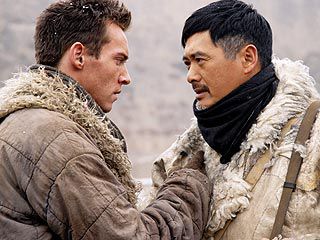
THE CHILDREN OF HUANG SHI (2008, directed by Roger Spottiswoode) – The incredible story of English adventurer George Hogg!


My wife and I love to watch movies based on true stories and real people. I had never heard of English adventurer George Hogg prior to 2008, which was the year that I found out that Chow Yun-Fat would be co-starring in a film based on Hogg’s life. Chow Yun-Fat is my favorite living actor, so I make it a point to watch every film he’s in. I even watched the horrendous DRAGONBALL EVOLUTION, even worse, at the theater!! As I looked into the film a little closer all those years ago, I thought Hogg’s real-life story had major dramatic potential. I thought the cast was interesting as well. At the time, Jonathan Rhys Meyers was starring in a popular series called THE TUDORS, where he played King Henry VIII. He seemed ready for the role of real-life hero George Hogg. Radha Mitchell had somewhat recently starred in the Denzel Washington action film, MAN ON FIRE, which I’m very fond of. And coolest of all, outside of Chow Yun-Fat of course, was the casting of Michelle Yeoh, another favorite of mine from her years in Hong Kong films. She and Chow Yun-Fat were captivating together in CROUCHING TIGER HIDDEN DRAGON. And finally, I saw that Roger Spottiswoode would be directing the film. The veteran filmmaker has had a hand in some of my favorite films, from editing HARD TIMES with Charles Bronson, to writing 48 HRS. with Nick Nolte and Eddie Murphy, and even directing the excellent action film SHOOT TO KILL, with Sidney Poitier and Tom Berenger. I was expecting a good, solid film!

The story opens in 1937 with British reporter George Hogg (Jonathan Rhys Meyers) worming his way into Nanjing, China, to cover the Japanese occupation of the city. While there, he sees and photographs horrific violence against the Chinese people. Discovered by the Japanese authorities with his camera, it appears he’s headed for execution. But luckily for Hogg, just prior to having his head lopped off, he’s saved by Chinese resistance fighter Chen Hansheng (Chow Yun-Fat). Injured while escaping, Hogg awakens under the care of Nurse Lee Pearson (Radha Mitchell), who is also taking care of Chen. Needing time to recover from his wounds, Hogg is sent to a boy’s orphanage in Huang Shi by Chen and Nurse Pearson. Initially reluctant to get involved with the 60 or so orphans, Hogg eventually begins to try to improve their living conditions. He begins teaching the boys, and he comes up with a way to guarantee needed food and supplies in town when he strikes a deal with the local merchant, Mrs. Wang (Michelle Yeoh). Over the next few years, it seems like everything is going pretty well. But when the Chinese nationalist military camps outside of the orphanage, and some of their leaders come to the orphanage and threaten to take some of the boys into their army by force, Hogg makes the decision that they should leave the area. Thus begins an incredible journey over mountains and through deserts to the city of Shandan, which is approximately 700 miles away, but in an area that Hogg believes will be safe. Will they be able to survive the journey and start all over again with a better life in Shandan?

With THE CHILDREN OF HUANG SHI, Director Roger Spottiswoode delivers a solid, but certainly not spectacular, movie. Even if writers James MacManus and Jane Hawksley take some liberties with the actual events for dramatic effect, the basic story about George Hogg working to improve the lives of these orphaned boys and then leading them to safety across hundreds of miles of treacherous terrain and away from war, is good stuff. I’m glad I watched it, and at times it managed to stir up my emotions. With that said, there still seemed to be something missing. I don’t think the movie as executed ever moved me as far emotionally as I hoped it would. Thinking back on the performances, I found Jonathan Rhys Meyers only adequate as George Hogg. He delivers some good moments, but I didn’t leave the film really thinking that much about him. I’d say that Radha Mitchell did better with her role as the nurse who saves Hogg, and who eventually falls in love with him. Her character had some complexity, and I felt myself more drawn to Mitchell’s performance. Chow Yun-Fat and Michelle Yeoh are in true supporting roles. Chow has so much natural charisma, that you can’t help but like his character, and anytime he’s on-screen things pick up. He’s actually quite fun as resistance fighter “Jack” Chen. The problem is that there are large chunks of the film’s 125-minute running time that he’s nowhere to be seen. Much of the same can be said of Michelle Yeoh. She’s very effective when she’s on the screen, but it seems she has even less screen time than Chow. It’s hinted at that her character has hidden layers of depth, but there just isn’t enough time to really develop anything. She is so beautiful, and I did enjoy every time she appeared. Thanks to cinematographer Xiaoding Zhao (THE CURSE OF THE GOLDEN FLOWER), there are many times that the movie itself is just so beautiful to look at. It appears that some of the most beautiful places on earth were captured for this film.

THE CHILDREN OF HUANG SHI has an awesome ace up its sleeve at the very end of the film, and by the end I mean the credits. As the credits begin to roll, some of the actual boys who lived through these harrowing experiences, now older men, appear on screen and provide some of their memories of the journey and of Hogg. That kind of stuff always gets to me and it did here as well. It was a strong ending to a decent film.

Film Review: The Pursuit of D.B. Cooper (dir by Roger Spottiswoode and Buzz Kulik)


The story of D.B. Cooper has always fascinated me.

D.B. Cooper is the name assigned to a man who, in 1971, hijacked an airplane, demanded $200,000, and then jumped off the plane after he got the money.  Reportedly, he was well-dressed and unfailingly polite during the entire hijacking.  When he jumped off the plane, he was about 10,000 feet over the Washington wilderness.  After he jumped, no further trace was found of him.  Over 50 years after the incident, the identity and the location of D.B. Cooper remains a mystery.

It’s been said that, even though Cooper had a parachute with him when he jumped, there’s no way that he could have survived the jump.  And yet, no body has ever been found.  (Of course, finding a body in the wilderness is not as easy as some people assume.)  Nine years after the the skyjacking, some of the money that Cooper received was found on the banks of the Columbia River, which was several miles away from the area that Cooper jumped over.  Did Cooper survive the jump and lose the money?  No one can say for sure.

Over the years, many people have come forward to say that they know the identity of D.B. Cooper.  Many distant fathers and secretive boyfriends and long lost friends have been accused of being D.B. Cooper.  Some of those suspects are more likely than others.  Even John List, the murderer who inspired the Stepfather films, was suspected at one point.

D.B. Cooper remains a fascinating character precisely because he’s never been captured and the mystery itself will probably never be solved.  Because he remains an enigma, it’s easy to project your own pet obsessions on him and his story.  Myself, I always imagine D.B. Cooper as being some sort of clever, fun-loving international rogue, even though there’s not really any evidence to back that up.  But, the fact of the matter is that I have a weakness for clever, fun-loving international rogues so, of course, that’s who I’m going to imagine D.B. to be.

I certainly would never imagine him to be like the character at the center of 1981’s The Pursuit of D.B. Cooper.

In this film, D.B. Cooper turns out to be Jim Meade (Treat Williams), a Vietnam vet and all around jackass who steals the money so that he can get back together with his estranged wife, Hannah (Kathryn Harrold).  Hannah does take him back because, seriously, who is going to say no to that much money?  Jim and Hannah spend the entire film running from one wilderness location to another.  They steal cars.  They steal trucks.  Meade steals an airplane at one point.  Hannah gets worried often and Jim tends to yell, “Woo hoo!” whenever he gets excited about anything.  At one point, Jim and Hannah are chased across some white water rapids.  When Hannah and Jim reach dry land, Jim gives the finger to the river.  I will say that, as someone who grew up in the South, Jim is a type of character who seems very familiar to me.  I’ve known a lot of Jim Meades and Treat Williams doesn’t do bad job playing Meade as being an impulsive, loud-mouthed good old boy.  The only problem is that, at no point, does Jim Meade come across like someone who could have pulled off what D.B. Cooper pulled off.

Jim is being pursued by two old army buddies.  The scruffier of the two is Remson (Paul Gleason), who somehow manages to keep popping up like a cartoon character at the most inopportune of times.  No matter what bad thing happens to Remson, he still shows up good-as-new a few minutes later.  Paul Gleason gives an energetic performance as Remson, a character who has little in common with the uptight authority figures that Gleason later played in The Breakfast Club and Die Hard.

The other person chasing Jim is Bill Gruen (Robert Duvall), who served with Meade in Vietnam but who is now working as an insurance investigator.  Gruen says that he knew Meade had to be D.B. Cooper because only Meade could survive jumping out of a plane over wilderness terrain.  Gruen wants some of the money for himself.  Despite his greed, it’s hard not to like Gruen because he’s played by Robert Duvall.  The best scene in the film is one where Duvall and Williams, exhausted from chasing each other, have a weary but friendly conversation.  It’s the one moment where Williams actually calms down and provides some hint that there’s actually something going on underneath Meade’s manic exterior.  Acting opposite Duvall brings out the best in him.

The Pursuit of D.B. Cooper had a notoriously troubled production and apparently, there was never a completed script during shooting.  Reportedly, bits of the film were directed by Robert Mulligan, John Frankenheimer, and Buzz Kulik before Roger Spottiswoode took over.  It’s a film that was obviously inspired by 70s chase films like Smokey and the Bandit but it also somehow managed to attract actors like Robert Duvall, who does his best to class up the joint.  The action quickly gets repetitive and the movie never seems to know if it wants to be a comedy or a drama.  On the plus side, Treat Williams and Kathryn Harrold make for a cute couple.

When this picture first came out, Universal Pictures offered a million dollar reward for any information that would lead to the capture and arrest of the real D.B. Cooper.  No one collected.

January Positivity: Escape (dir by Paul Emami)


2012’s Escape tells the story of two men who meet in Thailand.

Paul Jordan (C. Thomas Howell) is a doctor who came to Thailand with his wife, Kim (Anora Lyn).  Paul and Kim are both working in a clinic, trying to bring healthcare to the poor and the downtrodden.  They specifically left America because of the death of their newborn.  Paul says that they need to make a clean break and start new lives for themselves.  Paul is an atheist, both because of the death of his child and all of the misery that he sees around him.  Kim is secretly religious.  Though she doesn’t discuss it with Paul, she brings a bible with her and she regularly asks the people back home to pray for them.

Malcolm Andrews (John Rhys-Davies) is a former tech boss who has retired and has been exploring the world with his wife (Puttaya Chaimongkolepetc).  Malcolm is extremely wealthy but also very humble, a kind man who always tries to treat people with decency.  Unlike Paul, he is very religious and has no problem with accepting the idea the God can exist even when the world itself is a complete mess.

When Paul and Malcolm first meet, Paul initially distrusts Malcolm but that soon changes due to the circumstances of their meeting.  They’ve both been kidnapped by outlaws and they’re being held in a bamboo cage in the middle of an island jungle.  Paul has been kidnapped because one of the outlaws has been wounded and is dying.  Paul is expected to keep the man alive, with the understanding being that if the man dies, Paul dies as well.  Malcolm has been kidnapped because the outlaws are hoping to get a huge ransom for him.  Despite their differing views of the world, Paul and Malcolm become friends because, when you’re stuck in  a bamboo cage with someone, you really don’t have much of a choice but to become friends.  In a situation like that, there’s only so long someone can go without making eye contact.

While Paul and Malcolm debate theology and wait for an opportunity to make their escape, their wives try to get the authorities to search for their husbands.  Unfortunately, it turns out that the authorities are almost as incompetent as the outlaws.

Lately, there have been a lot of faith-based films that have attempted to duplicate Hollywood gerne films.  Escape has a religious message but it’s also a thriller about two men trapped in the middle of the jungle.  It’s fairly well-done, though the action does occasionally drag.  (There’s only so many ways that you can film two men talking in a cage.)  The film makes good use of C. Thomas Howell’s bland niceness and the jungle scenery is both beautiful and ominous.  That said, John Rhys-Davies is the main attraction here and he gives a strong and compelling performance as Malcolm.  Regardless of whether you agree with his beliefs or not, you really do want to see him make it back to his wife.

Escape ends on a bit of an abrupt note but it’s still an effective thriller.

Lisa Reviews An Oscar Winner: The Life of Emile Zola (dir by William Dieterle)


The Life of Emile Zola, the winner of the 1936 Oscar for Best Picture of the Year, opens with two French artists living in a drafty apartment.

Emile Zola (Paul Muni) is destined to become one of France’s most popular and important writers.  Paul Cezanne (Vladimir Sokoloff) will eventually become one of the most important artists of the post-impressionist movement.  But for now, they’re just two struggling artists who have sworn that they will never sell out their principles.  They are poor but they’re happy.  That changes for Zola after he meets a prostitute named Nana (Erin O’Brien-Moore) and he uses her life story as the inspiration for a novel.  The book is controversial and its frank content scandalizes France.  The public censor comes close to banning it.  But it also becomes a best seller.  It’s the book everyone secretly owns but claims to have never read.

Zola writes several more books, all about the conditions of the working class in France.  Eventually, he becomes what he claimed he would never be, a wealthy man living in a mansion and having little contact with the poor and oppressed.  Cezanne sees Zola one last time, calling him out for having sold his talent for money.  Cezanne explains that, on general principle, he can no longer be Zola’s friend.

Meanwhile, a quiet and rather meek family man named Captain Alfred Dreyfus (Joseph Schildkraut) has been arrested and accused of being a spy for Germany.  There’s little evidence that Dreyfus is a spy.  Indeed, most of the evidence seems to point to a Major Walsin-Esterhazy (Robert Barrat).  But, because Dreyfus is considered to be an outsider, he is convicted in a show trial and exiled to Devil’s Island.

(In real life, it’s generally agreed that Dreyfus was a victim of anti-Semitism.  As the only Jewish member of the army’s General Staff, Dreyfus was viewed with suspicion by his colleagues even before anyone knew that there was a German spy.  The Life of Emile Zola doesn’t specifically state that Dreyfus was a victim of anti-Semitism, with the exception of a brief moment when one of his accusers looks at his personnel file and says, “He’s not one of us,” while pointing at the word “Jew.”  Otherwise, the fact that Dreyfuss was Jewish is never mentioned in the film.  It’s as if the film is going out of its way to avoid offending the very people that the movie is criticizing.)

After speaking to Dreyfus’s wife (played by Gale Sondergaard, who would later become the victim of a show trial herself when she was blacklisted as a suspected communist), Zola decides to take up Dreyfus’s case.  He publishes an open letter — J’Accuse — in which he states that Dreyfus was not given a fair trial and that Dreyfus is innocent of the charges against him.  Zola finds himself in court, accused of libel.  Zola uses his trial to give Dreyfus the hearing that he never received.  While the army boos his every utterance, the people of France rally to his side.

The Life of Emile Zola is an early example of the type of prestige production that today is often referred to as being an “Oscar picture.”  It tells a true story.  As a film that condemns the treatment of Alfred Dreyfus but avoids stating the obvious reason why Dreyfus was targeted in the first place, it’s political without being radical.  And it features a performance from the most acclaimed actor of the era, Paul Muni.  Muni gives a powerful performance as Zola, holding the viewer’s attention even during the lengthy trial scenes that take up most the second half of the film.  That said, the true star of the film is Joseph Schildkraut, who plays Dreyfus as being a kind and trusting soul who finds himself caught up in a Kafkaesque nightmare.  At one point, Dreyfus is given a gun and told that there’s one way that he can avoid being put on trial for treason.  Schildkraut played the scene so well that I wanted to cheer when he refused to surrender.

The Life of Emile Zola is a big and, at times, self-consciously important production.  It was clearly designed to win a bunch of Oscars and it certainly managed to do that.  Compared to some of the other films nominated that year — The Awful Truth, Dead End, A Star is Born, Lost Horizon, Stage Door, In Old Chicago — The Life of Emile Zola can seem a bit stodgy.  However,  the performances of Muni and Schildkraut continue to make the film worth watching.

Film Review: Voyage of the Damned (dir by Stuart Rosenberg)


In 1939, an ocean liner named the MS St. Louis set sail from Hamburg.  Along with the crew, the ship carried 937 passengers, all of whom were Jewish and leaving Germany to escape Nazi persecution.  The ship was meant to go to Havana, where the passengers had been told that they would be given asylum.  Many were hoping to reunite with family members who had already taken the voyage.

What neither the passengers nor Captain Gustav Schroeder knew was that the entire voyage was merely a propaganda operation.  No sooner had the St. Louis left Hamburg than German agents and Nazi sympathizers started to rile up anti-Semitic feelings in Cuba.  The plan was to prevent the passengers from disembarking in Cuba and to force the St. Louis to then return to Germany.  The Nazis would be able to claim that they had given the Jews a chance to leave but that the rest of the world would not take them in.  Not only would the Jews be cast as pariahs but the Germans would be able to use the world’s actions as a way to defend their own crimes.

Captain Schroeder, however, refused to play along.  After he was refused permission to dock in Cuba, he then attempted to take the ship to both America and Canada.  When both of those countries refused to allow him to dock, Schroeder turned the St. Louis toward England, where he planned to stage a shipwreck so that the passengers could be rescued at sea.  Before that happened, Belgium, France, the Netherlands, and the United Kingdom jointly announced that they would accept the refugees.

Tragically, just a few days after the passengers disembarked, World War II officially began and Belgium, France, and the Netherlands all fell to the Nazi war machine.  It is estimated that, of the 937 passengers on the St. Louis, more than 600 of them subsequently died in the Nazi concentration camps.

The journey of the St. Louis was recreated in the 1976 film, Voyage of the Damned, with Max von Sydow as Captain Schroeder and a collection of familiar faces playing not only the ship’s passengers and crew but also the men and women in Cuba who all played a role in the fate of the ship.  In fact, one could argue that there’s a few too many familiar faces in Voyage of the Damned.  One cannot fault the performances of Max von Sydow, Malcolm McDowell, and Helmut Griem as members of the crew.  And, amongst the passengers, Lee Grant, Jonathan Pryce, Paul Koslo, Sam Wanamaker, and Julie Harris all make a good impression.  Even the glamorous Faye Dunaway doesn’t seem to be too out-of-place on the ship.  But then, in Havana, actors like Orson Welles and James Mason are awkwardly cast as Cubans and the fact that they are very obviously not Cuban serves to take the viewer out of the story.  It reminds the viewer that, as heart-breaking as the story of the St. Louis may be, they’re still just watching a movie.

That said, Voyage of the Damned still tells an important true story, one that deserves to be better-known.  In its best moments, the film captures the helplessness of having nowhere to go.  With Cuba corrupt and the rest of the world more interested in maintaining the illusion of peace than seriously confronting what was happening in Germany, the Jewish passengers of the St. Louis truly find themselves as a people without a home.  They also discover that they cannot depend on leaders the other nations of the world to defend them.

Defending the passengers falls to a few people who are willing to defy the leaders of their own country.  At the start of the film, Nazi Intelligence Chief Wilhelm Canaris (Denholm Elliott) explains that Captain Schroeder was selected specifically because he wasn’t a member of the Nazi Party and could not be accused of having ulterior motives for ultimately returning the passengers to Germany.  Canaris and his fellow Nazis assume that anti-Semitism is so natural that even a non-Nazi will not care what happens to the Jewish passengers.  Instead, Schroeder and his crew take it upon themselves to save the lives of the passengers.  It is not Franklin Roosevelt who tries to save the passengers of St. Louis.  Instead, it’s just a handful of people who, despite unrelenting pressure to do otherwise, step up to do the right thing.  Max von Sydow, who was so often cast in villainous roles, gives a strong performance as the captain who is willing to sacrifice his ship to save his passengers.

Flaws and all, Voyage of the Damned is a powerful film about a moment in history that must never be forgotten.

What Lisa Marie Watched Last Night #228: Dressed to Kill (dir by Lindsay Hartley)


Last night, I turned over to the Lifetime Movie Network and I watched Dressed to Kill!

Why Was I Watching It?

Because it was on Lifetime!  It’s been a while since I’ve really gotten a chance to enjoy a good Lifetime film.  I was planning on getting back into my Lifetime viewing habit last year but 2024 had other plans.  This year, though, I hope to once again get to enjoy my weekly Lifetime fix.

What Was It About?

When Vanessa (Suzanne R. Neff) dies after someone steals her asthma inhaler, she leaves her clothing company not her spoiler daughter Blair (Annie Sullivan) but instead to her loyal and kind-hearted assistant, Amy (Brianna Cohen).  Amy tries to figure out who killed Vanessa.  Was it Blair?  Was it disgruntled seamstress Wanda (Monanik Dugar)?  Or was it Amy’s own boyfriend, Kevin (Moe Sehgal)?

What Worked

First, and most importantly, this film fully embraced the melodrama.  When it comes to Lifetime films, the promise of melodrama is essential and the best films are the ones that shamelessly embrace it.  Director Lindsay Hartley kept the action moving and didn’t waste too much time trying to convince the viewer that they were watching a realistic portrait of life in the fashion industry.

This film actually did keep me guessing as far as who the murderer was.  It’s obvious that the filmmakers understood who most veteran Lifetime viewers would automatically suspect and, wisely, they played around with those expectations.

Monanik Dugar’s performance was Wanda was wonderfully unhinged.  I also liked Annie Sullivan’s performance as the hilariously entitled Blair.  As played by Sullivan, Blair was the influencer from Hell.

What Did Not Work

I probably would have taken the fashion aspect of the movie more seriously if the clothes hadn’t been so …. uhm, well …. ugly.  Of course, it’s all in the eye of the bolder but let’s just say that I would not have worn any of the outfits.

This movie did feature a fashion show but it looked so low-rent that, again, it left me wondering whether it would be better to just let the company go out of business.

“Oh my God!  Just like me!” Moments

I have asthma so, as soon as I saw Vanessa grabbing her inhaler, I knew how she was going to die.  That made me go “Agck!” because, seriously, asthma attacks are always scary.

When I was 18, I had a friend who got a job at a clothing company in Dallas.  At first, I thought that was really exciting but then I visited her at work and discovered that it was a place that designed polyester cabana wear for senior citizens.  Admittedly, that doesn’t have much to do with this movie but I still found myself thinking about it as I watched Dressed To Kill.  At least the company in Dressed to Kill could afford to put on a fashion show.  This place where my friend worked wasn’t even willing to do that,

(For the record, my friend only worked there for two weeks before walking off the job.  Some of that was my fault because I had lunch with her on her final day and, as her lunch hour came to a close, I said, “What if you just didn’t go back?”  Having never had a job before, I was shocked to discover that people still get a final paycheck even if they just leave for lunch and then never come back.  Hmmm, I thought, maybe I’ll get a job someday….)

Lessons Learned

Be careful with those scissors!

Live Tweet Alert: Join #ScarySocial for Twilight Zone: The Movie!


As some of our regular readers undoubtedly know, I am involved in a few weekly live tweets on twitter.  I host #FridayNightFlix every Friday, I co-host #ScarySocial on Saturday, and I am one of the five hosts of #MondayActionMovie!  Every week, we get together.  We watch a movie.  We tweet our way through it.

Tonight, at 9 pm et, Tim Buntley will be hosting #ScarySocial!  The movie?  Twilight Zone: The Movie!

If you want to join us this Friday, just hop onto twitter, start the movie at 9 pm et, and use the #ScarySocial hashtag!  I’ll be there tweeting and I imagine some other members of the TSL Crew will be there as well.  It’s a friendly group and welcoming of newcomers so don’t be shy.

Twilight Zone: The Movie is available on Prime!

See you there

4 Shots from 4 Films: Special George Pan Cosmatos Edition


4 Or More Shots From 4 Or More Films is just what it says it is, 4 shots from 4 of our favorite films. As opposed to the reviews and recaps that we usually post, 4 Shots From 4 Films lets the visuals do the talking!

Today, we celebrate the birth of director George Pan Cosmatos!  It’s time for….

4 Shots From 4 George Pan Cosmatos Films

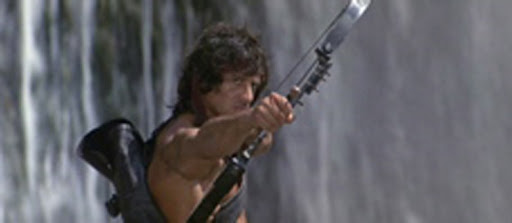
Rambo: First Blood Part II (1985, dir by George Pan Cosmatos, DP: Jack Cardiff)

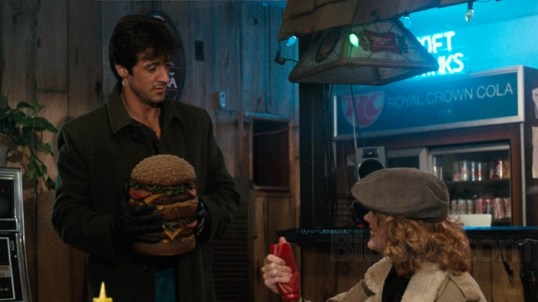
Cobra (1986, dir by George Pan Cosmatos, DP: Ric Waite)

Leviathan (1989, dir by George Pan Cosmatos, DP: Alex Thomson)

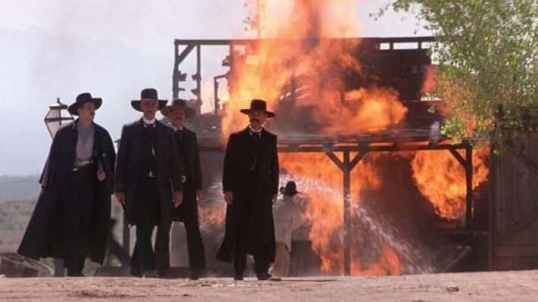
Tombstone (1993, dir by George Pan Cosmatos (and Kurt Russell), DP: William Fraker)

Scenes That I Love: Cobra Eats A Pizza


On this date, in 1941, future director George Pan Cosmatos was born in Italy.  Cosmatos would go on to direct some of the most financially successfully (if critically lambasted) films of the 80s.  He’s also credited as being the director on Tombstone, though it’s generally agreed that Cosmatos largely deferred to Kurt Russell on that film.  (Cosmatos was a last minute replacement for the film’s original director.)

Other than Tombstone, Cosmatos is best-known for the films that he did with Sylvester Stallone.  And today’s scene that I love comes from the 1986 film, Cobra.  In this short but unforgettable scene, we get a chance to learn a little about the Cobra lifestyle.  If you have any doubt that Cobra’s a badass, just wait until you see how eats a pizza.  He handles his guns just as well as he handle a slice of Pepperoni and a pair of scissors.  That Night Slasher better watch out!