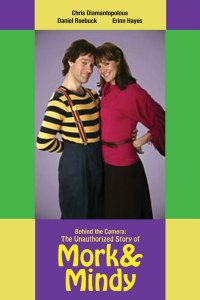
 The year is 1978. A television producer named Garry Marshall (Daniel Roebuck) teaches America how to laugh again by casting Pam Dawber (Erinn Hayes) and a hyperactive stand-up comedian named Robin Williams (Chris Diamantopoulos) in a sitcom about an alien struggling to understand humanity. Despite constant network interference, the show makes Robin a star but, with stardom, comes all the usual temptations: lust, gluttony, greed, pride, envy, wrath, and John Belushi.
The Behind The Camera films, which all dramatized the behind the scenes drama of old television shows, were briefly a big thing in the mid-aughts. Because they were lousy, they never got good reviews but they did get good ratings from nostalgia-starved baby boomers and gen xers. I think The Unauthorized Mork & Mindy Story was the last one produced. It probably would have been better if there had been any sort of drama going on behind-the-scenes of Mork & Mindy but, according to this movie, everyone got along swimmingly. Williams may get hooked on cocaine but the film squarely puts the blame for that on John Belushi. The script, which was obviously written with one eye on avoiding getting sued, is sanitized of anything that could have reflected badly on anyone who was still alive when the movie aired.
Stuck with unenviable task of having to play one of the most famous people in the world, Chris Diamantopoulos was not terrible as Robin Williams. Considering how sanitized the script was, not terrible is probably the best that could be hoped for. There was not much of a physical resemblance but Diamantopoulos nailed the voice and some of the mannerisms. Erinn Hayes looks like Pam Dawber but, just as in the actual show, the movie gives her the short end of the stick and focuses on Williams.
For aficionados of bad television, this is mostly memorable for Daniel Roebuck’s absolutely terrible performance as Garry Marshall and a scene in which Williams is heckled in a comedy club but an overweight man who steps out of the shadows and announces that he’s John Belushi! Roebuck’s performance as Garry Marshall begins and end with his attempt to impersonate Marshall’s familiar voice. He was much better cast as Jay Leno in The Night Shift. As for Belushi , since he was not around to sue or otherwise defend himself, the movie goes all out to portray Belushi (who was played by Tyler Labine) as being an almost demonic influence on Williams. The film’s portrayal of Belushi is even worse and probably more inaccurate than Wired and that’s saying something!
To quote Mork himself: Shazbot! This movie is full of it.
 John Candy and Eugene Levy make a great team in the underrated comedy, Armed and Dangerous.
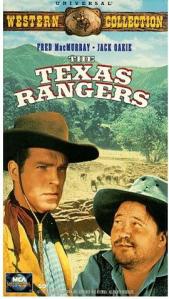 Sam (Lloyd Nolan), Jim (Fred MacMurray), and Wahoo (Jack Oakie) are three outlaws in the old west. Wahoo works as a stagecoach driver and always lets Sam and Jim know which coaches will be worth holding up. It’s a pretty good scam until the authorities get wise to their scheme and set out after the three of them. Sam abandons his two partners while Jim and Wahoo eventually end up in Texas. At first, Jim and Wahoo are planning to keep on robbing stagecoaches but then they realize that they can make even more money as Texas Rangers.
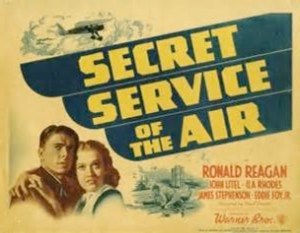 When a secret service agent’s investigation into a supposed counterfeiting ring instead leads to him discovering a plot to smuggle illegal aliens into the United States via airplanes, the agent ends up plummeting several hundred miles to his death. Realizing that they need someone who can go undercover and infiltrate the smuggling ring, the Secret Service recruits Lt. Brass Bancroft (Ronald Reagan). Bancroft is a war hero who is now a commercial airline pilot. He is also good with his fists, has an innate sense of right and wrong, and a sidekick named Gabby (Eddie Foy Jr., giving a very broad performance as the movie’s comic relief). But before Brass can win the trust of the smugglers, he will have to establish a firm cover story and that means allowing himself to be arrested on fake charges. In order to save the day, Brass will have to first survive prison.
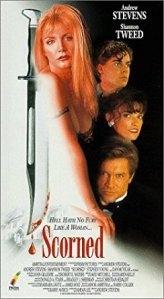 “In an hour, I promise, you’ll be able to beg in two languages.” — Patricia (Shannon Tweed) in Scorned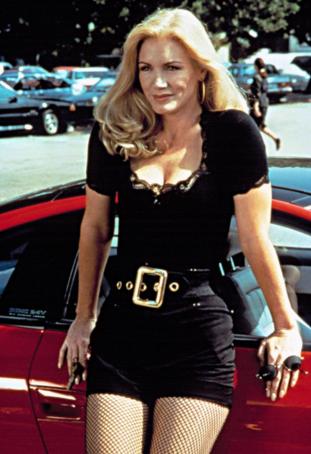
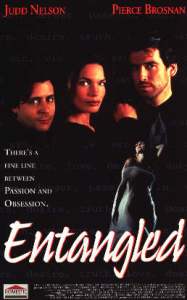 There has been a car crash in Paris and now, David (Judd Nelson) is in the hospital, slowly recovering. In flashbacks, it is revealed that David is an American writer who came to France after his first novel flopped. He came to see his best friend, a womanizing photographer (Roy Dupuis), and ended up meeting and falling in love with the beautiful model, Annabelle (Laurence Treil). Even as he worked on his second novel, he was consumed with jealousy over Annabelle. Why was she sneaking off to a château owned by a mysterious and decadent businessman named Garavan (Piece Brosnan)? Any why, while he is in the hospital, is his second novel published and credited to someone else?

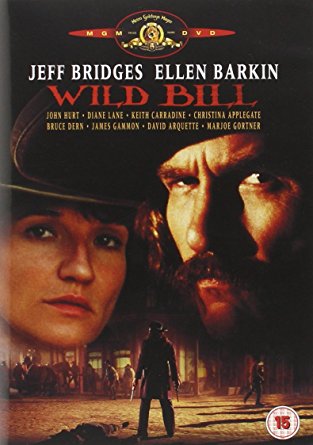 The year is 1876 and the legendary Wild Bill Hickok (Jeff Bridges) sits in a saloon in Deadwood and thinks about his life (most of which is seen in high-resolution, black-and-white flashbacks). Hickok was a renowned lawman and a sure shot, a man whose exploits made him famous across the west. Thanks to his friend, Buffalo Bill Cody (Keith Carradine), he even appeared on the New York stage and reenacted some of his greatest gun battles. Now, Hickok is aging. He is 39 years old, an old man by the standards of his profession. Though men like Charlie Prince (John Hurt) and California Joe (James Gammon) continue to spread his legend, Hickok is going blind and spends most of his time in a haze of opium and regret.
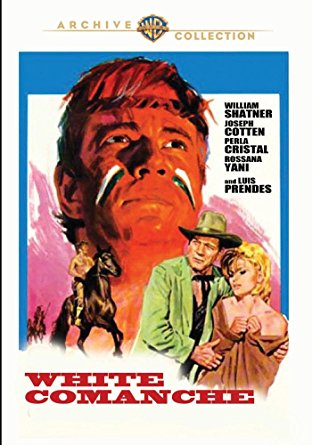 Johnny Moon (William Shatner) is a half-breed. His father was white and his mother was a Comanche. Johnny was raised Comanche but he now lives as a white man. He is a good and law-abiding citizen but he has a problem. Johnny has a twin brother named Notah (played, of course, by William Shatner) and, hooked on peyote, Notah keeps holding up stagecoaches, killing white men, and raping white women. Sick and tired of people constantly trying to lynch him, Johnny contacts Notah and demands a final showdown. At the same time, Johnny refuses to tell anyone about Notah’s existence so everyone still wants to kill Johnny. The only person who realizes that Johnny and Notah are not the same is one of Notah’s victims, a showgirl named Kelly (Rosanna Yanni). She sees that good Johnny has blue eyes while bad Notah has black eyes.
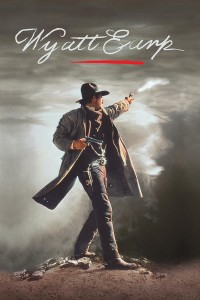 Once upon a time, there were two movies about the legendary Western lawman (or outlaw, depending on who is telling the story) Wyatt Earp. One came out in 1993 and the other came out in 1994.
 In a shack in rural Alabama, a fat, middle-aged man named Bill Riccio watches a faded VHS tape with several teenage boys. All of them have shaved heads. Several of them have elaborate tattoos of swastikas and other racist symbols. When asked, the majority of them say that they come from broken homes with alcoholic fathers and little hope for the future. One of them says that he feels that Bill Riccio is his father. All of them agree, with Riccio, that almost all of the country’s problems can be linked to an international conspiracy that they call ZOG (that stands for Zionist Occupational Government). They have named their home “the War House.”
 Through the Shattered Lens