Review: Lethal Weapon (dir. by Richard Donner)


“I’m too old for this shit.” — Roger Murtaugh

Lethal Weapon is one of those action movies that looks like pure genre formula on paper but somehow plays like lightning in a bottle on screen. From the opening moments, it feels like a film that knows exactly what kind of ride it wants to deliver and leans into that mission with confidence, attitude, and just enough heart to make the bullets and explosions actually matter.

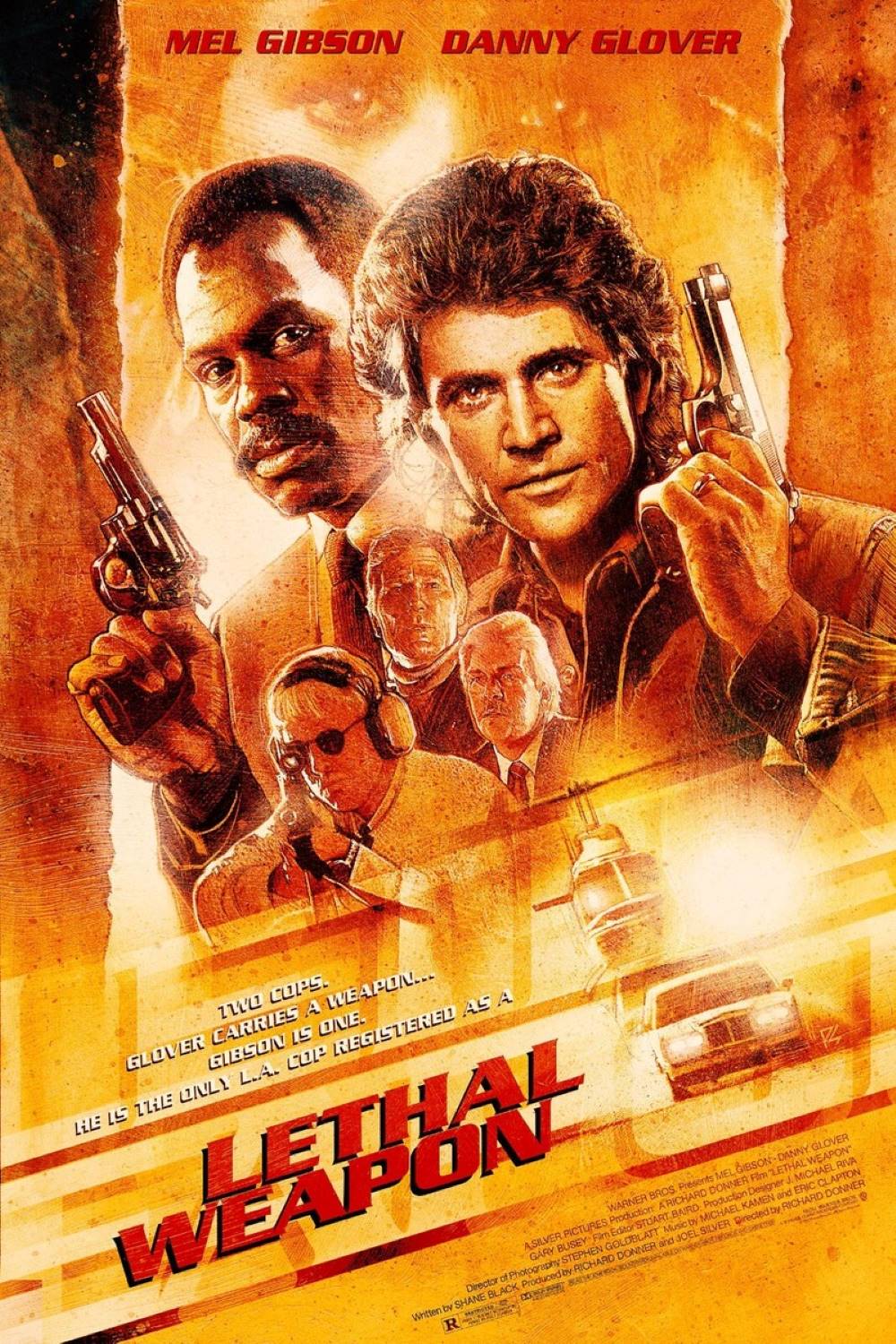
The premise itself is as straightforward as they come, and that simplicity is part of the charm. Martin Riggs is the textbook “cop on the edge,” a former special forces sniper whose life has completely fallen apart after the death of his wife. He’s volatile, depressed, and teetering on the edge of suicidal, which gives everything he does an extra layer of danger. On the other side of the pairing is Roger Murtaugh, a seasoned detective staring down his 50th birthday, trying to balance a long career in homicide with the quiet, constant pull of his family at home. When these two are thrown together and assigned to a case involving drugs, dead bodies, and shady ex-military criminals, the story plays out across familiar beats: suspicious deaths, escalating confrontations, close calls, and a trail that leads them deeper into a dangerous operation. The crime plot is pulpy and direct rather than twisty, but the film uses it as a sturdy framework rather than the main point of interest, keeping the investigation moving while the characters come into focus. Much of that sharp setup and snappy progression comes from Shane Black’s script, which crackles with knowing genre savvy, pitch-perfect banter, and a keen eye for how personal pain fuels action-hero antics.

What really makes Lethal Weapon feel alive is how much time it spends letting Riggs and Murtaugh exist as people before they fully morph into the “classic duo” that pop culture remembers. The film doesn’t rush past the small stuff. Riggs is introduced living in a rundown trailer on the beach with his scruffy dog for company, drinking and stumbling through life with the casual recklessness of someone who genuinely doesn’t care if he sees tomorrow. Those early moments of him alone, flirting with self-destruction, give his later heroics a sense of tragic context: he’s not just fearless, he’s half-convinced he has nothing left to lose. Murtaugh’s introduction is a complete contrast: a crowded home, kids, a loving wife, and the kind of loud, chaotic domestic life that’s full of relatable irritation and warmth. Seeing him grumble through birthday milestones or awkwardly handle family situations does more for his character than any speech about his years on the force could. These slices of everyday life build a strong emotional foundation so that when the bullets start flying, there’s something at stake beyond catching bad guys. Black’s writing shines here, weaving those intimate details into the thriller beats without ever feeling forced or preachy.

The chemistry between Mel Gibson and Danny Glover is the film’s true secret weapon. Gibson plays Riggs as an unpredictable live wire, able to flip from goofy physical comedy to chilling seriousness in an instant. He sells the idea that this is a man barely keeping it together, yet still razor-sharp when it comes to the job. There’s a constant sense that his jokes and antics are a flimsy barrier over something very raw. Glover, by contrast, keeps Murtaugh grounded and human; his performance is packed with little sighs, muttered reactions, and weary facial expressions that speak volumes. He comes across as a guy who has seen too much, loves his family, and genuinely wants to do the right thing, but is exhausted by how hard that is in practice. Their initial friction hits the expected “mismatched partners” beats: Murtaugh thinks Riggs is unstable and dangerous, while Riggs treats Murtaugh like a fussy old man who doesn’t get it. Yet as they move through stakeouts, interrogations, and gunfights, their banter evolves from pure irritation into an easy rhythm filled with barbs, mutual respect, and eventually real affection. Shane Black’s dialogue is the glue for all of it—witty, profane, and laced with just enough vulnerability to make the laughs land harder and the tension feel real.

Richard Donner’s direction is a huge part of why all of this clicks as well as it does. He has a knack for blending big, commercial genre instincts with an eye for character detail, and Lethal Weapon is a textbook example of that balance. He stages action scenes with clear geography and rhythm, so even when things get loud and chaotic, you always know where you are and what everyone is trying to do. At the same time, he’s just as interested in the quiet beats: a pause on Riggs’ face after a joke lands flat, Murtaugh’s body language when he walks into his noisy home after a brutal day, the way a conversation in a car can shift from banter to confession in a couple of lines. Donner keeps the film moving at a brisk pace, but he knows when to let a shot linger or a silence hang long enough to tell you what the characters can’t quite say out loud. His tonal control—jumping from dark to funny to tense without completely losing the thread—is a big reason the movie doesn’t collapse under its own genre juggling, and it pairs beautifully with Black’s script that sets up those shifts so precisely.

Tonally, Lethal Weapon walks a tricky line, and that’s a big part of its identity. On one hand, this is a story with genuinely dark undercurrents. Riggs’ suicidal impulses are not a throwaway character quirk; the film gives time to scenes where he nearly acts on them and struggles in a very raw way with his grief and loneliness. The case they’re working breaks open into territory involving drugs, exploitation, and violence that’s sometimes nasty rather than cleanly heroic. On the other hand, the film is full of humor, ranging from quick one-liners to broad physical bits. The Murtaugh household provides a lot of that levity: awkward conversations with his kids, Riggs stumbling through family dynamics, and the contrast between domestic calm and the chaos of the streets. The movie often jumps from heavy emotional beats to comedic ones and back again, and while the transitions can be abrupt, that mixture is part of what keeps it from feeling like just another grim cop story. The laughter doesn’t erase the darker material, but it does give the movie a sense of momentum and charm that keeps it entertaining instead of oppressive. Black’s screenplay nails this push-pull, using humor as both release valve and revelation.

As an action film, Lethal Weapon delivers a steady run of sequences that are energetic, clear, and tactile. The action is built around physical stunts, dangerous-looking falls, and gunfights that feel chaotic without becoming incoherent. One memorable sequence has Riggs dealing with a jumper on a rooftop in a way that instantly tells you everything about his mentality and willingness to risk himself. Another set piece in a more open, exposed environment lets the film escalate tension step by step before violence finally erupts. Through it all, Donner keeps a strong sense of spatial clarity; you can track where the characters are, what they’re trying to do, and how each decision raises the stakes. The fights feel scrappy and painful rather than overly slick, and that slightly rough quality actually works in the movie’s favor, making each impact land harder. Riggs, especially, moves like a human weapon, hurling himself into situations with a recklessness that ties directly into his psychological state, all fueled by Black’s clever plotting that makes those risks feel personal.

Underneath the gunfire and explosions, there’s a surprisingly sturdy emotional core tying everything together. Riggs’ grief isn’t just window dressing; it’s the lens through which his every decision makes sense. The movie doesn’t lecture you about what he’s feeling, but it shows it—through quiet moments alone, through the anger that erupts at all the wrong times, and through the way he throws his body into danger almost as if daring the world to take him out. Murtaugh’s arc is more subtle but still strongly drawn. He’s at an age where he has to confront the reality that he can’t keep pace with younger, more reckless colleagues forever, and yet his sense of duty keeps pulling him into situations where his family might lose him. Throughout their investigation, Murtaugh’s protective instincts—toward his loved ones, toward Riggs, and toward innocent people caught in the crossfire—become as important as his skills as a detective.

The relationship that develops between Riggs and Murtaugh is the heart of the film and the main reason it sticks in the memory. At first, Murtaugh just wants to survive partnering with a man he genuinely believes might be unhinged, while Riggs seems to treat their pairing as just another chaotic twist in a life already off the rails. As they trade confessions, back each other up in tight spots, and slowly understand what the other is carrying, their bond shifts into something like brotherhood. Murtaugh becomes a kind of anchor for Riggs, offering not just backup in a fight but also a place at the table, both literally and figuratively. Riggs, in turn, forces Murtaugh out of his comfort zone, reminding him that he still has plenty of courage and fire left in him. The film doesn’t turn their connection into a sentimental soapbox, but it lets small moments—a shared laugh after a narrow escape, a quiet conversation after the chaos—do the emotional lifting, with Black’s words giving those scenes their understated power.

If there’s a clear weak spot, it’s that the villains are fairly thinly drawn, operating more as looming threats than fully realized characters. They are dangerous and organized, capable of serious brutality and clearly involved in serious criminal operations, but the movie doesn’t spend much time exploring their motivations or inner lives. They’re the kind of antagonists designed to be obstacles: formidable enough to make the heroes’ victories feel earned, but not so complex that they distract from the central duo. For a character-driven action film, that trade-off mostly works. When Lethal Weapon is firing on all cylinders, the tension doesn’t come from wondering what the bad guys will do next so much as from seeing how Riggs and Murtaugh will handle whatever gets thrown at them and what that reveals about who they are.

Structurally, the film keeps a tight pace, always nudging the story forward even when it pauses for character beats. Expository scenes rarely feel like dry info dumps; they’re often laced with jokes, personal jabs, or subtle shifts in how the two leads relate to each other. The downtime moments—a quiet drink, a shared meal, a conversation in a car between partners who would rather pretend they’re fine—are as important as the louder ones. By the time the case ramps up to its most intense passages, there’s been enough time with these characters to care less about the mechanics of the plot and more about whether these two damaged, stubborn men can come out the other side with something to hold onto.

What ultimately makes Lethal Weapon work so well is that it doesn’t settle for being just a checklist of genre requirements. Yes, it has gunfights, dark humor, car chases, and tough-guy posturing. But wrapped around all of that is a story about grief, aging, loyalty, and how unlikely partnerships can change the trajectory of a person’s life. Donner’s steady hand behind the camera, Shane Black’s razor-sharp script, and the powerhouse performances turn what could have been a forgettable cop thriller into something much more memorable. For anyone who enjoys action movies that care as much about the people pulling the triggers as the bullets they fire, Lethal Weapon stands out as a defining entry in the buddy-cop mold, powered by the messy, heartfelt dynamic at its center and the sure-footed craftsmanship that brings it all together.
On-Stage With The Lens: Medea (dir by Mark Cullingham)


In 431 BC, the Greek playwright Euripides premiered his latest play, Medea.  The story of a woman scorned who deals with her anger by murdering her ex-husband’s soon-to-be wife, future father-in-law, and finally her own children, Medea has lived on as one of Euripides’s most-performed plays.  Three actresses have won Tony awards for playing Medea on Broadway, setting the record for the most Tonys won for playing the same role.

Medea is a play that is open to a lot of interpretations.  Quite a few stagings of the play present Medea as being a sympathetic character, a victim of a misogynistic culture who was driven to extremes by the men around her.  I can see that argument and it is true that the play does emphasize that all the men in Medea’s life treat her terribly.  Creon plots to send Medea into exile so that his daughter can marry her husband.  Medea’s smarmy husband, Jason, says that he has no choice but to marry a princess because Medea is only a “barbarian,” fit to be his mistress but not his wife.  In many ways, Medea is a sympathetic character.  But, for me, all of that sympathy goes out the window as soon as she murders her children.  The fact that, in most stage versions of the play, the Gods then help her to escape makes her even less sympathetic in my eyes.  (Needless to say, it certainly doesn’t do much for the reputation of the Greek Gods.  Then again, one gets the feeling that even the ancient Gods didn’t particularly like their Gods.)

In 1983, Zoe Caldwell won a Tony for playing Medea.  (Interestingly enough, in this production, the Nurse was played by Judith Anderson, who also won a Tony for playing Medea, in 1947.)  A performance at the Kennedy Center was filmed for PBS.  The production, with its minimalist sets and atmosphere of growing dread, captures the nightmarish intensity of the story.  Zoe Caldwell gives a riveting performance as Medea, alternating between wild-eyed madness and subtle manipulation.

As the most horrific of the Greek plays, Medea is a production that just feels right for the Halloween season.  Here is Zoe Caldwell in 1983’s Medea.

Brad’s Scene of the Day – “Do you smoke?!” from LETHAL WEAPON (1987)


LETHAL WEAPON may be more of a Christmas movie, and today is the 4th of July, but today is also the 76th birthday of Ed O’Ross. Ed is an instantly recognizable character actor from movies like THE HIDDEN (1987) and RED HEAT (1989), but I always think of him first as Mendez, the guy who’s freaked out by The General (Mitchell Ryan) and Mr. Joshua (Gary Busey) at the beginning of LETHAL WEAPON!

While you’re enjoying the the 4th of July, take a few minutes to celebrate Ed O’Ross and one of the great buddy cop films of all time!

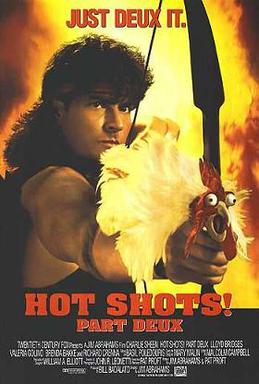
Hot Shots! Part Deux (1993, directed by Jim Abrahams)


Topper Harley (Charlie Sheen) is back but instead of being a knock-off of Tom Cruise, he’s now Sylvester Stallone.

When two separate teams of U.S. soldiers fail to rescue a group of hostages who are being held by Saddam Hussein (Jerry Haleva, who built an entire career out of his resemblance to the Iraqi dictator), it not only embarrasses America but threatens the reelection campaign of President Tug Benson (Lloyd Bridges).  President Benson can get away with throwing up on the Japanese ambassador and knocking over all the other Presidents with a shovel (though Gerald Ford falls on his own) but he can’t survive a hostage crisis.  Colonel Denton Waters (Richard Crenna) and Michelle Huddleston (Brenda Bakke) attempt to recruit Topper Harley from the Buddhist monastery, where he’s been living since the disappearance of Ramada (Valeria Golino).  Topper refuses to help with a third mission but, after Water is captured by Saddam, Topper does decide to lead the fourth mission.  Working with Ryan Stiles and Miguel Ferrer, Topper heads into the jungle to save Colonel Waters, reunite with Ramada, and discover his destiny.

The sequel to Hot Shots! is more of the same, a non-stop cavalcade of jokes, movie references, and deadpan one liners.  There are enough laugh out loud moments to make up for the jokes that don’t work.  I’ll always like the moment when Charlie Sheen sees Martin Sheen on another patrol boat.  (“Loved you in Wall Street!”)  It’s a movie made in the vein of Airplane! but the jokes aren’t as timeless as in that classic.  Everyone remembers Rambo enough to get the main joke and the interrogation scene in Basic Instinct has left enough of an impression that Topper’s “I know what to get your for Christmas,” comment to Michelle still draws a chuckle but do you remember Body of Evidence and the first President Bush vomiting at a state dinner?  Not all of the jokes have aged well but Charlie Sheen does a decent Rambo impersonation and Lloyd Bridges’s dim bulb President is one of the more relatable parts of the movie.  Fortunately, jokes about Saddam Hussein getting flattened by a piano will always be funny.

Favorite Son (1988, directed by Jeff Bleckner)


During a reception on the steps of U.S. Capitol, an assassin kills Contra leader Col. Martinez (Geno Silva) and seriously wounds Sen. Terry Fallon (Harry Hamlin), an up-and-coming politician from Texas.  An eager media catapults Fallon to national stardom and the beleagued President (James Whitmore), who is facing a tough reelection bid, is pressured to replace the current vice president (Mitchell Ryan) with Fallon.

The FBI only assigns two of their agents to investigate the assassination, a sure sign that someone wants the investigation to just go away.  Nick Mancuso (Robert Loggia) is a crusty, hard-drinking veteran agent whose career is nearly at an end.  David Ross (Lance Guest) is his young and idealistic partner.  When Mancuso and Ross discover that Martinez was injected with the HIV virus just two days before the assassination, it becomes obvious that there is a bigger conspiracy afoot.  It all links back to Sally Crain (Linda Kozlowski), who is Fallon’s legislative aide and also his lover.  (Fallon has a wife but she’s locked away in a hospital.)  Sally has an interest in bondage, as Ross soon finds out.

Favorite Son was originally aired as a 3-night, 4 and a half-hour miniseries.  It was later reedited and, with a running time of less than two hours, released theatrically overseas as Target: Favorite Son.  As a miniseries, Favorite Son is an exciting conspiracy-themed film that is full of scheming, plotting, interesting performances, and pungent dialogue.  Target: Favorite Son, on the other hand, is disjointed and, unless you know the original’s plot, almost impossible to follow.  If you’re going to watch Favorite Son, make sure you see the original miniseries.  My mom taped it off of NBC when it originally aired.  That was the only way that I was able to originally see the film the way that it meant to be seen.  The entire miniseries has also been uploaded, in three parts, to YouTube.

Hopefully, the original miniseries will get an official release someday because it’s pretty damn entertaining.  Harry Hamlin isn’t really dynamic enough for the role of Fallon but otherwise, the movie is perfectly cast.  Robert Loggia is so perfect for the role of Nick Mancuso that it almost seems as if the character was written for him.  (Loggia did later star in a one-season drama called Mancuso, FBI.)  Linda Kozlowski seems to be destined to be forever known as Crocodile Dundee’s wife but her performance as Sally shows that she was a better actress than she was given credit for.  The supporting cast also features good performances from Jason Alexander, Ronny Cox, Tony Goldwyn, John Mahoney, Kenneth McMillian, Richard Bradford, and Jon Cypher.

Favorite Son may be over 30 years old but it’s still relevant today.  In the third part, John Mahoney gives a speech about how American voters are often willfully ignorant when it comes to what’s going on behind the scenes in Washington and it’s a killer moment.  Melodramatic as Favorite Son may be, with its portrayal of political chicanery and an exploitative national media, it’s still got something to say that’s worth hearing.


A Movie A Day #258: The Hunting Party (1971, directed by Don Medford)


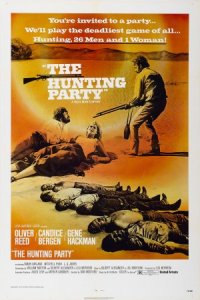
Old west outlaw Frank Calder (Oliver Reed) wants to learn how to read so he and his gang ride into the nearby town and kidnap Melissa Ruger (Candice Bergen).  Because he saw her reading to a group of children, Calder assumed that Melissa was a school teacher.  Instead, Melissa is the wife of a brutal cattle baron and hunter named Brandt Ruger (Gene Hackman).  Even after Calder learns the truth about Melissa’s identity, he keeps it a secret from his gang because he knows that they would kill her and then kill him as punishment for kidnapping the wife of a man as powerful as Brandt.  Stockholm Syndrome kicks in and Melissa starts to fall in love with Calder.  Meanwhile, Brandt learns that his wife has been kidnapped and, with a group of equally brutal friends, he sets out to get her back.  In Brandt’s opinion, Calder has stolen his personal property.  Using a powerful and newly designed rifle, Brandt kills Calder’s men one-by-one until there is a final, bloody confrontation in the desert.
Coming out two years after Sam Peckinpah redefined the rules of the western genre with The Wild Bunch, The Hunting Party owes a clear debt to Peckinpah.  Much as in The Wild Bunch, the violence is sudden, brutal, and violent.  What The Hunting Party lacks is Peckinpah’s attention to detail and his appreciation for the absurd.  Instead, The Hunting Party is just one shooting after another and, devoid of subtext or any hint of a larger context, it quickly gets boring.

Fans of Oliver Reed, however, will want to watch The Hunting Party because it features one of his best performance.  For once, Reed is actually playing the nice guy.  He may be an outlaw but he still cries when a mortally wounded member of his gang begs Calder to put him out of his misery.  Gene Hackman is also good, even though he’s playing one of his standard villain roles.  (The less said about Candice Bergen’s performance, the better.)  The Hunting Party may be dully nihilistic but Oliver Reed shines.

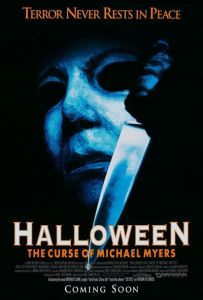
Even Ant-Man Had To Start Somewhere: Halloween: The Curse of Michael Myers (1995, directed by Joe Chappelle)


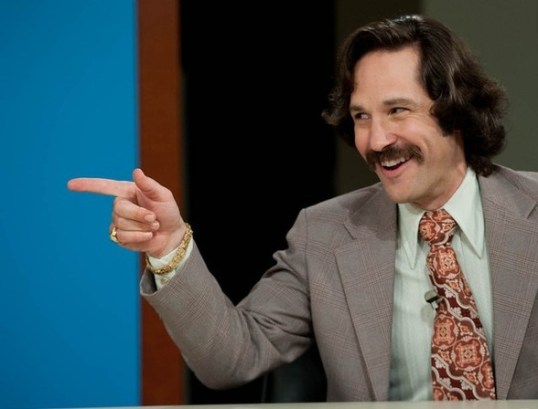
halloween6coverLong before he was either Ant-Man or Judd Apatow’s favorite leading man, Paul Rudd was just another young actor looking for his first break.  He got it in 1995 when he was cast in the latest entry in the Halloween franchise.  Though Clueless was released first, the man who would be Brian Fantana got his introducing credit for Halloween: The Curse of Michael Myers.  (He’s credited as Paul Stephen Rudd.)
Halloween: The Curse of Michael Myers was Miramax’s attempt to reboot the franchise by ignoring everything that made the first Halloween such a success in the first place.  John Carpenter’s Halloween was the epitome of simplicity, with Michael Myers portrayed as being an almost entirely motiveless killing machine.  One reason why Michael was scary was because he didn’t have any reason for killing other than he was evil.  (It was not until Halloween II that Laurie was discovered to be Michael’s sister and Samhain came into play.)

In Halloween 6, Michael (played by stuntman George P. Wilbur) is suddenly revealed to be afflicted with the Curse of the Thorn.  Because of the curse, he is required to serve as some sort of indestructible hit man for a cult of Druids (!) who are operating out of the basement of Smith Grove’s Sanitarium (!!), the same mental hospital that Michael escaped from at the start of the first film.  The head of the cult is Dr. Wynn (Mitchell Ryan), who was Sam Loomis’s boss in the first movie.

963589_032Donald Pleasence is back as Dr. Sam Loomis but it is not a happy return.  This was Pleasence’s final film and, in his few scenes, it is obvious that he was not in good health and his famous voice had been reduced to a hoarse rasp.  Pleasence died shortly after filming his scenes, which meant that he wasn’t available for the reshoots that Miramax demanded after the first cut of the film tested badly.  Add that to the fact that director Joe Chapelle reportedly had not seen any of the previous Halloweens, did not find the Loomis character to be interesting, and cut him out of several scenes and Dr. Loomis is barely in The Curse of Michael Myers.
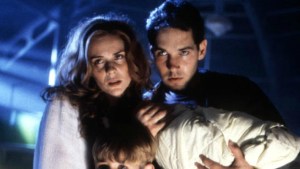
Instead, most of the film is centered around Tommy Doyle (Rudd).  Yes, the same Tommy Doyle for whom Laurie babysat in the first Halloween.  Tommy has figured out that, because of the curse, Michael has to kill his next of kin every Halloween.  How did Tommy figure that out?  I don’t know and the film doesn’t know.  It’s like trying to figure out how Sean Connery knew where the Holy Grail was in Indiana Jones and The Last Crusade.

Michael’s next of kin was Jamie Lloyd but, at the end of Halloween 5, she was kidnapped by the Cult of Thorn and held prisoner for six years.  For some reason, Michael did not kill her while she was being held captive.  Instead, Jamie was impregnated, gave birth to a baby boy named Stephen, and then escaped.  Though she was eventually killed by Michael, Tommy found the baby and has to protect the baby from Michael and the Cult.

list12Why does the Cult want the baby?  Why do birds suddenly appear whenever you are near?  There is no explanation, it’s just something that happens.

 

Michael comes back to Haddonfield to track down his grandnephew.  He also finds time to kill more members of the dysfunctional Strode family.  Luckily, Kara Stroe (Marianne Hagan) and her son, Danny, survive.  Danny is having dreams about killing people which would seem to suggest that he has inherited the Curse of the Thorn, except that the Strodes are not actually related to the Myers family so it doesn’t make any damn sense.

mv5bmtm1mzy2odg4nl5bml5banbnxkftztcwmje5nzu5ng-_v1_cr029304171_al_ux477_cr00477268_al_

After six films, it not always easy to keep track of how everyone is related.  Let’s see if I can do it:

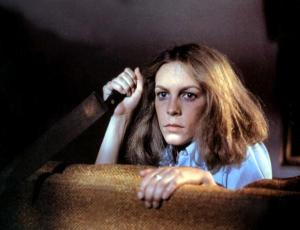
Laurie Myers is the younger sister of Michael Myers and Judith Myers.  In 1963, when Michael is 6 and Laurie is 2, Michael murders Judith.  Michael goes to Smith’s Grove Sanitarium, where he is treated by Dr. Loomis and secretly raised by the Cult of the Thorn.  Mr. and Mrs. Myers die in 1965 and Laurie is adopted by the Strodes.  Laurie has no memory of being a Myers.

jamie-lee-curtis-mar-5-2011-2-600In 1978, Michael “escapes” from Smith’s Grove and tries to kill Laurie.  Both he and Dr. Loomis get blown up at the hospital.
Between 1978 and 1988, Laurie marries someone named Lloyd and they have a daughter named Jamie.  But then Laurie and her husband die in a traffic accident and Jamie is raised by her foster family, the Carruthers.  Except Laurie didn’t really die but instead faked her death and abandoned her daughter which seems like a shitty thing to do.

In 1988, it turns out that both Michael and Dr. Loomis survived being blown up and consumed by a raging inferno.  Michael again escapes from custody and goes to Haddonfield.  He tries to kill Jamie but instead ends up falling down a mine shaft.  Jamie goes home and tries to kill her foster mother.

In 1989, Michael turns out to be alive again and tries to kill Jamie for a second time.  The Man In Black, who is somehow connected to the the Cult of Thorn, shows up and breaks Michael out of jail and kidnaps Jamie.

Then, six years later, Jamie has a son named Stephen and is finally killed by Michael.  Meanwhile, Laurie’s uncle, John Strode (Bradford English), has moved into the old Myers house because why not live in the house formerly inhabited by a serial killer who tried to murder your family?  Living with them is Laurie’s cousins, Kara and Tim (Kieth Bogart) and Kara’s son, Danny.

Meanwhile, Laurie is in the witness protection program and teaching school but you don’t have to worry about that until Halloween: H20.

Got all that?

halloween-6

I haven’t even gotten to the sleazy radio DJ who wants to do a live Halloween broadcast from inside the old Myers House.  There’s not much to say about him beyond noting that the role was originally offered to Howard Stern.

There are two versions of The Curse of Michael Myers floating around.  There’s the producer’s cut, which goes into more detail about the druids and attempts to fill some of the continuity gaps in the franchise.  Then there’s the theatrical edition, which was what Miramax released into theaters.  I have only seen the theatrical cut, which is a confusing mess.

While the producer’s cut features Michael being defeated by Celtic magic (which sounds stupid but would actually go with what’s already been established in the movie), the theatrical cut ends with Michael, who has previously survived being shot six times by Dr. Loomis, falling down a mine shaft, and literally blowing up, somehow being beaten into submission by Paul Rudd and a lead pipe.  Is there nothing that Paul Rudd cannot do?

Mr. Rudd, the town of Haddonfield owes you a debt of gratitude.

You stay classy, Haddonfield.

You stay classy, Haddonfield.


The Big Let-Down: CHANDLER (MGM 1971)


gary loggins's avatarcracked rear viewer

chandler1

“Some (producers) are able and humane men and some are low-grade individuals with the morals of a goat, the artistic integrity of a slot machine, and the manners of a floorwalker with delusions of grandeur”- Raymond Chandler, “Writers in Hollywood”, first published in Esquire Magazine, Nov. 1945

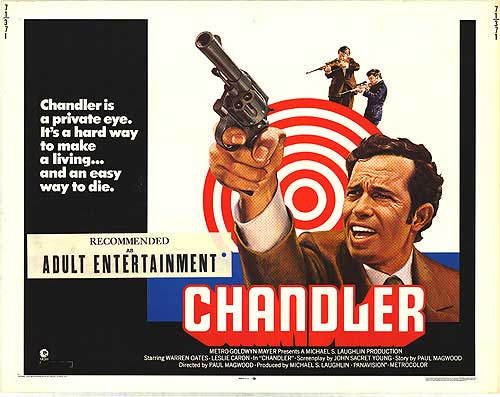
I had high hopes for CHANDLER, I really did. An homage to the hard-boiled fiction of Raymond Chandler (born July 23, 1888) with Warren Oates as the titular detective sounded like it’d be right up my dark alley. But as much as I wanted to like this movie, I was let down by its slow pace, convoluted script, and butchering by studio execs. Much of the film was cut, scenes were replaced, and the result is an evocative mood piece that ultimately doesn’t satisfy the noir lover in me.

chandler2

I don’t have a problem with Warren Oates as Chandler, with his Bogie-esque look and low-key performance…

View original post 342 more words

Film Review: Magnum Force (dir by Ted Post)


Today, we continue our look at the Dirty Harry film franchise by taking a look at the second film in the series, 1973’s Magnum Force.

Despite the fact that Dirty Harry famously ended with Harry Callahan throwing away his badge in disgust, Magnum Force reveals that Callahan (played again by Clint Eastwood) is still a member of the San Francisco Police Department.  He’s got a new partner (Felton Perry, a likable actor in a thankless role) but he’s still butting heads with his superiors at the department.  He’s also still got a way with the one-liners.  When Lt. Briggs (Hal Holbrook) brags that he never once had to draw his gun while he was in uniform, Callahan replies, “A man’s got to know his limitations.”

While Callahan is busying himself with doing things like gunning down robbers and preventing an attempt to hijack a plane, a group of motorcycle cops are gunning down the town’s criminals.  They begin by killing a mobster who has just beaten a murder charge on a technicality but soon, they’re gunning down anyone who has ever so much as been suspected of committing a crime.  Alone among the detectives investigating the murders, Callahan believes that the killers are cops and, even worse, he suspects that his old friend Charlie McCoy (played by Mitchell Ryan) might be a member of the group…

Though it suffers when compared to Dirty Harry, Magnum Force is still an exciting and effective action film that is clearly a product of the same period of time that gave us such classics of paranoid cinema as The Parallax View and Three Days of the Condor.  Whereas Dirty Harry took an almost documentary approach to capturing life and death in San Francisco, Magnum Force is a film that is full of dark shadows and expressionistic angles.

In Dirty Harry, the Scorpio Killer was both an obvious outsider and an obvious force of destruction.  The film’s dramatic tension came from the fact that he was so clearly guilty and yet nothing could be done to stop him.  The villains in Magnum Force are the exact opposite of Scorpio.  As chillingly played by David Soul, Robert Urich, Tim Matheson, and Kip Niven, the killer cops are distinguished not by their otherness but by their total lack of individuality.

In the film’s best scene, they confront Harry in a parking garage and basically tell him that he’s either with them or against him.  Sitting on their motorcycles, wearing their leather jackets, and with their grim faces hidden behind their aviator sunglasses, these cops are the ultimate representation of  faceless fascism.  After listening to their excuses, Harry asks if they consider themselves to be heroes.

“All of our heroes are dead,” one of them replies, delivering the film’s best line.

Obviously, Magnum Force was made to be an answer to those critics who claimed that Dirty Harry was a fascist film and it is a bit jarring, at first, to see Harry “defending” the system.  (“I hate the goddamn system but until something better comes along…”)  When Harry tells the killer cops, “I’m afraid you’ve misjudged me,” it’s not hard to see that this is the same message that Eastwood meant to give his critics.

However, what makes the killer cops in Magnum Force such interesting villains is that they are, ultimately, tools of the system that they’re attempting to destroy.  By killing off criminals as opposed to arresting them and putting them on trial, the killer cops are minimizing the risk of the flaws inherent in the system being exposed.  Hence, by defending the system, Harry is helping to expose and destroy it.

When I told Jeff that I was planning on watching and reviewing all of the Dirty Harry films, he suggested that I watch them in reverse-order.  His logic was that, since the films tended to get worse as the series progressed, watching them backwards would allow me to end my project on a happy note as opposed to a note of bitter disappointment.  I took his advice and I’m glad I did.  While I disagree with him about whether or not The Dead Pool is a better film than Sudden Impact, I do have to agree that the first two Dirty Harry films are dramatically better (and quite different in tone) from the ones that subsequently followed.

Tomorrow, we’ll look at the third film in the series, 1976’s The Enforcer.