4 Or More Shots From 4 Or More Films is just what it says it is, 4 shots from 4 of our favorite films. As opposed to the reviews and recaps that we usually post, 4 Shots From 4 Films lets the visuals do the talking!
Today, we pay tribute to the year 1975. It’s time for….
4 Shots From 4 1975 Films
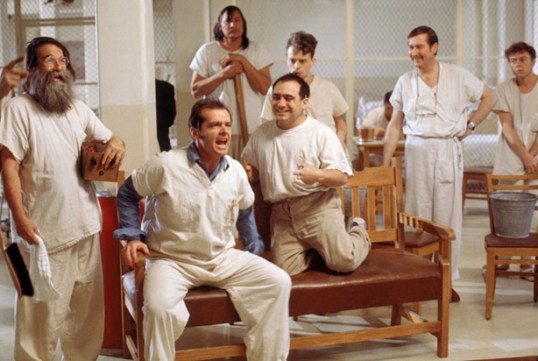
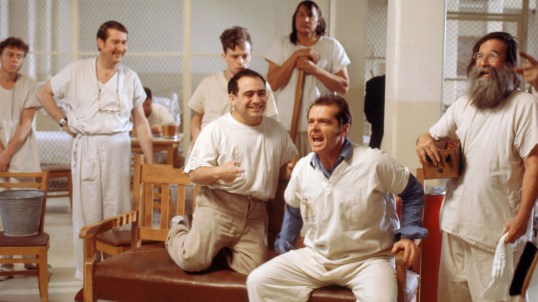
One Flew Over The Cuckoo’s Nest (1975, dir by Milos Forman, DP: Haskell Wexler and Bill Butler)
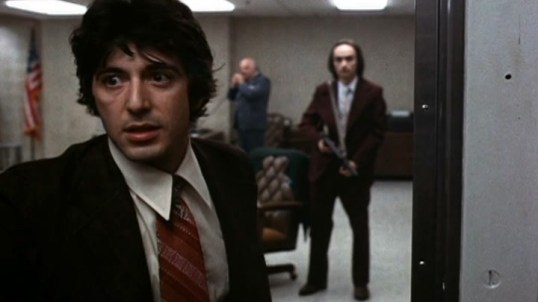
Dog Day Afternoon (1975, dir by Sidney Lumet, DP: Victor J. Kemper)
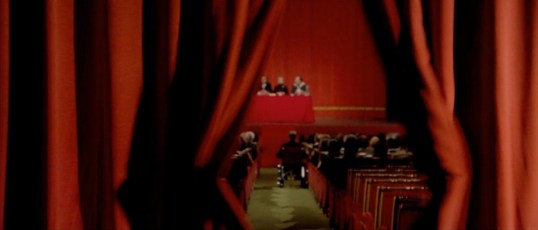
Deep Red (1975, dir by Dario Argento, DP: Luigi Kuveiller)
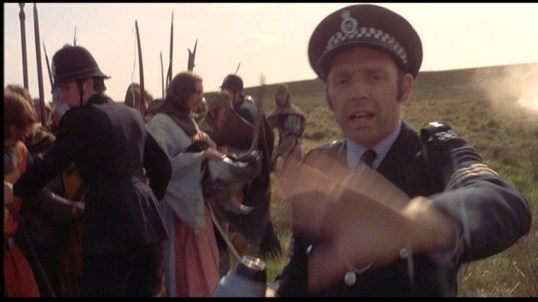
Monty Python and the Holy Grail (1975, dir. Terry Gilliam & Terry Jones, DP: Terry Bedford)
4 Shots From 4 Films is just what it says it is, 4 shots from 4 of our favorite films. As opposed to the reviews and recaps that we usually post, 4 Shots From 4 Films lets the visuals do the talking!
Today, I’m using this feature to take a look at the history of the Academy Award for Best Picture. Decade by decade, I’m going to highlight my picks for best of the winning films. To start with, here are 4 shots from 4 Films that won Best Picture during the 1980s! Here are….
4 Shots From 4 Best Picture Winners: The 1980s
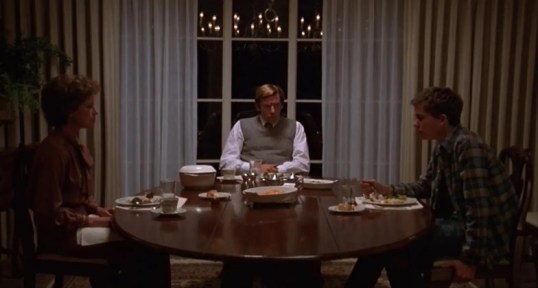
Ordinary People (1980, dir by Robert Redford, DP: John Bailey)
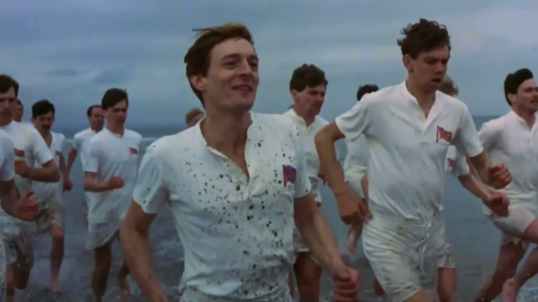
Chariots of Fire (1981, dir by Hugh Hudson, DP: David Watkin)
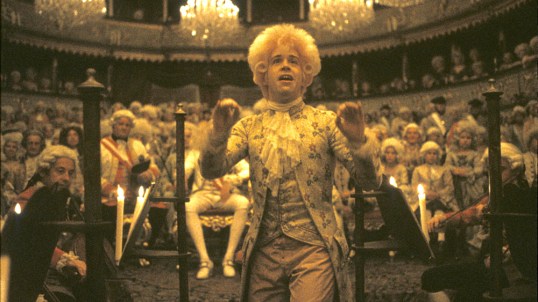
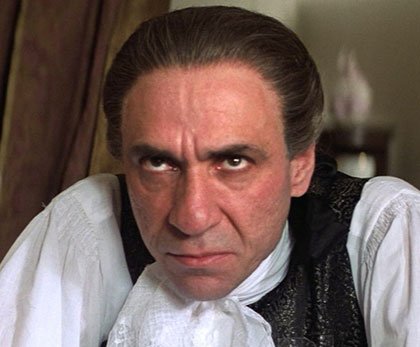
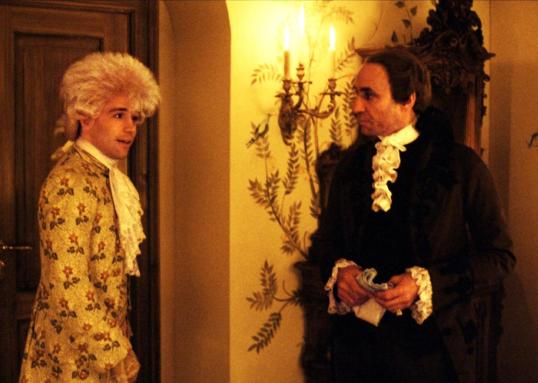
Amadeus (1984, dir by Milos Forman, DP: Miroslav Ondříček)
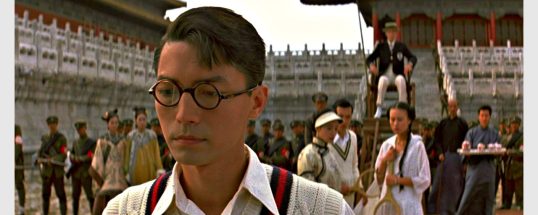
The Last Emperor (1987, dir by Bernardo Bertolucci, DP: Vittorio Storaro)
4 Shots From 4 Films is just what it says it is, 4 shots from 4 of our favorite films. As opposed to the reviews and recaps that we usually post, 4 Shots From 4 Films lets the visuals do the talking!
Today, I’m using this feature to take a look at the history of the Academy Award for Best Picture. Decade by decade, I’m going to highlight my picks for best of the winning films. To start with, here are 6 shots from 6 Films that won Best Picture during the 1970s! Here are….
6 Shots From 6 Best Picture Winners: The 1970s
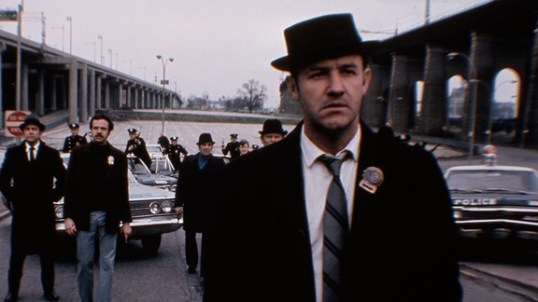
The French Connection (1971, dir by William Friedkin, DP: Owen Roizman)
The Godfather (1972, dir by Francis Ford Coppola, DP: Gordon Willis)
The Godfather Part II (dir by Francis Ford Coppola, DP: Gordon Willis)
One Flew Over The Cuckoo’s Nest (1975, dir by Milos Forman, DP: Haskell Wexler and Bill Butler)
Rocky (1976, dir by John G. Avildsen, DP: James Crabe)
The Deer Hunter (1978, dir by Michael Cimino, DP: Vilmos Zsigmond)
Technically, the 1975 film One Flew Over The Cuckoo’s Nest is not a horror film.
Though it may take place in a creepy mental hospital, there are no ghosts or zombies. There’s no masked killer wandering the halls. The shadows do not leap off the walls and there are no ghostly voice in the night, unless you count the rarely heard voice of Will Sampson’s Chief Bromden.
Admittedly, the cast is full of horror and paranormal veterans. Michael Berryman, of the original Hills Have Eyes, plays a patient. Louise Fletcher, who won an Oscar for playing the role of Nurse Ratched, went on to play intimidating matriarchs in any number of low-budget horror movies. Vincent Schiavelli, a patient in this film, played the angry subway ghost in Ghost. Another patient, Sidney Lassick, played Carrie’s condescending English teacher in Carrie. Brad Dourif, who received an Oscar nomination for playing the meek Billy Bibbit, has become a horror mainstay. Will Sampson appeared in the Poltergeist sequel. Both Scatman Crothers and Jack Nicholson would go on to appear in The Shining.
Nicholson plays Randle Patrick McMurphy, a career criminal who, hoping to get out of prison early, pretends to be mentally ill. He ends up getting sent to an Oregon mental institution, where his rebellious ways upset the administrators while, at the same time, inspiring the patients to actually try to take some control over their lives. The film is, in many ways, a celebration of personal freedom and rebellion. The only catch here is that, in One Flew Over The Cuckoo’s Nest, being a little bit too rebellious can lead to not only electroshock treatment but also a lobotomy. Those in charge have a way of making you permanently compliant.
And really, to me, that’s what makes One Flew Over The Cuckoo’s Nest a horror film. It’s about the horror of conformity and bureaucracy. The film may start out as something of a comedy and Nicholson brings a devil-may-care attitude to the role of McMurphy but then, eventually, you reach the scene where McMurphy is tied down and given electrical shocks to make him compliant. You reach the scene where Ratched coldly informs Billy Bibbit that she will be telling his mother that Billy lost his virginity to a prostitute and Billy reacts by slicing open his wrists. Finally, you reach the scene where McMurphy returns to the ward having had a bit of his brain removed. In those scenes, One Flew Over The Cuckoo’s Nest becomes a horror movie. The monster is not a ghost or a demon or a serial killer. Instead, it’s a system that is determined to squash out any bit of rebellion or free thought.
What makes Nurse Ratched such a great villain is the fact that, as opposed to being some sort of a maniacal force of evil, she’s really just someone doing her job and refusing to question her methods. She’s the ultimate symbol of bland authoritarianism. Her job is to keep the patients from getting out of control and, if that means lobotomizing them and driving one of them to suicide …. well, that’s what she’s going to do. For all the time that Ratched spends talking about therapy, her concern is not “curing” the patients or even helping them reach a point where they can leave the hospital and go one with their lives. Ratched’s concern is keeping everyone in their place. As played by Fletcher, Ratched epitomizes the banality of evil. (That’s one reason why it was so silly for Ryan Murphy to devote his most recent Netflix series to giving her an over-the-top origin story. Ratched is a great villain because she doesn’t have any complex motivations. She’s just doing whatever she has to do to keep control of the people are on her ward. Part of keeping control is not to allow anyone to question her methods. Everyone has had to deal with a Nurse Ratched at some point in the life. With the elections coming up, we’re about to be introduced to whole new collection of Nurse Ratcheds.)
I like One Flew Over The Cuckoo’s Nest, even though it’s an undeniably dated film. That said, it’s not as dated as the novel on which it’s based, nor is it as appallingly misogynistic. Jack Nicholson’s rough but charismatic performance holds up wonderfully well. (I don’t know if an actor has ever matched a character as perfectly as Nicholson does with McMurphy.) Louise Fletcher brings a steely resolve to the role of Nurse Ratched. Fans of spotting character actors in early roles will probably get a kick out of spotting both Danny DeVito and Christopher Lloyd as patients. The movie skillfully combines drama with comedy and the ending manages to be both melancholy and hopeful.
When it comes to the 1975 Oscar race …. well, I don’t know if I would argue that One Flew Over The Cuckoo’s Nest deserved to win Best Picture over Nashville, Dog Day Afternoon, or Barry Lyndon or Jaws. Dog Day Afternoon and Nashville feel as if they were ahead of their time, with their examination of the media and politics. Jaws set the template for almost every blockbuster that would follow and it’s certainly one of the most influential horror films ever made. Barry Lyndon is a stunning technical achievement. Compared to those films, One Flew Over The Cuckoo’s Nest seems rather simplistic. Watching it today, you’re very much aware of how much of the film’s power is due to Jack Nicholson’s magnetic screen presence. Nicholson definitely deserved his Oscar but it’s debatable whether or not the same can be said of One Flew Over The Cuckoo’s Nest as a whole.
So no, I wouldn’t necessary say that One Flew Over The Cuckoo’s Nest was the best of the films nominated that year. Still, it’s an entertaining film and a helluva ride. It’s a great film to watch whenever you’re sick of faceless bureaucrats trying to tell you what to do. And, in its own odd way, it’s a great film for Halloween season.
The 1984 film Amadeus is about a man who learns, after it’s a bit too late to really do anything about it, that he is thoroughly mediocre.
When we first meet Antonio Salieri (played by F. Murray Abraham), he’s an old man who has been confined to a mental asylum because he attempted to slit his own throat. What should drive Salieri — a respected, if not particularly beloved, composer in 18th Century Vienna — to attempt to take his own life? As he explains it to Father Vogler (Richard Frank), it’s the guilt of knowing that he’s responsible for death of the greatest composer of all time, Wolfgang Amadeus Mozart.
When Mozart (Tom Hulce) first showed up in Vienna, Salieri was already the court composer to the thoroughly vacuous Emperor Joseph II (Jeffrey Jones). At the time, Salieri believed himself to be a genius touched by God. As he recounts to Father Vogler, he prayed to God when he was a boy and he struck what he believed was an ironclad deal. God would make Salieri a great composer and Salieri would remain a faithful believer.
But then Mozart shows up and, from the minute that he first hears one of Mozart’s compositions, Salieri realizes that Mozart is the one who has been blessed with genius. Mozart is the one who is writing the music that will be remembered for the rest of time, long after Salieri and all of his other rival composers have been forgotten. Upon first hearing Mozart, Salieri suddenly realizes that he has been betrayed by God. He is a mediocre talent and he’s always been a mediocre talent.
The worst part of it is not just that Mozart’s a genius. It’s also that Mozart knows he’s a genius. He’s a bit of a brat as well, with a remarkably annoying laugh and vulgar manners that scandalize proper society. Despite the efforts of his rivals to dismiss his talent, Mozart is beloved by the common people. He’s an 18th century rock star and it seems as if no amount of scandal and petty jealousy can slow him down. Even worse, the emperor takes a interest in Mozart and commissions him — and not Salieri — to write an opera.
Rejecting a God that he feels has betrayed him, Salieri plots Mozart’s downfall….
Goddamn, this is a great movie. Seriously, everything about Amadeus works.
The ornate sets and the costumes not only wonderful to look at but they also actually tell us something about the characters who inhabit them. One look at the beautiful but cluttered home that Mozart shares with his wife, Constanze (Elisabeth Berridge), tells you almost everything you need to know about not only Mozart’s tastes (which are expensive) but also his talent (which is undisciplined but also limitless). The empty-headedness of Emperor Joseph is perfectly mirrored by the pretty but uninspired decor of his court while the grubby chaos of the mental asylum seems to have sprung straight from Salieri’s tortured soul. As visualized in Amadeus, there’s a cold beauty to Vienna, one that is fascinating but, at the same time, menacing. As for the costumes, Mozart’s powdered wig somehow seems to be brighter than everyone else’s and his colorful wardrobe demands your attention. Meanwhile, when a costumed and masked Salieri shows up at Mozart’s door, he’s like the Grim Reaper coming to collect a soul.
The witty script is full of sharp lines and director Milos Forman does a wonderful job of balancing comedy and drama. The scenes involving Joseph II are frequently hilarious and Jeffrey Jones does a great job of portraying Joseph as essentially being a very influential dunce. The scene where Joseph tells Mozart that he liked his latest composition but that “there are simply too many notes” is a classic and one to which any artist, whether they’re Mozart or not, will be able to relate. (“Just cut a few and it will be perfect.”)
The film is dominated by the performances of F. Murray Abraham and Tom Hulce. Hulce is wonderfully flamboyant in the early part of the film and, bravely, he doesn’t shy away from portraying Mozart as occasionally being a bit of a spoiled brat. It’s not just that Mozart can be annoying. It’s also that he’s often deliberately annoying. When we first see Mozart, it’s easy to understand why his very existence so grated on Salieri’s nerves and why Salieri considers him to be an “obscene child.” But as the film progresses, Hulce lets us in and we come to see that Mozart is actually a very vulnerable young man. When his disapproving father (Roy Dotrice) comes to visit, we suddenly understand both why Mozart is so driven to succeed but also why he is so instinctively self-destructive.
Meanwhile, F. Murray Abraham — well, what can I say about this performance? In the role of Salieri, Abraham gives one of the greatest film performances of all time. In many ways, Abraham has a tougher job than Hulce. If Hulce has to convince us that Mozart has been touched by genius despite the dumb things that he often does, Abraham has to make petty jealousy compelling. And somehow, Abraham manages to do just that. Whereas the role of Mozart allows Hucle to wear his emotions on the surface, Abraham has to play a character who keeps most of his thoughts and impulses hidden and the fact that we end up understanding Salieri (if never actually sympathizing with him) is a testament to F. Murray Abraham’s skill as an actor. Abraham won the Oscar for Best Actor for his work in Amadeus and it was more than deserved.
At the end of the film, Salieri declares himself to be the patron saint of mediocrities and, to a large extent, that’s what sets Amadeus apart from other biopics. Most people are mediocre. Most people are not going to end their life as a Mozart. They’re going to end their life as a Salieri or worse. This is one of the few films to be made about a runner-up. It’s interesting to note that, even though the film is more about Salieri than Mozart, it’s still called Amadeus. It’s not named Antonio or Salieri. Even in a film made about Salieri, Mozart is advertised as the main attraction.
(It should also be noted that many historians believe that Salieri and Mozart were actually fairly friendly acquaintances and that, beyond the normal rivalry that any two artists would feel, neither held any significant ill will towards the other. In other words, enjoy Amadeus as an outstanding piece of cinema but don’t necessarily mistake it for historical fact.)
Along with Abraham’s victory, Amadeus also won Best Picture of the year. Of the nominees, it certainly deserved it. (My pick for the best film of 1984 is Once Upon A Time In America with Amadeus as a close second.) It’s a great film and one that definitely deserves to be watched and rewatched.
Milos Forman passed away yesterday in Danbury, Connecticut. He was 83 years old.
When the news of Forman’s passing first broke, many commentators focused on the fact that, over the course of his career, Forman accomplished something that few other directors have. Forman not only directed two movies that won the Academy Award for Best Picture but he also won two directing Oscars. On the surface level, One Flew Over the Cuckoo’s Nest and Amadeus may have looked like two very different films but both of them dealt with a nonconformist and the people who sought to destroy him. Time and again, that was a theme to which Forman would return.
Loves of a Blonde (1965)
Even before Forman won his first Oscar, he had established himself as an important director. As a young man, Forman survived the two greatest evils of the 20th Century, Nazism and Communism. Both his mother and the man who he originally believed to be his father died in concentration camps during World War II. After the war ended, Forman would discover that his real father was Otto Kohn, a Jewish architect who was also a survivor of the Holocaust.
The Fireman’s Ball (1967)
Forman started his film career working in the Czech Republic, which at that time was communist-controlled and known as Czechoslovakia. Forman was one of the leading directors of the Czech New Wave, making films that took a satirical look at life under the communist regime. It was during this time when he received his first two Oscar nominations, both for Best Foreign Language Film. In 1968, Forman was fortunate enough to be in Paris when the Russians decided to invade Prague and put an end to all that subversive individual freedom. While the new Czech goverment kept itself busy by banning all of his films, Forman moved to the United States.
Taking Off (1971)
Forman’s first film in the States was a satire called Taking Off, which failed at the box office but has since developed a cult following. Despite the box office failure of Taking Off, Forman was hired to direct 1975’s One Flew Over The Cuckoo’s Nest, a film in which an authoritarian institution reacts to a nonconformist by ripping out part of his brain. Not only did this film win the Academy Awards for picture and director but it also won awards for actor, actress, and screenplay. One Flew Over The Cuckoo’s Nest was the first film to win the big five awards since It Happened One Night.
One Flew Over The Cuckoo’s Nest (1975)
Forman continued to make films about nonconformists. Hair was a film adaptation of the famous hippie musical. Ragtime looked at early 20th century America through the eyes of a proud black man who refused to bow under the prejudice of the time. Amadeus portrayed Mozart as a rock star and Salieri as a man who declared war on God, all the while trying to please a culturally illiterate ruler. Later films like Valmont, The People vs. Larry Flynt, and The Man In The Moon were a bit more uneven but all of them featured moments that celebrated the right of the individual to refuse to go along with the crowd.
Ragtime (1981)
A master director of actors, Forman directed Jack Nicholson, Louise Fletcher, and F. Murray Abraham to Oscar wins while Brad Dourif, Howard Rollins, Eizabeth McGovern, Tom Hulce, and Woody Harrelson were all nominated for performances that they gave in Forman films.
Milos Forman may be gone but his films will live on.
Don’t look now, but it appears as though Box Brown is making a concerted play for the title of “Best Biographer In Comics” — and he’s doing it by telling the life story of a guy who held a title of his own, that of “World Intergender Wresting Champion.”
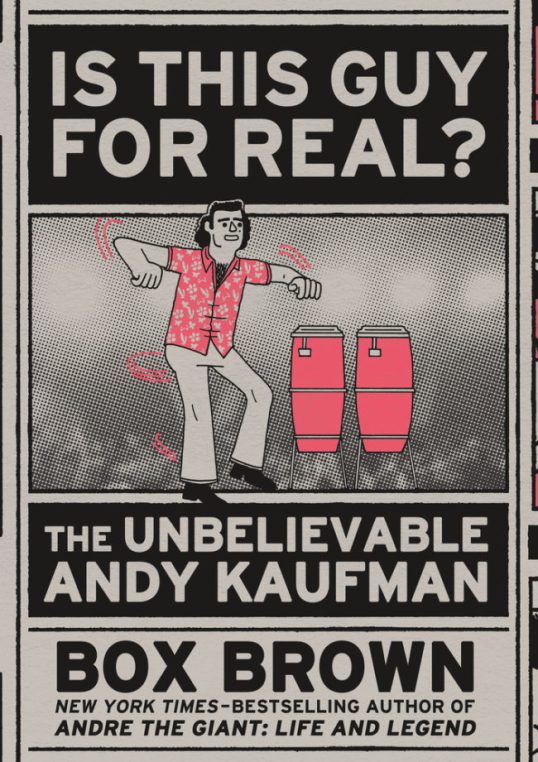
Yup, dadaist comedian Andy Kaufman is back under the media microscope in a big way, and it makes all the sense in the world that the cartoonist who chronicled the exploits of Andre The Giant and the history of Tetris in his previous volumes for First Second (who also publish his latest) would be the guy to do it. Kaufman’s never really left the spotlight entirely, of course — his tragically early death, combined with his singularly bizarre (and I mean that in the best possible way) career are more than enough to ensure that his legend will always carry on — but detailed looks at the man behind such memorable characters are Latka Gravas and Tony Clifton have been few and far between. Academy Award-winning director Milos Forman gave it his best shot with Man On The Moon nearly twenty years ago (the title being taken from R.E.M.’s song about Andy — which also never seems to go away completely), but despite a stellar starring turn from Jim Carrey, who absolutely inhabited the role (or should that be roles?) of Kaufman, I think most would agree that the film didn’t quite manage to pierce the veil of its own subject. And so now it falls to Brown to humanize this most alien of talents, and with his graphic novel Is This Guy For Real? The Unbelievable Andy Kaufman, he (spoiler alert) manages to do it — at least to a greater degree than has been done in the past.
The fleshing-out of important members of “Team Kaufman” such as writing partner/Tony Clifton fill-in Bob Zmuda, girlfriend Lynne Margulies, and manager George Shapiro go some way toward answering the books’ titular question for us, as does a more-than-cursory examination of the future comic’s early years and of his relationship with his family throughout his life. Brown being Brown, though, you pretty much know going in that one particular aspect of Kaufman’s career is going to get the most attention — his turn as a pro wrestling bad guy.
Cue some rather curious side-bars — such as Brown devoting something like 15 pages to a re-telling of the career of Kaufman’s main “nemesis,” Jerry “The King” Lawler , as well as a relating of the history and minutiae of Memphis regional wrestling in general — that very nearly run the book off the rails, and yet things come back together more or less just in time to prevent your interest from waning, even if it is rather curious, to say the least, that Brown spends more time on the Kaufman/Fred Blassie one-off video Breakfast With Blassie than he does on Kaufman’s entire five-year stint on Taxi. Go Figure.
Still, for every lapse in judgment like that, there’s at least one strong choice that Brown makes to ensure that your faith in his storytelling abilities never wanes. He makes it clear, for instance, that yes, Kaufman’s entire “thing” was an act (or, if you prefer, a series of acts), and shows enough of the comedian away/apart from his various ingeniously-constructed personas so that readers finally have a fairly solid handle on where Andy ends and, say, the “foreign guy,” or the misogynist wrestler, begins. This takes a deft touch, to be sure, but the disarmingly straight-forward script is aided in no small part by Brown’s smartly minimalist cartooning that draws special attention to differences in body language, facial expression, etc. that let you know when various “switches” are “flipped.” No one will ever accuse Brown of having a hugely varied repertoire as an illustrator, but his rote and basic forms and figures carry a degree of nuance that their ostensible “simplicity” wouldn’t necessarily be assumed to be capable of conveying. There’s also something of the frank and absurd to Brown’s style that fits this material perfectly — as if something utterly unique unto itself is being communicated in a visual language we can all understand.
A style as no-frills as Brown’s is also highly adaptable, and so whether Kaufman is portraying Elvis, Latka, Tony Clifton, or Lawler’s foil in the ring, the panels transition into each role nearly as seamlessly as did the comic himself. At the end of the day, though, Box Brown’s greatest triumph with Is This Guy For Real? The Unbelievable Andy Kaufman lies in the fact that, perhaps for the first time (and thanks, no doubt, to the assistance and participation he was able to obtain from the late performer’s family, particularly his brother, Michael), he finds a way to show Kaufman — at every phase of his life and career, from his earliest years to his ascension of showbiz’s heights to his painful final days — as his most complex and compelling character of all : himself.







 Through the Shattered Lens