Tonight’s episode of Ghost Story is full of stars!
Evil grandpa comes to visit his family and, with the help of voodoo cookies (you read that right), he tries to manipulate his deaf and mute granddaughter into helping him kill everyone! Grandpa is played by Melvyn Douglas. His granddaughter is played by Jodie Foster! And the script was written by none other than Robert Bloch and Richard Matheson!
This episode originally aired on November 10th, 1972.
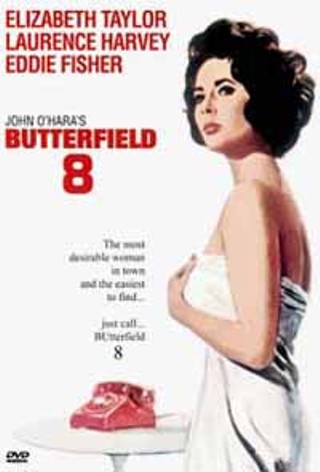
“Mama, face it,” Gloria Wandrous (Elizabeth Taylor) announces in the 1960 film, BUtterfield 8, “I was the slut of all time!”
Personally, I think Gloria is being a little bit too hard on herself. Certainly the film suggests, in its 1960 way, that she’s promiscuous and that she only sleeps with men for money but that doesn’t necessarily make her the slut of all time. For one thing, I would think that the slut of all time would have more options than just a wimpy pianist played by Eddie Fisher or a depressing, self-absorbed businessman played by Laurence Harvey.
“I still say it stinks,” Elizabeth Taylor said, almost immediately after winning her first Oscar for her performance in BUtterfield 8 and she’s kind of right. BUtterfield 8 is not a particularly good film, though not quite as bad as Taylor seemed to believe it to be.
Taylor won the Oscar after suffering a near fatal bout of pneumonia and having to undergo a tracheotomy. Along with saying that the film stunk, Taylor also often said that she only won her first Oscar because she nearly died. That may or may not be true but the thing is, Taylor’s the best thing in this overwritten and overheated mess of a movie. She certainly gives a better and more sympathetic performance than Laurence Harvey, who is cast as her married lover, Wilson Liggett. We’re meant to sympathize with Ligget but Harvey plays him as if he’s in a permanently sour mood and, after just a few minutes of listening to him bitch about every little thing, the viewer will get sick of him. It’s hard to really see what Gloria Wandrous sees in this whiny alcoholic.
Then again, the only other option that the film gives Gloria is Steve Carpenter, the pianist played by Eddie Fisher. Steve can’t decide if he’s in love with his boring girlfriend, Norma (Susan Oliver) or if he’s in love with Gloria. However, Steve has no problem letting Gloria borrow one of Norma’s dresses so that she can wear it when she goes home to visit her mother and I have to say that if I was Norma, Steve would be finding a new bed to sleep in after that. Gloria tells Steve that he needs to decide who he’s in love with but Steve jut can’t do it. Of course, in real life, Eddie Fisher left Debbie Reynolds so that he could marry Elizabeth Taylor. (A year or so later, Taylor left Fisher so that she could marry Richard Burton.)
BUtterfield 8 is one of those films that was undoubtedly considered to be daring when it was first released, seeing as how it acknowledged that people had sex without getting married first. (GASP!) Of course, though the film acknowledges that people have sex, it still makes sure to let us know that no one’s happy afterwards and that promiscuity eventually leads to death. (I mean, BUtterfield 8 may have taken risks but it still knew better than to defy the production code.) Seen today, the entire film is rather tame, talky, and slow but the star power of Elizabeth Taylor still comes through. The film opens with a lengthy sequence of Gloria getting ready for her day and, as you watch it and, more importantly, as you watch Elizabeth Taylor, you find yourself thinking that this is what a movie star is supposed to be. She dominates the film and she manages to credibly deliver even the most overheated pieces of dialogue. (Just try to imagine Jennifer Lawrence delivering the “slut of all time” line and you’ll immediately understand the difference between the movie stars of the past and the movie stars of the present. Of course, you could also say the same thing about trying to imagine a young Elizabeth Taylor in Silver Linings Playbook or The Hunger Games.) In fact, one could argue that Taylor’s performance is almost too good for the material. The film, in its 1960 way, suggests that Gloria would be better off if she just settled down but it’s impossible to imagine Taylor’s Gloria Wandrous settling for the stiffs played by Laurence Harvey and Eddie Fisher.
Though Elizabeth Taylor was correct about BUtterfield 8‘s overall quality, it’s still a good example of what star power can do for an otherwise mediocre film.
So, earlier today, I got off work early so I could go to Noon Mass with my sister and we both got our ashes. And I’m sure that will take some people by surprise because I’m not exactly the most faithful or devout of Catholics. But what can I say? I love the ornate ritual of it all.
And, as a part of my own personal ritual, I washed my forehead before I left the church. Erin and I had a great vegetarian lunch at Cafe Brazil and then we came home and I turned on the TV and what should be finishing up on TCM but the 1959 best picture nominee, The Nun’s Story. Fortunately, I had already set the DVR to record The Nun’s Story and so, on this most Catholic of days, I was able to watch this most Catholic of best picture nominees.
The Nun’s Story tells the story of Gaby (Audrey Hepburn), the daughter of a famous Belgian doctor (Dean Jagger). At the start of the film, Gaby has entered a convent because she wants to become a missionary nursing sister in the Belgian Congo. However, before Gaby can go to the Congo, she has to learn to give up her own rebellious streak and individual independence. Taking the name Sister Luke, she excels at her medical training but, because it is felt that she is still too independently minded, she is not sent to the Congo but instead assigned to work in a mental hospital. It’s there that her independent streak nearly gets her killed when she is fooled by a dangerous patient who claims to be the Archangel Gabriel. It is only after she takes her final vows that Sister Luke is finally sent to the Congo and it is there that she’s forced to work with the abrasive agnostic Dr. Fortunati (Peter Finch). Of course, as Sister Luke goes through her own spiritual struggles, the world inches closer and closer to the start of a second world war. When war does break out, Sister Luke finds herself torn between her vow of obedience (which includes remaining political neutral) and the realities of living in a country that’s been occupied by the Nazis.
1959 was apparently a good year for religious films. Not only did Ben-Hur win best picture, but The Nun’s Story also received 8 nominations. Reportedly, The Nun’s Story was the most financially successful film to be released by Warner Bros, up to that point. If Wikipedia is to be believed, it was also Audrey Hepburn’s personal favorite of the many movies that she made.
When seen today, probably the first thing that people notice about The Nun’s Story is that it’s extremely long and occasionally rather slow. The film follows Gaby from the minute she enters the convent to the moment that she makes her final choice about whether to be obedient to herself or to her vows and, during that time, it examines every single detail of her life in glorious Technicolor. A lot of emphasis is put on the rituals that Sister Luke goes through on her way to taking her final vows. Now, if you’re like me, all of the rituals are fascinating to watch and produce a whole host of conflicting emotions. Even as I found myself admiring Sister Luke’s dedication and her sacrifice, I still kept wondering — much as she did — if it was all really worth giving up her independence. But, I also have to admit that I found myself wondering if someone from a Protestant background would feel the same way.
To a certain extent, I really hate to say that you probably have to come from a Catholic background to truly enjoy any film. But I certainly think that’s the case with The Nun’s Story. But, even Protestants and skeptics will appreciate Audrey Hepburn’s wonderful lead performance. She keeps this film grounded and makes her mostly internal conflict of faith compelling. In a career that was full of great performance, this is one of Audrey’s best.
“Just remember: men can see much better than they can think. Believe me, a low-cut neckline does more for a girl’s future than the entire Britannica encyclopedia.” — Betty (Terry Moore), speaking the truth in Peyton Place (1957)
Sex! Sin! Secrets! Scandal! It’s just another day in the life of Peyton Place, the most sordid little town this side of Kings Row! It’s also the setting of the 1957 best picture nominee, Peyton Place.
Peyton Place is a seemingly idyllic little village in New England. The town is divided by railroad tracks and how your fellow townspeople views you literally depends on which side of the tracks you live on. As the film itself shows us, the right side of tracks features pretty houses and primly dressed starlets. The wrong side of the tracks features shacks and a bunch of people who look like the ancestors of the cast of Winter’s Bone. The difference in appearance is not particularly subtle (but then again, the same thing could be said for the entire film) but, regardless of which side of the tracks live on, chances are that you’re keeping a few secrets from the rest of the town.
On the right side of the tracks, you can find Constance McKenzie (played by Lana Turner, who is just about as convincing as a New England matron as you would expect a glamorous Hollywood star to be), a dress shop owner who is so prim and proper that she literally flies into a rage when she comes across her daughter kissing a boy. Could it be the Constance’s repression is the result of her once having been a rich man’s mistress? And will the new high school principal, the progressive and rather dull Mr. Rossi (Lee Phillips), still love her despite her sordid past?
Constance’s daughter is Allison (Diane Varsi) and poor Allison just can not understand why her mother is so overprotective. Will Allison ever find true love with the painfully shy Norman Page (Russ Tamblyn) or will she be forced to settle for someone like the rich and irresponsible Rodney Harrington (Barry Coe)?
Rodney, for his part, is in love with Betty (Terry Moore), a girl from the wrong sides of the tracks. Rodney’s father (Leon Ames) is the richest man in town and makes it clear that he will not allow his son to marry someone with a “reputation.” Will Rodney get a chance to redeem himself by going off to fight in World War II?
And what will happen when Rodney and Betty go skinny dipping and are spotted by a local town gossip who promptly mistakes them for Norman and Allison? Reputations are at stake here!
Meanwhile, over on the bad side of the tracks, Lucas Cross (Arthur Kennedy) sits in his shack and drinks and thinks about how the world has failed him. His long-suffering wife (Betty Field) works as housekeeper for the McKenzie family. Meanwhile, his abused daughter Selena (Hope Lange, giving the film’s best performance) is Allison’s best friend. When Lucas’s attempt to rape Selena leads to a violent death, the sins and hypocrisy of Peyton Place are revealed to everyone.
Peyton Place is a big, long movie, full of overdramatic characters, overheated dialogue, and over-the-top plotting and, for that reason, I absolutely love it! Apparently, the film was quite controversial in its day and the scenes where Arthur Kennedy attacks Hope Lange still have the power to disturb. However, the main reason why I enjoy Petyon Place is because anything that could happen in Peyton Place does happen in Peyton Place.
Seriously, how can you not love a film this sordid and melodramatic?


 Through the Shattered Lens