Film Review: Lawless (dir. by John Hillcoat)


For most of 2012, I was excited about seeing one film and that film was Lawless.  Why was I so excited about seeing Lawless?  Well, first off, I had spent most of the year being bombarded by the film’s genuinely exciting trailer.  Seriously, that trailer was more entertaining than 80% of the film that I’ve seen this year.  Judging from the trailer, the film was a period piece that took place during one of my favorite decades, the 1920s.  The film dealt with bootleggers and I’m proud to say that there’s a few of those on my family tree.  The trailer also featured Gary Oldman firing a tommy gun, Jessica Chastain dancing, Guy Pearce acting odd, and Tom Hardy being all tough and Tom Hardy-like.

When I watched that trailer, it didn’t matter that the film starred Shia LeBouf (who has always struck me as being a bit of a whiney actor).   It didn’t matter that director John Hillcoat previously wasted good material with his adaptation of The Road.  It didn’t even matter that the film was greeted with indifference at Cannes.  “Oh,” I told myself, “that’s just the French critics being reflexively anti-American.  Lawless has Truffaut written all over it…”

The only thing that tempered my enthusiasm for Lawless was when the first of the 30-second commercials started to appear on television.  As opposed to the exciting trailer, these commercials made the film seem rather average and they now put less emphasis on the film’s stylistic excesses and more on the fact that the film was apparently “based on a true story.”  The tone of the television spots was so different from that of the theatrical trailer that it was hard not to conclude that the PR geniuses at the Weinstein Company weren’t sure how to sell the film.  I found myself wondering if Lawless would be as confused as its ad campaign.

Last Friday, I finally saw Lawless and judged for myself.

Lawless tells the story of the three Bondurant brothers.  In the 1920s, these brothers are succesful bootleggers who work out of rural Virginia and who maintain a peaceful coexistence with local law enforcement through a steady supply of bribes.  The oldest brother is a taciturn World War I veteran named Forrest (played by Tom Hardy.)  The youngest brother is Jack (Shia LeBouf), who idolizes violent gangsters like Floyd Banner (Gary Oldman).  The middle brother is Howard (Jason Clarke).  Howard spends most of the movie yelling.

Things are peaceful for the Bondurant brothers until, one day, a corrupt and oddly fastidious prohibition agent named Rakes (Guy Pearce) shows up and demands a cut of whatever profit the brothers make from their bootlegging.  Forrest refuses and soon Rakes and the Bondurants are engaged in a very violent and bloody war.

That war, however, doesn’t stop Jack from pursuing a relationship with a rebellious preacher’s daughter (played by Mia Wasikowska).  Meanwhile, Forrest hires a new waitress to work at the family bar.  Maggie (Jessica Chastain) is a former dancer from Chicago and soon, she and Forrest are cautiously pursuing their own relationship.  As for Howard, he yells a lot.

Lawless is an odd film.  The actors are all well-cast and Shia LeBouf probably gives his first genuinely good performance here.  The film’s violent action sequences are well-choreographed and one could even argue that, in the character of Rakes, the film is drawing a very relevent parallel to America’s own modern-day war on drugs.  And yet, as I watched the film, I felt oddly detached from the action onscreen and the Bondurants never came to life for me as individual characters that were worth rooting for.  I think the ultimate problem with Lawless is the same problem that Hillcoat ran into with The Road.  Lawless is a film full of beautiful visuals and striking sequences but none of it seems to naturally flow together.  As a result, the film is visually striking but narratively weak.

As a result, Lawless is ultimately a case of the triumph of style over substance.  How you react to the film will probably depend on how much importance you put into either one of those two elements.  If you’re willing to accept the film simply as a collection of striking visuals (as I was), you’ll find a lot to enjoy in Lawless but if you’re looking for something deeper, you’ll probably be disappointed.

You’re also going to be disappointed if you go to Lawless expecting to see a Gary Oldman film because Oldman is only in about four minutes of the film, his best scene is in the trailer, and his character lacks that touch of eccentric charisma that Oldman typically brings to his villains.  Instead, it falls to Guy Pearce to be eccentric and evil and he does a great job.  Sporting an accent as odd as his haircut, Pearce brings a brilliantly perverse jolt to even the simplest of line readings.  Lawless is at its best when its content to just let Guy Pearce play at being Gary Oldman.
2011: The Year In Film So Far


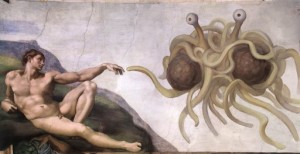
Greetings from the former home of the Flying Spaghetti Monster, Crossville, Tennessee!  Yes, Jeff and I are on our way back to Texas.  It’s been a wonderful vacation but I have to admit, I’m looking forward to seeing a movie at the Plano (or Dallas) Angelika on Sunday.  I’m not sure which movie but, as long as it’s a movie, I’ll be a happy girl.

That’s because I love movies.  Movies are what I schedule my life around.  My birth certificate says I was born in 1985 but I know that I was born in the year of Brazil, Prizzi’s Honor, Blood Simple, and After Hours.  If each year can be judged by the quality of the films then how is 2011 looking now that we’ve reached (and passed) the halfway mark?

Right now, as I sit here in this hotel room in my panties and my beloved Pirates shirt, I’d say 2011 is shaping up to be an average year.  There’s been a few films that I loved and there’s been a few that I’ve absolutely despised but for the most part, this year is shaping up to be comfortable and rather bland. 

Much as I did last year at this time, I’m going to take a few minutes to mention a few high points (and low points) of 2011 so far.  Agree?  Disagree?  Make your opinion known.

Best Film (So Far): Hanna, without a doubt.  Joe Wright’s stylish thriller hasn’t gotten half the acclaim that it deserves.  Runners-ups: The Cave of Forgotten Dreams, Incendies, Jane Eyre, Kill The Irishman, Of Gods and Men, Red Riding Hood, Sucker Punch, The Source Code, Super, 13 Assassins, The Tree of Life, Win Win, X-Men: First Class

Best Male Performance of the Year (so far): Paul Giamatti in Win Win.  Runners up: Bobby Cannavale in Win Win, Joseph Gordon-Levitt in Hesher, Matthew McConaughey in The Lincoln Lawyer, and Rainn Wilson in Super.

Best Female Performance Of The Year (so far): Sairose Ronan in Hanna. Runners up: Lubna Azabal for Incendies, Ellen Page for Super, Amy Ryan for Win Win, and Mia Wasikowska for Jane Eyre.

Best Ending (so far): The charmingly low budget zombie film that runs over the end credits of Super 8.

Best Horror Film (so far): Insidious.

Most Underrated Film Of The Year (so far): A tie, between Sucker Punch and Red Riding HoodRed Riding Hood, as a matter of fact, was so underrated that I had to see it a second time before I really appreciated it.

Best Bad Film: Beastly.  Silly but kinda fun in a really, really odd sort of way.

Worst Film of The Year (so far): The Conspirator, a bore of a movie that was apparently filmed through a filter of grime.  Runners up: Priest, The Beaver, Battle L.A. (sorry Arleigh, Leonard, and Erin), Season of the Witch, Your Highness, and The Green Lantern.

Biggest Example of A Missed Opportunity This Year (So Far): The Adjustment Bureau, which could have been a great Eternal Sunshine Of The Spotless Mind-type of film but instead, turned out to be just another predictable and shallow example of new age triteness.

The Get-Over-It Award For The First Half Of 2011: The Conspirator, a film that attempts to be relavent by using the 19th Century to comment on political issues from 2006.

My Prediction For Which Film Will Be The Most Overrated Of 2011: Last year, I predicted The Social Network and, surprise surprise, I was right.  In fact, the folks at AwardsDaily.com are still bitching about how The Social Network lost best picture to The King’s Speech.  (By the way, a few other choice pieces of wisdom from Awards Daily: The Beaver is Jodie Foster’s best film ever and only elitists should be allowed to comment on film.)  This year, I’m going to predict that the most overrated film of 2011 will be the unnecessary remake of The Girl With The Dragon Tattoo.

My Prediction For What Will Be The Worst Film Of 2011: The winner here is another remake — Rod Lurie is remaking Straw Dogs and this time, he’s setting it in the South.  You know what?  Go back to Vermont and fuck yourself ragged, you dumbass, blue state elitist.  

So, that’s 2011 so far.  There’s still quite a few films that I’m looking forward to seeing: Another Earth, The Debt, Don’t Be Afraid of the Dark; Tinker, Tailor, Soldier, Spy; Hugo, and most of all, Harry Potter and the Deathly Hallows, Part 2.

Lisa Marie Does Jane Eyre (dir. by Cary Fukunaga)


Hey, ladies!  Did your man make you sit through Battle Los Angeles?  Did he spend the whole time going, “Oh Hell yeah!” every time something exploded?  Did he insist on repeatedly going, “Hoorah!” after the movie ended? 

You want to get revenge?  Well, here’s what you’re going to do.  You’re going to go up to him and you’re going to tell him, in the sweetest way possible, that he’s going to take you to see the latest film adaptation of Jane Eyre.  Tell him that this is a revisionist take on the story and that its full of scenes of lesbian flirtation between Jane and Helen.  Of course, that’s a lie but this is the same guy who just gave you a card for Valentine’s Day.  You don’t owe him a damn thing.

And who knows?  He might find something to enjoy in Jane Eyre because it’s one of the best films of 2011 so far.  (Though I doubt it because Jane Eyre really is an unapologetic chick flick.)

Charlotte Bronte’s Jane Eyre is one of those books that has a timeless appeal to it.  I don’t know if it was the first novel to feature a young governess isolated in a creepy mansion but it certainly set the standard that all other gothic romances would have to meet.  The first film version was a silent film from 1910 and since then, Jane Eyre and the enigmatic Mr. Rochester have been played by everyone from Joan Fontaine and Orson Welles to Susannah York and George C. Scott to Charlotte Gainsbourg and William Hurt.  In this latest version, Jane is played Mia Wasikowska and Rochester by Michael Fassebender and the end result is probably the best film version of Jane Eyre to date.

With a few notable exceptions, the film is faithful to Bronte’s book.  Jane is an orphan who, after being mistreated by her wealthy aunt (Sally Hawkins, cast very much against type), is sent away to a “charity school” where she is again mistreated and abused until finally, she turns 18 and she leaves the school to take a job as the governess for a young French girl named Adele (Romy Settbon Moore).  Adele is the ward of the mysterious, arrogant, surly, but oh so hot Mr. Rochester.  Though Rochester is, at first, a rather fearsome employer, he soon starts to warm up to Jane and the two of them defy the 19th century class system by falling in love.  However, not everything is perfect.  Jane discovers that Rochester has secrets of his own and then there’s the constant sound of footsteps and moaning that seem to echo through the old mansion late at night.  Fires are mysteriously set.  A guest is savagely attacked in his sleep.  When Jane discovers the truth, she also discovers that nothing is as perfect as it seems.

One reason why the original novel has remained such an important work (and one that is still readable as opposed to say, The Scarlet Letter) is because Bronte used her narrative to tell several different stories.  Me, I’ve always related to the character of Jane and her struggle to maintain her independence in a society where women are not encouraged to think for themselves.  Others see the story as an early soap opera, a melodramatic romance in which true love conquers all.  There’s also an argument to be made that the book is primarily meant to be an examination of the 19th century British class system.  Of course, if that’s all a bit too much for you, you can always just read Jane Eyre as an early “haunted house” story.

The genius of this latest film adaptation is to be found in the way that director Cary Fukunaga and screenwriter Moira Buffini brings all of these various themes to life while still crafting a compelling and entertaining movie out of them.  Perhaps the biggest change they made is to begin their film near the book’s conclusion.  They then proceed to tell the story of Jane’s childhood and romance with Rochester through flashback, a move that recreates the book’s ground-breaking 1st person narration (ground breaking because, before Jane Eyre, it was rare that any female character was allowed to tell her own tale).  While some may complain that the 1st half of the book is pretty much reduced down to 15 minutes of screen time, Fukunaga and Buffini pick their scenes carefully and, most importantly. the essence of Bronte’s narrative comes through if not the exact details.

As a director, Fukunaga plays up the gothic aspects of the story.  Whenever Jane ventures outside, the skies are overcast and you can almost literally feel the chill of a desolate wind.  Meanwhile, the interior scenes are so full of menacing shadows and expressionistic camera angles that Fukunaga’s film almost feels like the noir version of Jane Eyre.  By doing so, this Jane Eyre becomes not just a prototypical gothic love story but instead, it becomes a true coming-of-age story with the mysteries of Mr. Rochester coming to symbolize the mysteries of life itself.

Fukanaga is helped by some excellent performances.  Jamie Bell and Judi Dench — playing a clergyman and a housekeeper respectfully — both bring life to characters that have been reduced to stereotypes in previous versions of this story.  Fassebender is a perfect Rochester, displaying both strength and weakness in equally believable measures.  However, the film’s success or failure obviously lies with Mia Wasikowska’s performance in the title role and this is Jane Eyre’s crowning triumph.  Wasikowska gives a fiercely, intelligent performance.  Her Jane is strong-willed, indepedent, and intelligent without ever becoming so idealized as to be unbelievable.  If Jane Eyre was the first strong woman to appear in literature, Wasikowska gives a performance that is equally strong.  There have been over 20 Jane Eyres since 1910 and Mia Wasikowska may very well be the best.