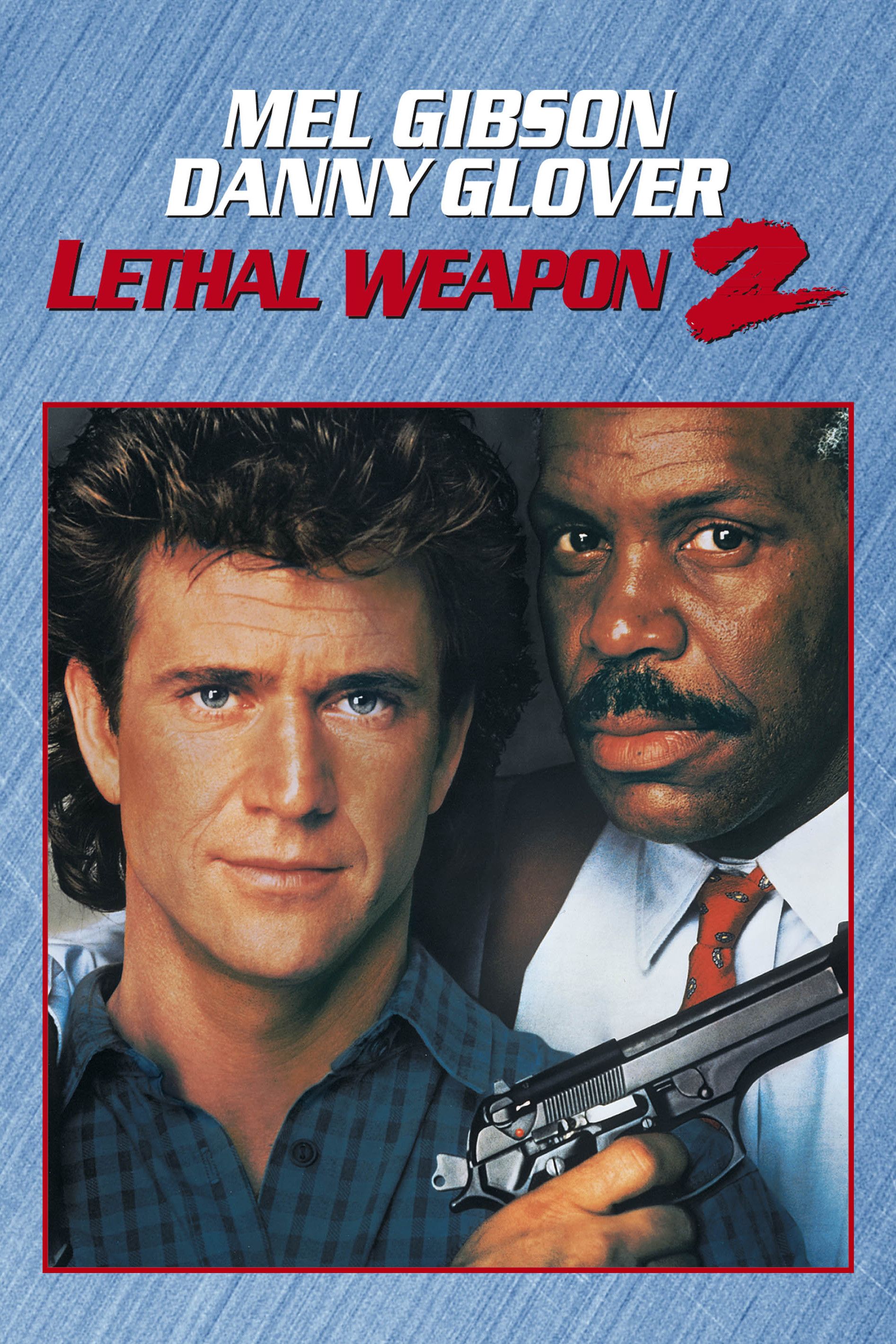
Review: Lethal Weapon 2 (dir. by Richard Donner)


“We’re back, we’re bad. You’re black, I’m mad. Let’s go!” — Martin Riggs

Lethal Weapon 2 is the kind of sequel that doesn’t really try to reinvent what worked the first time so much as crank the volume on everything: the action is bigger, the jokes come faster, and the chaos feels almost constant. Depending on what you loved about Lethal Weapon, that approach delivers more of the high-energy partnership in a flashier package. It’s a confident, very entertaining 80s action movie that knows it’s a sequel and leans into the spectacle that status allows.

Plot-wise, Lethal Weapon 2 wastes no time reminding you what this world feels like. It drops Riggs and Murtaugh into a wild car chase almost immediately, and from there the story locks onto a case involving South African diplomats hiding behind apartheid-era “diplomatic immunity” while running a massive drug and money-laundering operation. It’s a cleaner, more high-concept hook than the original’s murkier web of Vietnam vets and heroin smuggling, and the script makes the villains broad on purpose, almost cartoonishly arrogant, to give the audience someone very easy to hate. The trade-off is that the plot feels a bit more mechanical this time; you always know who the bad guys are and what the destination is, so the film’s real energy comes from the detours, jokes, and set-pieces rather than any mystery.

One of the big shifts from Lethal Weapon to Lethal Weapon 2 is tone. The first film balanced brutal violence and dark humor with a surprisingly heavy focus on Riggs’ suicidal grief and Murtaugh’s fear of getting too old for the job. The sequel keeps those elements in the background but leans harder into banter, slapstick timing, and outrageous gags like the now-famous exploding toilet sequence, with Richard Donner’s direction pushing the script toward action comedy. It’s still R-rated and not shy about blood or cruelty, but the emotional intensity is dialed down compared to the original’s raw edges.

Mel Gibson and Danny Glover remain the anchor, and their chemistry is as sharp as ever. Gibson’s Riggs is still reckless and unhinged, but there’s a looser, more playful side to him this time; he’s less haunted and more of a live-wire prankster until the story gives him something personal to latch onto. Glover’s Murtaugh continues to be the grounded center, constantly exasperated and always half a step away from just walking off the job, and the film has a lot of fun putting his straight-man persona through increasingly humiliating situations while still letting him be competent when it counts. Compared to the first film, where their partnership slowly thawed from suspicion to genuine trust, Lethal Weapon 2 starts from “these guys are already a team” and builds its best moments from how comfortably they now bounce off each other.

The biggest new ingredient is Joe Pesci as Leo Getz, a federal witness turned tagalong who basically functions as the franchise’s third stooge. Pesci leans into the motor-mouthed, paranoid, endlessly complaining energy that would become his signature, and his presence tips some scenes from gritty cop story into broad comedy. He undercuts tension at times, but he also gives the movie a different rhythm, especially in the quieter in-between beats where the first film might have lingered more on Riggs’ inner damage.

In terms of action, Donner clearly has more money and confidence to play with, and it shows. The chases are bigger, the shootouts are staged with a slicker sense of geography, and there’s a steady escalation in scale that makes the film feel like a genuine summer sequel rather than just another mid-budget cop movie. The original had a grimy, street-level intensity, with brutal fistfights and sudden bursts of violence; Lethal Weapon 2 is more interested in creative set-pieces, crowd-pleasing payoffs, and moments designed to make an audience cheer. It’s less intimate, but it is rarely dull.

Where the film lands in a more complicated space is its attempt to keep some emotional stakes alive while also going bigger and funnier. Riggs’ grief over the loss of his wife is still part of his character, and the story finds ways to poke at that wound again, including a new relationship that lets him imagine some kind of future beyond the constant death wish. Those beats are there to echo what worked so well in the first movie, but they have less room to breathe, often getting squeezed between an action scene and a joke instead of shaping the entire film’s tone. You can feel the push and pull between wanting to keep the darker emotional spine and delivering the kind of lighter, more easily marketable sequel a studio would understandably chase.

The villains themselves are effective in that pulpy 80s way: not nuanced, but very punchable. Arjen Rudd, with his smug talk of “diplomatic immunity,” is a villain designed to make audiences grind their teeth, and his main henchman adds a physically intimidating, quietly sadistic presence to the mix. Compared to the original’s more grounded ex-military antagonists, these guys feel one step closer to Bond territory, and that shift mirrors the film’s overall move toward heightened, almost comic-book stakes. What the sequel loses in plausibility, it gains in revenge-fantasy satisfaction.

When stacked directly against Lethal Weapon, the second film feels like a classic case of “if you liked hanging out with these characters once, here’s more time with them.” The original is tighter, more emotionally focused, and arguably more distinctive, with a stronger sense of danger and genuine unpredictability around Riggs’ mental state. Lethal Weapon 2 smooths some of those jagged edges and replaces them with quips, bigger set-pieces, and a more overtly crowd-pleasing structure, which makes it an easier, more consistently fun watch but also a slightly less resonant one. It is still a good film, but in many ways it is also the moment where the franchise shifts from a character-driven cop thriller with action to a full-on action-comedy machine.

As a fair, middle-of-the-road assessment, Lethal Weapon 2 works very well on its own terms and delivers exactly what most people want out of a late-80s buddy-cop sequel. The chemistry is intact, the action is energetic, and the film moves with the kind of confident pace that never really lets you get bored. At the same time, the tonal tilt toward broader humor and more cartoonish villains means it doesn’t quite have the same staying power or emotional punch as Lethal Weapon, especially if what hooked you the first time was how wounded and volatile it all felt. For fans of the original, it’s an enjoyable continuation—a louder, flashier second round that may not hit as hard, but still knows how to entertain.
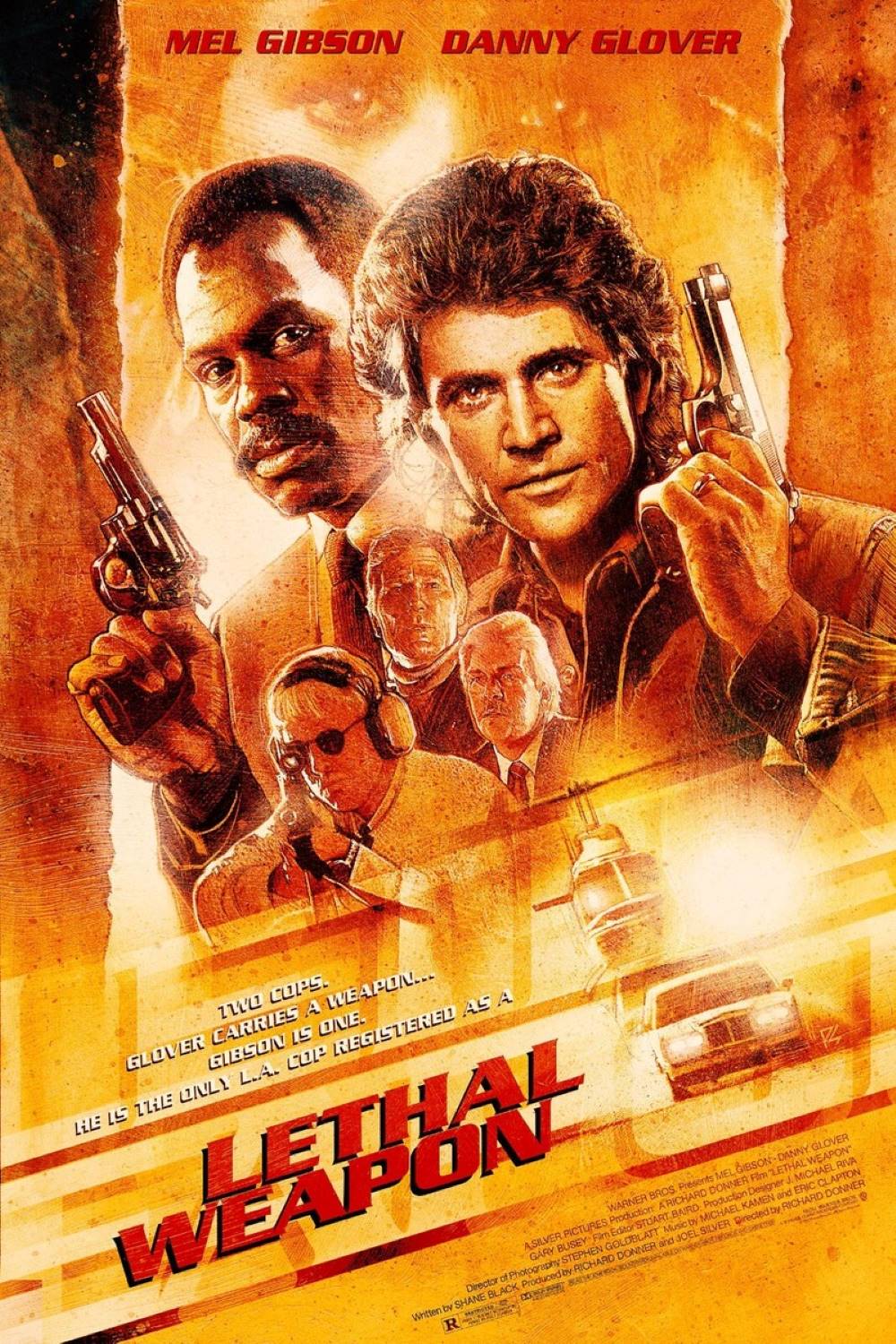
Review: Lethal Weapon (dir. by Richard Donner)


“I’m too old for this shit.” — Roger Murtaugh

Lethal Weapon is one of those action movies that looks like pure genre formula on paper but somehow plays like lightning in a bottle on screen. From the opening moments, it feels like a film that knows exactly what kind of ride it wants to deliver and leans into that mission with confidence, attitude, and just enough heart to make the bullets and explosions actually matter.

The premise itself is as straightforward as they come, and that simplicity is part of the charm. Martin Riggs is the textbook “cop on the edge,” a former special forces sniper whose life has completely fallen apart after the death of his wife. He’s volatile, depressed, and teetering on the edge of suicidal, which gives everything he does an extra layer of danger. On the other side of the pairing is Roger Murtaugh, a seasoned detective staring down his 50th birthday, trying to balance a long career in homicide with the quiet, constant pull of his family at home. When these two are thrown together and assigned to a case involving drugs, dead bodies, and shady ex-military criminals, the story plays out across familiar beats: suspicious deaths, escalating confrontations, close calls, and a trail that leads them deeper into a dangerous operation. The crime plot is pulpy and direct rather than twisty, but the film uses it as a sturdy framework rather than the main point of interest, keeping the investigation moving while the characters come into focus. Much of that sharp setup and snappy progression comes from Shane Black’s script, which crackles with knowing genre savvy, pitch-perfect banter, and a keen eye for how personal pain fuels action-hero antics.

What really makes Lethal Weapon feel alive is how much time it spends letting Riggs and Murtaugh exist as people before they fully morph into the “classic duo” that pop culture remembers. The film doesn’t rush past the small stuff. Riggs is introduced living in a rundown trailer on the beach with his scruffy dog for company, drinking and stumbling through life with the casual recklessness of someone who genuinely doesn’t care if he sees tomorrow. Those early moments of him alone, flirting with self-destruction, give his later heroics a sense of tragic context: he’s not just fearless, he’s half-convinced he has nothing left to lose. Murtaugh’s introduction is a complete contrast: a crowded home, kids, a loving wife, and the kind of loud, chaotic domestic life that’s full of relatable irritation and warmth. Seeing him grumble through birthday milestones or awkwardly handle family situations does more for his character than any speech about his years on the force could. These slices of everyday life build a strong emotional foundation so that when the bullets start flying, there’s something at stake beyond catching bad guys. Black’s writing shines here, weaving those intimate details into the thriller beats without ever feeling forced or preachy.

The chemistry between Mel Gibson and Danny Glover is the film’s true secret weapon. Gibson plays Riggs as an unpredictable live wire, able to flip from goofy physical comedy to chilling seriousness in an instant. He sells the idea that this is a man barely keeping it together, yet still razor-sharp when it comes to the job. There’s a constant sense that his jokes and antics are a flimsy barrier over something very raw. Glover, by contrast, keeps Murtaugh grounded and human; his performance is packed with little sighs, muttered reactions, and weary facial expressions that speak volumes. He comes across as a guy who has seen too much, loves his family, and genuinely wants to do the right thing, but is exhausted by how hard that is in practice. Their initial friction hits the expected “mismatched partners” beats: Murtaugh thinks Riggs is unstable and dangerous, while Riggs treats Murtaugh like a fussy old man who doesn’t get it. Yet as they move through stakeouts, interrogations, and gunfights, their banter evolves from pure irritation into an easy rhythm filled with barbs, mutual respect, and eventually real affection. Shane Black’s dialogue is the glue for all of it—witty, profane, and laced with just enough vulnerability to make the laughs land harder and the tension feel real.

Richard Donner’s direction is a huge part of why all of this clicks as well as it does. He has a knack for blending big, commercial genre instincts with an eye for character detail, and Lethal Weapon is a textbook example of that balance. He stages action scenes with clear geography and rhythm, so even when things get loud and chaotic, you always know where you are and what everyone is trying to do. At the same time, he’s just as interested in the quiet beats: a pause on Riggs’ face after a joke lands flat, Murtaugh’s body language when he walks into his noisy home after a brutal day, the way a conversation in a car can shift from banter to confession in a couple of lines. Donner keeps the film moving at a brisk pace, but he knows when to let a shot linger or a silence hang long enough to tell you what the characters can’t quite say out loud. His tonal control—jumping from dark to funny to tense without completely losing the thread—is a big reason the movie doesn’t collapse under its own genre juggling, and it pairs beautifully with Black’s script that sets up those shifts so precisely.

Tonally, Lethal Weapon walks a tricky line, and that’s a big part of its identity. On one hand, this is a story with genuinely dark undercurrents. Riggs’ suicidal impulses are not a throwaway character quirk; the film gives time to scenes where he nearly acts on them and struggles in a very raw way with his grief and loneliness. The case they’re working breaks open into territory involving drugs, exploitation, and violence that’s sometimes nasty rather than cleanly heroic. On the other hand, the film is full of humor, ranging from quick one-liners to broad physical bits. The Murtaugh household provides a lot of that levity: awkward conversations with his kids, Riggs stumbling through family dynamics, and the contrast between domestic calm and the chaos of the streets. The movie often jumps from heavy emotional beats to comedic ones and back again, and while the transitions can be abrupt, that mixture is part of what keeps it from feeling like just another grim cop story. The laughter doesn’t erase the darker material, but it does give the movie a sense of momentum and charm that keeps it entertaining instead of oppressive. Black’s screenplay nails this push-pull, using humor as both release valve and revelation.

As an action film, Lethal Weapon delivers a steady run of sequences that are energetic, clear, and tactile. The action is built around physical stunts, dangerous-looking falls, and gunfights that feel chaotic without becoming incoherent. One memorable sequence has Riggs dealing with a jumper on a rooftop in a way that instantly tells you everything about his mentality and willingness to risk himself. Another set piece in a more open, exposed environment lets the film escalate tension step by step before violence finally erupts. Through it all, Donner keeps a strong sense of spatial clarity; you can track where the characters are, what they’re trying to do, and how each decision raises the stakes. The fights feel scrappy and painful rather than overly slick, and that slightly rough quality actually works in the movie’s favor, making each impact land harder. Riggs, especially, moves like a human weapon, hurling himself into situations with a recklessness that ties directly into his psychological state, all fueled by Black’s clever plotting that makes those risks feel personal.

Underneath the gunfire and explosions, there’s a surprisingly sturdy emotional core tying everything together. Riggs’ grief isn’t just window dressing; it’s the lens through which his every decision makes sense. The movie doesn’t lecture you about what he’s feeling, but it shows it—through quiet moments alone, through the anger that erupts at all the wrong times, and through the way he throws his body into danger almost as if daring the world to take him out. Murtaugh’s arc is more subtle but still strongly drawn. He’s at an age where he has to confront the reality that he can’t keep pace with younger, more reckless colleagues forever, and yet his sense of duty keeps pulling him into situations where his family might lose him. Throughout their investigation, Murtaugh’s protective instincts—toward his loved ones, toward Riggs, and toward innocent people caught in the crossfire—become as important as his skills as a detective.

The relationship that develops between Riggs and Murtaugh is the heart of the film and the main reason it sticks in the memory. At first, Murtaugh just wants to survive partnering with a man he genuinely believes might be unhinged, while Riggs seems to treat their pairing as just another chaotic twist in a life already off the rails. As they trade confessions, back each other up in tight spots, and slowly understand what the other is carrying, their bond shifts into something like brotherhood. Murtaugh becomes a kind of anchor for Riggs, offering not just backup in a fight but also a place at the table, both literally and figuratively. Riggs, in turn, forces Murtaugh out of his comfort zone, reminding him that he still has plenty of courage and fire left in him. The film doesn’t turn their connection into a sentimental soapbox, but it lets small moments—a shared laugh after a narrow escape, a quiet conversation after the chaos—do the emotional lifting, with Black’s words giving those scenes their understated power.

If there’s a clear weak spot, it’s that the villains are fairly thinly drawn, operating more as looming threats than fully realized characters. They are dangerous and organized, capable of serious brutality and clearly involved in serious criminal operations, but the movie doesn’t spend much time exploring their motivations or inner lives. They’re the kind of antagonists designed to be obstacles: formidable enough to make the heroes’ victories feel earned, but not so complex that they distract from the central duo. For a character-driven action film, that trade-off mostly works. When Lethal Weapon is firing on all cylinders, the tension doesn’t come from wondering what the bad guys will do next so much as from seeing how Riggs and Murtaugh will handle whatever gets thrown at them and what that reveals about who they are.

Structurally, the film keeps a tight pace, always nudging the story forward even when it pauses for character beats. Expository scenes rarely feel like dry info dumps; they’re often laced with jokes, personal jabs, or subtle shifts in how the two leads relate to each other. The downtime moments—a quiet drink, a shared meal, a conversation in a car between partners who would rather pretend they’re fine—are as important as the louder ones. By the time the case ramps up to its most intense passages, there’s been enough time with these characters to care less about the mechanics of the plot and more about whether these two damaged, stubborn men can come out the other side with something to hold onto.

What ultimately makes Lethal Weapon work so well is that it doesn’t settle for being just a checklist of genre requirements. Yes, it has gunfights, dark humor, car chases, and tough-guy posturing. But wrapped around all of that is a story about grief, aging, loyalty, and how unlikely partnerships can change the trajectory of a person’s life. Donner’s steady hand behind the camera, Shane Black’s razor-sharp script, and the powerhouse performances turn what could have been a forgettable cop thriller into something much more memorable. For anyone who enjoys action movies that care as much about the people pulling the triggers as the bullets they fire, Lethal Weapon stands out as a defining entry in the buddy-cop mold, powered by the messy, heartfelt dynamic at its center and the sure-footed craftsmanship that brings it all together.

Brad’s Scene of the Day – Jet Li in LETHAL WEAPON 4 (1998)!


Happy 62nd Birthday, Jet Li!!

I had never heard of Jet Li until I saw a trailer for LETHAL WEAPON 4 that mentioned him. Now, as a rabid fan of Hong Kong cinema, I consider him a legend. And the scene that started it all for me is this badass scene where he dismantles Riggs, Murtaugh, their guns and their family members. Enjoy, my friends!

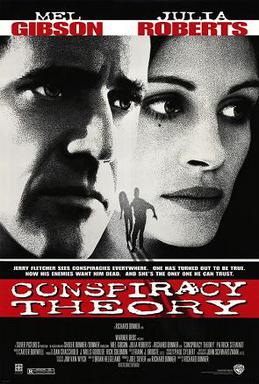
Conspiracy Theory (1997, directed by Richard Donner)


Jerry (Mel Gibson) is the taxi driver that most people would dread getting stuck with.  He’s obsessed with conspiracies, ranting and raving as he drives his passengers around New York City.  The moon landing was fake, he says.  The New World Order is real.  Fluoridation in mind control.  Freemasons control the world.  Black helicopters patrol the skies.  Implausibly, Justice Department lawyer Alice Sutton (Julia Roberts) enjoys listening to Jerry’s paranoid monologues but she finds them to be a lot less amusing when they turn out to be true.  Soon, she and Jerry are being pursued by Dr. Jonas (Patrick Stewart), the head of MK-Ultra and the man who bred Jerry to eventually become an assassin.

Conspiracy Theory has a good premise and a great Mel Gibson performance and Patrick Stewart is entertaining as the main bad guy.  Though it really is just a slightly above average 90s action film, Conspiracy Theory is still a movie that seems prophetic.  Many of Jerry’s theories were obscure and not well-known when the movie was first released, nearly 30 years ago.  Today, a lot of them have been popularized by social media and podcasts.  Conspiracies have gone mainstream.  Jerry would love listening to Joe Rogan today.  In fact, Jerry would probably have a podcast of his own.  Because the movie was released in 1997, a lot of the things that Jerry talks about feel quaint and almost old-fashioned when you compare them to what Jerry would be ranting about today.  Compared to today’s anti-vaxxers and 9-11 truthers, Jerry’s fear of the black helicopters seems harmless.  Or, at least, it does until the black helicopters suddenly show up in the middle of a chase scene, nearly invisible in the night sky.

Conspiracy Theory can’t really hold up to Richard Donner’s best films.  There aren’t as many memorable lines as in Lethal Weapon and it never finds the same balance between kitsch and art that Donner was able to find with both The Omen and Superman.  Donner still gets some good moments, like the opening montage where Jerry scares the Hell out of a yuppie passenger played by Alex McArthur.  I wish Conspiracy Theory had followed its premise through to its natural conclusion instead of having Jerry suddenly turn into what was then a typical Mel Gibson action hero.  (Today, of course, it would probably be much easier for audiences to accept the idea of Gibson playing a mentally ill, paranoid conspiracy theorist.)  Overall, though, both the movie and the theories hold your interest.


FREEDOM!!! 


I’m passionate about movies, but my day job consists of providing high quality tax planning and preparation services for a wide variety of clients in the Central Arkansas area. After a couple of months of 70-90 hour work weeks, April 16th is the day that I can begin to focus a little less on work and a little more on the things I truly love. I can’t wait to continue to share my passion for movies, music, Charles Bronson, Chow Yun-Fat, and so many other things with all of you. I need a few days to get some rest and get my mind straight, but I’ll soon be back to sharing my opinions and my life! Thanks to all of you who read my work! ❤️

The Films of 2025: Flight Risk (dir by Mel Gibson)


Flight Risk, Mel Gibson’s first directorial effort since the Oscar-nominated Hacksaw Ridge, opens with Winston (Topher Grace) being arrested by Madolyn (Michelle Dockery), a U.S. Marshal.

Winston is an accountant, one who moved around a lot of money for the Mafia and who arranged for a lot of bribes to high-ranked officials.  That said, Winston is not a particularly dangerous or even cunning fugitive.  If anything, he’s extremely neurotic.  He worries about the safety of his mother.  He tells Madolyn (and the audience) way more than anyone could possibly need to know about his bathroom habits.  He’s on the run because the government wants him to testify against his former employers.  Winston is far more frightened of the Mafia than he is of the government and with good reason.  The Mafia wants him dead.  The government still needs him alive.

After Winston is arrested in Alaska, Madolyn arranges for them to be flown to Anchorage by a Texas-born bush pilot named Darryl Booth.  When a man claiming to be Darryl (Mark Walhberg) shows up, Madolyn and Winston promptly get on the plane.  From the minute Wahlberg started speaking, I was rolling my eyes.  Wahlberg’s Texas accent was perhaps the worst that I’ve ever heard in a modern movie and that’s saying something.  Fortunately, it turned out that Wahlberg’s accent was deliberately bad.  The man calling himself Darryl Booth is not actually Darryl Booth.  He’s not from Texas.  He’s not a professional pilot.  Instead, he’s a hitman who has been sent to kill both Winton and Madolyn.  Unfortunately, Madolyn and Winston don’t realize that until the plane has already taken off.

Flight Risk starts out as an enjoyably silly movie but it’s ultimately done in by the limitations of its plot.  Nearly the entire film takes place in that cramped and nondescript airplane and neither Madolyn nor Darryl are really compelling enough to hold onto your interest over the entire course of the film’s 90 minute running time.  Winston, on the other hand, is actually a compelling character and Topher Grace shows, once again, that he deserves a bigger film career than the one he has.  Unfortunately, Winston spends the majority of the film incapacitated.  He’s either in handcuffs and stuck in the back of the plane or he’s sitting up front and freaking out but he never gets to do as much as one might wish.  Instead, the entire film comes down to Darryl taunting his targets and Madolyn struggling to figure out how to fly the plane.  To be honest, the film actually makes flying look pretty easy.  I mean, Madolyn has no experience as a pilot and she somehow still manages not to crash.  How difficult could it be?

Of the three main actors, Topher Grace gives the best performance, managing to give a fully-rounded performance even when Winston is incapable of moving.  For the first thirty minutes or so of the film, Mark Wahlberg is enjoyably over-the-top but then his character just becomes a standard talkative villain.  Michelle Dockery is stuck playing a boring character and she never brings much life to her flat dialogue.  If anything, she’s outacted by an unseen Leah Remini, who provides the voice of Madolyn’s partner and proves that she can still curse like a champ.

Flight Risk continues the pattern of scripts that rank high on Hollywood’s “black list,” (that is, the annual list of the most popular unproduced scripts in Hollywood), being turned it into disappointing films.  At least it’s slightly more fun than Cedar Rapids.

#MondayMuggers present BLOOD FATHER (2016), starring Mel Gibson!


Every Monday night at 9:00 Central Time, my wife Sierra and I host a “Live Movie Tweet” event on X using the hashtag #MondayMuggers. We rotate movie picks each week, and our tastes are quite different. Tonight, Monday March 10th, we’re watching BLOOD FATHER starring Mel Gibson, Erin Moriarty, Diego Luna, Michael Parks, William H. Macy, and Miguel Sandoval.

BLOOD FATHER is the story of an ex-con (Mel Gibson) who reunites with his estranged 17-year old daughter (Erin Moriarty) to protect her from drug dealers hell bent on killing her.

I remember being very excited about BLOOD FATHER when it was released back in 2016. I’ve always been a big fan of Mel Gibson’s work, and this movie looked like it would be right down my alley. I was visiting the Tampa area on a business trip and decided to take in the film at a theater in Pinellas Park during some downtime. I remember enjoying the film very much and thinking Gibson was especially badass in the title role. I’m looking forward to watching it again with the #MondayMuggers crew.

Here are a few interesting tidbits about BLOOD FATHER:

  1. Raoul Max Trujillo plays a badass Sicario trying to kill Mel Gibson and his on-screen daughter in this film. 10 years earlier he had played the chief warrior in APOCALYPTO (2006), which was directed by Gibson.
  2. The movie Lydia (Erin Moriarty) is watching in the theater is the remake of ASSAULT ON PRECINCT 13 (2005). Jean-François Richet directed that film and BLOOD FATHER.
  3. In 2008, Sylvester Stallone was planning to direct and star in an adaptation of Peter Craig’s novel “Blood Father.” Stallone and Mel Gibson would work together in 2014 on THE EXPENDABLES 3. 
  4. Director Jean-Francois Richet’s most recent film is PLANE (2023), starring Gerard Butler. It’s a damn good action film as well. 
  5. BLOOD FATHER was written by Peter Craig. His other credits include THE TOWN (2010), THE HUNGER GAMES: MOCKINGJAY 1 & 2 (2014-2015), THE BATMAN (2022) and TOP GUN: MAVERICK (2022). 

So, join us tonight for #MondayMuggers and watch BLOOD FATHER! It’s on Amazon Prime. 

The TSL Grindhouse: Mad Max (dir by George Miller)


I was a bit shocked to discover that I’ve neve actually sat down and written up a real review of 1979’s Mad Max for this site.  Considering how much I like this film and all the scenes and shots that I’ve share from Mad Max, you would think that I would have at least written about why I like this violent but intriguing film so much.  Today is George Miller’s birthday so let’s talk about the film that launched his career.

Mad Max is often described as being a post-apocalypse film but that’s not quite true.  It does take place in a “near future,” one in which there seems to be noticeably less people around.  The roads of Australia are dominated by crazed punks who have taken their obsession with their cars and motorcycles to the extreme.  (Director George Miller trained as a doctor and has said that this film was partially inspired by the auto crash victims who were brought into the emergency room on a nightly basis.)  Civilization is on the verge of collapsing but it is still hanging on by a thread.  For every Night Rider (Vincent Gil), ranting as he crashes into people, and for every psycho gang leader like Toecutter (Hugh Keays-Byrne), there are people just trying to survive day-to-day.  The nightly news is still televised though the news is always so bad that no one seems to pay it much mind anymore.  There are still cops, like Max Rockatansky (Mel Gibson) and Goose Rains (Steve Bisley), who patrol the roads in their cars and who do whatever is necessary to chase down the people who appear to be destined to inherit a world that they very much want to destroy.  Society still exists but it’s obviously on its last legs and the attempts to maintain some sort of normalcy — laws, news, vacation homes, sexy saxophone playing — can’t hide the fact that the world is coming to a violent end.  Max tries to deny that reality until, finally, he has no choice but to accept both the new world and his place in it.

Whenever I watch Mad Max, I’m always surprised by the fact that Mel Gibson almost seems like a supporting character for the majority of the movie.  When the movie starts, Max is tightly wound and in control and he doesn’t show much emotion while he’s on the job.  The flamboyant and always joking Goose seems like a much more likable protagonist.  He’s the guy that the viewer wants to spend time with and, when he ends up getting burned nearly to death by Toecutter and Toecutter’s protegee, Johnny the Boy (Tim Burns, cast as one of the most loathsome characters ever to appear in a film), it’s a shocking moment.  Goose had so much life to him.  The attention then shifts to Max’s wife, Jessie (Joanne Samuel).  When she finds herself being menaced by Toecutter and his gang, it’s alarming because she’s both a mother and she’s eventually isolated from both her family and from Max.  We don’t want to see anything bad happen to Jessie.  When something bad does happen, we’re more than ready for Max to step up and get some vengeance.  And that’s exactly what Max does.  One of the film’s most iconic images features Max not even flinching at the sound of an explosion in the distance.  He’s gotten his vengeance but at the price of his soul.  And, even as the film comes to an end, it’s obvious that nothing can be done to stop society’s collapse.  Max has accepted what neither Goose nor Jessie could.  There is no safety or society in the new world.  There is only the road and the battle to control the remains of the world.

What makes Mad Max such a thrilling film?  A lot of it has to do with the stuntwork, which remains truly spectacular to this day.  Made in the era before CGI, Mad Max features real cars that are being driven by real people who put themselves into real danger to capture some of the most stunning crashes captured on film.  As well, the cast truly brings their characters to life.  Tim Burns makes Johnny the Boy into a truly hateful character, one who manages to somehow be both whiny and dangerous at the same time.  Joanne Samuel and Steve Bisley are sympathetic as Jessie and Goose.  And then you’ve got Mel Gibson, young and on the verge of the superstardom that people now tend to pretend never happened, showing the intensity that would become his trademark as the increasingly unhinged Max.  (I love Tom Hardy but, as good as he was in Mad Max: Fury Road, he never came close to capturing the soul-shattering intensity of Gibson’s thousand-yard stare,)

That said, I think the main reason why Mad Max continues to resonate is because it all feels so plausible.  One looks at the world of Mad Max and it’s very easy to imagine finding yourself there.  Unlike other apocalypse films that often seem to be taking place in an entirely different universe, Mad Max feels like it could be playing out just a few miles away from the closet motorway.  For all of the spectacular stunts and flamboyant characters, Mad Max is a film that continues to feel very real.  For that, George Miller deserves a lot of credit.  Mad Max is a true classic of grindhouse filmmaking, featuring a story that feels more powerful with each passing year.

Scene That I Love: Mad Max Meets The Night Rider


Today’s scene of the day comes from the original Mad Max, directed by George Miller and starring Mel Gibson as Australia’s favorite apocalypse survivor.  In this scene, Max — who is still trying to be a servant of law and order — chases The Night Rider!

The Night Rider has become a bit of a fan favorite, which is saying something for someone who really isn’t in the film for that long.  As Mad Max takes place before the total collapse of civilization, it’s temping to see The Night Rider as a harbinger, letting Max and his other police colleagues know what the future for holds all of them.