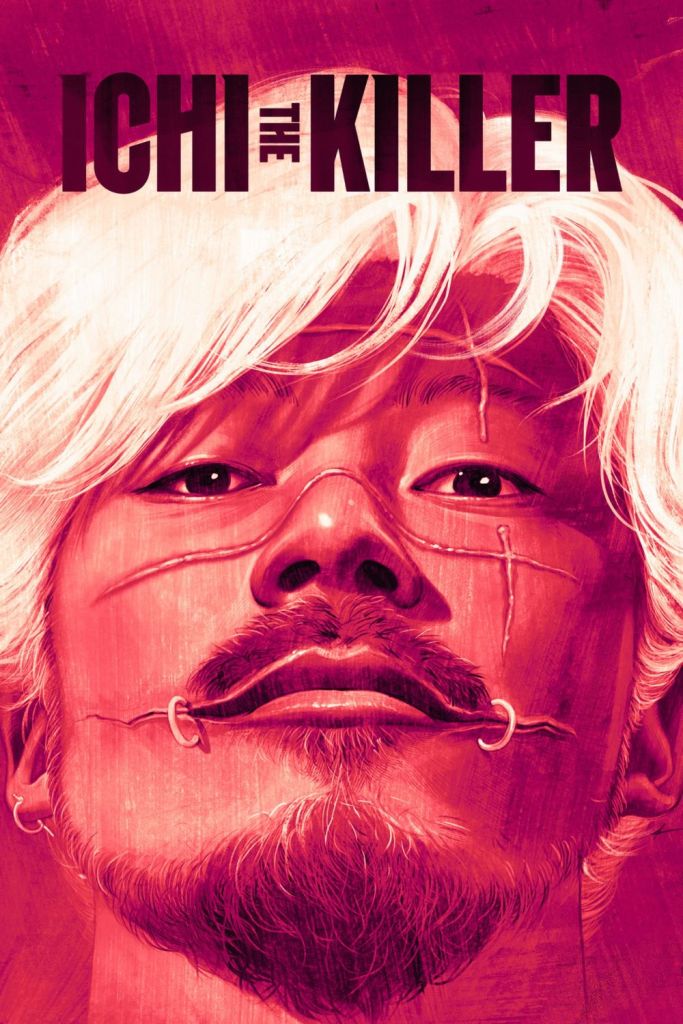
Horror Review: Ichi the Killer (dir. by Miike Takashi)


Filmmaking in Japan has always thrived on extremes—but not in one uniform direction. On one end lies the haunting, gothic atmosphere of horror steeped in shadows, ritual, and psychological dread; on the other lies the explosion of ultra-violence, pushed to grotesque and sometimes cartoonish heights. This duality mirrors the country’s broader cultural and artistic history, from the impressionistic ritualism of Noh theater and kabuki to the stark contrasts found in ukiyo-e prints. It was inevitable that such traditions would shape Japanese cinema, inspiring films that swing between meditative stillness and overwhelming sensory assault. Few modern filmmakers embody this radical spectrum more vividly than Miike Takashi, the ever-provocative and unapologetically eclectic mad genius of Japanese film.

Trying to find a Western counterpart to Miike often feels impossible. He refuses to be pinned down, leaping from genre to genre with the same restless energy as a filmmaker like Steven Soderbergh, but with far darker, more transgressive tendencies. Yet even in his eclecticism, Miike tends to operate at the polar extremes of Japanese genre filmmaking. One year he delivers chillingly restrained, gothic atmosphere—as seen in Audition or One Missed Call, both sustained by mood, dread, and psychological unease. The next, he unleashes pure ultra-violence, as in Dead or Alive or Ichi the Killer, films that seem designed to push cinematic violence far beyond socially tolerable thresholds. He’s made yakuza dramas, samurai fantasies, children’s stories, westerns, thrillers, and even musicals. To watch Miike is to surrender to unpredictability—but always to expect extremity.

And nowhere is Miike’s fascination with the violent pole more vividly captured than in his infamous 2001 adaptation of Hideo Yamamoto’s manga Ichi the Killer (Koroshiya 1 in Japan). The film remains one of his boldest and most grotesque provocations: hallucinatory, hyper-violent, and defiantly sadomasochistic. If Audition showed Miike at his gothic and restrained, building terror through silence and stillness, then Ichi the Killer does the opposite—it blasts the viewer with sensory chaos, arterial spray, and sadomasochistic spectacle. The result pushes beyond gore into nightmare surrealism, so extreme it resembles Peckinpah’s The Wild Bunch refracted through a carnival mirror.

On its surface, the narrative is deceptively straightforward: at its core lies the hunt between two men. Ichi, an emotionally fragile vigilante manipulated into becoming a weapon of destruction, and Kakihara, a flamboyant, sadistic yakuza enforcer who thrives on pain both given and received. While Miike alters aspects of the manga, he retains the dual narrative thread of these two figures spiraling toward an inevitable rooftop showdown high above Tokyo’s neon chaos. Yet to describe the plot too literally is pointless. Miike warps Yamamoto’s crime saga into something closer to a fever dream, a delirious collage of violence and grotesquerie where linear logic is slowly dissolved, leaving behind only sensation.

Where Ichi the Killer separates itself is in its layered subtext of body horror and sadomasochism. Miike is not content with gore alone; he explores the intimate psychology of pain and pleasure, showing their fusion in ways that unsettle. This is established from the film’s beginning, in one of its most infamous moments, when Ichi—lonely, voyeuristic, and lost in disturbing fantasies—masturbates while watching a prostitute being assaulted, climaxing onto a balcony railing. The explicitness shocks, but more importantly, it plants the film’s thematic flag: eroticism polluted by brutality, desire inseparable from cruelty. Miike ensures the audience feels implicated, not just as witnesses but as voyeurs who cannot look away.

Kakihara embodies the other side of this sadomasochistic spectrum. He lives for violence, both inflicting and enduring it. His Glasgow smile—cut into his cheeks years before Ledger’s Joker canonized the image—is carved symbol of his philosophy: rebellion scarred into flesh, grotesque yet strangely glamorous. Much of this impact rests on Tadanobu Asano’s performance. Watching him in this role today, it’s startling to compare Kakihara to his later mainstream work in the Marvel Cinematic Universe (Thor films) or the prestige Shōgun remake. The actor who once played measured dignity and stoicism there is here unchained, flamboyant, and feral. His Kakihara is rockstar-like, charismatic, terrifying, and magnetic; the performance feels like a primal howl that stands in stark contrast to his more restrained global roles. By the finale, one could argue Kakihara comes closer to the film’s “hero” than Ichi himself, embodying violence not merely as cruelty but as pure identity.

The film unfolds as a series of violent tableaux, each more outrageous than the last, somewhere between grotesque cartoon and waking nightmare. Bodies are mangled, organs splatter, arterial spray bursts like abstract expressionist brushstrokes. Miike pushes the imagery so far it sometimes tips into slapstick, calling to mind Peter Jackson’s Dead Alive. It’s violence past the point of horror, collapsing into absurdist comedy: as if Tom and Jerry were redrawn with box cutters and razor wire. Tarantino’s famous “House of Blue Leaves” sequence in Kill Bill clearly draws inspiration from Miike’s operatic bloodletting.

And yet Ichi the Killer is not mere shock and gore. Beyond its chaotic excess, the film probes violence as spectacle—something audiences recoil from but also consume with fascination. Miike refuses to let the audience off the hook. He doesn’t desensitize; he implicates. Watching Ichi means simultaneously condemning its cruelty and acknowledging our own morbid curiosity. That tension—between gothic atmospheres of dread and gaudy ultra-violence—is where Miike thrives.

This duality makes Ichi the Killer one of the most notorious entries in modern cult cinema. It isn’t for everyone, and was never intended to be. Some audiences will find it unwatchable, others mesmerizing. But what is undeniable is its extremity, one end of the spectrum of Japanese genre filmmaking stretched to breaking point. If Audition embodies Miike’s gothic restraint, Ichi represents his carnival of brutality. Together, they capture the twin poles of his artistry and of Japanese extremity itself. Violence here is more than gore—it is body horror, sadomasochism, and spectacle fused together, a dark carnival Miike dares us to enter and dares us not to look away.

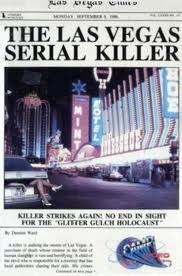
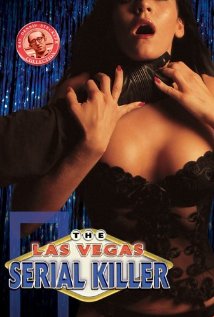
“The Las Vegas Serial Killer” Goes Back To A Dry Well


lv

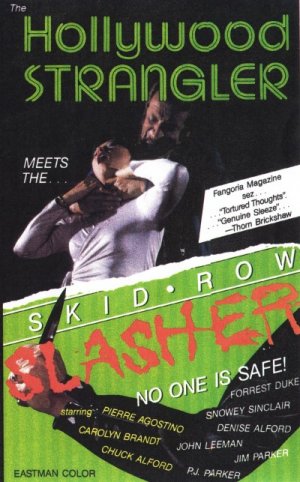
As we painstakingly established around these parts a few days back, The Hollywood Strangler Meets The Skid Row Slasher was not exactly Ray Dennis Steckler’s finer hour (okay, hour and ten minutes). It’s a definite head-scratcher of a movie, to be sure, but as mind-bogglingly weird as Steckler’s idea to shoot a silent slasher flick on a budget of $1,000 in 1979 was, that decision seems positively logical in comparison to his decision to actually make a sequel to said silent $1,000 slasher flick seven years later!

Still, in 1986, for reasons known only to the the pseudonymous “Cash Flagg” himself, that’s exactly what he did. Sort of. I think.

vegasserial2

The setup here is, as you might expect, something of a puzzler in spite of its simplicity. Pierre Agostino is back as our strangler, but he’s called “Johnathan Glick” rather than “Johnathan Click,” and his stomping grounds have changed from Tinseltown to Sin City. He’s let out of the joynt  on the flimsiest technicality you can possibly imagine — they never found any bodies, so his convictions for a series of murders are all overturned — and he hits the streets again and starts killing.

Now, that might seem to make sense apart from the inexplicable swapping of the C in the character’s last name for a G, but that’s really just the tip of the iceberg. What’s he doing in prison in Nevada when his kill-spree took place in California, for instance? And, oh yeah — what he even doing alive, since he was murdered by the Skid Row Slasher at the end of the last one?

You begin to see the problem here. But “problems” are a relative concept, I suppose, and the logical gaps in the story’s basic premise are absolutely nothing compared to the problems in this film’s pacing and execution.

4080196602_815a9d0305

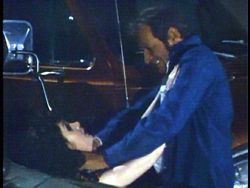
Steckler, here operating once again under his “Wolfgang Schmidt” nom de plume, has opted, no surprise at this point, to shoot the proceedings without sound — but instead of just telling the whole story via voice-over narration, he’s dubbed in actual, honest-to-goodness dialgoue in this one, and it’s never synched up even close to properly. Not that it really matters, because no one’s saying anything interesting — and nothing interesting is happening, either, with Click/Glick/whatever cruising downtown Vegas, the Strip, and neighborhood streets for ladies to choke with his bare hands. It’s, as you’ve no doubt come to expect, a pretty drawn out and tedious affair, and the killings themselves, when they do finally happen after interminable set-up periods, are all uniformly blase and aggressively nondescript.

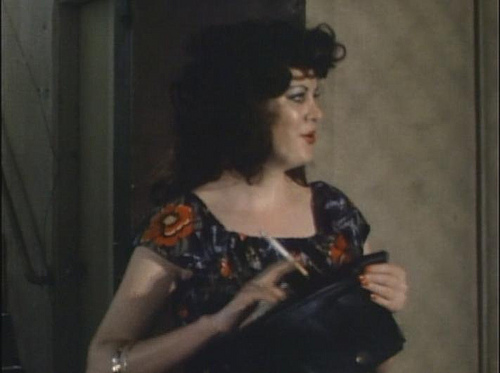
Then we’ve got the subplot about two low-rent hoodlums who stand around making cat-calls at women, snatching their purses, and taking long lunch breaks. They always seem to show up in roughly the same locales as G(C)lick, and at roughly the same times, but their importance —  and I use that term very loosely, trust me — to the goings-on isn’t fully explained until very nearly the end, at which point you’ll have long since stopped giving a shit, and this little “revelatory twist” is so underwhelming that it would almost be insulting if you weren’t so begrudingly impressed at Steckler’s bravado for thinking he could get away with an “explanation” so lame.

MV5BMTc1MTk5NjMwNl5BMl5BanBnXkFtZTcwMjg5NzkyMQ@@._V1_SY317_CR4,0,214,317_

Unleashed  on a by-and-large uncaring populace via the straight-to-VHS route, The Las Vegas Serial Killer is, naturally, available on DVD these days (it’s presented full-frame with mono sound, both of which are, I guess, adequate enough all things considered), and while Media Blasters, under their Guilty Pleasures sublabel, have given us a nice (-r than this flick deserves) set of extras, including an on-camera interview with the director and a full-length commentary track where he opines at length on the making of the production, at the end of the day it still makes no sense, simply because all the explanation in the world  couldn’t begin to shine any light on why this was made and who Steckler thought his audience was.

Shit, I’ve seen this thing a few times now, and I’m still none the wiser. Is it a sequel to The Hollywood Strangler Meets The Skid Row Slasher? Is Agostino playing the exact same guy? How did he manage to survive when it sure as shit looked like he was dead? Why was he doing his time in a state other than that in which his (first) crimes were committed?

Fortunately, all of these questions have the exact same, simple answer — it doesn’t matter.

Grindhouse Classics : “The Hollywood Strangler Meets The Skid Row Slasher”


l_79300_4d2680e6

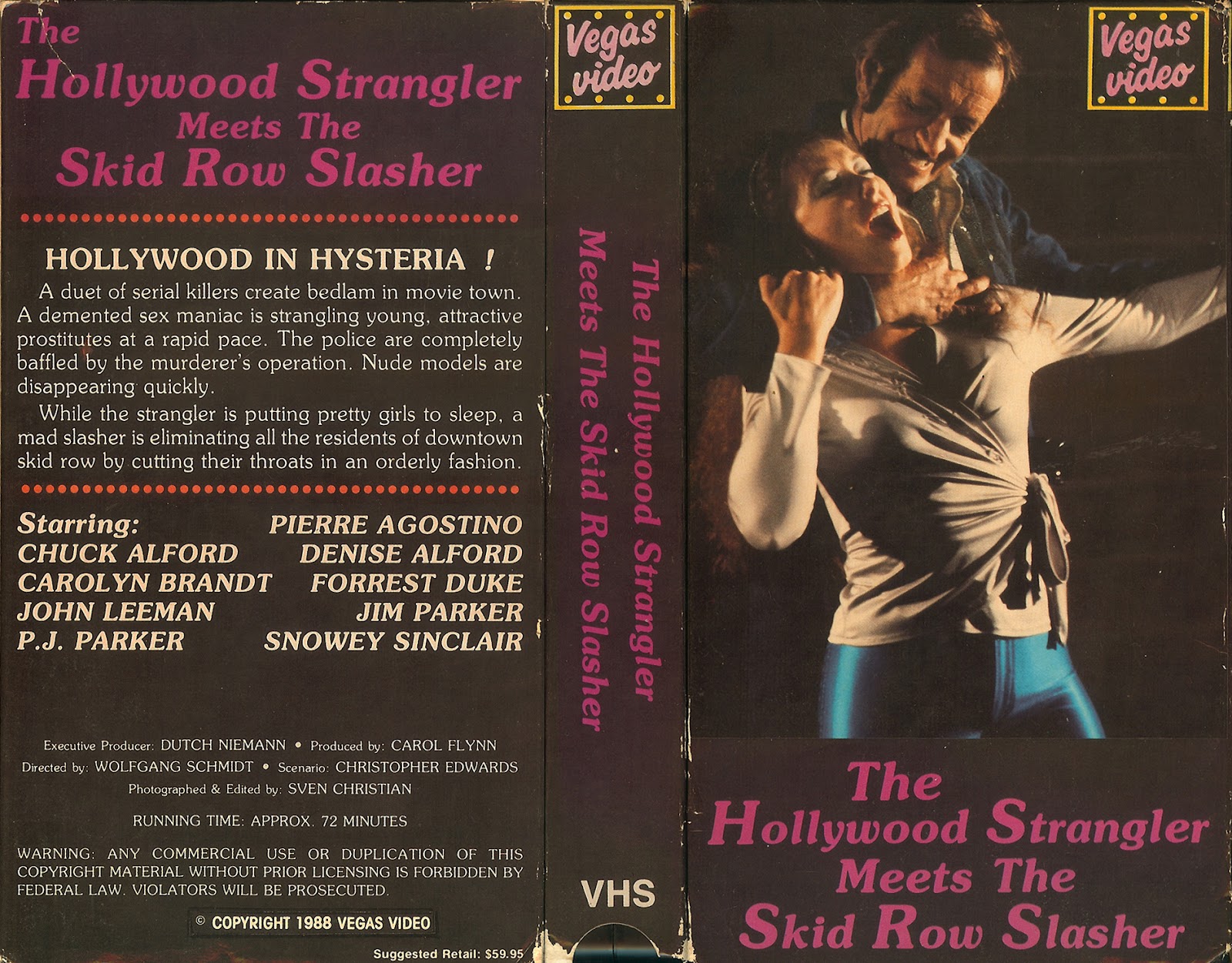
Sometimes, it’s almost impossible to know where to begin. Watching cult auteur Ray Dennis Steckler’s less-than-no-budget/dual-slasher mash-up The Hollywood Strangler Meets The Skid Row Slasher feels like a step back in time to the late 50s/early 60s, when ultra-cheap productions like The Creeping Terror and The Beast Of Yucca Flats were shot not only without sound, but with what sound was dubbed in later in post-production coming primarily in the form of voice-over narration, since the producers were too stingy and/or lazy to match up dialogue with actors’ moving mouths and only wanted to have to hire one person to tell their “story” anyway.

There’s just one wrinkle — Steckler (under his often-used “Wolfgang Schmidt” pseudonym) made this thing in 1979, hoping for a quick cash-in on the success of John Carpenter’s Halloween and the fly-by-night slasher genre that was then burgeoning in its wake! Honestly, by this point even Doris Wishman wasn’t cooking up her home-baked celluloid casseroles in a manner this frugal.

hwood vhs

Still, you’ve gotta give RDS at least some credit here — his dialogue-free, ultra-minimalist approach results in a style that can only be described as uber-naturalist, simply because when you spend this little on a production (the film’s total budget is reputed to be somewhere in the range of $1,000 — yes, you read that right) it literally can’t come out any other way. Honestly, his more “well-known” 1960s efforts such as The Thrill KillersThe Adventures Of Rat Pfink And Boo BooThe Lemon Grove Kids Meet The Monsters and, of course, The Incredibly Strange Creatures Who Stopped Living And Became Mixed-Up Zombies feel like big-money blockbusters in comparison with this effort, which is more akin in terms of its production “values” and “standards” to one of those old 8mm (although this was shot on 16) “educational” films they used to show you in school (if you’re old enough to have been around for them) on subjects ranging from photosynthesis to slaughterhouse operations and everything in between.

Purely as a side note,  I have to say that I have no idea what teachers do when they’re feeling lazy these days — I guess give a power-point presentation or something, but I do know what Ray Dennis Steckler does when he’s feeling like mailing it in — he makes a movie like this one.

Hollywood Strangler Meets Skidrow Slasher 271 - 273

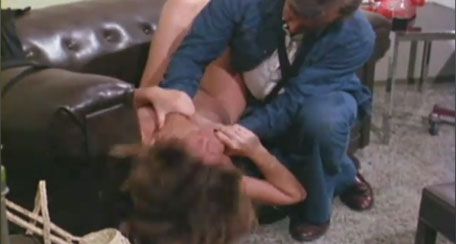
This was made at the apex of our guy Ray’s so-called “dark period” — when he got divorced from actress Carolyn Brandt (although she continued to star in his features, including this one), split LA broken-hearted, set up shop in Vegas, and generally spent his time seething with bitterness toward the Hollywood system that had rejected his admittedly unique — if not good by any standard definition of the word — brand of film-making. Returning to the streets of Hollywood Boulevard for the first time in many years for this one, there is, in fact, a palpable sense of rage that oozes from the frames of The Hollywood Strangler Meets The Skid Row Slasher, and if you do a little game in your head while you’re watching it whereby you replace the young, female victims of the strangler and the derelict, destitute victims of the slasher in your mind with the various exploitation producers and distributors that ripped Steckler off over the years, the flick becomes a lot more interesting.

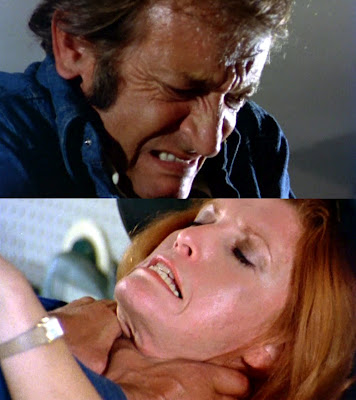
Truth be told, though, that’s about the only way you can draw any sort of “entertainment” from this 71-minute snooze-fest because Ray doesn’t really do anything on his part to keep you involved in the proceedings — it falls entirely on your shoulders as a viewer to invent a reason to keep watching. The “plot” alone’s certainly not gonna do it — our psycho narrator, one “Johnathan Click” (Pierre Agostino) poses as a nudie photographer in order to lure women whose phone numbers he’s obtained via the various hooker newspapers littering the boulevard over to his pad, where he dutifully proceeds to strangle them after they’ve disencumbered themselves of most or all of their clothing, while just a few block over an unnamed used bookstore clerk played by the aforementioned ex-Mrs. Steckler gets so sick of the bums and winos coming into her shop drunk off their asses that she starts slitting their throats (sometimes, curiously enough, with a knife that’s already got blood on it before she even sticks ’em ). As they both go about their business slicing,dicing, and choking their way through tinseltown, their paths are bound to cross — especially once Click rumbles his fellow traveler’s identity — but when they do, will they become uneasy allies in their mutual quest to, as they see it, clean up the streets, or will they have to duke it out to the death, figuring the town’s not big enough for the both of them?

the-hollywood-strangler-meets-the-skid-row-slasher

Don’t worry — by the time their confrontation finally does take place, you won’t give a shit about the outcome. Hell, if you’re a normal human being, you won’t even be awake anymore. Even as a morbid curiosity piece centered around the less-than-burning question of “how can Ray Dennis Steckler  make a movie with absolutely no money?,” this one runs out of gas pretty fast, and once the end credits (such as they are) roll, it feels more like a relief than anything else.

Perhaps the weirdest of all weird things in relation to this production, though, is that Steckler somehow, for some reason, must have felt that it worked (or at the very leaast turned a profit), because seven years later — long after what very few people who would have cared stopped doing so — he decided to make a sequel, this time featuring only “Mr. Click,” called The Las Vegas Serial Killer. I think he spent even less on that one since he didn’t have to  leave town to make it, and most of Hollywood Strangler‘s micro-micro-micro budget was, I’m guessing,  probably consumed by the director’s own travel and lodging expenses, given that the on-screen product looks like it didn’t cost  so much as one thin dime.

All that being said, Steckler performs something of an entirely accidental occult ritual here, by managing to warp our perceptions of the passing of time itself. At barely over an hour, this feels more like seven. You’ll swear that you can sit through the entire Godfather trilogy plus Lawrence Of Arabia  in the time it takes to watch The Hollywood Strangler Meets The Skid Row Slasher. At some point along the way, this passes the point of being merely dull and obtains the power to warp the laws of the universe merely through the force of its lethargy. This is a movie that works hard to be as boring as it is, goddamnit, and as a result it manages to completely take over our minds even if it can’t sustain our attention.

Don’t ask me how that works. I have no idea. Nor does Steckler. This kind of thing just comes naturally to a master of the craft such as himself.

Untitled-2

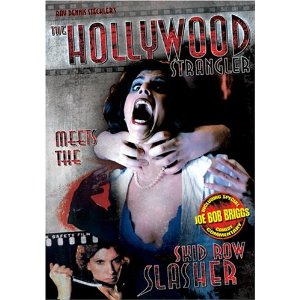
Fortunately, if you spring for either the purchase or rental of The Hollywood Strangler Meets The Skid Row Slasher on DVD, Media Blasters (under the auspices of their “Guilty Pleasure” sublabel) has done some things to make sure this can, indeed, sustain your interest. The widescreen transfers looks, well, as good as it can, the mono sound is bearable enough (not that it really matters that much), there are on-camera interviews with Brandt and Steckler, and we get two commentary tracks — one from Steckler which is pretty good, and one from the inimitable and legendary Joe Bob Briggs, which is, as you would expect, packed full of awesome from start to finish. A better overall package than this movie deserves, to be sure, but you’ll be grateful for it nevertheless.

51KK023JF3L__SL500_AA300_

All of which leads this review to one of those schizo conclusions that only seem possible with bottom-of-the-barrel exploitation cinema — the film sucks, but the DVD is great. At this point in his career, Steckler’s admitted one over-riding goal was to spend as little on his productions as possible, and here it really shows. He also prided himself on his intense hatred for actors and refused to hire any real ones, but that doesn’t matter much in this instance, since even the most talented performers in the world couldn’t save this thing. This is still, however,  a film worth sitting through, if not actively or actually watching — and not just as an endurance test (even though those can be fun sometimes). I know a statement like that positively demands an explanation, so try this — pop this disc into your player and keep one eye on your watch. Hell, keep both eyes on your watch since it’ll be more interesting than the movie. I guarantee you, at some point, the hands will stop moving, and they won’t start up again until “The End” comes up on the screen. That, my friends, is some real movie magic.

Anime You Should Be Watching: Bible Black (Baiburu Burakku)


eroge: is a portmanteau of erotic game. It is a Japanese video or computer game that featured erotic content (usually pornographic in nature) and used anime-style artwork in a visual novel format.

Hentai as a genre first reached wide recognition through the notorious Chōjin Densetsu Urotsukidōji, a 1980s OVA that fused graphic sexual imagery with apocalyptic horror and violent fantasy. That work established many of the conventions that would define adult anime for decades—its blend of mythology, grotesque excess, and surreal eroticism pushing the boundaries of animation’s narrative potential. Bible Black represents a later evolution of that tradition, taking the transgressive energy of Urotsukidōji and refining it through a more contained setting, structured storytelling, and psychological tension. Where its predecessor reveled in grandiose chaos, Bible Black turned inward, exploring horror through ritual, secrecy, and moral decay within familiar, everyday environments.

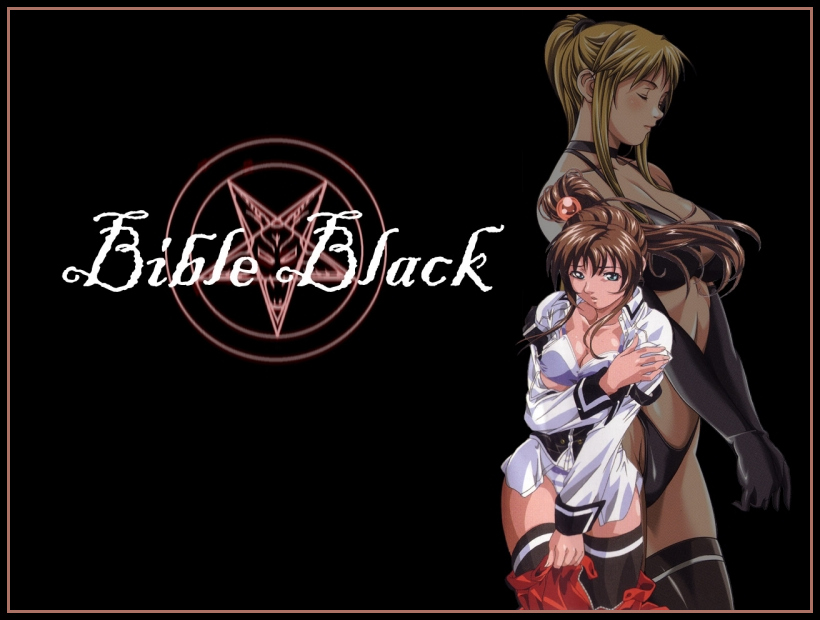
Originally developed as an eroge visual novel, Bible Black featured the artwork of its creator, Shoujo Sei. The game’s popularity within Japan’s adult gaming market grew rapidly, fueled by its striking blend of erotic storytelling, occult imagery, and a sinister undercurrent that set it apart from typical romantic visual novels of its time. Its success inevitably drew the attention of Milky Studio, an animation company already known for adapting adult-oriented games into OVAs. Within a few years, Milky Studio produced the first Bible Black anime series—a six-episode OVA that closely followed the storylines and choices from the original game.

The anime adaptation centers on a high school caught in a web of witchcraft and forbidden rituals. While the premise may sound familiar to fans of the supernatural or occult genres, Bible Black distinguished itself by merging sexual and mystical elements in a way that felt both deliberate and unsettling. The first OVA mirrors the game’s basic storyline, introducing viewers to a world where innocent facades collapse under the weight of temptation and corruption. Later sequels and prequels expanded on this mythology, delving into the origins of the dark book that drives the narrative and introducing new characters entangled in its influence. In doing so, the series built a continuity resembling a twisted mythos—an interconnected body of stories that deepened its immoral mystique.

To describe Bible Black merely as “popular” within its niche would be an understatement. Its reputation extends far beyond its target audience, circulated through anime forums, recommendation threads, and cultural commentary as a kind of benchmark for erotic horror. It is the title almost universally cited when discussing adult-oriented anime, whether out of reverence for its artistic boldness or infamy for its transgressive imagery. For many viewers—particularly Western audiences in the early 2000s—it represented their first exposure to Japanese erotic animation beyond parody or rumor, granting it a strange, almost legendary status within the genre’s history.

What separates Bible Black from lesser works is the precision with which it fuses its erotic and occult motifs. The narrative’s backbone—the pursuit and misuse of a magical grimoire—offers an allegory for unchecked desire and the cost of power. Rituals blend seamlessly with acts of seduction, and the visual motifs of pentagrams, candles, and bloodstained rites serve as metaphors for obsession and spiritual decay. This combination gives the anime an intensity uncharacteristic of typical adult fare, as every encounter is charged not only with physical desire but also with moral and supernatural consequence. Rather than treat sexuality as isolated spectacle, the series enfolds it within its darkly coherent world, ensuring that sin and pleasure remain inseparable.

The “harem” narrative structure, common to many eroge and visual novels, is used here with a more perverse edge. The typical male protagonist surrounded by female admirers becomes a focal point not of romantic fulfillment, but of temptation and corruption. In Bible Black, that dynamic is steeped in manipulation and control—sex as both a weapon and a spiritual act. This inversion of a familiar trope contributes to the series’ enduring fascination, as it refuses to comfort the viewer with the conventions of fantasy romance. Instead, it constructs an atmosphere of moral ambiguity and psychological pressure, leaving few characters untainted.

The setting amplifies the discomfort. By situating its story within the environment of a high school—a space symbolically associated with innocence and growth—Bible Black subverts expectations. The classrooms and corridors that should represent order and safety become arenas for forbidden rites and hidden depravity. This juxtaposition between the mundane and the macabre intensifies the sense of violation that defines the series. It’s not only a story of erotic ambition but of how institutional and moral structures collapse when confronted by unchecked desire and occult power.

Visually, the anime reflects its early-2000s production values with surprising sophistication. Milky Studio preserved the visual style of Shoujo Sei’s original artwork—marked by angular features, bold contrasts, and expressive eyes—while enriching the material with atmospheric lighting and strong sense of color. The palette alternates between the sterile brightness of school life and the dim, saturated tones of ritualistic scenes, crafting a visual rhythm that heightens tension between two worlds. Despite the limited resources typical of an OVA, the series achieved a memorable aesthetic identity, merging the glossy surfaces of contemporary anime with the raw suggestiveness of eroge art.

As Bible Black expanded into sequels like Bible Black: New Testament and various side stories, its universe deepened both narratively and tonally. The newer installments explored different perspectives and timeframes, revealing the long shadow of the original events. This serial approach—rare for hentai productions—allowed the franchise to form a loose continuity, almost like a dark fantasy saga built around erotic and esoteric principles. The cumulative effect was that Bible Black ceased to be a one-off novelty and became a defining thread in the history of animated erotic horror.

Its cultural impact extends further still. Bible Black served as one of the first major adult anime titles to gain substantial attention outside Japan during the rise of online fan communities. Through fan distribution and unofficial translations, it became many Western viewers’ first encounter with themes such as futanari—depictions involving gender transformation or dual sexual anatomy—which had previously remained obscure outside Japan. The OVA thus became not only a product of its domestic industry but also a cultural export that introduced global audiences to the specialized lexicon and aesthetics of Japanese hentai.

Critically, Bible Black remains an object of contention. Its explicitness renders it indefensible to some, yet others recognize within it a degree of thematic intent that surpasses mere sexual provocation. It approaches the occult not with romantic mysticism, but as an allegory for moral erosion and human vulnerability. Erotic acts in the series often parallel spiritual corruption, suggesting that the boundary between pleasure and damnation is perilously thin. The result is an anime that provokes both physical and intellectual reactions—equally discomforting in its carnality and symbolism.

Even after more than two decades, Bible Black maintains relevance and recognition. Later works have tried to replicate its formula—mixing fetishes with supernatural dread—but few possess its coherence or audacity. Its imagery, tone, and structure continue to influence adult creators seeking to merge explicit content with narrative ambition. Moreover, the series exemplifies a moment in anime history when the medium’s adult side dared to pursue storytelling complexity rather than rely solely on erotic novelty.

Viewed today, Bible Black endures as both time capsule and touchstone. It captures an era when the boundaries between mainstream anime and adult experimentation briefly blurred, and when eroge culture translated successfully to animation with both narrative depth and artistic conviction. Whether judged as an expression of taboo horror, a stylistic artifact of its generation, or a benchmark for the fusion of sex and the supernatural, Bible Black stands as one of the most distinctive and controversial works in anime’s underground lineage. Its lasting infamy, like its allure, lies in its refusal to separate desire from darkness—a union as seductive as it is terrifying.