Holidays On The Lens: Beyond Tomorrow (dir by A. Edward Sutherland)


After three eccentric businessman arrange for a young couple to get together right before the holidays, a plane crash kills the three men.  However, their ghosts remain on Earth to watch over the couple and to take care of some unexpected holiday business.  The film is a holiday film and a comedy and a romance and a musical and a ghost story and a melodrama and finally an oddly sincere meditation on life and death.

From 1940, here’s Beyond Tomorrow!

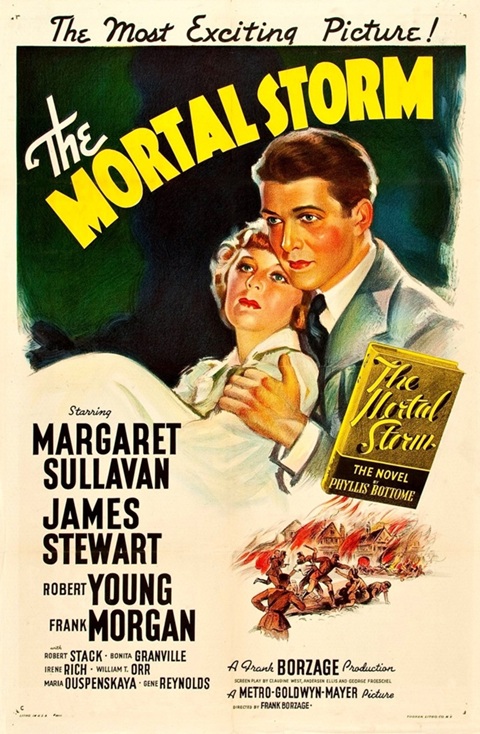
The Unnominated #16: The Mortal Storm (dir by Frank Borzage)


Though the Academy of Motion Picture Arts and Sciences claim that the Oscars honor the best of the year, we all know that there are always worthy films and performances that end up getting overlooked.  Sometimes, it’s because the competition too fierce.  Sometimes, it’s because the film itself was too controversial.  Often, it’s just a case of a film’s quality not being fully recognized until years after its initial released.  This series of reviews takes a look at the films and performances that should have been nominated but were, for whatever reason, overlooked.  These are the Unnominated.

Oh, how this movie made me cry!

Released in 1940, at a time when war was spreading across Europe, Asia, and Africa but the United States was still officially neutral, The Mortal Storm opens on January 30th, 1933.  In the mountains of Germany, near the Austrian border, Professor Viktor Roth (Frank Morgan) is celebrating his 60th birthday.  He starts the day being applauded by his students at the local college.  In the evening, he returns home for a celebration with his family, including wife (Irene Rich), his daughter Freya (Margaret Sullivan), his son Rudi (Gene Reynolds), and his two stepsons, Otto (Robert Stack) and Erich von Rohn (William T. Orr).  Also present are Freya’s fiancé, Fritz (Robert Young) and one of Roth’s students, a pacifist named Martin Breitner (James Stewart).  It’s a joyous occasion and the film takes its time introducing us to Prof. Roth and his extended family.  At first, everyone seems very kind.  They seem like people who most viewers would want to spend time with or live next to….

But then, the family’s maid excitedly enters the room and announces that it’s just been announced that Adolf Hitler is the new chancellor of Germany.  Otto and Erich are overjoyed and head out to celebrate with the other members of the Nazi Youth Leage.  Martin is less happy and excuses himself to return home.  Roth and his wife worry about what this means for people who do not agree with Hitler’s beliefs.  Freya says that they shouldn’t talk politics.  It is jokingly mentioned that Hitler has taken away Roth’s special day but Roth’s young son Rudi says that he’s learned in school that the needs of the individual will never be more important than the needs of the state.  If Hitler wants to take away your day, it’s your duty to give it up or face the consequences.

Based on a 1937 novel, The Mortal Storm was not the first Hollywood production to take a stand against Hitler and the Nazis but it was one of the best.  I say this despite the fact that the film only hints at the fact that Prof. Roth is Jewish, something that was made very clear in the book.  (In the movie, Roth and his wife worry what will happen to “Non-Aryans” and “freethinkers.”)  That said, the film perfectly captures how quickly and insidiously the authoritarian impulse can spread.  The town, which once seemed so friendly, becomes a very dark place as the students at the university put on their swastika armbands and start to hunt down anyone who dissents from the party line.  When Roth says that, as a scientist, he does not believe one race can be genetically superior to another, his students walk out on him.  A local teacher is beaten when he fails to return to the Nazi salute.  When Martin refuses to join the Party, Otto and Erich turn against him despite being lifelong friends.  When Martina and Freya flee for the border, Fritz pursues them.  And even after Prof. Roth is sent to a concentration camp, Otto and Erich continue to follow the orders of Hull (Dan Dailey), the sinister Youth Party Leader.

It’s a powerful film, one that remains just as relevant today as it was when it was first released.  Hull and Erich’s fanaticism would, today, find a welcome home on social media.  The scenes in which the townspeople eagerly threaten to report their former friends and neighbors for failing to salute or show proper enthusiasm for the government have far too many modern day equivalents for me to even begin to list them all.  This film was also the last the James Stewart made with frequent co-star Margaret Sullivan and they both give great performances.  (All-American Jimmy Stewart might seem a strange choice to play a German farmer but he is never less that convincing as Martin, one of the few people in the town not to surrender his principles and beliefs to the crowd.)  The film’s final moments, with the camera panning around the empty Roth home, brought very real tears to my eyes.

Despite being a powerful film, The Mortal Storm was not nominated for a single Oscar.  (Jimmy Stewart did win his only Oscar that year but it was for The Philadelphia Story.)  It’s temping to assume that, at a time when America was still divided about how to react to the war in Europe and when many Americans still remembered the trauma of the first World War, The Mortal Storm was too explicitly political and anti-Nazi to get a nomination but, the same year, The Great Dictator was nominated for Best Picture.  It seems more likely that, in those days when the studios ruled supreme, MGM decided to puts it weight behind The Philadelphia Story rather than The Mortal Storm.

That said, The Mortal Storm was definitely worthy of being nominated, for Picture, Director, Screenplay, Actress (Margaret Sullivan), Actor (Stewart), Supporting Actor (Frank Morgan and Robert Stack), and Supporting Actress (Irene Rich and, in the role of Stewart’s mother, Maria Ouspenskaya).  The film may not have been nominated but it remains a powerful and important work of art.

Previous entries in The Unnominated:

  1. Auto Focus 
  2. Star 80
  3. Monty Python and The Holy Grail
  4. Johnny Got His Gun
  5. Saint Jack
  6. Office Space
  7. Play Misty For Me
  8. The Long Riders
  9. Mean Streets
  10. The Long Goodbye
  11. The General
  12. Tombstone
  13. Heat
  14. Kansas City Bomber
  15. Touch of Evil

Late Night Retro Television Review: Friday the 13th: The Series 2.16 “Scarlet Cinema”


Welcome to Late Night Retro Television Reviews, a new feature where we review some of our favorite and least favorite shows of the past! On Fridays, I will be reviewing Friday the 13th: The Series, a show which ran in syndication from 1987 to 1990. The show can be found on YouTube!

This week, a nerdy film students takes his love of a 1940s horror film too far!

Episode 2.16 “Scarlet Cinema”

(Dir by David Winning, originally aired on February 20th, 1989)

Darius Pogue (Jonathan Wise) is a nerdy film student who is obsessed with The Wolf Man.  When Darius steals an old antique movie camera, he discovers that, by looking through the camera’s view finder, he can bring The Wolf Man to life and send him to kill anyone who annoys him.  Darius kills a snooty antique store manager.  He kills a bully.  He kills his professor.  He even sends the wolf after Ryan and a girl that Darius likes.

However, as much as Darius enjoys sending the Wolf Man after people, he wants to be the Wolf Man himself.  After allowing the Wolf Man to scratch him, Darius shoots him with silver bullets.  Transforming into a werewolf himself, Darius goes after Ryan, Micki, and Jack.  Unfortunately, Darius didn’t consider that film stock is full of silver nitrate.  Live by the film, die by the film….

This episode was a case where the premise was pretty interesting but the execution didn’t quite work.  The episode mixes in archival footage from The Wolf Man with scenes of Darius’s victims meeting their fate.  So, for example, one sees Lon Chaney Jr. turning into the Wolf Man and then the viewer sees The Wolf Man killing one of Darius’s classmates.  The problem is that the Friday the 13th werewolf makeup doesn’t really look much like the Wolf Man makeup.  Regardless of how darkly lit each scene is, it’s pretty obvious that the Wolf Man from the film is not the same Wolf Man that is doing Darius’s bidding.  It not only negates the whole idea behind the cursed antique but it’s also pretty distracting for those of us just trying to watch the show.  And, again, it’s a shame because the idea behind this episode was actually pretty clever.

Myself, I’ve always liked the original Wolf Man.  Eventually, Larry Talbot got a bit too whiny for his own good and it’s pretty much impossible to buy the idea of the hulking, very American Lon Chaney, Jr. as the son of the sophisticated and very British Claude Rains.  But, even with all that in mind, The Wolf Man holds up as a classic American horror film, full of atmosphere and featuring a pretty impressive monster.  Friday the 13th deserves some credit for making Darius a Wolf Man fan because The Wolf Man, with its portrait of a man being driven mad by a curse that he cannot control, fits in perfectly with the main idea behind Friday the 13th.  Darius, like most of the villains on this show, isn’t really evil until he starts using the camera.  Each times he picks up the camera, his actions become progressively worse.  Just as Larry Talbott was cursed by the werewolf, Darius is cursed by the camera.  Much like a drug addict, Darius falls in love with the camera and he just can’t stop using it.  His addiction changes his personality as it becomes all-consuming,.  Eventually, it drives him to become the Wolf Man himself.

The episode ends with another cursed antique safely hidden away and Darius joining Larry Talbot in the cold embrace of death.  There was a lot of potential to this episode so it’s a shame that it didn’t quite work.

Film Review: The Man I Married (dir by Irving Pichel)


In 1940’s The Man I Married, Joan Bennett stars as Carol Cabbott Hoffman.

Carol is a New York-based art critic.  She is young, sophisticated, wealthy, and politically naive.  Because she has been married to a German for seven years, she has been keeping up with what has been happening in Germany but it’s clear that she doesn’t really understand the full story of what she’s hearing.  As she says, at one point, she has heard bad things about the Nazis but she also tries to keep an open mind and not get drawn in by “propaganda.”

Her husband, Eric Hoffman (Francis Lederer), has not been back to Germany in ten years and he says that he has little interest in ever returning.  But, when he receives a letter from his father (Otto Kruger), Eric announces that he has to return home for a visit.  Before Carol, Eric, and their son, Ricky (Johnny Russell), leave for Germany, they are approached by their friend, Dr. Hugo Gerhardt (Ludwig Stossel).  He explains that his brother has been imprisoned in a concentration camp and he asks Carol and Eric to deliver money to him and to appeal to the American embassy for help.  Carol agrees to do so.  Eric is noticeably reticent.

As soon as they arrive in Germany and Eric learns that his father wants him to take over the family’s factory, Eric starts to change.  He and a former schoolmate named Freida (Anna Sten) are a bit too happy to see each other again.  Eric insists on listening to the nightly radio broadcasts from Dr. Goebbels.  When Freida mentions that it is illegal to joke about Hitler, Eric surprises Carol by defending the law.  With Eric spending all of his time with Freida and dismissing Carol’s understandable suspicions by saying that she’s just being jealous, Carol meets an American correspondent named Keith (Lloyd Nolan) who reveals to her the truth of life in Nazi Germany.  Carol discovers that, rather than being the economically-strong paradise that Eric and Freida claim it to be, Germany is a place where many citizens live in fear of being heard saying the wrong thing and, as a result, they’ve chosen to close their eyes to what is going on around them.

The Man I Married is an interesting film.  It’s an anti-Nazi film that was released at a time when America was still technically a neutral nation.  Indeed, the film almost feels like it was made to prepare Americans for the inevitability of war with Germany.  When Keith mocks Carol for trying to be neutral about the Nazis, it’s clear that he’s meant to be speaking to the audience watching the film.  Eric begins the film as an erudite and seemingly charming man but, as soon as he arrives in Germany and is reunited with Freida, he reveals himself to be a fervent Nazi.  The film warns the audience not to trust those who were trying to excuse or dismiss Germany’s actions.

This is also one of the few films made before World War II that really acknowledged just how central anti-Semitism was to the Nazi ideology, acknowledging the concentration camps at a time when many in the West were refusing to admit they existed, either because they were in denial or because they just didn’t care.  Towards the end of the film, a major character is discovered to have had a Jewish mother and the reaction to the news reveals the hate that was at the heart of the Third Reich.

The Man I Married, with its portrayal of a populace that has convinced itself that their government is never to be questioned and that all dissent must be punished, is a film that feels just as relevant today as it did in 1940.  It’s a film that warns viewers of the risk of disbelieving their own eyes.

Holiday Spirit: Beyond Tomorrow (dir by A. Edward Sutherland)


After three eccentric businessman arrange for a young couple to get together right before the holidays, a plane crash kills the three men.  However, their ghosts remain on Earth to watch over the couple and to take care of some unexpected holiday business.  The film is a holiday film and a comedy and a romance and a musical and a ghost story and a melodrama and finally an oddly sincere meditation on life and death.

From 1940, here’s Beyond Tomorrow!

Holiday Film Review: Beyond Tomorrow (dir by A. Edward Sutherland)


I’m standing at the edge of tomorrow
And its all up to me how far I go
I’m standing at the edge of tomorrow

I’ve never seen such a view before
A new world before my eyes
So much for me to explore
It’s where my future lies

Today I’m standing at the edge of tomorrow
From here the future looks bright for me
And it’s all up to me how far I go
It’s my time to break away
I’m standing at the edge of tomorrow
Today

Beyond Tomorrow is a strange film from 1940.  Technically, it is a holiday film.  It takes place during the Christmas season and there’s a lot of very peppy scenes featuring people celebrating the holidays.  I watched the movie with my friends in the Late Night Movie Gang.  We’re a pretty sentimental group but even we felt that some of the characters went a bit overboard with the holiday cheer.  The film is also comedy and a romance and a musical and a ghost story and a melodrama and finally an oddly sincere meditation on life and death.  That’s a lot of weight for one film to carry and there were more than a few times that Beyond Tomorrow seemed like it might collapse in a heap of Christmas ambition.  Fortunately, the film always righted itself and, in the end, it actually managed to be …. well, definitely more interesting than what any of us were expecting!

The film opens with three businessmen (Harry Carey, C. Aubrey Smith, and Charles Winninger) living in a mansion with their Russian housekeeper (played by Maria Ouspenskaya, who was also the old gypsy lady in The Wolf Man).  As almost something of a lark, the three men arrange for James (Richard Carlson) to meet Jean (Jean Parker).  Jean is a teacher.  James is a singing cowboy from Texas.  Together, with the encouragement of the three businessmen, Jean and James get together.  Awwwww!

Unfortunately, the three businessmen are then all killed in a plane crash.  However, their ghosts remain on Earth and watch over the growing love between James and Jean.  Unfortunately, James become a singing sensation on the radio and soon, he’s being tempted to cheat.  Meanwhile, Jean’s ex-husband is running around with murder in his heart and a gun in his hand!  This romantic comedy has suddenly taken a very dark turn!

While the three ghosts look after James and Jean, they consider why they’re still on Earth and not in the afterlife.  One ghost is eventually greeted by his son, who died during the Great War.  Another one of the businessmen is haunted by vaguely defined sins and, even in death, he refuses to repent because he feels that he doesn’t deserve to go to Heaven.  Instead, he continually walks off into the darkness.  The last businessman continually tries to push James and Jean on the right path but it turns out that it’s not easy for the dead to talk sense to the living.

You can probably give yourself whiplash trying to keep up with the film’s tonal changes.  It starts out with romance and comedy and then suddenly, it’s turns into an existential rumination of love, forgiveness, and guilt.  Once the three businessmen die, it becomes a totally different story.  Suddenly, soldiers are returning from the dead and the gates of Hell are beckoning.  And, on top of that, James keeps breaking out into song every few minutes!

It’s a very strange film.  Unfortunately, from the start, the pacing feels off.  By today’s standards, Beyond Tomorrow gets bogged down in all of the songs and the scenes of holiday mirth-making.  That may not have been as much of a problem for audiences in 1940 but I have to say that, speaking as someone trying to watch this film in 2020, Beyond Tomorrow made my ADD go crazy.  If not for my friends and their patient willingness to inform me what was going on in the film, I probably wouldn’t have been able to follow the film’s storyline.

That said, the film was fairly well-acted and the final scenes, with the heavenly gates in the sky, are undeniably effective.  Speaking as a history nerd, I found it interesting to see how the shadow of World War I still hung over a film that was made 21 years after that war ended.  As the scenes in which one of the ghosts is a reunited with son showed, America was still dealing with trauma and horror of the first modern war.  (One year after the release of Beyond Tomorrow, Japan would bomb Pearl Harbor and America entered World War II, a conflict that many hoped to avoid precisely because they remembered the all of the men who didn’t make it home during the previous war in Europe.)  Messy though the film may be, Beyond Tomorrow functions well as both a historical document and a bit of sentimental wish fulfillment.

Compared to holiday classics like the original Miracle on 34th Street and It’s A Wonderful Life, Beyond Tomorrow is relatively unknown.  Certainly, it’s no classic.  But, for fans of both Christmas and old movies, it’s still an interesting trip into the past.

Halloween Havoc!: FRANKENSTEIN MEETS THE WOLF MAN (Universal 1943)


gary loggins's avatarcracked rear viewer

FRANKENSTEIN MEETS THE WOLF MAN was Universal’s first Monster Mash-Up, and in my opinion the best of the lot. From here, things got a little crowded, but by spotlighting just two supernatural terrors, we get a spooky, atmospheric ‘B’ film that really works. Lon Chaney Jr. returns to his signature role of Lawrence Talbot, suffering from the curse of lycanthropy, and he’s even better than in the original (which I reviewed in 2015 ). And The Monster is played by 60-year-old Bela Lugosi , in the part he rejected twelve years earlier. Bela’s interpretation is… interesting (but more on that later).

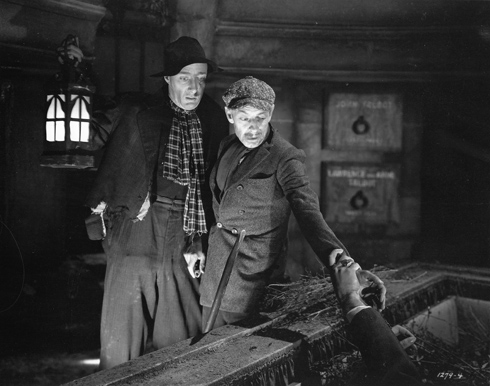
The eerie opening scene features two graverobbers under a full moon, breaking into the Talbot family crypt. Opening the lid of the late Larry Talbot’s coffin, they find the body is covered in wolfbane, and one of them recites that familiar “Even a man who’s pure in heart…” poem…

View original post 731 more words

Horror Scenes I Love: Larry Talbot Discovers His Fate in The Wolf Man


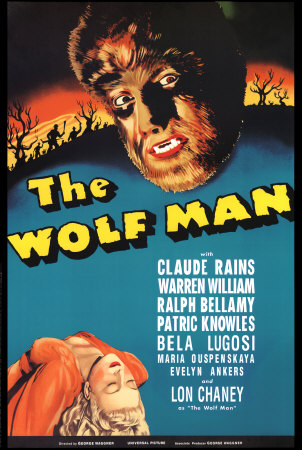
Today’s horror scene that I love comes from 1941’s The Wolf Man.

In this scene, poor, unfortunate Larry Talbot (Lon Chaney, Jr) visits a gypsy camp and learns that sad truth of his fate from Maleva (Maria Ouspenskaya).  I love this scene not only for the iconic dialogue but also for George Waggner’s atmospheric direction and Maria Ouspenskaya’s performance.  Even Lon Chaney, Jr. gives it his all in this scene.  Larry Talbot may have been a dumb lug but he was our dumb lug!

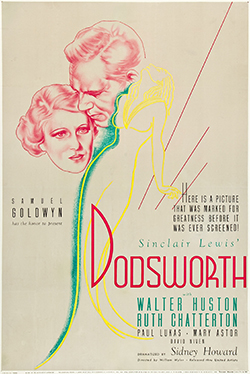
Lisa Reviews An Oscar Nominee: Dodsworth (dir by William Wyler)


(With the Oscars scheduled to be awarded on March 4th, I have decided to review at least one Oscar-nominated film a day.  These films could be nominees or they could be winners.  They could be from this year’s Oscars or they could be a previous year’s nominee!  We’ll see how things play out.  Today, I take a look at the 1936 best picture nominee, Dodsworth!)

Dodsworth is the type of film that makes me thankful for both TCM and my own obsession with Oscar history.

Based on a Sidney Howard-penned stage adaptation of a Sinclair Lewis novel, Dodsworth tells the story of an American couple abroad and how their travels change them as both individuals and as a couple.  Sam Dodsworth (Walter Huston) is a wealthy man living in the middle of the United States.  20 years ago, he founded Dodsworth Motors and now, he’s finally reached the point where he can sell his company and retire.  Sam doesn’t have any big plans, not yet anyway.  Mostly, he just wants to visit Europe with his wife, Fran (Ruth Chatterton).  They’ve never been.

Walter Huston is perfectly cast as Sam Dodsworth.  When we first meet Sam, we’re not really sure whether we’re going to like him or not.  He seems to be a decent human being but he also seems to be rather resistant to change.  He’s a self-made man.  He’s smart but he’s not well-educated.  He’s honest but he’s stubborn.  He’s rich but he’s hardly sophisticated.  He says that he wants to experience new things but we can’t help but wonder how he’s going to react when he actually has the opportunity.

The cracks in Sam and Fran’s marriage become obvious as soon as they board a luxury liner heading for England.  Sam meets another traveler, Edith (Mary Astor).  Edith is divorced and lives in Italy, two things that make her very exotic to a proud product of middle America like Sam Dodsworth.  Edith and Sam immediately hit it off but there’s no way that Sam would ever consider having an affair.  Meanwhile, Fran finds herself attracted to a series of different Europeans, played by David Niven, Paul Lukas, and Gregory Gaye.  While Fran loves Europe, Sam finds himself yearning to return to the small town world that he knows best.

For a film that was released 82 years ago, Dodsworth remains a remarkably watchable and involving film.  Along with featuring brilliant lead performances from Walter Huston, Ruth Chatterton, and Mary Astor, Dodsworth touches on universal themes that remains as relevant as today as when the film was first released.  Though neither Sam nor Fran would probably recognize the term, their trip to Europe leads to an existential crisis that will be familiar to anyone who has ever looked at their life and wondered, “Is this all there is?”  At the start of the film, both characters believe that they’ve found perfection in their marriage, their family, and their money.  By the end of the movie, both of them realize just how wrong they were.

If not for my love of Oscar history, I never would have seen Dodsworth listed among the films nominated for best picture of 1936.  And, if not for TCM, I wouldn’t have had the opportunity to DVR Dodsworth this morning and then watch it earlier tonight.  That’s why it pays to know your history and to take chances on films of which you previously may not have heard.

Dodsworth was nominated for 7 Academy Awards but it only won the Oscar for Best Art Direction.  It lost Best Picture to a far less memorable film, The Great Ziegfield.

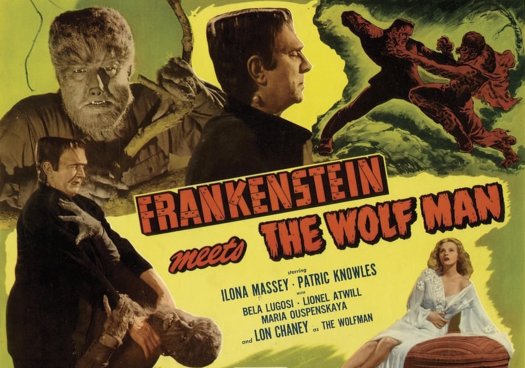
Horror Film Review: Frankenstein Meets The Wolf Man (dir by Roy William Neill)


frankenstein_meets_the_wolf_man_movie_poster

Long before Batman v. Superman, there was Frankenstein Meets The Wolf Man!

Released in 1943, Frankenstein Meets The Wolf Man was the first of the Universal horror movies to feature the monsters meeting.  (Dracula would join both Frankenstein’s Monster and the Wolf Man in later films.)  In our current age of the MCU and Zack Snyder super hero movies, that might not seem like a big deal but I’m sure it was huge in 1943.  Were the Universal Monster Movies the first example of a shared cinematic universe?  To be honest, I have no idea but it sounds good so let’s go with it.

Frankenstein Meets The Wolf Man starts, as so many Frankenstein films have, with a little bit of grave robbing.  Except, this time, the grave robbers aren’t looking for body parts.  Instead, they break into the Talbot family crypt because they’ve heard that Larry Talbot was buried with a lot of jewelry and money.  As the grave robbers wander around the crypt, they recap for us everything that happened in The Wolf Man.  Finally, they open up Larry’s coffin and are confronted with the dead body of Larry Talbot himself!  (Larry is, once again, played by Lon Chaney, Jr.)

Unfortunately for our grave robbing friends, there’s a full moon out.  As soon as the moonlight shines on Larry, he comes back to life and promptly transforms into … THE WOLF MAN!

After killing one of the robbers, the Wolf Man runs out of the tomb.  The next morning, once again human and alive, Larry Talbot wakes up in some bushes.  He’s arrested by the police.  He’s sent to a mental hospital.  He transforms a few more times and kills a few more stock characters.  And during all of this, Larry tells anyone who will listen that he just wants to be cured of his condition so that he can die and stay dead.

It was at this point that it occurred to me that Larry Talbot is perhaps the whiniest werewolf in film history.

Eventually, Larry decides that maybe the famous Dr. Ludwig Frankenstein could help him!  So, he breaks out of the hospital and travels to Germany (though, since the film was made during World War II, we’re never specifically told that he’s in Germany).  Accompanying him is Malena (Maria Ouspenkaya), the gypsy woman from the first Wolf Man.

In Germany a generic Eastern European country, Larry finds out that Dr. Frankenstein is dead and his research is missing.  Larry does, however, discover the frozen body of Frankenstein’s Monster (now played by Bela Lugosi).  After reviving the monster, Larry is upset to discover that the Monster not only doesn’t know where to find Frankenstein’s research but that, after dealing with their crap for four movies, the Monster doesn’t really seem to care about doing anything other than harassing the local villagers.

Fortunately, Larry does get to meet Ludwig’s widow (Illona Massey) and get a chance to tell her about how much he wishes he was dead.  Probably just to get him to shut up about how terrible his existence is, the widow agrees to help Larry.  She gives him Ludwig’s research and Larry believes that he’s finally found a way to end both his life and the Monster’s!

Unfortunately, it doesn’t quite work that way.  For one thing, Larry is working with a scientist (played by Patric Knowles) who doesn’t think that the Monster needs to be destroyed.  Secondly, Larry keeps forgetting to keep track of the lunar cycles.  That full moon is continually taking him by surprise.

It all leads to a final battle between Frankenstein’s Monster and the Wolf Man.  It only lasts for a little less than 10 minutes so it’s hard not to be a bit disappointed but at least no one talks about having a mother named Martha.

(Can you imagine that conversation?

“Growl growl growl growl”

“Why you say Martha?”

“Growl growl.”

“But Monster’s mother named Martha!”

“Growl!”

“Friends!”

“growl…”)

(It’s been seven months since that damn movie came out and, here at the Shattered Lens, we’re still getting mileage out of “But my mother was named Martha!” jokes.)

Frankenstein Meets The Wolf Man isn’t necessarily a good movie but it is a lot of fun to watch.  It helps, of course, if you’ve seen the other Universal horror films.  Part of the fun is spotting members of the Universal stock company, like Lionel Atwill and Dwight Frye, and seeing who they’ll be playing this time around.  One thing that I did legitimately appreciate is that the film made at least some sort of an effort to maintain a continuity with both The Wolf Man and Ghost of Frankenstein.  It appears that some actual thought was put into explaining how both the Wolf Man and the Monster were still around after the events of the last two films.  That shows more respect for the audience that you’ll find in most modern films.