4 Or More Shots From 4 Or More Films is just what it says it is, 4 shots from 4 of our favorite films. As opposed to the reviews and recaps that we usually post, 4 Shots From 4 Films lets the visuals do the talking!
Today the Shattered Lens celebrates what would have been the 94th birthday of the great cinematographer, Gordon Willis. Willis was the master of using shadow and underexposed film to create some of the most haunting movie images of the 70s and 80s. He was also one of the first cinematographers to take advantage of the so-called “magic hour,” that moment when the sun is setting and everything is bathed in a golden glow. Today, everyone does that but Willis was the first.
Willis has often been cited as one of the most influential cinematographers of all time but, amazingly, Willis would receive only two Academy Award nominations (for Zelig and The Godfather Part III) and he would never win a competitive Oscar.
In memory of Gordon Willis, here are….
6 Shots From 6 Gordon Willis Films
End of the Road (1970, dir by Aram Avakian, Cinematography by Gordon Willis)
The Godfather (1972, dir by Francis Ford Coppola, Cinematography by Gordon Willis)
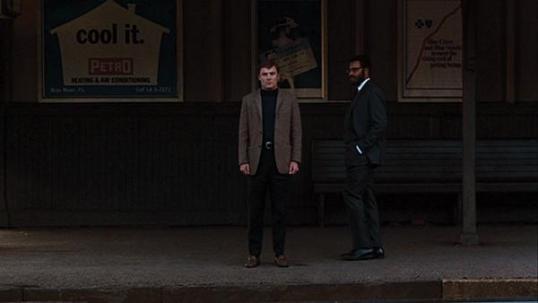
The Parallax View (1974, dir by Alan J. Pakula, Cinematography by Gordon Willis)
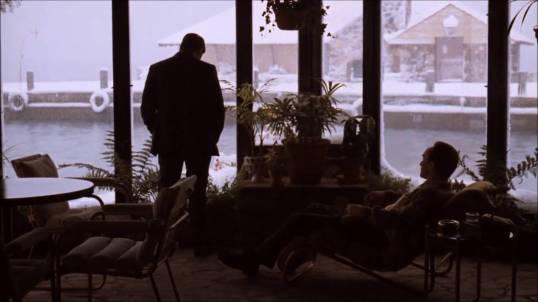
The Godfather Part II (dir by Francis Ford Coppola, Cinematography by Gordon Willis)
All The President’s Men (1976, dir by Alan J. Pakula, Cinematography by Gordon Willis)
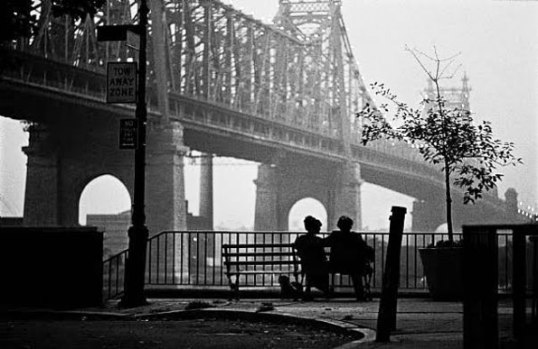
Manhattan (1979, dir by Woody Allen, Cinematography by Gordon Willis)
4 Or More Shots From 4 Or More Films is just what it says it is, 4 shots from 4 of our favorite films. As opposed to the reviews and recaps that we usually post, 4 Shots From 4 Films lets the visuals do the talking!
Today the Shattered Lens celebrates what would have been the 91st birthday of the great cinematographer, Gordon Willis. Willis was the master of using shadow and underexposed film to create some of the most haunting movie images of the 70s and 80s. He was also one of the first cinematographers to take advantage of the so-called “magic hour,” that moment when the sun is setting and everything is bathed in a golden glow. Today, everyone does that but Willis was the first.
Willis has often been cited as one of the most influential cinematographers of all time but, amazingly, Willis would receive only two Academy Award nominations (for Zelig and The Godfather Part III) and he would never win a competitive Oscar. Remember that, the next time someone argues that the Oscars are the final arbitrator as far as cinematic quality is concerned.
(Actually, does anyone argue that anymore?)
In memory of Gordon Willis, here are….
6 Shots From 6 Gordon Willis Films
End of the Road (1970, dir by Aram Avakian, Cinematography by Gordon Willis)
The Godfather (1972, dir by Francis Ford Coppola, Cinematography by Gordon Willis)
The Parallax View (1974, dir by Alan J. Pakula, Cinematography by Gordon Willis)
The Godfather Part II (dir by Francis Ford Coppola, Cinematography by Gordon Willis)
All The President’s Men (1976, dir by Alan J. Pakula, Cinematography by Gordon Willis)
Manhattan (1979, dir by Woody Allen, Cinematography by Gordon Willis)
When I was little, my Aunt would sometimes take my older brother and I with her into Manhattan. In a little movie theatre near 82nd Street, she’d get us a set of tickets for a film, help us get seated with snacks and then either stay for the movie or leave to perform housekeeping duties for someone nearby if she had work and we weren’t allowed to hang out on site. John Carpenter’s Escape From New York wasn’t a film she stayed for (she loved Raiders of the Lost Ark), but it was okay. I was introduced to Snake Plissken, who ended up being cooler than Han Solo to my six year old eyes. Instead of being the hero, here was a criminal being asked to a mission. It showed me that even the bad guys could be heroes, now and then (or better yet, not every hero is cookie cutter clean). The film became an instant favorite for me. As I also do with Jaws and The Fog, I try not to let a year go by without watching Escape From New York at least once. It was my first Carpenter film.
The cultural impact of Escape From New York is pretty grand, in my opinion. It had a major influence on Hideo Kojima’s Metal Gear video games and also spawned a few comics with Plissken, complete with Jack Burton crossovers with Carpenter’s Big Trouble in Little China.
Carpenter brought in most of the same crew he worked with in his previous movies. The film was the third collaboration between Carpenter and Debra Hill, who previously worked with him in 1978’s Halloween and 1980’s The Fog. Though Hill didn’t write this one, she was still the producer, along with Larry Franco. There’s also a bit of speculation on whether Hill performed the opening vocals describing New York or Jamie Lee Curtis handled that. Cinematographer Dean Cundey (who worked on most of Carpenter’s early films) returned to help give the movie it’s gritty look, which is helpful considering how much of it takes place either at night or in darkened rooms. Another interesting part of the production is James Cameron, who was the Director of Photography when it came to the effects and matte work. One of the best effects shots in the film has Plissken gliding over Manhattan, which was designed by Effects member John C. Wash. The shot on his plane’s dashboard of the city was made from miniature mock up with reflective tape that made it appear as if it were digital, which was pretty cool given that they weren’t on an Industrial Light and Magic budget. There’s a fantastic article on We Are The Mutantsand on theEscape From New York/LA Fan Pagethat focus on Wash’s technical contributions to the film.
For Carpenter’s career, Escape From New York marked the start of a great working relationship with Alan Howarth. Howarth, who also worked on the sound in the film, assisted Carpenter with the soundtrack. I’ve always felt this brought a new level to Carpenter’s music overall. You can easily hear the difference when Howarth was involved. Where Carpenter excelled at general synth sound, Howarth’s touch added some bass and depth. Together, they’d work on Christine, Big Trouble in Little China, Halloween III: Season of the Witch, Prince of Darkness and They Live together. On his own, Howarth was also responsible for both Halloween 2, 4 and 5.
For the writing, Carpenter worked with Nick Castle, who played Michael Myers for him in the original Halloween. Escape From New York’s story is simple. In 1988, the crime rate for the United States rises 400 percent. As a result, someone had the notion to turn Manhattan into a prison for an entire country, setting up walls around the borough and mines in the waterways. When Airforce One crashes in the borough nearly a decade later, the recently arrested war hero / fugitive Snake Plissken (Kurt Russell) is given a mission. Go in, rescue the President and/or the tape he’s carrying in 22 hours, and Plissken receives a pardon for all his crimes. To ensure that he follows through, he’s injected with nano-explosives that will kill him when the deadline hits. What seems like a simple mission becomes a little complicated when Snake discovers the President was captured by The Duke of New York, played by Issac Hayes (I’m Gonna Git You Sucka). Given that I’ve commuted to Manhattan more times than I can count, the film holds a special place in my heart. The concept of the entire borough being a prison was mind blowing as a kid. The concept still holds up for me as an adult.
For a film about New York, there were only two days of filming actually spent on location there, according to Carpenter’s commentary. Most of that was used for the opening shot at the Statue of Liberty. The bulk of the film was made in Los Angeles, Atlanta and St. Louis. At the time, there was a major fire in St. Louis. The damage made for a great backdrop for both the crash site and the city at night. The film does take some liberties with locations, though. For example, as far as I know, we don’t have a 69th Street Bridge in Manhattan, but as a kid, it didn’t matter much. From an action standpoint, it might not feel as intense as other films. Even when compared to other films in 1981 – like Raiders of the Lost Ark (released a month earlier) – Escape From New York doesn’t have a whole lot, though I still enjoy what it does provide.
Snake Plissken (Kurt Russell) has 22 hours to save the President in John Carpenter’s Escape from New York.
Casting seemed to come easy for the film. Hill, Castle and Carpenter reached out to some friends. Kurt Russell and Carpenter worked together on Elvis, that was easy enough. Russell’s work with Carpenter would continue on in The Thing, Big Trouble in Little China and Escape from L.A. From Halloween, Donald Pleasance was brought on to play the President, along with Charles Cyphers and Nancy Stephens as one pissed off flight attendant. From The Fog, we have Tom Atkins as Nick and Adrienne Barbeau as Maggie, who happened to be married to Carpenter at the time. According to Carpenter on the film’s commentary track, the sequence for Maggie’s exit needed to be reshot and extended. The scene with her body on the ground was filmed in Carpenter’s garage and added to the film.
Ernest Borgnine’s (The Poseidon Adventure) Cabbie was a favorite character of mine. Like most cabbies, he knew the city well. He even prepared for some of its challenges with molotov cocktails. Harry Dean Stanton (Alien, Christine) played Brain, the smartest individual in the room and the supplier for gas for the Duke. If you look close, you’ll also catch Assault on Precinct 13’s Frank Doubleday as Romero, which his crazy looking teeth. To round it all out, Lee Van Cleef (The Good, The Bad & The Ugly) plays Hauk, who puts Snake on his mission. And of course, it wouldn’t be a Carpenter film without a George ‘Buck’ Flower cameo. Buck was kind of Carpenter’s lucky charm in the way Dick Miller was for Joe Dante’s films. Good Ol’ Buck plays an inmate who sings Hail to the Chief.
Overall, Escape From New York is a classic Carpenter film that’s worth the watch. Whether you do so while wearing an eyepatch or not, that’s on you. We all have our preferences.
I have a love / hate relationship with David Koepp.
Loved The Shadow, Stir of Echoes, Angels & Demons, Panic Room, Jurassic Park and The Lost World (even to see him get eaten by a T-Rex while running down a busy street). I hated War of the Worlds (I’m sorry, but there’s no way Justin Chatwin’s character could have made it through that film), Mission: Impossible and Indiana Jones and the Kingdom of the Crystal Skull. Sometimes he hits the mark, and other times he misses.
Premium Rush falls somewhere in between. I really don’t have a whole lot to say about it. It’s mostly very good, particularly the bike riding scenes, but overall, the story could have been a little stronger and Michael Shannon (to me, anyway) felt really out of place here. It’s one of those movies where you pluck your brain out of your head and place it in the seat next to you. As long as you don’t give the movie too much thought and just enjoy the ride that’s presented to you, you’ll do just fine. At only 90 minutes, it moves very quickly and you’ll find yourself at the end before you really know it. I’ve seen this type of film before with Thomas Michael Donnelly’s Quicksilver, starring Kevin Bacon and 1993’s Airborne, directed by Castle Producer and former X-Files alum, Rob Bowman.
Wilee (Joseph Gordon-Levitt) is the best bike messenger around. He’s so good that he rides a ‘fixee’, a bike with no brakes, no sets of gears other than the basics and where the pedals always move (no cruising). Weaving in and out of traffic, he makes his way through each delivery with lots of style. There are these decision points that happily reminded me of both my bike riding times and motorcycle ones where Wilee has to find the next available angle to ride through. Scenes like that help to keep the action moving, when it happens. Premium Rush also showcases some great areas of Manhattan as they travel around. It’s a great looking film in that sense, with low cuts of bike wheels and jumps, but again, you’re either riding through the city and hoping they don’t hit, or you’re off the bike waiting to find out if they’ll jump onto another one again.
Basically, the story is that Wilee is given a special package that he needs to deliver, and a corrupt cop is on his tail, played over the top by Michael Shannon. That’s all there is to it. Get the package where it needs to go. Levitt does well in the film, as does Dania Ramirez and Aasif Mandvi. If there’s anyone in the movie who didn’t quite gel with me, it would be Michael Shannon. Shannon’s a good actor, and he’s not bad here, just really animated. It felt like a role that would have been better suited for Willem Dafoe or someone strange like that. I never felt any kind of fear or even worry when Shannon was around. He came off more like a bumbling crook in a film like Baby’s Day Out”, than someone who really needed what Wilee was carrying.
Koepp is getting better at directing, but some of the writing is a little off. The film suffers from the same problem that Green Lantern had with it’s climax or Tron: Legacy did with some of it’s parts. You have a few scenes where it could have been stronger had things moved in one direction, but then veers off. The impact just isn’t as great. I won’t go into detail on what they are, but for me, I saw a few things that could have been changed (or at least one in particular).
Overall, Premium Rush is a fun film that may get you wanting to ride after seeing it, but just don’t ask a lot of it. Just get your popcorn, sit back and enjoy where it all goes.



 Before you start, note that Escape From New York was recently showcased in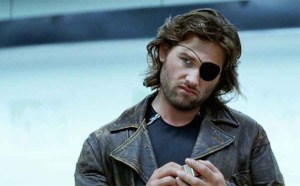

 Through the Shattered Lens