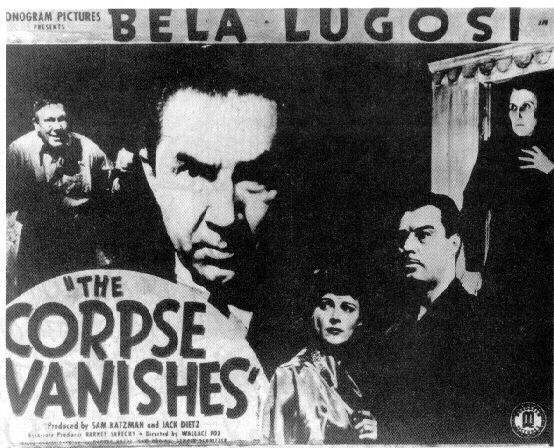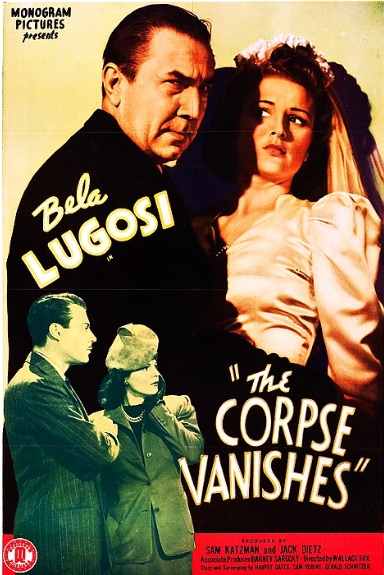
Horror Film Review: The Corpse Vanishes (dir by Wallace Fox)


1942’s The Corpse Vanishes opens with a young bride collapsing at her wedding.  A doctor runs over to her and says that she’s died.  A hearse — or a “stiff wagon,” as one witness puts it — pulls up and takes the body.  However, the body never reaches the morgue!

It turns out that this is not the first time this has happened.  In fact, there’s an epidemic of brides dying on their wedding day and their bodies disappearing.  One would think that this would cause a citywide panic or, at the very least, it would cause some people to maybe get married out-of-town.  Considering that the most recent victim was the daughter of one of the richest families in the community, you would think solving this mystery would be the police’s number one priority.

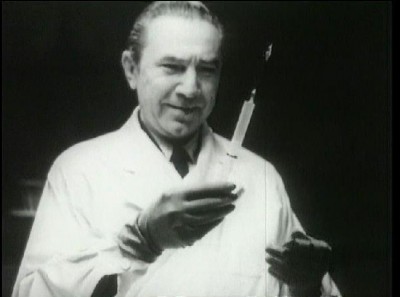
However, the police are useless.  And when the police can’t get the job done, it falls to journalists.  At least, that’s the way it worked in movies from the 1930s and the 40s.  While the cops were busy saying, “Scram!” and “Beat it, buster!,” it fell to the cynical and quick-witted journalist to find out what was going on.  In this case, Patricia Hunter (Luana Walters) investigates and discovers that all of the brides received an orchid on their wedding day.  (How the police didn’t notice this, I don’t know.)  Patricia tracks down the eccentric Dr. Lorenz (Bela Lugosi), who was once quite renowned for his orchids.

Dr. Lorenz now lives in a secluded mansion.  He’s polite when Patricia comes to speak to him but it’s obvious that he’s hiding something.  A sudden thunderstorm leads to Patricia and Dr. Foster (Tristram Coffin) getting stranded at Lorenz’s mansion.  Foster was visiting the mansion to examine Lorenz’s wife, the Countess (Elizabeth Russell).

Lorenz, as you probably already guessed, is behind the corpse abductions.  Except, of course, the brides aren’t dead.  Instead, the orchid has put them into a state of suspended animation.  Lorenz is extracting their blood and using it to keep his wife young.  Helping him out are his servants, a dwarf named Toby (Angelo Rossitto), Toby’s hulking half-brother, Angel (Frank Moran), and their mother, Fagah (Minerva Urecal).  Patricia figures out what is going on but will she be able to convince anyone else!?

From what I read about the film online, it would appear that The Corpse Vanishes has got a terrible reputation but, when I watched it, I actually found it to be entertaining when taken on its own Poverty Row terms.  No, the plot doesn’t make any sense.  But Bela Lugosi’s smile manages to be both sinister and inviting and Toby and Angel make for good henchmen.  The movie only has a 64-minute runtime and, as a result, the plot has to keep moving fairly quickly.  The film also features a lot of snappy “newsroom” dialogue between Patricia and her easily-annoyed editor (Kenneth Harlan), all delivered at a fast pace and with the the casually cynical outlook that makes 1940s newspaper movies so entertaining.  The Corpse Vanishes is a thoroughly ludicrous film that epitomizes an era and, as such, it’s far more diverting than one might otherwise expect.
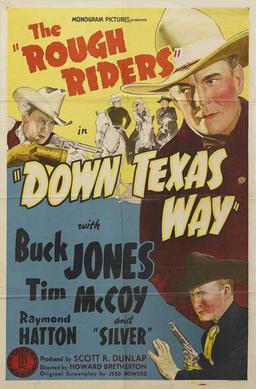
Down Texas Way (1942, directed by Howard Bretherton)


The sixth entry in the Rough Riders series finds Marshal Tim McCall (Tim McCoy) traveling from Wyoming to Texas so that he can help Sandy Hopkins (Raymond Hatton) celebrate his birthday.  When he arrives, he discovers that the birthday celebration is on hold because Sandy has been accused of murdering his best friend, John Dodge (Jack Daley).  Dodge was the richest man in town and the townspeople think that Sandy murdered him as a result of a disagreement over a card game.  What they don’t know is that Sandy and Dodge were only pretending to be mad at each other as a practical joke.

Dodge was really murdered by Bert Logan (Harry Woods), an outlaw who has hired an actress named Stella (Lois Austin) to pretend to be Dodge’s long-lost wife.  When all of Dodge’s property is given to Stella, Stella will then give it all to Dodge.  While Tim tries to keep the sheriff (Glenn Strange) from prosecuting Sandy, Marshal Buck Roberts (Buck Jones) goes undercover and infiltrates Logan’s gang.

After five previous films that just featured the Rough Riders talking about what their lives were like when they weren’t chasing outlaws, Down Texas Way shows us Sandy Hopkins’s life in Texas.  It’s about what you would expect.  Sandy likes to spend his time playing cards and hanging out in the lobby of his hotel.  It seems like an nice life, at least until Bert Logan tries to frame him for murder.  Luckily, the other Rough Riders are always there to have his back.  Down Texas Way is not one of the better Rough Riders films because Bert’s scheme never makes much sense but Hatton is relaxed and engaging and McCoy and Jones are their usual tough selves.  As with the previous film, the appeal of this Rough Riders film is the Rough Riders themselves and the way that they always stick together and have each other’s back.  That’s especially true in Down Texas Way, in which both Tim and Buck show that they’ll travel across several states if it means helping out a friend in a jam.

One final note, the town’s sheriff is named Trump, though I assume he’s no relation.  Glenn Strange, who played Sheriff Trump, would later play Frankenstein’s Monster in the last of the Universal horror movies.

Previous Rough Rider Reviews:

  1. Arizona Bound
  2. The Gunman From Bodie
  3. Forbidden Trails
  4. Below the Border
  5. Ghost Town

30 Days of Noir #14: Shoot to Kill (dir by William Berke)


The 1947 film, Shoot to Kill (also known as Police Reporter), opens with both a bang and a crash.

The police are chasing a car down one dark and lonely road.  When that car crashes, the police are shocked to discover who was inside of it.  Two men and one woman, all well-dressed.  The men are both dead but the woman is merely unconscious.  The police identify one of the men as being the notorious gangster, Dixie Logan (Robert Kent).  It makes sense that Logan would be fleeing the police but what about his two passengers, newly elected District Attorney Lawrence Dale (Edmund MacDonald) and Dale’s wife, Marian (Luana Walters)?

The police may not be able to get any answers but fortunately, there’s a reporter around!  Mitch Mitchell (Russell Wade) is a crime reporter and, seeing as how he knew both Lawrence and Marian, he seems like the perfect person to get some answers.  (In fact, it was Mitch who first suggested that Lawrence should hire Marian as his administrative assistant, therefore setting in motion the whirlwind romance that would end with them married.)  Mitch goes to see Marian in her hospital room and he asks her what happened.

It’s flashback time!  Yes, this is one of those films where almost the entire film is a flashback.  That, in itself, is not surprising.  Some of the best film noirs of all time were just extended flashbacks.  (D.O.A, Double Indemnity, and Sunset Boulevard, to name just a few examples.)  What sets Shoot to Kill apart is the fact that, occasionally, we even get characters having a second flashback while already in someone else’s flashback.  We’re through the the film noir looking glass here, people.

Lawrence Dale, we’re told, was elected district attorney because he managed to secure the conviction of notorious gangster Dixie Logan, despite Logan’s insistence that he was no longer involved in the rackets.  However, what we soon discover is that not only was Logan actually innocent but Dale specifically prosecuted him as a favor to some of Dale’s rival gangsters.  That’s right, Lawrence Dale was on the take!  It also turns out that Marian has some secrets of her own.  When she first showed up at Dale’s office, she was doing more than just looking for a job.  As for her marriage to Dale …. well, I really can’t tell you what the twist is here because it would spoil the entire film.

Shoot To Kill may clock in at just 64 minutes but it manages to pack a lot of twists and turns into just an hour.  In fact, I’d argue that it probably tries to do a little bit too much.  At times, the film is a bit difficult to follow and a few inconsistent performances don’t help matters.  For instance, Russell Wade is likable as the crime reporter but he still doesn’t exactly have a dynamic screen presence.  Much better cast are Luana Walters and Edmund MacDonald, who both do a good job as, respectively, a femme fatale and a sap.  At the very least, history nerds like me will be amused by the fact that Edmund MacDonald was obviously made up to resemble Thomas E. Dewey, the former Manhattan District Attorney who twice lost the U.S. presidency.

The best thing about Shoot To Kill is the look of the movie.  Filmed in grainy black-and-white and full of dark shadows, crooked camera angles, and men in fedoras lighting cigarettes in alleys, Shoot to Kill looks the way that a film noir is supposed to look.

Regardless of whether it was the filmmaker’s original intention, Shoot To Kill plays out like a low-budget, black-and-white fever dream.  It’s definitely a flawed film but, for lovers of film noir, still worth a look.

Halloween Havoc!: Bela Lugosi in THE CORPSE VANISHES (Monogram 1943)


gary loggins's avatarcracked rear viewer

cv1

A little over a week ago I wrote about Bela Lugosi’s pairing with The East Side Kids , and mentioned what’s been come to know as “The Monogram Nine”. These Poverty Row horrors were ultra-low-budget schlockfests made quickly for wartime audiences, and though the films weren’t very good, they gave Bela a chance to once again have his name above the titles. From 1941 to 1944, the Hungarian cranked out the rubbish: THE INVISIBLE GHOST, BLACK DRAGONS, THE CORPSE VANISHES, BOWERY AT MIDNIGHT, THE APE MAN, VOODOO MAN, RETURN OF THE APE MAN, and the two East Side Kids entries. Let’s take a look at a typical Lugosi vehicle, 1943’s THE CORPSE VANISHES.

cv2

Our story concerns young, virginal society brides who keep dying at the altar, their corpses hijacked by mysterious Dr. Lorenz (Bela, of course). The brides receive an “unusual orchid” whose “peculiar sweet odor” causes them to go into a…

View original post 602 more words