Halloween TV Havoc!: Lon Chaney Jr in FRANKENSTEIN (Tales of Tomorrow 1952)


gary loggins's avatarcracked rear viewer

lcj

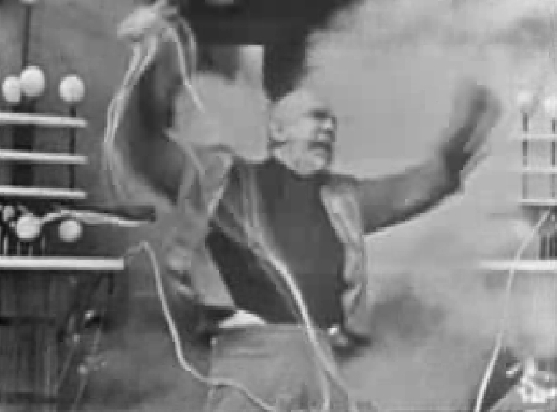
Early TV science fiction was dominated by kiddie programming like CAPTAIN VIDEO and TOM CORBETT, SPACE CADET. In 1951, a more adult oriented fantasy series called TALES OF TOMORROW made it’s debut on ABC. The live broadcast dramatized works by prominent writers like Arthur C. Clarke, Theodore Sturgeon, Jules Verne, and H.G. Wells. Big name stars such as Boris Karloff, Leslie Neilson, and Rod Steiger headlined many of the episodes. Lon Chaney Jr. starred in a half-hour adaptation of Mary Shelley’s FRANKENSTEIN, with John Newland (later host and director of ONE STEP BEYOND) as the scientist who creates a monster. It’s said Chaney was *ahem* a bit under the weather during this live performance (in other words, drunk as a skunk!).  I’ll let you be the judge. The quality of this kinescope-to-video isn’t great, but I hope you’ll enjoy watching Lon Chaney Jr. as the monster of FRANKENSTEIN!

View original post

Horror Film Review: The Wolf Man (dir by George Waggner)


the-wolfman

“Even a man who is pure in heart, and says his prayers by night;

May become a wolf when the wolfbane blooms and the autumn moon is bright.”

— Gypsy Poem, The Wolf Man (1941)

Poor Larry Talbot.

We all know his story, of course.  The plot of the original Wolf Man is so iconic and has been imitated in so many other films that, even if you somehow have never seen the original 1941 film, you still know what happened.

Larry (played by Lon Chaney, Jr.) is a loser.  When we first meet him, he is nervously returning to his childhood home in Wales.  (Chaney doesn’t sounds at all Welsh nor does he sounds like he’s from any other part of the UK for that matter, but that’s not really important.)  Larry’s older brother has recently died and Larry hopes that maybe he can reconcile with his father, Sir John (Claude Rains).  Larry’s brother was the favored son, the one who lived up to the Talbot name and made his father proud.  Larry, on the other hand, hasn’t really succeeded at anything he’s ever done.  To use the slang of the time, Larry comes across as basically being a lug.  A big dumb lug.

After discovering that his father really doesn’t seem to want to have much to do with him, Larry goes for a stroll through the nearby village.  He buys a silver-headed walking stick, mostly so he can flirt with the salesgirl, Gwen (Evelyn Ankers).  It turns out that there’s a gypsy camp nearby.  What better place to go on a date!?

Well, perhaps Larry should have just invited her to the movies.  Not only does a fortune teller (Maria Ouspenskaya) see something terrible in his future but Larry ends up getting bitten by what appears to be a wolf.  The good news is that Larry was bitten while saving the life of one of Gwen’s friends, which is certainly going to make him look like good boyfriend material.  The bad news is that the wolf was actually the fortune teller’s son, Bela (played by none other than Bela Lugosi).  It turns out that Bela was a werewolf and now, Larry’s going to be a werewolf too!

Larry, needless to say, is not happy about this.  But then again, Larry wasn’t happy before he became the werewolf either.  Lon Chaney, Jr. played Larry Talbot in five different movies and I don’t think he smiled once.  I guess that’s understandable, seeing as how he was a werewolf.  In every film in which he appeared, Larry would beg someone to kill him and put him out of his misery.  And, in every sequel, Larry would somehow be brought back to life and have to go through it all over again.  I guess he earned the right to be a little glum.

But still, even before he’s bitten in The Wolf Man, Larry is kind of a boring character.  The only time that he’s interesting is when he’s a wolf man.  And really, he’s a far more successful werewolf than human.  When we first meet Larry, he apologizing to his father for never living up to his expectations.  But once Larry turns into the Wolf Man, he finally manages to get things done.  When he’s the wolf man, Larry has the inner drive that he lacks as a human.

To me, the heart of The Wolf Man is not to be found in Chaney’s glum performance.  Instead, it’s in Claude Rains’s performance as John.  When we first meet Sir John, he seems like a rather imposing figure but, over the course of this 70 minute film, John slowly lowers his guard.  We discover that he’s actually a loving father and there’s something rather sweet about watching as he slowly welcomes Larry back into his life.  Of course, it all ends in tragedy.  These things often do.

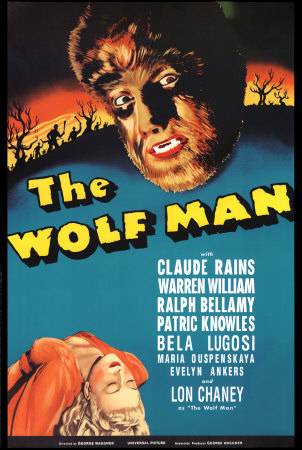
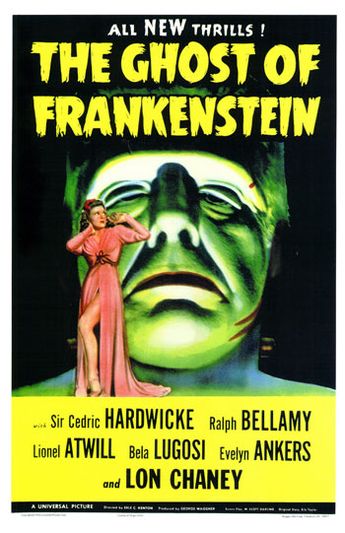
Everything, from the set design to shadowy cinematography to the hard-working fog machine (which keeps the moors looking properly creepy) to the performances of Claude Rains and Maria Ouspenskaya, comes together to make The Wolf Man into a genuine classic of horror cinema.  And, of course, I have to mention the brilliant makeup job that was done to transform Chaney into The Wolf Man.  

Still, I have to wonder — why did Lugosi turn into an actual wolf while Chaney turned into this?

wm

Oh well, it probably doesn’t matter.  Just relax and enjoy the damn film, as a wise person somewhere once said.  Be sure to watch The Wolf Man this holiday season!

Saddle Sore: BILLY THE KID (MGM 1941)


gary loggins's avatarcracked rear viewer

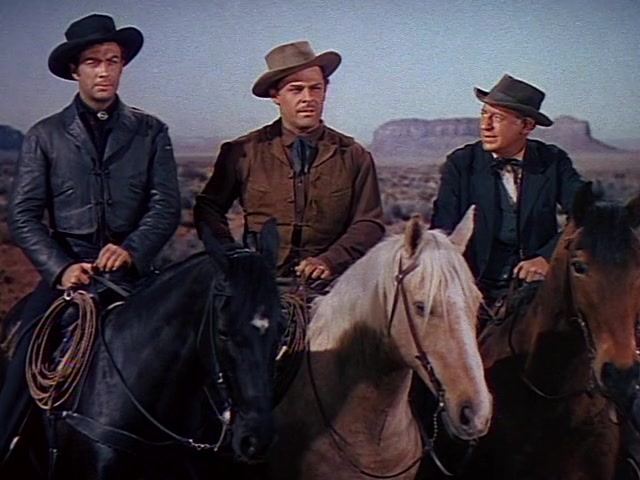
billy1

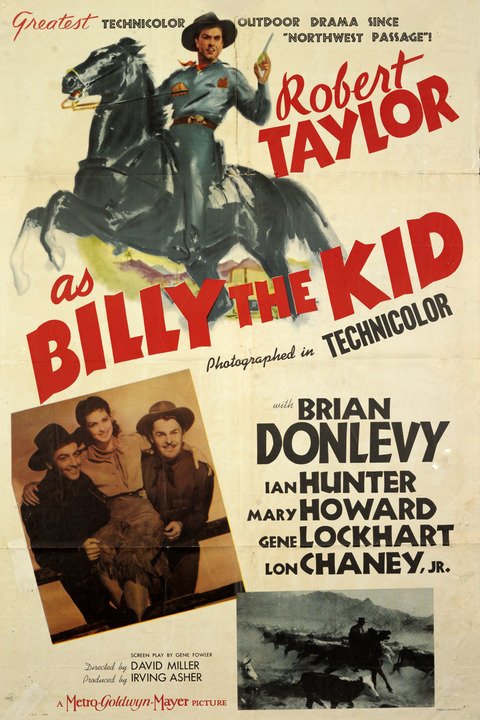
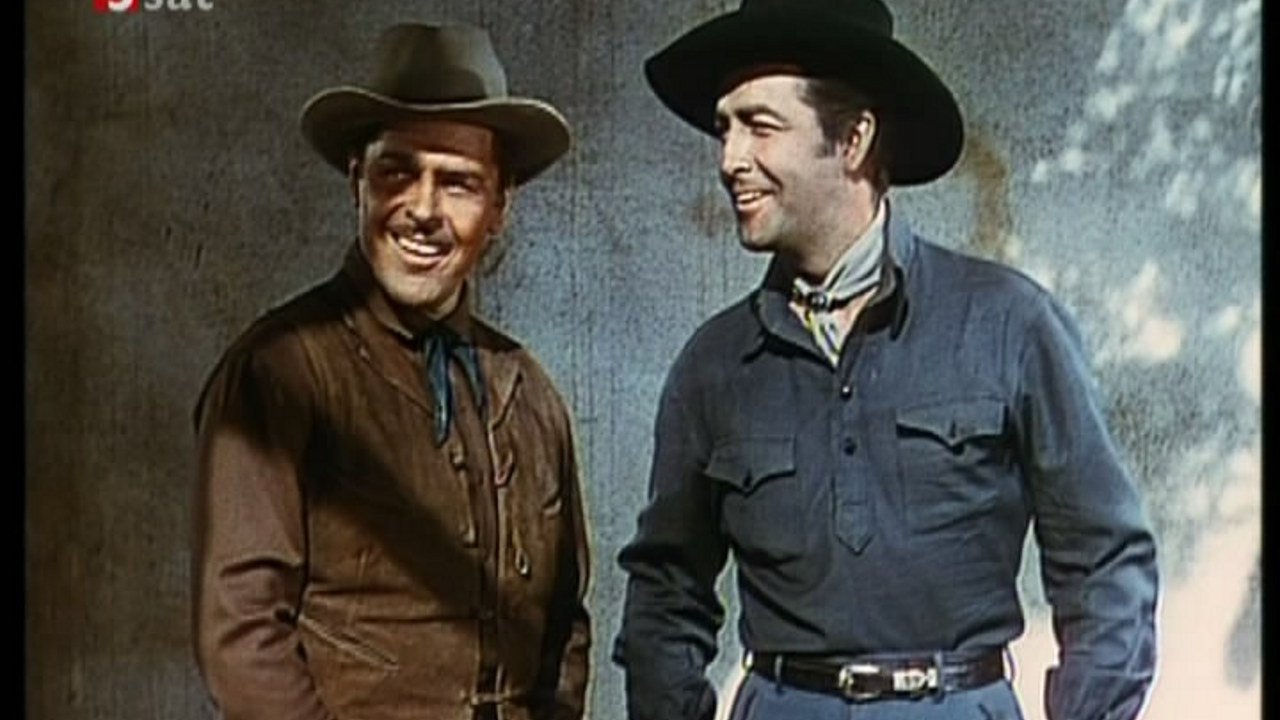
What kind of topsy-turvy world is this? Perennial bad guy Brian Donlevy is on the side of the law, loveable Gene Lockhart is the villain, and almost 30 Robert Taylor is BILLY THE KID. This 1941 Technicolor horse opera has only a passing resemblance to reality, and was actually a remake of a 1930 film starring Wallace Beery and Johnny Mack Brown, which depicted the outlaw’s legend a bit more truthfully… but not much!

billy2

In this version, Billy joins up with ruthless cattleman Hickey, who’s out to takeover Lincoln County. They start a stampede of rival Keating’s cattle, and during the commotion Billy encounters childhood friend Jim Sherwood, now working for Keating. Billy and his pal Pedro switch sides, and Pedro takes a bullet for it. The Kid is out for revenge, but Keating’s cooler head prevails, and he sets out to seek help from the territorial governor.

billy3

But Keating doesn’t make it, as we…

View original post 534 more words

Twilight of the Gods: HILLBILLYS IN A HAUNTED HOUSE (Woolner Brothers 1967)


gary loggins's avatarcracked rear viewer

hillb1

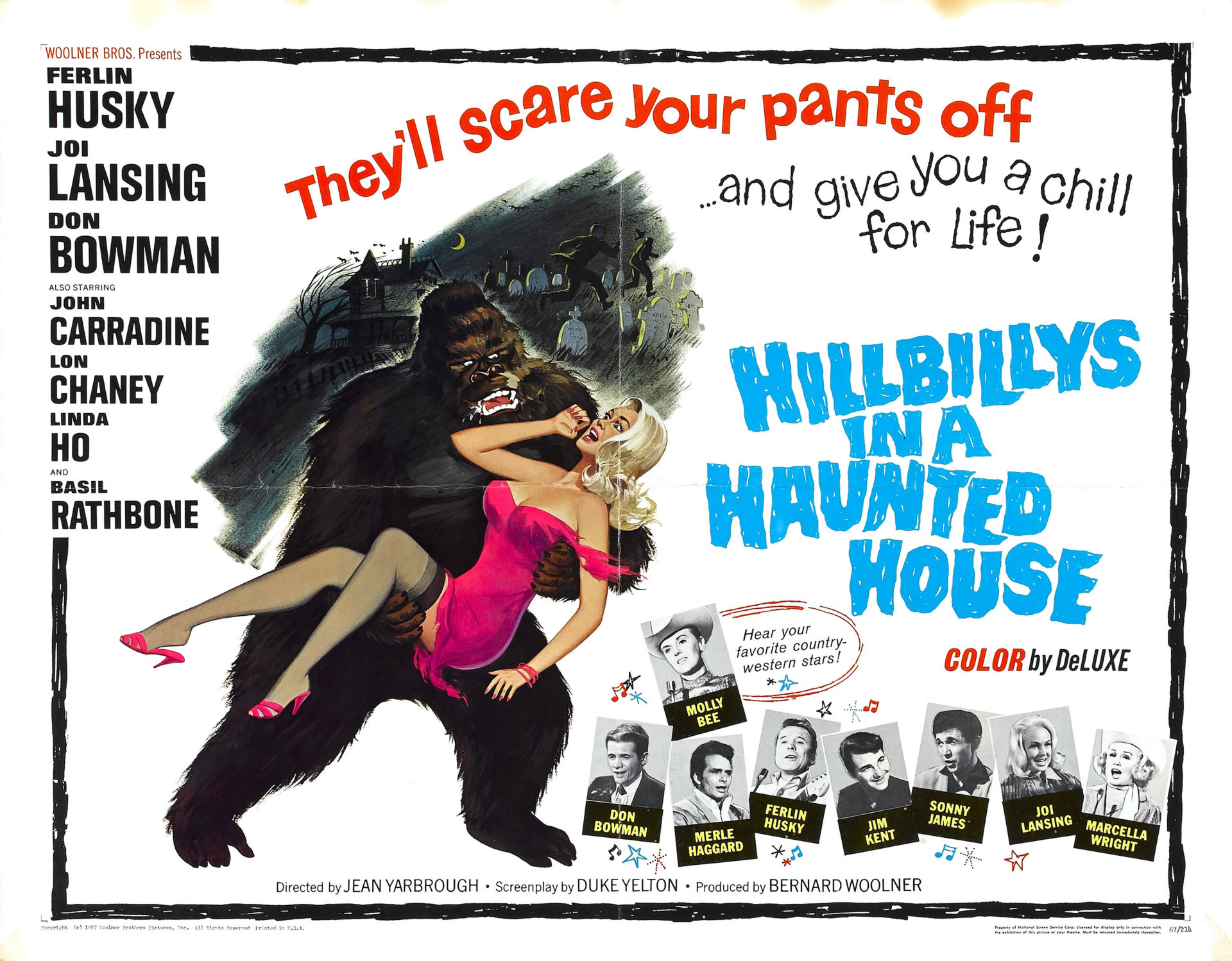
Let’s face it, HILLBILLYS IN A HAUNTED HOUSE is a lousy excuse for a movie. The acting is atrocious, the script derivative and juvenile, and the direction nearly non-existent. It’s a scare comedy that’s neither scary nor funny, and if you’re not a fan of 60’s style Country & Western music you’ll absolutely hate it. The only reason this Woolner Brothers drive-in dreck is remembered today is the presence of horror icons Basil Rathbone , John Carradine, and Lon Chaney Jr as the villains. But even this trio of terror can’t save the movie.

hillb2

The plot (such as it is) concerns country entertainers Woody Weatherby (Ferlin Husky, a classic country singer who can’t act), Boots Malone (blonde bombshell Joi Lansing), and Jeepers (country comic Don Bowman) forced to spend the night in the eerie Beauregard Mansion. There put through the usual fright paces with ghosts (obvious sheets on strings), a “weird-woof” (as Jeepers…

View original post 515 more words

Film Review: Welcome to Hard Times (1967, directed by Burt Kennedy)


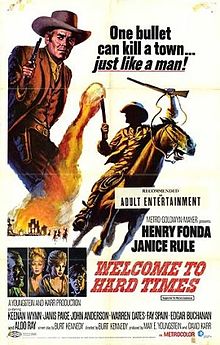
220px-WelcomehardtimesWelcome to Hard Times is a western that used to frequently turn up on TV when I was a kid.  I remembered that I had always enjoyed it but otherwise, I had largely forgotten about it when I saw that it was airing on TCM earlier today.  I rewatched it to see if I would still enjoy it.  Welcome To Hard Times has its flaws but it is still an above average addition to the genre.

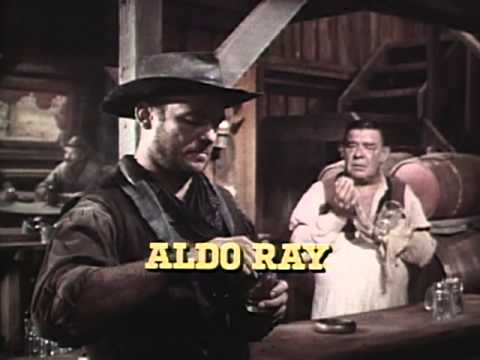
Based on a novel by E.L. Doctorow, Welcome to Hard Times takes place in the small western settlement of Hard Times, Nevada.  When the mysterious Man From Bodie (Aldo Ray) shows up, he terrorizes everyone in the town.  When the town founder, Mr. Fee (Paul Birch), attempts to stand up to him, the Man from Bodie shoots him dead.  When the local undertaker, Mr. Hansen (Elisha Cook, Jr.) tries to stop the Man from stealing one of his horses, the Man silently guns him down.  As the town’s mayor, Will Blue (Henry Fonda), stands by and helplessly watches, The Man rapes and murders Fee’s girlfriend and also kills the local saloonkeeper, Avery (Lon Chaney, Jr.).  The Man burns down the town and finally leaves.

Thought most of the surviving townspeople abandon Hard Times, Will Blue stays behind and tries to rebuild.  He adopts Fee’s son, Jimmy (Michael Shea).  Also staying behind is Jimmy’s mother, Molly Riordan (Janice Rule), a former saloon girl who was also raped by the Man and who constantly taunts Will for not being able to stand up to him.  New settlers arrive and the town starts to rebuild.  Zar (Kennan Wynn) and his four girls reopen the saloon and serve the workers at a nearby mine.  Isaac Maple (John Anderson) reopens the general store.  Under Will’s leadership, Hard Times starts to thrive.

A drifter named Leo Jenks (the great Warren Oates) also moves in.  When Molly discovers that Leo is a crack shot, she gets him to teach Jimmy how to handle a shotgun.  Both she and Will know that the Man is going to return in the spring.  Molly is obsessed with vengeance and Will fears that Jimmy is going to be consumed by her hatred.

Aldo Ray  Welcome to Hard Times (1967)Of course, the Man does eventually return.

Welcome to Hard Times works best at the beginning and the end, when Aldo Ray is on-screen.  As the sadistic Man from Bodie, Ray gives a classic western bad guy performance.  He’s intimidating, he’s violent, and he guns down the citizens of Hard Times with even more casual arrogance than Lee Marvin, Jack Palance, and Lee Van Cleef combined!  The middle section of the film drags and it is hard to ignore Jane Rule’s shaky Irish accent.  It is obvious that Welcome to Hard Times is trying to say something about Will Blue’s humanistic approach but it does not seem to know what.

Director Burt Kennedy was best known for directing comedic westerns.  Welcome to Hard Times was a rare dramatic film for him.  It’s not a great western but, thanks to Aldo Ray’s performance and the excellent work of cinematography Harry Stradling, Jr., it’s still a worthy addition to the genre.


Aldo Ray

Embracing the Melodrama Part II #23: The Defiant Ones (dir by Stanley Kramer)


Defiant_Ones_poster

Stanley Kramer is one of those old school filmmakers who directed several films that were acclaimed when they were originally released but who tends to be dismissed by contemporary film critics.  Kramer specialized in making films about social issues and he deserves to be applauded for attempting to look at issues that Hollywood, at that time, would have preferred to ignore.  However, as Mark Harris points out in his excellent book Pictures At A Revolution, Kramer started out as a producer and, even after he started directing, he never lost his producer sensibility.  As a result, a Kramer film would typically address issues that were guaranteed to generate a lot of free publicity but, at the same time, Kramer would never run the risk of truly alienating his audience by digging too deeply into those issues.  As a result, Kramer’s films have come to represent a very safe and middlebrow version of 50s and early 60s style liberalism.

Now, I have previously reviewed 4 Stanley Kramer films on this site and I have to admit that I was somewhat dismissive of most of them.  I felt that Ship of Fools was shallow.  I thought that Guess Who’s Coming To Dinner collapsed under the combined weight of a self-satisfied script and Kramer’s refusal to let Sidney Poitier’s character be anything other than idealized perfection.  R.P.M. is a guilty pleasure, specifically because Kramer was so out-of-touch with the film’s subject matter.  I did give Judgment at Nuremberg a good review, describing it as one of Kramer’s rare films that still holds up today.

And now, I’m going to give another Kramer film a good review.

Kramer’s 1958 film The Defiant Ones features a classic Kramer situation.  White Joker (Tony Curtis) and black Noah (Sidney Poitier) are both prisoners in the deep south.  Joker is an unrepentant and violent racist while Noah … well, Noah is Sidney Poitier.  He’s determined, he’s not afraid to speak his mind, and most of all, he’s dignified.  That’s not meant to be a complaint about Poitier’s performance in The Defiant Ones.  In the role of Noah, Poitier has a great screen presence and it’s impossible not to root for him.  Whereas Curtis tends to chew up every piece of scenery that he gets nears (and, again, that’s not really a complaint because Curtis’s overacting is totally appropriate for his character), Poitier keeps the film grounded.

When the prison bus that is transporting them crashes, Joker and Noah are able to escape.  Fleeing on foot, they make their way through the wilderness and attempt to hide from the police.  As quickly becomes obvious, Joker and Noah hate each other but, because the sheriff had a sense of humor, they have also been chained together.  In other words, they’re stuck with each other and, in order to survive, they’re going to have to learn to coexist.

No, it’s not exactly subtle but it works.

As a filmmaker, Kramer was never known for being visually inventive and, as a result, his films often had to resort to heavy-handed monologues to make their point.  But, in The Defiant Ones, the chains act as a great visual symbol for race relations in America.  Joker and Noah literally can’t escape from each other and they have to work together if they’re going to survive.  The chains make that obvious and, as a result, this is the rare Kramer film where nobody has to give a big speech to get across Kramer’s message.  As a result, The Defiant Ones preaches without ever getting preachy.

Though the film is dominated by Poitier and Curtis, it also features some excellent supporting work.  Lon Chaney, Jr, for instance, has a great cameo as world-weary man who helps the two convicts in their flight.  Cara Williams is surprisingly poignant as a lonely, unnamed woman who tries to both protect Joker and get rid of Noah.  And finally, there’s Theodore Bikel, playing the role of Sheriff Max Muller.  Max is the most surprising character in the film, the head of a posse that’s set out to recapture Noah and Joker.  As opposed to most of his men, Max is a humane and caring man who struggles to control the more bloodthirsty men who are serving under him.

Message films tend to get dated rather quickly but The Defiant Ones holds up surprisingly well.

It Came From The Public Domain: Indestructible Man (dir by Jack Pollexfen)


(SPOILERS BELOW)

First released in 1956, Indestructible Man is a low-budget B-movie that, as a result of being in the public domain, has been released on DVD by several different companies and seems to be included in just about every other compilation box set released by the folks at Mill Creek.  Perhaps because it stars Lon Chaney, Jr., it also seems to turn up on TCM fairly regularly.  That’s how I first saw it.

Whenever anyone mentions the film Indestructible Man to me, I always think about … well, actually no one ever mentions Indestructible Man to me.  But if they did, I would probably always remember one scene in particular.  It comes towards the end of the film.  Detective Dick Chasen (Max Showalter) has managed to solve the mystery of the Indestructible Man.  He celebrates by going out with his new girlfriend, a burlesque dancer played by Marian Carr.  Sitting there in the car, illuminated by the romantic glow of the moon, Detective Chasen informs her that he’s gotten her fired from her job because she’s going to be way too busy being his wife to have a career.  “Even if I wanted to, I couldn’t say no!” his girlfriend responds.

Don’t believe me?  Watch for yourself.  From Indestructible Man, here’s one of the most sexist scenes in film history…

Up until that ending, Indestructible Man tells the story of Charles “Butcher” Benson (Lon Chaney, Jr).   As you might guess from his nickname, Butcher isn’t a nice guy.  In fact, he’s a career criminal who is sitting on death row in California.  He’s been double-crossed by his criminal partners (who include both a lawyer and a guy named Squeamy, so you know they’re bad) and, from his prison cell, he swears that he will have his revenge.

And then he’s promptly executed.

However, his body is donated to science.  Scientist Robert Shaye is investigating whether or not massive electrical shock can be utilized to cure cancer.  When he and his assistant (Joe Flynn) shock the Butcher’s corpse, the Butcher comes back to life and starts to wander around the laboratory.  Shaye attempts to give him a shot but the hypodermic needle snaps when pressed against the Butcher’s skin.  The Butcher proceeds to strangle both the scientist and his assistant…

What’s going on?  Well, fortunately, this film is narrated by Detective Dick Chasen (and yes, that is the character’s name and that’s all I’m going to say about it).  Dick Chasen explains to us that 1) the electrical shock fried Butcher’s vocal chords and rendered him mute and that 2) the shock caused Butcher’s cells to multiply at such a rate that he is now …. INDESTRUCTIBLE!

Anyway, Butcher proceeds to spend the rest of the movie tracking down and murdering his former criminal associates.  Even before you reach the most sexist ending in the history of American cinema, it’s all rather silly.  It’s also rather slow.  The film lasts 70 minutes and I would say that 20 of those minutes consist of pure padding.

However, as often happened with B-movies, the low budget occasionally works to the film’s advantage.  The flat black-and-white and the stark sets may have been an unintentional consequence of economic reality but, at the same time, they give the film a much needed edge.

Much as the low budget accidentally worked to the film’s advantage, so to did the personal demons of Lon Chaney, Jr. contribute to making him into a surprisingly effective and disturbingly believable killer.  Though he’s best remembered for playing the handsome and soulful Larry Talbot in the original Wolf Man, by the time Lon Chaney, Jr. made Indestructible Man, years of drinking, smoking, and self-destructive behavior had caught up with the former matinée idol.  Chaney’s ravaged face, marked by deep lines and sporting a permanently grim expression, makes him perfect for this role.  The highest praise that I can pay to Chaney’s performance is that you look at him and you truly believe that his character would be nicknamed Butcher.

As I stated at the start of this review, Indestructible Man is in the public domain and it’s fairly easy to track down.  For that matter, you can always watch it below.

And just remember … you’re not supposed to say no to a detective…