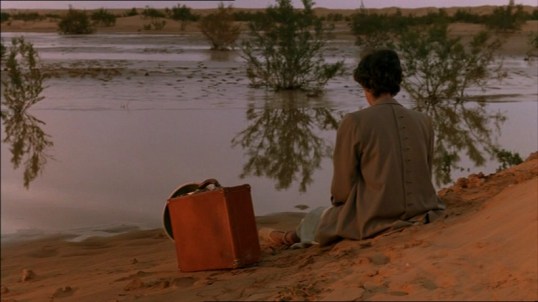
Film Review: Michael Collins (dir by Neil Jordan)


Released in 1996, Michael Collins tells the story of the early 20th century struggle of Ireland to gain independence from Britain.

Liam Neeson stars as Michael “Mick” Collins, the revolutionary leader who perfected the use of guerilla warfare against the British and then, in the greatest of ironies, found himself fighting some of his former allies during the Irish Civil War.  Aidan Quinn plays Mick’s friend and fellow revolutionary, Harry Boland.  Both Harry and Mick fall in love with Kitty Kiernan (Julia Roberts).  Stephen Rea shows up as Ned Broy, a member of the Dublin police department who is inspired by Mick’s words to become a double agent.  Charles Dance has a cameo as the fearsome Soames, a British intelligence agent who is sent to Ireland to violently put down the Irish insurgency.  Finally, Alan Rickman plays Eamon de Valera, who goes from being one of Mick’s strongest allies to being one of his fiercest rivals.  The film follows Collins from the Easter Rising of 1916 to his eventual assassination in 1922, providing a look at the history of Ireland that is as much directed towards those outside of Ireland as those on the inside.

When watching Michael Collins, it helps to have a working knowledge of Irish history.  Otherwise, it can occasionally be a bit difficult to keep track of who is angry with who at any particular point in time.  Of course, it should be noted that the movie itself is not exactly historically accurate.  In the film, the gentle and likable Ned Broy becomes a victim of British bloodlust.  In real life, Ned Broy outlived Michael Collins by several decades and died peacefully at the age of 84.  For that matter, the film presents Eamon de Valera as being coldly Machiavellian and it suggests that de Valera was jealous of Mick’s popularity.  Though both Rickman and director Neil Jordan later said it wasn’t intentional, the film also seems to suggest that de Valera played a role in Collins’s assassination.  While Eamon de Valera remains a controversial figure for many reasons (including his neutrality during World War II), Jordan has said that he feels de Valera was not necessarily treated fairly in Michael Collins and indeed, de Valera — who plays as big a role in the founding of the Irish republic as anyone — is portrayed as often being ineffectual and unwilling to truly put himself at risk to fight the British.  De Valera’s relationship with Collins was undoubtedly more complex than portrayed in this film but, when one makes a movie for an international audience, nuance is often the first thing that’s abandoned.

Seen today, 29 years after it was released, Michael Collins is an impressively made film that has a few inescapable flaws.  It’s gorgeous to look at, full of moody shots of dark Dublin streets.  The violence is often shocking and Jordan doesn’t shy away from considering the moral implications of Collins’s guerilla warfare.  Michael Collins doesn’t make the mistake of blindly celebrating violence, which would be a valuable lesson for the world’s current crop of self-styled revolutionaries if they were only willing to hear it.  Having gotten used to seeing Liam Neeson cast in one generic action film after another, it was interesting to watch Michael Collins and see what a good actor he truly could be.  Even in 1996, He was perhaps a few years too old to playing a man who was only 31 when he died but Neeson still plays the role with a ferocious charisma that makes him believable as a leader.  His scenes with Aidan Quinn have a joie de vivre that brings out the both in best actors.  Alan Rickman is memorably sinister as Eamon de Valera and Stephen Rea’s gentle style makes Ned Broy into a truly tragic figure.  That said, the very American Julia Roberts feels miscast as Kitty Kiernan.  One gets the feeling that she was cast solely for her box office appeal.  Every film, the feeling goes, needs  a love story and those love stories need to be between people with familiar faces and Roberts is such a familiar face that her every appearance in the film feels like a distraction from the story being told.  That said, the film captures the excitement and danger of being in the middle of history-making events.  It’s a historical epic that’s never boring and manages to hold the viewer’s interest.

Michael Collins is ultimately a flawed but entertaining look at the early days of the Irish republic.
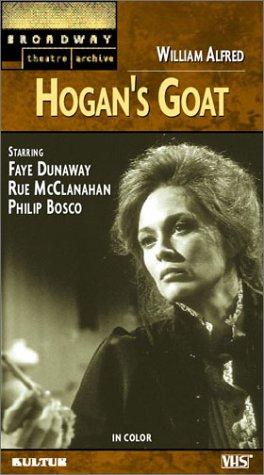
Made-For-Television Film Review: Hogan’s Goat (dir by Glenn Jordan)


1971’s Hogan’s Goat opens in Brooklyn in the 1890s.  This was when Brooklyn itself was still a separate city, before it become a borough of the unified New York City.  If you’ve watched the video that I include with most of my Welcome Back Kotter reviews, you’ll notice the boast: “Fourth largest city” on the Welcome to Brooklyn sign.  And indeed, if Brookyln had remained independent, it would now be the fourth most populated city in America, behind New York, Los Angeles, and Chicago.  Sorry, Brooklyn.

(However, Houston thanks you.)

Local ward boss Matt Stanton (Robert Foxworth) heads home with what he thinks is exciting news.  He tells his wife, Kathleen (Faye Dunaway), that he is finally going to be mayor of Brooklyn.  The current mayor, a man named Quinn (George Rose), has been caught up in some sort of corruption and the Democratic political machine is ready to abandon him.  Matt Stanton is about to become one of the most powerful men in New York.  That’s not bad for a relatively young man who came to America from Ireland in search of a better life.  Adding to Stanton’s happiness is the fact that he’ll be defeating Quinn, a canny politician towards whom Stanton holds a grudge.  Kathleen, however, is worried.  An immigrant herself, Kathleen met Stanton while the latter was in London.  They were married in a civil ceremony and, ever since Stanton brought her back to Brooklyn, she has been lying and telling everyone that they were married in a church.  Kathleen feels that she and Stanton have been living in sin and she wants to have a convalidation ceremony.  Stanton refuses because doing so would mean admitting the lie in the first place and he can’t afford to lose the support of the Irish Catholic voters of Brooklyn.

However, it turns out that there are even more secrets in Stanton’s past, ones that Kathleen doesn’t know about but Quinn does.  When those secrets start to come out, Kathleen comes to realize that there’s much that she doesn’t know about her husband.  Stanton, with political power in his grasp, desperately tries to hold on to the image that he’s created of himself and Kathleen, leading to tragedy.

Hogan’s Goat was an Off-Broadway hit when it premiered in the mid-60s and its success led to Faye Dunaway getting her first film offers.  The made-for-television version of Hogan’s Goat, which premiered on PBS and featured Dunaway recreating her stage role, is essentially a filmed play.  Little effort was made to “open up” the story and, as a result, the film is undeniably stagy.  It’s clear from the start the film was mostly shot to record Faye Dunaway’s acclaimed performance for posterity.  Indeed, she’s the only member of the theatrical cast to appear in the film version.  Dunaway does give a strong performance, easily dominating the film with her mix of nervous intensity and cool intelligence.  The rest of the cast is a mixed bag.  Robert Foxworth is appropriately driven and ambitious as Stanton but his Irish accent comes and goes.  Philip Bosco does well as a sympathetic priest and George Rose is appropriately manipulative as Quinn.

In the end, the story of Hogan’s Goat is probably of the greatest interest to Irish-American history nerds like me, who have read and studied how Irish immigrants, especially in the 19th century, faced tremendous prejudice when coming to the United States and how they reacted by building their own political machines and dispensing their own patronage.  In Hogan’s Goat, the conflict is less between more Stanton and Quinn and more between Kathleen’s traditional views and her devout Catholicism and Stanton’s own very American ambition.  Whereas Kathleen still fights to retain her faith, pride, and her commitment to who she was before she married Stanton, Stanton fights for power and to conquer the man who Stanton feels has everything that he desires.  In the end, Stanton’s hubris is not only his downfall but Kathleen’s as well.

Late Night Retro Television Review: Degrassi High 1.14 “It Creeps!”


Welcome to Late Night Retro Television Reviews, a feature where we review some of our favorite and least favorite shows of the past!  On Sunday, I will be reviewing the Canadian series, Degrassi High, which aired on CBC and PBS from 1989 to 1991!  The series can be streamed on YouTube!

Wake up in the morning, it’s time to make a feminist slasher film….

Episode 1.14 “It Creeps!”

(Dir by Kit Hood, originally aired on February 6th, 1990)

Shane’s back!

We haven’t seen Shane since he showed up at the last junior high dance.  Shane, of course, is the ex-boyfriend of Spike and the wayward father of Emma.  Shane took LSD while at a concert and either jumped or fell off a bridge.  When we see him in this episode, he’s suffering from brain damage.  One minute, he’s greeting Spike like his best friend.  Another minute, he’s yelling at her and suddenly acting aggressive.  Spike still tries to be nice to him, despite Liz’s comment of “He’s creepy.”  (Seriously, what is going with Liz this season?)  What’s really disturbing, though, is that Shane’s only close friend still appears to be Luke, the idiot who gave him the acid in the first place.

(Seriously, how did Luke get away with that?)

That was the B-plot of this episode.  The A-plot featured Lucy finally making her feminist horror film, It Creeps!!, for her creative writing class.  Personally, I like the idea behind It Creeps!!  It’s a slasher movie where, for once, it’s the guys getting knifed in the shower instead of the girls.  It’s the type of thing that would get Lucy a deal with Blumhouse today.  I’m a little bit surprised that she was able to get away with making it for a school project but I guess that 80s were a more innocent time.  If a student shot a bloody slasher film in her school today, she’d probably be suspended.

Lucy shows her film to the class and is shocked when they laugh at certain parts.  She runs out the room but her creative writing teacher assures her that class is enjoying her film.  He tells her that she did a good job, considering that it was her first film.  (It’s a hundred times better than Michael Scott’s Threat Level Midnight.)  Lucy returns to the classroom, just in time to find everyone cheering as Wheels dies on screen.

Of course, those of us who know our Degrassi history, know how this is going to turn out.  After graduation, Wheels is going to be driving drunk and he’s going to have the accident that will not only send him to prison but will also leave Lucy crippled and temporarily blinded.  Seriously, this show is a lot darker if you already know what’s going to happen in School’s Out!

As for this episode, it was a good one.  The plot with Lucy’s film worked because the end result actually looked like something that had been filmed by a moderately talented teenager who owned a somewhat beat-up video camera.  And I was glad that the show remembered that Shane existed.  Amanda Stepto did a wonderful job portraying Spike’s reaction to seeing Shane.  This was Degrassi High at its best.

Lisa Marie’s Week In Review: 3/10/25 — 3/16/25


Happy St. Patrick’s Day, everyone!  The 17th is not only St. Patrick’s Day but it’s also Kurt Russell’s birthday!  Buckle up because things are going to get wild in about an hour!

Here’s a quick look at what I watched over the previous week.

Films I Watched:

  1. Bagdad Cafe (1987)
  2. Blood Father (2016)
  3. Captain Ron (1992)
  4. Circle of Friends (1995)
  5. The Computer Wore Tennis Shoes (1969)
  6. Deepwater Horizon (2016)
  7. Dixie Dynamite (1976)
  8. Executive Decision (1996)
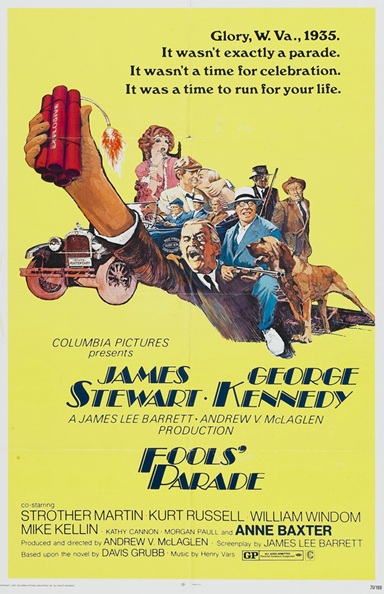
  9. Fools’ Parade (1971)
  10. The General (1998)
  11. Get Shorty (1995)
  12. The Food of the Gods (1976)
  13. Hogan’s Goat (1971)
  14. Michael Collins (1996)
  15. Now You See Him, Now You Don’t (1972)
  16. Poseidon (2006)
  17. The Snapper (1993)
  18. Soldier (1998)
  19. The Strongest Man In The World (1975)
  20. Superdad (1973)
  21. Swing Shift (1984)
  22. The Van (1996)
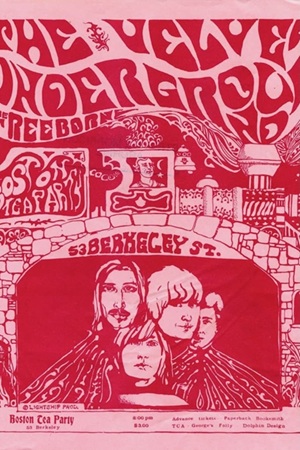
  23. The Velvet Underground In Boston (1967)

TV Shows I Watched:

  1. Check It Out!
  2. CHiPs
  3. Dark
  4. Degrassi High
  5. Fantasy Island
  6. Friday the 13th: The Series
  7. Highway to Heaven
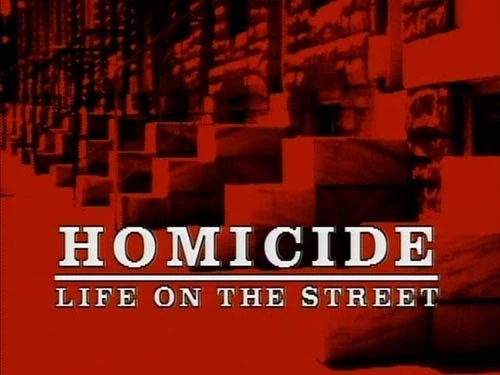
  8. Homicide: Life On The Street
  9. Miami Vice
  10. Pacific Blue
  11. St. Elsewhere
  12. Welcome Back, Kotter

Links From The Site:

  1. Arleigh reviewed Code of Silence!
  2. Jeff reviewed Sidekicks, Born To The West, and Far and Away!
  3. Brad reviewed Shane and Red Sun!  He wrote about Blood Father and shared scenes from Karate Kid and Lone Wolf McQuade!  He paid tribute to Paul Fix!
  4. Erin reviewed Touchback and Dreamer!  She also shared The Strangest Sin, Wild Parties, Swamp Sister, Born Innocent, The Canceled Czech, The Ides of March, and Climb A Broken Ladder!

News and Links From Last Week:

  1. Producer Stanley R. Jaffe Dies At 84
  2. A profile of Isabella I of Castile
  3. March 15 Painting For Happy St. Patrick’s Day 2025! Painting Chicago’s River Green! Here’s How They Do It!

Want to check out last week?  Click here!


Retro Television Review: Homicide: Life On The Street 3.6 “A Model Citizen”


Welcome to Retro Television Reviews, a feature where we review some of our favorite and least favorite shows of the past!  On Sundays, I will be reviewing Homicide: Life On The Street, which aired from 1993 to 1999, on NBC!  It  can be viewed on Peacock.

No one’s happy this week.

Episode 3.6 “A Model Citizen”

(Dir by John McNaughton, originally aired on November 11th, 1994)

Welcome to Baltimore, where everyone is depressed.  Consider this week’s episode of Homicide: Life On The Street.

  1. The episode opens with Munch, Bolander, Howard, and Felton in a morgue, waiting for the results of an autopsy.  They start talking about the shows that they watched as children and how many of them had their origins right in Baltimore.  Of course, none of those shows are on the air anymore.  Munch mentions his favorite childhood shows and is ridiculed for liking things when he was a kid.
  2. Emma Zoole (Lauren Tom), an artist who makes models of crime scenes for use in criminal court, stops by the department.  She’s looking for Steve Crosetti, to get his input on a recreation.  Meldrick Lewis tells her that Crosetti’s dead but he offers to help.  Lewis has a crush.  However, Emma likes Bayliss and Bayliss likes Emma.  Bayliss is even turned on by the fact that Emma sleeps in a coffin.  However, when Bayliss sees how upset Lewis is over his relationship with Emma, Bayliss tries to break up with her.  They end up having sex in the coffin instead.
  3. That’s it!, Lewis declares.  He cannot go into the bar business with Tim Bayliss.  Then again, there might not be a bar business anyway because Munch got kicked out of the state-required alcohol awareness class.  Munch, for whatever reason, decided to argue about whether or not a bartender could really be held responsible for getting someone drunk.
  4. Pembleton, Russert, and the city of Baltimore are all being sued by serial killer Pamela Wilgis.  Wilgis claims that Pembleton violated her civil rights when he interrogated her.  Pembleton’s entire interrogation style is put on trial.  He feels like he’s being attacked on all sides.  Finally, Pembleton gets depressed enough to reenter a church, even though he earlier claimed to no longer have any use for religion.
  5. Munch and Howard investigate the accidental shooting of a child by his older brother.  Much gets extremely upset while searching for the gun, taking Howard totally be surprise.  Howard comes to realize that Much actually cares about protecting children from violence and Munch realizes that the world is a terrible place.
  6. Beau Felton returns to his house and discovers that both his wife and his son have left and they’ve taken all the furniture with them.  Goodbye is scrawled, in lipstick, on the bathroom mirror.
  7. Much ends up sitting outside, staring at the ground while Lewis and then Howard both talk to him about how much life sucks.
  8. No one wants to end up like Steve Crosetti, Howard says at one point.  Good luck!  This job is depressing!

This was a good episode, one that really captured the emotional turmoil of seeing the worse that humanity has to offer while, at the same time, acknowledging that depressed people often use humor to deal with their feelings.  A few of Munch’s and Lewis’s line made me laugh out loud but seriously, I felt so bad for both of them!

Hopefully, everyone will have cheered up by next week.

Song of the Day: Theme From CHiPs by John Parker and Alan Silvestri


As today is Erik Estrada’s birthday, it’s obvious what today’s song of the day has to be.

No matter what you may think of the show, this theme has one of the greatest bass lines of all time.  If you’re not dancing, you might want to call 911.

4 Shots From 4 Films: Special Bernardo Bertolucci Edition


4 Shots From 4 Films is just what it says it is, 4 shots from 4 of our favorite films. As opposed to the reviews and recaps that we usually post, 4 Shots From 4 Films lets the visuals do the talking!

Today, the Shattered Lens celebrates Italian director Bernardo Bertolucci!  It’s time for….

4 Shots From 4 Bernardo Bertolucci Films

The Conformist (1970, dir by Bernardo Betrolucci, DP: Vittorio Storaro)

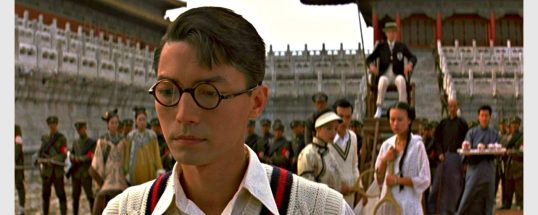
The Last Emperor (1987, dir by Bernardo Bertolucci, DP: Vittorio Storaro)

The Sheltering Sky (1990, dir by Bernardo Betrolucci, DP: Vittorio Storaro)

Stealing Beauty (1996, dir by Bernardo Bertolucci, DP: Darius Khondji)