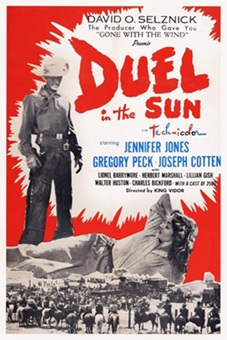
Duel In The Sun (1946, directed by King Vidor)


After her father is executed for killing her mother and her mother’s lover, “half-breed” Pearl Chavez (Jennifer Jones) is sent to live with her father’s second cousin, Laura Beth McCanles (Lillian Gish).  Laura is the wife of rancher, politician, and all-around racist Senator Jackson McCanles (Lionel Barrymore).  Worried that Pearl’s beauty and uninhibited manner will get her into trouble, Laura arranges for Pearl to meet with a minister known as The Sinkller (Walter Huston) who instructs Pearl on how to be a “good” girl.

Wanting to make Pearl bad and his, Lewton “Lewt” McCanles (Gregory Peck) becomes obsessed with Pearl and is soon forcing himself on her on a regular basis.  When the good McCanles brother, Jesse (Joseph Cotten), leaves the ranch despite being in love with Pearl, Pearl tries to find a good husband in the form of Sam Pierce (Charles Bickford).  Lewt responds by gunning Sam down and then goes on the run.  It all leads to an overwrought duel in the sun as the two doomed lovers take aim at each other.

Duel In The Sun is credited to veteran director King Vidor and there are a few shots of the western landscape that do feel typical of Vidor’s work.  However, Duel In The Sun’s true auteur was its producer, David O. Selznick.  Still looking to recapture his earlier success with Gone With The Wind and eager to make his future wife, Jennifer Jones, into an even bigger star than she was, Selznick obsessed over every detail of Duel In The Sun, pushing Vidor and a host of other directors (including Josef von Sternberg, William Dieterle, William Cameron Menzies, Otto Brower, and Sidney Franklin)  to make the film more steamy, more melodramatic, more violent, and more visually epic.  Reportedly, while Video was trying to shoot the film’s titular duel, he had to call cut several times when Selznick ran into the scene with a water bottle to spray more “sweat” onto Jones and Peck.  Today, the stiff Peck seems miscast as the black sheep of the family, the reserved Jones is even more miscast as a mestiza, and the plot is clearly too simplistic to carry the film’s epic ambitions.  A few impressive shots aside, Duel In The Sun is just boring,  In the 40s, though, the film’s relative openness about sex generated enough controversy to make Duel In The Sun into a box office hit.  It was one of the two top-grossing westerns of the 40s, beating out Red River, My Darling Clementine, Fort Apache, The Ox-Bow Incident, and several other films that were actually good.

Unlike Jones, Peck, and even usually reliable stalwart like Lionel Barrymore and Walter Huston, Joseph Cotten at least emerges from this film with his dignity intact.  Playing the good brother, Cotten gets to underplay while everyone else is overplaying and it turns out to be the right approach for him.  Surviving Duel In The Sun was no easy feat but Cotten pulled it off.

Retro Television Review: The Love Boat 4.13 “Isaac’s Teacher/Seal of Approval/The Curse of Dumbrowskis”


Welcome to Retro Television Reviews, a feature where we review some of our favorite and least favorite shows of the past!  On Wednesdays, I will be reviewing the original Love Boat, which aired on ABC from 1977 to 1986!  The series can be streamed on Paramount Plus!

Get ready for a very odd cruise!

Episode 4.13 “Isaac’s Teacher/Seal of Approval/The Curse of the Dumbrowskis”

(Dir by Bob Sweeney, originally aired on January 10th, 1981)

This is a weird episode.

Harriet (Florence Henderson) boards the ship with her husband, Harold Rogers (Jeffrey Tambor).  Now, the idea of Florence Henderson and Jeffrey Tambor as a married couple may sound strange but it’s even stranger when you actually see it.  Henderson and Tambor have absolutely zero chemistry together.  Tambor looks more like Henderson’s no-good stepson than her husband.

Harriet is convinced that she is destined to die at an early age so she continually pressures Harold to find a woman that he can marry after she’s gone.  In fact, Harriet thinks that maybe Harold could marry another passenger on the boat, Cindy (Christina Hart).  Harold is getting frustrated with the pressure that Harriet is putting on him to find a new lover.  Doc Bricker suggests that maybe Harold should make Harriet jealous by cheating on her with Cindy.  What?  I mean, I’m not surprised that Doc would make that suggestion but it is a bit odd that the show itself seems to think that this is a good idea.  Harold goes along with the idea because, even if Harriet doesn’t get jealous, he’ll still get to sleep with Cindy.  Wait.  What?

Harriet is okay with Harold cheating on her until Harold says that he wants to give her favorite necklace to Cindy.  Harriet realizes that she’s not okay with Harold giving her jewelry to his adulterous lover and she decides that she’ll no longer pressure Harold to find a new wife.  They leave the ship with their marriage stronger than ever.  Doc saves the day!

Meanwhile, Karen (Georgia Engel) boards the boat and immediately falls for Oscar Tilton (Donald O’Connor).  Now, as mismatched as Florence Henderson and Jeffrey Tambor are, they seem like soulmates compared to Georgia Engel and Donald O’Connor.  For one thing, O’Connor appears to be about 20 years older than Georgia Engel.  Secondly, Donald O’Connor’s ebullient style clashes wildly with Georgia Engel’s inability to speak above a whisper.

Oscar is an entertainer who is traveling with his seal, Shirley.  When Shirley sees that Oscar and Karen are falling in love, Shirley gets jealous and throws herself overboard.  She leaves behind her rubber ball, apparently as a way to taunt Oscar.  Oscar is depressed.  How can he do his act without Shirley?  Karen encourages him by telling him that he doesn’t need the seal to be entertaining.  Gopher even helps out by playing the horns that Shirley would have played had she not jumped into the ocean….

I am not making this up.

Anyway, good news all around.  Shirley survives jumping into the ocean and swims back to Oscar’s beach house.  Shirley shows up when the boat docks in Los Angeles.  Oscar tells Shirley that Karen is going to be a part of his life from now on.  Shirley claps her fins, indicating that she approves.

NO, I AM NOT MAKING THIS UP!

All I can say is thank goodness for Lillian Gish.  Gish plays Mrs. Williams, who boards the boat with her hulking nephew (Reb Brown).  Mrs. Williams is also Isaac’s former teacher.  Isaac is insecure about just being a bartender and pretends, with Gopher’s help, to be the ship’s first officer.  Captain Stubing is not amused.  Isaac tells Mrs. Williams the truth and Mrs. Williams replies that she is proud of Isaac, no matter what he does for a living.

Awwwwwwww!

This was a really simple story but it was sweet.  Lillian Gish’s natural class provided a balance to Jeffrey Tambor cheating on Florence Henderson and Donald O’Connor’s seal trying to scare off Georgia Engel.  And Ted Lange — seriously, episodes like this remind the viewer of how lucky The Love Boat was to have him.  Yes, everyone knows that pointing thing that he does.  But Lange also played Isaac as being a genuinely nice guy.  I don’t drink but if I did, I would want Isaac to be my bartender.

Again, this episode was weird but at least it gave Lillian Gish and Ted Lange a chance to shine.

Cleaning Out The DVR: The Comedians (dir by Peter Glenville)


Not to be mistaken for the Taylor Hackford-directed, Robert De Niro-starring disaster from a few years back, The Comedians is a film from 1967 that follows several different people as they attempt to survive day-to-day life in Haiti, back when Haiti was ruled by the dictator, Papa Doc Duvalier.

Richard Burton stars Mr. Brown (Richard Burton), a deeply cynical and world-weary Englishman who owns what passes for a luxury hotel in Haiti.  Though Mr. Brown hopes to be able to sell the hotel and get out of Haiti, he is also having an affair with Martha (Elizabeth Taylor), the German wife of Pineda (Peter Ustinov), the ambassador from Uruguay.  Mr. Brown tries to avoid politics, which it turns out is not easy to do when you’re living under a murderous regime.

Complicating Mr. Brown’s life is Major Jones (Alec Guinness), a retired British army officer who has come to Haiti to do business but who is promptly imprisoned when it’s discovered that he was invited to come to the island by a minister who was subsequently declared to be an enemy of the state.  The fascist Captain Concasseur (Raymond St. Jacques) arrests Major Jones and Mr. Brown takes it upon himself to try to get Jones released.  Unfortunately, Major Jones doesn’t quite understand how serious his situation is and he’s convinced the Haitians that he’s not only a brilliant military leader but that he can also arrange for them to receive a cache of weapons, which he claims he has hidden in a Miami warehouse.

Meanwhile, Mr. and Mrs. Smith (Paul Ford and Lillian Gish) have also arrived on the island, hoping to set up a vegetarian center in Haiti.  (Mr. Smith even once ran for President of the U.S. as the candidate of the Vegetarian Party.)  In many ways, Mr. and Mrs. Smith serve as a stand-in for clueless American activists, obsessing over minor issues while ignoring the larger problems that are right in front of their faces.

From the start, The Comedians establishes Haiti as being a dangerous place, a country where the people live in fear of the brutal police and where the poor struggle to survive day-to-day while their rulers live a life of luxury.  It’s a place where political dissidents regularly disappear, though the police aren’t above murdering people in public as well.  It’s a country where the State rules supreme, controlling the citizens through both fear and a fierce cult of personality.  Rebels like Dr. Magiot (James Earl Jones) only want the country to be free but they know that, as long superpowers like America are supporting the regime, there’s little that the rebels can realistically hope to accomplish.

A major theme running through The Comedians is that the real suffering of the Haitian people is often overshadowed by the strategic concerns of the United States.  Unfortunately, pretty much the same thing happens within the film itself.  While there’s several black actors in supporting roles, the story focuses on the white characters and, as a result, it sometimes feels like the film’s message is less about the people being oppressed and more about how unfortunate it is that people like Brown, Jones, and the Smiths are being inconvenienced by it all.  Like many similarly well-intentioned political films from the late 60s, The Comedians get so bogged down in all of the personal dramas that it loses sight of what’s actually the important part of the story.  The film is often seems more interested in Brown and Martha’s affair than in the conditions that would lead to people like Dr. Magiot risking their lives to bring about change.

For the most part, it’s a well-acted film.  Richard Burton’s natural self-loathing is put to good use and Alec Guinness has a few poignant scenes as a pathological liar who doesn’t realize how much trouble he’s actually in until it’s too late.  (Guinness also has a scene where he wears blackface and pretends to be Burton’s maid.  He does this in order to escape from the secret police and the film doesn’t treat it as being a joke but it’s still rather cringey to watch.)  Elizabeth Taylor is miscast as Martha and her German accent comes and goes but Paul Ford and Lillian Gish do a good job playing clueless Americans.  Perhaps the film’s strongest performance comes from Zakes Mokae, who doesn’t say much as a member of the secret police but who exudes menace every time that he’s on screen.  Still, as well acted at it may be, the film is slowly paced and always seem hesitant about taking any position beyond a general sense that dictatorships are bad.

That said, there’s nothing wrong with reminding people that dictatorships are bad.  That’s especially an important message today.  The past few years have left me convinced that a lot of people secretly yearn for a dictatorship and would be willing to trade their freedoms for a false sense of security.  Though the film may struggle dramatically, it’s still works as a warning about what true authoritarianism actually is.


Editorial: On Classic Hollywood and Historical Perspective


gary loggins's avatarcracked rear viewer

TRIGGER WARNING: Tonight’s post has been cancelled so I can present the following editorial. All views expressed are mine alone. Not all of you will agree with me. If you’re too sensitive, please just keep it moving. For the rest of you, read on…  

*sigh* I shouldn’t even have to be writing this. 

The New York Yankees baseball  team have stopped playing Kate Smith’s immortal “God Bless America” at their games. Hockey’s Philadelphia Flyers have followed suit, and Philly’s Wells Fargo Arena has gone so far as to  remove a statue of Ms. Smith from the premises. Meanwhile, at Kentucky’s Bowling Green University, plans are afoot to rename the Gish Sisters Movie Theater, named after pioneering film stars Lillian and Dorothy Gish.

What’s going on here, you may well ask?

Let’s start with the venerable Kate Smith. For those of you unfamiliar, Kate Smith was a popular songstress whose…

View original post 1,118 more words

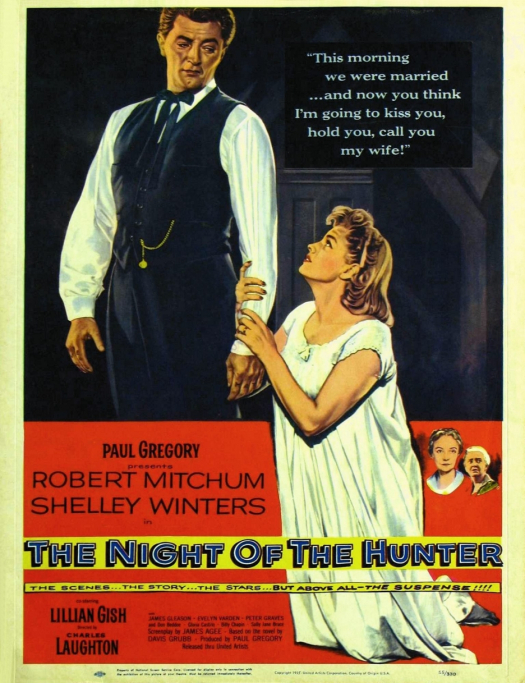
Happy 100th Birthday Robert Mitchum!: THE NIGHT OF THE HUNTER (United Artists 1955)


gary loggins's avatarcracked rear viewer

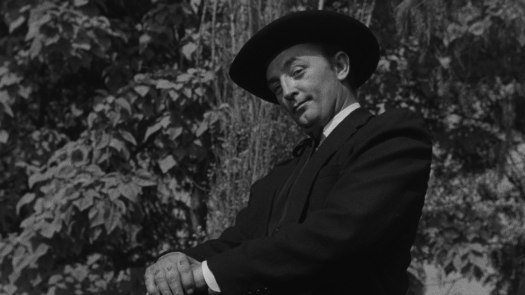
Regular readers know I’m a big fan of Big Bob Mitchum, having covered nine of his classic films. The self-effacing Mitchum always downplayed his talents in interviews, but his easy-going, naturalistic style and uncanny ear for dialect made him one of the screen’s most watchable stars. Whether a stoic film noir anti-hero, a rugged soldier fighting WWII, a romantic lead, or a malevolent villain, Mitchum always delivered the goods. Last night I watched THE NIGHT OF THE HUNTER for the first time, and his performance as the murderous ‘Reverend’ Harry Powell just zoomed to the top of my list of marvelous Mitchum performances.

Mitchum’s Powell is totally amoral and totally crazy, a sociopathic killer who talks to God about killing women, those “perfume smelling things, lacy things, things with curly hair” that The Lord hates, according to Harry. He’s sexually repressed to the point he must murder in the name of God to…

View original post 578 more words

The Seventh Annual Academy Awards: 1920


Over on Through the Shattered Lens Presents the Oscars, we are reimagining Oscar history, one year at a time. Today, we take a look at 1920. Prohibition goes into effect, women finally get the right to vote, Harding is elected President, D.W. Griffith finally gets some recognition, and Fatty Arbuckle is the most popular man in Hollywood!

Lisa Marie Bowman's avatarThrough the Shattered Lens Presents The Oscars

William S. Hart, the Third President of AMPAS William S. Hart, the Third President of AMPAS

1920 was a year of many changes.

On January 16th, the 18th Amendment went into effect and prohibition became the law of the land.  Suddenly, it was illegal to transport and sell alcohol in the United States.  As social reformers rejoiced, the government grew and ordinary citizens started to hoard whatever liquor they had.  (Selling alcohol was illegal but drinking it was not.)  Perhaps the people happiest about prohibition were the gangsters who now had a totally new market to exploit.

On August 26th, the 19th amendment to the U.S. Constitution passed and, finally, all women were granted the right to vote.  And it came not a minute too late because it was time for the United States to elect a new president.  Weary after the nonstop drama of  8 years of Woodrow Wilson, the American electorate turned to Warren…

View original post 1,342 more words

The Sixth Annual Academy Awards: 1919


At the 1919 Academy Awards, Evelyn Preer makes history, Harry Houdini is rewarded for playing himself, and Bolshevism goes on trial!

Jedadiah Leland's avatarThrough the Shattered Lens Presents The Oscars

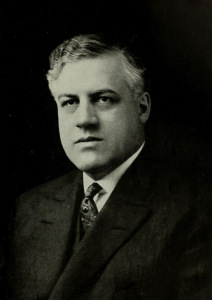
Attorney General A. Mitchell Palmer Attorney General A. Mitchell Palmer

In 1919, as the Spanish Flu continued to infect and kill millions, the world tried to recover from World War I.  After spending six months at the Paris Peace Conference, President Woodrow Wilson returned to the U.S. and launched an ultimately unsuccessful campaign to bring the United States into the newly formed League of Nations.  On September 25th, while barnstorming across the nation in support of the League, a physically exhausted Wilson collapsed and never truly recovered.  On October 2nd, a stroke left him partially paralyzed and blind in one eye.

Even before Wilson’s physical collapse, the U.S. population had reason to feel uncertain about the future.  On January 6th, the wildly popular Theodore Roosevelt died in his sleep.  Before his death, Roosevelt had been widely expected to run for President in 1920 and hopefully return the U.S. to the peace and prosperity…

View original post 1,108 more words