(Trailer pulled from the official website where it can also be accessed with code: 7201969)
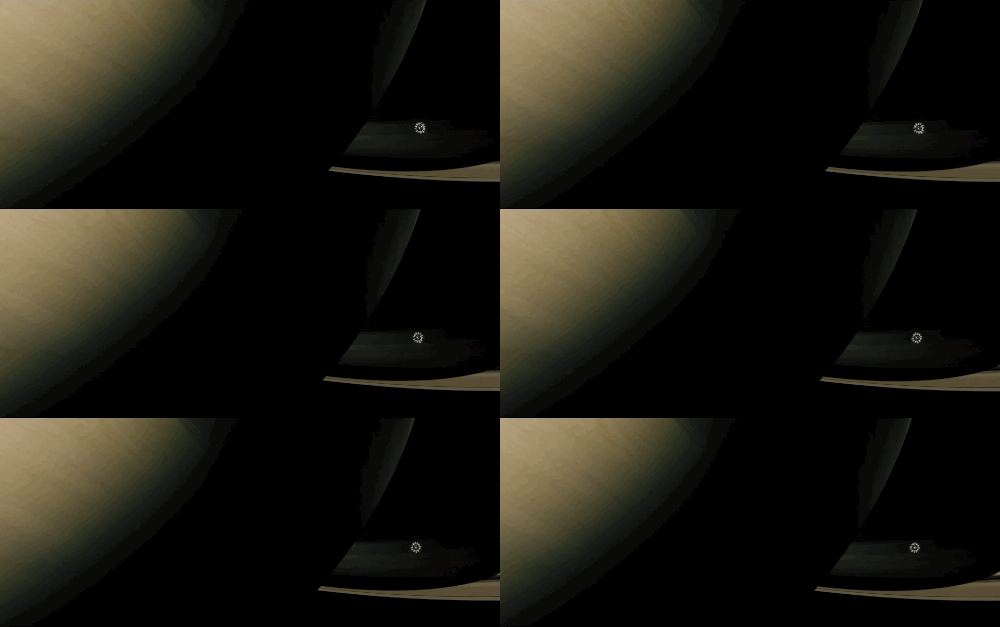
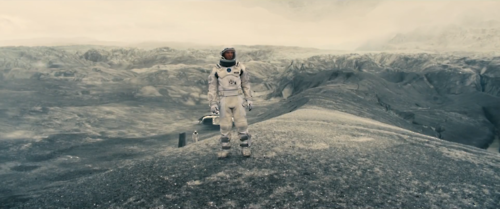
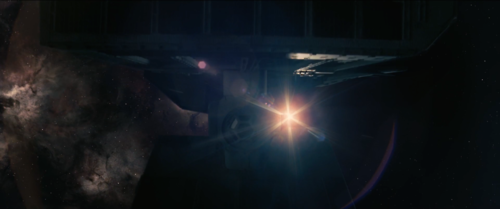
‘Interstellar’, directed by Christopher Nolan (‘Inception’, ‘The Dark Knight’), stars Matthew McConaughey, Jessica Chastain, Anne Hathaway, Casey Affleck, Michael Caine and many others. It is set in a not so distant future in which resources on earth are running low and a group of astronauts/explorers blast off to utilize “wormholes” to find habitable and resource rich planets outside of our solar system. The music is by Nolan’s go-to composer Hans Zimmer, and the cinematography by Hoyte Van Hoytema (‘Her’, ‘Let The Right One In’).
I personally love astronomy and astrophysics. I love space, and have a mild obsession with Saturn. So when I say I am excited for ‘Interstellar’ it isn’t just because I am a fan of Nolan, or I am wrapped up in the wave of hype that tends to surround his films. I have a genuine personal interest in the science and themes involved here and so my expectations for this, even with all the confidence I have in its (amazing) cast and crew, are probably higher than any other release in 2014. Luckily the first full length trailer was beautifully made and was exactly what I wanted to see; and now this new trailer (which showed at Comic-Con) expands on the first, offering us even more of a glimpse as to what we are to expect…and boy oh boy does it look amazing. It has a genuine ‘Inception’ meets ‘2001: A Space Odyssey’ tone and look to it; and I can not wait to see those visuals in IMAX. Sadly it doesn’t hit theaters until November 6th…but until then I’ll be sitting here, with the trailer on loop *cries*.
In 2008 a little film from Sweden swept through the film festivals and earned a rightful and well-deserved place in many film critics and film circles “best of 2008” and “top ten” lists. This was Swedish filmmaker’s film adaptation of the John Ajvide Lindqvist vampire novel, Let The Right One In. It was a vampire film that appealed not just to horror genre fans hungry for a vampire film that was the polar opposite of the current “Twilight” vampire craze. Horror fans wanted something that wasn’t watered down and emasculated to better appeal to the tween girl set. So, Alfredson’s vampire film was embraced by these horror fans and when news came that the rights to the novel was licensed by British-studio Hammer Film and an American-remake was set for production the reaction was decisively negative.
Fans of the original Swedish film were quite protective of the film and saw any plans to remake it for the North American audience as a cynical cash-grab. Their argument was that the original film was such a great one that there should be no need to remake it. Why fix something that wasn’t broken was another point made. It didn’t help the side of those supporting the remake that Matt Reeves was chosen to direct the remake. Reeves was better known as J. J. Abrams friend (some would say Reeves owes his success to Abrams and that he was coattailing the successful producer-director) and the director of the POV monster film, Cloverfield.
As strident fans of the original continued to vent and complain about the remake already failing (despite not an inch of film being shot) the producers were gradually filling the roles in the remake with some very interesting names. Fresh off her break-out performance in Kick-Ass was Chloe Grace Moretz taking on the role of Abby (the vampire child in the original was named Eli) with Kodi-Smit McPhee (The Road) taking on the role of the young boy Owen who befriends her. One name after the other filled out the cast with some very good veteran actors from Elias Koteas to Richard Jenkins (taking on the role of Abby’s Renfield).
Matt Reeeves’ version of Lindqvist novel from Alfredson comes from using the novel itself as the base for the screenplay Reeves himself wrote for the remake. While Let Me In shares many similarities in characters and situations from the original Swedish film, Reeves film does use more of the themes and details from the novel than Alfredson did for his adaptation. Let Me In definitely has enough about it which will distinguish itself from its Swedish counterpart and stand on its own.
The film switches locales from a suburb of in Sweden to a snowy Los Alamos, New Mexico (yes, it does snow in New Mexico). We learn quickly that Owen has become quite the loner due to the constant bullying by classmates. He spends time alone in the plaza area of the apartment complex he lives in with his mother (played by Carla Buono who we never fully see). He fantasizes of getting back at those who have and still bullying him even to the point that he buys a small pocketknife and practices his retribution on one of the trees in the plaza. It’s during one of his nighttime practices with the pocketknife that he first encounters Abby. There’s a certain wariness during their encounter with Abby proclaiming that Owen will not become a friend. But in time the two do become friends with Abby becoming quite protective of Owen once learning about the bullying he has to endure on a daily basis.
The change in Abby’s relationship with Owen doesn’t sit well with Abby’s Renfield. He asks Abby never to see Owen again as he goes out to procure Abby more fresh blood (a previous attempt goes awry forcing Abby to go out into the night to hunt). It’s in the scenes between Abby and Jenkins character that we see more of the duo’s relationship mirroring the novel’s. The novel explores the theme of pedophilia and while Reeves adaptation wasn’t quite obvious about it there are clues and small character interactions which hint at this pedophilic relationship which the Swedish original never really touched upon.
It’s in these small character interactions that Reeves’ film begins to differentiate itself from Alfredson’s version. The narrative between the two films still remain the same, but Reeves’ version explores the darker themes in the novel source while Alfredson concentrates more on the growing relationship between the two primary characters. These differences could be seen in how Reeves films Abby’s attacks while hunting her prey to be more animalistic (though at times the CGI seems too apparent when Abby attacks) and Abby’s subtle manipulation of Owen. I say manipulation because Abby seems very intent on trying to befriend and put Owen at ease despite the earlier comment that they will never be friends. Not to mention her Renfield admitting to Abby that he has gotten tired of what he has done to keep Abby safe and that maybe he wants to get caught to just end it all.
The film moves along quite leisurely but with a sense of growing dread not just between Owen and his bullies, but between Abby, her Renfield and those suspecting the duo. Owen gets caught in the lives of these two newcomers and soon gets confronted by Abby’s true nature and his own reaction to this. It’s a reaction that at first shows Owen fearing Abby and wanting to escape the growing bond between the two of them, but seeing how Abby’s been nothing but helpful to Owen he chooses to remain at her side. Abby rewards Owen’s protective nature by saving Owen from a near-deadly encounter with the school bullies at the school swimming pool.
This is the one sequence in Reeves’ film which many fans scrutinized to no end. The original film shot the scene with an almost arthouse eye despite the obvious violence involved. It was a scene where Alfredson filmed it as “less is more” and let the audience’s imagination run wild. Reeves’ does the same but adds his own stylistic touches to the sequence. not too much to make it so different from Alfredson’s version, but enough that it’s not a shot-for-shot copy. Again Reeves’ chose to show Abby’s violent predator aspect in this scene, but still keeps the focus of the scene on Owen as he struggles underwater. It’s only once he is out that we see — just as he does — the aftermath of Abby’s promise to protect Owen.
The question remains whether this American-remake stands up to the original. In terms of storytelling it more than holds it own from the original film and at times actually surpasses Alfredson’s version. This Reeves version journeys through the darkside more than the original film. It definitely strips away much of the arthouse sensibilities of Alfredson’s film which made it such a beauty to watch even if at times the narrative became more than too slow to keep one’s attention. Reeves’ adaptation doesn’t ramp up the pacing of the film, but keeps it moving forward even if at a gradual pace. When violence does occur in the remake it happens quickly and with a sense of brutality that the original film fails to deliver. The remake doesn’t linger on the gore and violence, but does show enough of it to remind everyone in the audience that this is a horror film first and foremost.
If there was one quibble to be made about this remake its that Reeves relies too much on CGI to show Abby at her most dangerous. Each attack made by Abby was shot at a wide-angle and we see every move but with each move done using CGI which gives it too much of an artificial look to it. It’s a testament to Moretz’ performance as she switches from a friendly Abby when interacting with Owen during their time together at night to one of a predator older than anyone in the film doing what was necessary to attain the blood needed to survive. Reeves could definitely have used less CGI and went for a more natural approach using sudden edits to show the ferocious nature of Abby’s attacks.
The film’s cast does a great job with the roles given to them. While it was Moretz’s and McPhee’s performances as Abby and Owen that keeps the audience’s attention and keeps it from wavering it’s the supporting cast around them which provides the glue. Koteas as the detective who begins to suspect Abby as having to do more with the attacks than previously mentioned was very good, but in the end it was Richard Jenkins in the Renfield role who would steal every scene he’s in. His character’s fatalistic acceptance of his role when it came to Abby was palpable. We watch him do horrible things to people and to himself, but we also get a sense that he couldn’t stop on his own if he wanted to. He has been doing the role of blood procurer for Abby for so long that he doesn’t know what else to do. I will say that Jenkin’s with the garbage bag mask when out hunting for victims will be the images that will stick to people’s minds long after they’ve left the theater. Some will even unconsciously check the back seat of their cars at night before getting in.
In the end, this remake of Let The Right One In doesn’t feel, look and sound like the cash-grab that cynical fans of the original have proclaimed it to be. Matt Reeves does a great job in adapting more of the novel in his version and using some of the darker themes in that source to allow his film to stand on its own when compared next to Alfredson’s version. The performances by everyone involved was wonderful and keeps the story’s slow pacing from losing the audience. While this remake doesn’t have the arthouse quality of the original film it does have a certain grittiness to its look which lends quite well in pointing out how brutal the narrative really was not just in physical violence but in how one of the two leads manipulates the situation to benefit it’s survival even if there was some genuine affection between Abby and Owen. In the end, Abby gets everything and continues to exist for another boy’s lifetime.
Fans so vocal of their negative attitudes towards this film will not have their minds changed, but those keeping an open-mind will be rewarded with one of the better horror films of the year. If the original Swedish adaptation never existed I’m quite sure that all the accolades heaped on Tomas Alfredson’s film would be given to Matt Reeves instead. A remake should never be discounted because its one of an original that’s already lauded for its quality. There’s been bad remakes but thankfully Let Me In is not one of them.
In 2008 a Swedish film called Let the Right One In stormed through the film festival circuit and became one of the most critically-acclaimed film of that year. The film was an adaptation the a novel by the same name by Swedish author John Ajvide Lindqvist. It took the vampire genre which has started to gain a sort of resurgence in the past 5 years due to the teen-pop vampire-romance franchise Twilight.
Tomas Alfredson’s film was definitely the anti-Twilight of this resurgence. It was a beautifully-shot and framed film with a dark, poignant story to match the visuals. While arthouse film fans and horror fans with discerning taste praised the film the rest of the general public either ignored it or never even heard about it. This is always the case when it comes to foreign films which tries to make a bridgehead onto the U.S. film market.
The film has since been discovered by the general public through home video sales and through Netflix, but not before an American film studio has bought the rights to produce an American remake for the American market. It fell onto the shoulders of Cloverfield director Matt Reeves to film this remake and try to dampen any advance outrage by the original film’s fans. While there will remain a very vocal group denouncing this “Americanized” remake of Let the Right One In (renamed Let Me In for the remake) I think casting decisions and certain stylistic choices by Reeves has me hoping that this remake will not fail but actually stand on it’s own while still letting the original keep it’s status as one of the best horror films of the past decade.
Above is the newly released Red Band Trailer for the film and below are two posters for the remake which were unveiled over at San Diego Comic-Con 2010. Both posters definitely take on a very stylized look. The second one looks too similar to Park Chan-wook’s poster for Thirst. The first one I like better as it combines the film’s innocence with the darker underlying story really well.
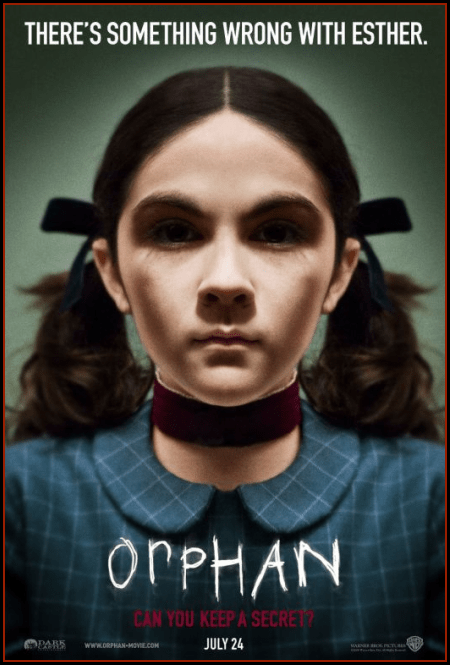
There has been a complaint which has been getting louder and louder for the past several years from both horror and mainstream film fans. The complaint is that horror films of late have either been remakes or another sequel. While this complaint is not exclusive to the horror genre (non-horror genres have had the same problem) it is more prevalent and happens more often. Once in awhile a film will come out that tries to be different and put out an original story. Spanish director Jaume Collet-Serra has done just that with his second foray into feature filmmaking with Orphan. While the film won’t win many awards and become the critical darling the way Let the Right One In did Collet-Serra’s Orphan does bring a fresh new take on the evil child subgenre. Despite some of the flaws and script problems the film does entertain throughout most of its running time until it loses steam in the final 15 minutes.
Jaume Collet-Serra first got his start directing the 2005 remake of House of Wax. A film more famous (infamous in some people’s eye) for being the first major film of socialite Paris Hilton. A film that deservedly got panned by critics, but still did well enough in the box-office to put horror fans on notice that Collet-Serra might be a filmmaker to keep an eye on. Orphan marks his second full-lenght feature and using the screenplay by David Leslie Johnson, Collet-Serra tries a hand in the evil child subgenre which has more than it’s share of classic titles like The Omen, The Bad Seed and The Good Son. While this subgenre of horror usually means some sort of demonic-possession or some sort of mental or genetic abnormality causing for their psychotic or sociopathic behavior, in Orphan an interesting reason was given to the nature of it’s titual character.
The film begins with a harrowing and quite disturbing scene of the Vera Farmiga’s character pregnant and in labor, but also starting to miscarriage her child. The graphic nature of the scene quickly lays down the hammer that Orphan will not hold things back just because childen will be involved throughout most of it’s running time. We then see Farmiga’s Kate and her husband John (played by Peter Sarsgaard) at the local orphanage as they attempt to fix their family and ease Kate’s emotional turmoil over the miscarriage by adopting a child. They meet Esther a 9-year-old Russian orphan girl who seem to be the perfect child at first glance. Esther’s well-spoken and well-mannered at such a young age. Esther soon becomes part of John and Kate’s young family which consists of a younger deaf daughter named Max and a son named Daniel. While Max accepts Esther as a new older sister Daniel senses something just off-putting about Esther and reacts much more coldly towards his new dopted sister.
The majority of Orphan‘s second and first half of the third and final reel shows Esther’s true nature peek through the facade of Old World genteel and proper behavior. 12-year-old Isabelle Fuhrmann does an excellent job portraying the sociopathic and manipulative Esther. It is difficult to believe that a child actor of her age able to tackle such a dark role and actually pull it off without making the character too over-the-top or campy. In fact, no matter how one thinks of the performances of the rest of the film’s cast (Farmiga does a good job in the Cassandra-role with Sarsgaard an average performance as the hapless and clueless husband) this film is totally Fuhrmann’s and she sticks the landing.
While the film tries to make something original (and most of it is to a point) out of a tried-and-true model of the evil child storyline the script doesn’t hold up through the length of the film. The story itself is quite interesting when one really steps back to look at it, but there’s several leaps in logic the Kate character makes which will illicit more than a few confused reactions (running away from incoming help and into the dark, unknown being a major one). The dialogue itself is serviceable with none of it wince-inducing. There’s just a sense that the film’s reveal in the end of the film as to Esther’s true nature was just handled in a very clumsy manner. The twist is very original but the execution of that reveal after the tense and very brutal 40-50 minutes before it comes off quite flat. Orphan definitely looked like a script which was in need of several more rewrites to reconcile the first 3/4’s of the film with the final part. Yet, despite the ridiculous manner in which the final 10-15 minutes unfolds Collet-Serra manages to keep the film from dragging along through two hours. It actually plays much faster for a film with such a long running time.
In the end, Orphan marks a decidedly better effort from Jaume Collet-Serra, but one which still shows that he has some polishing to do to join the ranks of better horror directors of his generation. The film is enjoyable enough if given a chance. Most horror fans will enjoy the film and some may even embrace it because of the silly ending. Mainstream audiences looking for a change of pace from the strum und drang of the summer blockbuster season could do no worse than Orphan. It is not a perfect film and not even an above-average one, but it is a good horror film that tried to add something new to the genre, but hampered by a storyline that cannot sustain the tension it built-up and the brutality it showcased. In the hands of a much more seasoned filmmaker with a better hashed out screenplay Orphan could’ve become an instant classic.





 Through the Shattered Lens