Clash of the Titans (1981, directed by Desmond Davis)


High atop Mt. Olympus, Zeus (Laurence Olivier) and his fellow Gods look down on Earth and jealously manipulate its citizens.  When Zeus impregnates Danae (Vida Taylor), the daughter of the King of Argos, she and her son Perseus (Harry Hamlin) are banished to sea.  Zeus responds by ordering Poseidon (Jack Gwillim) to release the Kraken.

Years later, when Callibos (Neil McCarthy), the son of the Goddess Thetis (Maggie Smith), destroys all but one of Zeus’s flying horses, Zeus transformer Callibos into a tailed monster.  Thetis tries to get her revenge by having Callibos kill Perseus but instead, Perseus chops off Callibos’s hand, comes to possess Pegasus, the last of the flying horses, and also wins the right to marry Andromeda (Judi Bowker).

At the wedding, Cassiopeia (Sian Phillips) declares Andromeda to be even more beautiful than Aphrodite (Ursula Andress).  Big mistake.  Aphrodite demands that Andromeda by sacrificed to the Kraken.  Along with Pegasus, Ammon (Burgess Meredith), Thallo (Tom Pigott-Smith), and robot owl, Perseus goes on a quest to get the snake-haired head of Medusa so he can turn the Kraken into stone.

There’s a lot that I love about Clash of the Titans, from the Ray Harryhausen’s stop-motion special effects to the blind witches who pass one eyepiece among them to Burgess Meredith’s performance as Ammon.  I even like the robot owl.  But the thing that has always made the biggest impression on me is that Mt. Olympus is portrayed as having a shelf that holds a figurine for every human in the world.  The Gods casually move the pieces around and transform them on whims.  Of all the films that have been based on Greek mythology, Clash of the Titans is one of the few that really captures the idea of the Gods essentially being a bunch of petty and jealous libertines who view humans are just being their playthings.

Let’s not overthink Clash of the Titans, though.  The main appeal of Clash of the Titans is that it’s just a good, old-fashioned adventure movie.  In this age of CGI and humorless heroes, it’s hard not love the film’s mix of old-fashion stop-motion animation, strong characters, and occasional moments of humor.  (I like the owl and I won’t apologize for it.)  Also, Medusa has appeared in a lot of movie but she’s never been scarier than in this movie.  Who can forget the yellow glow of her eyes, followed by men turning to stone?  Who can forget the hiss of her tail or the moment when Perseus waits to strike while trying not to look into her eyes?  Beyond Medusa, who can forget the Kraken rising from the sea or the blood of Callibos giving birth to giant scorpions?  Without CGI, Clash of the Titans still captures the feel of living in a different time and a different land.  Clash of the Titans brings mythology to life in a way that few other films have been able to,

I loved the original Clash of Titans when I was a kid.  I rewatched it last month and I happy to say that I love it still.
4 Shots From 4 Films: “May 22nd Birthday” Edition!


4 Shots From 4 Films is just what it says it is, 4 shots from 4 of our favorite films. As opposed to the reviews and recaps that we usually post, 4 Shots From 4 Films lets the visuals do the talking!

Today’s “4 Shots From 4 Films” celebrate four people who were born on this day!! Enjoy!

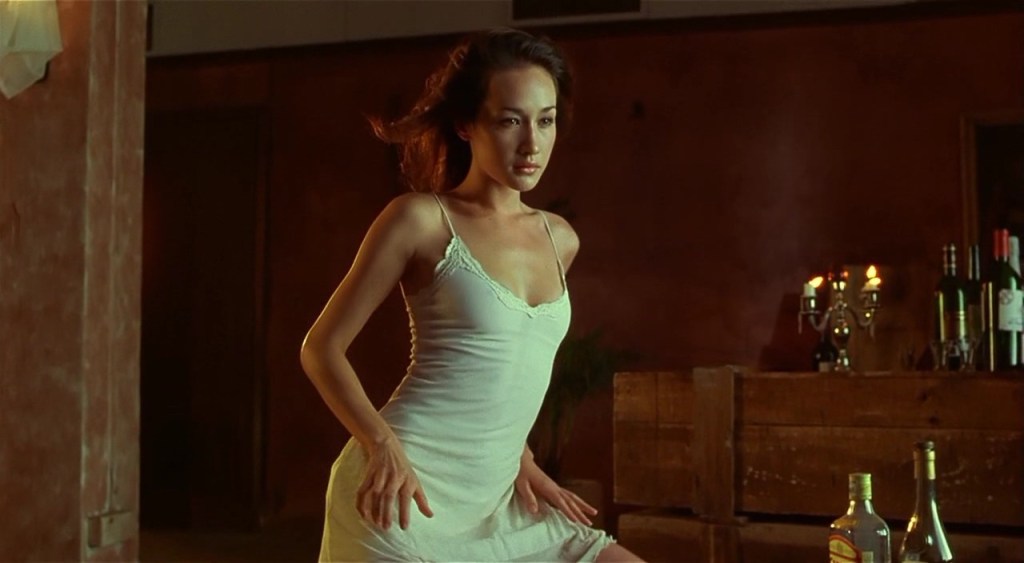
Maggie Q in NAKED WEAPON (2002)

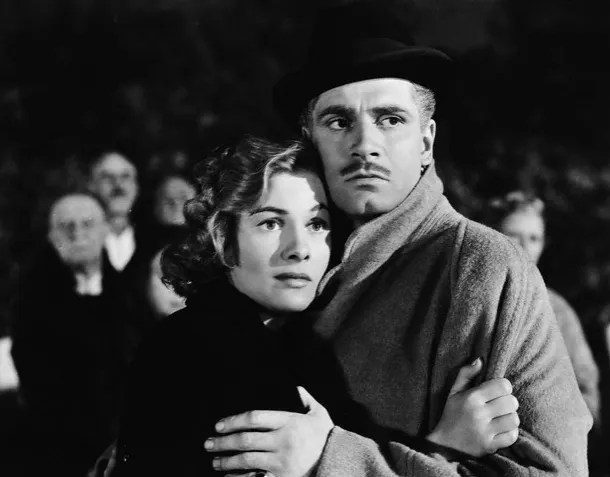
Laurence Olivier in REBECCA (1940)

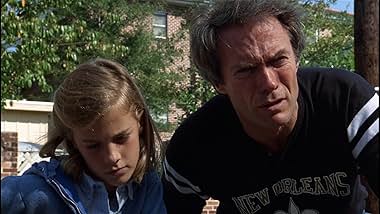
Alison Eastwood in TIGHTROPE (1984)

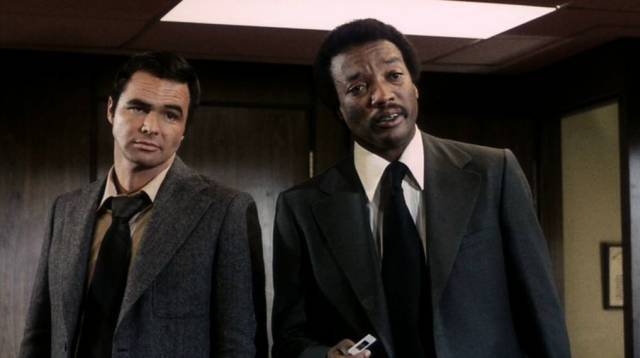
Paul Winfield in HUSTLE (1975)

Scenes That I Love: Laurence Olivier In Hamlet


119 years ago today, Laurence Olivier was born in Surrey.  The son of a clergyman, Olivier would go on to become one of the greatest stage actors of the 20th Century.  He would also have a distinguished film career, one that led to him frequently being described as being the world’s greatest living actor.

He is perhaps best-known for his Shakespearean performances.  He won multiple Oscars for directing and starring in 1948’s Hamlet.  Today’s scene that I love comes from that film and features Olivier at his best, as both an actor and a director.

Film Review: Inchon (dir by Terence Young)


Inchon is an infamous film.

First released in 1982, this epic recreation of one key battles of the Korean War was an expensive film with a cast of well-known actors.  Jacqueline Bisset plays a wealthy army wife who tries to protect five South Korean children who have found themselves in the middle of the battle.  Ben Gazzara plays her husband, a major who is having an affair with the daughter of Toshiro Mifune.  David Janssen and real-life film critic Rex Reed wander through the film as journalist.  (Janssen growls like a man dealing with a serious hangover while Reed struggles to not look straight at the camera.)  Richard Roundtree plays a tough sergeant.  The great Italian actor Gabriele Ferzetti plays a Turkish officer.  And, finally, the role of legendary American general Douglas MacArthur — of “I will return” fame — is played by the very British Sir Laurence Olivier.  Olivier was apparently told that, in real life, MacArthur often sounded like the comedic actor W.C. Fields and Olivier often seems to be imitating Fields’s pinched style of speaking.  Olivier also wears almost as much makeup here as he did in his production of Othello.  MacArthur is portrayed as being almost a mystic warrior, a man who relies as much on his faith as his strategic genius to repel the communists.  (In victory, he recites The Lord’s Prayer.)  The film was directed by Terence Young, who previously brought James Bond to cinematic life.

Inchon is notorious for being a flop with both critics and audiences.  The film had a budget of $46,000,000 and reportedly made $5,000,000 at the box office before it was withdrawn.  The entirety of the budget was put up by the Unification Church, which is an organization that many people consider to be a cult.  (I like neither communists nor cultists so this film left me with no one to root for.)  The film proved to be such a flop at the box office that it has never been released on home video.  It did, however, air on television a few times and, in recent years, the television cut has been posted to YouTube.  That’s how I saw Inchon.

I watched Inchon because I’ve frequently seen it referred to as being one of the worst films ever made.  Watching the film, I have to say that I think the “worst film” label is a bit extreme.  For the most part, it’s just an extremely uneven and often rather boring film, one that mixed scenes of surprisingly brutal combat with dialogue-heavy scenes that just seem to drag on forever.  It’s a film that belongs as much in the disaster genre as the war genre as the film is full of rather shallowly-written characters who all have their own individual dramas to deal with.  Will Jacqueline Bisset save the children?  Who will sacrifice their lives to defeat the communists? Will Ben Gazzara, who often seems to be the sole member of the cast who is at least tying to give a credible performance, choose his wife or his mistress?  The film ultimately feels like a compressed miniseries.  Everyone has a story but hardly anyone makes an impression.

That said, Laurence Olivier’s performance as Douglas MacArthur …. agck!  Seriously, it’s hard to know where to even begin when it comes to talking about just how miscast Olivier is as the quintessential all-American general.  It’s been said that it takes a truly great actor to give a truly bad performance and Olivier certainly proves that to be true in this film.  Obviously frail and trying to sound like W.C. Fields, Olivier’s MacArthur is a general who would inspire zero confidence.  The film doesn’t help by portraying MacArthur as being an almost holy figure, one who is often framed to look like almost an angel descending from Heaven to lead the battle against America’s enemies.  The film is full of scenes of people discussing MacArthur’s genius just to be followed by a scene of Olivier looking old, tired, and rather grumpy.  There were a few times when I thought I could see Olivier’s hair dye running down the side of his face.  It may have been my imagination or just the graininess of the upload on YouTube but, given the quality of the film, I can’t really dismiss the possibility that it happened and no one felt like doing a second take.

As I said, Inchon can be found on YouTube.  It’s not the worst film ever made but that doesn’t mean it’s a good one.

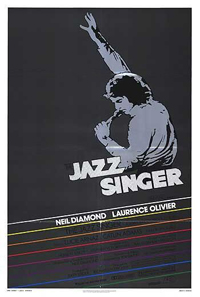
Film Review: The Jazz Singer (dir by Richard Fleischer)


In the 1980 remake of The Jazz Singer, it only takes the film seven minutes to find an excuse to put Neil Diamond in blackface.

Of course, the film was a remake of the 1927 version of The Jazz Singer, which featured several scenes of Al Jolson performing in blackface.  In fact, Al Jolson in blackface was such a key part of the film that it was even the image that was used to advertise the film when it was first released.  Back in the 20s, Jolson said that wearing blackface was a way of honoring the black artists who created jazz.  (As shocking as the image of Al Jolson wearing blackface is to modern sensibilities, Jolson was considered a strong advocate for civil rights and one of the few white singers to regularly appear on stage with black musicians.)  Regardless of Jolson’s motives, less-progressively minded performers used blackface as a way to reinforce racial stereotypes and, to modern audiences, blackface is an abhorrent reminder of how black people were marginalized by a racist culture.  You would think that, if there was any element of the original film that a remake would change, it would be the lead character performing in blackface.

But nope.  Seven minutes into the remake, songwriter Jess Robin (Neil Diamond) puts on a fake afro and dons blackface so that he can perform on stage at a black club with the group that is performing his songs.  The group’s name is the Four Brothers and, unfortunately, one of the Brothers was arrested the day of the performance.  Jess performs with the group and the crowd loves it until they see his white hands.  Ernie Hudson — yes, Ernie Hudson — stands up and yells, “That’s a white boy!”  A riot breaks out.  The police show up.  Jess and the three remaining Brothers are arrested and taken to jail.  Jess is eventually bailed out by his father, Cantor Rabinovitch (Laurence Olivier).  The Cantor is shocked to discover that his son, Yussel Rabinovitch, has been performing under the name Jess Robin.  He’s also stunned to learn that Yussel doesn’t want to be a cantor like his father.  Instead, he wants to write and perform modern music.  The Cantor tells Yussel that his voice is God’s instrument, not his own.  Yussel returns home to his wife, Rivka (Caitlin Adams), and tries to put aside his dreams.

But when a recording artist named Keith Lennox (Paul Nicholas) wants to record one Yussel’s songs, Yussel flies out to Los Angeles.  As Jess Robin, he is shocked to discover that Lennox wants to turn a ballad that he wrote into a hard rock number,  Jess sings the song to show Lennox how it should sound.  The arrogant Lennox is not impressed but his agent, Molly (Lucie Arnaz) is.  Soon, Jess has a chance to become a star but what about the family he left behind in New York?  “I have no son!” the Cantor wails when he learns about Jess’s new life in California.

I’ve often seen the 1980 version of The Jazz Singer referred to as being one of the worst films of all time.  I watched it a few days ago and I wouldn’t go that far.  It’s not really terrible as much as its just kind of bland.  For someone who has had as long and successful a career as Neil Diamond, he gives a surprisingly charisma-free performance in the lead role.  The most memorable thing about Diamond’s performance is that he refuses to maintain eye contact with any of the other performers, which makes Jess seem like kind of a sullen brat.  It also doesn’t help that Diamond appears to be in his 40s in this film, playing a role that was clearly written for a much younger artist.  Still, when it comes to bad acting, no one can beat a very miscast Laurence Olivier, delivering his lines with an overdone Yiddish accent and dramatically tearing at his clothes to indicate that Yussel is dead to him.  Olivier was neither Jewish nor a New Yorker and that becomes very clear the more one watches this film.  It takes a truly great actor to give a performance this bad.  Diamond, at least, could point to the fact that he was a nonactor given a starring role in a major studio production.  Olivier, on the other hand, really had no one to blame but himself.

Still, I have to admit that ending the film with a sparkly Neil Diamond performing America while Laurence Olivier nods in the audience was perhaps the best possible way to bring this film to a close.  It’s a moment of beautiful kitschThe Jazz Singer needed more of that.

Film Review: The Shoes of The Fisherman (dir by Michael Anderson)


The 1968 film, The Shoes of The Fisherman, opens in a snowy Siberian labor camp.  For the past twenty years, this camp has been the home of Kiril Pavlovich Lakota (Anthony Quinn), the Ukrainian archbishop of Liviv.  Kiril is unexpectedly released by Russia’s new leader, Piotr Ilyich Kamenev (a very British Laurence Olivier).  After explaining to Kiril that Russia and China are on the verge of nuclear war due to a famine that has been instigated by U.S. sanctions, Kamenev tells Kiril that he is being released on the condition that he tell no one about the conditions at the Russian labor camp.  Kiril starts to protest just for Father Telemond (Oskar Werner), the Vatican’s representative, to say that the conditions have already been agreed to.

In Rome, Kiril meets the Pope (John Gielgud), who makes the humble Kiril a cardinal, over Kiril’s objections that he just a “simple man.”  Later, when the aged Pope suddenly dies, Kiril is unexpectedly elected, as a compromise candidate, to succeed him.  Still humble and considering himself to be a simple man with a simple mission, Kiril suddenly finds himself as one of the most revered and powerful men on the planet.  With Father Telemond as his secretary, Kiril tries to make the Vatican responsive to the needs of the people and sets out to bring peace between the Russians and the Chinese. That turns out to be easier said than done, especially when Telemond himself is eventually accused of heresy for his progressive views.

(And yes, Telemond is a Jesuit….)

The Shoes of the Fisherman is a type of film that should be familiar to anyone who has any knowledge of the Hollywood studios in the 60s.  It’s the type of big and self-serious film that was meant to tell audiences, “You won’t find anything this opulent and important on television!”  The cast is designed to appeal to everyone.  Anthony Quinn and Laurence Olivier are there for the older viewers (especially the older viewers who made up the majority of the Oscar voters in 1968) while, for the younger voters, there’s handsome Oskar Werner as a Jesuit who interpretation of the Gospels is so radical that even Pope Francis would probably tell him to step back a little.  For the older, anti-communist viewers, there are scenes that portray the harsh conditions at a Siberian labor camp.  The commies put Kiril in prison so he must be one of the good guys.  And for the younger, more liberal viewers, there was the suggestion that the threat of World War III was largely due to the actions of the American government.  And, just in case there was still anyone who thought that television was preferable to a prestige picture, TV star David Janssen shows up as a cynical reporter whose wife (played by Barbara Jefford) is a doctor who Kiril helps to get some medicine for one of her dying patients.  Director Michael Anderson includes enough sudden zoom shots to let younger viewers know that he’s with them while still directing in a stately enough manner to appeal to the older viewers.

The end result is a film that is big and grand but also rather slow.  The film gets bogged down in subplots that don’t really add much to the overall story.  We spend way too much time with the reporter and his wife.  Anthony Quinn does a good enough job as Kiril, giving a rather subdued performance by Quinn standards.  (A scene where Kiril recites a Jewish prayer for a dying man is wonderfully acted by Quinn, who seems to truly be emotionally invested in the film’s message of togetherness.)  Laurence Olivier is not at all convincing as a Russian but still, he has the stately bearing of a man used to being in power.  Like many of the studio productions of the late 60s, The Shoes of The Fisherman tries a bit too hard to strike a balance between old school Hollywood and the counterculture and the film ultimately feels rather wishy-washy as a result.  It’s a noble film with good intentions but it’s not particularly memorable.

Scenes That I Love: Laurence Olivier In Hamlet


117 years ago today, Laurence Olivier was born in Surrey.  The son of a clergyman, Olivier would go on to become one of the greatest stage actors of the 20th Century.  He would also have a distinguished film career, one that led to him frequently being described as being the world’s greatest living actor.

He is perhaps best-known for his Shakespearean performances.  He won multiple Oscars for directing and starring in 1948’s Hamlet.  Today’s scene that I love comes from that film and features Olivier at his best, as both an actor and a director.

https://www.youtube.com/watch?v=5ks-NbCHUns

4 Shots From 4 Best Picture Winners: The 1940s


4 Shots From 4 Films is just what it says it is, 4 shots from 4 of our favorite films. As opposed to the reviews and recaps that we usually post, 4 Shots From 4 Films lets the visuals do the talking!

Today, I’m using this feature to take a look at the history of the Academy Award for Best Picture.  Decade by decade, I’m going to highlight my picks for best of the winning films.  To start with, here are 4 shots from 4 Films that won Best Picture during the 1940s!  Here are….

4 Shots From 4 Best Picture Winners: The 1940s

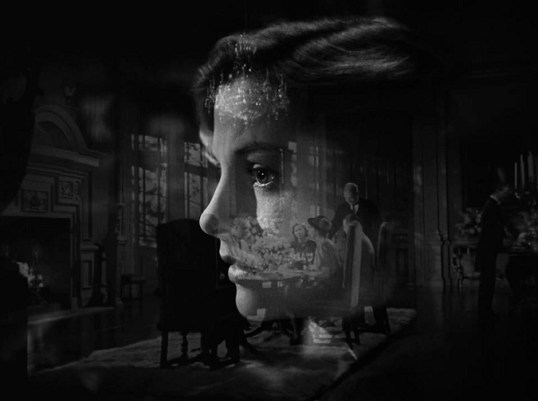
Rebecca (1940, dir by Alfred Hitchcock, DP: George Barnes)

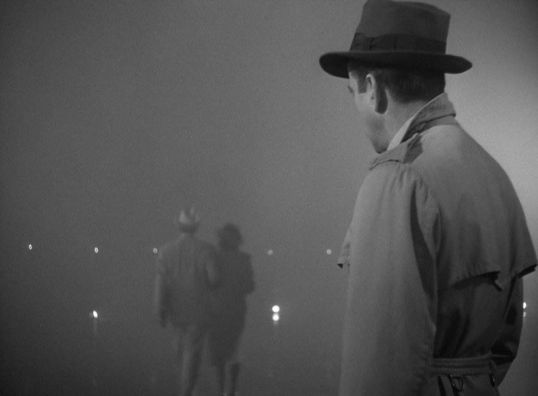
Casablanca (1942, dir by Michael Curtiz, DP: Arthur Edeson)

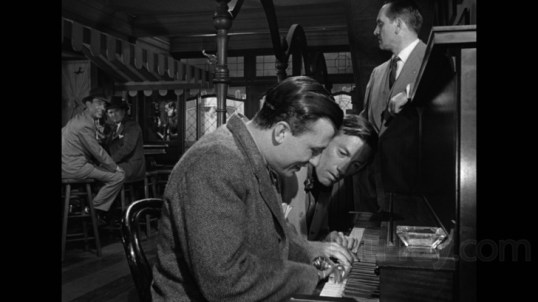
The Best Years Of Our Lives (1946, dir by William Wyler, DP: Gregg Toland)

Hamlet (1948, dir by Laurence Olivier, DP: Desmond Dickinson)

Scenes That I Love: “Now is the winter of our discontent” from Laurence Olivier’s Richard III


115 years ago today, Laurence Olivier was born in Surrey.  The son of a clergyman, Olivier would go on to become one of the greatest stage actors of the 20th Century.  He would also have a distinguished film career, one that led to him frequently being described as being the world’s greatest living actor.

He is perhaps best-known for his Shakespearean performances.  He won multiple Oscars for directing and starring in 1948’s Hamlet.  Before his turn in Hamlet, he was similarly nominated for his film version of Henry V.  That said, for me, his best cinematic Shakespearean performance was as Richard III in the 1953 film of the same title.

Though acclaimed, Richard III was not quite the Oscar favorite that Olivier’s previous two adaptations of Shakespeare had been.  Henry V was released at a time when its portrayal of a determined British ruler could be viewed as a metaphor for the UK’s role in the second world war.  Hamlet was released at a time when the world was still rebuilding and trying to adjust to the new atomic age and its dark, noirish style captured those anxieties.  Richard III was released in the 50s, at a time when Americans perhaps weren’t as receptive to films that suggested that leaders should not be trusted.  As a result, Richard III received only one nomination, for Olivier’s performance in the title role.

Today, in honor of his birthday, here is a scene that I love from 1953’s Richard III:

6 Shots From 6 Pete Cushing Films


4 or more Shots from 4 or more Films is just what it says it is, 4 shots from 4 of our favorite films. As opposed to the reviews and recaps that we usually post, 4 Shots from 4 Films lets the visuals do the talking!

Today, the Shattered Lens pays tribute to Peter Cushing, one of the great actors and horror stars of the previous century.  By most accounts, an old-fashioned gentleman who enjoyed gardening and a little painting, Peter Cushing went from the stage to films to television and back again and, along the way, appeared in some of the most popular and beloved films ever made.  He was often cast as a rival to Christopher Lee.  In real life, the two men were the closest of friends.

Here are….

6 Shots From 6 Peter Cushing Films

Hamlet (1948, dir by Laurence Olivier, DP: Desmond Dickinson)

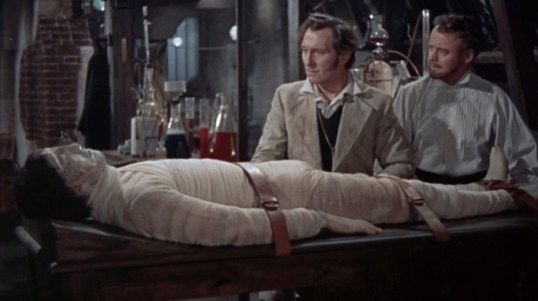
The Curse of Frankenstein (1957, dir by Terence Fisher, DP: Jack Asher)

Horror of Dracula (1958, dir by Terence Fisher, DP: Jack Asher)

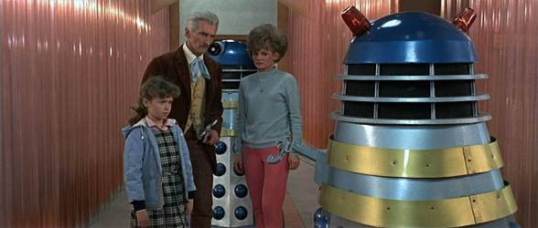
Dr. Who and the Daleks (1965, dir by Gordon Flemyng, DP: Jack Wilcox)

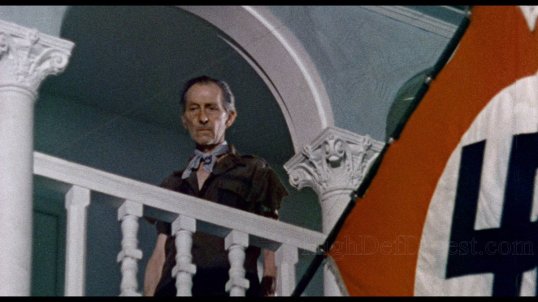
Shock Waves (1977, dir by Ken Weiderhorn, DP: Reuben Trane)

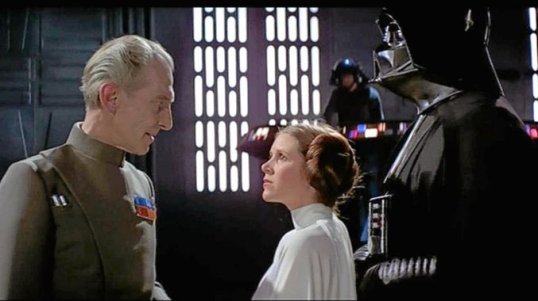
Star Wars Episode IV: A New Hope (1977, dir by George Lucas, DP: Gilbert Talyor)