Late Night Retro Television Review: CHiPs 4.18 “The Hawk and the Hunter”


Welcome to Late Night Retro Television Reviews, a feature where we review some of our favorite and least favorite shows of the past!  On Mondays, I will be reviewing CHiPs, which ran on NBC from 1977 to 1983.  The entire show is currently streaming on Prime!
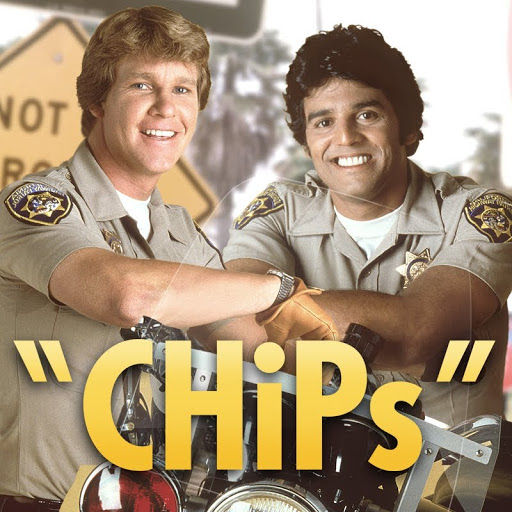
This week, we finally meet Barizca’s family.

Episode 4.18 “The Hawk and the Hunter”

(Dir by Leslie H. Martinson, originally aired on April 5th, 1981)

In this episode, we learn a little bit more about Officer Barizca.  Played by Brodie Greer, Barizca has been an important member of the ensemble since the first season but, up until this point, we really haven’t learned much about his life outside of driving a patrol car and directing traffic at crash sites.

It turns out that Barizca’s father, Pete (Sandy McPeak), is a crop duster.  When it becomes clear that Pete is getting too old to fly his airplane, Barizca takes a leave of absence from the Highway Patrol so that he can help out.  Hopefully, Barizca will find the courage to finally tell his father that it’s time to retire.

Meanwhile, there’s an environmentalist nutjob named Lyle (Dwight Schultz) who is convinced that the Barizcas are spreading poison with their airplane.  Lyle has been sending threats to Pete so, eventually Barizca flies over Lyle and covers him in pesticide to help the Highway Patrol arrest him.  So, I guess Lyle really is going to die now.

At the end of the episode, Pete retires and Barizca returns to patrolling the highways.

This was an okay episode, in that the scenery was nice and I did appreciate that the show made an effort to focus on something other than Ponch being the best at everything.  Dwight Shultz was believably unhinged as Lyle and there was an interesting tension between him and Baker as both of them were Vietnam vets.  Unfortunately, the Barizcas themselves just weren’t that interesting.  This episode was a case of “You’ve seen one strained father-son relationship, you’ve seen them all.”

That said, I hope next week’s episode will introduce us to Grossman’s family.
Retro Television Review: The American Short Story #9: Soldier’s Home


Welcome to Retro Television Reviews, a feature where we review some of our favorite and least favorite shows of the past!  On Saturdays, I will be reviewing The American Short Story, which ran semi-regularly on PBS in 1974 to 1981.  The entire show can be purchased on Prime and found on YouTube and Tubi.

This week, we have an adaptation of a short story by Ernest Hemingway.

Episode #9 “Soldier’s Home”

(Dir by Robert Young, originally aired in 1977)

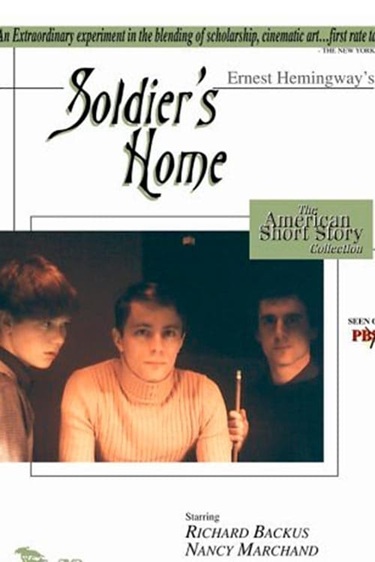
Having gone from attending college to serving in the Army during the Great War, Harold Krebs (Richard Backus) returns home to Oklahoma.  He arrives home later than most of the other soldiers who served.  (He stayed in Europe until 1919.)  As a result, there’s no big parade waiting for him.  Everyone in town seems to have moved beyond the war and they no longer have much of a desire to talk about it.

Harold, who was once a popular and optimistic member of the town’s social set, no longer feels that he fits in.  He feels detached, watching people as they go about their lives but never feeling any desire to join them.  His mother (Nancy Marchand) pushes him to go out and date and have a good time but Harold feels lost, regardless of how much she prays for him.

Ernest Hemingway’s short story was one of the first to realistically deal with the feelings of soldiers returning from combat.  Though Harold doesn’t talk much about his experiences, one can tell that he saw and experienced things that left him scarred.  After surviving the horror of The Great War, there’s no way Harold can just slip back into his normal routine.

The adaptation sticks closely to Hemingway’s story.  Unfortunately, it doesn’t really find the visual style necessary to capture the power of Hemingway’s words.  Hemingway was a deceptively simple storyteller and Robert Young’s film is a fairly straight-forward portrait of a young man who doesn’t want to do anything, one that fails to truly capture the subtext of Hemingway’s story.  Richard Backus’s blank-eyed acting style worked well when he was playing a member of the undead in Deathdream but, in this one, he just makes ennui seem boring and petulant.  Nancy Marchand, not surprisingly, is far stronger in the role of his well-meaning but clueless mother.

As was almost always the case when it came to attempts to adapt Hemingway, it’s best just to read the original.

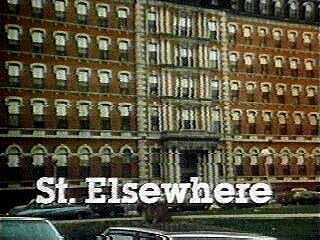
Retro Television Review: St. Elsewhere 1.16 “Monday, Tuesday, Sven Day”


Welcome to Retro Television Reviews, a feature where we review some of our favorite and least favorite shows of the past! On Fridays, I will be reviewing St. Elsewhere, a medical show which ran on NBC from 1982 to 1988.  The show can be found on Hulu and, for purchase, on Prime!

It’s another day in Boston.

Episode 1.16 “Monday, Tuesday, Sven Day”

(Dir by Mark Tinker, originally aired on March 1st, 1983)

It’s a busy day at St. Eligius.  Here’s a breakdown:

  1. The racial conflict is continuing.  Putting a young white man and a young black man in the same hospital room leads to an all-out brawl.  Some poor guy walking down the hall on a broken leg gets trampled in the melee.  Agck!
  2. A man in a crude astronaut’s uniform shows up at the ER.  He doesn’t get any lines but his name tag identifies him as “J. Masius,” which is a reference to one of the show’s writers.
  3. Oh, hey, it turns out that kid who claimed he was jumped by a bunch of black guys actually wasn’t jumped by a bunch of black guys.  Instead, his father (Dick O’Neill) beat him up.  Dr. Westphall threatens to beat up the kid’s dad.  They may be old but they both grew up on the streets of Boston!  What is it with old men from Boston and they’re need to threaten each other with fisticuffs?
  4. Dr, Chandler hears another doctor make a racist remake and gets angry.  “I keep forgetting he’s black,’ the doctor says.
  5. Dr. Morrison apologizes on behalf of the racist doctor.  Chandler tells Morrison that he’ll never understand what it’s like to be black.  Morrison agrees but then points out that he only lives two blocks away from Chandler so he does understand what it’s like to live in a poor neighborhood.  Uhmm….see, this is why I was kind of dreading watching this show try to deal with racism.  St. Elsewhere has been a good show so far but well-intentioned TV writer liberalism is usually the cringiest liberalism there is.
  6. Peter’s wife is pregnant.  Peter is not the father.  Peter asks a nurse for a loan so that he can pay his wife’s abortion.
  7. By the way, Peter is sleeping with the nurse who unknowingly paid for his wife’s abortion.
  8. There’s no way any of this is going to end well.
  9. A sex worker comes in to get her appendix removed.  “I love my job,” Fiscus says after telling her to undress.  Ugh, what a pig.  I get that guys say stuff like that when they’re talking to each other and that’s fine but you don’t say that to someone when they’re in terrible pain and in the emergency room.
  10. Finally, the show’s best storyline featured Ehrlich going to party at Dr. Craig’s house for a visiting Scandinavian doctor named Sven.  Ehrlich brings Shirley Daniels as his date and proceeds to have way too much to drink.  This storyline was fun because it highlight William Daniels’s wonderfully sardonic portrayal of the abrasive Dr. Craig.  I love that Ehrlich is both terrified of and desperate to impress him.  Drunk Ed Begley, Jr. was definitely this episode’s highlight.

This was an okay episode.  It wasn’t the most memorable that I’ve seen but I did enjoy that terrible party at Dr. Craig’s house.  Terrible parties are always so much more fun to watch than good ones.