Scenes That I Love: Aguirre Declares Himself To Be The Wrath of God


In honor of Werner Herzog’s birthday, today’s scene that I love comes from one of his best films.  1972’s Aguirre, The Wrath of God not only established Herzog as a major filmmaker but it also showed that he was the director who could get the best out of the notoriously difficult Klaus Kinski.

In this scene, Kinski plays the mad conquistador, Aguirre.  Lost with his men in the Amazon, Aguirre establishes control over the dwindling expedition.

Scene That I Love: Lee Van Cleef, Clint Eastwood, and Klaus Kinski in For A Few Dollars More


In 1925, on this very date, Lee Van Cleef was born in Somervillve, New Jersey.  In honor of what would have been Lee Van Cleef’s 100th birthday, here he is with Klaus Kinski and Clint Eastwood in For A Few Dollars More.

There’s not a lot of dialogue in this scene but when you had actors like Eastwood, Kinski, and Lee Van Cleef, you didn’t need a lot of dialogue to make an impression.

Film Review: Woyzeck (dir by Werner Herzog)


First released in 1979 and directed by the great Werner Herzog, Woyzeck takes place in a small German town in the 19th century.  It’s the type of town where everyone knows everyone else and not much happens.  As is mentioned towards the end of the film, it’s been a while since the town has seen a “real murder.”

Franz Woyzeck (Klaus Kinski) is a soldier who lives in the town.  He’s had a son with Marie (Eva Mattes), despite not being married to her.  For that, Woyzeck’s Captain (Wolfgang Reichmann) continually tells him that he is immoral.  Woyzeck replies that the poor cannot afford morals.  To make extra money, Woyzeck does odd jobs for the Captain and he’s agreed to serve as an experimental test subject for the Doctor (Willy Semmelrogge).  The Doctor, who looks down on Woyzeck, has put Woyzeck on a diet of only peas.  He’s curious to see what this does to Woyzeck’s physical well-being but he has no interest in the fact that Woyzeck is obviously going mad.

Woyzeck, who, at the start of the film, is already hearing voices and talking about his apocalyptic visions, comes to suspect that Marie is cheating on him with a handsome Drum Major (Josef Bierbichler).  While the film does make it clear that the Drum Major is interested in Marie, whether or not she’s actually cheating is left ambiguous.  Woyzeck may believe that she is but Woyzeck also believes that he’s having visions of the end of the world so who knows whether one should trust his opinion.  Eventually, Woyzeck’s madness leads to tragedy and another ambiguous ending.  (The ambiguity reflects not only Werner Herzog’s customary aesthetic but also the fact that the film is based on a fragment of an unfinished play.)

What drives Woyzeck mad?  Was he born mad or was he driven mad by his jealousy over the Drum Major?  Does he truly love Marie or, as someone who has very little to his name, does he just want to possess her?  Is he driven crazy by the inequality all around him or is he just looking for an excuse to justify his own disturbed thoughts?  Herzog does not provide a definitive answer.  Why Woyzeck goes mad is less important than the fact that the community around him is thoroughly and totally indifferent to the fact that he’s obviously losing his mind.  The Captain lectures him as him as if he’s merely a teenager who needs to grow up.  The Doctor only cares about Woyzeck as a test subject.  Even Marie seems to be indifferent to his instability.

With each scene shot in one take and featuring a largely stationary camera, Woyzeck captures the claustrophobic feeling of being trapped in one’s circumstances.  Woyzeck is desperate to escape both his circumstances and his madness but Herzog makes it clear that Woyzeck has nowhere to go.  He’s trapped in his life and his fate feels almost pre-ordained.  This film is dark, even by the standards of Werner Herzog,  However, it also features one of Klaus Kinski’s rare sympathetic roles.  It’s not surprising that Kinski is convincing as a madman as Kinski is often said to have been a bit mad in real life as well.  What stands out is just how good a job Kinski does at playing the rather meek and subservient side of Woyzeck.  Woyzeck features one of Klaus Kinski’s best performances.

In My Best Fiend, Herzog said (one hopes jokingly) that he was often tempted to have Kinski killed.  Woyzeck shows us why we should be happy that he didn’t.

Horror Scenes That I Love: Klaus Kinski in Nosferatu


From the 1960s until his death in the early 90s, German actor Klaus Kinski was known for being the enfant terrible of world cinema.  Kinski was a volatile talent, an often angry and occasionally violent performer who specialized in playing extreme characters and who reportedly took pride in his ability to drive directors crazy.  Kinski appeared in good films and bad films and, in every one of them, he gave the type of unique performance that only he was cable of giving.

Kinski is best-remembered for his work with his frenemy, Werner Herzog.  When Herzog and Kinski weren’t making films together, they were often criticizing each other in the press and sending one another death threats.  In the documentary My Best Fiend, Herzog documented his partnership with Kinski.  Even while Herzog talked about the time that he went to Kinski’s home with the intent of killing him, Herzog’s affection for his frequent star was obvious.  Klaus Kinski was one of a kind.

In Werner Herzog’s 1980 film, Nosferatu, Kinski played the role of Dracula.  In this scene, she comes to visit Isabelle Adjani’s Lucy.

Scenes That I Love: Aguirre Declares Himself To Be The Wrath of God


In honor of Werner Herzog’s birthday, today’s scene that I love comes from one of his best films.  1972’s Aguirre, The Wrath of God not only established Herzog as a major filmmaker but it also showed that he was the director who could get the best out of the notoriously difficult Klaus Kinski.

In this scene, Kinski plays the mad conquistador, Aguirre.  Lost with his men in the Amazon, Aguirre establishes control over the dwindling expedition.

International Horror Review: Jack The Ripper (dir by Jess Franco)


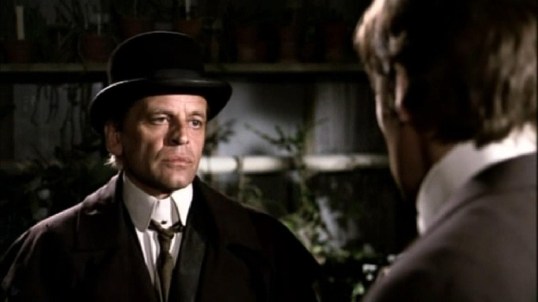
In this 1976 German film, Klaus Kinski plays Dr. Dennis Orlof.

He’s a doctor in what is supposed to be Victorian-era London.  (Some of the characters where Victorian-style clothes.  Some of them definitely do not.)  Dr. Orlof is known for being a kind and compassionate man.  He has dedicated his life to taking care of the poor and the sick.  He is one of the few doctors willing to take care of the men who fish on the Thames and the women who walk the foggy streets of Whitechapel.  Because his patients are not rich, Dr. Orlof makes very little money.  He is usually behind on paying the rent for his office but his lady doesn’t care.  Dr. Orlof is such a kind man.  Who could possibly even think of evicting a living saint?

Of course, what only he and his wife know is that Dr. Orlof is also a deviant who is haunted by hallucinations of a nearly naked woman taunting him and daring him to “come and get me.”  Dr. Orlof haunts the sleazy dance halls of London and he often offers to give the dancers a ride in his carriage.  Dr. Orlof is also the murderer who the press refers to as being Jack the Ripper.

Klaus Kinski as Jack the Ripper?  That sounds like perfect casting, right?  Actually, it’s too perfect.  Klaus Kinski is so obviously unhinged from the first minute that he appears onscreen that it’s impossible to believe that he wouldn’t automatically be everyone’s number one suspect.  Kinski plays Orlof as being someone who is in a permanently bad mood.  Even when Orlof is doing his “good deeds,” he comes across as being so annoyed with the world that the viewer is left to wonder how anyone could have fallen for his act.  Kinski himself seems a bit bored with the role.  When Kinski was invested in a character (as he often was when he appeared in the films of Werner Herzog), he was a dangerously charismatic force of nature.  When he was bored, though, Kinski made little effort to keep anyone else from noticing.  Kinski moves lethargically through Jack the Ripper.

Trying to solve the Ripper case is Inspector Selby (Andreas Mannkopf).  The film spends a lot of time on Selby’s investigation but it’s never as interesting as one might hope.  Selby spends a lot of time in his office, looking concerned.  When he actually talks to the witnesses to the Ripper’s murders, the scene seem to drag out forever.  In one unfortunate scene, he gathers all the witnesses in one room and asks each one to describe what the Ripper looked like so a sketch can be made of him.  Again, what should have been a minute or two-minute scene is dragged out to an unbearable seven minutes.  Seven minutes is a lot of time when you’re bored.

Jack the Ripper was directed by Jess Franco.  On this site, I’ve defended some of Franco’s other films.  Franco was an idiosyncratic filmmaker whose films often felt rushed but who was also capable of creating a dream-like atmosphere and occasionally coming up with an insanely bizarre plot twist.  Jack the Ripper, with its tormented title character and its dance hall scenes, in unmistakably a Jess Franco film.  Unfortunately, it’s also often excruciatingly dull.  Kinski was obviously a big name in Europe in the 70s but I kind of wish that Franco had cast his frequent star, Howard Vernon, as Jack the Ripper.  Not only was Vernon the start of the original Awful Dr. Orlof but Vernon also specialized in playing self-loathing aristocrats.  If nothing else, Vernon would have been a bit less oblivious in his madness than Kinski.

Jack the Ripper is definitely a lesser Franco film.  It’s also a lesser Kinski film and a lesser Jack the Ripper film.  There is one good sequence in which Orlof and a victim ride through the London fog in a carriage.  Otherwise, this is a Franco film that you can get away with skipping.

Scene I Love: Klaus Kinski in David Lean’s Doctor Zhivago


The 1965 film, Doctor Zhivago, is not only notable as one of the many David Lean-directed films to be nominated for Best Picture. It’s also remembered as being one of two Best Picture nominees to feature, albeit in a small role, the madman of European cinema, Klaus Kinski.

In this scene, set in the aftermath of Russia’s communist revolution, Kinski explains why he, despite being a prisoner, is the only free man on the train. Due to his German accent, Kinski was dubbed by actor Robert Rietty and he doesn’t have much screen time but he still manages to steal the movie.

Scene That I Love: Lee Van Cleef Meets Klaus Kinski in For A Few Dollars More


In 1925, on this very date, Lee Van Cleef was born in Somervillve, New Jersey.  In honor of what would have been Lee Van Cleef’s 97th birthday, here he is with Klaus Kinski and Clint Eastwood in For A Few Dollars More.

There’s not a lot of dialogue in this scene but when you had actors like Eastwood, Kinski, and Lee Van Cleef, you didn’t need a lot of dialogue to make an impression.

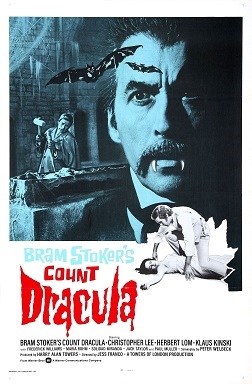
International Horror Review: Count Dracula (dir by Jess Franco)


Christopher Lee played Dracula in seven horror films and he often said that he hated almost every single one of them.

Christopher Lee, you have to understand, was a fan of Bram Stoker’s original novel and he always wanted to play Dracula the way that Stoker wrote him, as a member of the old nobility who got younger each time he drank blood.  As Lee often explained it, he spent years vainly trying to convince Hammer to do a Dracula film that was faithful to Stoker’s novel but Hammer instead preferred to use Dracula as an almost generic villain, one who was frequently plugged into equally generic films.

At some point, in the late 60s, producer Harry Alan Towers approached Christopher Lee and asked him to play Dracula in a non-Hammer film about the world’s most famous vampire.  At first, Lee refused.  If he was bored with playing Dracula for Hammer, why would he want to play him for someone else?  However, Towers then explained that his version of Dracula would be the first Dracula film to actually be faithful to Stoker’s book.  In fact, along with the presence of Christopher Lee, that would be the film’s major selling point!  Hearing this, Lee agreed.

The resulting film was 1970’s Count Dracula, a German-Spanish-British co-production that was directed by none other than Jess Franco.  Jess Franco, of course, is a beloved figure among many fans of Eurohorror and a bit of a controversial filmmaker.  Some people admired him for his ability to direct atmospheric films while spending very little money.  Others complained that Franco’s films were frequently amateurish and narratively incoherent.  When it comes to Franco, both camps can make a compelling argument.  Personally, I tend to come down on the pro-Franco side of things, particularly when it comes to the films that he made with Towers in the 70s.  For his part, Christopher Lee said he enjoyed working with Franco and they would go on to collaborate on several more films together.

So, what type of film is Jess Franco’s Count Dracula?  Well, Towers did not lie to Lee.  For the most part, Count Dracula remains faithful to plot of Bram Stoker’s Dracula.  There’s a few minor differences, of course.  A few characters are combined, which is understandable given that you sometimes need a scorecard to keep up with everyone in the novel.  The ending is a bit more abrupt in the film than it is in the book.  This probably has something to do with the fact that Franco ran out of money before he finished the film.  That was a fairly frequent occurrence on Franco’s films.

That said, film sticks close to the novel.  Jonathan Harker (Frederick Williams) goes to Transylvania and meets Dracula (Christopher Lee, with a mustache), an aging nobleman.  Harker soon finds himself being held prisoner in the castle, a victim of Dracula and his brides.  Though Harker does manage to escape (though not before finding Dracula asleep in his coffin), he ends up at a psychiatric hospital in London.  He meets Dr. Seward (Paul Muller) and Prof. Van Helsing (Herbert Lom).  Eventually, his fiancee Mina (Maria Rohm) and her best friend, Lucy (Soledad Miranda, who was Franco’s muse until he tragic death in a car accident) come to visit him.  Accompanying Lucy is Quincy Morris (Franco regular Jack Taylor), who, in the film, is a combination of two of the novel’s characters, Quincy and Arthur Holmwood.  Meanwhile, a madman named Renfield (Klaus Kinski) babbles about his master and eats bugs.

That said, while the story may stick close to Stoker, this is definitely a Franco film.  The action plays out at its own deliberate pace.  Depending on how much tolerance you have for Franco’s aesthetic, you’ll find this film to be either dream-like or slow.  Personally, I liked the amospheric images and the somewhat ragged editing style.  Whether it was Franco’s intention or not, they gave the film a hallucinatory feel, as if one was watching a nightmare being dreamt by Stoker himself.  At the same time, I can imagine others getting frustrated by the film and I can understand where they’re coming from.  Franco, with his habit of mixing the sensual with a deep sense of ennui, is not for everyone.

Still, it was interesting to see Lee giving a much a different performance as Dracula than he did in the Hammer films.  The Hammer films portrayed Dracula as being animalistic, driven by only his craving for blood.  In Count Dracula, Lee plays with the idea of Dracula being a relic of the old world, someone who has no choice but to watch as civilization changes around him.  While Dracula is undoubtedly evil, Lee plays him with hints of dignity.  Gone is the snarling and growling monster of the Hammer films and instead, this movie features a Dracula who takes an almost Calvinistic approach to his affliction.  He’s accepted his fate.  As he tells Harker, Harker can either choose to enter the castle or not.  In the end, it makes no difference because eventually, someone will enter.  The film also retains the idea of Dracula growing younger in appearance as he drinks blood, which adds a whole other dimension to Dracula’s cravings.  Blood is life and youth, two things that Dracula no longer possesses.

As for the rest of the cast, Klaus Kinski, not surprisingly, throws himself into the role of Renfield.  Reportedly, he ate real bugs for the role.  Herbert Lom seems a bit bored with the role of Van Helsing.  He doesn’t have any of the eccentric energy that we typically associate with the role.  Of course, some of that is due to the fact that, because of scheduling conflicts, Lom and Lee were never on set at the same time.  The scenes where Dracula and Van Helsing confront each other were created through some editing sleight-of-hand.  As is typical with Franco films, sometimes it works and sometimes, it’s extremely obvious that Lom wasn’t actually looking at Lee (or anyone other than the cameraman) when he delivered his lines.

Count Dracula is an interesting take on the story.  It’s a bit uneven, though that’s perhaps not a surprise considering that the production was apparently beset by budgetary problems from the start.  This film is Franco at his least lurid and it’s hard not to miss some Franco’s more sordid impulses.  Watching the film, you get the feeling that Franco was holding back.  But, the visuals are wonderfully dreamy, Kinski is compelling in his insane way, and Lee finally appears to be enjoying the role of Dracula.  It’s actually kind of nice to see.

4 Shots From 4 Klaus Kinski Films


4 Shots From 4 Films is just what it says it is, 4 shots from 4 of our favorite films. As opposed to the reviews and recaps that we usually post, 4 Shots From 4 Films lets the visuals do the talking!

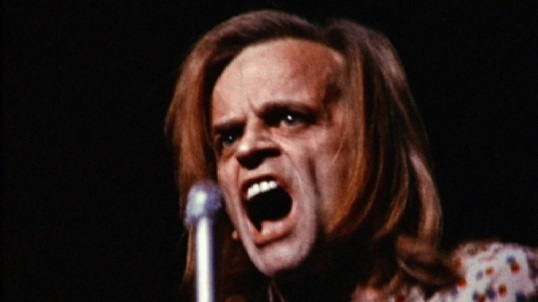
95 years ago today, Klaus Kinski was born in Poland.  Kinski was a brilliant actor who, by all accounts, was an absolute monster in his private life.  Werner Herzog worked with him on several films and reportedly considered murdering him on more than a few occasions.  Herzog, himself, wrote about the time that he had spent in a mental asylum and the time that was diagnosed as being a psychopath.  Because of his talent, he appeared in many great films.  Because of his reputation for being a literal madman, he also missed out on a lot of great roles and spent much of his career appearing in low-budget exploitation flicks.  Many of those films were in the horror genre.

Today, on the anniversary of Kinski’s birth, TSL presents….

4 Shots From 4 Klaus Kinski Films

Count Dracula (1970, dir by Jess Franco, DPs: Manuel Merino and Luciano Trasatti)

Jack the RIpper (1976, dir by Jess Franco, DPs: Peter Baumgartner and Peter Spoerri)

Nosferatu The Vampyre (1979, dir by Werner Herzog, DP: Jörg Schmidt-Reitwein)

Venom (1981, dir by Piers Haggard, DPs: Denys Coop and Gilbert Taylor)