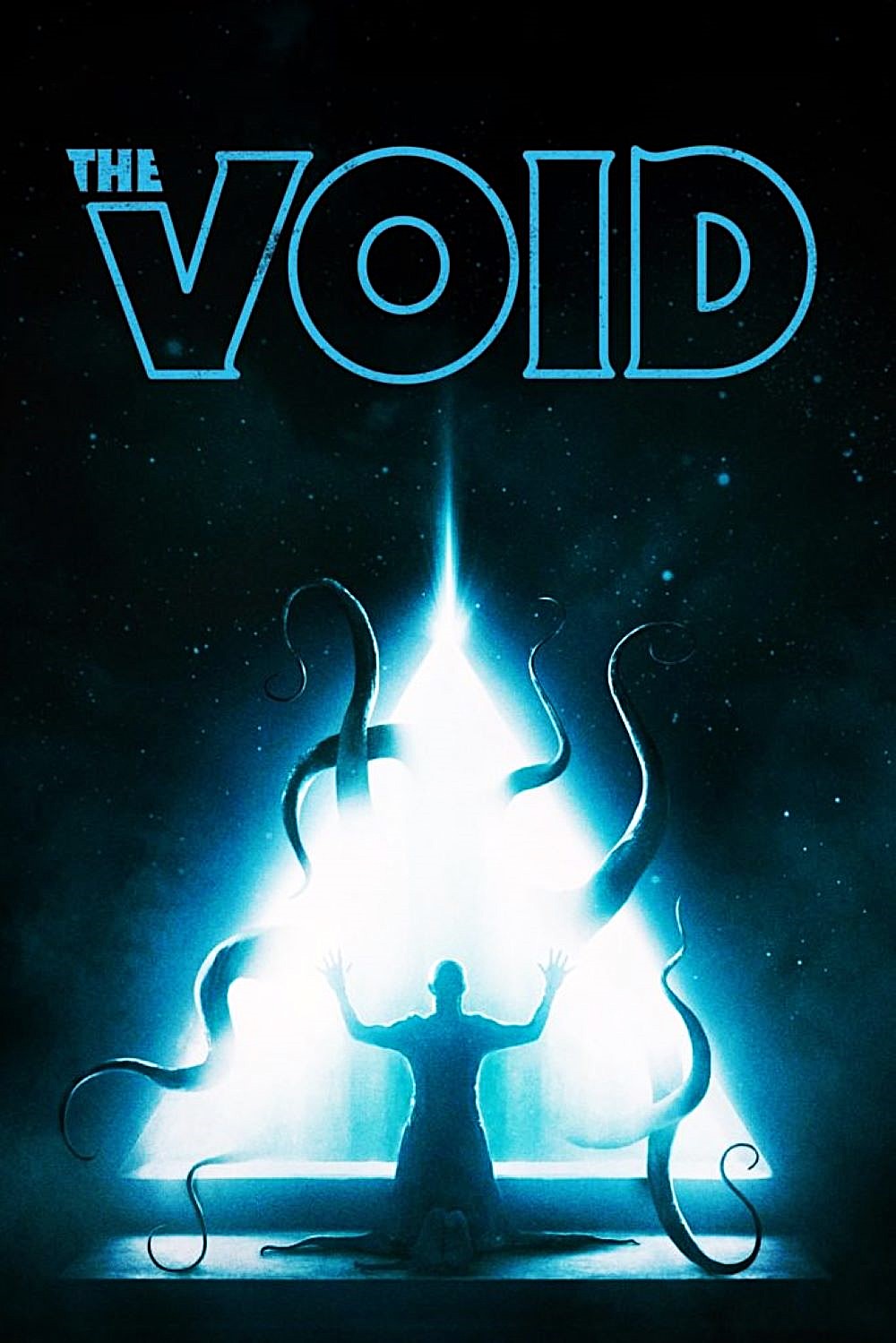
Horror Review: The Void (dir. by Steven Kostanski & Jeremy Gillespie)


“It’s not just the darkness out there… it’s the darkness in here.” — Sheriff Daniel Carter

Steven Kostanski and Jeremy Gillespie’s The Void is a grisly, atmospheric plunge into Lovecraftian cosmic horror and John Carpenter-inspired body horror, set within a nearly abandoned rural hospital shrouded in eerie blue light and creeping shadows. The film expertly conjures anxiety and dread, as fragile boundaries between dimensions begin to dissolve, threatening to swallow all inside.

At the heart of the story is Deputy Sheriff Daniel Carter (Aaron Poole), whose weighty grief and fractured relationships drive his reluctant heroism. He stumbles upon a bloodied man and brings him to the hospital staffed by his estranged wife, Allison Fraser (Kathleen Munroe), a focused nurse haunted by their broken family. Dr. Richard Powell (Kenneth Welsh) looms as the villainous architect of the unfolding nightmare, his obsession with conquering death fueled by personal tragedy, twisting him into a leader of occult horrors.

The supporting characters—Vincent and Simon, survivors hardened by trauma; Maggie, a pregnant woman caught in the web of cosmic corruption; and Kim, a vulnerable young intern—saturate the siege narrative with survival-driven urgency. Though less developed than the leads, they embody the raw desperation and existential threat pervading the hospital.

The Void wears its influences on its sleeve, drawing heavily from the siege tension of John Carpenter’s Assault on Precinct 13 alongside the paranoia and isolation of The Thing. These classic Carpenter motifs—claustrophobic settings, unrelenting external threat, and mistrust among survivors—penetrate the film’s fabric, amplified by a synthesizer-driven score nodding to Carpenter’s sonic signature. The nightmarish body horror, occult elements, and grotesque practical effects owe much to Stuart Gordon’s work adapting Lovecraft’s stories, blending visceral horror with cosmic dread.

Yet, while the homage is clear and affectionate, the film sometimes falters by blending these iconic elements into a decoction that resists full cohesion. Instead of synthesizing the inspirations into an innovative whole, it assembles a patchwork—rich in style and atmosphere but struggling to commit to a coherent, fresh narrative. The mixture of Carpenter’s claustrophobic siege, Gordon’s visceral mythos, and the cultist horror trope occasionally feels like pastiche rather than a confident new voice.

The technical craftsmanship shines throughout. Practical effects—from mutated creatures to grotesque body transformations—are lovingly crafted and tactile, restoring a physicality often lost in digital horror. The cinematography and lighting accentuate the oppressive mood, favoring muted colors punctuated by blood-red and luminous blues, thinking as much about shadows as solid objects.

However, the film’s narrative and character work often leave something to be desired. While Carter’s arc of guilt and reluctant heroism is thematically resonant, key emotional beats suffer from underdevelopment, with his relationships, particularly with Allison, only superficially explored. Dialogue oscillates between exposition-heavy and clipped, hindering audience connection with the cast amid the unrelenting terror. The supporting characters serve primarily functional roles, their deeper motivations and backstories sacrificed for the sake of grim spectacle and escalating horror.

The climax descends into surreal, fragmented sequences that evoke fever dreams more than narrative resolution. This abstract finale, while visually striking, challenges viewers seeking clarity and can be polarizing: some will appreciate the cosmic horror tradition of unsolvable mysteries, while others may experience frustration with the loose plotting and ambiguity. Pacing reflects these shifts—building steadily in the opening act before devolving into frenetic, disjointed bursts that occasionally undermine tension.

Despite these narrative and pacing flaws, The Void remains a memorable experience for lovers of practical effects and cosmic horror texture. It’s a film rich with unsettling imagery and mood, capturing a form of existential terror that goes beyond cheap scares. The filmmakers’ love for classic horror runs deep, even if the resulting fusion occasionally feels like homage without full reinvention.

Ultimately, The Void is a dark, unsettling trip into the unknowable—a sonic and visual descent into a hellish siege where logic unravels and time shatters. It’s a film that prizes atmosphere and physical monstrosity over smooth storytelling, inviting viewers to surrender to dread rather than demand explanation. For fans of Carpenter’s minimalist tension, Gordon’s visceral adaptations, and the tactile nightmares of 80s horror, The Void offers a rewarding, though imperfect, journey into the cosmic abyss—an evocative invocation of terror where humanity is both survivor and prey.
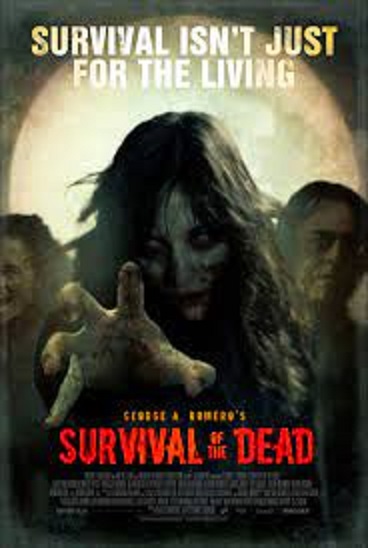
The TSL’s Horror Grindhouse: Survival of the Dead (dir by George Romero)


Sitting off the coast of Delaware, Plum Island seems like the perfect place to live. The people are friendly. The town is small and quaint but definitely inviting. There are plenty of horses, for those who like to ride. The island’s one mailman is a welcome sight, dropping off mail everyday and giving everyone a friendly wave.

The only problem with Plum Island is that, as pretty as it may be, it is also the home to two feuding Irish families. Patrick O’Flynn (Kenneth Welsh) and Seamus Muldoon (Richard Fitzpatrick) have been enemies for as long as anyone can remember. Their feud has gone on for so long that its doubtful anyone even know what started it all. The two families have an uneasy peace up until the breakout of the zombie apocalypse. The O’Flynns want to kill every zombie that shows up on the island. The Muldoons, on the other hand, want to keep the zombies as pets and workers until a cure for their condition can be found. Eventually, Patrick O’Flynn turns out to be so reckless in his mission to destroy the undead that he’s exiled from the island. Even his own daughter, Janet (Kathleen Munroe), supports sending Patrick off to the mainland.

However, no sooner has Patrick been exiled then he hooks up with a bunch of AWOL National Guardsmen, who are weary of spending the rest of their days chasing the undead. Patrick leads them back to Plum Island, hoping to use them to destroy the the Muldoons forever.

Released in 2010, Survival of the Dead is both the final entry in George Romero’s Dead films (which started way back in 1968 with the classic Night of the Living Dead) and it was also Romero’s last completed film as a director. (Romero died in 2017, while in pre-production on a film called Road of the Dead.) Unfortunately, Survival of the Dead was not warmly greeted by critics or audiences, many of whom felt that Romero was simply rehashing concepts that he had already fully explored in the previous Dead films.

To a certain extent, those critics have a point. There are a lot of flaws with Romero’s final film, from the obviously low budget to the inconsistent performances. (Welsh, Fitzpatrick, and Munroe are all well-cast and give good performances but the National Guardsmen are all forgettable at best.) At the same time, there’s enough weird moments in Survival of the Dead to make it watchable. Plum Island is a memorably surreal location. The undead of Plum Island continue to exhibit the same behavior in death that they did in life. The mailman still tries to deliver mail. Another zombie continues to ride her horse across the island. It’s only when they sense the living amongst them that they turn deadly. As with all of Romero’s Dead films, the living dead may be dangerous and relentless but the truly scary characters in the film are the living humans who, even in the middle of the end of the world, cannot set aside their differences long enough to work together. The film’s final shot, which suggests that it takes more than death to end a blood feud, is so striking that it makes up for a lot of the weaker moments that came before it.

In the end, the most interesting thing about Survival of the Dead is that it’s more of a western than a traditional horror movie, featuring two warring families fighting on horseback and battling to control the land. Romero often said that he felt trapped by his reputation as a horror filmmaker and that he was actually interested in all genres of film. With Survival of the Dead, Romero finally got to make a Western. The end result is uneven but still has enough interesting moments to make it worth watching.

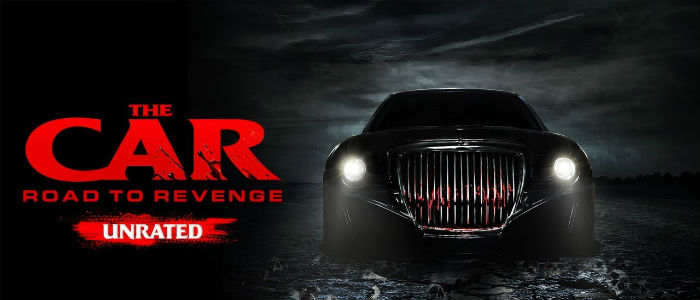
The Car: Road to Revenge, Review by Case Wright


Happy Horrorthon! I warn you that this post might look …. weird. My Chrome version of wordpress has been possessed. There’s NO OTHER EXPLANATION! EVER!

The Car: Road To Revenge is a sequel to The Car from 1977…. MINDBENDER! No wonder I feel like having a key party and getting an orange couch… Dramatization:

This film was written after Death Race 2050 – ALT Title: Miffed Max: Budget Road, Reviewed like a boss! also by G. J. Echternkamp. I have to write that G.J. is a genuinely nice person and these are great genre films. I could easily see Bruce Campbell starring in a Echternkamp movie. Believe me, I have some ideas….G.J. …DM me. 😉 really! Car 2 is set in a dystopian future, but really it didn’t seem any worse than Seattle today. Car 2 had fancy cars, embattled police, and shitty local government, and lawlessness; if you threw in some drizzle, I’d be right at home.

The film begins with Caddock (Jamie Bamber) of Battlestar Galactica fame. He’s a possessive and corrupt prosecutor who is in an on again off again thing with Daria (Kathleen Munroe). Apparently, he gets an evil computer chip that everyone wants … for some reason. I never fully understood why they wanted the chip or why they’d kill Caddock for it. Did the chip have the recipe for Coca Cola? Were they hardcore gamers? Did it have the latest version of Microsoft Word?

Caddock puts the evil chip into his car and it does …. something. I wasn’t really sure what it did, but when the bad guys go after Caddock for it and kill him, the chip causes Caddock to possess the car. Caddock Car spends the rest of the movie avenging his own death and trying to get Daria to be his … Car Girlfriend? I wasn’t sure how that Daria/Caddock Car consummation would work, but I know she’d have to use plenty of Jiffy Lube or maybe they could MAACO out for a while. I’m not saying it would be a AAA session, but maybe they could get used to it and have a GOODYEAR or two.

Caddock’s murder/slash possession puts Ranier (Grant Bowler) on the case. By on the case, he basically drinks a lot and gets into the pants of Daria. Bad idea because Caddock Car is possessive is it like Daria’s all Meineke and tries to run over Ranier…a lot. Then, the movie gets…weird. The bad guys who want the chip, kill or try to kill A LOT of people to get the chip. Why? It will apparently improve their body augmentations and I don’t mean like the piercings on a Seattle Soccer Mom…. I mean Robotech stuff. Caddock Car manages to squish most of his enemies to death and I mean jump on a Capri-Sun when you’re bored at your kid’s soccer game squish.

Caddock Car eventually gets the majority of his revenge. I had trouble figuring out who to root for sometimes, but I guess it was Daria. She was pretty badass and eventually kills Caddock Car, but Caddock Car is avenging his murder…so, maybe him too. Anyway, Caddock Car gets driven into the bottom of a …lake? Quarry? Large above ground pool? I could not really tell where the car ended up, but it’s dead…or is it???

Happy Horrorthon!!!!