Retro Television Review: St. Elsewhere 2.19 “The Women”


Welcome to Retro Television Reviews, a feature where we review some of our favorite and least favorite shows of the past! On Fridays, I will be reviewing St. Elsewhere, a medical show which ran on NBC from 1982 to 1988.  The show can be found on Hulu and, for purchase, on Prime!
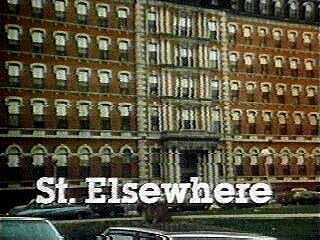
This week, St. Elsewhere tries something different.

Episode 2.19 “The Women”

(Dir by Bruce Paltrow, originally aired on March 28th, 1984)

Four women share a room at St. Eligius.

Evelyn Milbourne (Eva La Galliene) is elderly, headstrong, and rich.  She’s also about to lose her independence as it’s clear that she can no longer live on her own.

Rose Orso (Brenda Vacarro) is only in her 40s but is already showing signs of dementia.  She struggles to remember who she is.  Her husband is becoming a stranger.  At one point, she grabs some scissors.  At first, it seems like she might be planning on attacking one of the other women.  Instead, she cuts her hair and doesn’t do a very good job of it.

Paige (Blythe Danner) is in for a nose job and she tells a lot of stories about her glamorous life outside of the hospital.  Towards the end of the episode, she confesses that she’s actually a pathological liar who got her nose job because she didn’t have anything better to do.

The fourth woman never speaks.  She’s in a coma.  She dies in the middle of the night and is rolled out of the room with disturbing efficiency.

This episode was basically a play.  A few of the regulars got scenes of their own but, for the most part, the action stayed in that one hotel room and it focused on the four women.  When I first realized what this episode was going to be like, I really thought I was going to hate it.  It seemed like the sort of thing that would bring out the worst in the show’s writers.  Instead, it turned out to be a very well-done and extremely well-acted episode, one that reminded the viewer that every patient has their own story.  After spending most of this season focusing on the doctors, The Women announced that the patients matter too.
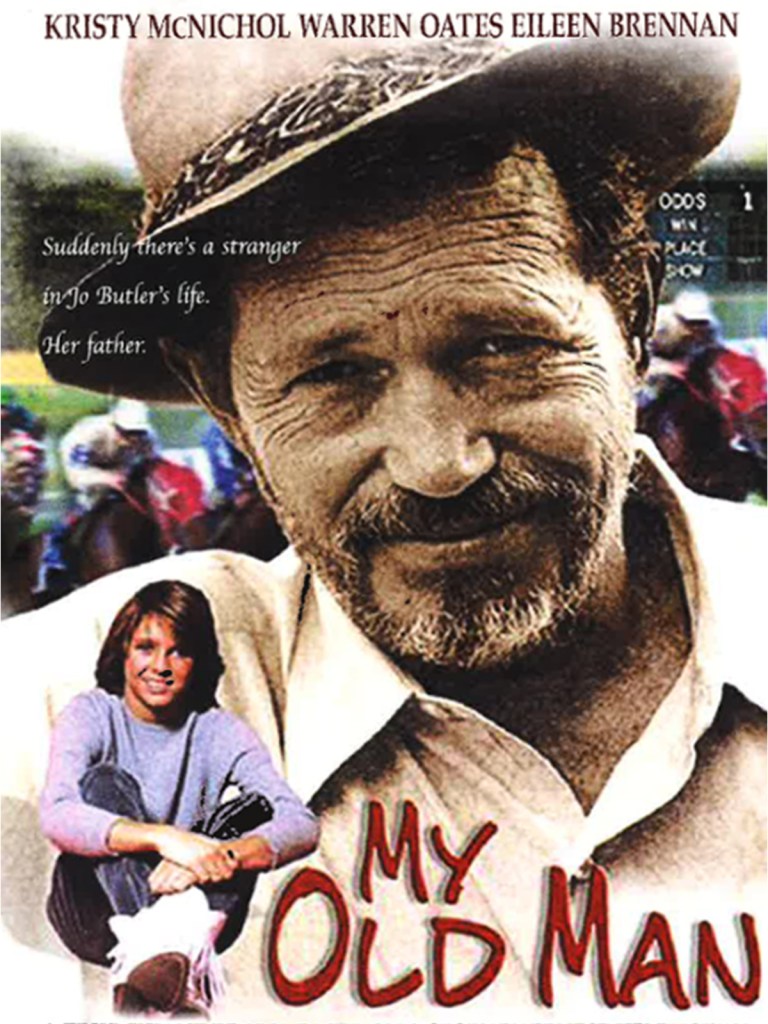
Brad reviews MY OLD MAN (1979) – starring Warren Oates and Kristy McNichol! 


In my continuing celebration of Warren Oates’ birthday, I decided to check out his 1979 TV movie MY OLD MAN, with Kristy McNichol. Based on a 1923 short story from Ernest Hemingway, Oates stars as Frank Butler, an alcoholic horse trainer and compulsive gambler, who goes to see his 16-year-old daughter, Jo (Kristy McNichol) after the death of her mother. In an effort to have some sort of relationship with Jo, Frank asks her to spend the summer with him, where he introduces her to his world of horse racing, as well as his old flame Marie (Eileen Brennan). Things get off to a rocky start, but with time the two start to develop a loving and meaningful relationship. Frank’s notorious bad luck even changes for the better for a while, and he’s able to buy Jo her own racehorse. Unfortunately, just as things are starting to go well, Frank suffers a life threatening injury in the horse stables, and Jo is faced with the possibility of having to take on life without her mother or her father… 

For a 1979 TV movie, I enjoyed MY OLD MAN. I like Warren Oates as the grizzled father who wants a relationship with his daughter but who also has no idea of how to go about it. He’s cranky and not happy to have someone else to answer to, but he also shows just enough vulnerability that we believe that he has a chance to be a caring dad. Kristy McNichol also does a good job as the 16 year old daughter who wants to get to know a dad that she’s only been told about thus far in her life, with most of those things not being very good. For this movie to work, their relationship has to work. I think both Oates and McNichol effectively express their characters’ desires to connect with each other simply because they’re father and daughter and that means something. As the father of a daughter myself, I know firsthand that our bond is truly special and one of the most important things in my life. And I’ll do anything to keep it that way. 

Aside from the central relationship between Frank and his daughter Jo, I also like the relationship between Frank and his old flame, the waitress Marie (Eileen Brennan). Brennan is very good in the role and effectively conveys her character’s strong love for Frank. Frank needs her and even tells his daughter at one point, “No matter what was going on with me, she never lost her respect for me, and she never stopped caring about me. To me, that shows a lot of class.” From my perspective, I know that all of us guys need someone like Marie in our lives. I’m extremely blessed to have my own “Marie,” even if she does go by a different name. I do want to mention one more relationship in the film that’s interesting, and that’s between Frank and his former jockey George, played by a young Michael Jeter. The two have a bad past that rears its head over the course of the film, and Jeter acquits himself quite well acting against the seasoned veteran. 

Overall, I enjoyed MY OLD MAN as it worked its way through its themes of family reconciliation and personal redemption. The last 20-30 minutes wasn’t quite as effective for me when the TV movie melodrama really kicked in. It still had some good moments, but it felt a little more forced once the focus shifted away from the relationships being developed by the central characters. With that said, I watched this movie in celebration of Warren Oates, and he’s just as great as I had hoped. He’s more than enough reason to watch the film even if it’s not perfect. 

Funny Farm (1988, directed by George Roy Hill)


Andy Farmer (Chevy Chase) is a New York sports writer who leaves the city and moves to the small town of Rosebud, Vermont so that he can work on his novel.  He and his wife, Elizabeth (Madolyn Smith), struggle to adjust to living in a small town.  The delivery of their furniture is delayed by the collapse of a covered bridge.  When they try to make a phone call from inside their own house, the local operator tells them to deposit ten cents.  They were expecting a Norman Rockwell-type town and instead, they find themselves having to pay for the funeral of a man who was buried on their property long before they moved in.  When Elizabeth makes more progress writing a children’s book than Andy does with his heist novel, their marriage starts to feel the strain.

Chevy Chase is now so much better known for the stories of his unprofessional and diva-like behavior on film and television sets that it’s easy to forget that he was, at his peak, a very funny actor.  Chase may be playing a variation of his put-upon everyman but, compared to the first two Vacation movies, most of the humor in Funny Farm is very mild.  George Roy Hill was a classy director who had been making movies since the 50s and Funny Farm feels like a throwback to the type of family-friendly comedies that Disney would make in the 60s.  That I laughed as much as I did was largely due to Chase’s performance.  Whether he was tripping over a Dutch door, reacting to his wife’s dislike of the first few chapters of his new novel, or offering to pay the townspeople $50 to pretend to be nice for a weekend, Chase was consistently funny and even likable.  I don’t know if this is the type of performance that Chevy Chase could give today.  There’s a bitterness that’s now integral to screen persona and it’s made him into someone who audience want to laugh at instead of with.  It’s too bad because Funny Farm is a reminder of the type of comedic actor that Chevy Chase used to be and who he probably still could be if not for the failed talk show and the infamous Friar’s Club roast.

As for Funny Farm, it’s an amusing and likable comedy and it still holds up well today.  Chase is the key to the film’s success but he’s not the only reason that the film works.  I liked the scene where Mike Starr and Glenn Plummer, as the two movers, watch as the bridge they tried to drive over collapses.  I even liked the running joke about the two ducks who refused to leave the Farmers’s property.  Funny Farm may not have been a hit when it was first released but it’s since built up a cult following.  There will always be a place for a funny comedy that leaves you in a good mood.

A Movie A Day #303: The Evil That Men Do (1984, directed by J. Lee Thompson)


Clement Molloch (Joseph Maher) is a doctor who uses his medical training to torture journalists and dissidents in an unnamed South American country.  Holland (Charles Bronson) is a former  CIA assassin, who is content with being retired.  But when Molloch kills a journalist who was also an old friend of Holland’s, it all becomes about revenge.  No one’s more dangerous than Charles Bronson seeking revenge.  Working with the dead journalist’s widow (Theresa Saldana), Holland heads down to South America.  Since Molloch is always surrounded by bodyguards, it is not going to be easy to get him.  But who can stop Charles Bronson?

Bronson was 62 years old when he made The Evil The Men Do and he was still the toughest, coolest killer in the movies.  The Evil That Men Do is a rarity, an 80s Bronson film that was not produced by Cannon.  It still feels like a Cannon production, even if it is a little more interesting than some of the other films that Bronson was making at that time.  Dr. Molloch was clearly based on the notorious Nazi Klaus Barbie and Joseph Maher plays Molloch as being a dignified sadist.  Molloch also has a strange relationship with his equally cruel sister (Antoinette Bower).  That Molloch is so extremely evil makes the film’s final scenes all the more satisfying.

The Evil That Men Do is one of the best of Bronson’s later films.  Charles Bronson, man.  No one got revenge better than Bronson.

Horror on TV: Tales From The Crypt 6.1 “Let The Punishment Fit The Crime” (dir by Russell Mulcahy)


For tonight’s excursion into televised horror, we present you the premiere episode of the 6th season of HBO’s Tales From The Crypt!

In Let The Punishment Fit The Crime, attorney Geraldine Ferrett (Catherine O’Hara) is pulled over while driving through a small town in upstate New York.  It turns out that Geraldine didn’t have enough numbers on her licence plate.  (That’s because she has a vanity plate that reads, “Sue me.”)  It doesn’t sound like a huge crime but, as everyone at the courthouse keeps trying to warn her, she is in “a very strict town.”  Let The Punishment Fit The Crime is a satirical look at our overregulated and overlitigious society.

This episode originally aired on October 31st, 1994 — hey, this is a Halloween episode!

Enjoy!


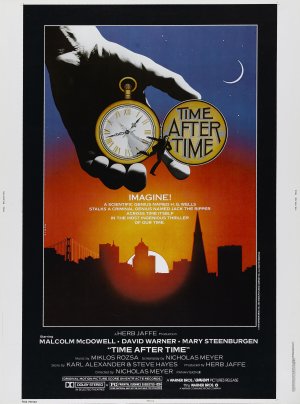
Embracing the Melodrama Part II #62: Time After Time (dir by Nicholas Meyer)


TimeAfterTime79So, I just gave the 1979 film Home Before Midnight a fairly negative review but I simply cannot end the 70s section of Embracing the Melodrama on such a negative note!  So, before we move on to the 80s, allow me to suggest another film from 1979 that you could watch while you’re not watching Home Before Midnight!

Time After Time opens in London.  The year is 1893.  Writer H.G. Wells (Malcolm McDowell) is having a dinner party so that he can show off his latest invention, a time machine.  Among his guests is a surgeon named John Stevenson (David Warner).  What nobody at the party suspects is that Stevenson also goes by the name Jack the Ripper and that he enjoys killing prostitutes.  When a detective from Scotland Yard shows up at Wells’s home, Stevenson jumps into the time machine and escapes into the future.  Since Stevenson does not have the “non-return key,” the machine returns back to 1893 but Stevenson has apparently escaped.

Wells uses the machine to pursue Stevenson and soon finds himself in 1979 San Francisco.  Wells had expected to find that the future would be a utopia but instead, he discovers the world of 1979 is loud, polluted, violent, angry, and dangerous.  (Kinda like the world of 2015…)  As Wells pursues Stevenson, he struggles to adjust to the world of the “future,” and he also meets a bank clerk, Amy Robbins (Mary Steenburgen).

Time After Time is probably the sweetest movie ever made about Jack the Ripper and that’s largely because of the romance between both Wells and Amy and the two actors who played them.  After watching Time After Time, I was not surprised to learn that McDowell and Steenburgen got married shortly after appearing in this film.  They were so incredibly sweet together!

Add to that, considering the he’s best known for playing villains and other menacing types, it’s interesting to see Malcolm McDowell plays such a gentle and nice character.  Wells’ befuddlement is charming to watch.  There’s a great scene where Amy calls Wells on a landline phone and Wells stares down at the receiver in frightened amazement.

Time After Time is a really good and likable movie.  It’s sweet and it proves that even hunting for Jack the Ripper can be a romantic experience if it’s done with the right person.  Watch it and enjoy!