October Positivity: Holyman Undercover (dir by David A.R. White)


In 2010’s Holyman Undercover, David A.R. White plays Roy.  Roy is an 18 year-old Amish dude from Kansas.  It’s time for him to experience Rumspringa, a period in which he can live life amongst “the English” and decide whether or not he wants to commit to being Amish.  Roy decides to go Los Angeles so he can track down his uncle and work with him as a missionary.

Roy struggles in Los Angeles.  Giving money to one homeless man leads to him nearly getting mugged.  When he meets his uncle, he discovers that Brian (also played by David A.R. White) is now a struggling actor who has a taste for cocaine.  (Brian claims that he’s a holyman working undercover.)  Accompanying Brian to an audition leads to Roy getting cast as Satan on a primetime soap opera.  His wife is played by vapid supermodel Tiffany Towers (Jennifer Lyons).  Meanwhile, the show’s producer is a former country girl named Annie (Andrea Logan White) and soon, Roy is having fantasies about Annie dressing up like an Amish woman and dancing in a field with him.  However, the head of the network (Fred Willard) wants Roy to date Tiffany because it’ll be good publicity for the show.

Throughout it all, Roy remains innocent and confused about the modern world.  He’s never watched television.  He doesn’t know how to use a phone.  He doesn’t understand what a credit card is.  He’s earnest and honest to a fault and, even after Tiffany makes out with him, he continues to insist that he only has eyes for Annie.

Of course, in reality, I imagine that the typical Amish person knows how to use a phone.  I imagine that they probably also know what a television is and they probably even understand that you’re expected to pay your credit card debt.  The Amish may choose to reject a good deal of the modern world but that doesn’t mean that they don’t know what the modern world is.  But this film isn’t meant to be a realistic portrayal of the Amish or of Hollywood or of really anything.

Indeed, I’m not really sure what to make of this film.  It’s faith-based and it ends with Roy delivering a simple message about loving others but the film’s humor is often rather mean-spirited and there’s several jokes that are more than a little racist and homophobic.  (Japanese tourists take pictures while shouting, “Godzilla!”  When Brian ends up in jail, his cellmate is a hulking black man who says his name is Beef because “it’s what’s for dinner.”)  David A.R. White is not bad as Roy but his performance as Brian is incredibly shrill and there’s really no reason, beyond ego, for director White to have cast himself in both roles.

Probably the best thing that one can say about the film is that the name actors — Fred Willard, Clint Howard, Edie McClurg, and Staci Keanan — all manage to survive with their dignity intact.  Indeed, the highlight of the film is, believe it or not, John Schneider earnestly playing himself as the actor who replaces Roy as Satan and who then promptly launches a presidential campaign.  “The country’s going to Hell anyway!” he says, with just the right amount of self-awareness.

Interestingly enough, the film does end with one particularly prophetic scene, as Roy and Annie leave Hollywood to produce an Amish dating show.  Tiffany moves with them to the farm and a group of Amish men compete for her hand in marriage.  Farmer Wants A Wife, anyone?

October Positivity: Hidden Secrets (by Carey Scott)


2006’s Hidden Secrets takes place over the course of one very long weekend.

The death of their friend Chris has reunited a group of acquaintances, who gather for the funeral and then end up staying with Chris’s sister, Sherry (Tracy Melchior), for the weekend.  The men gather on her roof and hammer tiles.  The women …. well, for the most part, the women are just portrayed as being catty and judgmental.

For instance, Rhonda (Autumn Paul), who is married to Christian book author Harold (Gregg Brinkley), is offended that Gary (John Schneider) is doing stem cell research and is a Jewish agnostic who spends most of his time challenging Rhonda’s super-strict interpretation of the Bible.  Interestingly enough, considering that this is a Pureflix film, Rhonda is not portrayed in a positive light and Gary usually gets the better of her in their arguments.  Rhonda even apologizes at the end for being so judgmental.  Of course, since this is a Pureflix film, Gary still ends up converting.

Pastor Jeremy (David A.R. White) is dating reporter Rachel (Staci Keanan).  Rachel suspects that Jeremy is still in love with his ex-girlfriend, Sherry.  Rachel is correct.  You have to feel bad for Rachel, who certainly deserved better than she got in this movie.  Jeremy and Rachel end up sharing a bed at Sherry’s house, which freaks Jeremy out because he’s all about abstinence.

Michael (Corin Nemec) is a gay Christian who practices celibacy and whose main function seems to be to offer people advice.

Anthony (Sean Sedgwick) is a rough and tumble guy who shows up with his latest girlfriend, Sally (Rachael Lampa), and who takes her out dancing for her birthday, even though Rhonda says that Christians shouldn’t dance.

The film follows these characters over the weekend, basically doing a Big Chill sort of thing.  Rhonda judges everyone.  Gary is sarcastic.  Jeremy is torn between Sherry and Rachel.  The night of dancing for Sally’s birthday turns into an extended scene where Anthony, Jeremy, and Harold take to the stage and perform a song. It all wraps up with everyone confessing their fears during a church service and I have to admit that I felt sorry for all the people at the church who probably didn’t have the slightest idea why one group of people suddenly hijacked the service to discuss their own problems.

As far as PureFlix films go, this one was well-made and it actually did have some potential.  No one was completely right and no one was completely wrong.  The main message seemed to be accept and love one another.   That said, it also had some fairly serious flaws.  John Schneider doesn’t give a bad performance but he was still miscast as a Jewish abortionist.  I love Corin Nemec and he gave one of the better performances in Hidden Secrets but the film used his character to promote the destructive “ex-gay” movement and it’s difficult not to be bothered by that.  And finally, the resolution of Sherry/Jeremy/Rachel love triangle left me feeling that Jeremy was essentially a terrible, self-absorbed person.  I don’t think that was what the film was going for but, regardless….

Hidden Secrets is an uneven film, to say the least.  At its best, it made me miss some of my old friends.  It’s been a while since we’ve all gotten together.  Hopefully, when we next see each other, it won’t be at another funeral.

I Watched Love Is On The Air (2021, Dir. by Arvin N. Berner)


Adam Smasher (Jason London) is the family friendly version of Howard Stern, an obnoxious shock jock who has just been fired from his radio job and, due to nearly crashing into a cow, finds himself stranded in a small North Carolina town.  He gets a job on the local radio station, co-hosting a call-in show with Eve Cassidy (Lauren Harper).  At first, Adam and Eve don’t mix.  Adam is cynical and Eve actually wants to help people with their relationship issues.  After a few days, Adam learns to appreciate country living and Eve falls in love with him even though she’s dating the station manager, Jamel (Ian Reier Michaels).  Adam shows he’s a soft touch when he buys a bunch of sandwiches for a poor family and Eve starts to loosen up and have more fun on the air.  Eve is offered her own show in Chicago and has to decide between her career and Adam.

This isn’t a Hallmark film but it might as well be.  I enjoyed it even though I knew everything that was going to happen, from the minute Adam first heard Eve on the radio and called in to “smash” her.  (I actually had to check to see when this movie has been made because Adam’s whole act seemed to be from the 1990s.)  This is one of those movies where you know what you’re getting from the start.  If you’re surprised that Adam brings a carousel down to the station for Eve to ride during a commercial break, you’ve probably never seen one of these movies before.  I liked the cozy small town town feel of the location and I think Jason London should be in more movies.  I also think it’s funny that 99% of these movies start with someone having car trouble.  If people knew how to drive, they would never fall in love.

October Positivity: The Favorite (dir by Curtis Graham)


The 2019 film, The Favorite, tells the story of two brothers.

Benjamin Bernard (Luke Benjamin Bernard) is an MMA fighter, an up-and-comer who never gives up in the ring and has won the loyalty of his fans as a result.  His nickname is “The Favorite” because the crowd loves to watch him fight.  What the crowd doesn’t know is that Benjamin rarely feels like the favorite in his everyday life.  Instead, he’s lived his life overshadowed by his brother and, as a result, he’s grown up to be angry and insecure.

Benjamin’s brother is Luke (Matthew Fahey).  Luke is a star soccer player, one who is destined to go pro as soon as he graduates.  (At one point, he’s projected to be the number one draft choice.)  Luke has always been a good son and a good friend and a good brother.  He and Benjamin love each other but Benjamin just cannot get over his jealousy towards the strong relationship between Luke and their father, Daniel (John Schneider).

The tensions between the two come to a head one night while the two of them are on a double date.  Luke is driving when Benjamin punches him.  Luke loses control of the SUV, resulting in a catastrophic crash.  Luke’s girlfriend is killed.  Benjamin’s girlfriend may never walk again.  Luke is taken to the hospital in a coma and the doctors are forced to remove a part of his skull in order to save his life, causing half of the top of Luke’s head to cave in.  Somehow, Benjamin survives the accident with only a few minor cuts and bruises.

After spending days in a coma, Luke finally opens his eyes.  It quickly becomes apparent that he’s suffered severe brain damage.  He can barely walk or speak but Luke also makes it clear that he intends to recover.  With the help of Benjamin and Daniel, Luke makes quick progress.  But when Benjamin confesses that it was his actions that led to the car crash and the death of Luke’s girlfriend, will Luke ever be able to forgive him?

The Favorite ends with an interesting postscript.  As the end credits roll, the viewers are informed that the film’s star, Luke Benjamin Bernard, was in a similar car accident in 2013.  The accident left him in a stage 3 coma and, just as happened to Luke in the film, the doctor’s had to remove a portion of Bernard’s skull in order to save his life.  Bernard was given little chance of recovery but, to the shock of everyone, he did eventually wake up from his coma.  He had to learn how to walk, talk, and write again.  He even had to re-learn how to swallow and eat solid food.  Much like the film’s Luke, the real Luke made remarkable progress in his recovery, completing rehab in three weeks.  While in the hospital, Bernard had a dream about two brothers who were dealing with the same thing that he was dealing with.  That dream led to Bernard writing the script for The Favorite, with Benjamin and Luke representing two sides of himself and his recovery.  The film ends with a shot of him giving a motivational speech and I don’t care how cynical you may be, it’s incredibly touching.

It’s a touching film as well.  Yes, the budget is low and there are a few scenes that are a bit overwritten.  A subplot about Benjamin trying to win the MMA championship felt like it was lifted from a dozen other films.  But, in the end, it doesn’t take away from the power of the film’s story or the excellent performances of Bernard, Fahey, and Schneider.  This is a heartfelt movie, one that celebrates the love of family and the promise of hope.

The Eric Roberts Collection: Road to the Open (dir by Cole Claassen)


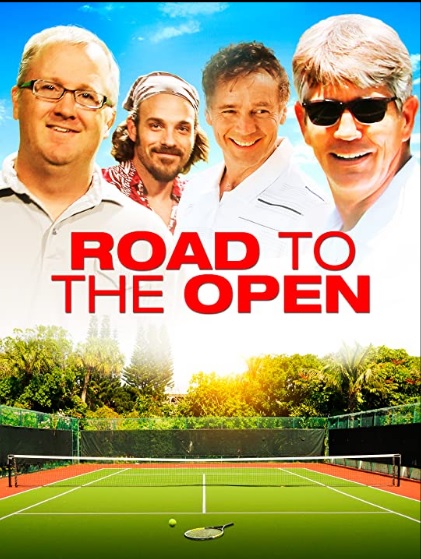
In 2014’s Road to the Open, Eric Roberts and John Schneider play, respectively, Tim and Rob Gollant.

The Gollant brothers are wealthy, smug, and athletic.  At the local country club, they’re not only the best golf players but also the best tennis players.  They’re the type who taunt their opponents while they’re losing.  No one really likes the Gollant brothers but people put up with them because the Gollant brothers are extremely rich.  When they tell you to get off of their bench at the club, it’s because it really is their bench.  Their names are literally on the bench.

The Gollant Brothers aren’t exactly likeable but they are fun to watch, specifically because they’re played by John Schneider and Eric Roberts.  Roberts and Schneider give perfect performances as two men who have never actually had to grow up.  They’re the type of overage high school bullies who wouldn’t stand a chance in the real world but who, fortunately, can spend all of their time hiding out at their country club.

Of course, the Gollants are not the heroes of Road to the Open.  Instead, they’re the obstacle standing in the way of Jerry McDonald (Troy McKay) and Miles Worth (Philip DeVova).  Jerry and Miles are lifelong friends who enjoy playing tennis together.  Overweight, balding, and mild-mannered, Jerry is not a typical athlete and he knows it.  Haunted by the death of his wife and raising his daughter on his own, Jerry doesn’t so much fear losing as much as he fears letting everyone down.  Miles, meanwhile, is a typical athlete, right down to the anger management issues.  Fortunately, Miles has been seeing a somewhat eccentric therapist (Judd Nelson) and he may have finally learned how to control his temper.

There’s a lot of tennis in Road to the Open but, ultimately, it’s about Jerry and Miles’s friendship and Jerry trying to find the strength to move on with his life.  Even though he meets and falls in love with Sam (Michelle Gunn), Jerry still feels as if he’s betraying the memory of his wife and, at times, he feels guilty for feeling any sort of happiness.  There’s a lot of comedy to be found in Road to the Open but, ultimately, this film is a heartfelt and rather sweet testament to friendship and love.  It’s also a well-acted film, with McKay, DeVova, and Gunn bringing a lot of likable energy to their roles.

I watched Road to the Open on Tubi.  It turned out to be a nice surprise.

Previous Eric Roberts Films That We Have Reviewed:

  1. Star 80 (1983)
  2. Blood Red (1989)
  3. The Ambulance (1990)
  4. The Lost Capone (1990)
  5. Love, Cheat, & Steal (1993)
  6. Love Is A Gun (1994)
  7. Sensation (1994)
  8. Doctor Who (1996)
  9. Most Wanted (1997)
  10. Mr. Brightside (2004)
  11. Six: The Mark Unleased (2004)
  12. Hey You (2006)
  13. In The Blink of an Eye (2009)
  14. The Expendables (2010) 
  15. Sharktopus (2010)
  16. Deadline (2012)
  17. Miss Atomic Bomb (2012)
  18. Lovelace (2013)
  19. Self-Storage (2013)
  20. Inherent Vice (2014)
  21. Rumors of War (2014)
  22. A Fatal Obsession (2015)
  23. Stalked By My Doctor (2015)
  24. Stalked By My Doctor: The Return (2016)
  25. The Wrong Roommate (2016)
  26. Stalked By My Doctor: Patient’s Revenge (2018)
  27. Monster Island (2019)
  28. Seven Deadly Sins (2019)
  29. Stalked By My Doctor: A Sleepwalker’s Nightmare (2019)
  30. The Wrong Mommy (2019)
  31. Her Deadly Groom (2020)
  32. Top Gunner (2020)
  33. Just What The Doctor Ordered (2021)
  34. Killer Advice (2021)
  35. The Poltergeist Diaries (2021)
  36. My Dinner With Eric (2022)

Stagecoach (1986, directed by Ted Post)


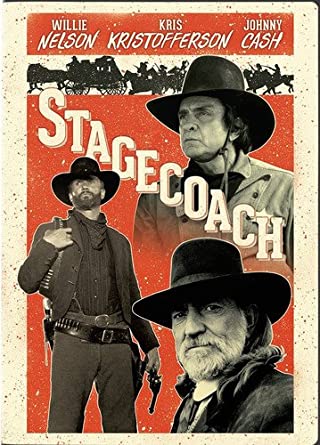
The year is 1880 and Geronimo and his Apaches are on a warpath against the people who have taken their land.  Despite the warnings of the local Calvary officers, one stagecoach tries to make the long journey from Arizona to New Mexico.  The seven passengers may start out as strangers but they’re going to have to work together to survive the journey.  The most famous passenger is dentist-turned-gunslinger Doc Holliday (Willie Nelson).  The most infamous is the Ringo Kid (Kris Kristofferson), an outlaw who has recently escaped from prison and who is looking for revenge against the men who framed him for a crime that he didn’t commit.  Henry Gatewood (Anthony Fraciosa) is a banker who has embezzled money and is looking to make a quick escape.  Foppish Trevor Peacock (Anthony Newley) sells liquor.  Dallas (Elizabeth Ashley) is a former prostitute looking to start a new life.  Mrs. Mallory (Mary Crosby) is nine months pregnant and traveling to reunite with her husband, an officer in the Calvary.  Finally, Hatfield (Waylon Jennings) is a chivalrous gambler.  Riding atop the stagecoach is Buck (John Schneider), who gets paid 8 dollars a month to risk his life taking people through Apache country, and Curly (Johnny Cash), the tough-but-fair town marshal who plans to arrest the Ringo Kid as soon as they reach civilization.

Made for television, Stagecoch is an adequate remake of the John Ford classic.  The story remains basically the same, with the main difference being that the majority of the characters are now played by country-western singers who are a few years too old for their roles.  Doc Holliday, who died of “consumption” when he was in his 30s, is played by Willie Nelson, who doesn’t look a day under 70.  The Ringo Kid is played by Kris Kristofferson, who, despite having literally played Billy the Kid a decade earlier, still doesn’t look like he’s ever been called a “kid” at any point in his life.  Compared to their original counterparts, the remake’s characters have been slightly tweaked so that they fit with the outlaw country images of the singers playing them.  Doc Holliday sympathizes with Geronimo and says that his use of whiskey is “medicinal.”  Kristofferson’s Ringo Kid is more openly contemptuous of authority than John Wayne’s.  Waylon Jennings is less of a cynic in the role of Hatfield than John Carradine was and Johnny Cash sits atop the stagecoach like a man on a holy mission.

The cast is the main reason to watch this version of Stagecoach.  The film can’t match the original but Nelson, Kristofferson, Jennings, and Cash obviously enjoyed playing opposite each other and, even if Nelson and Kristofferson are miscast, all of them bring some needed country-western authenticity to their roles.  As for the non-singers, Mary Crosby, Elizabeth Ashley, and John Schneider all make the best impressions while both Franciosa and Newley seem too 20th Century for their western roles.  Director Ted Post does a good job with the action scenes and keeps the story moving, even if the remake’s status as a TV production keeps him from capturing visual grandeur of Ford’s original.  Stagecoach is a respectful remake of a classic, one that can be appreciated when western fans on its own merits.

Cocaine Wars (1985, directed by Hector Olivera)


In 1980s Bolivia, the most powerful drug lord is Gonzalo Reyes (Federico Luppi).  Working with General Lujan (Rodolfo Ranni), Reyes runs his own concentration camp, where people are forced to process the cocaine that is then sold in the United States.  Reyes’s pilot is an American named Cliff Adams (John Schneider).  Reyes eventually gives Cliff a very important assignment.  He wants Cliff to assassinate Marcelo Villalba (John Vitali), a crusading journalist who is running for president of the country.

What Reyes and Lugan don’t know but soon learn is that Cliff is actually a Miami-based DEA agent who has been working deep undercover.  Despite his assignment and the fact that even the U.S. government seems to consider Villalba to be expendable, Cliff refuses to carry out the assassination.  Soon, he and his girlfriend (Kathryn Witt) and their friend Bailey (Royal Dano) are being pursued by Reyes and Lujan.  Cliff’s girlfriend is also a reporter and she has compiled a story that, if it is published, will blow the lid off of Reyes and Lujan’s partndership.

Produced by Roger Corman and filmed in Argentina, Cocaine Wars is very much a product of its time.  In the 1980s, America was all about the War on Drugs, especially the War on Cocaine.  However, some of the world’s biggest drug lords were working with the tactic approval of some of America’s most important allies in South and Central America.  For as long as it was convenient and strategically useful, the American government would look the other way.  It was only when the situation became internationally embarrassing, as in the case of Panama’s General Manuel Noriega, that the U.S. would actually step in.  This was certainly the case in Bolivia, where drug lords were so essential to overthrowing the government that the subsequent coup was referred to as being “the cocaine coup.”  General Lujan is a stand-in for a large number of Bolivian military men who continually overthrew the country’s democratically-elected leaders.  By including several Germans among Reyes’s organization, Cocaine Wars also acknowledges the role that Nazi war criminal Klaus Barbie played in not only propping up a series of Bolivian strongmen and drug organizations but also teaching the Bolivian secret police how to torture information out of political prisoners.  While Cocaine Wars is not primarily a political film, it is still notable as an early example of a film that pointed out why the War on Drugs was destined for failure.

As for the film itself, it is a standard low-budget action film.  There aren’t any huge surprises to be found but, at 82 minutes, it moves quickly and it has enough action to satisfy fans of the genre.  John Schneider may not have been Sylvester Stallone, Arnold Schwarzengger, or even Chuck Norris but that works to the movie’s advantage.  Unlike those bigger-than-life heroes, Schneider does not come across as being indestructible and that adds a little more suspense to the inevitable gunfights and torture scenes.  Schneider is a likable and effective action lead, even if you never do forget that you’re essentially watching a TV actor taking a stab at the big screen.

The Films of 2020: Roped (dir by Shaun Piccinino)


Ah, the rodeo.

Though they’re not quite as ever-present as people up north seem to assume, rodeos are still a pretty big deal down here in the Southwest.  Now, I have to admit that I have mixed feelings about the rodeo, largely due to the fact that I spent the early part of my life constantly moving from the city to the country to the city and then back to the country again.  The city girl side of me looks at the rodeo and says, “That’s a silly tradition that’s dangerous to both the animals and the participants and there’s no way that I would ever let any future child of mine have anything to do with it.”  However, the country girl side of me hears the words “rodeo,” and shouts, “Hell yeah!”  Seriously, there’s nothing more exciting than watching a handsome cowboy try to ride a bull without getting killed.

And believe me, rodeos can be dangerous.  There’s an episode of King of the Hill in which Hank and Peggy take Bobby to the rodeo and Peggy mentions that one of her relatives was sent home from Vietnam because he was having rodeo nightmares.  I could believe it.  Rodeos are not petting zoos, despite what some people may think.  Bulls and broncos can be dangerous when they’re angry and a rodeo clown can only provide so much protection.  In fact, there’s some towns that have actually considered baning the rodeo.

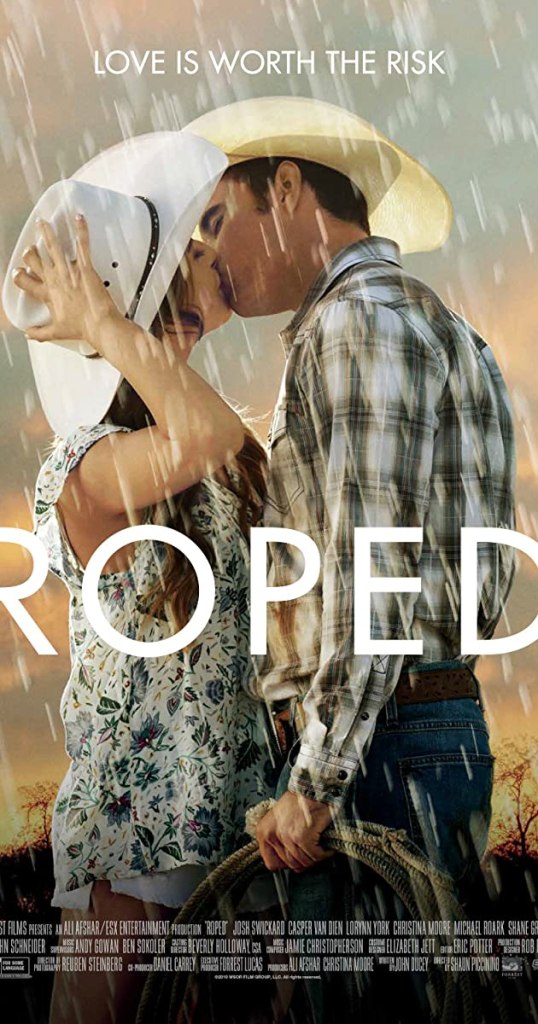
Roped takes place in one such town.  City councilman Robert Peterson (Casper Van Dien) doesn’t want the rodeo coming anywhere near his home.  He argues that the rodeo is unfair to animals and that it corrupts the youth.  It’s kind of like Footloose, except instead of banning dancing, the councilman wants to ban a rather foul-smelling carnival in which people are occasionally killed.

Of course, what the councilman doesn’t know is that his own teenage daughter, Tracy (played by Lorynn York) is falling in love with a rodeo cowboy!  Colton Burtenshaw (Josh Swickard) is a up-and-coming star on the rodeo circuit and it’s pretty much love at first sight as soon as he and Tracy meet.  Of course, this means that Tracy is going to have to defy her father and Colton’s going to have to prove that the rodeo isn’t as bad as everyone thinks that it is.  It’s time for laughs, tragedy, love, and sheep.  Yes, you read that right.

Anyway, you can probably guess everything that happens in Roped.  This is a low-budget movie that’s designed for the “I wish they still made movies like they used to do” crowd and, for what it is, it’s not that bad.  It’s hardly a great or even a memorable film but it gets the job done and it’ll appeal to people who have nostalgic memories of the rodeo.  There’s not an edgy moment to be found in the film but people looking for edgy movies probably won’t be watching Roped in the first place.  It’s a nice-looking film and Lorynn York and Josh Swickard make for a cute couple, in both the film and real life.  (York and Scwickard married shortly after making this movie.)  Plus — hey, Casper Van Dien’s in the movie!  Van Dien’s always fun to watch, especially when he’s playing a well-meaning but misguided authority figure.

As I wrap up this review, one final word about the rodeo: it’s pronounced “roe-dee-oh.”  Don’t come down here and say you want to see a “ro-day-oh.”  Those clowns can turn on you quickly.

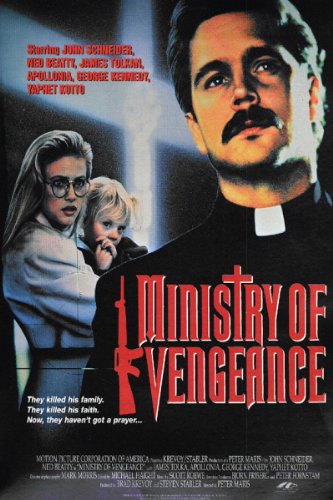
Ministry of Vengeance (1989, directed by Peter Maris)


David Miller (John Schneider) is a former soldier who served in the Vietnam War.  Though David managed to survive the war, the majority of his platoon did not and he is still haunted by the day when he was forced to blow up a kid who was working for the VC.  After getting out of the army, David renounces violence and war and he becomes an Episcopal priest.  (His denomination is never really made clear but he wears a collar and he’s got a family so I assume he’s Episcopal.)  He marries Gail (Meg Register) and they have a daughter named Kim (Joey Peters).  Eventually, the Millers find themselves in Rome, where David works with a kindly minister named Hughes (George Kennedy) and preaches the word of the God and the gospel of nonviolence.

Unfortunately, the Millers just happen to be in an airport when it’s attacked by a group of terrorists led by Ali Aboud (Robert Miano).  As David watches, Aboud personally executes his wife and daughter.  Though David survives the attack because Aboud says, “Leave the priest alive!,” his faith is shaken and he goes from renouncing violence to renouncing peace.  After the local CIA agent (Yaphet Kott) refuses to tell David the name or the location of the terrorist who killed his family, David just happens to open up a magazine and finds himself staring at a picture of Ali Aboud.  Ministry of Vengeance may claim to be about faith but it’s mostly about coincidence.

After David discovers that Aboud is in Lebanon, he decides it’s time for him to fly over and dispense some “eye for an eye” justice.  First, David has to get trained by his old drill instructor (James Tolkan).  Once he’s back in fighting shape, David heads off to Lebanon, little aware that Aboud is actually a CIA informant and that the agency is prepared to kill to protect its assets.

Ministry of Vengeance is one of those direct-to-video films where the majority of the budget was spent on getting a handful of “name” actors to make a brief appearance and give the entire production the feel of being a legitimate movie.  So, along with George Kennedy and Yaphet Kotto, Ned Beatty shows up as a quirky minister in Lebanon while Prince’s former protegee, Apollonia Kotero, plays Beatty’s daughter.  None of them get to do as much as you might like.  It’s always good to see Kotto, even if he’s appearing in a bad film, but his role here is mostly just a glorified cameo.  Most of the film is about John Schneider, trying to balance his faith with his desire for vengeance.  That’s a potentially interesting angle to bring to the story but the movie’s handling of the issue is shallow.  David has doubts about his mission but only when it’s convenient for the film’s narrative.

There are a few good action scenes.  James Tolkan is a blast in the R. Lee Ermey roll of the hardass drill sergeant.  Otherwise, Ministry of Vengeance is as forgettable as a guest sermon.

Spring Breakdown: Super Shark (dir by Fred Olen Ray)


So, here’s the thing: when I was making out my list of films to review for Spring Breakdown, I was under the impression that the 2011 film, Super Shark, was a Spring Break film.  I was convinced that it was a film about a giant shark that ate a bunch of people over the course of Spring Break.

Fortunately, right before posting this review, I decided to rewatch Super Shark.  Normally, I probably wouldn’t have because I’m currently on vacation but it’s also currently raining and it’s also about 7 degrees outside.  (That’s 7 degrees Celsius but it’s still pretty cold.)  It’s like God was reading through my drafts folder last night and said, “Uh-oh.  Lisa needs to rewatch the movie before she posts the review.”

Anyway, upon rewatching Super Shark, I discovered that 1) the film is still awesome as Hell and 2) it’s not actually a Spring Break film.  Instead, it’s a summer film.  There’s even a scene where two lifeguards talk about what a great time they’re going to have working on the beach during the summer.  So, technically, I probably shouldn’t be reviewing this film as part of a Spring Break series but …. well, I’m going to do it anyways.  I mean, it may be a summer film but it plays out like a Spring Break film.  Plus, it’s got a giant shark.

Not surprisingly, for a film called Super Shark, the giant shark is the main attraction.  The CGI’s a bit dodgy and the shark does look a bit cartoonish but that actually adds to the film’s charm.  Whereas Steven Spielberg dealt with the reality of a fake-looking shark by keeping the shark off-screen as much as possible, directed Fred Olen Ray takes the opposite approach and seriously, more power to him.  Ray puts the shark in as many scenes as possible, as if he’s saying, “Yes, this is a low-budget B-movie and why should we pretend that it’s anything other than that?”  There’s an honesty to this approach that’s impossible not to respect.

The shark is prehistoric in origin.  It was safely separated from society until the big bad oil company did some bad corporate stuff and, as a result, the shark is now free to ruin everyone’s summer.  You know that whole thing about how sharks have to stay in the water or they’ll die?  That’s not a problem for Super Shark.  Super Shark will jump on the beach and eat you, he doesn’t care.  In fact, Super Shark is such a rebel that he’ll even take on a tank and win!  WE LOVE YOU, SUPER SHARK!

As always, there’s a group of humans around who don’t love Super Shark as much as the viewers.  There’s the evil corporate guy played by John Schneider.  He’s into money and drilling.  And then there’s the scientist played by Sarah Lieving.  She hates corporations and she doesn’t like sharks.  There’s a DJ played by Jimmie “JJ” Walker.  And then there’s the lifeguards and the beachgoers and the people who just want to participate in a wholesome bikini contest.  Sorry, everyone, Super Shark has other plans.

Anyway, I have a weakness for films about giant sharks attacking oil wells and eating people on the beach.  It’s a silly film but it’s obviously been designed to be silly.  This isn’t Jaws nor is this a serious film about the issues surrounding underwater drilling.   This is a B-movie about a giant shark and if you can’t enjoy something like this, I worry about you.  This is a film that you watch with your friends and you have a lot of fun talking back to the screen.  Don’t take it seriously and just enjoy the giant shark action.  Who could ask for a better summer?  Or a better Spring Break for that matter?