Retro Television Review: The American Short Story 1.1 “The Music School”


Welcome to Retro Television Reviews, a feature where we review some of our favorite and least favorite shows of the past!  On Saturdays, I will be reviewing The American Short Story, which ran semi-regularly on PBS in 1974 to 1981.  The entire show can be purchased on Prime and found on YouTube and Tubi.

Today, we start a new series of reviews with an adaptation of a John Updike short story!

Episode 1.1 “The Music School”

(Dir by John Korty, originally aired on January 1st, 1974)

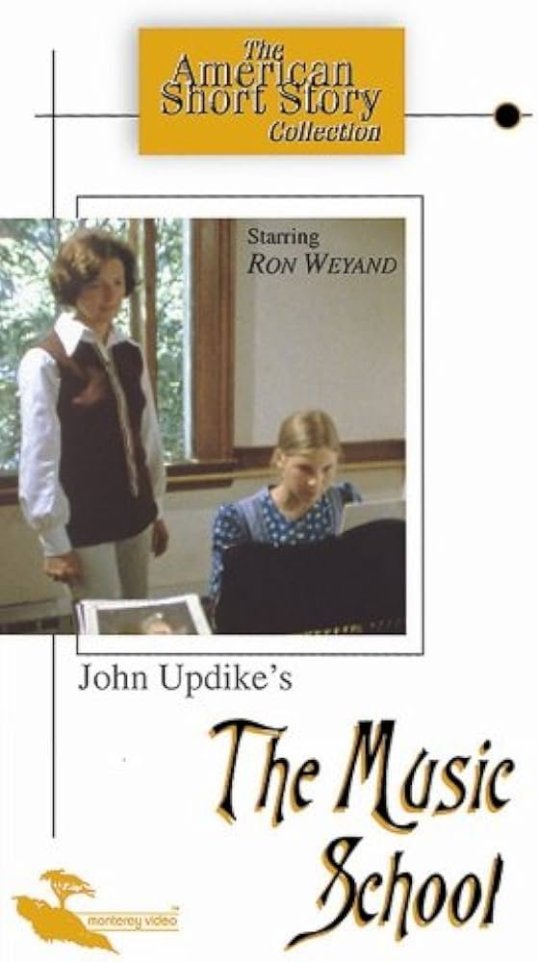
The first episode of The American Short Story is based on a story by John Updike.  Alfred Schweigen (Ron Weyand) is a writer who sits at his typewriter and who occasionally looks out the window of his office.  His wife playfully sprays the window with a garden hose and the writer thinks about how she’s in therapy because of his affairs.  He remembers taking his daughter to her music school and thinks about the sounds of music floating through the building like ghostly memories.  He thinks about a priest who, while talking to a bunch of “Protestants and non-believers,” explained that it was now permissible to chew the Eucharist wafer instead of waiting for it to dissolve.  He thinks about a friend of his, a computer programmer, who was apparently assassinated by a random sniper while his family watched.  In his mind, Alfred takes the random thoughts and occurrences and builds a story around them.

It’s an interesting episode, even if it doesn’t quite work.  Tasked with bringing Updike’s words to visual life, this episode far too often falls back onto cliche and Ron Weyand often looks more annoyed that sincerely perplexed by life’s mysteries.  (The writer’s narration is provided by Henry Fonda, whose middle-American voice doesn’t quite match Weyand’s petulant performance.)  It’s a midlife crisis type of story, one in which the writer tries to deal with his own ennui and infidelities by turning them into fiction.  Unfortunately, this is a case of what was compelling on the page falling flat when it’s adapted for film.  I appreciated this episode’s ambition, even if it didn’t work in the end.

Next week, the American Short Story interprets a story by Ambrose Bierce!

May The Fourth Be With You: Looking Back At Star Wars


Today is Star Wars Day.  (It’s May 4th.  May the Fourth Be With You!  I’ll stop now.)  Five years ago, I ranked all of the Star Wars feature films that had been released up until that point from best to worst.  Here’s how I ranked them:

  1. The Empire Strikes Back
  2. Rogue One
  3. New Hope
  4. The Force Awakens
  5. Revenge of the Sith
  6. Return of the Jedi
  7. Solo
  8. The Rise of Skywalker
  9. The Last Jedi
  10. Attack of the Clones
  11. The Phantom Menace

Since that was a while ago, I decided to take a look back and see if I still felt the same way.  Here are my brief thoughts on each film, in order of release.

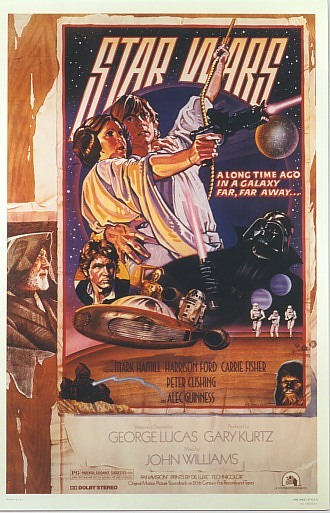
Star Wars: Episode IV — A New Hope (1977, directed by George Lucas) — A New Hope may not be the best Star Wars film but it’s still the most entertaining, even if George Lucas doesn’t seem to realize that.  A tribute to the serials and space operas that Lucas grew up with, A New Hope features great action scenes, special effects that hold up well despite not being as slick as modern CGI, and great performances from Alec Guinness and Harrison Ford.  Mark Hamill would eventually become a much better actor, though you might not guess just from his performance here.  Watching New Hope today, I really appreciate that the movie doesn’t get bogged down in overexplaining things.  We don’t need to know what the Clone Wars were specifically about or what the Kessel Run actually was.  They sound cool and that’s all that was really required.  Despite what some claim, there is absolutely no evidence that Darth Vader was meant to be Luke’s father in this move.

Star Wars Holiday Special (1978, directed by Steve Binder) — Only aired once, I debated whether to include it here or not.  I eventually did just because it features the debut of Boba Fett.  It’s as bad as you’ve heard but the special’s real since is that it’s incredibly boring.  Harrison Ford still looks happier here than he did in Return of the Jedi.

Star Wars: Episode V — The Empire Strikes Back (1980, directed by Irvin Kershner) — The best of the original trilogy, this installment was surprisingly dark, downbeat, and violent.  Mark Hamill finally started to show some signs of growth as an actor while Harrison Ford’s Han Solo continued to be the coolest rebel in the universe.  Combining the more thoughtful scenes with Yoda with the action-orientated scenes on Cloud City made this the most intelligent of the Star Wars films.  The battle on Hoth remains one of the best action scenes ever.  I think every kid who saw this movie wanted an AT-AT Walker.  I know I did.

Star Wars: Episode VI — Return of the Jedi (1983, directed by Richard Marquand) — It’s not quite as bad as its reputation, largely due to the opening with Jabba the Hutt’s court.  Jabba is so grotesque and evil in this movie that it’s hard not to regret that the subsequent films made him into more of buffoon than a crime lord.  Brining back the Death Star made this film feel like a retread.  The Ewoks were created to sell toys but so was everything else in this movie.  Harrison Ford looks particularly grouchy at the end.

The Ewok Adventure (1984, directed by John Korty) and Ewoks: The Battle For Endor (1985, directed by Jim and Ken Wheat) — I guess if these had been successful, there would have been an Ewok television show.  The Ewok Adventure feels childish and features a narrator.  Battle for Endor is surprisingly violent for a movie about teddy bears.  Both films are more bland than truly bad.

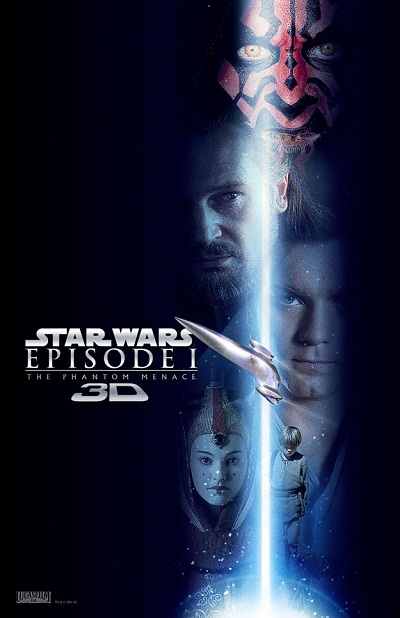
Star Wars: Episode I — The Phantom Menace (1999, directed by George Lucas) — There’s been some revisionism about this film.  Some people actually defend it now.  Not me.  It’s still pointless.  This movie started the trend of every popular film having to have an in-depth “mythology” behind it.  It turns out that the Evil Empire was all about trade routes and tariffs.  Jake Lloyd gets more blame than he deserves.  Overexplaining the Force was a sign of things to come.  This movie would feature Natalie Portman’s worst performance if not for…

Star Wars: Episode II — Attack of the Clones (2o02, directed by George Lucas) — As painfully generic as its title, this movie was responsible for Hayden Christensen having an undeserved reputation for being a bad actor.  I doubt any actor, no matter how talented, could make Lucas’s dialogue feel natural.

Star Wars: Episode III — Revenge of the Sith (2005, directed by George Lucas) — The only one of the prequels that actually added anything to what we already knew, Revenge of the Sith is dark, violent, and it doesn’t have as many slow spots as the other prequels.  Ewan McGregor finally gets a chance to act and Hayden Christensen and Natalie Portman are finally given actual characters to play.  Today, some people say it’s the best of the Star Wars films.  They’re wrong but it’s still pretty good.

The Clone Wars (2008, directed by Dave Filoni) — The only animated Star Wars film doesn’t get much attention and it does get bogged down in the mythology of the of the prequels.  No one really cares about the specifics of the Clone Wars.  The fact that it’s animated and clearly marketed at kids makes the dialogue easier to tolerate.

Star Wars: Episode VII — The Force Awakens (2015, directed by J.J. Abrams) — When this first came out, a lot of people (including myself) were so happy to have a new Star Wars film that we overrated it.  It’s hard to watch today without thinking about how bad things got after it was released but it does still hold up well as a space adventure, though Daisy Ridley’s blandness is more apparent on subsequent viewings.  The performances of Adam Driver and John Boyega still hold up.  The main attraction, though, is Harrison Ford returning as Han Solo.

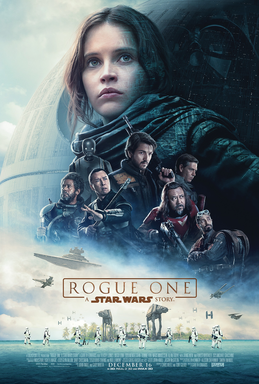
Rogue One: A Star Wars Story (2016, directed by Gareth Edwards) — The first stand-alone live action Star Wars feature film is a thrilling space adventures that holds up on subsequent viewings and works because the stakes actually feel real.  For the first time since New Hope, the Death Star is actually frightening.  This remains one of the best films in the franchise and it’s not surprising that it led to the best of the Star Wars television shows.

Star Wars: Episode VIII — The Last Jedi (2017, directed by Rian Johnson) — The haters are right about much of this film.  For all the complaints about Disney not allowing their Marvel directors much freedom, the Star Wars sequels shows what happens when a franchise isn’t sure where it wants to go.  Rian Johnson tries to bring Star Wars down to Earth but that’s not where we want Star Wars.  Rose Tico was an annoying character and her line about saving what we love deserves all of the mockery it received but Kelly Marie Tran still didn’t deserve to be run off of social media.  Turning Luke into a bitter old man was this film’s greatest sin.

Solo: A Star Wars Story (2018, directed by Ron Howard) — That this wasn’t a box office hit was the a clear warning sign that audiences were getting bored with Star Wars.  This Han Solo origin story isn’t bad.  Ron Howard could direct a film like this in his sleep.  It just feels unnecessary.  Alden Ehrenreich does his best but no one can replace Harrison Ford as Han Solo.

Star Wars: Episode IX — The Rise of Skywalker (2019, directed by J.J. Abrams) — J.J. Abrams tries to undo everything that Rian Johnson did in his film.  I don’t blame Abrams because Johnson’s film wasn’t great but just shrugging it all off doesn’t really work either.  The sequel trilogy, which started with such high hopes, ends with a whimper.  Daisy Ridley’s boring performance doesn’t help.

My rankings, as of 2025, are below:

  1. The Empire Strikes Back
  2. Rogue One
  3. New Hope
  4. Revenge of the Sith
  5. Return of the Jedi
  6. Force Awakens
  7. Solo
  8. Rise of Skywalker
  9. The Last Jedi
  10. Ewoks: Battle for Endor
  11. The Clone Wars
  12. The Ewok Adventure
  13. Holiday Special
  14. Phantom Menace
  15. Attack of the Clones

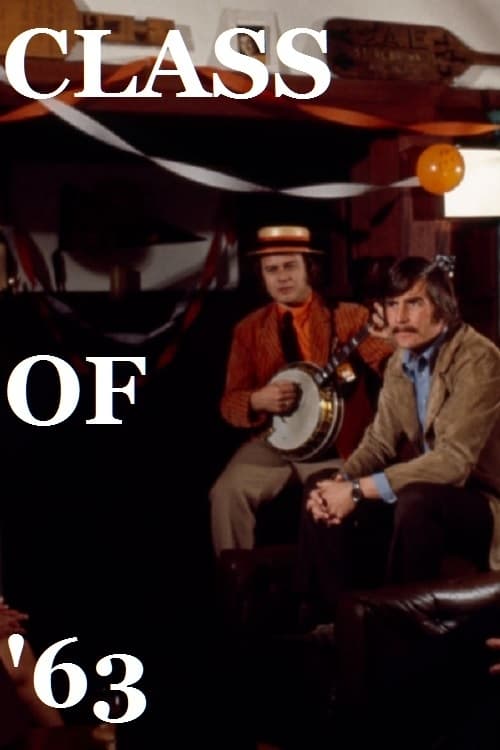
Retro Television Reviews: Class of ’63 (dir by John Korty)


Welcome to Retro Television Reviews, a feature where we review some of our favorite and least favorite shows of the past!  On Sundays, I will be reviewing the made-for-television movies that used to be a primetime mainstay.  Today’s film is 1973’s Class of ’63!  It  can be viewed on YouTube!

It’s college reunion time!  Alumni of all ages and from all over the country are returning to the place where they became adults and spent the best years of their lives.

Joe Hart (James Brolin), of the Class of ’63, returns to the campus but he immediately feels like a bit like an outsider.  As opposed to his former classmates, many of whom are desperately trying to recapture their fading youth, Joe is quiet and sensitive and he’s aware of the passage of time.  He hasn’t come back to college so that he can relive his carefree fraternity days.  Instead, his main interest is whether or not his former fiancée will be there.

And it turns out that Louise Swerner (Joan Hackett) is there!  She’s accompanied by her husband and fellow member of the Class 0f 63, Mickey Swerner (Cliff Gorman).  From the minute that Mickey appears, it’s obvious that he has both a chip on his shoulder and a lot of insecurity.  He is visibly annoyed when people fail to immediately recognize him.  He and Louise have a strained marriage and he’s not particularly happy with how excited she is to see Joe again.  While Mickey tries to convince everyone that he’s grown up to be a winner, Louise and Joe get reacquainted and it becomes obvious that they still love each other.  Will Louise and Joe leave the reunion together and should they be more concerned with the fact that Mickey just happens to have a sniper rifle in his luggage?  And what to make of Dave McKay (Ed Lauter), the former classmate who seems to be just a little bit too excited to see everyone?

It’s an interesting film and I have to say that it didn’t quite go the direction that I was expecting it to.  Despite the presence of the rifle and Mickey’s obvious instability, the film is less a thriller and more a look at what it means to grow up and the difficulty of letting go of the past.  None of the characters are caricatures.  Joe and Louise may seem perfect together but the film makes clear that they’re also idealizing their time together.  With neither one of them really happy with their current life, they’ve both fallen into the trap of wondering, “What if?”  Meanwhile, Mickey may be flawed but it’s impossible not to have some sympathy for him.  As hostile as Cliff can be, it’s obvious that the person that he hates the most is himself and Cliff Gorman does a good job of capturing Mickey’s raging insecurity.  Gorman’s intensity provides a good balance to Brolin’s more laid back performance and, by the end of the film, one can understand why and how Louise was able to fall in love with two men who superficially seem to be so different.

Class of ’63 is a good drama, one that requires a little patience but which ultimately rewards the audience for sticking with it.

Sci-Fi Review: The Ewok Adventure (1984, dir. John Korty)


vlcsnap-2015-12-14-17h31m40s256

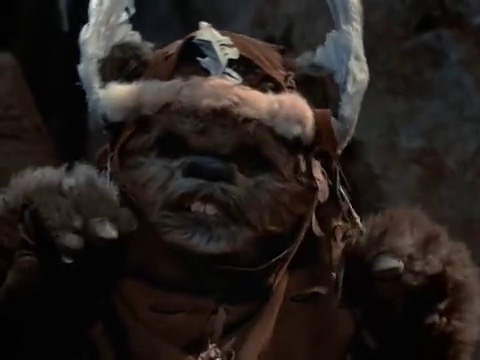
Yes, the Ewoks were cute, fun, and Warwick Davis, but did we need two movies devoted just to them? I guess so. This movie is about two kids who are separated from their parents after their spaceship crashes in Northern California where a bunch of little people are cosplaying as Ewoks. Or they have crashed on the distant moon of Endor as our narrator Burl Ives tells us. I believe Burl Ives was an afterthought as he actually barely narrates this movie. It begins when we see the parents at the crash site looking for their kids. A giant shows up and takes them away.
vlcsnap-2015-12-14-17h31m26s351

Then the opening credits start. I swear you could put these over the start of a Davy Crockett movie and they wouldn’t look out of place.
vlcsnap-2015-12-14-17h31m48s690

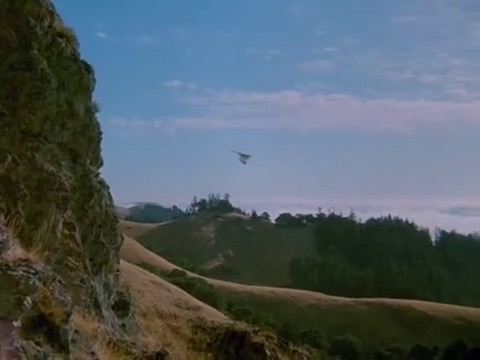
Next we meet the Ewoks. Two of the kids went out hiking in Marin County and haven’t come back, so it’s time to go hang gliding to find them.

vlcsnap-2015-12-14-17h35m49s868

After the kid Ewoks are saved, we get introduced to the human children.

vlcsnap-2015-12-14-17h39m26s642

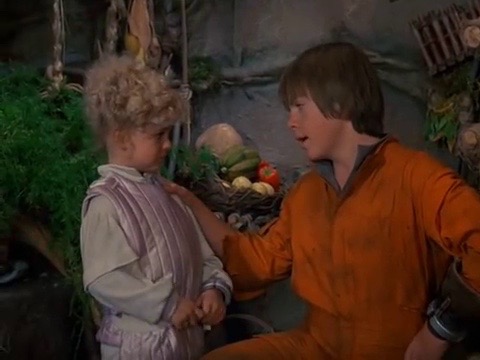
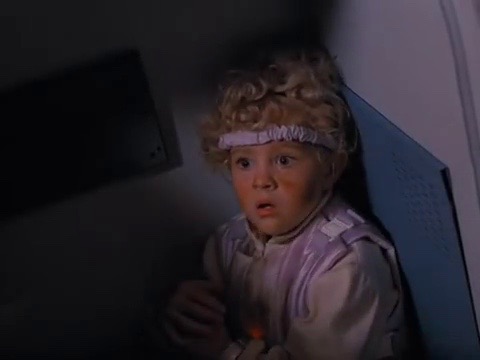
This is Cindel played by Aubree Miller who just had a mirror put in front of her and realized she’s wearing that unfortunate headband.

vlcsnap-2015-12-14-17h40m34s892

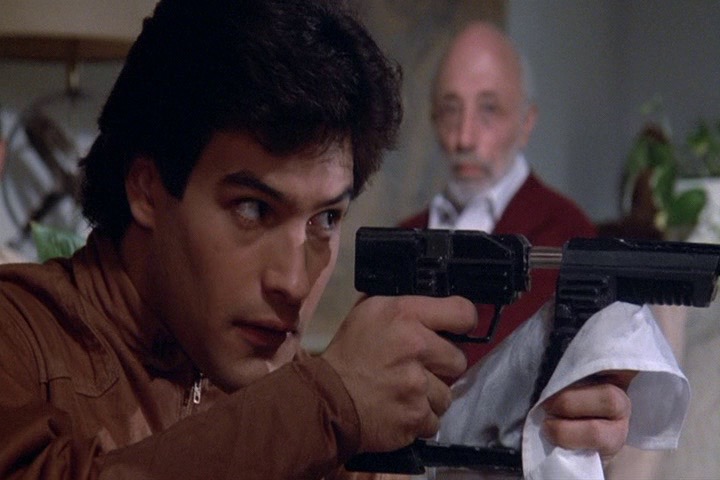
This is Mace played by Eric Walker who is doing his best impersonation of David Packer in V (1983).

vlcsnap-2015-12-15-17h34m46s501

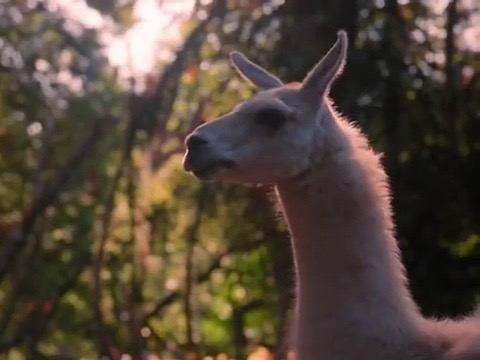
It’s actually kind of tough to talk about this movie cause there’s little to it. So let’s hit the main points here. Such as that we finally know where the llama at the gas station in Godard’s Film Socialisme came from.

vlcsnap-2015-12-14-17h42m01s119

It came from the North Bay Area Moon of Endor. This is the first of several times you’ll see Earthbound animals that apparently exist on Endor too.

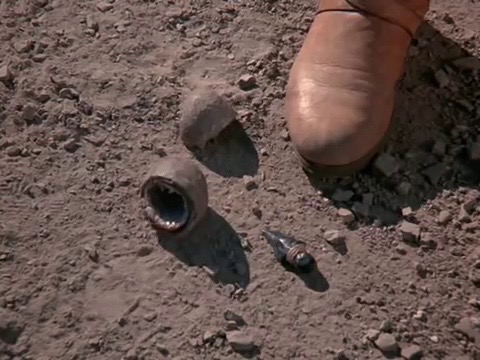
A bunch of this now is the kids and the Ewoks feeling each other out such as how to communicate, can they be friends, and will the Ewoks help the kids to find their parents. Cindel isn’t feeling well so the Ewoks and Mace go out to find some special medicine. And by that I mean we can have a scene where Mace almost gets his arm chewed off by putting it in a tree with this.
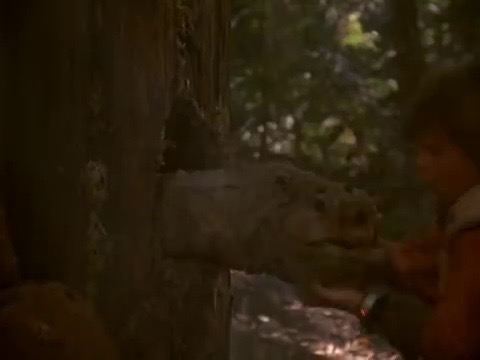
vlcsnap-2015-12-14-17h52m23s782

Now Cindel is just fine.

vlcsnap-2015-12-14-18h01m49s675

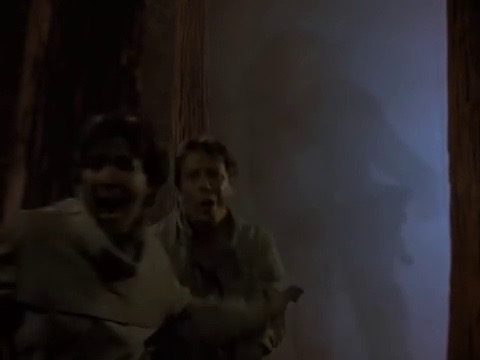
The kids try to sneak away, but they should be careful out there, it looks like there’s a werewolf howling at the moon.

vlcsnap-2015-12-14-18h05m50s413

Scratch that! It’s one of those Rodents Of Unusual Size that Wesley fought in the Fire Swamp.
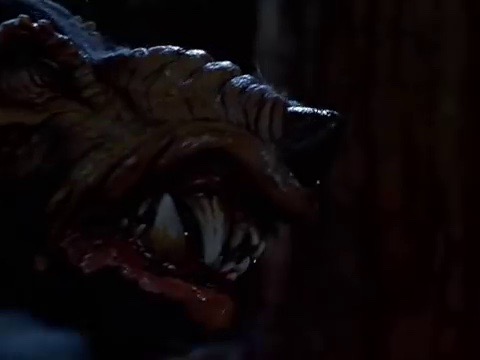
vlcsnap-2015-12-14-18h10m33s927

They find something on the creature that leads them to believe that their parents are still alive. Now it’s time to go out and hunt for them. But first we need to hand out special items to the members of the caravan that will go to search for the parents.
vlcsnap-2015-12-14-18h24m47s816

Mace gets stuck with a rock. That’s no good. The rock arcs over anything you throw it at.
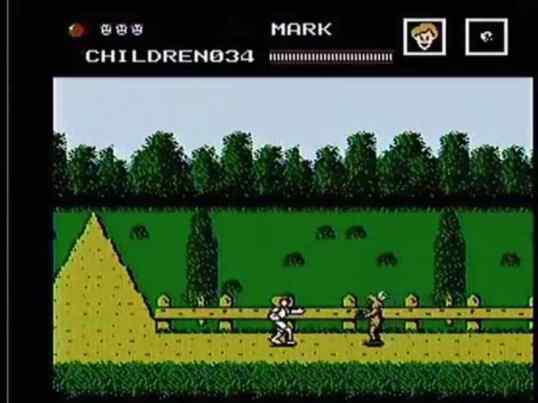
image1

How is Mace supposed to save his parents from Jason Voorhees? Now they head out and make me depressed that I can’t go hiking right now.
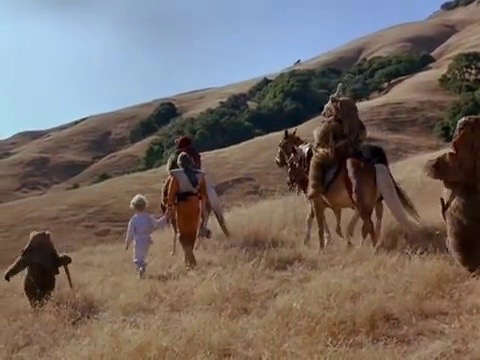
vlcsnap-2015-12-15-14h50m48s358

Next Mace makes a rookie mistake that people who approach California ponds frequently make. He gets really close to the water when…

vlcsnap-2015-12-15-14h51m11s241

suddenly he is erased from the frame leaving only his reflection in the water…
vlcsnap-2015-12-15-14h51m43s894

before we cut to him trapped under the water like he’s under ice.
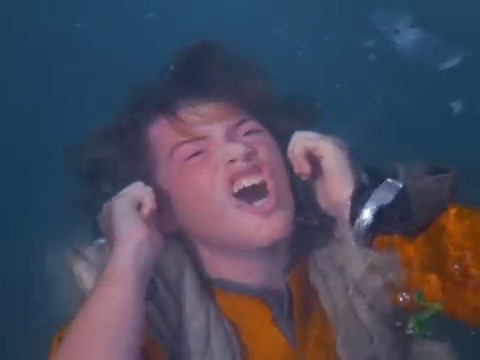
vlcsnap-2015-12-15-14h52m01s353

It could have been worse. It could have been this pond just a few miles from my East Bay California home.

IMG_9648-002

After he’s rescued and some more travel, we get to the next plot point. Nukie flies by the tent.
vlcsnap-2015-12-15-14h58m02s606

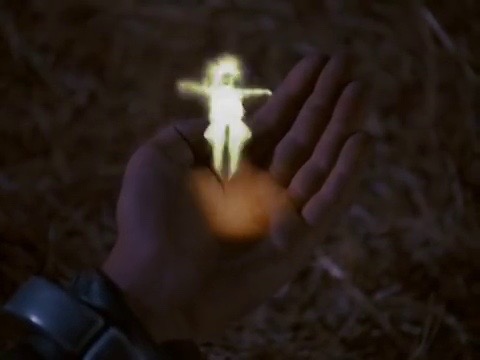
Actually, it’s a bunch of light that is collected and turns into Mace’s own personal little fairy.

vlcsnap-2015-12-15-15h03m27s333

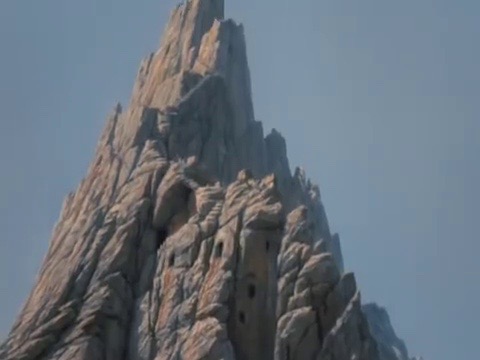
Time for more walking. They finally arrive at “The Dreaded Forbidden Fortress Of The Giant Thorax (???)”.
vlcsnap-2015-12-15-15h08m05s399

Good thing Ives told us that because otherwise I thought they arrived at the poster for The Keep (1983). Now we find out what the rock from earlier was about. Turns out it’s hollow.

vlcsnap-2015-12-15-15h18m56s491

Inside is an arrowhead that was clearly placed inside there by some Native Endorian Indians. The arrowhead flies toward and underneath a rock. The kid blows the rock away with his gun. Inside, Mace decides to leave Cindel behind for her own safety. Now the Ewoks mean business. This one puts on its Thor helmet just in case they run into Vincent D’Onofrio and don’t have the money they owe him.

vlcsnap-2015-12-15-15h22m05s609

Now they reach a cavern, but unlike Indy, they have a web they can climb across.
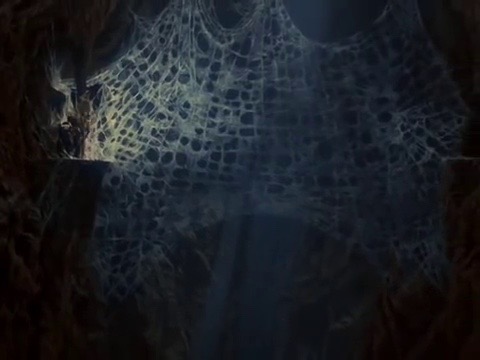
vlcsnap-2015-12-15-15h23m13s535

They fight a huge spider, which falls down the cavern, then magically pops up again before getting defeated.

Now we finally get a good look at the creature holding the kids’ parents.

vlcsnap-2015-12-15-15h28m54s319

After a battle that takes the strength of all of them working together, they defeat the monster who also falls down the cavern, then is magically back at the top of it before ultimately being stopped.

They all make it out alive. Mace lets the fairy thing loose and Cindel gets her wings.
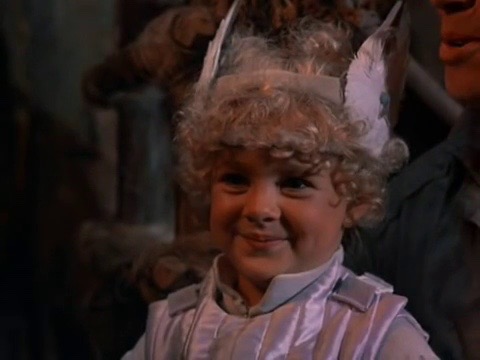
vlcsnap-2015-12-15-15h45m48s021

This is when Burl Ives comes back to leave us with these parting words: “Reunited, the families enjoy the simple pleasures of being together. Having learned something they already knew. That courage, loyalty, and love are the strongest forces in the universe.”

And when those don’t work, just shoot lasers…

vlcsnap-2015-12-15-15h41m02s912

and throw hatchets.

vlcsnap-2015-12-15-15h42m29s676

This is a harmless little 80s children’s fantasy/sci-fi movie. The thing is there are better films of this sort from that same time period such as Labyrinth (1986), The Never Ending Story (1984), and Willow (1988). I’d say this is for Star Wars completionists only.
Embracing the Melodrama #27: Go Ask Alice (dir by John Korty)


Go Ask Alice

Earlier today, I took a look at The People Next Doora film about a family torn apart by the discovery that their teenage daughter is taking drugs.  For all of that film’s melodrama and over-the-top moments, it still worked.  It may have felt like it was taking place on a plane of heightened reality but it still felt real nonetheless.  Among the many films in the drugs-in-the-suburbs genre, that general feeling of reality made The People Next Door unique.  Far more typical of the genre is the 1973 made-for-TV movie, Go Ask Alice.

Go Ask Alice is based on a YA book that’s been in print for 43 years now.  (I can still remember spending an afternoon reading it in a Barnes and Noble when I was 14 years old.)  The book claims to be the diary of a  teenage girl who ended up getting addicted to drugs and sex.  She runs away from home for a bit and, even when she does manage to stop using drugs, her friends still insist on secretly slipping her acid.  She goes crazy and ends up spending some time in a mental asylum.  Eventually, she’s released and moves to a new town with her family.  She ends the diary saying that she’s looking forward to the future and then, in the afterward, we’re told that she died three weeks later of an overdose and this diary has been published so that we can all learn from her story.

Now, oddly enough, when Go Ask Alice was originally published, it was apparently sold as being an authentic diary of an anonymous teenage girl who had been a patient of the book’s “editor”, Dr. Beatrice Sparks.  However, if you actually read the book, it’s pretty obvious that, while Dr. Sparks may have indeed used some of her patients’ real-life experiences, Go Ask Alice is in no way authentic.  Instead, it’s a classic example of the type of cautionary tale in which a character makes one mistake (in this case, the girl drinks a soda that’s been spiked with LSD) and, immediately afterwards, everything bad thing that possibly could happen does happen.  The purpose of the book is to shock and titillate, to make us wonder how this girl can go from being the sweet optimist who bought a diary because she feels that she finally has something to say to being so jaded that she casually says stuff like, “Another day, another blowjob.”  And, of course, the answer is that she didn’t because the whole thing is totally made up.

But that still didn’t stop anyone from making a movie out of the book and informing us, at the start of the movie, that the story we are about to watch is true and only the names and certain details have been changed to protect everyone’s privacy.  Our diarist (who is now definitely named Alice) is played by a young actress named Jamie Smith-Jackson, who is sympathetic and pretty.  Alice’s mother (Ruth Roman) is too repressed and uptight to provide any guidance to her rapidly maturing daughter.  Meanwhile, Alice’s father is played by William Shatner, so we know he’s not going to be able to do any good either.

Much as in the original book, Alice goes to one party, drinks on LSD-spiked soda, and her life is never the same.  Soon, she’s spending all of her time doing drugs and, as she informs us, having a “monthly pregnancy scare.”  She’s no longer hanging out with her smart, nerdy friends.  Instead, she spends all of her time with a bunch of petty criminals who recruit Alice to help deliver drugs to the students at the junior high.  (“I push at the elementary school!” one junior high kid snarls).  Eventually, Alice runs away from home and lives on the streets.  Fortunately, she runs into a liberal Catholic priest (played by Andy Griffith and yes, you read that right) and starts trying to get her life straight…

Go Ask Alice is no The People Next Door but it’s no Reefer Madness either.  What it gets wrong about teenage drug use, it gets right about just how confusing and alienating it can be to be 15 years old.  At the same time, I’d be lying if I said that this film did not have some camp appeal.  How can it not when it features not only Andy Griffith talking tough but also William Shatner with a bushy mustache?

And guess what?

You can watch it below!