Late Night Retro Television Review: 1st & Ten 2.2 “The Veterans”


Welcome to Late Night Retro Television Reviews, a feature where we review some of our favorite and least favorite shows of the past! On Wednesdays, I will be reviewing 1st and Ten, which aired in syndication from 1984 to 1991. The entire series is streaming on Tubi.
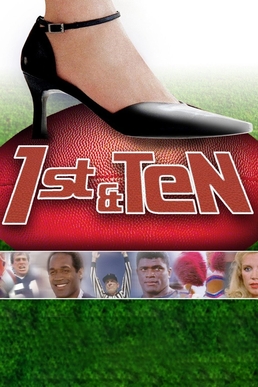
This week, the Bulls face a dilemma.  What to do with O.J. Simpson?

Episode 2.2 “The Veterans”

(Dir by Bruce Seth Green, originally aired on September 1st, 1986)

This week, veteran running back T.D. Parker (O.J. Simpson) shows up for training camp.  All of the players are excited to see him.  At the bar where all of the Bulls hang out, Dr. Death (Donald Gibb) announces that T.D. Parker has had over one hundred injuries over the past twelve years but he’s still the heart and the soul of the Bulls franchise.  He’s the face of the team!  When people think of the Los Angeles Bulls, they think of T.D. Parker slashing through the other team on his way to an acquittal touchdown.

Speaking as a viewer, it seems kind of strange that this is the first that I’m really hearing about the legendary T.D. Parker.  Where was he last season?  The Bulls went all the way to the Championship Game but I never once heard anyone mention T.D. Parker.  I certainly didn’t see him in the locker room.  The Bulls actually had a totally different running back named Carl Witherspoon.  Oddly, Carl seems to have vanished this season….

As for T.D., his injuries are catching up with him.  Denardo and Diana are forced to confront that fact that T.D. can no longer cut it.  Even in practice, he’s spilling a lot of blood on the field.  Denardo cuts T.D. from the team. When T.D. says that football is all that he knows, Denardo announces that T.D. may not be playing but he’ll still be on the field …. AS A COACH!  T.D. looks confused.  He’ll figure it out eventually, I guess.

Meanwhile, Jeff East briefly returns as quarterback Bryce Smith but just long enough to fall out of a window at training camp and bust his knee.  (He was trying to keep the new kicker — a Bosnian played by future voice of the Crypt Keeper John Kassir — from sneaking out to go into town to get drunk.)  Bryce is done for the season.  Veteran quarterback and all-around druggie sleaze Johnny Valentine (Sam J. Jones) becomes the new starter and Tom Yinessa is brought back to be his backup.  That’ll make Yinessa’s roommate (Jeff Kaake) and Yinessa’s potential girlfriend (Katherine Kelly Lang) happy.

Finally, the NFL owners don’t want to give their players a pension or a raise.  They do, however, want to give them mandatory drug tests.  Diana protests but she’s overruled by the other owners, all of whom are male and in their 60s.  There’s a lot of toupees and cigars at the ownership meeting.

This episode was actually kind of entertaining.  That’s doesn’t mean it was good.  1st & Ten isn’t a really a show that’s ever good.  But this episode did feature Sam J. Jones giving a totally over the top performance as creepy quarterback Johnny Valentine.  Speaking of going over the top, the same can be said of Delta Burke’s performance this season.  It would appear that between seasons one and two, Burke realized there was no need to try to be in any way subtle in her line readings.  That was probably the right decision.

Next week …. who knows?  I’m getting a little bored with training camp so hopefully, we’ll move on!

Late Night Retro Television Review: 1st & Ten 1.4 “The Slump”


Welcome to Late Night Retro Television Reviews, a feature where we review some of our favorite and least favorite shows of the past! On Wednesdays, I will be reviewing 1st and Ten, which aired in syndication from 1984 to 1991. The entire series is streaming on Tubi.

This week, cocaine comes to the locker room.  Actually, cocaine was probably already there.  Now, there’s more cocaine.  Football, right?

Anyway….

Episode 1.4 “The Slump”

(Dir by Bruce Seth Green, originally aired on December 16th, 1984)

This week’s episode starts off with some full front nudity as wide receiver Mace Petty (Marshall R. Teague) takes a shower with a blonde woman.  Suddenly, a bearded man steps into the shower, accuses Mace of seducing his wife, and points a gun at him.  OH MY GOD, IS MACE GOING TO DIE!?  (And who is Mace, anyway?)

Oh wait, it’s a prop gun.  Ha ha, it’s practical joke.  Those crazy Bulls.

With the required HBO nudity out of the way, the plot kicks off.  The Bulls are in a slump.  They’ve lost their past two games!  In order to turn things around, Diane makes a trade for a talented wide receiver.  (Ha!  TAKE THAT, MACE!)  Butch Cassidy (Michael Toland) may be a good athlete but guess who has a cocaine addiction!?  Butch is soon snorting in the men’s room.  When he has to take a drug test, he uses a groupie’s urine instead.  When the results come back, it’s announced that Butch is pregnant.  Butch is kicked off the team.  Maybe the Sundance Kid can take his place….

The good news is that The Bulls still win their next game, breaking the slump.  And Bob Dorsey earns Diana’s trust by telling her that Butch has a drug problem.  And the Arcola Brothers attempt to keep the Bulls from serving beer at the stadium is thwarted when Diana has a bunch of helicopter fly in the beer.  (That way, no one has to cross the picket line that the Arcolas have set up outside the stadium.)  Finally, Carl Witherspoon gets a new contract and the rest of the team gets jealous because Carl is now a “millionaire” but then Carl points out that he’s a terrible negotiator and he actually got screwed over on the contract.  He then agrees to take the team to Hawaii.  No wonder they won that game!

This episode was actually better than the previous three.  That doesn’t mean it was particularly good but still it wasn’t terrible.  (And that’s what we mean by “damning by faint praise.”)  If nothing else, Michael Toland gave a good performance as the cocky but self-destructive Butch Cassidy.  I also kind of like the chemistry between Geoffrey Scott and Delta Burke.  They’re good together.  As far as episodes of bad shows go, this was a good one.

Late Night Retro Television Review: 1st & 10 1.2 “The Opener”


Welcome to Late Night Retro Television Reviews, a feature where we review some of our favorite and least favorite shows of the past! On Wednesdays, I will be reviewing 1st and Ten, which aired in syndication from 1984 to 1991. The entire series is streaming on Tubi.

This week, the football season begins!

Episode 1.2 “The Opener”

(Dir by Bruce Seth Green, originally aired on December 2nd, 1984)

The opening game of the season is approaching.  The Bulls have trader their former quarterback (who was played, briefly, by Robert Logan in the pilot) for a new quarterback, Bob D0rsey (Geoffrey Scott).  Bob Dorsey is a notorious womanizer and a veteran player with a strong arm and a bad knee.  So, basically, he’s just like their former quarterback except he’s played by Geoffrey Scott instead of Robert Logan.

Dana has decided that Bob will start on opening day, instead of the quarterback that they drafted out of BYU, the ultra-religious Bryce Smith (Jeff East).  (Opening Day, quarterback, drafted — look at me using all the football terminology!)  Bryce is fine with not starting because he feels that it is God’s will for Bob to start.

However, the Mafia (represented by Michael V. Gazzo and Robert Miranda) is not happy!  It turns out that general manager Roger Barrow has been doing business with the Arcola Brothers.  He’s been giving them tickets and allowing the Arcolas to scalp them in return for a 20% commission.  Dana puts an end to that, saying that all the tickets will now be sold through the box office as opposed to being held for VIPs.  The Mafia wants Roger to make sure that Bob does not start.  Roger convinces one of the other players to injure Bob during practice so that Bryce will be the starter.

Uh-oh!  Bob injures his knee.  Bryce is going to have to play …. except, right before the team hits the field, the team doctor suddenly says that Bob’s knee is at 80% and he can play if he wants to.  Of course, Bob wants to!  Bob takes the field and, after several minutes of stock footage, we’re told that the Bulls have won the game.

This show feels so strange.  On the one hand, I get the feeling that this episode probably was realistic about the physical toll that playing football takes on a player.  Bob is 35 and can barely walk.  I imagine that the episode’s portrayal of the locker room being a mx of stupidity and testosterone was probably accurate as well.  I’ll even give the episode credit for showing that all of the players resent the team’s owner and that Coach Denardo uses that to his advantage when it comes to motivating them.  Everyone — well, almost everyone — resents their boss.  (Not me!  I love everyone I’ve ever worked with!)

On the other hand, the first two episodes have been so low-budget that it appears there’s only five or six players on the team and the mix of comedy and drama feels rather awkward.  Dana’s friend Mona (Ruta Lee) starts drinking in the morning and tossing out pithy one liners.  Meanwhile, the Mafia is threatening to kill Roger.  It really doesn’t fit together.  The whole thing just looks and feels cheap.

But, hey, the Bulls won!  Good for them!

Retro Television Review: Playmates (dir by Theodore J. Flicker)


Welcome to Retro Television Reviews, a feature where we review some of our favorite and least favorite shows of the past!  On Sundays, I will be reviewing the made-for-television movies that used to be a primetime mainstay.  Today’s film is 1972’s Playmates!  It  can be viewed on YouTube.

Playmates tells the story of two divorces.

Marshall Barnett (Alan Alda) is an attorney.  He went to Yale and Harvard.  He has a successful career.  He has rich and educated friends.  He has a nice bachelor pad.  He also pays hundreds of dollars in alimony.  He and Lois (Barbara Feldon) got divorced 3 years ago and Marshall is still bitter.  He’s bitter that he has to pay her so much money.  He’s bitter that he only gets to see his son on the weekends.  He’s bitter that he can’t seem to start a new, meaningful relationship with anyone.  He’s bitter that his wife still asks him to critique her modernist paintings.

Kermit Holvey (Doug McClure) is a blue collar welder.  He has only been divorced for a few months and his relationship with ex-wife Patti (Connie Stevens) is nowhere near as contentious as Marshall’s relationship with Lois.  Still, Kermit is struggling to adjust to being single and to only seeing his son on the weekends.

Marshall and Kermit meet one weekend while they are both taking their sons to the Kiddieland Amusement Park.  Marshall is so overjoyed to meet someone else who is dealing with divorce that he comes on a bit strong in trying to get to know Kermit.  Kermit, however, does eventually get over his initial weariness and soon, he and Marshall are best friends.  It doesn’t matter that Marshall has a tendency to be a little bit condescending and that Kermit often can’t follow what Marshall is talking about.  They spend most of their time talking about their ex-wives.

But then Kermit meets Lois and he discovers that her paintings really aren’t as bad as Marshall made them out to be.  And Marshall meets Patti and he discovers that she’s not as dumb as Kermit made her out to be.  Soon, Kermit is secretly dating Lois and Marshall is secretly dating Patti and anyone who has ever watched a comedy before knows that there is a big mess waiting in the future.

Playmates was one of those films that pretended to be a lot naughtier than it actually was.  For all the winking and the occasional sly smiles, all that happens is that Kermit and Marshall both end up going out with women with whom they really don’t have much in common.  And while it’s tempting to read a lot into how quickly Kermit and Marshall become friends and how they both end up dating the other’s female equivalent, I think that might be giving this film too much credit.  (If it were made today, things might be different.)  In the end, the film really has more to say about class than it does marriage, as both Marshall and Lois obviously view spending time with Kermit and Patti as being a way of slumming and building up some working class bona fides without actually having to be working class.  Patti, to her credit, calls Marshall out on this.  Marshall admits that she has a point but he still come across as if he’s talking down to her, largely because he’s played by Alan Alda, an actor who is a master at being somehow both likable and condescending at the same time.

Playmates is a well-acted film and there are some funny lines.  The four main characters are all ultimately likable, even if they all have their moments where you can tell why they would be difficult to live with.  It deserves some credit for following its story through to its natural conclusion, with one couple realizing that they still love each other while the other realize that they are better off divorced.  The film may not be as radical as it pretends to be but it still doesn’t cop out on the ending.  In the end, Playmates is probably best watched as a time capsule.  It’s here if you ever want to experience 1972 firsthand.