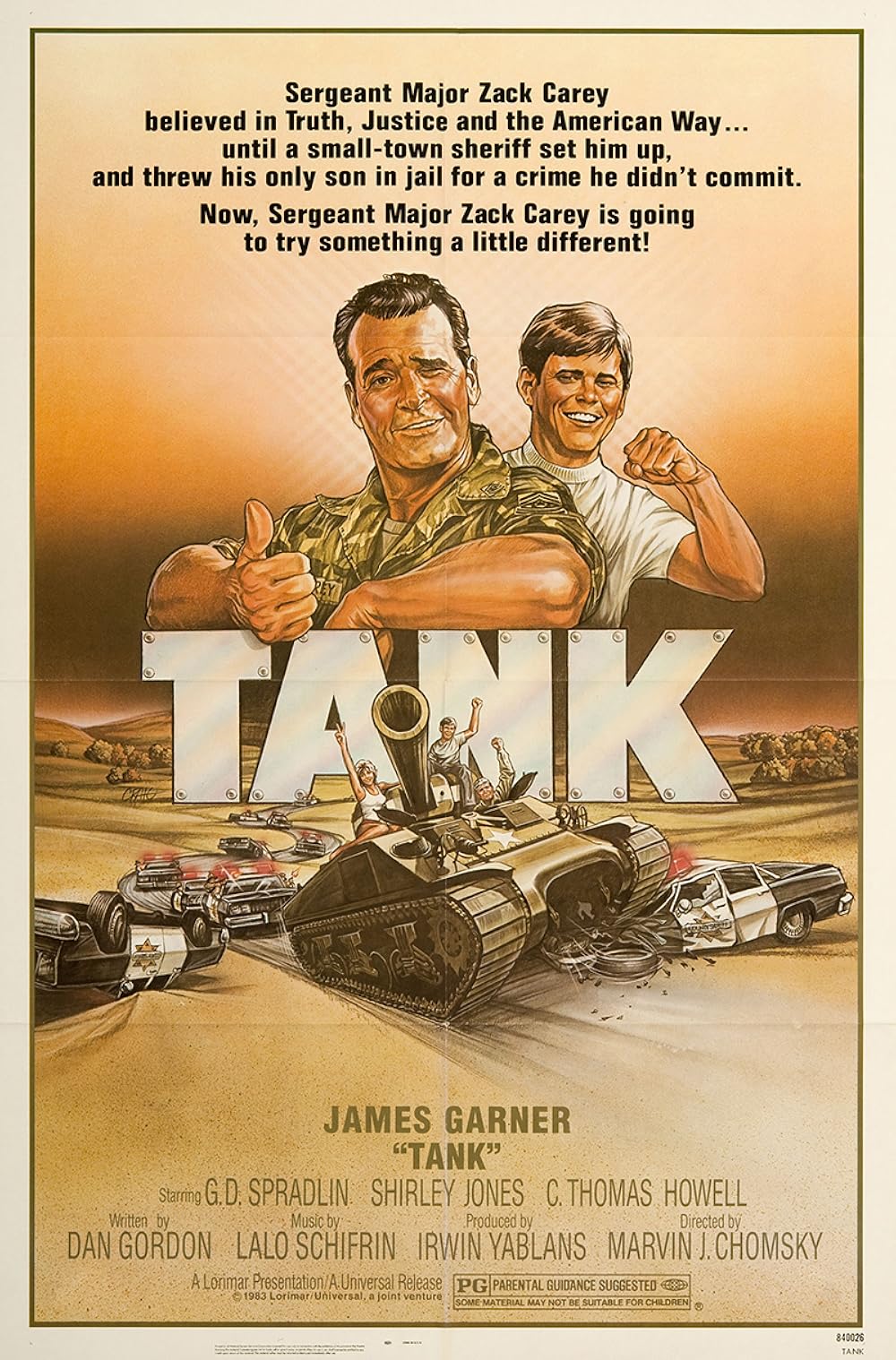
Review: Tank (dir. by Marvin J. Chomsky)


“There comes a time when a man has to stand up and be counted.” — Zack Carey

The 1984 action‑drama Tank is a small‑town parable dressed up as a military gimmick picture: an aging Army sergeant major, a battered old Sherman tank, and a corrupt sheriff. At its best, the film leans into James Garner’s quiet charisma and the absurdly specific “one man versus a whole county” premise; at its worst, it staggers under inconsistent tone and a plot that veers between heartfelt family‑drama and almost cartoonish vigilantism. Taken as a product of the early‑mid‑1980s, however, Tank holds up as a reasonably entertaining, if not especially deep, genre hybrid that works more through Gardner’s presence and a few solid set pieces than through psychological complexity or formal ambition.

James Garner plays Zack Carey, an Army sergeant major who moves his family to a small Georgia town near a training base, where he has acquired a battle‑worn M4A3 Sherman tank as a personal hobby and morale project. The setup is already a little out of the ordinary: an enlisted man whose side hustle is maintaining a World War II relic, while his wife LaDonna (played by Shirley Jones) quietly pushes back against the constraints of Army life and small‑town politics. The film’s opening stretches the believability of that scenario thin, but Garner’s easygoing authority and dry humor sell the idea that Zack is exactly the kind of practical, no‑nonsense soldier who would grow attached to a tank and treat it like a second family member. The script uses this setup to position the vehicle not just as hardware, but as a symbol of the character’s livelihood, dignity, and sense of duty.

The trigger for the conflict is an incident at a local bar, where Zack intervenes when a local deputy, who also moonlights as a pimp, roughs up a teenage prostitute named Sarah. The sheriff, Eugene Buelton (played with oily menace by C. Thomas Howell), is deeply corrupt and runs the town like a fiefdom, using his deputies to intimidate anyone who crosses him. When Zack’s teenage son, Billy, is later framed for a crime and thrown into a primitive prison camp, the fuse is lit. The film’s moral map is deliberately simple: Buelton is cartoonishly evil, Buelton’s deputies are unreliable tools of his will, and the Careys are painted as upright, essentially decent people caught in an unjust system. That simplicity works in Garner’s favor, because it lets the film focus on emotional stakes—father‑son loyalty, a wife’s fear for her family—rather than intricate political nuance.

What gives Tank much of its energy is the moment Zack decides to fight back with the only weapon he truly controls: his Sherman. The image of a lone, aging non‑commissioned officer rolling down country roads in a clanking World War II tank is inherently cinematic, and director Marvin J. Chomsky milks it for both action and symbolism. The scenes where Zack smashes through the sheriff’s office, disrupts the local jail, and later drives straight into the work farm to free Billy are played with a pulpy, almost comic‑strip bravado. The tank becomes a rolling moral absolutist: clumsy, loud, and impossible to ignore, cutting through the town’s layers of bureaucracy and intimidation in a way that mirrors Zack’s own frustration with a justice system that refuses to protect his son. The film’s action sequences are not particularly innovative by modern standards, but they benefit from the authenticity of the M4A3 and the straightforward choreography that lets the vehicle feel like a physical presence rather than a CGI abstraction.

Where Tank runs into trouble is in its fluctuating tone and some of its secondary choices. The subplot involving Sarah, the teenage prostitute, is handled with mixed success. On one hand, it adds a layer of social commentary about exploitation and small‑town complicity; on the other, it sometimes feels tacked on, introduced more as a narrative convenience than a fully developed character arc. The film wants to position her as a sympathetic victim who finds a kind of makeshift family inside the tank, but the material doesn’t dive deep into her background or inner life, leaving her more of a device than a rounded personality. This uneven handling reflects a broader issue: the movie vacillates between being a gritty crime drama, a family‑centric tearjerker, and a lighthearted action‑comedy. At times it feels like a made‑for‑television movie with a slightly bigger budget, hit by the same kind of tonal indecision that often plagued mid‑tier 1980s genre pictures.

Garner’s performance is the single element that keeps Tank consistently watchable. His Zack Carey is neither a cartoon hero nor a brooding anti‑hero; he’s a working‑class soldier approaching the end of his career, tired of compromise and willing to push back when pushed too far. Garner underplays the action‑hero theatrics, relying instead on quiet resolve, a dry sense of humor, and a lived‑in weariness that makes Zack feel like someone you might have actually met in an Army post or small town. Shirley Jones, as his wife, brings a grounded warmth to the domestic scenes, and the dynamic between Zack and his son Billy feels occasionally sentimental but never entirely false. The relationship between father and son anchors the film’s more outlandish elements, turning the tank chase into a visible metaphor for a father’s desperation to protect his child in a system that treats both as expendable.

Visually, Tank is workmanlike rather than stylish. The Georgia countryside is shot in broad daylight, with an emphasis on wide shots that showcase the tank moving through fields, back roads, and small towns. The tank itself is the film’s most vivid visual motif, a hulking, almost anachronistic machine that looks slightly out of place in a 1980s setting, yet somehow believable as the relic of a bygone era carried forward by a man who still believes in clear‑cut notions of right and wrong. The production favors practical effects and real locations over glossy stylization, which gives the material a modest, sometimes cheap‑looking quality but also lends it a concrete, lived‑in feel. The score, composed by Lalo Schifrin, adds a number of flavors—military marches, light jazz, and even a faintly disco‑tinged theme—further underscoring the film’s genre‑mixing instincts without always achieving cohesion.

Thematically, Tank leans heavily on the idea of individual resistance against corrupt authority. The sheriff’s abuse of power, the rigged legal process, and the near‑absence of any higher‑level oversight all feed into a classic American underdog narrative: one man, one tank, and a small band of allies taking on a system that has long since stopped pretending to be fair. The film stops short of overtly political commentary, but it clearly sympathizes with the notion that ordinary people sometimes have to go outside official channels when those channels are rigged against them. At the same time, the movie softens its edges with a crowd‑pleasing finale that reframes Zack and his allies as folk heroes, welcomed by a gathering of onlookers at the Tennessee border. This turn toward feel‑good spectacle undercuts some of the grittier implications of the earlier material, but it also fits the early‑1980s appetite for triumphant, crowd‑friendly resolutions.

As a time capsule of 1980s genre filmmaking, Tank is more interesting than it is groundbreaking. It is neither a forgotten masterpiece nor a laughably bad curio; it sits somewhere in the middle, powered by James Garner’s steady presence and the appealingly simple conceit of a World War II tank as a one‑man war machine. The film’s weaknesses—a schematic morality play, uneven tone, and underdeveloped secondary characters—are real, but they don’t completely erase its modest strengths. If viewed as a straightforward, mid‑tier action‑drama with a strong central performance and a memorable mechanical co‑star, Tank emerges as a fair, unpretentious, and occasionally rousing piece of 1980s entertainment.
Retro Television Review: Fantasy Island 7.11 “Games People Play/The Sweet Life”


Welcome to Retro Television Reviews, a feature where we review some of our favorite and least favorite shows of the past!  On Tuesdays, I will be reviewing the original Fantasy Island, which ran on ABC from 1977 to 1984.  Unfortunately, the show has been removed from most streaming sites.  Fortunately, I’ve got nearly every episode on my DVR.

“Smiles, everyone …. SMILES, DAMMIT!”

Episode 7.11 “Games People Play/The Sweet Life”

(Dir by Cliff Bole and Don Weiss, originally aired on January 14th, 1984)

Three women who all work for a toy company come to Fantasy Island.  Nora Leonard (Lynda Day George) has closed off her heart after getting hurt in too many past relationships.  Barbara Jessup (Jenilee Harrison) wants her boss to look past her appearance and realize that she really does have a brain to go with her beauty.  Sandy Hoffman (Berlinda Tolbert) wants to have the courage to present her ideas….

Oh hey, it’s a Wizard of Oz thing!  Except it’s not.  There’s no Dorothy and there’s no Toto.  There’s a corporate spy named Steven Curry (John McCook), who wants the details of the company’s new video game and who also falls for Nora.  And there’s Dick York as Mr. Sutton, who wears a bowtie as all toy company execs do.

What there is not is an interesting fantasy.  Even with three separate fantasies in one, this storyline was pretty blah.  Everyone seemed a bit bored, even the usually dependable Lynda Day George.

The other fantasy was slightly more interesting, but only because it featured the great character actor Kevin McCarthy as Daniel Koster.  Daniel wanted to give his wife and his children the lifestyle they could have had if Daniel had been rich.  In fact, Daniel sent his family to Fantasy Island ahead of him so that they could enjoy being rich without him around.  (What?)  I was always under the impression that guests at the Island only stayed for a weekend.  Daniel comes to the Island and discovers that his family appears to be very happy, even if his son is still writing bad poetry.  (There’s no money in poetry, Daniel gruffly explains and, as a poet, I can say that’s very true.)  Along with his son’s rhyming habits, Daniel has other things to deal with, like his bad heart.

In fact, Daniel dies of a heart attack while on the Island but not before realizing that his family always loved him, even if they weren’t rich.  Having Daniel die was depressing.  What made it even worse is that Roarke apparently knew Daniel was probably going to die on the Island but he didn’t really seem to do anything to try to prevent it from happening.  Instead, he just made a bunch of cryptic comments to Lawrence about how Daniel’s weekend on Fantasy Island could be his last.  Lawrence looked concerned but didn’t do anything to help.  Why is Lawrence even there?

Eh, this episode.  I always enjoy watching Kevin McCarthy and he gives a typically solid performance but otherwise, this was a disappointing trip to the Island.

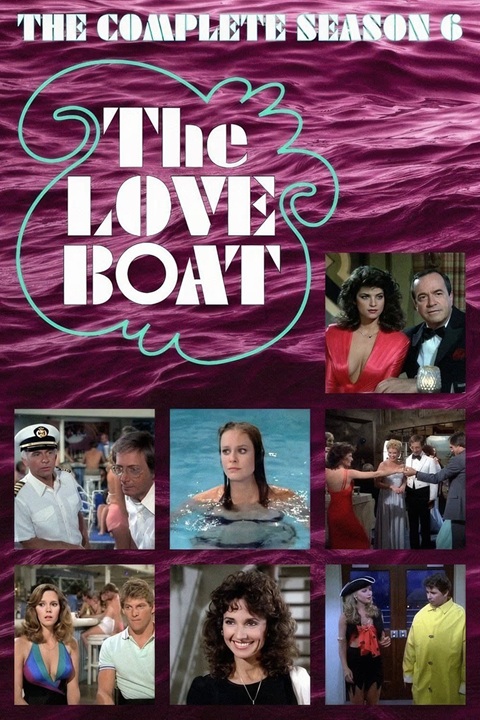
Retro Television Review: The Love Boat 6.15 “The Captain’s Replacement/Sly As A Fox/Here Comes The Bride …. Maybe”


Welcome to Retro Television Reviews, a feature where we review some of our favorite and least favorite shows of the past!  On Wednesdays, I will be reviewing the original Love Boat, which aired on ABC from 1977 to 1986!  The series can be streamed on Paramount Plus!

Come aboard!  We’re expecting you….

Episode 6.15 “The Captain’s Replacement/Sly As A Fox/Here Comes The Bride …. Maybe”

(Dir by Bob Sweeney, originally aired on January 15th, 1983)

First off, before I do anything else, I want to thank Case for covering the last three episodes of The Love Boat for me.  The previous month was not an easy one for me or my family and having Case, Brad, and Jeff helping me out with my television reviews really helped out.  Thanks, guys.  You all did a wonderful job!

As far as this episode goes, I know there’s one question that is on everyone’s mind:

Julie appeared to be moderately coked-up in this episode, though not as much as usual.  I’d say on the How Coked Up Was Julie Scale, this episode was right in the middle.  Five out of ten.

Julie actually had a bit to do during this episode.  Captain Donahue (McLean Stevenson) was on the ship, technically so that he could watch and learn from Captain Stubing.  Gopher, however, suspected that Donahue was planning on replacing Stubing as the captain of the Pacific Princess.  Gopher, Julie, Doc, Isaac, and Vicki all decided to pretend to be crazy in order to convince Donahue to stay away from the Pacific Princess.  Julie, for instance, started to obsessively practice her “welcome aboard” greeting.  I’m not sure what was so crazy about that.  As far as I can tell, Julie’s entire job consists of greeting people when they board the ship.  It seems like it would be a good idea to get some practice in.  Still, Donahue is freaked out enough that he backs off from trying to steal Stubing’s position.  Captain Stubing is relieved and so is the rest of the crew.  Maybe they came across an episode of Hello, Larry and realized what was in store for them if McLean Stevenson became the new captain.

Julie also served as an advisor to Mary Frances Bellflower (Shelley Fabares), who boarded the ship with two suitors.  Ben Phillips (Frank Bonner) and Henry Greg (Arte Johnson) spent the cruise bickering over who would make the best husband for Mary Frances.  Mary Frances assumed that the two men only cared about her because she was rich and she owned a valuable foxhound.  However, by the end of the cruise, Mary Frances realized that both of the men sincerely loved her.  She promised Julie that she would return to the ship in the future with the man she had chosen.  Julia, her nose red, suggested that Mary Frances give bigamy a try.  Everyone had a good laugh.

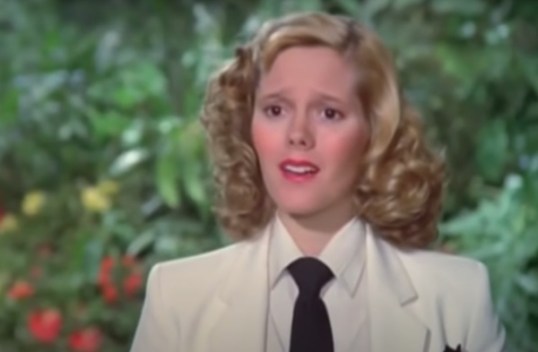
Finally, Doc arranged for his old friend, Erica Dupont (Jenilee Harrison), to get a job serving drinks on the cruise.  Erica, the daughter of an autoworker, needed the job so that she could help pay for her wedding to Robert Wallingford (Stephen Shortridge).  Erica confessed that Robert and his parents both thought she was rich because her last name was Dupont.  Erica immediately got to work serving drinks but — oh no! — Robert’s snooty parents (William Windom and Jane Wyatt) just happened to be on the cruise!  Erica tried to avoid them but eventually, they saw Erica sharing a friendly dance with Doc and they got the wrong idea.  They called Robert, who flew down to Mexico to meet the boat.  Erica finally confessed that, while her last name was Dupont, that did not make her a Du Pont.  The Wallingfords were disappointed to learn that Erica was not related to future murderer John du Pont.  Still, Robert forgave Erica and I guess they got married after the cruise.  Who knows?  I would think that starting an engagement with a lie would be a problem for most people but whatever.

This cruise was mildly enjoyable.  Jenilee Harrison and Bernie Kopell had a likable chemistry and it was hard not to feel that Erica should have just dumped Robert and declared her love for Doc.  As for everyone acting crazy to fool McLean Stevenson, you could tell that the regulars were having fun.  The storyline about Mary Frances and her two suitors was fairly weak but the other two stories made up for it.

I’m glad that I came aboard.

Retro Television Review: Fantasy Island 6.4 “The Angel’s Triangle/Natchez Bound”


Welcome to Retro Television Reviews, a feature where we review some of our favorite and least favorite shows of the past!  On Tuesdays, I will be reviewing the original Fantasy Island, which ran on ABC from 1977 to 1984.  Unfortunately, the show has been removed from most streaming sites.  Fortunately, I’ve got nearly every episode on my DVR.

This week, an angel comes to the Island.

Episode 6.4 “The Angel’s Triangle/Natchez Bound”

(Dir by Bob Sweeney, originally aired on November 6th, 1982)

Death takes a holiday!

Well, not literally.  The Angel of Death, Michael Eden (played by Gary Collins), does come to Fantasy Island but he’s working.  Years ago, he was meant to take soul of Catharine Harris (Carol Lynley), a woman who was in a car accident with her husband, Brent Harris (Doug McClure).  Michael could not bring himself to allow Catharine to die.  So, she miraculously survived.  But now, years later, Michael has been sent to collect the soul of Brent.  Brent and Catharine have come to Fantasy Island to have the honeymoon they missed out on due to the car accident.  Michael has come to make sure that the honeymoon is a tragic one.

Michael very much wants to take Brent’s soul.  If Brent’s dead than maybe Michael and Catharine could (somehow) be together.  But when Brent is taken ill and sent to the Fantasy Island hospital, Michael sees how much Catharine loves her husband.  And he allow Brent to live, which seems a bit unfair to …. well, like anyone.  Or at the very least, anyone who has ever died or lost a loved one.

The interesting thing about this fantasy was that it established that Roarke is apparently not an angel.  When Roarke introduces Tattoo to Michael, Roarke says that Michael “is not like us.”  This leads to a funny moment in which Tattoo, upon hearing that Michael is the angel of death, announces that he some work to catch up on.  I always like it when Tattoo gets to do more than just wave at the airplane.  As for the rest of this fantasy, it wasn’t bad.  Carol Lynley did a good job as Catharine.  Gary Collins was a bit stiff but it kind of worked for his character.  Doug McClure was as goofy as ever.

The other fantasy features Jennilee Harrison as Jenny Ryan, a Vegas card dealer who wants to work on a Mississippi steamboat.  She gets her wish and promptly gets involved with helping a writer named Samuel Clemens (Stephen Shortridge, a.k.a. Beau on Welcome Back Kotter) and a kid named Huck Finn (Adam Rich) hide an escaped slave (Sam Scarber) from a dastardly gambler and slave hunter (Roddy McDowall).  Did I mention that Clemens is having trouble coming up with a plot for his new book?  Jenny inspires Mark Twain, helps Jim get to safety, and returns to the present with a pet frog.  Sure, why not?  This storyline was predictable, largely because I read Huckleberry Finn in high school.  However, Stephen Shortridge was, somewhat surprisingly given his work on Kotter, perfectly charming as Mark Twain and Roddy McDowall obviously enjoyed hamming up his villainy.  (To be honest, when I saw Roddy’s name in the opening credits, I was hoping he’d be returning as Satan.)

This was not a bad episode, especially compared to the previous season 6 episodes.  Both fantasies held me attention and apparently, the Angel of Death will leave you alone if he thinks you’re cute.  That’s good to know!

Retro Television Review: Fantasy Island 5.1 “Show Me A Hero/Slam Dunk”


Welcome to Retro Television Reviews, a feature where we review some of our favorite and least favorite shows of the past!  On Tuesdays, I will be reviewing the original Fantasy Island, which ran on ABC from 1977 to 1984.  Almost the entire show is currently streaming on Daily Motion, YouTube, Plex, and a host of other sites.

Smiles, everyone, smiles!  It’s time to start the 5th season!

Episode 5.1 “Show Me A Hero/Slam Dunk”

(Dir by Phillip Leacock, originally aired on October 10th, 1981)

The fifth season brings some changes to Fantasy Island.

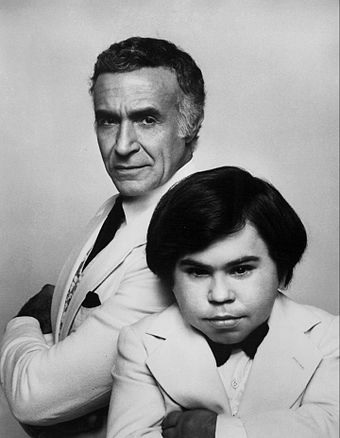
For instance, at the start of the season premiere, Roarke gifts Tattoo a platform that he can stand on while greeting and saying goodbye to the guests and so that he can, visually, be on equal footing with Mr. Roarke.  From what I’ve read, this was something that Herve Villechaize specifically requested as a condition for agreeing to continue with the show.  Considering that the previous season didn’t give Tattoo much to do, I can understand Villechaize’s logic.

The other big change is that Roarke has a new assistant.  His goddaughter, Julie (Wendy Schaal), has spent the summer working on Fantasy Island.  She only appears briefly in this episode, asking Mr. Roarke if she can greet the guests with him.  Roarke tells her that she’s not quite ready but perhaps next week, she will get the opportunity….

And really, Julie should feel good about that because neither fantasy is really that interesting this week.

Matt Kane (Sonny Bono) is a short sportswriter who wants to become a great basketball player and play for a team called the California Top Hatters (who the Hell came up with that name?) because he thinks that’s the only way that he’ll be able to win the heart of Ginger Donavon (Jenilee Harrison), the daughter of the team’s coach (Forrest Tucker).  Mr. Roarke warns Matt that there’s more to love than being able to play basketball but he still gives Matt a pair of magic sneakers.

Matt becomes a great basketball player.  (For some reason, the team is practicing on Fantasy Island).  Coach Donavon says that, if Matt wants a place on the team, he’ll have to beat out rookie sensation Skyhook Schuyler (Peter Isacksen).  Fortunately, Matt comes to realize that he can’t win Ginger by being the best player.  Instead, he has to be a better person.  He removes his shoes and bombs the try out.  But he gets to leave the island with Ginger.

Sonny Bono was a frequent guest star on both this show and The Love Boat.  He always played dorky guys who tried too hard to be cool.  That’s certainly the case here but what should be charming is made a bit bland by the total lack of chemistry between him and Jenilee Harrison.  On the plus side, Tattoo actually gets to do something in this fantasy, serving as a confidante to Skyhook.  It turns out that Skyhook is just as insecure about being tall as Tattoo is about being short.  To help Skyhook, Tattoo paints a picture of him so that Skyhook can see his kind soul.  Awwww!  Seriously, Herve Villechaize totally earned his right to stand on that platform.

As for the other fantasy, Helen Ross (Connie Stevens) is engaged to Ted Kingman (Martin Milner) but she can’t get over her former lover, John Day (David Hedison).  She thinks that John died while serving in the military but Mr. Roarke reveals that John actually survived the war and he lives on a nearby island.  Helen is reunited with John, just to discover that he’s a cad who faked his own death and became a deserter.  Helen leaves the Island feeling confident in her decision to marry Ted.

It’s only after she leaves that the truth is revealed.  Ted is currently serving a prison sentence.  Mr. Roarke arranged for Ted to have a weekend with freedom, on the condition that he lie about his situation to Helen so that she could move on from their failed romance.  So, basically, Mr. Roarke took Helen’s money and then lied to her.  Uhmm …. seriously, what the Hell, Mr. Roarke?

This was a bit of an underwhelming start for the fifth season but fear not!  Next week …. Roddy McDowall returns as the Devil and he wants Mr. Roarke’s soul!

Til then….

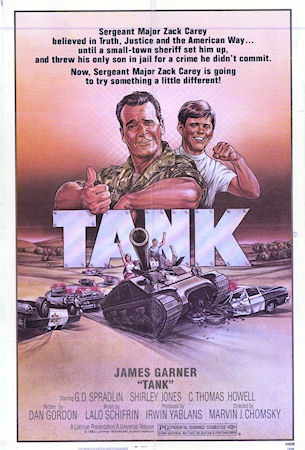
A Movie A Day #204: Tank (1984, directed by Marvin Chomsky)


If you had just moved to a small town in Georgia and your teenage son was framed for marijuana possession and sentenced to years of hard labor, what would you do?

Would you hire a good lawyer and file appeal after appeal?

Would you go to the media and let them know that the corrupt sheriff and his evil deputy are running a prostitution ring and the only reason your son is in prison is because you dared to call them out on their corruption?

Or would you get in a World War II-era Sherman tank and drive it across Georgia, becoming a folk hero in the process?

If you are Sgt. Zack Carey (James Garner), you take the third option.  Sgt. Carey is only a few months from retirement but he is willing to throw that all away to break his son (C. Thomas Howell) out of prison and expose the truth about Sheriff Buelton (G.D. Spradlin) and Deputy Euclid Baker (James Cromwell, playing a redneck).  Helping Sgt. Carey out are a prostitute (Jenilee Harrison), Carey’s wife (Shirley Jones), and the citizens of Georgia, who lines the road to cheer the tank as it heads for the Georgia/Kentucky border.  It’s just like the O.J. Bronco chase, with James Garner in the role of A.C. Cowlings.

The main thing that Tank has going for it is that tank.  Who has not fantasized about driving across the country in a tank and blowing up police cars along the way?  James Garner is cool, too, even if he is playing a role that would be better suited for someone like Burt Reynolds.  Tank really is Smoky and the Bandit with a tank in the place of that trans am.  Personally, I would rather have the trans am but Tank is still entertaining.  Dumb but entertaining.

One final note, a piece of political trivia: According to the end credits, the governor of Georgia was played by Wallace Willkinson.  At first, I assumed this was the same Wallace Wilkinson who later served as governor of Kentucky.  It’ not.  It turns out that two men shared the same name.  It’s just a coincidence that one played a governor while the other actually became a governor.