The TSL Horror Grindhouse: The Dunwich Horror (dir by Daniel Haller)


Look at me/I’m Sandra Dee….

First released in the groovy and psychedelic year of 1970, The Dunwich Horror stars Sandra Dee as Nancy, an somewhat innocent grad student at Massachusetts’s Miskatonic University.  When the mysterious Wilbur Wheatley (Dean Stockwell) comes to the university and asks to take a look at a very rare book called The Necronomicon, Nancy agrees.  She does so even though there’s only one edition of The Necronomicon in existence and it’s supposed to be protected at all costs.  Maybe it’s Wilbur’s hypnotic eyes that convince Nancy to allow him to see and manhandle the book.  Prof. Henry Armitage (Ed Begley) is not happy to see Wilbur reading the book and he warns Nancy that the Wheatleys are no good.

Nancy still agrees to give Wilbur a ride back to his hometown of Dunwich.  She finds herself enchanted by the mysterious Wilbur and she’s intrigued as to why so many people in the town seem to hate Wilbur and his father (Sam Jaffe).  Soon, she is staying at Wilbur’s mansion and has apparently forgotten about actually returning to Miskatonic.  She has fallen under Wilbur’s spell and it soon becomes clear that Wilbur has sinister plans of his own.  It’s time to start chanting about the Old Ones and the eldritch powers while naked cultists run along the beach and Nancy writhes on an altar.  We are in Lovecraft county!

Actually, it’s tempting to wonder just how exactly H.P. Lovecraft would have felt about this adaptation of his short story.  On the one hand, it captures the chilly New England atmosphere of Lovecraft’s work and it features references to such Lovecraft mainstays as Miskatonic University, the Necronomicon, and the Old Ones.  As was often the case with Lovecraft’s stories, the main characters are students and academics.  At the same time, this is very much a film of the late 60s/early 70s.  That means that there are random naked hippies, odd camera angles, and frequent use of the zoom lens.  The film makes frequent use of solarization and other psychedelic effects that were all the rage in 1970.  Lovecraft may have been an unconventional thinker but I’m still not sure he would have appreciated seeing his fearsome cult transformed into a bunch of body-painting hippies.

Really, the true pleasure of The Dunwich Horror is watching a very earnest Sandra Dee act opposite a very stoned Dean Stockwell.  Stockwell was a charter member of the Hollywood counterculture, a friend of Dennis Hopper’s who had gone from being a top Hollywood child actor to playing hippie gurus in numerous AIP films.  As for Sandra Dee, one gets the feeling that this film was an attempt to change her square image.  When Wilbur tells Nancy that her nightmares sound like they’re sexual in origin and then explores her feelings about sex, Nancy replies, “I like sex,” and it’s obviously meant to be a moment that will make the audience say, “Hey, she’s one of us!”  But Sandra Dee delivers the line so hesitantly that it actually has the opposite effect.  Stockwell rather smoothely slips into the role of the eccentric Wilbur.  Wilbur is meant to be an outsider and one gets the feeling that’s how Stockwell viewed himself in 1970.  Sandra Dee, meanwhile, seems to be trying really hard to convince the viewer that she’s not the same actress who played Gidget and starred in A Summer Place, even though she clearly is.  It creates an oddly fascinating chemistry between the two of them.  Evil Wilbur actually comes across as being more honest than virtuous Nancy.

Executive produced by Roger Corman, The Dunwich Horror is an undeniably campy film but, if you’re a fan of the early 70s grindhouse and drive-in scene, it’s just silly enough to be entertaining.  Even when the film itself descends into nonsense, Stockwell’s bizarre charisma keeps things watchable and there are a few memorable supporting performances.  (Talia Shire has a small but memorable roll as a nurse.)  It’s a film that stays true to the spirit of Lovecraft, despite all of the hippies.

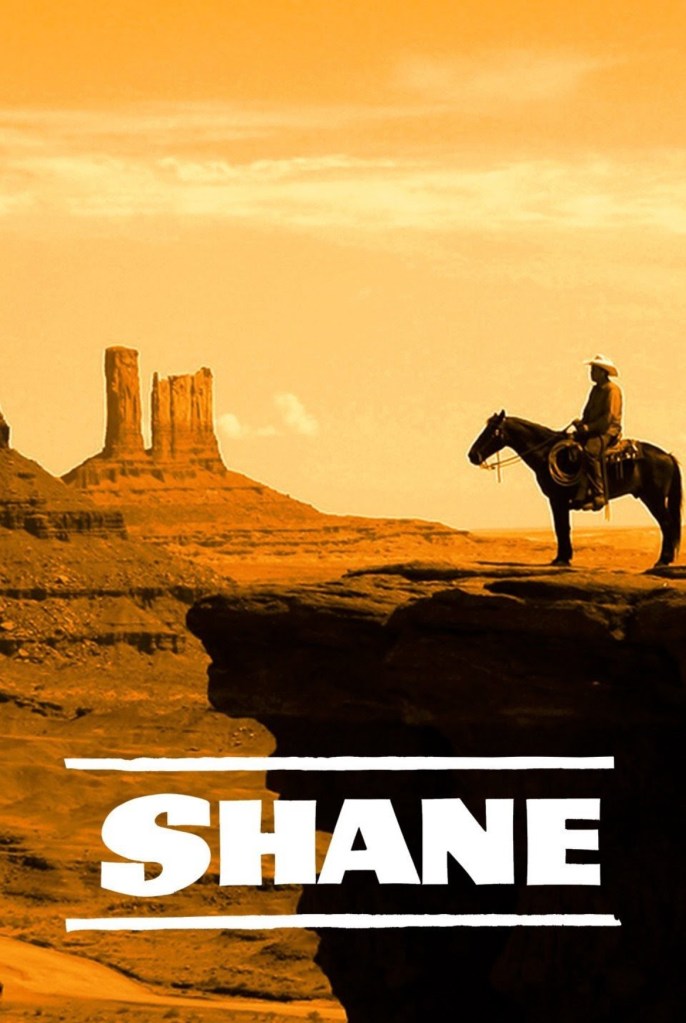
SHANE (The TV Series) – Episode 7: Day of the Hawk (originally aired October 22nd, 1966)


Episode 7 begins with two drunk cowboys, who work for Rufe Ryker (Bert Freed), raising cane and deciding they’ll go harass some sodbusters just for the hell of it. On this day, they ride over to Ira Jackson’s (Jason Wingreen) ranch, where Marian Starett (Jill Ireland) is there visiting Ira’s daughter Elizabeth (Catherine Ferrar). As the cowboys ride around the house, hooping and hollering and shooting off their guns, a frustrated Ira opens the door and fires a blast from his shotgun. The cowboys shoot back toward the house, hitting a kerosene lamp in the kitchen and starting a fire. Ira gets the ladies out of the house and then commences to fighting with the cowboys, who now realize what they’ve done and are wanting to help put out the fire. While the men and Marian are distracted with the fight, Elizabeth runs back into the house to try to save her calico cat, where she is engulfed by the flames and dies. 

We move on to Elizabeth’s funeral and see Shane (David Carradine) ride up with Reverend Harry Himber (James Whitmore). Rufe Ryker is there and he tells Shane and the Reverend that he’s sorry about what happened, that he had nothing to do with it, and that he doesn’t want any trouble. Shane isn’t in much mood to listen to Ryker so he moves on. Reverend Himber, who we will come to find out is a pacifist, begins the service by saying that Elizabeth would want everyone there to remember the good times they had together with her, as well as look inward to find forgiveness and understanding. Hellbent on revenge, Ira just screams “No!”

That night, after chewing his two cowhands out, Ryker decides he’s going to pay them two months wages and send them out of town. He would rather lose a couple of good cowboys as fight a war with Ira. As one of the men, the young Hoke (Dee Pollock), is on his way out of town, Ira shoots him down from the hillside with his rifle. The remainder of the episode consists of Shane and Tom Starett (Tom Tully) trying to protect Ira and the other local farmers from the wrath of Ryker and his men, while Reverend Himber tries to get everyone to talk it out to avoid more killings in the valley. 

In episode 7, the character of Rufe Ryker takes center stage, along with Shane and the visiting Reverend Himber, played here by guest star James Whitmore in an incredible performance. This is probably the deepest episode we’ve dealt with thus far, with each character showing some level of moral complexity. Neither Shane or Ryker want a fight, but they both prepare to get bloody for different reasons. Ryker makes it clear that he will protect his men and fight for them even when they’re wrong. Shane makes it clear that he will fight for the sodbusters against powerful men like Ryker even when he thinks they’re wrong. And then there’s Reverend Himber, the pacifist who is willing to do whatever it takes to stop a fight. During the episode we find out that he had been forced to kill six enemy soldiers when they raided the hospital he was working at during the war. This episode drives home the fact that a man’s ideals will at times contrast harshly with the realities of the positions they find themselves in. Each of these three men finds himself in a situation that has grown bigger than him, with both Ryker and Shane recognizing the deal and preparing for the worst. Reverend Himber, on the other hand, tries to take control of the situation, only to be the catalyst for more tragedy. We have all been in situations where we hope for the best, but we’re smart enough to prepare for the worst, because some of the biggest fools alive are the ones who think they can control other people. 

Overall, the “Day of the Hawk” is a strong episode that has a surprisingly powerful and emotional conclusion. The storyline belongs to Shane, Ryker and the Reverend, so Shane’s relationship with Marian takes a back seat this time around. I don’t think they look at each other longingly a single time, which did make me a little sad. Here’s hoping they’ll double that up in Episode 8! 

Retro Television Review: Fantasy Island 6.4 “The Angel’s Triangle/Natchez Bound”


Welcome to Retro Television Reviews, a feature where we review some of our favorite and least favorite shows of the past!  On Tuesdays, I will be reviewing the original Fantasy Island, which ran on ABC from 1977 to 1984.  Unfortunately, the show has been removed from most streaming sites.  Fortunately, I’ve got nearly every episode on my DVR.

This week, an angel comes to the Island.

Episode 6.4 “The Angel’s Triangle/Natchez Bound”

(Dir by Bob Sweeney, originally aired on November 6th, 1982)

Death takes a holiday!

Well, not literally.  The Angel of Death, Michael Eden (played by Gary Collins), does come to Fantasy Island but he’s working.  Years ago, he was meant to take soul of Catharine Harris (Carol Lynley), a woman who was in a car accident with her husband, Brent Harris (Doug McClure).  Michael could not bring himself to allow Catharine to die.  So, she miraculously survived.  But now, years later, Michael has been sent to collect the soul of Brent.  Brent and Catharine have come to Fantasy Island to have the honeymoon they missed out on due to the car accident.  Michael has come to make sure that the honeymoon is a tragic one.

Michael very much wants to take Brent’s soul.  If Brent’s dead than maybe Michael and Catharine could (somehow) be together.  But when Brent is taken ill and sent to the Fantasy Island hospital, Michael sees how much Catharine loves her husband.  And he allow Brent to live, which seems a bit unfair to …. well, like anyone.  Or at the very least, anyone who has ever died or lost a loved one.

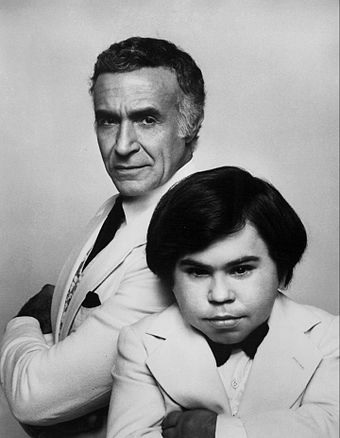
The interesting thing about this fantasy was that it established that Roarke is apparently not an angel.  When Roarke introduces Tattoo to Michael, Roarke says that Michael “is not like us.”  This leads to a funny moment in which Tattoo, upon hearing that Michael is the angel of death, announces that he some work to catch up on.  I always like it when Tattoo gets to do more than just wave at the airplane.  As for the rest of this fantasy, it wasn’t bad.  Carol Lynley did a good job as Catharine.  Gary Collins was a bit stiff but it kind of worked for his character.  Doug McClure was as goofy as ever.

The other fantasy features Jennilee Harrison as Jenny Ryan, a Vegas card dealer who wants to work on a Mississippi steamboat.  She gets her wish and promptly gets involved with helping a writer named Samuel Clemens (Stephen Shortridge, a.k.a. Beau on Welcome Back Kotter) and a kid named Huck Finn (Adam Rich) hide an escaped slave (Sam Scarber) from a dastardly gambler and slave hunter (Roddy McDowall).  Did I mention that Clemens is having trouble coming up with a plot for his new book?  Jenny inspires Mark Twain, helps Jim get to safety, and returns to the present with a pet frog.  Sure, why not?  This storyline was predictable, largely because I read Huckleberry Finn in high school.  However, Stephen Shortridge was, somewhat surprisingly given his work on Kotter, perfectly charming as Mark Twain and Roddy McDowall obviously enjoyed hamming up his villainy.  (To be honest, when I saw Roddy’s name in the opening credits, I was hoping he’d be returning as Satan.)

This was not a bad episode, especially compared to the previous season 6 episodes.  Both fantasies held me attention and apparently, the Angel of Death will leave you alone if he thinks you’re cute.  That’s good to know!

Airplane! (1980, directed by David Zucker, Jim Abrahams, and Jerry Zucker)


Airplane!, which may be the funniest movie ever made, has made me laugh every time that I’ve watched it.  And I’ve watched it a lot!

Whenever I’m getting ready to travel for my day job, I watch Airplane!  Whenever I’m going to Baltimore or West Virginia for the holidays, I watch Airplane!  Whenever I’m in a bad mood and I need something lighten me up, I watch Airplane!  Whenever I’m in a good mood and I want to be in an even better mood, I watch Airplane!

I can’t remember how old I was when I first saw Airplane! but I know I wasn’t yet ten.  While a lot of the humor went over my head at that young age, it did not matter because I laughed at all the sight gags, like the heart hopping around on the doctor’s desk and the line of passengers waiting to “calm down” the hysterical woman.  I laughed when Ted Stryker (Robert Hays) and Elaine (Julie Haggerty) got covered in seaweed while making out on the beach.  I laughed at the people dying while listening to Ted’s story, even though I didn’t fully understand that it was because of Ted boring them to death.  I loved it when Kareem Abdul-Jabbar got annoyed with the kid in the cockpit, even though young me really didn’t know who Kareem was other than he was a basketball player.  Otto the autopilot was the coolest character around.  Stephen Stucker’s Johnny made me laugh with his nonstop energy.  “Excuse me, stewardess, I speak Jive.”  “And don’t call me Shirley.”  “It looks like I picked the wrong time to stop sniffing glue.”  Every time I heard them, I laughed at all of those lines.  I didn’t have to understand why Lloyd Bridges was suddenly upside down.  I just knew it was funny.

As I got older and rewatched the film, I started to pick up on the humor that earlier went over my head.  I traveled to Turkey when I was twelve and our tour guide spent an hour telling us that Midnight Express was not a fair representation of her country.  After that, I suddenly understood why Captain Oveur (Peter Graves) wanted to know if Joey had ever been to a Turkish prison.  I came to appreciate Julie Hagerty and Lorna Patterson as the two flight attendants.  Airplane! still made me laugh but I came to understand that it was also a love story.  What adolescent boy watching Airplane! didn’t want to be Robert Hays, not only landing the plane but also getting kiss Julie Hagerty at the end of the movie?

And then, as I learned more about the movies, I realized that Airplane! was a pitch perfect parody of the disaster genre and I came to understand the brilliance of casting actors like Lloyd Bridges, Robert Stack, Peter Graves, and especially Leslie Nielsen in this film.  From the first time I saw the movie, Nielsen always made me laugh because he had the best lines and he delivered them with deadpan perfection.  But, as I got older, I came to understand that Nielsen was doing more than just saying funny things.  He was sending up his entire career.  I’m a part of the generation who grew up laughing at Leslie Nielsen the comedy superstar and it’s always strange for me to see him in one of his older, serious roles.  I have Airplane! to thank for that.

There’s so much to say about Airplane!  I could write a thousand words just talking about my favorite jokes and one-liners or how much I enjoyed Stryker’s flashbacks.  It’s my favorite movie and one that still makes me laugh even though I know all of the jokes by heart.  (I’ve always thought Howard Jarvis waiting for Stryker to return to the taxi was one of the best, though underrated, jokes in the movie.)  Airplane! is close to 50 years old and it’s still just as funny today as when I first saw it.

In fact, I think I’ll go watch it right now!

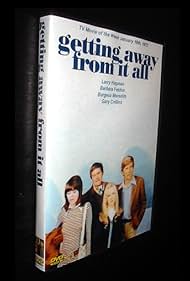
Retro Television Review: Getting Away From It All (dir by Lee Philips)


Welcome to Retro Television Reviews, a feature where we review some of our favorite and least favorite shows of the past!  On Sundays, I will be reviewing the made-for-television movies that used to be a primetime mainstay.  Today’s film is 1972’s Getting Away From It All!  It  can be viewed on YouTube.

For Fred Clark (Larry Hagman) and Mark Selby (Gary Collins), life is New York City just isn’t that much fun anymore.  The weather is terrible.  The traffic cannot be navigated.  The only people ruder than the cabbies are the doormen.  Fred and Mark have come up with the perfect plan.  They’ve decided to move to a small country town and purchase a house on a small island.  In fact, they’re going to buy the entire island!  It’s surprisingly cheap.  Fred and Mark don’t ever really stop to wonder why the island is available for so little money.  Seriously, if you’re buying an island, you should probably ask yourself those questions.

Mark’s wife, Alice (E.J. Peaker), is enthusiastic about the idea.  Less excited is Fred’s wife, Helen (Barbara Feldon).  Helen enjoys living in the city and having a nice job in an office building.  She gets along with her boss (played by Jim Backus, one of many veteran actors to show up in a small role in this film).  Perhaps hoping that Fred will change his mind once he’s confronted with the reality of actually living in the country, Helen finally gives in.

It does turn out that the island is not quite the paradise that Fred and Mark were expecting.  The only way to get out to the island is in a leaky rowboat.  The house is falling apart and, as Helen is disgusted to learn, it also doesn’t have indoor plumbing.  There’s no electricity either but fortunately, the local handyman is working on it.  His name is Herbie and he’s played by a very young and thin Randy Quaid.  If you’ve ever wanted to hear Randy Quaid speak with an exaggerated New England accent, this is the film for you.  There’s nothing convincing about Quaid’s accent but it still seems only fair, considering all of the Yankee actors who have butchered the Southern accent over the years.

Just when it looks like Fred and Mark have managed to make the Island livable, they get a disturbing letter.  As the new owners of the Island, they owe 20 years worth of back taxes.  As Fred puts it, the tax bill is more than either of them can afford.  If they can’t raise the money, the town will take back the Island.   Fred and Mark consider trying to get jobs but it turns out that neither one of them knows much about being fisherman.  They then decide to charm the town into nullifying the tax bill.  That turns out to be more difficult than either man imagines.

Getting Away From It All is a comedy that deals with a universal theme, the desire to escape from the harshness of everyday life and find a perfect place to which to escape.  That said, the film’s main reason for existing is a parade of comedic cameos.  Jim Backus, Vivian Vance, Joe E. Ross, Burgess Meredith, Paul Hartman, and J. Pat O’Malley all appear in small roles, appearing just long enough for 1972 viewers to say, “Hey, I recognize that person!”  The end result is a rather shallow film that has a few chuckle-worthy moments.  (Again, Randy Quaid pretending to be from Maine has to be worth something.)

In the end, for all of the film’s celebration of getting away from it all, it’s hard not to feel that Gary, Mark, Alice, and Helen will all end up back in Manhattan sooner than later.  Some people are just city folks.

Film Review: L.A. 2017 (dir by Steven Spielberg)


L.A. 2017 is the Steven Spielberg film about which you’ve probably never heard.

To a certain extent, that’s understandable.  Spielberg was only 24 when, in 1971, he directed L.A. 2017.  It was a film that he directed for television.  In fact, it was only his third directorial assignment.  As opposed to the huge budgets that we tend to associate with a typical Spielberg production, L.A. 2017 was made for about $300,000.  The entire film was shot in about 12 days.  In fact, with a running time of only a scant 69 minutes, L.A. 2017 hardly qualifies as a feature-length film.  L.A. 2017 has never been released on DVD or Blu-ray, making it a true oddity in Spielberg’s filmography.  Despite the fact that Spielberg has credited L.A. 2017 with opening a lot of doors for him, it’s an almost totally forgotten film.

Of course, some of that is because L.A. 2017 really isn’t a film at all.  Instead, it was an episode of a television show called The Name of the Game.  The show was about Glenn Howard (Gene Barry), a magazine publisher, and the reporters who worked for him.  L.A. 2017 was unique in that it was the show’s only excursion into science fiction.  In fact, from everything that I’ve read about the show, it appears that L.A. 2017 was nothing like any of the other episodes of The Name of the Game.  This episode was also unique because Spielberg directed it as if he was making a feature, as opposed to just another installment in a weekly series.  If not for the opening credits (which announce, among other things, that we’re watching a Robert Stack Production), one could easily imagine watching L.A. 2017 in a movie theater, perhaps as a double feature with Beneath The Planet Of The Apes.

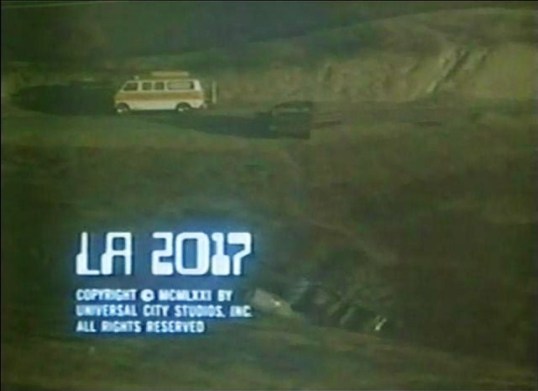
L.A. 2017 opens with Glenn driving down a mountain road in California.  He’s heading to a pollution summit and, as he drives along, he awkwardly dictates an editorial into a tape recorder.  Glenn worries that society may have already ruined the environment to such an extent that the Earth cannot be saved.  As if to prove his point, Glenn starts to cough as he’s overcome by all of the smog in the air.  His car swerves into a ditch and Glenn is knocked unconscious.
Welcome to the future

When he wakes up, he finds himself being rescued by men wearing wearing protective suits and masks.  The sky is a sickly orange and an ominous wind howls in the background.  Glenn’s rescuers take him to an underground city where he discovers that, somehow, he has traveled through time.  The year is now 2017, which in this film looks a lot like the 70s except that everyone’s now underground and the landline phones are extra bulky.  (Needless to say, watching 1971’s version of 2017 in 2019 is an interesting experience.)  It turns out that the pollution got so bad that the surface of the planet became uninhabitable.  The U.S. is now run by a corporation that is headquartered in Detroit.  (Presumably, the Corporation is a former car company.)  The U.S. is also at war with England, for some reason.  No mention is made about what’s happened to Canada but, if Detroit’s still around, I assume at least some of Canada managed to survive as well.
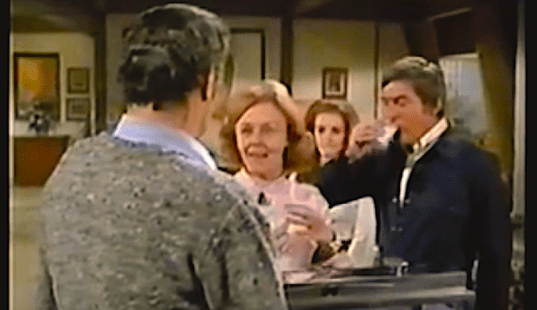
The …. uh, Future.

Everyone in the future drinks a lot of milk and, when they’re not listening to cheerful announcements, they’re listening to the soothing music that the Corporation provides for them.  Everyone in the future is also very friendly.  We know this because everyone keeps assuring Glenn that he’s surrounded by friends.  In fact, everyone in the future refers to one another by their first name because “it’s friendlier.”  It’s also the law.  It turns out that there’s a lot of laws in the future.  In fact, the underground cities are pretty fascist in the way that they handle things.  There are constant announcements encouraging people to pursue a career in law enforcement and anyone who disagrees with the Corporation ends up in a straight jacket.  Glenn feels that maybe he’s been brought to the future so he can start a new magazine and challenge the status quo.  The Corporation disagrees….
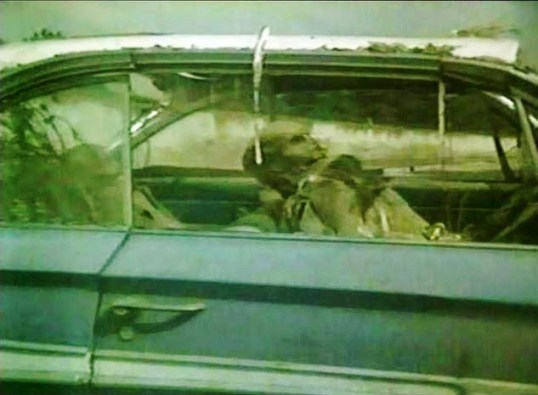
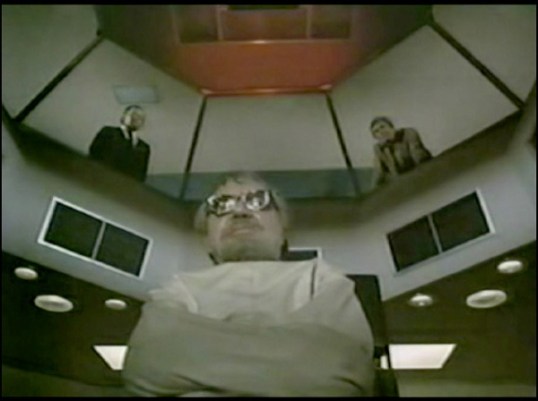
This is what happens when you don’t go underground in the future.

Okay, so there’s nothing subtle about L.A. 2017.  From the villainous corporation to the heavy-handed environmental message, there’s nothing here that you haven’t seen in dozens of other sci-fi films.  But the lack of subtlety doesn’t matter, largely because Spielberg directs with so much energy and with such an eye to detail that it’s impossible not to get sucked into the story.  As opposed to the somewhat complacent Spielberg who has recently given us rather bland and safe blockbusters like Lincoln, The BFG, and The Post, the Spielberg who directed L.A. 2017 was young and obviously eager to show off what he could do with even a low budget and that enthusiasm is present in every frame, from the wide-angle shots of Glenn driving his car to the scenes of Glenn looking up at the shadowy executives and scientists who are staring down at him when he’s first brought to the underground city.  As opposed to the sterile vision of so many other future-set films, Spielberg’s future feels as if it’s actually been lived in.  When Glenn finds himself in a new world, it comes across as being a real world as opposed to just a narrative contrivance.

Of course, because L.A. 2017 was just one episode in a weekly series, Glenn couldn’t remain in the future and L.A. 2017 returns Glenn to the present in the most contrived and predictable way possible.  Still, L.A. 2017 remains an entertaining example of what a young and talented director can do when he’s determined to be recognized.  Watching the film, it’s easy to draw a straight line from Spielberg doing L.A. 2017 to doing Duel and then subsequently being hired for Jaws.

Incidentally, Joan Crawford is somewhere in this film.  Crawford worked with Spielberg when he directed her in the pilot for Night Gallery and she was one of his first major supporters in Hollywood.  Apparently, in L.A. 2017, she plays one of the people staring down at Glenn when he’s first brought into the underground city.  I haven’t found her yet but she’s apparently there somewhere.

Unfortunately, L.A. 2017 has never been released on DVD or Blu-ray but it is currently available on YouTube.
Horror on TV: Twilight Zone 3.10 “The Midnight Sun”


TheTwilightZoneLogo

In this episode of The Twilight Zone, the Earth has somehow gotten off of orbit is now being drawn closer and closer to the sun. With humanity on the verge of extinction, two women (Lois Nettleton and Betty Garde) struggle to survive as the heat keeps rising.

Full of haunting images of a deserted and sun-baked city, The Midnight Sun is one of the few episodes of The Twilight Zone that has ever given me nightmares. For some reason, the melting painting always gets to me.

This episode was written by Rod Serling and directed by Anton Leader. It was originally broadcast on November 17th, 1961.