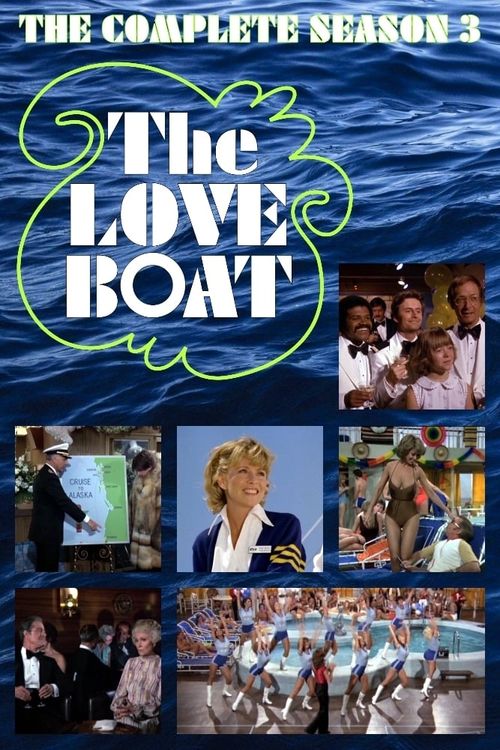
Welcome to Retro Television Reviews, a feature where we review some of our favorite and least favorite shows of the past! On Wednesdays, I will be reviewing the original Love Boat, which aired on ABC from 1977 to 1986! The series can be streamed on Paramount Plus!
This week, The Love Boat has a very special passengers!
(Dir by George Tyne, originally aired on April 19th, 1980)
This week, the pop cultural stars align as a young David Hasselhoff boards the Love Boat!
Hasselhoff plays Tom Bell, a 20-something attorney who is dating a 30-something attorney named Cathy (Shelley Fabares). Cathy insists that they keep their romance a secret due to the age difference. She doesn’t want people to think that she’s a cradle robber or an older woman with a gigolo. (Cathy might also want to consider that she’s a senior partner at the firm while Tom is just a junior partner.) Tom doesn’t care about the age difference. In fact, he wants to marry Cathy!
And yes, they do eventually get married. Tom even has his grandparents waiting for them when the boat docks in Los Angeles so that they can act as witnesses. There’s not really any suspense as to whether or not Tom and Cathy will end up married because this is The Love Boat, the show that combined the swinging culture of the 70s with the morality of the 50s. The Hoff is his usual dramatic but self-aware self while Shelley Fabares is endlessly likable. They’re a cute couple and, minor age difference aside, they just look like they belong together. It was a sweet story.
As for the other passengers:
Fay Piermont (Peggy Cass) is married to Bill (Gordon Jump). Bill’s a nice guy but Fay fears that they’ve become a boring couple. She wants to be an exciting couple and she’s figured out that the way to do this is to get a makeover, buy a new wardrobe, and then toss her glasses and all of her frumpy clothes overboard. (At first, both Julie and Vicki are worried that Fay is planning on throwing herself overboard. One would think that would be cause for ship-wide alarm but Julie and Vicki just check on Fay occasionally to make sure she’s still alive.) At first, Bill is freaked out by Fay’s new attitude but, eventually, he comes to accept it and Fay comes to realize that she loves Bill, even if he is a bit reserved. This is the type of story that The Love Boat did frequently. Fay and Bill are a nice couple, even if they’re no Tom and Cathy.
Finally, Isaac is reunited with a former high school classmate, a model named Janet (BernNadette Stanis). Janet is upset that her husband (Clifton Davis) is more into sports than romance so she tries to make him jealous by lying about what a womanizer Isaac was in high school. Gopher overhears and tells Isaac that Janet referred to him as being “all hands” in high school. Now, most people would understand that Janet was just trying to make her husband jealous but Isaac somehow becomes convinced that he is a womanizer but he just can’t remember his actions because he suffers from dissociative identity disorder and he even goes to Doc Bricker for help! Why would Isaac believe that? It makes no sense that Isaac — cool, calm Isaac — would suddenly be so stupid. This is something that would happen to Gopher not Isaac.
That one silly storyline aside, this was a pleasant cruise on The Love Boat. I’m glad things worked out for Tom and Cathy. Seriously, the world is so lucky to have The Hoff.
The 40th film — wait a minute, I’m finally up to number 40!? That means that there’s only ten more movies left to review! And then I’ll be able to move on! It’s always exiting for me whenever I’m doing a review series and I realize that I’m nearly done.
Anyway, where was I?
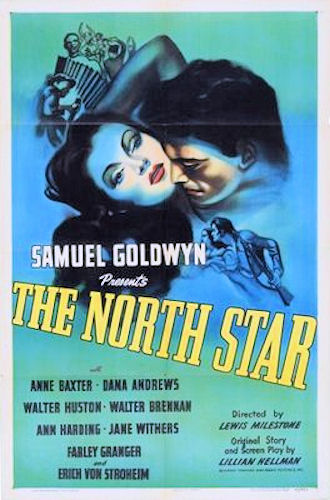
Oh yeah — the 40th film in Mill Creek’s Fabulous Forties box set was the 1943 war epic, The North Star. This is one of the many war films to be included in the Fabulous Forties box set and I have to admit that they all kind of blend together for me. Since these films were actually made at a time when America was at war, there really wasn’t much room for nuance. Instead, every film follows pretty much the same formula: the Nazis invade, a combination of soldiers and villagers set aside their individual concerns and/or differences and team up to defeat the Nazis, there’s a big battle, a few good people sacrifice their lives, the Nazis are defeated, and the allies promise to keep fighting.
It’s a pretty predictable formula but that’s okay because it was all in the service of fighting the Nazis. Could I legitimately point out that the villains in these movies are always kind of two-dimensional? Sure, I could. But you know what? IT DOESN’T MATTER BECAUSE THEY’RE NAZIS! Could I point out that the heroes are often idealized? Sure, but again it doesn’t matter. Why doesn’t it matter? BECAUSE THEY’RE FIGHTING NAZIS!
That’s one reason why, even as our attitude towards war changes, World War II films will always be popular. World War II was literally good vs evil.
Anyway, The North Star was a big studio tribute to America’s then ally, the Soviet Union. When a farm in the Ukraine is occupied by the Nazis, the peasants and the farmers refuse to surrender. They disappear into the surrounding hills and conduct guerilla warfare against the invading army. It’s all pretty predictable but it’s also executed fairly well. It doesn’t shy away from showing the brutality of war. There’s a haunting scene in which we see the bodies of all of the villagers — including several children — who have been killed in a battle.
The Nazis are represented by Erich Von Stroheim. Von Stroheim plays a German doctor who continually claims that he personally does not believe in the Nazi ideology and that he’s just following orders. When wounded Nazi soldiers need blood transfusions, he takes the blood from the children of the village. His rival, a Russian doctor, is played by all-American Walter Huston and indeed, all the Russians are played by American stars, the better to create a “we’re all in this together” type of spirit. When Huston tells Von Stroheim that he is even worse than the committed Nazis because he recognized evil and chose to do nothing, he’s speaking for all of us.
Unfortunately, before the Nazis invade, The North Star devotes a lot of time to showing how idyllic life is in the communist collective and these scenes are so idealized that they totally ring false. Everyone is so busy singing folk songs and talking about how happy they are being a part of a collective (as opposed to being an individual with concerns that are not shared by the other members of the collective) that it’s kind of unbearable. Not surprisingly, The North Star was written by Lillian Hellman, who wrote some great melodramas (like The Little Foxes) but who was always at her most tedious when she was at her most overly political.
(Watching the opening of The North Star, I was reminded that I would be totally useless in a collectivist society.)
So, I have to admit, that I was rather annoyed with the villagers at first. But then the Nazis invaded and I realized that we’re all in it together! As I said earlier, you can forgive your heroes almost anything when they’re fighting Nazis.
The North Star is an above average war film and a below average piece of political propaganda. See it as a double feature with The Last Chance.
Louise Beavers and Fredi Washington in Imitation Of Life
The 1934 film Imitation of Life opens with Delilah Johnson (Louise Beavers) standing on the back porch of a house owned by widowed mother Bea Pullman (Claudette Colbert). Delilah says that she’s come for the housekeeping position. Bea tells her that there is no housekeeping position and quickly figures out that Delilah has the wrong address. As Delilah wonders how she’s going to get to the other side of town in time to interview for the job, Bea hears her toddler daughter falling into the bathtub upstairs. After Bea rescues her daughter, she agrees to hire Delilah as a housekeeper.
The rest of the film tells the story of their friendship. It turns out that, because she knows an old family recipe, Delilah can make the world’s greatest pancakes. Bea decides to go into business, selling Delilah’s pancakes and using Delilah as the product’s mascot. Soon Delilah’s smiling face is on billboards and she’s known as Aunt Delilah. When it comes time to incorporate the business, Bea and her partner, Elmer (Ned Sparks), offer Delilah 20% of the profits. They tell Delilah that they’re all going to be rich but Delilah protests that she doesn’t want to be rich. She just wants to take care of Bea and help to raise Bea’s daughter.
Delilah, incidentally, is African-American while Bea is white.
Despite the fact that Imitation of Life is considered to be an important landmark as far as Hollywood’s depiction of race is concerned, I have to admit that I was really uncomfortable with that scene. First off, considering that Delilah was the one who came up with recipe and her face was being used to sell it, it was hard not to feel that she deserved a lot more than just 20%. Beyond that, her refusal felt like it was largely included to let white audiences off the hook. “Yes,” the film says at this point, “Delilah may be a servant but that’s the way she wants it!”
It was a definite false note in a film that, up to that point and particularly when compared to other movies released in the 30s, felt almost progressive in its depiction of American race relations. Up until that scene, Bea and Delilah had been portrayed as friends and equals but, when Delilah refused that money, it felt like the film had lost the courage of its convictions.
However, there’s a shot that occurs just a few scenes afterwards. Several years have passed. Bea is rich. Delilah is still her housekeeper but now the house has gotten much larger. After having a conversation about Delilah’s daughter, Bea and Delilah walk over to a staircase and say goodnight. Bea walks upstairs to her luxurious bedroom while, at the same time, Delilah walks downstairs to her much smaller apartment. It’s a striking image of these two women heading different directions on the same staircase. But it also visualizes what we all know. For all of Delilah’s hard work, Bea is the one who is sleeping on the top floor. It’s a scene that says that, even if it couldn’t openly acknowledge it, the film understands that Delilah deserves more than she’s been given. It’s also a scene that reminds us that even someone as well-intentioned and kind-hearted as Bea cannot really hope understand what life is truly like for Delilah.
The film itself tells two stories, one of which we care about and one of which we don’t. The story we don’t care about deals with Bea and her spoiled child, Jessie (Rochelle Hudson). Jessie develops a crush on her mom’s boyfriend, Steve (Warren William). It’s really not that interesting.
The other story is the reason why Imitation of Life is a historically important film. Delilah’s daughter, Peola (Fredi Washington), is of mixed-race ancestry and is so light-skinned that she can pass for white. Throughout the film, Peola desperately denies being black and, at one point, stares at herself in a mirror and demands to know why she can’t be white. When Peola goes to school, she tells her classmates she is white and is mortified when Delilah shows up at her classroom. When Peola gets older, she attends an all-black college in the South but, eventually, she runs away.
When Delilah tracks her daughter down, Peola is working as a cashier in a restaurant. When Delilah confronts her, she is almost immediately confronted by the restaurant’s owner, who angrily tells her that the restaurant is a “whites only” establishment. Peola pretends not to know her mother.
Beyond the confrontation between Peola and Delilah, that scene in the restaurant is important for another reason. It’s the only time that the film provides any direct evidence as to why Peola wants to pass for white. Oh, don’t get me wrong. We all know why Peola thinks that society will treat her differently if it believes that she’s white. (And we also know that she’s right.) But this scene is the first time that the film itself acknowledges the fact that, in America, a white girl is going to have more opportunities than a black girl. Up until that point, white audiences in 1934 would have been able to dismiss Peola as just being selfish or unappreciative but, with this scene, the film reminds viewers that Peola has every reason to believe that life would be easier for her as a white girl than as an African-American. It’s a scene that would hopefully make audiences consider that maybe they should be angrier with a society that allows a restaurant to serve only whites than they are with Peola. It’s a scene that says to the audience, “Who are you to sit there and judge Peola when you probably wouldn’t even allow Delilah to enter the theater and watch the movie with you?”
Imitation of Life was nominated for best picture of the year and, though it lost to It Happened One Night, Imitation of Life is still historically important as the first best picture nominee to attempt to deal with racism in America. (Despite a strong pre-nomination campaign, Louise Beavers failed to receive a nomination. It would be another 5 years before Hattie McDaniel would be the first African-American nominee and winner for her role as Mammy in Gone With The Wind. Interestingly enough, McDaniel got the role after Beavers turned it down.)
Following the box office success of Imitation of Life, there were several films made about “passing.” The majority of them starred white actresses as light-skinned African-American characters. Imitation of Life was unique in that Fredi Washington, who played Peola, actually was African-American. As will be obvious to anyone who watches Imitation of Life, Fredi Washington had both the talent and the beauty to be a major star. However, she was considered to be too sophisticated to play a maid or to take on any of the comedy relief roles that were usually given to African-American performers. (And, as an African-American, no major studio would cast her in a lead or romantic role.) As such, her film career ended just three years after Imitation of Life and she spent the next 50 years as a stage performer and a civil rights activist. (For an interesting look at the history of African-Americans in the film industry, I would suggest checking out Donald Bogle’s Bright Boulevards, Bold Dreams: The Story of Black Hollywood.)
Like Peola, Washington herself could have passed for white. She was often asked if she was ever tempted to do so. I’m going to end this review with the answer that she gave to a reporter from The Chicago Defender:
“I have never tried to pass for white and never had any desire, I am proud of my race. In ‘Imitation of Life’, I was showing how a girl might feel under the circumstances but I am not showing how I felt. I am an American citizen and by God, we all have inalienable rights and wherever those rights are tampered with, there is nothing left to do but fight…and I fight. How many people do you think there are in this country who do not have mixed blood, there’s very few if any, what makes us who we are, are our culture and experience. No matter how white I look, on the inside I feel black. There are many whites who are mixed blood, but still go by white, why such a big deal if I go as Negro, because people can’t believe that I am proud to be a Negro and not white. To prove I don’t buy white superiority I chose to be a Negro.”
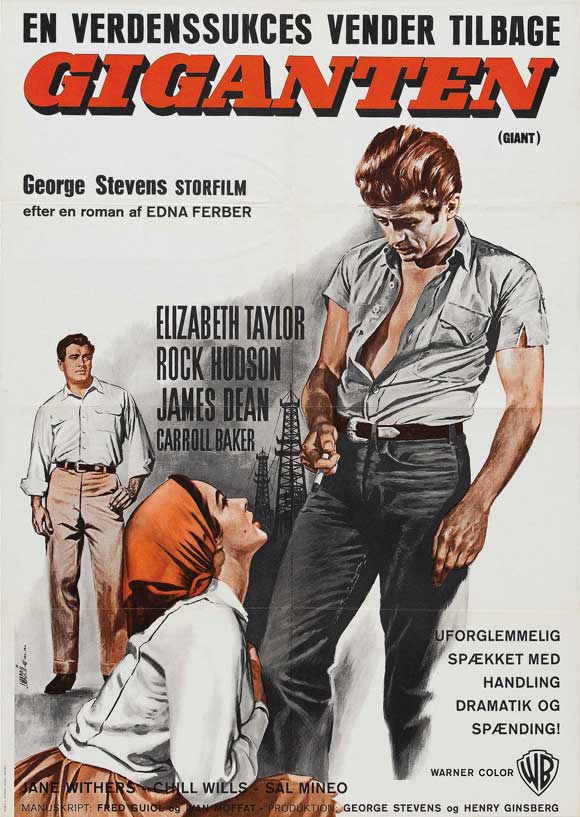
Let’s continue to embrace the melodrama by taking a look at the 1956 best picture nominee, Giant.
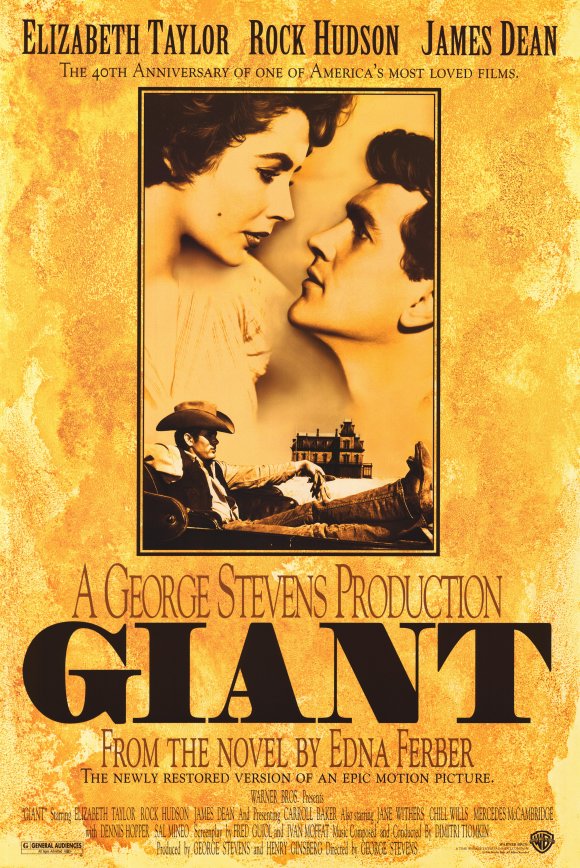
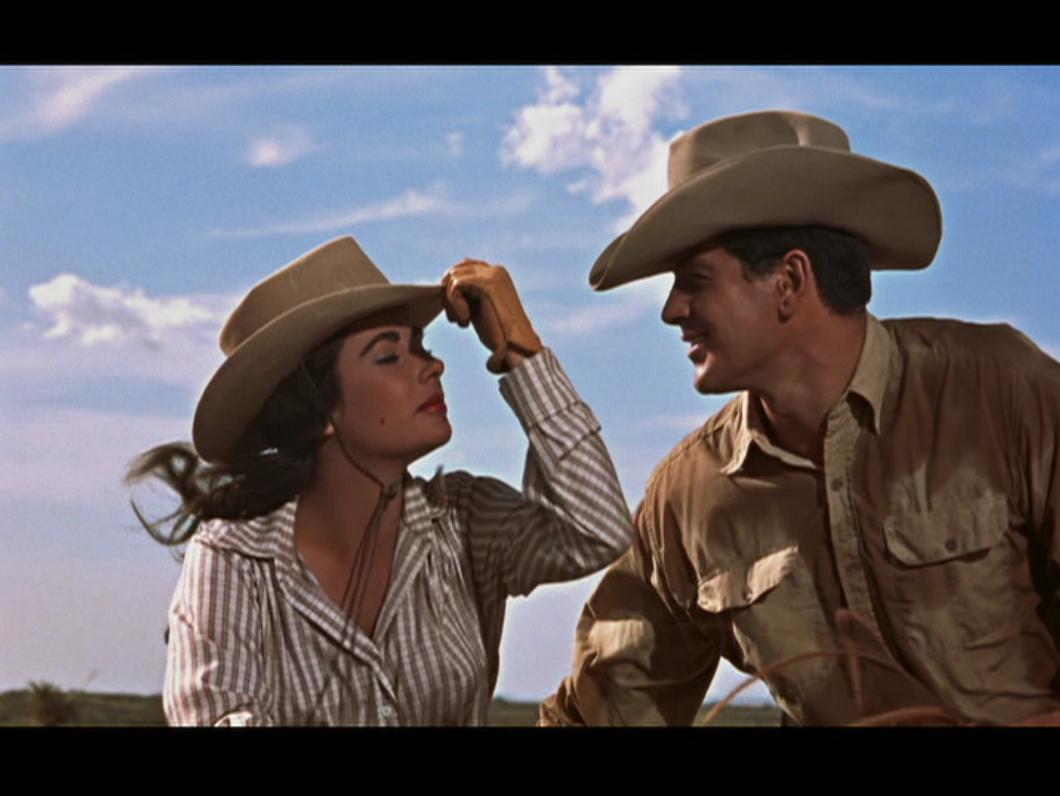
Giant is a film about my home state of Texas. Texas rancher Bick Benedict (Rock Hudson) goes to Maryland to buy a horse and ends up returning to Texas with a bride, socialite Lesley Lynnton (Elizabeth Taylor). At first, Lesley struggles to adapt to the harsh and hot Texas landscape. Bick’s sister, Luz (Mercedes McCambridge) takes an instant dislike to Lesley and Bick is annoyed by Lesley’s concern over the living conditions of the Mexicans that work on Bick’s ranch. It sometimes seems like the only person who appreciates Lesley is Jett Rink (James Dean), an ambitious ranch hand who secretly loves her and who is planning on becoming a rich man. That’s exactly what happens when oil is found on the land around Bick’s ranch. While Bick stubbornly clings to the past, oilman Jett represents both the future of Texas and the nation. Meanwhile, Bick and Lesley’s son (played by a very young Dennis Hopper) challenges his father’s casual bigotry when he falls in love with a Mexican girl.
Giant is appropriately named because it is a huge film. Clocking in at 201 minutes, Giant tells a story that spans several decades and features a big cast that is full of familiar faces, all struggling for their chance to somehow stand out from everyone else around them. Even the film’s wonderful panoramic shots of the empty Texas landscape only serve to remind us of how big the entire film is. To a certain extent, the size of Giant‘s production is to be understood. In the 1950s, Hollywood was having to compete with television and they did this by trying to make every film into a major event. You watch a movie like Giant and you practically hear the old Hollywood moguls shouting at America, “See!? You can’t get that on your precious TV, can you!?”
For those of us watching Giant today, the length is both a blessing and a curse. It’s a curse because the movie really is too damn long. The opening scenes drag and many of them really do feel superfluous. It’s hard not to feel that the real story doesn’t really start until about 90 minutes into the movie. And once the story really does get started, there’s still way too much of it for it all to be crammed into one sitting. Oddly enough, you end up feeling as if this extremely long film is still not telling you everything that you need to know. If Giant were made today, it would probably be a two-part movie on either HBO or Lifetime and it would definitely feature a lot more sex.
However, to be honest, one of the reasons that I did enjoy Giant was because it was as big as it was. I mean, the film is about Texas so of course it should be a little excessive! Everything’s bigger in Texas and that includes our movies. Add to that, Giant may be too long but it uses that length to deals with issues that are still relevant today — oil, immigration, and racial prejudice. Rock Hudson may not have been a great actor but he is at least convincing as he transitions from bigotry to tolerance.
But really, when it comes to Giant, most people are only interested in James Dean. And they definitely should be because Dean gives a great and compelling performance here. Dean brings all of the emotional intensity of the method to material that one would not naturally associate with method acting and the end result is amazing to watch. Giant was released after Dean had been killed in that infamous car wreck. I can only imagine what it must have been like to be sitting in a theater in 1956 and to see this compelling and charismatic actor towering above the world on the big screen while aware, all the time, that his life had already been cut short and he would never been seen in another film.
Even better, Dean’s new style of acting clashes perfectly with Hudson’s old style of acting, making the conflict between Bick and Jett feel all the more real and intense. Much as Bick represents old Texas and Jett represents the new Texas, Hudon and Dean represented the two sides of Hollywood: the celebrity and the artist. Needless to say, Dean wins the battle but, surprisingly, Hudson occasionally manages to hold his own.
I can’t necessarily say that Giant is an essential film. A lot of people are going to be bored by the excessive length. But if you’re a fan of James Dean or if you’re from Texas, Giant is a film that you need to see at least once.


 Through the Shattered Lens